
Hydroxyl Value and Viscosity in Polyester Polyol Selection: A Technical Guide
Hydroxyl value (OHV) and viscosity are the two numbers that decide whether a polyester polyol will work in a given polyurethane system. OHV measures how many hydroxyl groups are available to react with isocyanate, and therefore sets crosslink density — in practice, the rigidity, dimensional stability and load-bearing behaviour of the cured foam, adhesive or coating. Viscosity, reported in CPS at 25 °C, governs how the polyol pumps, meters, mixes and wets the other components on your line. Specifying one without the other leaves the supplier to guess.
This guide breaks both parameters down for formulators, procurement managers and distributors, and uses the XINFA polyester polyol portfolio as a working case study — from High Flame Retardant XF-2007 (OHV 200 ± 10 mgKOH/g) to Pentane System XF-435 (OHV 500 ± 50 mgKOH/g), and from the High Water-based series (1,500–3,000 CPS) to the noticeably heavier XF-200 (10,000–30,000 CPS). The objective is practical: by the end, you should be able to write a grade specification that a supplier can quote against without a round of clarification emails.
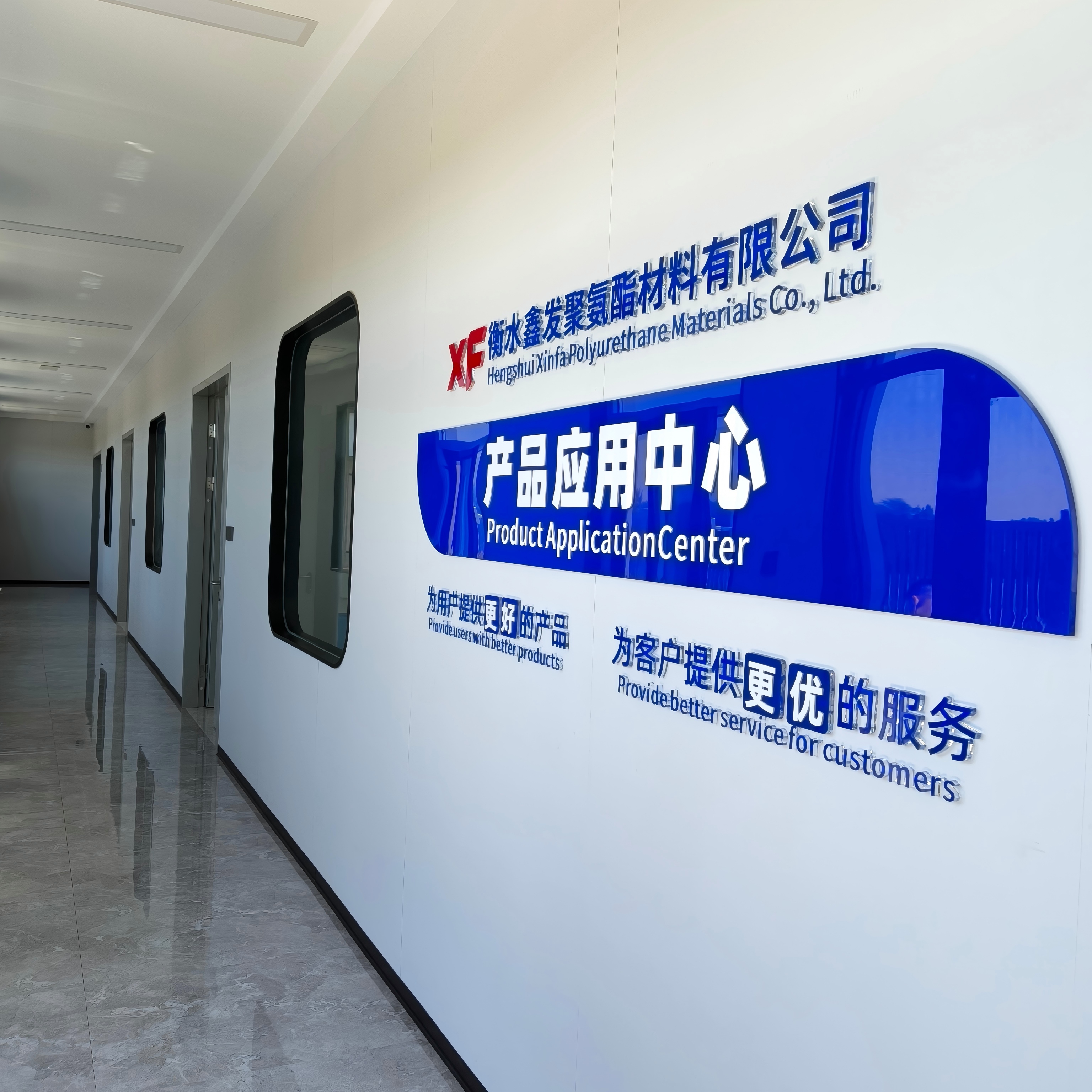
Cover: XINFA product application centre — where polyester polyol grades are matched to an application before a specification is finalised.
Problem Definition: Why "Polyester Polyol" Is Not a Specification
A purchase order that reads only "polyester polyol" is not a specification — it is a category. It leaves grade selection to whoever receives the enquiry, and that is where most re-quotes, sample loops and delivery delays begin.
Inside XINFA's own catalogue the spread is wide. Hydroxyl value runs from 60 ± 5 mgKOH/g on adhesive grade XF-Z to 500 ± 50 mgKOH/g on pentane system grade XF-435. Viscosity at 25 °C runs from 1,000 ± 200 CPS on mining grade KXF-280 to 10,000–30,000 CPS on phthalic anhydride grade XF-200. Both ends of that range are correctly sold as polyester polyol, and neither substitutes for the other in the same formulation.
Three failure modes of a vague specification
- Reactivity mismatch. An OHV that sits far from the formulation's target shifts the isocyanate index and changes the reaction profile, so the same line and the same catalyst package can produce a different foam than the one that was validated.
- Processing mismatch. A grade at the top of the viscosity range can fall outside the working range of a metering pump or mixing head, while a very low-viscosity grade can flow or sag before gelation on a vertical surface.
- Tolerance mismatch. A grade quoted at ±50 mgKOH/g is not interchangeable with one quoted at ±5 mgKOH/g. If your formulation was validated on a tight band, incoming material inside a loose band may still be out of specification for you.
The vocabulary gap
Buyers typically describe what they need in qualitative terms — "we need the higher-reactivity type" or "something that flows more easily". Suppliers quote in mgKOH/g and CPS with defined tolerances. Closing that gap is not a formality; it is the difference between a first-sample approval and a third iteration.
Industry Background: Why Parameter Discipline Matters More in 2026
Polyester polyol demand continues to be anchored by rigid PU and PIR insulation. Grand View Research estimates the global polyester polyol market at USD 9,654.2 million in 2024, projected to reach USD 15,033.3 million by 2033. The same source puts Asia Pacific at a 43.7% revenue share in 2024, with China forecast to grow at the highest CAGR of 5.2% through 2033.
The aromatic segment carries much of that growth. Persistence Market Research values the global aromatic polyester polyols market at USD 1.9 billion in 2026, growing at a 5.9% CAGR to USD 2.8 billion by 2033. Grand View Research separately reports that aromatic polyester polyols held a 61.4% share of the bio-based polyester polyol from bio-succinic acid market in 2024 — a signal that aromatic backbone chemistry remains the default choice where structural performance is required.
Regulation reinforces the same direction. Polyester polyols for rigid PU and PIR insulation applications are a key volume anchor driven by the EU Energy Performance of Buildings Directive (EU) 2024/1275, which keeps pressure on insulation performance and, indirectly, on the specification precision of the grades feeding those systems.
On the supply side, industry reporting cited by Fortune Business Insights lists key global players as Stepan, Huafon Group, COIM, BASF SE, Covestro AG and Dow Inc., with the top three holding roughly a 30% share. Most of these companies sell broad polyol portfolios; what a buyer actually quotes against is a grade-level document, and that is precisely where OHV and viscosity have to be explicit.
About the case-study supplier. Hengshui Xinfa Polyurethane Materials Co., Ltd. was established in 2010, with its factory located in the Salt Chemical Circular Economy Park in Jizhou City. The site covers 25,000 square metres and operates a large-scale production capacity of 50,000 tons of polyester polyol series products annually. The company holds ISO 9001, ISO 14001 and ISO 45001 certification covering the production of oligomeric polyester polyols, and exports through its wholly owned subsidiary, Hebei Xinshe Technology Co., Ltd., based in Shijiazhuang.
Detailed Solution: Decoding OHV and Viscosity
Hydroxyl value: the crosslink density lever
Hydroxyl value is reported in mgKOH/g and expresses the hydroxyl content of the polyol in terms of the equivalent milligrams of potassium hydroxide. In a polyurethane reaction, each hydroxyl group is a potential urethane linkage with isocyanate. A higher OHV therefore means more reactive sites per unit mass, which generally supports a denser crosslinked network after curing. That is the structural reason rigid insulation grades sit at the higher end of a catalogue, while grades intended for more flexible, adhesive-type performance sit at the lower end.
The spread inside the XINFA range makes the point concrete. High Flame Retardant XF-2007 is specified at 200 ± 10 mgKOH/g and Pentane System XF-435 at 500 ± 50 mgKOH/g. Both are documented for rigid insulation work — flame-retardant and PIR spraying on one side, home appliances, pipes, sandwich panels and PIR systems on the other — yet they sit 300 mgKOH/g apart. That gap is not cosmetic; it changes the stoichiometry a formulator must set and the physical profile of the finished part. At the other extreme, adhesive grade XF-Z at 60 ± 5 mgKOH/g is documented for sandwich panel adhesives, where the low hydroxyl content is the point.

Laboratory verification: hydroxyl value, acid value and viscosity are checked as defined parameters, not estimated from appearance.
Viscosity: the process window, not the performance target
Viscosity, expressed in CPS at 25 °C, says less about how the finished polymer will behave than about whether the material can be processed at all. It determines pumpability, metering accuracy, mixing energy, substrate wetting and — on vertical spray work — whether the applied layer stays where it was placed long enough to react.
The High Water-based series shows what a deliberately tight viscosity band looks like: XF-2006 at 1,500 ± 500 CPS, XF-3153 at 1,800 ± 500 CPS, XF-2003 and XF-300W both at 2,000 ± 500 CPS, and XF-315G at under 3,000 ± 500 CPS. All five grades are documented for high-water-based or full-water-based systems, spraying insulation, sandwich panels and polyurethane pipes. A narrow, low-viscosity cluster is what makes that family practical in spray and pour equipment.
The contrast at the other end is equally deliberate: XF-200 at 10,000–30,000 CPS, XF-2007 at 15,000 ± 3,000 CPS and XF-250P at 11,000 ± 2,000 CPS. These are heavier materials, and transfer line design, temperature control and pump selection all matter more when they are in use.
Why you must specify both. Viscosity and OHV do not move together. Adhesive grade XF-280 is specified at 280 ± 20 mgKOH/g with a high viscosity entry on the grade sheet, while mining grade KXF-350 carries a higher hydroxyl value, 350 ± 20 mgKOH/g, at only 1,500 ± 500 CPS. Higher OHV does not imply thicker material. Each parameter has to be written into the specification separately.
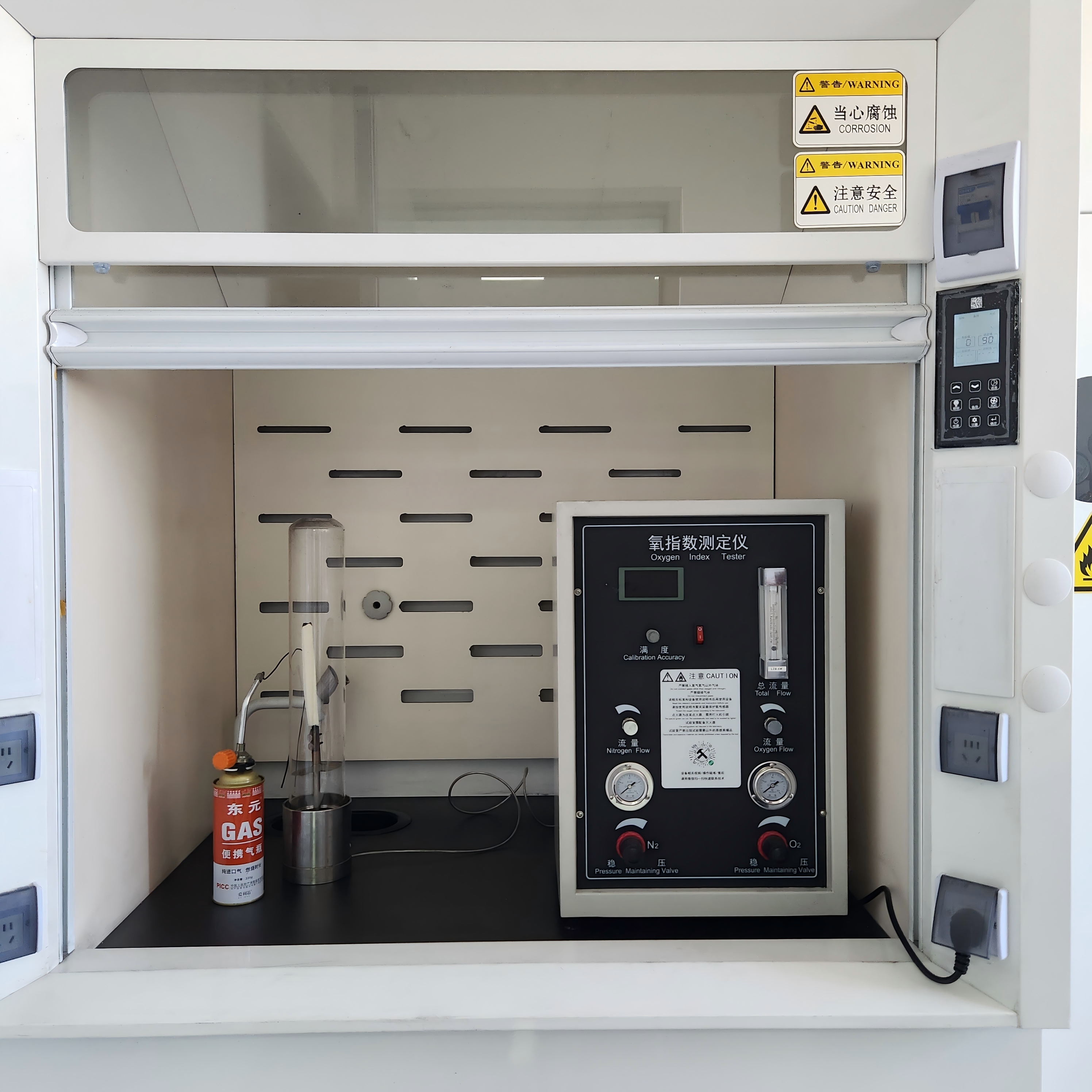
Flame performance is a separate specification line: XINFA documents a dedicated High Flame Retardant family alongside the standard rigid grades.
The supporting specifications: acid value, moisture and base chemistry
Every XINFA grade sheet carries two more numbers beside OHV and viscosity. Acid value (mgKOH/g) sets the upper limit on residual acidity, ranging from ≤0.5 on XF-2006 to ≤5.0 on XF-Z. Moisture (%) is limited to between ≤0.1% and ≤0.15% across the portfolio. Both matter because residual acid and water consume isocyanate and shift the effective reactivity of a batch; treat them as specification items rather than footnotes.
The base chemistry line identifies the backbone. Most grades are built on PA (phthalic anhydride), PTA, AA, DEG and GLY. One family is named explicitly for its backbone — Phthalic Anhydride Polyester Polyol, covering XF-3152, XF-2412, XF-1752 and XF-2002, documented for spraying insulation, sandwich panels, polyurethane pipe, PU wood imitation and home appliances. Knowing whether the backbone is aromatic-dominated is part of reading a grade sheet properly, particularly when the grade was chosen for flame or thermal reasons.
Using XINFA's portfolio as a case study in grade families
XINFA documents eight families, each occupying a different neighbourhood on the OHV/viscosity map: Phthalic Anhydride, High Flame Retardant, Pentane System, Mining, High Water-based, Adhesive, Controlled-Release Fertilizer Coating Agent, and an additional group covering XF-235 and NXF-400 for spraying foam and sandwich panels.
The practical sequence when shortlisting is family first, grade second. Pick the family that matches the application, then choose the grade inside it by OHV band, and only then confirm that the viscosity band suits the equipment.
Step-by-Step Breakdown: Specifying a Grade in Seven Steps
- Start from the application, not the grade. Decide whether the end product is rigid insulation (spray, panel or pipe), an adhesive, a coating, an elastomer or an agricultural coating. XINFA documents families against exactly these uses, so the family usually falls out of the application.
- Convert the application into an OHV band. Rigid and PIR insulation work generally calls for higher hydroxyl values — XF-435 at 500 ± 50 or XF-390 at 400 ± 20 in the pentane system, for example. Adhesive performance is documented at the opposite end, with XF-Z at 60 ± 5 mgKOH/g.
- Check the viscosity band against your equipment, not against preference. Confirm the CPS figure fits your metering pump, mixing head and line temperature. A water-based grade at 1,500–3,000 CPS and a flame-retardant grade at 15,000 ± 3,000 CPS are handled very differently.
- Set acid value and moisture limits in the same document. State whether you will accept ≤0.5 or ≤5.0 mgKOH/g acid value, and whether your process needs the ≤0.1% moisture tier rather than ≤0.15%.
- Record the tolerance you will accept. XINFA grade sheets use ±5 (XF-200, XF-Z), ±10 (XF-2007, XF-2003), ±15 (XF-3152, XF-235P) and ±20 or ±50 bands (XF-435). Incoming inspection should be written against the same band you ordered.
- Match the catalyst and flame-retardant package at the same time. XINFA also supplies the amine catalysts used alongside these polyols — TEDA A33 (Triethylene Diamine 33%), PC-5 (PMDETA, CAS 3030-47-5), PC-8 (DMCHA, CAS 98-94-2) and PC-41 (CAS 15875-13-5) — as well as TCPP (CAS 13674-84-5) and TEP (CAS 78-40-0) as phosphorus flame retardants. Specifying polyol and catalyst against one document removes a common source of mismatch.
- Validate with a sample batch before scale-up. XINFA reports 100% testing in its quality control, a minimum order quantity of 1 mt, monthly capacity of 4,000 mt and a documented lead time of 15–20 days.
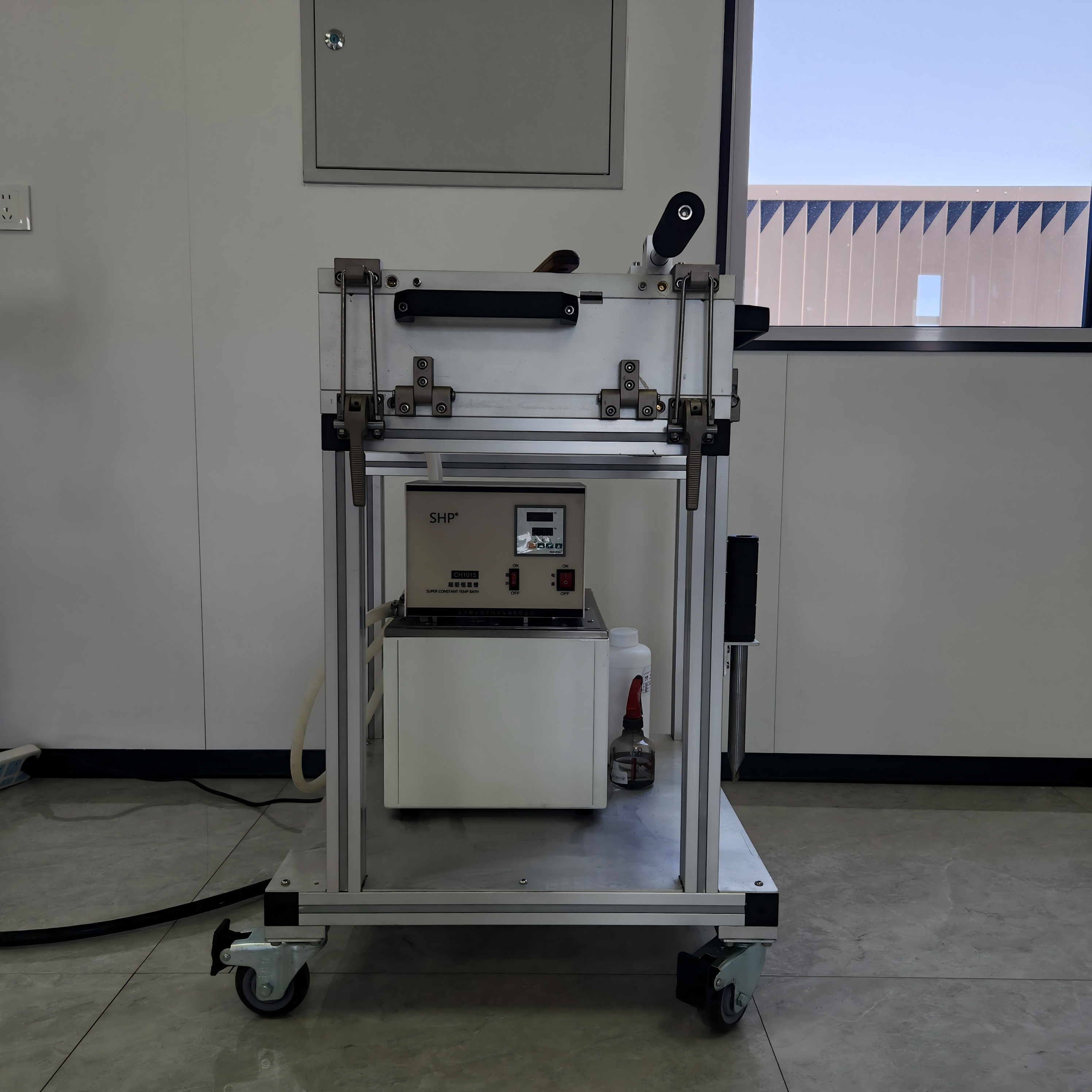
Processing check: mixing behaviour is where a viscosity band either fits the line or does not.
Use Cases: Where the Two Parameters Become Visible
Spray foam insulation — Poland, 500 mt over two years
A two-year project in Poland used 500 metric tons of product 3943 for spray foam applications. Product 3943 corresponds to the High Water-based series (XF-2003, XF-2006, XF-3153, XF-315G, XF-300W). Documented highlights include high mechanical strength, high wear resistance, resistance to high and low temperature cycling, hydrolysis resistance and aging resistance; the project achieved stable operation and covered wall spraying, insulation boards, soundproof flooring, leak-proof pipelines and composite materials.
Read against the parameter discussion, the choice is consistent: the water-based family sits at 1,500–3,000 CPS, a band suited to spraying, where the material has to atomise and wet the substrate quickly, and at moderate hydroxyl values between 170 ± 10 and 315 ± 15 mgKOH/g.
Spray application: a low-viscosity band is what allows the polyol to atomise and wet the substrate in a single pass.
Insulation industry — India, 100 mt
A second documented case covers 100 metric tons delivered to an insulation client in India, where the project achieved good thermal insulation performance. The recorded highlights are high strength and density, excellent thermal conductivity, fire retardancy and structural support of the pipeline.
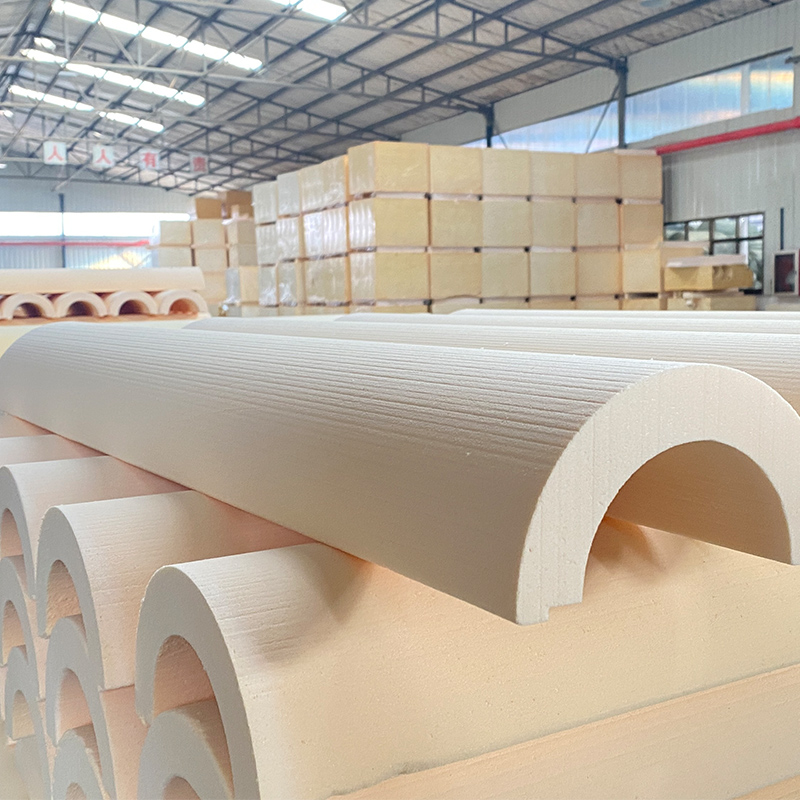
Pipeline insulation: high strength and density combined with fire retardancy are the requirements that drive the OHV selection here.
PIR sandwich panels, pipes and appliances
The Pentane System family is documented for home appliances, polyurethane pipes, sandwich panels and PIR systems. Within it, XF-2402N at 240 ± 10 mgKOH/g and XF-2020 at 200 ± 10 mgKOH/g occupy the mid band with viscosities under 8,000 ± 1,500 and 7,000 ± 1,000 CPS respectively, while XF-435 and XF-390 sit at the top of the OHV range for the most demanding rigidity requirements.
Adhesives, fertilizer coatings and mining
Adhesive grades XF-Z (60 ± 5 mgKOH/g) and XF-280 (280 ± 20 mgKOH/g) are documented for sandwich panel adhesives. The controlled-release fertilizer coating family — XF-270 at 260 ± 10, XF-B-3 at 300 ± 30 and XF-B-4 at 370 ± 20 mgKOH/g — runs at a tight viscosity band of 3,000 to 3,500 CPS. Mining grades KXF-350 at 350 ± 20 mgKOH/g and KXF-280 at 280 ± 15 mgKOH/g carry the lowest viscosities in the catalogue, 1,500 ± 500 and 1,000 ± 200 CPS.
Comparison Table: XINFA Polyester Polyol Grades by OHV and Viscosity
All figures below are taken from XINFA grade documentation. Viscosity is measured in CPS at 25 °C; acid value is expressed in mgKOH/g.
| Family | Grade | OHV (mgKOH/g) | Acid value | Moisture | Viscosity (CPS, 25 °C) |
|---|---|---|---|---|---|
| Phthalic Anhydride | XF-3152 | 315 ± 15 | ≤2.0 | ≤0.1% | 3,000 ± 500 |
| Phthalic Anhydride | XF-2412 | 260 ± 10 | ≤1.5 | ≤0.1% | 6,000 ± 1,500 |
| Phthalic Anhydride | XF-1752 | 175 ± 10 | ≤1.0 | ≤0.1% | <5,000 |
| Phthalic Anhydride | XF-200 | 195 ± 5 | ≤1.0 | ≤0.1% | 10,000–30,000 |
| High Flame Retardant | XF-2007 | 200 ± 10 | ≤2.0 | ≤0.1% | 15,000 ± 3,000 |
| High Flame Retardant | XF-250P | 260 ± 10 | ≤1.5 | ≤0.1% | 11,000 ± 2,000 |
| High Flame Retardant | XF-235P | 235 ± 15 | ≤2.0 | ≤0.15% | 3,000–6,000 |
| High Flame Retardant | XF-240P | 240 ± 15 | ≤2.0 | ≤0.15% | <5,000 |
| Pentane System | XF-435 | 500 ± 50 | ≤3.0 | ≤0.15% | 10,000 ± 2,000 |
| Pentane System | XF-390 | 400 ± 20 | ≤2.0 | ≤0.15% | 2,000 ± 500 |
| Pentane System | XF-360 | 370 ± 20 | ≤2.0 | ≤0.15% | 1,500 ± 500 |
| Pentane System | XF-2402N | 240 ± 10 | ≤1.5 | ≤0.1% | <8,000 ± 1,500 |
| Pentane System | XF-2020 | 200 ± 10 | ≤1.5 | ≤0.1% | <7,000 ± 1,000 |
| Mining | KXF-350 | 350 ± 20 | ≤2.0 | ≤0.1% | 1,500 ± 500 |
| Mining | KXF-280 | 280 ± 15 | ≤1.5 | ≤0.1% | 1,000 ± 200 |
| High Water-based | XF-2003 | 200 ± 10 | ≤1.5 | ≤0.1% | 2,000 ± 500 |
| High Water-based | XF-2006 | 170 ± 10 | ≤0.5 | ≤0.1% | 1,500 ± 500 |
| High Water-based | XF-3153 | 315 ± 15 | ≤2.0 | ≤0.1% | 1,800 ± 500 |
| High Water-based | XF-315G | 315 ± 15 | ≤2.0 | ≤0.1% | <3,000 ± 500 |
| High Water-based | XF-300W | 315 ± 15 | ≤1.5 | ≤0.1% | 2,000 ± 500 |
| Adhesive | XF-Z | 60 ± 5 | ≤5.0 | ≤0.15% | 10,000 ± 2,000 |
| Adhesive | XF-280 | 280 ± 20 | ≤3.0 | ≤0.1% | 15,000 (grade-sheet entry) |
| Fertilizer Coating | XF-270 | 260 ± 10 | ≤3 ± 0.2 | ≤0.1% | 3,000 ± 500 |
| Fertilizer Coating | XF-B-3 | 300 ± 30 | ≤3.0 | ≤0.15% | 3,000 ± 500 |
| Fertilizer Coating | XF-B-4 | 370 ± 20 | ≤3.0 | ≤0.15% | 3,500 ± 500 |
| Other | XF-235 | 230–245 | ≤2.0 | ≤0.15% | 10,500 ± 1,500 |
| Other | NXF-400 | 400 ± 20 | ≤2.0 | ≤0.15% | 3,000 ± 1,000 |
The same data, organised the way a buyer actually shortlists — by application:
| Documented application | Family to shortlist first | OHV range in that family | Viscosity range |
|---|---|---|---|
| Spraying insulation, high-water-based systems | High Water-based | 170 ± 10 to 315 ± 15 | 1,500–3,000 CPS |
| High flame retardant, PIR spraying | High Flame Retardant | 200 ± 10 to 260 ± 10 | 3,000–15,000 CPS |
| Sandwich panels, pipes, appliances, PIR system | Pentane System | 200 ± 10 to 500 ± 50 | 1,500–10,000 CPS |
| Spraying insulation, PU wood imitation, appliances | Phthalic Anhydride | 175 ± 10 to 315 ± 15 | 3,000–30,000 CPS |
| Sandwich panel adhesives | Adhesive | 60 ± 5 to 280 ± 20 | 10,000–15,000 CPS |
| Controlled-release fertilizer coating | Fertilizer Coating Agent | 260 ± 10 to 370 ± 20 | 3,000–3,500 CPS |
| Mining | Mining | 280 ± 15 to 350 ± 20 | 1,000–1,500 CPS |
| Spraying foam and sandwich panels | Other types (XF-235, NXF-400) | 230–245 and 400 ± 20 | 3,000–10,500 CPS |
Frequently Asked Questions
Are XINFA polyester polyol grades certified to recognised standards?
Yes. Hengshui Xinfa Polyurethane Materials Co., Ltd. holds ISO 9001:2015 (certificate 04322Q31390R1S, issued 6 June 2025 and valid to 14 July 2028), ISO 14001:2015 (certificate 04326E01332R101, issued 15 June 2026 and valid to 14 June 2029) and ISO 45001:2018 (certificate 04326S01211R101, issued 15 June 2026 and valid to 14 June 2029). All three were issued by Beijing United Intelligence Certification Co., Ltd. The scope covers the production of oligomeric polyester polyols, with related management activities included for the environmental and occupational health and safety systems.
What hydroxyl value range can XINFA supply?
Documented grades run from 60 ± 5 mgKOH/g on adhesive grade XF-Z to 500 ± 50 mgKOH/g on pentane system grade XF-435, spread across eight families: Phthalic Anhydride, High Flame Retardant, Pentane System, Mining, High Water-based, Adhesive, Controlled-Release Fertilizer Coating Agent, and an additional group covering XF-235 and NXF-400. Viscosity across the same portfolio runs from 1,000 ± 200 CPS to 10,000–30,000 CPS. Production is supported by a capacity of 50,000 tons of polyester polyol series products annually and a documented monthly capacity of 4,000 mt, with OEM/ODM customisation available for polyester polyol.
How should budget be planned around OHV and viscosity?
XINFA quotes grade by grade rather than publishing a list price, so the useful planning inputs are the documented commercial parameters: a minimum order quantity of 1 mt, a monthly capacity of 4,000 mt and a lead time of 15–20 days. Because the two parameters determine which family is quoted, the fastest route to an accurate figure is to send a full specification — application, target OHV band with tolerance, viscosity band, acid value and moisture limits, and base chemistry — rather than an enquiry for "polyester polyol".
Can I validate OHV and viscosity before committing to a production order?
Yes. XINFA reports 100% testing in its quality control process, and samples can be requested against a stated specification before scale-up. Validation has a documented track record: a two-year spray foam project in Poland used 500 metric tons of a High Water-based grade with stable operation reported across wall spraying, insulation boards, soundproof flooring, leak-proof pipelines and composite materials, and a 100 mt insulation delivery in India achieved good thermal insulation performance. Sample enquiries can be sent to admin@xinfapu.com or on WhatsApp at +86 166-3389-3646, quoting the target OHV and viscosity bands.
What is the lead time once a grade is confirmed?
The documented lead time is 15–20 days, against a monthly capacity of 4,000 mt and a minimum order quantity of 1 mt. Build two checks into that window: confirming the tolerance band your incoming inspection will use, and matching the catalyst package — for example TEDA A33, PC-5, PC-8 or PC-41 — to the hydroxyl value you selected. A complete grade specification sent with the enquiry keeps the order inside the standard lead time.
Conclusion: Two Numbers, One Specification
Hydroxyl value and viscosity are not interchangeable quality labels — they answer different questions. OHV tells you how many reactive sites the polyol brings to the isocyanate reaction and therefore how dense and rigid the cured network will be, from XF-Z at 60 ± 5 mgKOH/g through XF-2007 at 200 ± 10 up to XF-435 at 500 ± 50. Viscosity tells you whether the material will move through your pumps, mixing head and application equipment, from the 1,500–3,000 CPS High Water-based series to XF-200 at 10,000–30,000 CPS.
Write both into the specification, along with acid value, moisture, base chemistry and the tolerance band you will accept. Suppliers can quote against that document directly; they cannot quote reliably against a category name.
Next step: specify a grade and request a sample
Send the application, target OHV band, viscosity band, acid value and moisture limits, and the base chemistry you need. XINFA's technical team will match it to a documented grade — from the High Water-based series to the Pentane System and High Flame Retardant families — and confirm sample availability and the 15–20 day lead time.
Contact: Jessica · admin@xinfapu.com · Tel +86 156-3365-7995 · WhatsApp +86 166-3389-3646 · www.xinfapu.com
Download the full product catalogue: XINFA Polyester Polyol Brochure (PDF)