
Polyester Polyol Explained: Raw Materials, Key Specs, and Why They Matter
Polyester polyol is a hydroxyl-terminated polymer produced by reacting polycarboxylic acids or anhydrides with polyhydric alcohols, and it forms the polyol side of a polyurethane reaction. Two products sold under that same generic name can behave very differently in a spray gun, a panel laminator or a coating pan, because their raw materials and their four measured specifications — hydroxyl value, acid value, moisture and viscosity — are not the same.
This explainer is written for buyers and formulators at the first stage of sourcing. They know they need a polyester polyol; they do not yet know which numbers on a technical data sheet actually decide whether a grade will run in their process. The article covers the raw materials behind the chemistry, the four specifications that carry most of the decision weight, documented grade examples from XINFA's polyester polyol series, and a qualification sequence that can be applied to any supplier.
XINFA (Hengshui Xinfa Polyurethane Materials Co., Ltd., www.xinfapu.com) is a Chinese manufacturer of polyester polyol series products and polyurethane catalysts, located in the Salt Chemical Circular Economy Park in Jizhou City, Hebei Province. The facility covers 25,000 square metres, runs an annual production capacity of 80,000 tons and a polyester polyol series capacity of 50,000 tons per year, and holds ISO 9001, ISO 14001 and ISO 45001 management system certification. The specification values quoted throughout this article come from XINFA's published grade data.
What Polyester Polyol Actually Is
Definition first: a polyester polyol is a polymer whose backbone is built from ester linkages and whose chain ends carry hydroxyl (–OH) groups. The hydroxyl groups are the reactive sites. In a polyurethane system they react with isocyanate groups to form urethane bonds, which is why the number and accessibility of those –OH groups — expressed as hydroxyl value — appears first on every data sheet.
Two structural features follow from that definition and explain most of the behaviour buyers care about:
- The ester backbone comes from the acid or anhydride component. Aromatic acids such as phthalic anhydride (PA) and purified terephthalic acid (PTA) introduce aromatic rings into the chain; aliphatic diacids such as adipic acid (AA) introduce flexible methylene segments.
- The hydroxyl end groups come from the alcohol component. Diols such as diethylene glycol (DEG) extend chains, while a triol such as glycerol (GLY) introduces branching points that raise functionality and, with it, crosslink density.
Because both sides of the reaction can be varied, "polyester polyol" describes a category, not a specification. That distinction is the whole reason a technical data sheet exists.
The Problem: A Category Name Being Used as a Product Name
In first-stage sourcing, the most common failure is treating polyester polyol as a commodity that can be bought on price per ton alone. That assumption breaks down for three practical reasons.
- Hydroxyl value ranges widely inside the same category. XINFA's own portfolio runs from 60±5 mgKOH/g in the adhesive grade XF-Z to 500±50 mgKOH/g in the pentane system grade XF-435. These are not interchangeable materials in any formulation.
- Acid value and moisture limits are set by the application, not by habit. The same portfolio spans acid values from ≤0.5 mgKOH/g (XF-2006, high-water-based series) to ≤5.0 mgKOH/g (XF-Z), with moisture limits of ≤0.1% or ≤0.15% depending on grade.
- Viscosity decides whether a grade can physically be processed. A grade at 1,000±200 CPS at 25 °C (KXF-280) and a grade at 15,000±3,000 CPS at 25 °C (XF-2007) demand different pumps, temperatures and mixing energy.
The consequence for a new buyer is concrete: a grade that performs well in a sandwich panel line can be the wrong choice for a pentane-blown appliance foam, even though the invoice line reads the same. Specification matching, not name matching, is the first decision.
Industry Background: Where the Material Sits
Polyester polyols sit upstream of rigid foam, adhesives and coatings, so their demand tracks insulation and industrial construction activity. Future Market Insights estimated the global polyester polyol market at USD 10.1 billion in 2025 — a figure that reflects the size of the downstream foam, panel and coating base rather than any single application.
Within that base, XINFA's polyester polyol products are used in pipeline insulation, panels, household appliances, exterior wall insulation and cold storage, and the company exports to markets including the Middle East, India, Pakistan, Southeast Asia, Central Asia, Europe, North America and South America.
What matters at the discovery stage is the shape of the supply side: most polyester polyol consumption is application-specific, so manufacturers organise production by grade family rather than around one universal product. That is why a serious sourcing conversation starts with the application and the processing method, and only then moves to the data sheet.
Raw Materials: PA, PTA, AA, DEG and GLY
XINFA's polyester polyol series are documented as being made from PA, PTA, AA, DEG and GLY. In standard polyester polyol chemistry these five inputs are understood as follows, and the list explains why two grades with the same hydroxyl value can still differ in rigidity, reactivity profile and processing behaviour.
| Raw material | Role in the polymer | Typical effect on the finished polyol |
|---|---|---|
| PA (phthalic anhydride) | Aromatic anhydride; acid component | Aromatic backbone character supporting rigidity; the basis of the phthalic anhydride-based polyester polyol family |
| PTA (purified terephthalic acid) | Aromatic diacid; acid component | Aromatic backbone character from a difunctional acid, used alongside or instead of PA |
| AA (adipic acid) | Aliphatic diacid; acid component | Flexible aliphatic segments; generally softens the backbone relative to aromatic acids |
| DEG (diethylene glycol) | Diol; alcohol component | Chain extension and flexibility; part of the hydroxyl balance against the acid component |
| GLY (glycerol) | Triol; alcohol component | Branching and higher functionality; a lever for raising hydroxyl value and crosslink density |
The practical reading is that the acid component tends to govern rigidity and thermal character, while the alcohol component — particularly how much triol is in the blend — tends to govern functionality and therefore hydroxyl value. This is why suppliers publish separate families instead of one flat list: XINFA, for example, classifies XF-3152, XF-2412, XF-1752 and XF-2002 as a Phthalic Anhydride Polyester Polyol series used in spraying insulation, sandwich panels, polyurethane pipe, PU wood imitation and home appliances.
The Four Specifications That Decide Application Fit
Hydroxyl value (mgKOH/g)
Hydroxyl value measures how many hydroxyl groups are available for reaction, expressed as milligrams of potassium hydroxide equivalent per gram of polyol. It is the first number to read because it sets the stoichiometry of the system. A higher hydroxyl value means more reactive sites per unit weight, which generally means higher crosslink density, greater rigidity and a faster, more exothermic reaction. A lower hydroxyl value means fewer reactive sites, more flexibility and a longer processing window.
XINFA's grade data shows the spread plainly. XF-Z, an adhesive grade for sandwich panel adhesives, is specified at 60±5 mgKOH/g. XF-2020, in the pentane system series, is specified at 200±10 mgKOH/g. XF-435, also in the pentane system series, reaches 500±50 mgKOH/g. Those three values describe three formulation roles, not three quality tiers.
Acid value (mgKOH/g)
Acid value measures residual acidity in the finished polyol. It is a process-consistency indicator: it shows how completely the esterification reaction has been driven and how much acidic residue remains. For formulation work it matters because the amine catalyst package is balanced against the overall reactivity of the system, and residual acidity competes with that balance.
In XINFA's data, acid value specifications run from ≤0.5 mgKOH/g for XF-2006 (high-water-based series) and ≤1.5 mgKOH/g for KXF-280 (mining series) and XF-2003, up to ≤5.0 mgKOH/g for the adhesive grade XF-Z. The pattern is not arbitrary: adhesive systems are typically formulated with a different balance of polyol, isocyanate and catalyst than a PIR foam, so the tolerance moves with the application.
The catalyst side of that balance is a separate purchase, but the two are chosen together. Within XINFA's catalyst range, TEDA (triethylenediamine, CAS 280-57-9) is a white crystalline solid with purity ≥99% (GC), a melting point of 158–165 °C and use in polyurethane foams, elastomers and coatings; TEDA A33 (triethylene diamine 33%) contains 33.0–33.6% TEDA in DPG, with a water content of 0.15–0.35% and a relative density of 1.03. Neither substitutes for reading the polyol's acid value — they are the other half of the reactivity equation.
Moisture (%)
Moisture is the specification that quietly causes the most process problems. Water reacts with isocyanate, consuming material that was intended for the polyol and generating gas in the process. On a foam line that appears as variability in density and cell structure; in an adhesive or coating it appears as bubbles, hazing or inconsistent cure.
This is why the moisture limits in XINFA's polyester polyol data are tight across the portfolio: ≤0.1% for grades such as KXF-350, KXF-280, XF-2003, XF-280 and XF-270, and ≤0.15% for grades including XF-Z, XF-435, XF-390, XF-B-3, XF-B-4 and XF-235. For a new buyer, moisture is also a storage question — a grade that arrives within limit can drift out of limit if drums are left open in a humid environment.
Viscosity (CPS at 25 °C)
Viscosity describes how the polyol flows, and it decides whether a grade is compatible with the equipment on site. It is not a quality ranking: XF-2007, a high flame retardant grade intended for PIR spraying insulation, is specified at 15,000±3,000 CPS at 25 °C, while XF-3153 in the high-water-based series is specified at 1,800±500 CPS. The first suits a system designed for high-viscosity components; the second suits a system that needs the material to move quickly through pumps and lines.
Viscosity also interacts with temperature. Because all values are quoted at 25 °C, a buyer processing at a different temperature should expect a different effective viscosity and should confirm the handling window with the supplier before scaling up.
Worked example: NXF-400
A single grade shows how the four specifications combine. XINFA's NXF-400 is specified at a hydroxyl value of 400±20 mgKOH/g, an acid value of ≤2.0 mgKOH/g, a moisture content of ≤0.15% and a viscosity of 3000±1000 CPS at 25 °C.
Read together, that profile describes a material with a high concentration of reactive sites, low residual acidity, a controlled moisture ceiling and a moderate, pumpable viscosity. For a formulator, the hydroxyl value points to a highly crosslinked, rigid-leaning system, the acid value indicates a well-controlled esterification endpoint, and the viscosity indicates the grade can be handled without the high-viscosity equipment demanded by grades in the 10,000–15,000 CPS band. Whether it fits a specific line still depends on the isocyanate index, catalyst choice and processing temperature — which is why a data sheet is a starting point, not a decision.
How XINFA's Grade Families Map to Applications
Suppliers group grades by application because the application determines the specification window. XINFA's polyester polyol range is organised into the following families.
| Grade family | Models | Documented application focus |
|---|---|---|
| Adhesive grade polyester polyol | XF-Z, XF-280 | Sandwich panel adhesives |
| High water-based polyester polyol | XF-2003, XF-2006, XF-3153, XF-315G, XF-300W | High-water or full-water-based systems, spraying insulation, sandwich panels, polyurethane pipes |
| High flame retardant polyester polyol | XF-2007, XF-235P, XF-240P, XF-250P | PIR spraying insulation, sandwich panels, polyurethane pipes |
| Pentane system polyester polyol | XF-435, XF-390, XF-360, XF-2402N, XF-2020 | Home appliances, polyurethane pipes, sandwich panels, PIR systems |
| Mining polyester polyol | KXF-350, KXF-280 | Mining industry formulations |
| Controlled-release fertilizer coating agent | XF-270, XF-B-3, XF-B-4 | Controlled-release fertilizer coating |
| Phthalic anhydride polyester polyol | XF-3152, XF-2412, XF-1752, XF-2002 | Spraying insulation, sandwich panels, polyurethane pipe, PU wood imitation, home appliances |
| Spraying foam and panel grade | XF-235 | Spraying foam and sandwich panels |
Two families deserve a closer look at the discovery stage. The pentane system series spans the widest hydroxyl value range in the portfolio, from XF-2020 at 200±10 mgKOH/g to XF-435 at 500±50 mgKOH/g, which reflects how much the blowing agent and appliance cavity geometry influence the required reactivity. The high flame retardant series, by contrast, is defined by application performance rather than a single hydroxyl value: XF-2007 sits at 200±10 mgKOH/g with a viscosity of 15,000±3,000 CPS, XF-250P at 260±10 mgKOH/g with 11,000±2,000 CPS, XF-235P with an acid value of ≤2.0 mgKOH/g and a viscosity of 3,000–6,000 CPS, and XF-240P with a moisture limit of ≤0.15% and a viscosity below 5,000 CPS.
Step-by-Step: How to Qualify a Polyester Polyol Grade
- Define the process before the product. State whether the material will be sprayed, poured, laminated or applied as a coating, and at what temperature. Viscosity and reactivity requirements follow from that answer.
- Match hydroxyl value to the formulation role. Use the application as the filter: adhesive grades such as XF-Z sit at 60±5 mgKOH/g, while pentane system grades reach 500±50 mgKOH/g. If a proposed grade falls outside the band your formulation was built around, it is the formulation — not the grade — that you would be changing.
- Set an acid value tolerance you can work with. Decide whether your system needs the ≤0.5 mgKOH/g level of XF-2006 or can accept the ≤5.0 mgKOH/g level of XF-Z, then confirm the supplier's batch control against that number.
- Fix the moisture ceiling and the storage plan together. A ≤0.1% limit is only meaningful if drums are sealed and stored dry. Moisture is a joint responsibility between specification and handling.
- Check viscosity against real equipment. Compare the CPS value at 25 °C with the pumps, meters and mixing head on your line. A high-viscosity grade does not become processable simply because another plant uses it.
- Request the data sheet and a sample, then run a trial. Verify hydroxyl value, acid value, moisture and viscosity against the declared specification, then run the material in your own system with your own catalyst package. A trial result in your process is the only evidence that counts.
Use Cases: Where Specification Differences Become Visible
PIR sandwich panels and spray insulation
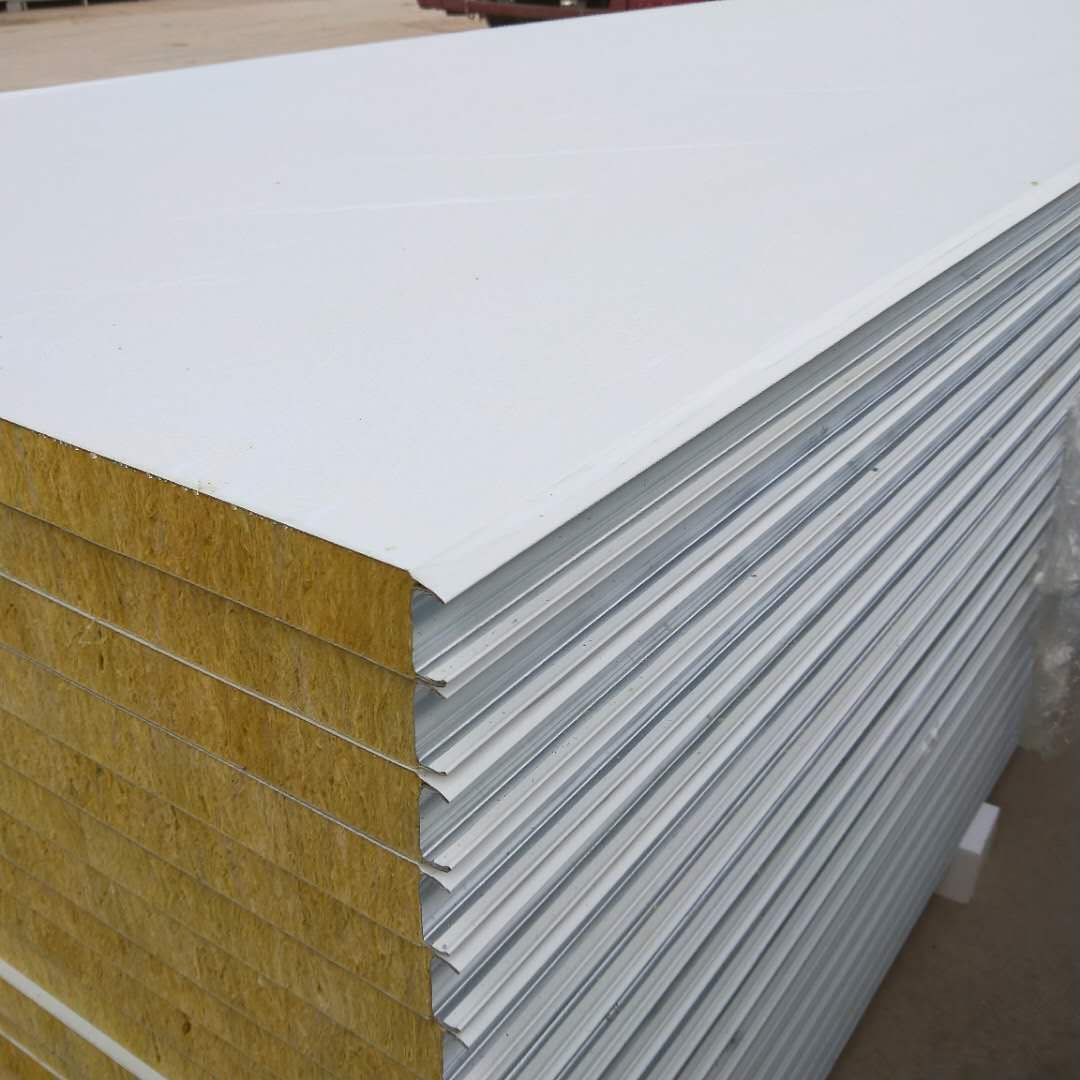
Panel and spray work is where the high flame retardant and phthalic anhydride-based families are used. XINFA documents the high flame retardant series for PIR spraying insulation, sandwich panels and polyurethane pipes, and the phthalic anhydride series for spraying insulation, sandwich panels, polyurethane pipe, PU wood imitation and home appliances. These systems balance polyol, isocyanate, blowing agent, flame retardant additive and catalyst together; TCPP (tris(1-chloro-2-propyl) phosphate), for example, appears in XINFA's range as a flame retardant additive with a phosphorus content of 9.0–9.8% and a chlorine content of 32%.
Home appliances and pentane systems
Appliance foam is a pentane-blown system with tight cavity-filling requirements, which is why the pentane system series covers such a wide hydroxyl value range. XF-390 at 400±20 mgKOH/g, XF-360 at 370±20 mgKOH/g, XF-2402N at 240±10 mgKOH/g and XF-2020 at 200±10 mgKOH/g give a formulator several reactivity levels inside one documented family, with XF-390 also specified at 2,000±500 CPS and an acid value of ≤2.0 mgKOH/g.
Mining formulations
The mining series is a two-grade family: KXF-350 at 350±20 mgKOH/g with a viscosity of 1,500±500 CPS, and KXF-280 at 280±15 mgKOH/g with 1,000±200 CPS. Both carry a moisture limit of ≤0.1% and acid value limits of ≤2.0 and ≤1.5 mgKOH/g respectively — a pair of constraints that matter in field conditions where humidity control is difficult.
Adhesives and coatings
The adhesive grade polyester polyol family consists of XF-Z and XF-280, both documented for sandwich panel adhesives, with a hydroxyl value range across the two models of 55 to 300 mgKOH/g. In coating work, the controlled-release fertilizer coating agent series — XF-270 at 260±10 mgKOH/g, XF-B-3 at 300±30 mgKOH/g and XF-B-4 at 370±20 mgKOH/g — applies the same principle to a different target: the release behaviour depends on the film formed by the polyol, so hydroxyl value and viscosity are selected against a release requirement rather than a foam requirement.
Comparison Table: Specification Snapshot Across Grade Families
The table below restates selected grades using only the values published in XINFA's grade data. It is a reading aid for the specifications described above, not a substitute for the current technical data sheet.
| Grade family | Model | Hydroxyl value (mgKOH/g) | Acid value (mgKOH/g) | Moisture (%) | Viscosity (CPS, 25 °C) |
|---|---|---|---|---|---|
| Adhesive | XF-Z | 60±5 | ≤5.0 | ≤0.15 | 10,000±2,000 |
| Adhesive | XF-280 | 280±20 | ≤3.0 | ≤0.1 | — |
| Mining | KXF-350 | 350±20 | ≤2.0 | ≤0.1 | 1,500±500 |
| Mining | KXF-280 | 280±15 | ≤1.5 | ≤0.1 | 1,000±200 |
| High flame retardant | XF-2007 | 200±10 | — | — | 15,000±3,000 |
| High flame retardant | XF-250P | 260±10 | — | — | 11,000±2,000 |
| High flame retardant | XF-240P | — | — | ≤0.15 | <5,000 |
| Pentane system | XF-435 | 500±50 | ≤3.0 | ≤0.15 | 10,000±2,000 |
| Pentane system | XF-390 | 400±20 | ≤2.0 | ≤0.15 | 2,000±500 |
| High water-based | XF-2003 | 200±10 | ≤1.5 | ≤0.1 | 2,000±500 |
| High water-based | XF-2006 | — | ≤0.5 | ≤0.1 | 1,500±500 |
| Controlled-release fertilizer coating | XF-B-4 | 370±20 | ≤3.0 | ≤0.15 | 3,500±500 |
| Spray / panel | NXF-400 | 400±20 | ≤2.0 | ≤0.15 | 3,000±1,000 |
"—" means the value is not stated in the grade data used for this article. Always confirm against the current technical data sheet before ordering.
Frequently Asked Questions
1. Which management system certifications cover XINFA's polyester polyol production?
XINFA holds ISO 9001 quality management system certification, ISO 14001 environmental management system certification and ISO 45001 occupational health and safety management system certification. Production takes place at the company's facility in the Salt Chemical Circular Economy Park in Jizhou City, Hebei Province, which covers 25,000 square metres and runs an annual production capacity of 80,000 tons, including 50,000 tons of polyester polyol series products. Buyers who need certification documents for supplier qualification can request them together with the technical data sheet.
2. Can XINFA supply grades beyond standard foam types, such as pentane systems, mining or controlled-release fertilizer coating?
Yes. The portfolio is organised as application families rather than one product: pentane system grades (XF-435, XF-390, XF-360, XF-2402N, XF-2020), mining grades (KXF-350, KXF-280), controlled-release fertilizer coating agents (XF-270, XF-B-3, XF-B-4), adhesive grades (XF-Z, XF-280), high flame retardant grades (XF-2007, XF-235P, XF-240P, XF-250P), high water-based grades (XF-2003, XF-2006, XF-3153, XF-315G, XF-300W) and phthalic anhydride-based grades (XF-3152, XF-2412, XF-1752, XF-2002). The company's R&D team comprises 13 engineers and technicians.
3. What drives the cost of a polyester polyol grade?
Cost follows the specification, not only the product name. The main drivers visible in the grade data are the raw material combination (PA, PTA, AA, DEG and GLY), the hydroxyl value target, how tight the acid value and moisture limits are, and the viscosity window the process requires. Two grades can carry different acid value ceilings — ≤0.5 mgKOH/g for XF-2006 against ≤5.0 mgKOH/g for XF-Z — and that difference reflects different production control requirements. Quotations should therefore be requested against a defined specification and application, not against the category name.
4. How should a new buyer evaluate a polyester polyol sample?
Start with the technical data sheet, then verify the four key figures — hydroxyl value, acid value, moisture and viscosity — against the declared values on arrival. After that, run the sample in your own system with your own isocyanate, catalyst package and processing temperature, and compare the result with your current material on the criteria that matter for your application: for foam, cell structure and dimensional stability; for adhesives, bond strength and open time; for coatings, film formation and cure. A sample that passes on paper but has not been trialled in your process is not yet qualified.
5. How do I request a quotation, a sample or the product catalogue?
Contact XINFA directly with your application, target hydroxyl value and any acid value, moisture or viscosity limits: email admin@xinfapu.com, telephone +86 156-3365-7995, or WhatsApp +86 166-3389-3646. The product catalogue is available from the download link at the end of this article. Including your processing method and required specification window in the first message shortens the technical review considerably.
Conclusion
Polyester polyol is a family of materials defined by chemistry, and the four specifications that matter most — hydroxyl value, acid value, moisture and viscosity — are what translate that chemistry into application fit. Hydroxyl value sets reactivity and crosslink density, acid value indicates process control, moisture protects the isocyanate balance, and viscosity determines whether a grade can physically run on your line. None of them can be assessed in isolation, and none of them makes a grade "better" than another: XF-Z at 60±5 mgKOH/g and XF-435 at 500±50 mgKOH/g are both correct materials in their intended systems.
For a first-stage buyer the sequence is straightforward: define the process, filter by grade family, read the four specifications against that process, and then verify with a sample in your own equipment. XINFA supplies these families from a 25,000 square metre facility operating under ISO 9001, ISO 14001 and ISO 45001 certification, and publishes the technical data needed to run that comparison.
Next Step: Request a Sample and Technical Data Sheet
Send your application, target hydroxyl value and any acid value, moisture or viscosity limits to the XINFA technical team. Samples, grade data sheets and quotations are issued against your specification.
Email: admin@xinfapu.com · Tel: +86 156-3365-7995 · WhatsApp: +86 166-3389-3646
Website: www.xinfapu.com · Catalogue: Download the XINFA product catalogue (PDF)
Have Questions or Need More Details?
Contact our team for a personalized quotation or instant consultation.
Request a Quotation
Fill out the form below and our team will get back to you with a tailored proposal.
WhatsApp Direct Chat
Prefer to chat in real-time? Message us on WhatsApp for instant assistance & quick answers.
- Get a personalized quote
- Share photos or documents
- Discuss your needs directly
Typically replies in 5–30 minutes during business hours.