
Polyester Polyol for Mining Industry: Application Guide for KXF-350 and KXF-280
Mining-industry polyurethane projects rarely fail because a raw material is unavailable. They fail because the wrong grade is specified during research and evaluation, and the mismatch only becomes visible later — in processing behaviour, in cure response, or in the finished system. For formulators building mining PU systems, XINFA supplies a dedicated Polyester Polyol for Mining series with two grades: KXF-350 and KXF-280. This application guide explains what separates the two grades, what the raw-material basis means for performance, and how to match a grade to a mining project requirement using verified product data only.
The short answer, for buyers who need the decision immediately:
- KXF-350 — hydroxyl value 350±20 mgKOH/g, acid value ≤2.0 mgKOH/g, moisture ≤0.1%, viscosity 1500±500 CPS at 25°C.
- KXF-280 — hydroxyl value 280±15 mgKOH/g, acid value ≤1.5 mgKOH/g, moisture ≤0.1%, viscosity 1000±200 CPS at 25°C.
- Both grades share the same declared raw-material basis (PA, PTA, AA, DEG, GLY) and are designated for mining applications.
The practical rule follows from the numbers. The higher hydroxyl value and higher viscosity of KXF-350 point toward systems that need more crosslinking and greater structural demand. The lower hydroxyl value and lower viscosity of KXF-280 point toward systems where mixing, dosing, and a gentler reaction profile matter more.

Why Mining Polyol Grade Selection Is Harder Than It Looks
Two grades from the same series can look deceptively similar on a one-page datasheet. KXF-350 and KXF-280 are both aromatic polyester polyols designated for mining, both carry a moisture limit of ≤0.1%, and both are covered by the same quality, environmental, and occupational health certifications. What separates them is a narrow band of numbers — hydroxyl value and viscosity — and that narrow band drives a wide difference in how a formulation behaves.
Three practical difficulties make the decision harder than the datasheet suggests:
- Parameter interaction. Hydroxyl value and viscosity move together in this pair. A formulator cannot adjust one without accepting the other, so the trade-off has to be decided deliberately rather than tuned away.
- Late discovery of a mismatch. A grade that is wrong for a processing line often performs acceptably in a small trial and only reveals the problem at production scale, when reformulation is expensive.
- Compliance confirmation. Buyers in regulated markets must confirm that a specific model — not only the supplier — sits inside the certification scope, because a supplier-level certificate does not automatically extend to every product.
This guide resolves all three, starting with the market context that explains why mining grades exist as a separate product family at all.
Polyester Polyol Demand and Where Mining Fits
Polyester polyol is a mainstream industrial raw material, and the aromatic segment that mining grades belong to is a well-defined part of that market.
The global polyester polyol market was estimated at USD 9,654.2 million in 2024 and is projected to reach USD 15,033.3 million by 2033, according to Grand View Research. Asia Pacific dominated the market with a 43.7% revenue share in 2024, and China is expected to grow at the highest CAGR of 5.2% through 2033. Within the broader category, the global aromatic polyester polyols market was valued at USD 1.9 billion in 2026 and is projected to grow at a CAGR of 5.9% to reach USD 2.8 billion by 2033, according to Persistence Market Research.
The supplier landscape is concentrated but not closed. Key global players in the polyester polyol market include Stepan, Huafon Group, COIM, BASF SE, Covestro AG, and Dow Inc., with the top three holding roughly a 30% share. That leaves a meaningful role for specialist producers — particularly for application-specific grades such as those developed for mining.
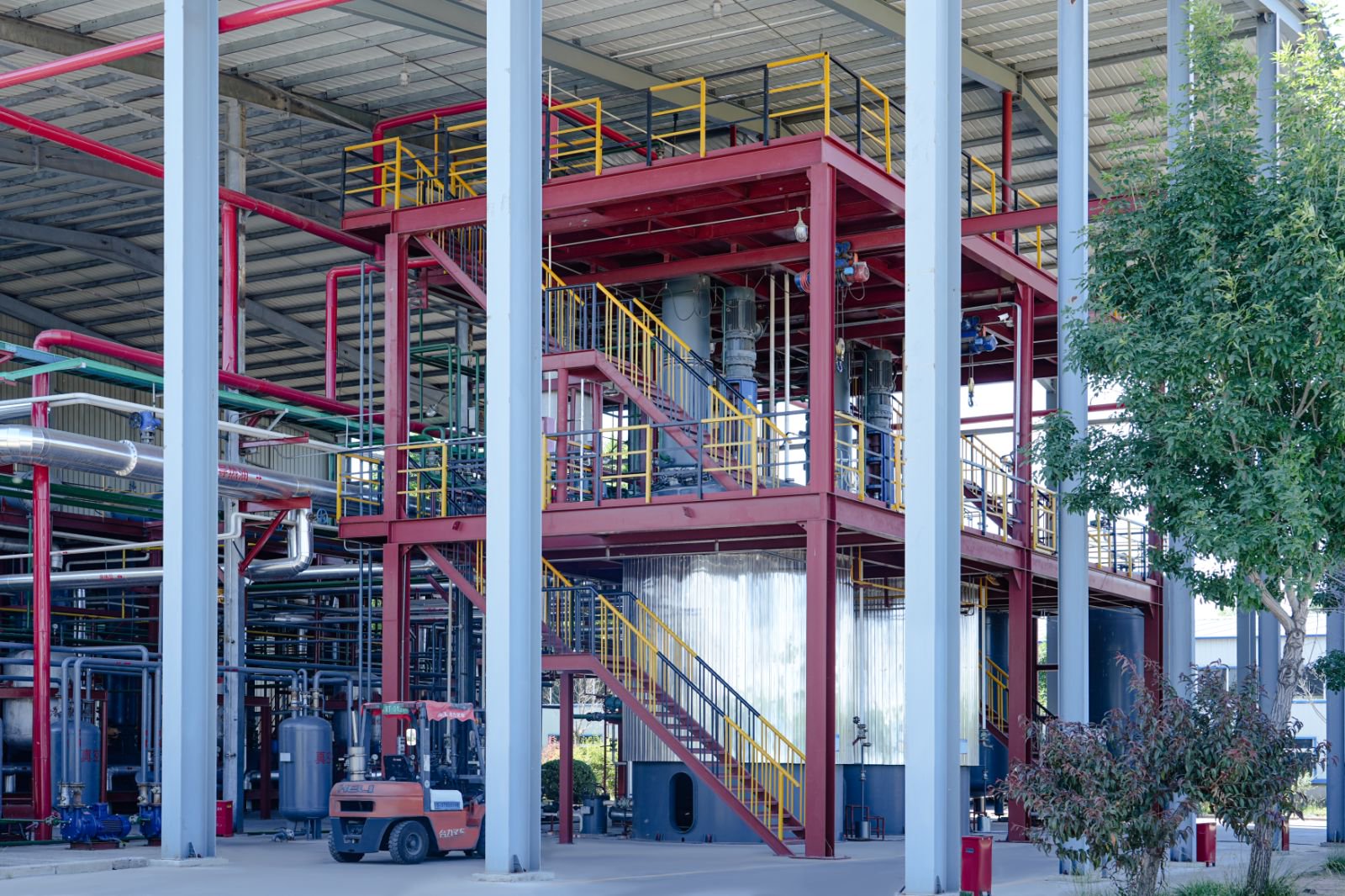
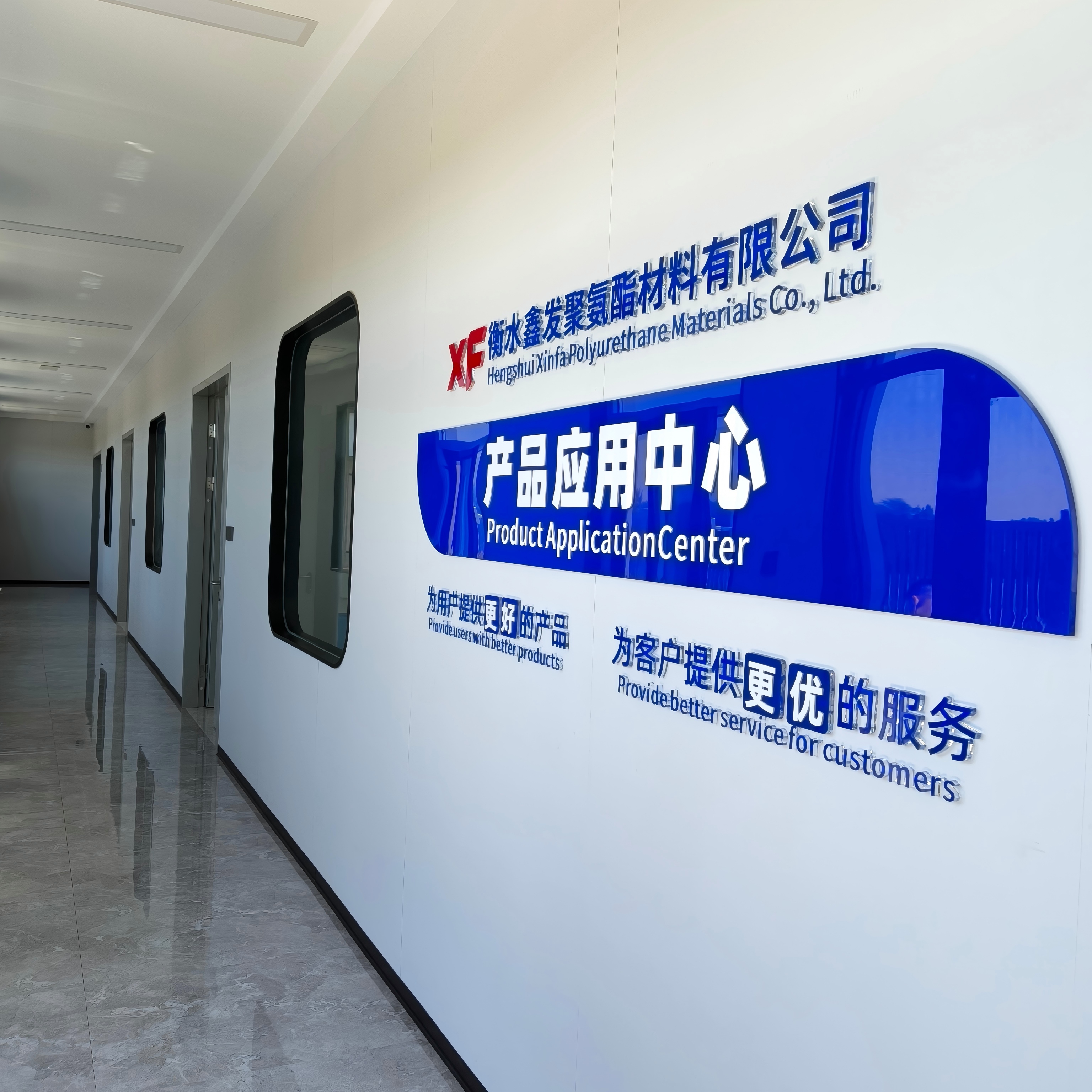
XINFA (Hengshui Xinfa Polyurethane Materials Co., Ltd.) is a Chinese producer of polyester polyol and polyurethane materials, established in 2010, with its factory located in the Salt Chemical Circular Economy Park in Jizhou City, Hebei Province. The company operates a 25,000 square meter site with modern production workshops, R&D centres, and a complete system of environmental protection facilities. Through the introduction of more than 30 sets of intelligent equipment, it has achieved a large-scale production capacity of 50,000 tons of polyester polyol series products annually. Mining grades sit inside that portfolio, alongside polyurethane catalysts and flame retardants that are used in the same PU systems.
What KXF-350 and KXF-280 Actually Are
Both grades belong to XINFA's Polyester Polyol for Mining series. They are aromatic polyester polyols, sold under the model designations KXF-350 and KXF-280, and the declared applicable industry for both is mining.
The raw-material basis
The declared raw-material basis for both mining grades is PA, PTA, AA, DEG, and GLY — commonly phthalic anhydride, purified terephthalic acid, adipic acid, diethylene glycol, and glycerol. This is the same aromatic polyester polyol chemistry that XINFA applies across its wider polyol range, and it is the reason the mining grades are described as aromatic rather than aliphatic.
For a buyer, the raw-material basis matters because it determines the family the product belongs to, and therefore which processing routes, catalyst packages, and downstream expectations apply. Because KXF-350 and KXF-280 share the same basis, the selection decision is not about chemistry family — it is about which point on the hydroxyl value and viscosity curve fits the project.
KXF-350 profile
KXF-350 is the higher-hydroxyl grade of the pair. Its verified specification is:
- Hydroxyl value: 350±20 mgKOH/g
- Acid value: ≤2.0 mgKOH/g
- Moisture: ≤0.1%
- Viscosity: 1500±500 CPS at 25°C
The ±20 mgKOH/g hydroxyl window and the ±500 CPS viscosity window describe a grade that is specified tightly enough to be predictable, while still allowing normal production tolerance. This is the grade to specify first when a mining formulation needs a higher concentration of reactive hydroxyl groups.
KXF-280 profile
KXF-280 is the lower-hydroxyl, lower-viscosity grade. Its verified specification is:
- Hydroxyl value: 280±15 mgKOH/g
- Acid value: ≤1.5 mgKOH/g
- Moisture: ≤0.1%
- Viscosity: 1000±200 CPS at 25°C
Two differences are worth flagging. KXF-280 carries a tighter acid value limit (≤1.5 mgKOH/g versus ≤2.0 mgKOH/g), and a much tighter viscosity window (±200 CPS versus ±500 CPS). Where a formulation is sensitive to residual acidity or to batch-to-batch flow consistency, those tighter limits are a genuine selection argument, not a marketing detail.
Because KXF-280 is the lower-viscosity product, it also presents less resistance in pumping, dosing, and mixing equipment — a practical consideration wherever the mining system is processed at ambient or controlled temperature without strong heating.
Reading the Four Selection Parameters
Four numbers decide the grade. Understanding what each one controls removes most of the guesswork.
1. Hydroxyl value (mgKOH/g). This measures the concentration of reactive hydroxyl groups available for reaction with isocyanate. A higher hydroxyl value provides more reaction sites, which generally drives higher crosslink density in the cured system. KXF-350 at 350±20 mgKOH/g and KXF-280 at 280±15 mgKOH/g therefore sit at two different points on that curve, and the choice should follow the structural demand of the mining application rather than habit.
2. Acid value (mgKOH/g). This measures residual acidity. Acid value influences the balance with the isocyanate component and the catalyst package, and it is one of the parameters most often used as a stability indicator. Both grades are tightly specified — ≤2.0 mgKOH/g for KXF-350 and ≤1.5 mgKOH/g for KXF-280 — and where a formulation tolerates less residual acidity, KXF-280 is the safer starting point.
3. Moisture (%). Residual water reacts with isocyanate and can generate carbon dioxide, which introduces variability into a system. Both mining grades are specified at ≤0.1% moisture — the same tight limit — so moisture is a shared baseline rather than a differentiator in this pair. It is still the parameter most worth re-checking on the certificate of analysis, because moisture failures are rarely visible until processing.
4. Viscosity (CPS at 25°C). This controls handling: pumping, dosing, mixing, and wet-out. At 1500±500 CPS, KXF-350 is the more viscous grade; at 1000±200 CPS, KXF-280 is the more fluid and more consistent one. Where a mining line runs at ambient temperature or uses low-shear mixing equipment, the lower viscosity of KXF-280 reduces the risk of incomplete mixing.
Step-by-Step: How to Choose Between KXF-350 and KXF-280
The selection sequence below is built only on verified product parameters and on standard formulation practice. It is intended to be run in order, because later steps depend on earlier ones.
Step 1 — Fix the processing route. Before looking at the polyol, decide how the mining PU system will be processed: temperature, mixing method, dosing equipment, and pot life requirements. This determines whether viscosity or reactivity is the binding constraint.
Step 2 — Translate the route into a viscosity target. If the line is low-shear, ambient-temperature, or long-run, start with KXF-280 at 1000±200 CPS. If the process includes heated dosing or high-shear mixing, the 1500±500 CPS of KXF-350 is manageable and its other advantages become available.
Step 3 — Set the structural target. Decide whether the mining system needs a higher or lower crosslink density. Higher structural demand points to KXF-350 (350±20 mgKOH/g). Where a lower, more controlled reaction profile is preferred, KXF-280 (280±15 mgKOH/g) is the appropriate grade.
Step 4 — Check acid value against the catalyst package. Match the residual acidity allowance to the catalysts and additives in the formulation. If the system is sensitive to acidity, the ≤1.5 mgKOH/g limit of KXF-280 is the more conservative specification; if ≤2.0 mgKOH/g is acceptable, KXF-350 remains available.
Step 5 — Confirm the moisture limit is workable. Both grades deliver ≤0.1% moisture, so confirm that downstream storage and handling will not reintroduce moisture before the polyol reaches the mixing head.
Step 6 — Verify certification coverage for the exact model. Do not rely on a supplier-level certificate alone. Check that KXF-350 or KXF-280 appears in the applicable product list of the certificate — see the compliance section below.
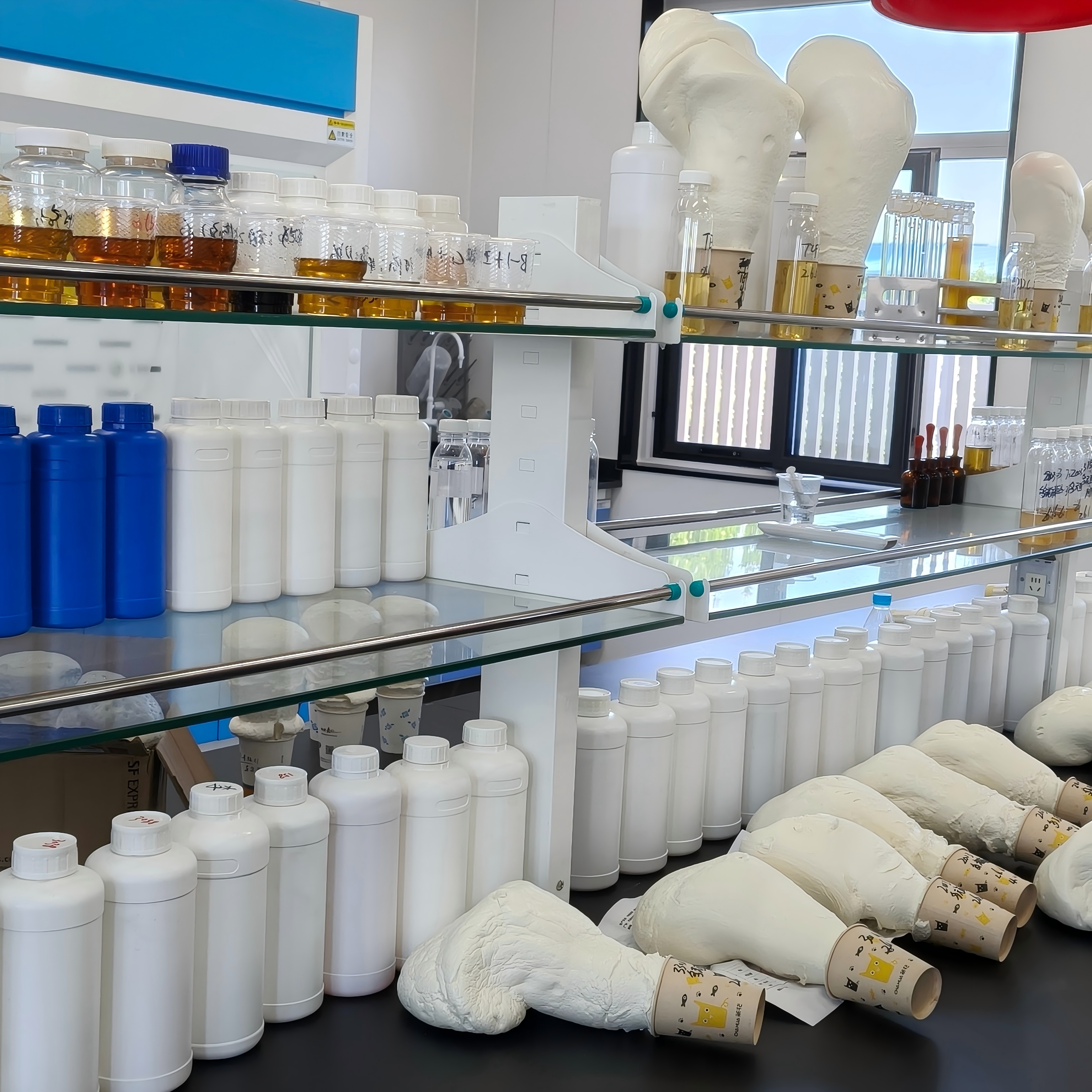
Step 7 — Validate with a sample before committing. Reproduce the production processing route during the sample trial, not a simplified lab version. Because the two grades differ mainly in hydroxyl value and viscosity, a trial that skips the real mixing and dosing conditions will not distinguish them reliably.
Application Scenarios: Matching Grade to Mining Requirement
Because both grades are designated for mining and share the same raw-material basis, the practical difference between them appears at the scenario level rather than the chemistry level. Three recurring scenarios cover most evaluation cases.
Scenario A — Higher structural demand. Where the mining system must carry higher mechanical demand and the formulation is built around a higher crosslink density, KXF-350 is the natural first specification, given its 350±20 mgKOH/g hydroxyl value. The trade-off is that the higher viscosity must be compatible with the processing line.
Scenario B — Processing-limited or ambient-temperature lines. Where the constraint is mixing, pumping, or batch consistency rather than structural performance, KXF-280 is the logical starting point. Its 1000±200 CPS viscosity is both lower and more tightly controlled, and its ≤1.5 mgKOH/g acid value adds an additional margin where acidity is a concern.
Scenario C — Moisture-critical systems. In mining environments where humidity and water exposure are part of the operating reality, the shared ≤0.1% moisture limit on both grades removes this parameter from the selection decision and lets formulators focus on hydroxyl value and viscosity instead. The relevant control is downstream storage and handling, not grade choice.
In PU systems that also require catalysis and flame-retardant components, XINFA supplies matching products from the same portfolio — including TEDA, TEDA A33, PC-5, PC-8, PC-9, PC-41, and the phosphorus-based flame retardants TCPP and TEP — which simplifies sourcing when a mining formulation is assembled from multiple components.
KXF-350 vs KXF-280: Verified Specification Comparison
| Parameter | KXF-350 | KXF-280 |
|---|---|---|
| Hydroxyl value (mgKOH/g) | 350±20 | 280±15 |
| Acid value (mgKOH/g) | ≤2.0 | ≤1.5 |
| Moisture (%) | ≤0.1 | ≤0.1 |
| Viscosity at 25°C (CPS) | 1500±500 | 1000±200 |
| Raw-material basis | PA, PTA, AA, DEG, GLY | PA, PTA, AA, DEG, GLY |
| Applicable industry | Mining | Mining |
Read together, the table makes the decision rule explicit: choose on hydroxyl value and viscosity, treat acid value as a secondary constraint in acidity-sensitive systems, and treat moisture as an identical baseline for both grades.
Compliance and Supply Considerations
Certification is a constraint question, not a marketing question.
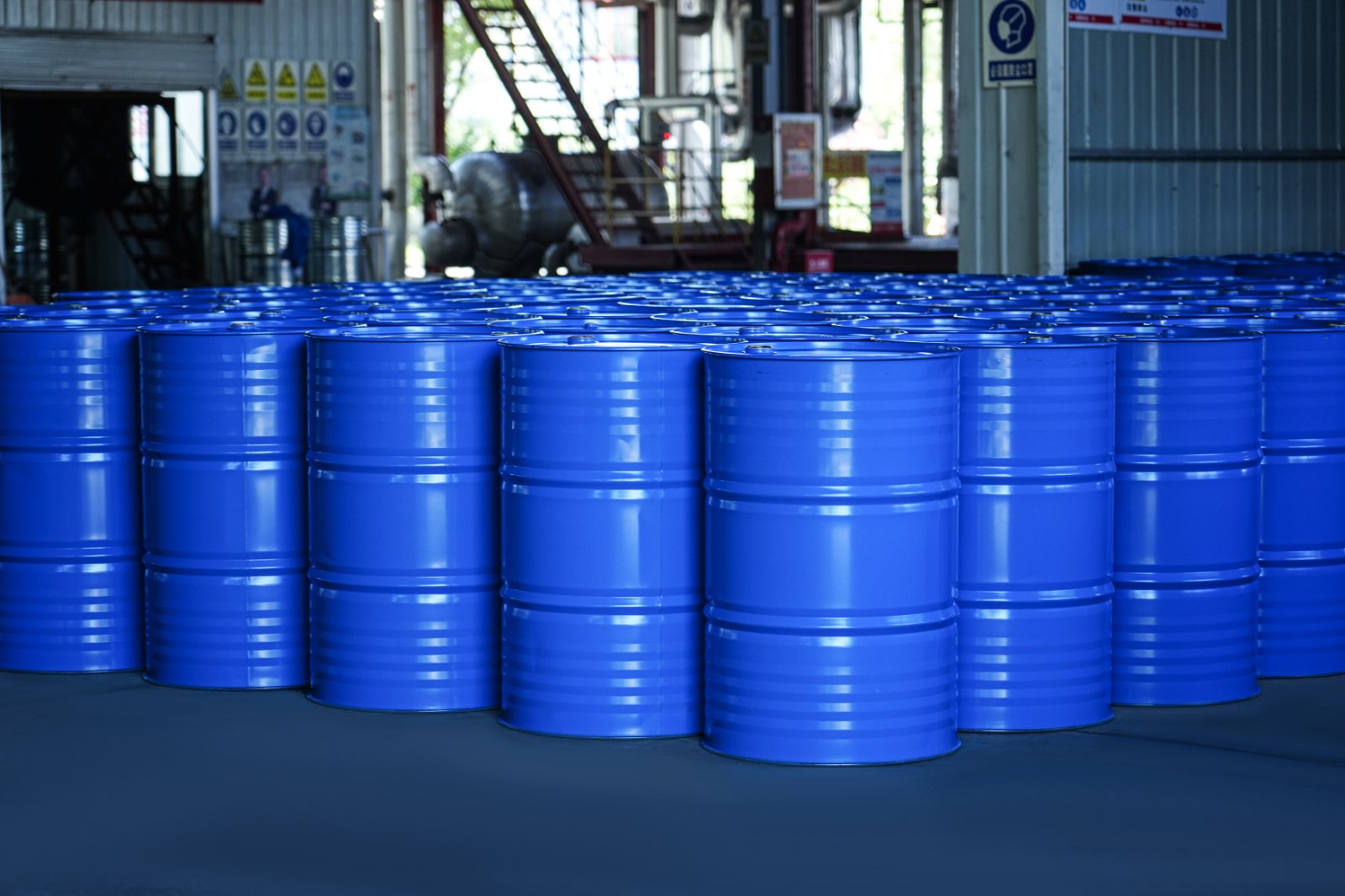
XINFA holds three management system certifications, and the mining grades KXF-350 and KXF-280 appear in the applicable product list of each one. The ISO 9001 quality management certificate (number 04322Q31390R1S) applies the standard GB/T19001-2016 / ISO 9001:2015, was issued on 2025-06-06 and is valid to 2028-07-14. The ISO 14001 environmental management certificate (number 04326E01332R101) applies GB/T 24001-2016 / ISO 14001:2015, was issued on 2026-06-15 and is valid to 2029-06-14. The ISO 45001 occupational health and safety certificate (number 04326S01211R101) applies GB/T 45001-2020 / ISO 45001:2018, issued on 2026-06-15 and valid to 2029-06-14. All three were issued by Beijing United Intelligence Certification Co., Ltd., and the certified scope is the production of oligomeric polyester polyols and related management activities.
On supply, XINFA operates an OEM/ODM production mode for polyester polyol, with a monthly capacity of 4,000 mt, a minimum order quantity of 1 mt, and a stated lead time of 15–20 days. Quality control is described as 100% testing, and after-sales support covers technical support and product training. Export markets include the EU, Middle East, Southeast Asia, Central Asia, India, Pakistan, South America, and North America. To support global trade, the company established a wholly-owned subsidiary, Hebei Xinshe Technology Co., Ltd., in Shijiazhuang, which handles the import and export of polyurethane materials and related products.
Frequently Asked Questions
1. Are KXF-350 and KXF-280 covered by XINFA's certifications?
Yes. Both mining grades appear in the applicable product lists of XINFA's three management system certificates. ISO 9001 (certificate 04322Q31390R1S, standard GB/T19001-2016 / ISO 9001:2015) was issued on 2025-06-06 and is valid to 2028-07-14. ISO 14001 (certificate 04326E01332R101, standard GB/T 24001-2016 / ISO 14001:2015) and ISO 45001 (certificate 04326S01211R101, standard GB/T 45001-2020 / ISO 45001:2018) were both issued on 2026-06-15 and are valid to 2029-06-14. All three were issued by Beijing United Intelligence Certification Co., Ltd., with a certified scope covering the production of oligomeric polyester polyols and related management activities.
2. Can XINFA supply or customize mining-grade polyester polyol at scale?
Yes. XINFA operates an OEM/ODM production mode for polyester polyol, with a monthly capacity of 4,000 mt and 100% testing as its quality control standard. Customization is offered for polyester polyol, and after-sales support includes technical support and product training. The company's overall polyester polyol series production capacity is 50,000 tons annually, supported by more than 30 sets of intelligent equipment at its 25,000 square meter facility in Jizhou City, Hebei Province.
3. What is the minimum order quantity for a mining-grade polyester polyol?
The minimum order quantity for XINFA polyester polyol is 1 mt. Commercial terms depend on the grade selected, order volume, packaging, and delivery destination, so pricing is handled as a quotation rather than a published list price. Buyers comparing KXF-350 and KXF-280 for a mining project should request a quote for both grades so the comparison reflects identical commercial conditions.
4. Can I evaluate KXF-350 before placing a production order?
Sample evaluation can be requested directly from XINFA. Because KXF-350 and KXF-280 differ mainly in hydroxyl value and viscosity, a useful trial reproduces the intended production conditions — the same mixing, dosing, temperature, and cure route — rather than a simplified laboratory setup. That way the comparison reflects how each grade behaves on the actual mining line. Samples can be requested through the XINFA website at www.xinfapu.com or through the contact details at the end of this guide.
5. What is the lead time for a mining-grade polyester polyol order?
XINFA states a lead time of 15–20 days. Export experience covers the EU, Middle East, Southeast Asia, Central Asia, India, Pakistan, South America, and North America, and international trade is handled through the company's wholly-owned subsidiary, Hebei Xinshe Technology Co., Ltd., based in Shijiazhuang, Hebei Province.
Conclusion
Choosing between KXF-350 and KXF-280 is a specification decision, not a brand decision. Both grades belong to XINFA's Polyester Polyol for Mining series, share the same aromatic raw-material basis of PA, PTA, AA, DEG, and GLY, and both carry a moisture limit of ≤0.1%. The difference is where each one sits on the hydroxyl value and viscosity curve.
Specify KXF-350 (350±20 mgKOH/g, 1500±500 CPS at 25°C) when the mining formulation needs higher reactive hydroxyl content and the process can handle the higher viscosity. Specify KXF-280 (280±15 mgKOH/g, 1000±200 CPS at 25°C) when easier mixing and dosing, a tighter viscosity window, and a lower acid value limit of ≤1.5 mgKOH/g are the governing constraints. In both cases, confirm that the exact model is listed within the certification scope and validate the choice with a sample that reproduces the real processing route.
XINFA (Hengshui Xinfa Polyurethane Materials Co., Ltd.) produces polyester polyol and polyurethane materials at its facility in Jizhou City, Hebei Province, with 50,000 tons of annual polyester polyol series capacity and OEM/ODM support, and distributes globally through its subsidiary Hebei Xinshe Technology Co., Ltd.
Next step — sample, specification sheet, or quotation
To evaluate KXF-350 or KXF-280 for a mining project, request a sample, a grade-specific specification sheet, or a quotation directly from XINFA. Technical support and product training are available as part of the after-sales service.
Website: www.xinfapu.com | Blog: blog.xinfapu.com
Email: admin@xinfapu.com | Tel: +86 156-3365-7995 | WhatsApp: +86 166-3389-3646
Product brochure (open and download): XINFA Polyester Polyol Brochure