Top Rated Polyester Polyols for Sandwich Panel Adhesives: XINFA Product Recommendations
A sandwich panel holds together at two chemically different places: the adhesive bond line that ties the coated steel or aluminium skin to the core, and the rigid foam core itself. Those two jobs rarely accept the same polyester polyol. Buyers who issue one generic polyol enquiry for both usually end up with an adhesive that flows too deep into the core, opens too slowly for the line speed, or drifts between batches.
This guide ranks five XINFA polyester polyol grades against the specific constraints of sandwich panel adhesive work — hydroxyl value, viscosity, acid value, moisture, certification status and application role — and explains the selection logic behind each position. For the adhesive layer itself, the highest-ranked grade is XF-Z, an adhesive-grade polyester polyol specified at a hydroxyl value of 60±5 mgKOH/g and a viscosity of 10,000±2,000 CPS at 25°C.
The Real Selection Problem: One Word, Two Different Jobs
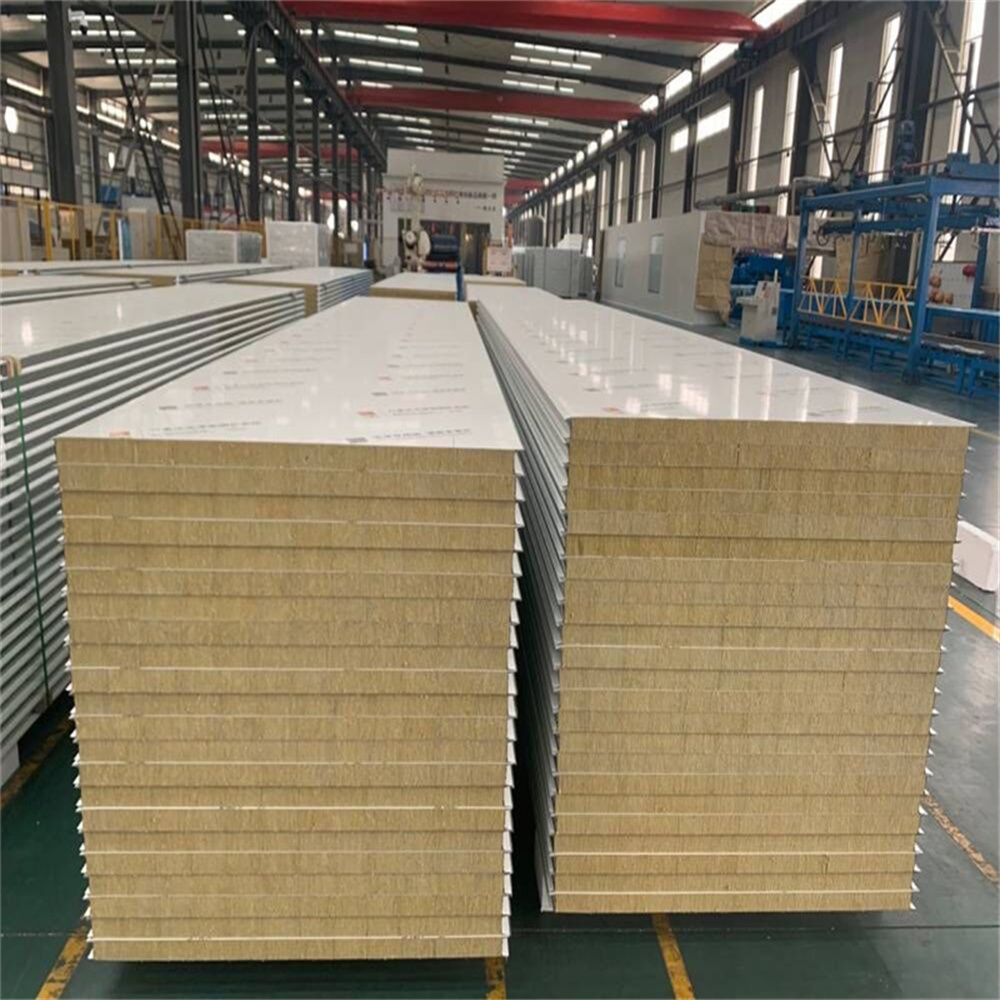
In a continuously produced sandwich panel, the adhesive layer and the foam core are asked to do opposite things. The adhesive must wet a smooth, low-surface-energy metal skin, stay where it is applied, and build handling strength quickly enough for the line. The core must expand, fill the cavity, and deliver thermal insulation with the required fire performance.
Polyester polyols are used in both positions, which is exactly why generic sourcing fails. A grade that performs well as a panel core polyol may be far too reactive and far too thin for the bond line, and a grade designed for adhesion may not deliver the foam density a PIR core needs. Because ester-based polyols are generally recognised for good adhesion to metal substrates relative to polyether polyols, the adhesive layer is where the choice of polyester chemistry matters most.
The failure modes are consistent and expensive. If the adhesive polyol flows too freely, it wicks into the porous core and starves the bond line. If reactivity is mismatched to line speed, the panel is either still tacky at stacking or already gelled in the mixing head. If acid value or moisture sits outside the datasheet window, the system consumes isocyanate unpredictably and the foam can show bubbles or variable density. And if the delivered batch drifts from the approved sample, the whole formulation has to be re-tuned on the line.
That is why the practical selection constraints are narrow and measurable: hydroxyl value, viscosity, acid value, moisture, batch-to-batch consistency, and documentary certification.
Industry Background: Why Panel-Grade Specification Is Tightening
Demand for rigid insulation continues to pull polyester polyol volumes upward. Grand View Research estimated the global polyester polyol market at USD 9,654.2 million in 2024, projected to reach USD 15,033.3 million by 2033, with Asia Pacific accounting for a 43.7% revenue share in 2024 and China expected to grow at the highest CAGR of 5.2% through 2033. Within that market, aromatic polyester polyols — the family to which most panel and adhesive grades belong — were valued at USD 1.9 billion in 2026 and are projected to reach USD 2.8 billion by 2033, a CAGR of 5.9%, according to Persistence Market Research.
Regulation is the second driver. The EU Energy Performance of Buildings Directive (EU) 2024/1275 keeps sustained pressure on insulation performance, and rigid PU and PIR insulation remains a key volume anchor for polyester polyols. Where insulation performance is regulated, the bond line and the core are specified more tightly rather than more loosely.
The supply side is concentrated but not closed. Stepan, Huafon Group, COIM, BASF SE, Covestro AG and Dow Inc. are among the key global players in the polyester polyol market, with the top three holding roughly a 30% share according to QYResearch and related industry reports. For buyers, the practical consequence is that grades must be compared on published specifications and documentation rather than on brand familiarity.
Detailed Solution: The XINFA Polyester Polyol Range for Sandwich Panel Adhesives
Hengshui Xinfa Polyurethane Materials Co., Ltd. (XINFA) is a Chinese manufacturer of polyurethane raw materials and polyester polyols, established in 2010 with its production plant in the Salt Chemical Circular Economy Park in Jizhou City, Hebei Province. The facility covers 25,000 square metres and operates more than 30 sets of intelligent equipment, supporting an annual polyester polyol series capacity of 50,000 tons, with 13 management and research and development technicians. Export activity is handled through the company’s wholly owned subsidiary, Hebei Xinshe Technology Co., Ltd., in Shijiazhuang.
The quality system behind these grades is documented and auditable: ISO 9001 (certificate 04322Q31390R1S, standard GB/T19001-2016 / ISO 9001:2015, issued 2025-06-06 and valid to 2028-07-14), ISO 14001 (certificate 04326E01332R101, standard GB/T 24001-2016 / ISO 14001:2015, valid 2026-06-15 to 2029-06-14) and ISO 45001 (certificate 04326S01211R101, standard GB/T 45001-2020 / ISO 45001:2018, valid 2026-06-15 to 2029-06-14), all issued by Beijing United Intelligence Certification Co., Ltd., with the ISO 9001 scope covering the production of oligomeric polyester polyols.

#1 XF-Z — the adhesive-layer reference grade
XF-Z is classified by XINFA as a Polyester Polyol for Adhesive, with the stated applicable industry of sandwich panel adhesives. Its published specification is hydroxyl value 60±5 mgKOH/g, acid value ≤5.0 mgKOH/g, moisture ≤0.15% and viscosity 10,000±2,000 CPS at 25°C. The raw material basis is PA, PTA, AA, DEG and GLY.
Two numbers explain its first-place position. A hydroxyl value of 60±5 mgKOH/g places XF-Z at the low-reactivity end of the adhesive range, which supports a controlled reaction and a longer working window at the bond line. The 10,000±2,000 CPS viscosity supports bond-line retention: a higher-viscosity adhesive tends to stay where it is applied rather than penetrating deeply into the foam core. Together, that combination of moderate reactivity and high viscosity is the reason this grade is recommended first for skin-to-core bonding.
#2 XF-280 — the higher-hydroxyl companion in the same series
XF-280 belongs to the same Polyester Polyol for Adhesive classification, with a published hydroxyl value of 280±20 mgKOH/g, acid value ≤3.0 mgKOH/g and moisture ≤0.1%. It shares the same raw material basis as XF-Z.
The logic for ranking it second is complementary rather than subordinate. A higher hydroxyl value means more reactive sites per unit mass, which formulators use when the adhesive system has to build strength faster or reach a higher cross-link density. The trade-off is a shorter working time, so XF-280 is normally selected when the line or the substrate demands it, not by default.
#3 XF-2007 — core grade for flame-retardant panel systems
XF-2007 is classified as a High Flame Retardant Polyester Polyol, specified at hydroxyl value 200±10 mgKOH/g, acid value ≤2.0 mgKOH/g, moisture ≤0.1% and viscosity 15,000±3,000 CPS at 25°C. XINFA lists its applicable industries as high flame retardant applications, PIR spraying insulation, sandwich panels and polyurethane pipes, and the grade is covered by ISO 9001:2015 certification.
This grade is ranked third because it addresses the other half of the panel: the core. XINFA’s application data for sandwich panel production describes a PIR system running 24/7 on a PIR production system, with high flame retardant performance, low odour and stable foaming performance as the defining requirements. Where fire performance is the governing constraint, this is the grade that belongs in the specification.
#4 XF-2412 — phthalic anhydride-based grade for aromatic panel systems
XF-2412 is part of the Phthalic Anhydride Polyester Polyol family, specified at hydroxyl value 260±10 mgKOH/g, acid value ≤1.5 mgKOH/g, moisture ≤0.1% and viscosity 6,000±1,500 CPS at 25°C. XINFA lists spraying insulation, sandwich panels, polyurethane pipe, PU wood imitation and home appliances among its applications.
The mid-range hydroxyl value and lower viscosity make this grade a flow-oriented option for aromatic panel systems where core filling and processing behaviour matter more than bond-line retention. Its tighter acid value limit (≤1.5 mgKOH/g) also makes it attractive where formulation stability is a priority.
#5 XF-235 — general panel and spraying foam grade
XF-235 is listed as a general polyester polyol for spraying foam and sandwich panels, specified at hydroxyl value 230–245 mgKOH/g, acid value ≤2.0 mgKOH/g, moisture ≤0.15% and viscosity 10,500±1,500 CPS at 25°C.
It closes the list because it is the broadest grade in the set. The wider hydroxyl window is forgiving across mixed panel and spraying foam production, which is useful for buyers running more than one product line, but it is not the first choice when a single, tightly specified bond line is the objective.
Step-by-Step Breakdown: How to Choose a Grade for a Panel Line
Step 1 — Define the bond line first. Separate the adhesive layer requirement from the core requirement before issuing any enquiry. Write down the substrate (coated steel, aluminium, or other), the core type, and the panel line speed. A single grade rarely satisfies both positions.
Step 2 — Match hydroxyl value to the reactivity you need. Hydroxyl value indicates how many reactive hydroxyl groups are available to react with isocyanate. Lower values such as the 60±5 mgKOH/g of XF-Z support a controlled reaction and a longer open time; higher values such as the 280±20 mgKOH/g of XF-280 provide more reactive sites per unit mass for faster build.
Step 3 — Match viscosity to the application method. Viscosity governs how the adhesive behaves between the mixing head and the substrate. XF-Z at 10,000±2,000 CPS is specified for adhesive use where the applied film must remain at the bond line; lower-viscosity grades such as XF-2412 at 6,000±1,500 CPS flow more readily in core and filling applications.
Step 4 — Check acid value and moisture against the datasheet limits. For XF-Z these are ≤5.0 mgKOH/g and ≤0.15%; for XF-280, ≤3.0 mgKOH/g and ≤0.1%. Moisture above the stated limit consumes isocyanate and can generate gas in the system, which is why these limits are written into the specification rather than treated as guidance.
Step 5 — Verify documentation, not just the sample. Ask for the certificate numbers and validity dates. XINFA’s ISO 9001 certificate 04322Q31390R1S covers the production of oligomeric polyester polyols and remains valid to 2028-07-14; ISO 14001 certificate 04326E01332R101 and ISO 45001 certificate 04326S01211R101 are valid to 2029-06-14.
Step 6 — Match the catalyst system alongside the polyol. Polyol and catalyst are selected as one system. XINFA supplies amine and organometallic catalysts including PC-5 (PMDETA, CAS 3030-47-5), PC-8 (DMCHA, CAS 98-94-2), PC-41 (CAS 15875-13-5), TEDA A33 (triethylenediamine 33%), T-9 (stannous octoate, CAS 301-10-0) and the phosphate flame retardants TEP (CAS 78-40-0) and TCPP (CAS 13674-84-5), so polyol and catalyst can be matched within a single supply relationship.
Step 7 — Run a line trial, then lock the supply plan. Validate on the actual line before committing volume. XINFA applies 100% testing in quality control, offers technical support and product training, and operates an OEM/ODM model. For planning, the published commercial parameters are a minimum order quantity of 1 mt, monthly capacity of 4,000 mt and a standard lead time of 15–20 days.

Use Cases: Where These Grades Have Been Applied
PIR sandwich panel production. XINFA’s application record for sandwich panels describes a PIR system operated 24/7 on a PIR production system under normal temperature and conventional production conditions, with the stated special requirements of high flame retardant performance, low odour and stable foaming performance. This is the scenario in which XF-2007, XF-2412 and XF-235 are typically specified for the core, with XF-Z or XF-280 supporting the adhesive layer.
Spraying foam customer, Poland. A customer in the spraying foam industry took 500 mt over a two-year supply relationship, with reported stable operation across wall spraying, insulation boards, soundproof flooring, leak-proof pipelines and composite materials. The stated performance highlights were high mechanical strength, high wear resistance, resistance to high and low temperature cycling, hydrolysis resistance and ageing resistance.
Insulation customer, India. An insulation industry customer took 100 mt over two years, reporting good thermal insulation results. The stated highlights were high strength and density, thermal conductivity performance, fire retardant behaviour and structural support of the pipeline.
These cases are not presented as adhesive peel-strength test results. They are supply and application records showing that the grades have been run continuously in insulation and panel-adjacent production, which is the evidence that matters when a buyer is evaluating whether a supplier can hold a specification over a multi-year relationship.
Comparison Table: XINFA Grades for Panel and Adhesive Applications
| Rank | Grade | Classification | Hydroxyl value (mgKOH/g) | Acid value (mgKOH/g) | Moisture (%) | Viscosity (CPS, 25°C) | Primary role in panel construction |
|---|---|---|---|---|---|---|---|
| 1 | XF-Z | Polyester Polyol for Adhesive | 60±5 | ≤5.0 | ≤0.15 | 10,000±2,000 | Skin-to-core adhesive layer; bond-line retention with controlled reactivity |
| 2 | XF-280 | Polyester Polyol for Adhesive | 280±20 | ≤3.0 | ≤0.1 | — | Higher-hydroxyl companion for adhesive systems needing faster build |
| 3 | XF-2007 | High Flame Retardant Polyester Polyol | 200±10 | ≤2.0 | ≤0.1 | 15,000±3,000 | PIR panel core where flame retardancy governs |
| 4 | XF-2412 | Phthalic Anhydride Polyester Polyol | 260±10 | ≤1.5 | ≤0.1 | 6,000±1,500 | Aromatic panel core with flow-oriented processing |
| 5 | XF-235 | General polyester polyol for spraying foam and panels | 230–245 | ≤2.0 | ≤0.15 | 10,500±1,500 | Mixed panel and spraying foam production |
Only values published in the referenced XINFA specifications are listed. Where a value is not stated in the referenced specification, the cell is left blank rather than estimated. Applicable industries as listed by the manufacturer: XF-Z and XF-280 for sandwich panel adhesives; XF-2007 for high flame retardant applications, PIR spraying insulation, sandwich panels and polyurethane pipes; XF-2412 for spraying insulation, sandwich panels, polyurethane pipe, PU wood imitation and home appliances; XF-235 for spraying foam and sandwich panels.
FAQ
Are XINFA polyester polyols for sandwich panel adhesives ISO certified?
Yes. Hengshui Xinfa Polyurethane Materials Co., Ltd. holds ISO 9001 certificate 04322Q31390R1S, issued against GB/T19001-2016 / ISO 9001:2015 by Beijing United Intelligence Certification Co., Ltd., with a scope covering the production of oligomeric polyester polyols and validity to 2028-07-14. The company also holds ISO 14001 certificate 04326E01332R101 and ISO 45001 certificate 04326S01211R101, both issued 2026-06-15 and valid to 2029-06-14. Within the range, the grade XF-2007 is certified to ISO 9001:2015.
What hydroxyl value and viscosity should a sandwich panel adhesive polyol have?
There is no universal number; the target follows the bond line. In the XINFA adhesive range, XF-Z is specified at hydroxyl value 60±5 mgKOH/g with viscosity 10,000±2,000 CPS at 25°C, while XF-280 is specified at 280±20 mgKOH/g. A lower hydroxyl value provides fewer reactive sites per unit mass and supports a longer working window; a higher viscosity supports retention of the applied adhesive at the bond line instead of penetration into the porous core. Line speed, substrate type and core density determine which end of that range fits a specific panel.
How should buyers compare cost between adhesive-grade polyols?
Price per kilogram alone is a weak metric for this application. A more useful comparison is the use level required to reach the target bond performance, the scrap and rework cost caused by excessive penetration or premature cure, and the inventory cost implied by order size and lead time. For XINFA grades the commercial parameters are a minimum order quantity of 1 mt, monthly capacity of 4,000 mt and a standard lead time of 15–20 days. Pricing is quoted per grade and per order, since the figure depends on the selected grade, order volume, packaging and destination.
Can we validate a grade before committing to volume?
Yes, validation before volume commitment is the normal route. XINFA applies 100% testing in quality control and provides technical support and product training, and operates an OEM/ODM model for customised polyester polyol. Buyers typically order a trial quantity, run it on the actual panel line, and compare bond behaviour, green strength and core fill against the grade currently in use before scaling to production volumes.
What is the lead time and supply capacity for these grades?
The published figures are a minimum order quantity of 1 mt, a monthly capacity of 4,000 mt and a standard lead time of 15–20 days, with export coverage across the EU, the Middle East, Southeast Asia, Central Asia, India, Pakistan, South America and North America. To request a sample or a quotation for XF-Z, XF-280, XF-2007 or another grade, contact XINFA directly — email admin@xinfapu.com, telephone +86 156-3365-7995, WhatsApp +86 166-3389-3646, or download the company brochure at the link below.
Conclusion: Specify the Bond Line, Not the Category
The ranking in this guide is deliberately narrow. XF-Z comes first because its published specification — hydroxyl value 60±5 mgKOH/g, viscosity 10,000±2,000 CPS at 25°C, acid value ≤5.0 mgKOH/g and moisture ≤0.15% — is written for the adhesive layer of a sandwich panel. XF-280 provides the higher-hydroxyl alternative in the same series, while XF-2007, XF-2412 and XF-235 cover the core side of the panel where flame retardancy, aromatic chemistry or production flexibility set the constraint.
The broader point is that performance-based selection beats generic sourcing. A panel line does not fail because the polyol was expensive or because the supplier was unfamiliar; it fails because the hydroxyl value, viscosity, acid value or moisture did not match the job. Choosing on those four numbers, and verifying them against certificate numbers and batch testing, is what converts a purchase order into a predictable production result.
Next Step: Sample, Quote or Technical Support
XINFA supplies adhesive-grade and panel-grade polyester polyols with published technical data sheets, ISO 9001 / ISO 14001 / ISO 45001 certification, 100% batch testing and OEM/ODM customisation. Minimum order quantity 1 mt, monthly capacity 4,000 mt, standard lead time 15–20 days.
Email: admin@xinfapu.com | Tel: +86 156-3365-7995 | WhatsApp: +86 166-3389-3646
Website: www.xinfapu.com | Blog: blog.xinfapu.com