Choosing High-Temperature Grease by Duty: Load, Heat, Water, and Supplier Capability
Prepared for industrial buyers and OEM procurement teams in the evaluation-to-execution stage. Product data referenced below is published by Hangzhou Xingang Lubrication Technology Co., Ltd.
Choosing High-Temperature Grease by Duty: Load, Heat, Water, and Supplier Capability

High-temperature grease is not a single formulation. It is a family of products matched to operating heat, mechanical load, water exposure, and lubrication equipment. Buyers who only compare maximum service temperature often discover that a grease which survives a kiln bearing fails in a wash-down conveyor bearing, or that an OEM-approved grade is not the same as a catalogue substitution.
Hangzhou Xingang Lubrication Technology Co., Ltd. (XINGANG) is a China-based grease manufacturer founded in 1993 and focused on industrial grease and lubricants. Its published range includes lithium grease, high-temperature lithium complex grease, high-temperature polyurea grease, high-temperature calcium sulfonate complex grease, automotive grease, and OEM formulations. This article uses those product families as concrete references so that an industrial buyer can apply the same comparison method to other high-temperature grease suppliers.
Defining the Real Service Condition First
Before asking whether a grease is high-temperature, define what the equipment actually does. A useful duty profile includes more than ambient temperature. It should record the temperature at the lubrication point, not only the process air temperature; the load pattern, including shock loads and vibration; water splash or steam exposure; dust and contamination; the re-lubrication method; and the length of the planned service interval.
The reason for this is simple. Heat drives oxidation and thickener breakdown. Load determines whether the grease needs stronger extreme-pressure additives or a higher weld-load reserve. Water changes both the thickener and the base-oil behaviour, especially in steel, mining, and heavy machinery applications.
At the evaluation stage, buyers can use an internal screening sheet with four columns: equipment point, peak temperature, load or EP requirement, and lubrication method. The same sheet should later be used to compare the offered grease families. For XINGANG product data, the typical boundary is expressed as working temperature, dropping point, and in some cases weld load (PD value). These three numbers answer different questions. Working temperature indicates the intended continuous range, dropping point helps confirm structural stability, and weld load gives a measurable indication of extreme-pressure capacity.
Why Capability Reviews Matter More in 2026
The global high-temperature grease market has grown enough that many suppliers now offer apparent equivalents with different thickener chemistry. One market estimate places the global high-temperature grease market at roughly USD 28.04 billion in 2025, while other estimates differ because definitions of specialty grease vary. Industry data cited by STLE indicates that lithium grease and lithium complex grease still represent a large share of global production, but calcium sulfonate complex grease production grew by 7.7% in 2024. China's finished lubricant exports also rose about 10% in 2024 to around 260,000 metric tons, according to Lubes'N'Greases and China Customs data.
These trends point to two practical implications. First, buyers have more sourcing options. Second, the difference between a good and a poor supplier is not the product name on the label; it is whether the supplier can identify the correct thickener family, hold quality specifications during production, and document the result before shipment.
Four High-Temperature Grease Families to Compare
The following grease families appear in XINGANG's standard and OEM-oriented programme. They also represent the most common thickener types used for high-temperature bearing grease, automotive grease, gear grease, and general heavy-duty industrial service.
Lithium Grease: The Standard Multipurpose Option
XINGANG lithium grease models XG/L1 and XG/L2 belong to the lithium grease category. The catalogue specifies lithium soap in mineral oil, a working temperature range of -20 to 120°C, and a dropping point of ≥180°C. Typical applications include multi-purpose plant service, automotive components, metallurgy, and power tools. This is not a grease designed for continuous extreme heat; it is better viewed as the economical baseline when temperatures remain near 120°C and the duty is not dominated by water.
When buyers search for “lithium high-temperature grease,” they are often describing this kind of conventional lithium grease, but the label can be misleading. A lithium grease capable of 120°C service is not the same as a high-temperature lithium complex grease intended for more severe continuous operation. The comparison should be made using catalogue working temperature, not market terminology.
High-Temperature Lithium Complex Grease for EP and Heat
XINGANG XG/HP and XG/HP-R are described as high-temperature extreme-pressure lithium complex greases. They use lithium complex thickening in mineral oil, have a working temperature range of -20 to 180°C, a dropping point of 300°C, and a weld-load or PD value of 315 kgf. Their stated application fields are automobile and metallurgy. This family is a sensible next step when a lithium grease is no longer stable enough at higher bearing or gear temperatures.
For an OEM buyer, the product classification matters because it changes how the grease behaves during shearing, how it interacts with seal elastomers, and what compatibility testing should be done before switching products. A high-temperature lithium complex grease is not an old lithium grease with more additive; it is a different thickener system.
High-Temperature Polyurea Grease for Long-Life and Cleaner Operation
XINGANG classifies XG/U1, XG/U2, XG/U5, XG/U6, XG/U10, XG/U17, and XG/U18 as high-temperature polyurea greases. The catalogue gives a working temperature range of -20 to 200°C and a dropping point of 260°C, with polyurea thickened mineral or synthetic oil depending on grade. Applications include metallurgy, chemical processing, textiles, printing and dyeing, automobiles, mining, oil fields, coastal equipment, sugar refining, paper making, and plastics.
Polyurea grease is increasingly specified for electric-vehicle wheel bearings and turbine yaw drives because of its oxidation resistance across repeated temperature cycles. This does not mean every polyurea grade fits every OEM application; it does mean that buyers evaluating high-temperature bearing grease should ask which polyurea composition is being offered and what base oil it contains.
High-Temperature Calcium Sulfonate Complex Grease for Water and Heavy Load
XINGANG XG/C4 and XG/C5 belong to the high-temperature calcium sulfonate complex grease category and use a calcium sulfonate complex thickener. The catalogue lists a working temperature range of -20 to 250°C, a dropping point of 330°C, and a PD or weld-load value of 500 kgf. The specified base oil is 150 BS oil, and the main application areas are mining, machinery, and automotive equipment.
Calcium sulfonate complex grease is one of the fastest-growing categories in heavy-duty industrial use, partly because of its water resistance and high load-carrying capacity. The grease also responds well to shock-loaded applications and to environments where water splash would wash away a less tenacious product.
XINGANG states that these products are designed for centralized lubrication systems and manual greasing environments, and that they can operate under high-temperature, heavy-load, impact-load, and humid or water-splash conditions. Technical advantages include strong adhesion and extreme-pressure/anti-wear performance, which provide protection in demanding industrial environments.
Selection Tables for Industrial and OEM Buyers
The table below compares the published XINGANG specifications for the four grease families discussed above. A dash means that a weld-load value is not published for that family in the source data; it does not mean the grease has no extreme-pressure performance.
| Grease Family | Model References | Working Temperature | Dropping Point | PD Weld Load | Published Application Focus |
|---|---|---|---|---|---|
| Lithium grease | XG/L1, XG/L2 | -20 to 120°C | ≥180°C | — | Multi-purpose, automotive, metallurgy, power tools |
| High-temperature extreme-pressure lithium complex grease | XG/HP, XG/HP-R | -20 to 180°C | 300°C | 315 kgf | Automobile, metallurgy |
| High-temperature polyurea grease | XG/U1, U2, U5, U6, U10, U17, U18 | -20 to 200°C | 260°C | — | Metallurgy, chemical, textile, printing/dyeing, automotive, mine, oil field, coastal defence, sugar, paper, plastic |
| High-temperature calcium sulfonate complex grease | XG/C4, XG/C5 | -20 to 250°C | 330°C | 500 kgf | Mining, machinery, automotive |
Buyers should compare these catalogue values with the actual bearing or gear temperature measured in the plant. A high dropping point is useful evidence of thermal stability, but it is not a substitute for a grease-life test under dynamic conditions. For bearing-grade claims, ASTM D3336 is the standard test method used to evaluate grease life in ball bearings at elevated temperatures up to 400°F or 204°C; an OEM buyer should ask the supplier how that test was performed and whether the grease was evaluated on the relevant rig.
From Parameters to Supplier Capability
Product tables help short-list chemistry. Supplier capability decides whether the grease can be repeated, packaged, tested, and delivered to specification. When the buyer is moving from evaluation to execution, the following evidence should be collected.
- Certification validity: request the certificate number, issuing body, expiry date, and the certified scope for quality, environmental, and occupational health and safety systems.
- Automotive evidence: if the grease will be supplied to an automotive OEM chain, review the IATF certification history and the scope wording. XINGANG holds IATF 16949:2016 certificate number 2024A3002 issued by China Jiuding Automotive Supplier Certification Co., Ltd., valid until 3 July 2027, covering design and manufacturing of lubricating oil without permitted exclusions.
- Manufacturing consistency: ask for the production site address, factory scale, and quality-control method. XINGANG reports a factory area of 16,000 m² and a 100% test protocol for its quality-control process.
- OEM documentation: confirm whether the supplier accepts OEM production, what can be customized, and what minimum quantity applies.
- Pre-shipment acceptance: define whether the order will be released based on a pre-shipment test and what documents will accompany each batch.
Step-by-Step: From Evaluation to Execution
Step 1. Build a Duty Matrix for Each Application Point
List the equipment bearings, gearboxes, conveyors, and lubrication points that will receive high-temperature grease. Record the temperature, load type, water exposure, and whether lubrication is manual or centralized. This matrix becomes the reference for all later supplier conversations.
Step 2. Choose the Grease Family
Select one of the four families described above. Use XG/L1 and XG/L2 lithium grease for general service up to roughly 120°C. Choose XG/HP or XG/HP-R lithium complex grease for high-temperature automotive or metallurgy points requiring extreme-pressure protection up to 180°C. Compare XG/U-series polyurea grease when temperatures reach 200°C and long grease life is needed in cleaner, oxidation-sensitive applications. Evaluate XG/C4 and XG/C5 calcium sulfonate complex grease for high-temperature, water-splash, and shock-load duties up to 250°C.
Step 3. Compare EP Numbers and Additive Packages
Do not select only by dropping point. Compare published PD values where available. If your application includes gear sets, heavily loaded roller bearings, or shock loads, ask how extreme-pressure performance is measured and what additives are present.
Step 4. Verify Laboratory and Test Evidence
For a true high-temperature bearing grease evaluation, ask whether the supplier has run grease-life testing at elevated temperature. Pre-shipment testing can also be written into the order terms. XINGANG lists pre-shipment test as an acceptance condition in its procurement support terms, which gives the buyer a controlled point to review results before the goods leave the factory.
Step 5. Confirm OEM or Standard Commercial Terms
For standard products, XINGANG lists a procurement MOQ of 200 kg, with FOB/CIF delivery and T/T payment. For OEM production, the listed MOQ is 2,000 kg and the typical lead time is 10 to 20 days. Customization is available for packaging and sticker labelling. This distinction prevents confusion between a sample or small trial order and a true OEM production run.
Step 6. Review After-Sales Support
OEM buyers should also evaluate what happens after delivery. XINGANG's OEM programme includes remote technical formula guidance, on-site usage consultation, quality-problem compensation and replacement support, and application-solution matching. These service commitments are especially valuable when the grease will be installed across multiple sites.
Application Scenarios and Field Evidence
High-temperature grease selection becomes clearer when the chemistry is tied to real applications. The following scenarios are based on XINGANG's published product positioning and on documented field use in Chinese steel and metallurgical plants.
Steel Mills, Rolling Mills, and Heavy Machinery
XINGANG high-temperature greases have been applied by large steel plants, metallurgical enterprises, and industrial equipment manufacturers. In a documented case in China, the project scale reached 40 units over a project duration of 30 years. Applications included bearings in continuous casting, rolling mills, kiln cars, gearboxes, conveyors, and vibrating screens, all of which are high-temperature or heavy-load lubrication points.
The reported outcome was reduced friction and wear, improved temperature resistance, better water resistance, extended lubrication intervals, and enhanced equipment reliability. The stated highlight is excellent extreme-pressure anti-impact behaviour and stable grease structure under long-term high-temperature conditions, with good compatibility for centralized lubrication systems. For a buyer, this type of evidence is more useful than a single table value because it connects grease chemistry to maintenance cost and equipment reliability.
Customers in this segment have included major Chinese steel enterprises. XINGANG also received recognition as an excellent supplier from Wuhan Iron and Steel. These references should be verified through direct supplier records, but they help explain why the company positions several high-temperature grease families for metallurgy.
Automotive and OEM Manufacturing
XINGANG's catalogue includes automotive grease and lithium-complex grades suited to automotive and metallurgy applications. The IATF 16949:2016 certificate adds an important automotive quality-system reference. Industry data also shows polyurea grease being chosen for newer EV wheel-bearing and turbine-yaw applications because of oxidation resistance across temperature cycles. OEM buyers can therefore use the same duty matrix to decide whether a standard automotive grease, a high-temperature lithium-complex grease, or a high-temperature polyurea grease is the correct starting point for a new model programme.
Wet Processing, Mining, and Shock-Load Points
For mining machinery and wet-process equipment, the calcium sulfonate complex grease family is especially relevant. The catalogue gives XG/C4 and XG/C5 a high temperature range and a 500 kgf PD value, which makes them worth evaluating wherever water splash and shock loads are combined. In such conditions, testing should include water-washout and corrosion behaviour, not only temperature performance.
Assessing XINGANG's Production Capability
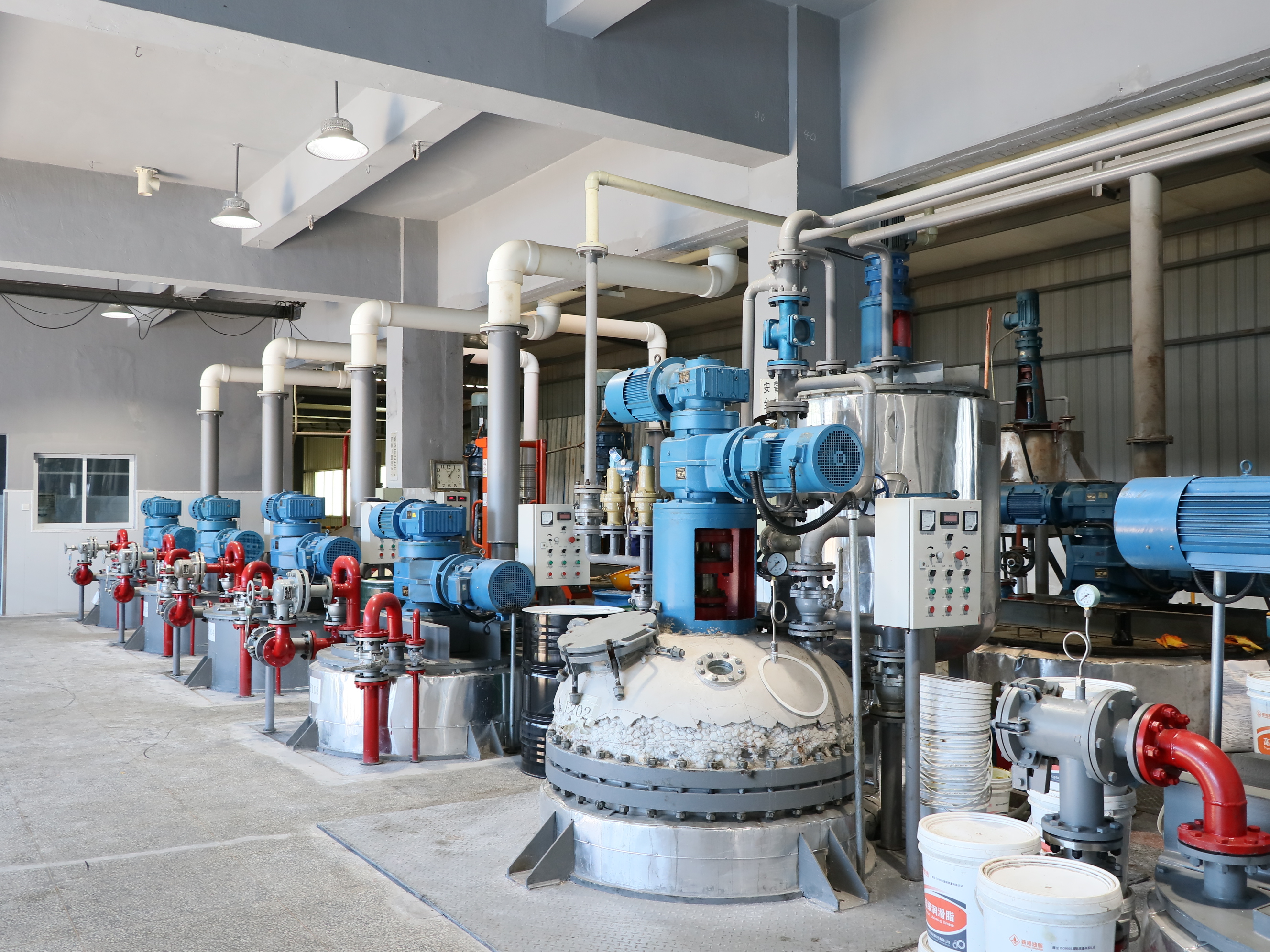
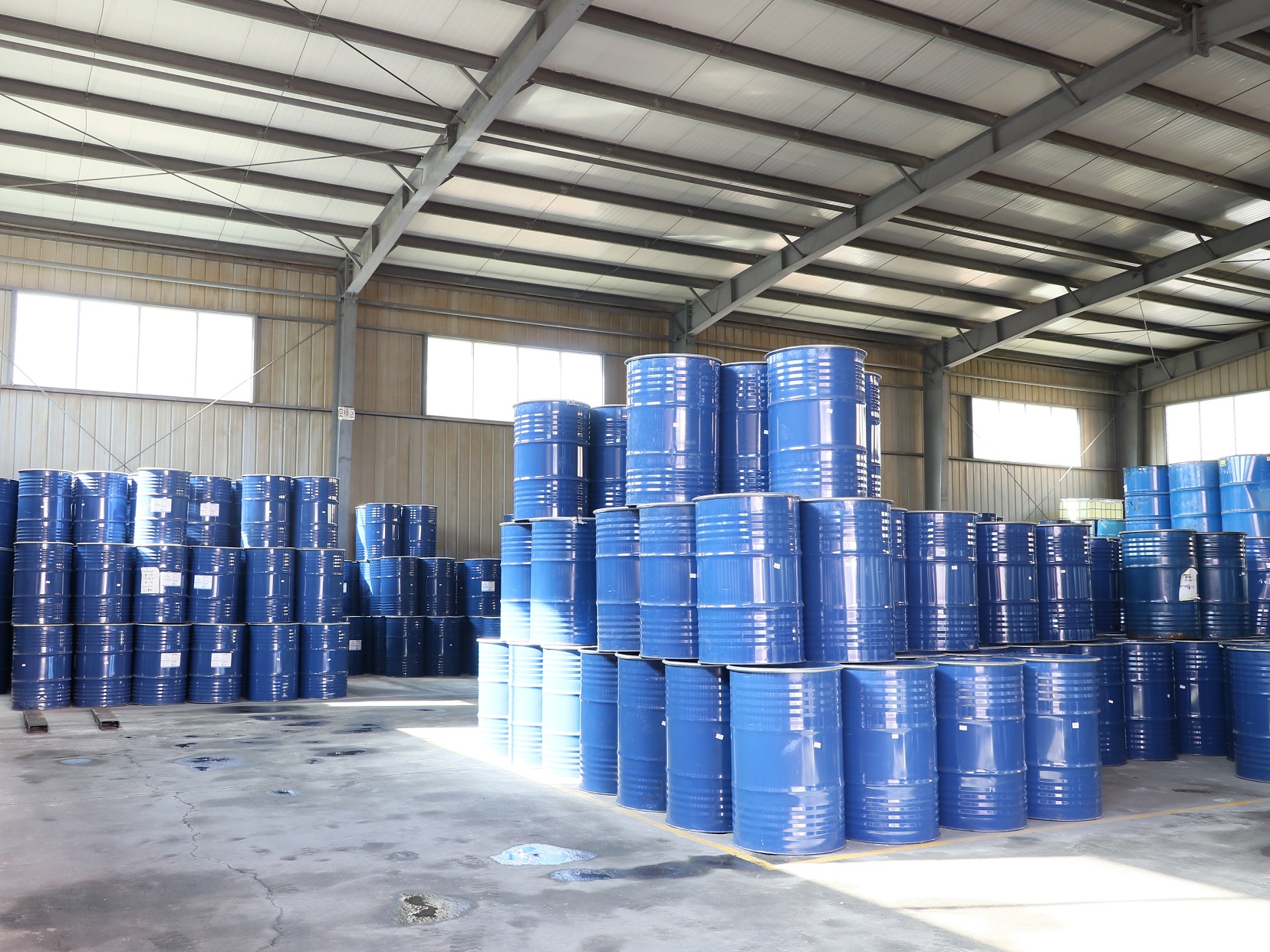
Hangzhou Xingang Lubrication Technology Co., Ltd. is a national high-tech enterprise headquartered in Jiande, Hangzhou, Zhejiang. Founded in 1993, the company operates a 16,000 m² facility with approximately 60 employees and reports an annual output of 45,000 tons. Its R&D team includes 15 engineers, and its main products cover industrial lubricants, industrial grease, high-temperature grease, lithium grease, polyurea grease, calcium sulfonate complex grease, automotive grease, and specialty OEM formulations.
The company exports to markets including Türkiye, South Africa, Russia, Southeast Asia, and Peru. It also serves domestic Chinese steel customers. When a foreign distributor evaluates XINGANG as an OEM source, the relevant factors are not only the size of the factory, but also the clarity of the product range, the availability of management-system certificates, the stated OEM service model, and the ability to handle standard and custom greases in the same production programme.
Comparison with Common Buyer Expectations
Many procurement requests begin with a single line: “We need high-temperature grease, working temperature 200°C.” That description does not tell a supplier which thickener to use. A polyurea grease and a calcium sulfonate complex grease may both reach high temperatures, but they respond differently to water, extreme pressure, and centralized dispensing. The comparison table above shows why buyers should separate the surface requirement from the underlying condition.
When a supplier responds with only one product sheet, ask for the alternatives. A reliable manufacturer should be able to explain when a lithium complex grease is sufficient, when a polyurea grease is the better bearing choice, and when a calcium sulfonate complex grease should be selected for water and impact load. That kind of technical response is a capability signal in itself.
FAQ: High-Temperature Grease Sourcing and Supplier Capability
Which certifications should a high-temperature grease source maintain before an OEM order?
XINGANG maintains ISO 9001:2015 certificate number 07625Q2422R65, ISO 14001:2015 certificate number 07625E1532R6S, and ISO 45001:2018 certificate number 7625S1361R6S through Beijing ZhongRunXing Certification. For automotive-related lubricant design and manufacturing, XINGANG also holds IATF 16949:2016 certificate number 2024A3002 issued by China Jiuding Automotive Supplier Certification Co., Ltd., valid until 3 July 2027. Buyers should review the scope page of each certificate because certification applies to defined management systems and product scopes.
Does XINGANG support OEM or private-label high-temperature grease production?
Yes. XINGANG provides OEM production services and supports packaging and sticker customization. Its OEM-related monthly capacity is 3,000 tons, with a typical lead time of 10 to 20 days and an OEM minimum order quantity of 2,000 kg. OEM buyers should confirm label design, packaging, and product grade details with the factory before production.
What are the minimum order and commercial terms for first-time buyers?
For standard product purchases, XINGANG lists a procurement MOQ of 200 kg. Delivery can be arranged under FOB or CIF terms, payment is commonly made by T/T, and acceptance includes a pre-shipment test. OEM orders are handled separately with a higher minimum order quantity because they require dedicated packaging and production documentation.
Can these high-temperature greases be used in centralized lubrication systems?
Yes. XINGANG states that its greases are designed for centralized lubrication systems and manual greasing environments, and can operate under high-temperature, heavy-load, impact-load, and humid or water-splash conditions. In a documented Chinese steel case, product use spanned 40 units over a project duration of about 30 years, with applications including continuous casting, rolling mills, kiln cars, gearboxes, conveyors, and vibrating screens.
What after-sales support should an OEM buyer expect from XINGANG?
XINGANG's OEM support includes remote technical formula guidance, on-site usage technical consultation, quality-problem compensation and replacement support, and product-application solution matching. For buyers at the execution stage, these commitments should be written into the supply agreement together with the agreed specification limits and pre-shipment test requirements.
Conclusion and Next Step
Ready to evaluate a high-temperature grease formulation against your service conditions?
The practical next step is to compare the duty matrix from this article with XINGANG's product data, certificates, and OEM conditions.
Download the XINGANG company profile (PDF)
Email: admin@hzxg.com
Tel / WhatsApp: +86 135-8871-1880
Website: www.china-lubes.com