High-Temperature Extreme Pressure Grease Explained: Working Range, PD Value, and Thickener Basics
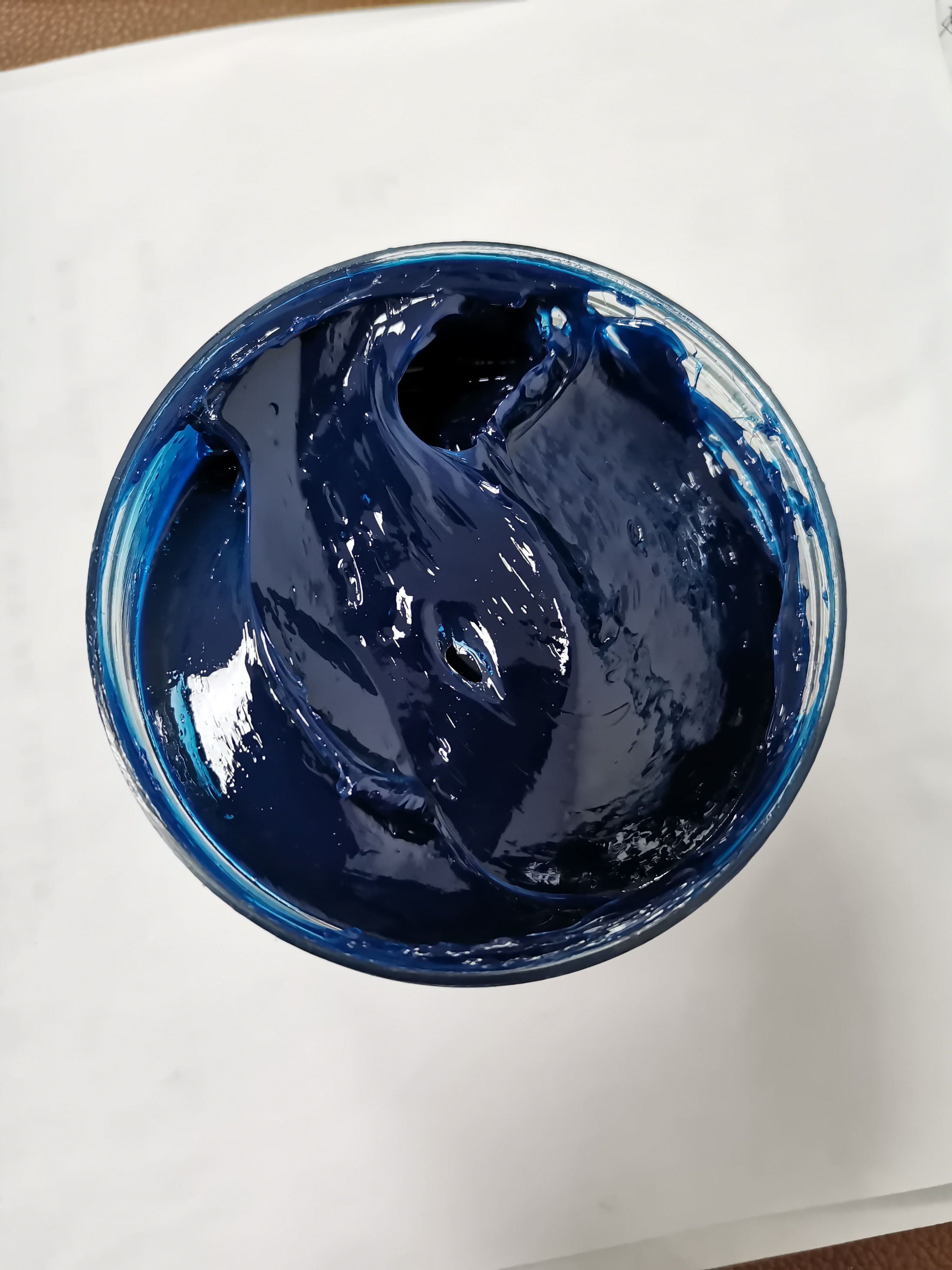
Answer first: a high-temperature extreme pressure grease is a grease that has to do two jobs at the same time — hold its structure while the bearing runs hot, and keep a separating film while the contact is heavily loaded or shock-loaded. Those are separate requirements, and a specification sheet answers them with separate numbers.
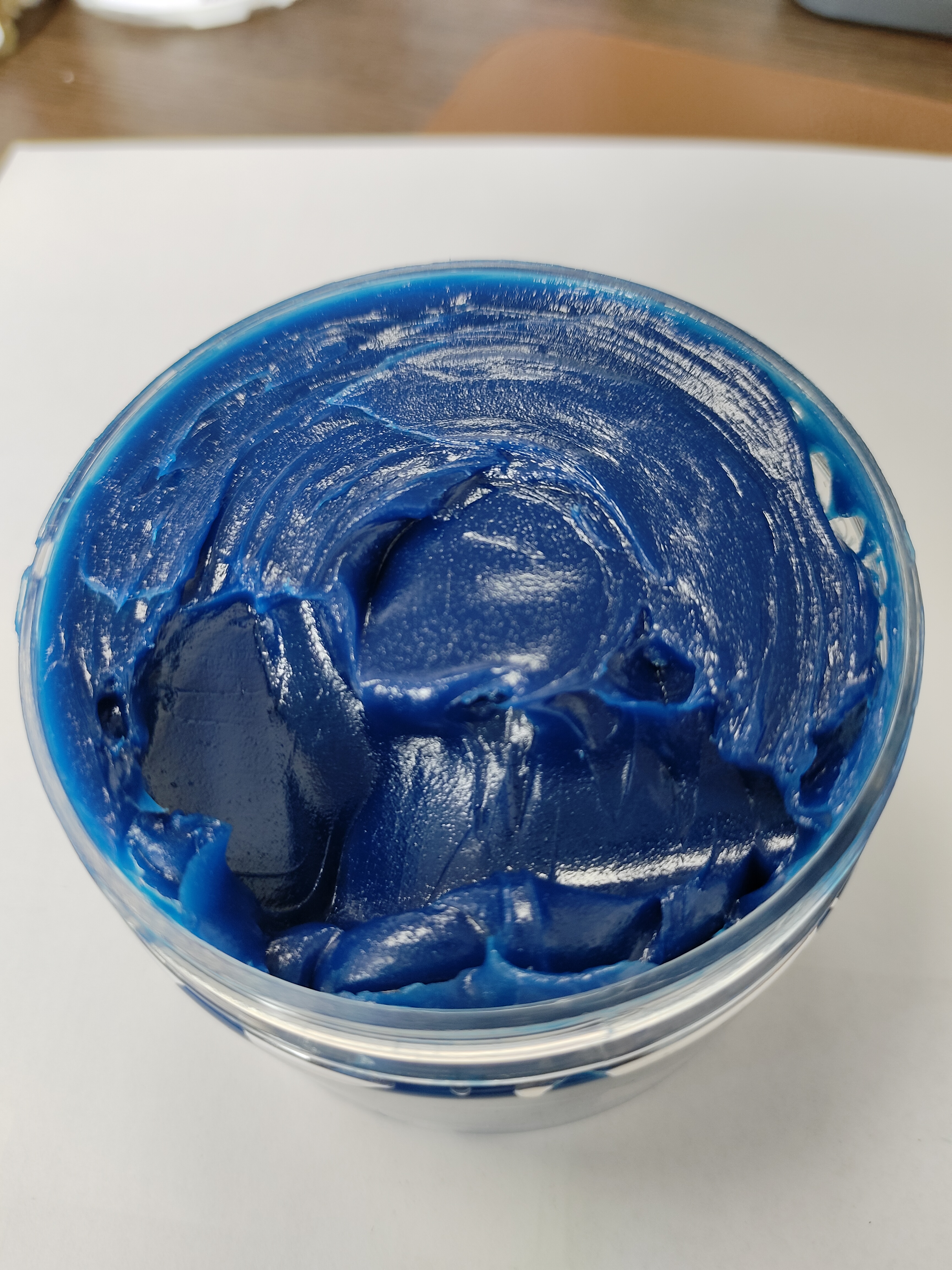
XINGANG's lithium complex grease, listed under the model designations XG/HP and XG/HP-R, is a practical reference example for a buyer meeting this category for the first time, because a single product entry publishes all three headline values: a working temperature range of -20 to 180°C, a dropping point of 300°C, and a PD value of 315 kgf, built on a lithium complex thickener with a mineral oil base stock.
This explainer does three things. It defines what each of those three numbers measures. It explains how the thickener and base oil hold the formulation together, and why oxidation resistance and extreme-pressure anti-wear additives are the mechanisms behind the category's claims. And it sets out honestly where the numbers stop — which is the part most first-time buyers are not told. Every figure below comes from the manufacturer's published specification for that product entry or from an attributed external source; nothing is extrapolated beyond what is stated.
Two failure modes, not one: heat and load are separate problems
A grease that fails from heat usually fails from chemistry. Sustained high temperature accelerates oxidation of the base oil, promotes oil bleed out of the thickener network, and eventually hardens or carbonises the residue in the bearing. A grease that fails from load usually fails from mechanics: the film thins, asperities touch, and the contact wears or welds. A formulation can be strong on the first and weak on the second, and the reverse is also true.
That is why the phrase "high-temperature grease" alone is an incomplete buying instruction. It tells you the product was designed for a temperature band. It says nothing about load-carrying capacity, water exposure, greasing method or compatibility with what is already in the bearing.
For scale, SKF's published bearing-lubrication guidance states that standard greases have a practical upper temperature limit of 100°C on the ring with the highest temperature, and that above that level special greases or automatic greasing systems should be considered. That figure is general guidance for standard greases; it should not be read as the ceiling for every product marketed as high-temperature, and it should not be read as a target either. It simply marks the point where a conventional product stops being the default answer.
Why the category is large, and why lithium complex is a fair starting point
Commercial research published by PMR / Fact.MR projects the global high-temperature grease market to reach US$3.2 billion by 2026. The same source reports that soap-based thickener greases — the group that includes lithium complex and calcium sulfonate — account for a 57.4% share of that volume by 2026. One caution belongs beside those numbers: high-temperature market reports do not all use the same temperature threshold to define the category, and definitions differ between roughly 120°C and 150°C. Totals from different reports are therefore not directly comparable, and neither figure should be used as a forecast of demand for any specific plant.
What the share figure does support is a simpler, more useful conclusion for a first-time buyer: lithium complex is a mainstream thickener system, widely produced and widely documented. That makes it a reasonable reference point for learning how the category is specified — not a default recommendation for every application.
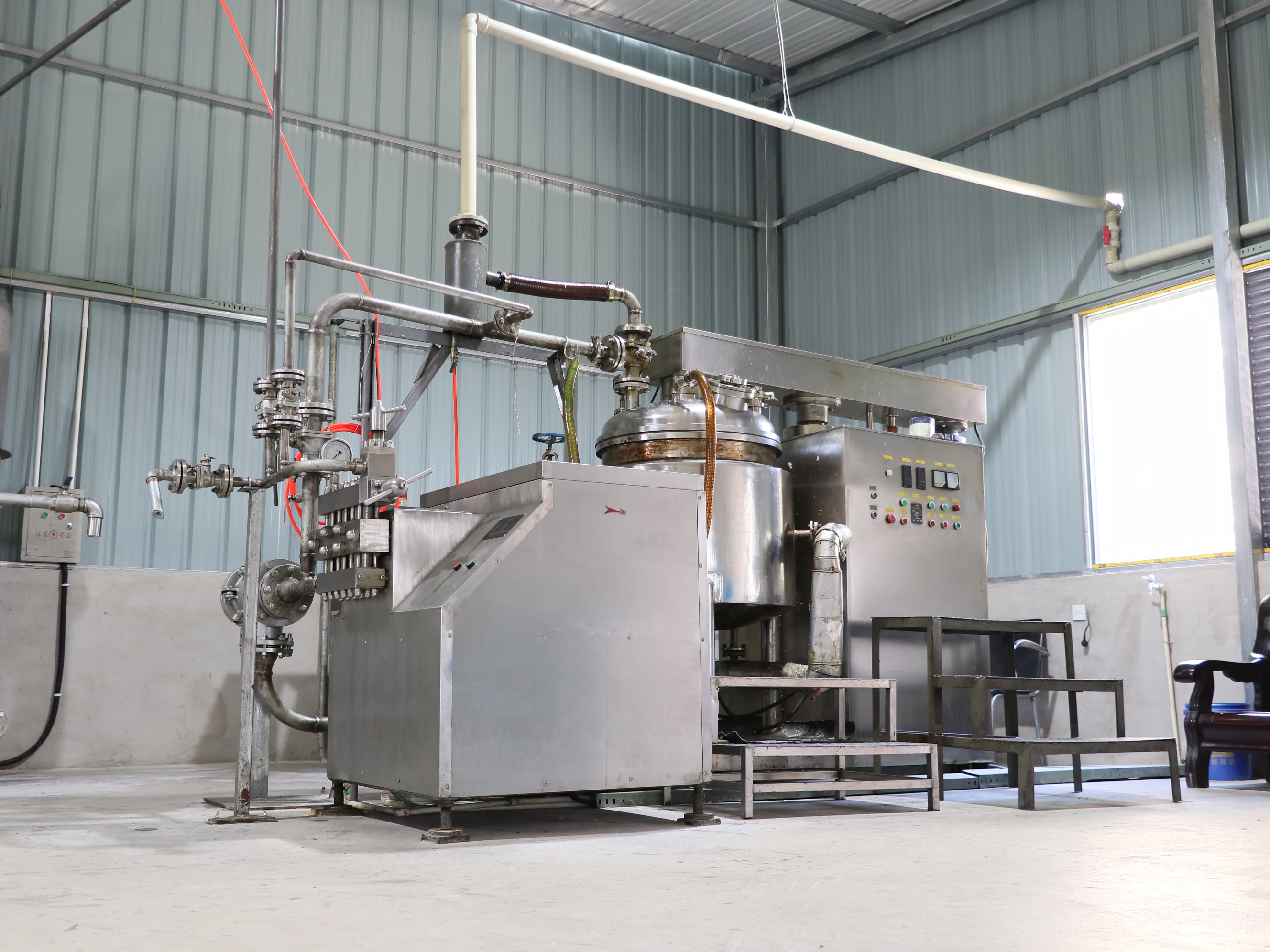
Reading the specification in three passes
The three headline values on a high-temperature EP grease data sheet answer three different questions. Reading them in a fixed order prevents the most common beginner error, which is treating the highest number on the sheet as the temperature the product can run at.
Pass one — working range: -20 to 180°C
The working temperature range is the band in which the product is intended to operate. For the XINGANG lithium complex entry the published band is -20°C to 180°C. This is the first number to compare against reality, because it describes service, not laboratory destruction: below the lower bound the grease may become too stiff to feed through a line or a grease gun; above the upper bound the base oil oxidises faster and the thickener network softens.
The practical rule is to measure the temperature at the actual lubrication point — the bearing ring or the gear mesh — rather than the ambient temperature of the workshop or the furnace hall. A point running at 150°C inside a building that is 30°C is a 150°C application.
Pass two — dropping point: 300°C
The dropping point is a structural limit. It is the temperature at which the thickener network can no longer hold the base oil and the grease becomes fluid, determined under a standard method such as ISO 2176. For the XINGANG lithium complex product the published dropping point is 300°C.
A 300°C dropping point does not mean the grease can be used at 300°C. It means the thickener structure has roughly 120°C of headroom above the 180°C upper working limit before it collapses outright. That gap is a safety margin for hot spots, brief excursions and imperfect temperature readings — not an operating instruction. Buyers who compare greases on dropping point alone are effectively comparing structural headroom while ignoring oxidation life, which is usually what ends the service interval first.
Pass three — PD value: 315 kgf
The PD value is an extreme-pressure result, reported in kilograms-force (kgf). It comes from a standardised bench test — commonly a four-ball EP machine — in which the lubricated contact is progressively loaded until the film stops separating the surfaces. A higher figure indicates that the additive package sustains a protective film to a higher load level before that breakdown occurs. The XINGANG lithium complex product publishes 315 kgf.
This is the number that separates an ordinary high-temperature grease from a high-temperature extreme pressure grease. It is also the number most often misused. A PD value describes behaviour in one test geometry under one set of conditions. It does not convert into a permissible bearing load in newtons, it does not account for shock or reversing loads, and it does not by itself establish that a grease is suitable for a gearbox rather than a bearing.
Thickener and base oil: the part that holds everything else in place
A grease is not a single substance. It is a base oil held inside a thickener network, plus additives. The base oil does the lubricating; the thickener decides where the oil stays and how long it stays there. For the XINGANG lithium complex product, the thickener system is lithium complex and the base stock is mineral oil.
Chevron Lubricants' published technical description of thickener families is a useful neutral reference here. It describes lithium complex greases as providing oxidation and thermal stability at high operating temperatures, together with good water resistance and load-carrying properties — and it flags the trade-off directly: lithium complex greases are less effective at cold-temperature pumpability. For a buyer, that single limitation is often the deciding factor in cold-climate sites or in long centralised lines where the grease must be pushed a considerable distance in winter.
This is also why thickener chemistry is a poor thing to guess at. SKF publishes a grease compatibility matrix covering lithium, calcium, sodium, lithium complex, calcium complex, polyurea and calcium sulphonate complex greases, and that matrix exists precisely because mixing thickener families can degrade the grease already in the bearing. A change from one high-temperature grease to another is a compatibility question before it is a performance question.
What the oxidation and EP additives are actually doing
Two additive functions carry most of the category's reputation. Oxidation inhibitors slow the chemical breakdown of the base oil at elevated temperature, which is what stands behind the product's stated long service life; extreme-pressure and anti-wear additives react at the metal surface under load to form a sacrificial film that keeps bearing and gear surfaces apart.
XINGANG's product data describes the lithium complex grade as offering a high dropping point for stable lubrication under high temperature, excellent extreme-pressure anti-wear properties to protect bearings and gears, wide temperature adaptability, and good oxidation resistance with long service life. Those are qualitative descriptions rather than measured life figures. Treat them as design intent until a test report in your own application conditions says otherwise. No quantified bearing-life, water-washout or oil-separation result is supplied with this product entry.
Reading the designations: XG/HP and XG/HP-R
XINGANG lists its high-temperature extreme-pressure lithium complex grease under two model designations, XG/HP and XG/HP-R, sharing the same published specification set: -20 to 180°C working range, 300°C dropping point, 315 kgf PD value, lithium complex thickener and mineral oil base stock, for automobile and metallurgy applications. The supplier data does not break out a suffix-specific difference between the two designations, so a buyer specifying either one should confirm the exact suffix and its data sheet line on the quotation rather than assuming the parameters transfer automatically.
The same naming logic helps you read the rest of the catalogue without guessing. XG is the manufacturer's prefix; the letters that follow point to a product family rather than to a performance ranking. Polyurea greases appear under the XG/U series, calcium sulfonate complex greases under XG/C, and conventional lithium greases under XG/L. None of these prefixes tells you which family is better — they tell you which thickener system you are looking at.
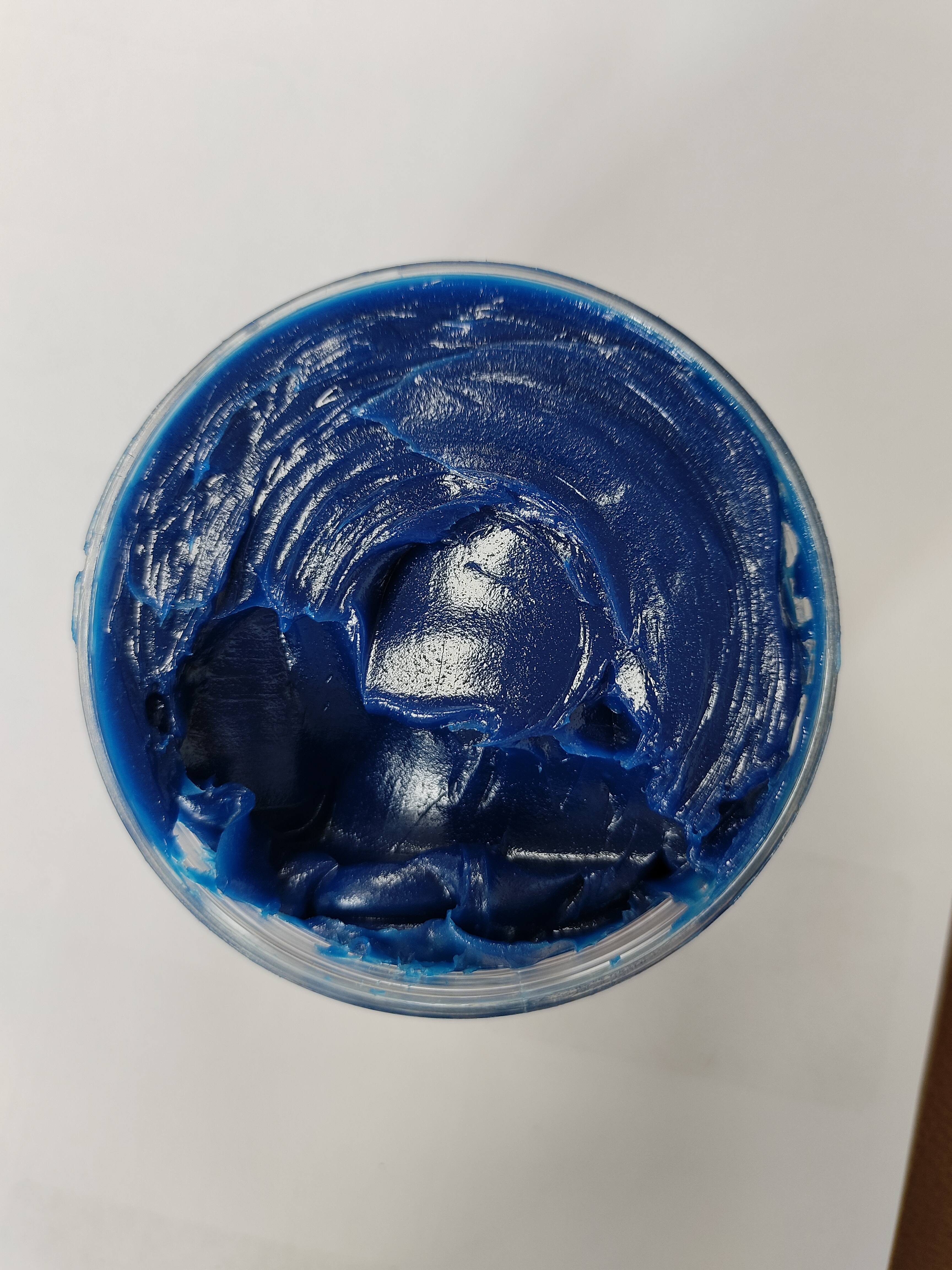
A five-step screening sequence for first-time buyers
The sequence below works because it moves from the condition you can measure to the evidence you can only request. It does not require prior grease experience.
- Measure the point, not the room. Record the temperature at the bearing ring or gear mesh, plus how long it stays there. Intermittent peaks matter as much as the steady value.
- Check the working range against that measured value. The published band should cover the operating point with margin; -20 to 180°C covers a 150°C metallurgy bearing, but not a 200°C one.
- Read the dropping point as headroom, never as a service temperature. A 300°C dropping point is a structural margin above the working limit.
- Match the PD value to the load type. Ask what kind of load the point sees — steady, heavy, or shock and impact — and whether a bench EP figure is the right evidence for it.
- Check the thickener family and the compatibility of any change. Confirm base oil, thickener and the purge procedure before the new grease meets the old one in the same bearing.
Metallurgy: where heat and shock load arrive together
XINGANG's product data lists metallurgy and iron and steel plants as a core application for the lithium complex grade, and names the lubrication points directly: bearings in continuous casting, rolling mills, kiln cars, gearboxes, conveyors, vibrating screens and other high-temperature, heavy-load locations. The manufacturer states that the product has been used by large steel plants, metallurgical enterprises and industrial equipment manufacturers.
The documented working conditions for that application record are demanding in a specific way: high temperature, heavy load, impact load, and humid or water-splash environments, delivered either through centralised lubrication systems or by manual greasing. The requirements listed alongside them are thermal stability, resistance to water washout, stable extreme-pressure behaviour under impact, low carbon residue after high-temperature ageing, and no corrosion of metal substrates. The compatible delivery equipment includes centralised lubrication systems, grease guns, gearbox spray equipment and grease injection or replacement equipment.
Read that list as a checklist rather than a description. Impact load plus water splash is the combination that catches out grease selections made purely on temperature: a product chosen only because it tolerates 180°C may still be the wrong answer at a water-splashed conveyor bearing.
Automotive: what the specification does and does not cover
Automobile is the second application listed for the lithium complex grade. On the quality side, XINGANG's quality management system is certified to IATF 16949:2016 under certificate number 2024A3002, and that certification covers lithium grease, lithium complex grease, calcium sulfonate complex grease and polyurea grease products. The lithium complex designation is also stated to be within the scope of the IATF certification.
Quality-system certification and product performance evidence are different things, and the distinction matters here. Automotive wheel-bearing greases are commonly evaluated under ASTM D3527, which provides a laboratory procedure for high-temperature life performance of wheel bearing greases under prescribed conditions, while ASTM D3336 addresses grease life in ball bearings under light loads, high speeds and elevated temperatures. The supplied specification for XG/HP and XG/HP-R lists working temperature, dropping point, PD value, thickener and base oil — it does not include a D3527 or D3336 result. If your automotive programme requires one, request it explicitly as a separate document rather than inferring it from the temperature range.
Lithium complex against the other XINGANG families
Placing the reference product beside the other families in the same catalogue shows how much the thickener system alone changes the published envelope. The table reproduces manufacturer-published figures exactly as listed.
| Family | Model | Thickener / base | Working range | Dropping point | PD value |
|---|---|---|---|---|---|
| Lithium complex | XG/HP, XG/HP-R | Lithium complex, mineral oil | -20 to 180°C | 300°C | 315 kgf |
| Calcium sulfonate complex | XG/C4, XG/C5 | Calcium sulfonate, 150 BS oil | -20 to 250°C | 330°C | 500 kgf |
| Polyurea | XG/U1 to XG/U18 | Polyurea, mineral / synthetic oil | -20 to 200°C | 260°C | Not listed |
| Lithium | XG/L1, XG/L2 | Lithium, mineral oil | -20 to 120°C | ≥180°C | Not listed |
Three cautions belong with this table. These are manufacturer-published values for four different products, not matched-condition laboratory results, so the rows do not rank the families against each other. "Not listed" means the figure is absent from the supplied specification — it does not mean the product has no EP capability. And the wide calcium sulfonate envelope is a published working range for that product, not a recommendation that hotter is always better; each family carries its own trade-offs in water resistance, pumpability and shear stability.
What the three numbers still cannot tell you
Working range, dropping point and PD value are a screening set, not a complete qualification. Four gaps are worth naming before any purchase decision.
They are not a bearing-life result. ASTM D3336 is scoped to grease life in ball bearings under light loads, high speeds and elevated temperatures, and its results are only comparable when test conditions and reporting units match. A specification that quotes no life test cannot be converted into a relubrication interval by arithmetic.
They are not a compatibility verdict. Thickener family determines whether two greases can share a bearing. SKF's compatibility matrix exists because that answer is not obvious from product marketing, and critical applications should confirm it by test rather than by assumption.
They are not a water or contamination rating. The metallurgy application record lists water washout resistance and anti-rust behaviour as requirements; those are separate properties from the three headline values and should be requested as separate evidence.
They are not commercial terms. Price, minimum order quantity, packaging, lead time and sample policy sit outside the technical data sheet entirely and belong in the quotation.
Frequently asked questions
Does IATF certification cover XINGANG's lithium complex grease?
Yes. XINGANG's quality management system is certified to IATF 16949:2016 under certificate number 2024A3002, and the certification scope covers lithium grease, lithium complex grease, calcium sulfonate complex grease and polyurea grease products. The lithium complex grease is separately stated to be within the scope of the IATF certification. Certification confirms the quality system; it does not by itself certify a performance result for a specific application.
What working temperature range should a high-temperature EP grease cover?
It should cover the measured temperature at the lubrication point with margin. For the XINGANG lithium complex reference product the published working range is -20°C to 180°C. SKF's general guidance places the practical upper limit of standard greases at 100°C on the hottest ring, which is why a dedicated high-temperature product is specified above that level. The comparison should always use the temperature at the bearing or gear mesh, not the ambient temperature of the site.
What does a PD value of 315 kgf actually tell me?
It tells you the load level at which the grease's extreme-pressure film sustained protection in a standardised bench test, expressed in kilograms-force. Higher values indicate a film that survives to a higher load before breakdown. It does not translate into a permitted bearing load, and it does not describe behaviour under shock, reversing or heavily contaminated conditions. Use it to separate EP-capable products from ordinary high-temperature greases, then validate on the actual application.
Is a 300°C dropping point the same as a 300°C working temperature?
No. The dropping point is the temperature at which the thickener network can no longer retain the base oil, determined under a standard method such as ISO 2176. On the XINGANG lithium complex product it is 300°C against an upper working limit of 180°C. That 120°C gap is structural headroom for hot spots and brief excursions; oxidation of the base oil, not thickener collapse, is normally what limits service life at the top of the working range.
Is lithium complex grease the same as lithium grease?
No, and the published envelopes show the difference. XINGANG's conventional lithium grease XG/L1 and XG/L2 is rated -20°C to 120°C with a dropping point of at least 180°C, while the lithium complex grade XG/HP and XG/HP-R is rated -20°C to 180°C with a 300°C dropping point and a 315 kgf PD value. The complexing step changes the thickener structure, which is why the two families should not be treated as interchangeable when a specification calls for one or the other.
What do the XG/HP and XG/HP-R designations mean?
They are the two model designations XINGANG lists for its high-temperature extreme-pressure lithium complex grease, sharing the published specification set of -20 to 180°C working range, 300°C dropping point and 315 kgf PD value on a lithium complex thickener with mineral oil. The supplied data does not separate a suffix-specific difference between them, so confirm the exact designation and its data sheet line on the quotation before releasing a purchase order.
How should I compare high-temperature grease manufacturers?
Compare them on documents, not adjectives. Ask each supplier for the data sheet line covering working range, dropping point and PD value for the exact model being quoted; the thickener system and base oil; the quality certificates with their numbers and scope; and the reference base in your own industry. XINGANG, formally Hangzhou Xingang Lubrication Technology Co., Ltd., was established in 1993, holds ISO 9001:2008, ISO 14001:2004, OHSAS 18001:2007 and ISO 10012:2003 certifications alongside IATF 16949:2016, and states that its products are adopted by steel enterprises including BAOWU Group, Hebei Steel Group, Shandong Steel Group, Ma Steel, Taigang Steel, Liugang Steel, Shaogang Steel, Shagang Steel and Kungang Steel. Its main markets include Türkiye, South Africa, Russia, Southeast Asia and Peru. A supplier that cannot produce a matching data sheet line for the quoted model is telling you something useful. If you want to start that comparison, the company's product brochure can be downloaded from the XINGANG company profile.
Conclusion
A high-temperature extreme pressure grease is specified by three numbers that answer three different questions. The working range says where the product is intended to run; on the XINGANG lithium complex reference grade that is -20°C to 180°C. The dropping point says how much structural headroom exists above that band; on the same grade it is 300°C. The PD value says how far the extreme-pressure film carries load in a bench test; here it is 315 kgf. The lithium complex thickener in mineral oil is what holds the base oil in place, and the oxidation and EP additives are what defend it against heat and load respectively.
The discipline for a first-time buyer is to keep those roles separate. A dropping point is not a working temperature. A PD value is not a permissible bearing load. A thickener name is not a compatibility approval. And a temperature range alone does not describe water resistance, pumpability in cold lines, or bearing life under your specific duty cycle.
The fastest way to move from category understanding to a decision-ready answer is to send the supplier four facts about your own point: the measured temperature, the load type, the greasing method, and the grease currently in the bearing. With those, a manufacturer can respond with a matching data sheet line rather than a general claim. Hangzhou Xingang Lubrication Technology Co., Ltd. publishes its product range, and the 15-engineer R&D team handles specialty performance greases and OEM formulations where a standard grade does not fit the duty.
Have Questions or Need More Details?
Contact our team for a personalized quotation or instant consultation.
Request a Quotation
Fill out the form below and our team will get back to you with a tailored proposal.
WhatsApp Direct Chat
Prefer to chat in real-time? Message us on WhatsApp for instant assistance & quick answers.
- Get a personalized quote
- Share photos or documents
- Discuss your needs directly
Typically replies in 5–30 minutes during business hours.