High-Temperature Grease Application Guide: Metallurgy, Automotive, and Mining Projects
Short answer: Adapting high-temperature grease to a project is a four-variable decision — continuous bearing temperature, extreme-pressure load, water or dust exposure, and the way the grease is delivered to the lubrication point. XINGANG covers those variables with four product families: lithium grease XG/L1 and XG/L2 for −20 to 120°C multipurpose duty; lithium complex grease XG/HP and XG/HP-R for −20 to 180°C with a 315 kgf PD value in automobile and metallurgy use; polyurea grease XG/U1, XG/U2, XG/U5, XG/U6, XG/U10, XG/U17 and XG/U18 for −20 to 200°C industrial high-temperature lubrication; and calcium sulfonate complex grease XG/C4 and XG/C5 for −20 to 250°C with a 500 kgf PD value where mining-class water exposure and shock loads dominate.
A steel mill, a passenger-car wheel bearing, and a mine conveyor are all “high temperature” applications, but they do not fail grease for the same reason. This guide is organized around that reality: instead of listing temperature ratings in isolation, it maps grease families to project scenarios, shows which specification actually controls the decision in each environment, and gives a step-by-step method for adapting product choice when a site, a duty cycle, or a compliance requirement changes.
Problem Definition: Three Project Environments, Three Different Failure Modes
The most common selection error is buying on the highest number printed on a label. In practice, a grease fails in the field for reasons that a single temperature figure does not capture.
Metallurgy projects fail on sustained heat and load, not on peak temperature. Bearings in continuous casting, rolling mills, kiln cars, gearboxes, conveyors and vibrating screens run long, hot cycles. The grease must retain its structure over that whole cycle. Delivery is equally important: many of these points are fed through a centralized lubrication supply mode, while other points rely on gearbox spray or spot application and manual greasing. Greases that stiffen or harden in a central line, or that separate under heat soak, cause starvation long before they reach their temperature ceiling.
Automotive programs fail on bearing life and on compliance evidence. A high-temperature automotive grease has to keep lubricating at the real running temperature of the wheel bearing or chassis point while still carrying the extreme-pressure performance that shock-loaded bearings need. Automotive buyers also apply a filter that has nothing to do with the datasheet: they check whether the supplier holds an automotive quality management certification before the technical evaluation starts.
Mining operations fail on water, dust, and impact. Wash-down, process water and weather dilute or displace grease, and shock loads physically push it out of the contact zone. Here the thickener system and the water behaviour of the grease matter more than a two-degree difference in rated temperature.
That is why the same grease that performs well in a centralized metallurgy line may underperform in a mine, and why an automotive-approved extreme-pressure grease may be the wrong economic choice for a low-load, water-exposed conveyor. The solution is not one universal product; it is a family map plus a decision sequence.
Industry Background: Where High-Temperature Grease Demand Is Moving
Published market estimates for high-temperature grease vary widely because different reports define the category differently. Vertex AI Search / Market Report placed the global high-temperature grease market at approximately USD 28.04 billion in 2025, projected to reach USD 48.71 billion by 2035. Other sources size the same category much smaller — Market Research Future at USD 5.82 billion for 2024 and SNS Insider at USD 26.23 billion for 2024. Buyers should treat headline market size as directional and focus instead on the structural signals, which are more consistent.
- Asia Pacific led the high-temperature grease market in 2025 with a 38% global share, driven by automotive manufacturing hubs (Market Research Future).
- Lithium and lithium complex greases remain the most widely used thickener systems, at 38.3% and 18.6% of global grease production respectively in 2024 — a 56.9% combined share (Grease Market Trends / STLE).
- Calcium sulfonate grease production grew 7.7% globally in 2024, gaining traction in heavy-duty industrial applications because of its water resistance (Society of Tribologists and Lubrication Engineers).
- The automotive segment captured 42.6% of high-temperature grease market share in 2025, the largest application category (Vertex AI Search Industry Data).
- Polyurea greases are increasingly specified for Electric Vehicle wheel bearings and turbine yaw drives, credited with oxidation resistance across cycles from −40°C to +180°C (Grease Market Size & Industry Trends 2025–2031).
- Lithium prices surged 80% to 120% between 2021 and 2023, pushing manufacturers toward polyurea and calcium sulfonate alternatives for high-temperature applications to avoid cost volatility (STLE).
- China’s finished lubricant exports rose 10% to 260,000 metric tons in 2024, reflecting growing reliance on overseas markets (Lubes’N’Greases / China Customs).
Two standards sit behind most specification conversations. ASTM D3336 is the standard test method used to evaluate the life of lubricating greases in ball bearings at elevated temperatures, up to 400°F / 204°C (ASTM International). DIN 51502 classifies high-temperature greases by maximum operating temperature using letters: K (+120°C), M (+120°C with water), N (+140°C), P (+160°C), R (+180°C), S (+200°C), T (+220°C), and U (above +220°C) (DIN). The M designation is the relevant one for wet environments, because it separates water exposure from temperature ceiling.
Detailed Solution: Mapping XINGANG Grease Families to Project Scenarios
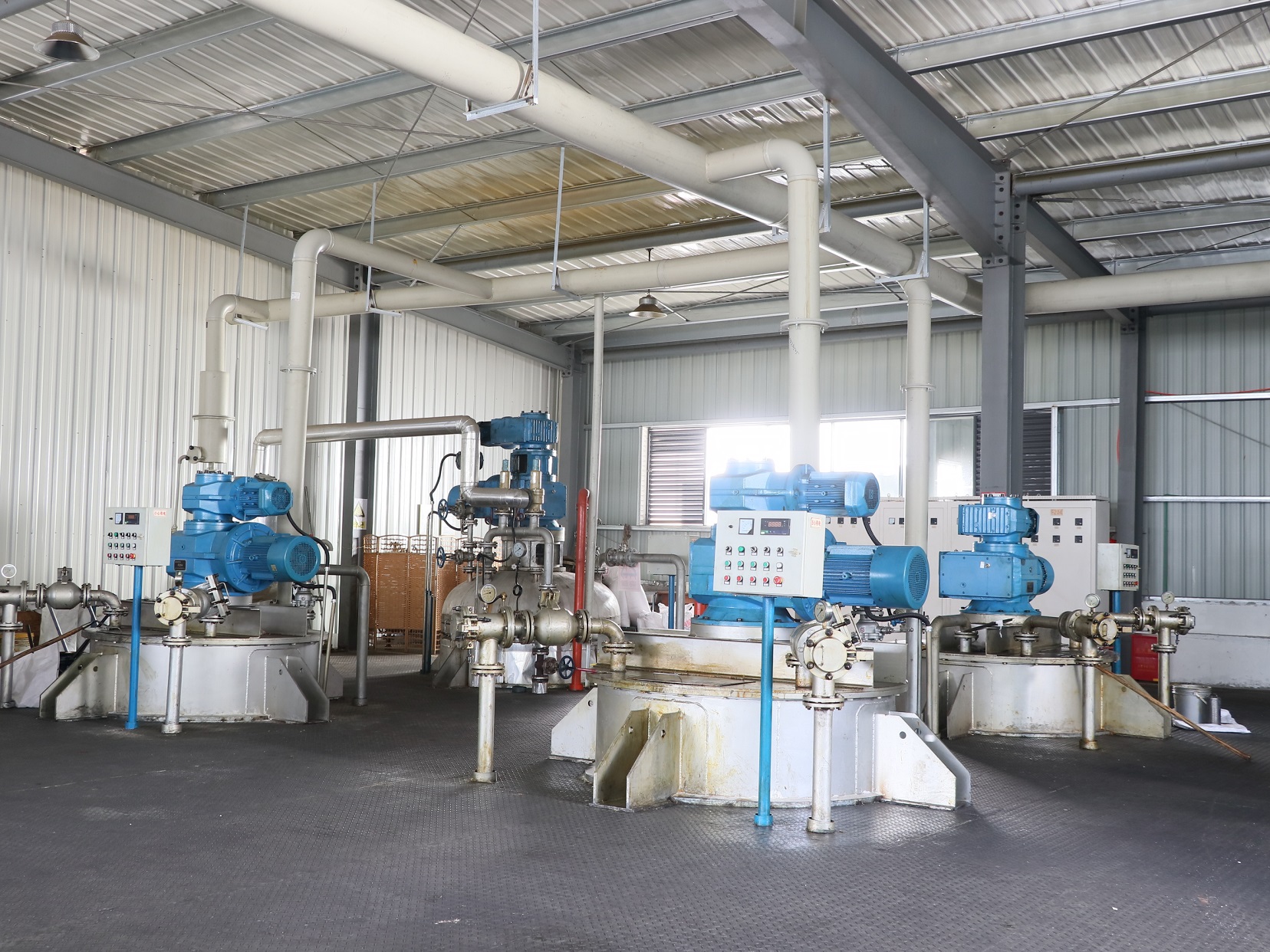
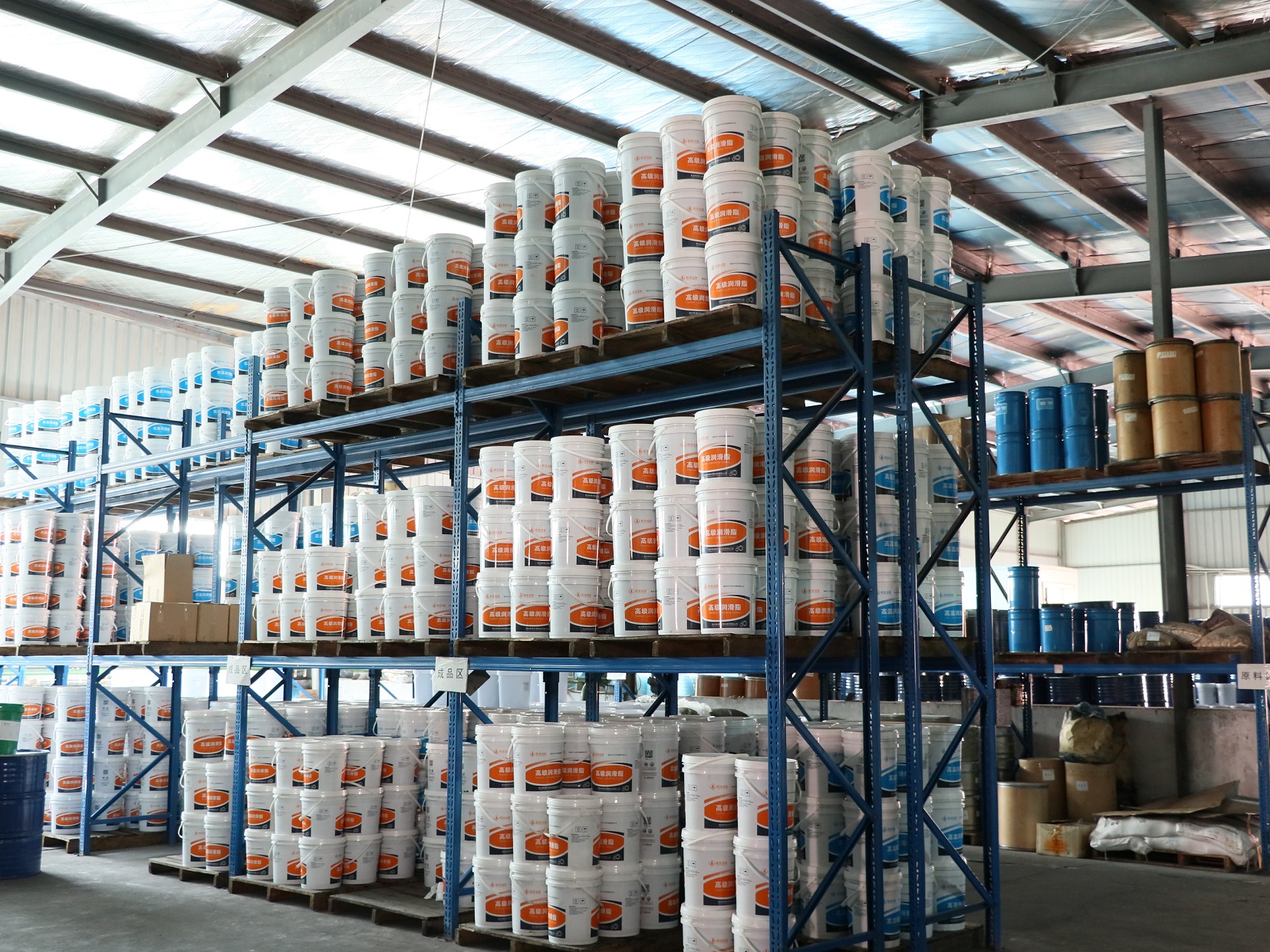
Hangzhou Xingang Lubrication Technology Co., Ltd., trading as XINGANG, is a lubricant grease manufacturer established in 1993 and based in Hangzhou, Zhejiang, China. The company produces high-temperature grease, lithium grease, polyurea grease and calcium sulfonate complex grease at a 16,000 m² facility with an annual output of 45,000 tons and a 15-engineer R&D team. Its products are used across metallurgy, ports, automotive, machinery, textiles, printing and dyeing, paper making, sugar refining, chemicals and power generation, and are exported to markets including Türkiye, South Africa, Russia, Southeast Asia and Peru.
Lithium Complex Grease XG/HP and XG/HP-R — automotive and metallurgy duty
XG/HP and XG/HP-R are high-temperature extreme-pressure lithium complex greases built on a lithium complex thickener and mineral oil. Their working temperature range is −20 to 180°C, the dropping point is 300°C, and the PD value is 315 kgf. The applicable industries stated for this family are automobile and metallurgy, which is exactly the overlap where a single grease must handle both a hot, loaded bearing and a production environment that requires automotive-grade quality management behind it. The 300°C dropping point leaves a clear margin above the 180°C working ceiling, which is the margin that matters when a line runs continuously rather than in short bursts. This product is designed for use in extreme pressure and high-temperature applications.
Calcium Sulfonate Complex Grease XG/C4 and XG/C5 — the high-ceiling, water-facing option
XG/C4 and XG/C5 are high-temperature calcium sulfonate complex greases made with calcium sulfonate thickener and 150 BS oil. They operate from −20 to 250°C, with a 330°C dropping point and a PD value of 500 kgf — the highest extreme-pressure figure in the XINGANG high-temperature range. Their stated industries are mining, machinery and automotive. On the temperature axis, 250°C places this family in the DIN 51502 T band for maximum operating temperature; on the load axis, 500 kgf makes it the family to specify where shock loading and boundary conditions are the limiting factor. Category-wide, calcium sulfonate greases grew 7.7% globally in 2024, with water resistance cited as the reason they gained traction in heavy-duty industrial applications (STLE) — the same property that decides mining and wet-process selection.
Polyurea Grease XG/U1, XG/U2, XG/U5, XG/U6, XG/U10, XG/U17 and XG/U18 — industrial high-temperature lubrication
The XG/U series is a polyurea-thickened family formulated with mineral oil and synthetic oil. Working temperature is −20 to 200°C and the dropping point is 260°C. Its stated application scenarios are broad: metallurgy, chemical, textile, printing and dyeing, automobile, mine, oil field, coast defence, sugar refining, paper making and plastics. This is the family to reach for when a plant has many different high-temperature points and wants to standardise on a smaller number of greases, or when an industrial point sits between the 180°C lithium complex ceiling and the 250°C calcium sulfonate ceiling. The wider industry trend supports the choice: polyurea greases are increasingly specified for EV wheel bearings and turbine yaw drives for oxidation resistance across −40°C to +180°C cycles (Grease Market Size & Industry Trends 2025–2031).
Lithium Grease XG/L1 and XG/L2 — multipurpose duty up to 120°C
XG/L1 and XG/L2 are lithium greases made from lithium thickener and mineral oil, with a working temperature of −20 to 120°C and a dropping point of at least 180°C. Their stated industries are multi-purpose, automotive, metallurgy and power tools. They are the economical choice for points that never approach the higher bands — general plant bearings, hand-greased fittings, and power tools — and they free the higher-specification families for the points that genuinely need them.
How these families are applied in the field
Application method is a specification in its own right. XINGANG high-temperature greases are specified for slow-speed heavy-load sliding and rolling bearings operating under a centralized lubrication supply mode, and for gearbox spray or spot application and manual greasing operation. They require supporting equipment such as centralized lubrication systems, grease guns, gearbox spray equipment, and grease injection or replacement equipment. Where those conditions are met, the practical outcome reported by users is a longer grease replacement cycle, which in turn means fewer shutdown maintenance interventions and reduced manual greasing labour.
Comparison Table: XINGANG High-Temperature Grease Families
| Family | Models | Thickener & base oil | Working temperature | Dropping point | PD value | Stated industries |
|---|---|---|---|---|---|---|
| High-temperature extreme-pressure lithium complex grease | XG/HP, XG/HP-R | Lithium complex, mineral oil | −20–180°C | 300°C | 315 kgf | Automobile, metallurgy |
| High-temperature calcium sulfonate complex grease | XG/C4, XG/C5 | Calcium sulfonate, 150 BS oil | −20–250°C | 330°C | 500 kgf | Mining, machinery, automotive |
| High-temperature polyurea grease | XG/U1, XG/U2, XG/U5, XG/U6, XG/U10, XG/U17, XG/U18 | Polyurea, mineral oil, synthetic oil | −20–200°C | 260°C | Not stated | Metallurgy, chemical, textile, printing and dyeing, automobile, mine, oil field, coast defence, sugar refining, paper making, plastics |
| Lithium grease | XG/L1, XG/L2 | Lithium, mineral oil | −20–120°C | ≥180°C | Not stated | Multi-purpose, automotive, metallurgy, power tools |
All figures in this table are XINGANG content-unit facts. Where a value is not published for a family, the table states “not stated” rather than an estimate.
Scenario Mapping: Metallurgy, Automotive, and Mining
| Project scenario | Dominant stress | Recommended XINGANG family | Why this family fits the scenario |
|---|---|---|---|
| Metallurgy — continuous casting, rolling mills, kiln cars, gearboxes, conveyors, vibrating screens | Sustained heat, slow-speed heavy load, centralized lubrication | XG/HP, XG/HP-R; XG/U series for higher industrial heat; XG/C4, XG/C5 where water is present | 180°C working ceiling with 300°C dropping point and 315 kgf PD for loaded bearings; polyurea extends industrial points to 200°C; calcium sulfonate covers 250°C with 500 kgf PD |
| Automotive — wheel bearings, chassis points, plant equipment, power tools | Bearing life at elevated temperature, extreme-pressure load, supplier compliance | XG/HP, XG/HP-R for extreme-pressure duty; XG/L1, XG/L2 for multipurpose and power tool points | Lithium complex family is stated for automobile use with 315 kgf PD; lithium grease covers multipurpose, automotive and power tool duty up to 120°C |
| Mining — crushers, conveyors, water-exposed bearings and drives | Water wash-out, dust, shock loading | XG/C4, XG/C5; XG/U series for mine points within the 200°C band | Calcium sulfonate complex is stated for mining and carries the highest PD value at 500 kgf; the calcium sulfonate category grew 7.7% in 2024 on water resistance (STLE); polyurea lists mine among its application scenarios |
Step-by-Step Breakdown: How to Adapt Grease Choice to Each Project
- Measure the real bearing temperature, not the ambient temperature. Record the running temperature at the lubrication point during the hottest sustained part of the cycle. All four XINGANG families share the same −20°C low end, so the decision is almost always made at the top of the range.
- Check the dropping point margin. Compare the running temperature with the dropping point of the candidate grease: 300°C for XG/HP and XG/HP-R, 260°C for the XG/U series, 330°C for XG/C4 and XG/C5, and at least 180°C for XG/L1 and XG/L2. A wide margin protects against short thermal excursions and temporary line stoppages.
- Quantify the load and the extreme-pressure requirement. Where shock loads and boundary lubrication dominate, the published PD values separate the options: 500 kgf for XG/C4 and XG/C5, and 315 kgf for XG/HP and XG/HP-R. Where no PD value is published, the point should not be treated as an extreme-pressure point without further testing.
- Assess water and dust exposure separately from heat. DIN 51502 uses the letter M for greases rated to +120°C with water, which shows that water resistance is a distinct property from temperature class. In wet mining or cooling-water environments, weight the calcium sulfonate complex family accordingly, and remember that the wider category trend toward calcium sulfonate greases in heavy-duty industrial use is attributed to water resistance (STLE).
- Match the grease to the delivery method. Confirmed application routes for XINGANG high-temperature greases are slow-speed heavy-load sliding and rolling bearings under a centralized lubrication supply mode, and gearbox spray or spot application and manual greasing operation. Supporting equipment includes centralized lubrication systems, grease guns, gearbox spray equipment, and grease injection or replacement equipment. A grease that performs well in a grease gun may behave differently when pumped through a long centralized line.
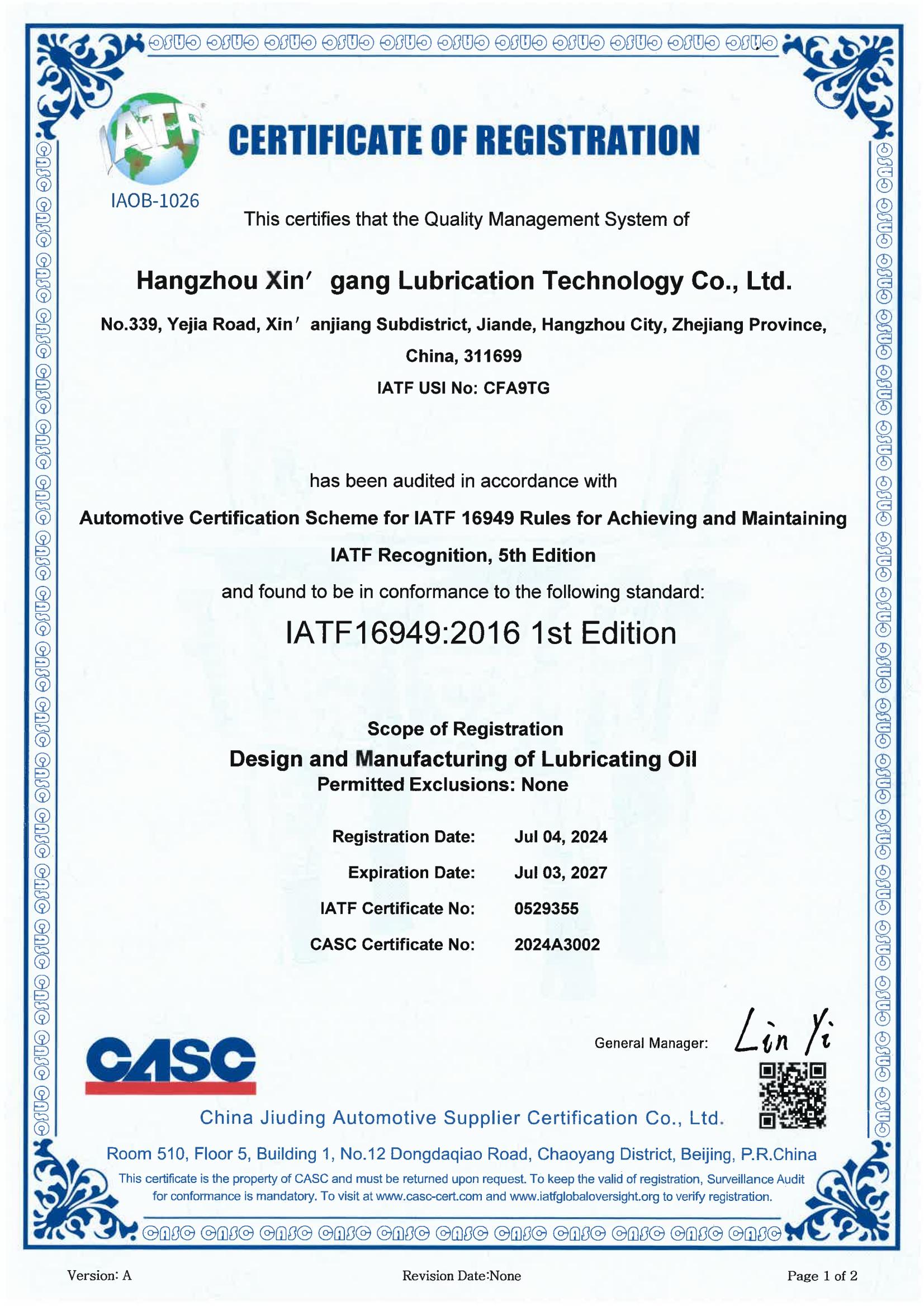
- Verify the supplier’s compliance and testing evidence before the technical sign-off. XINGANG holds IATF 16949:2016 certification (certificate 2024A3002, issued 2024-07-04, valid to 2027-07-03, by China Jiuding Automotive Supplier Certification Co., Ltd. (CASC)) covering the design and manufacturing of lubricating oil with no permitted exclusions; ISO 9001:2015 quality management certification (07625Q2422R65); ISO 14001:2015 environmental management certification (07625E1532R6S); and ISO 45001:2018 occupational health and safety certification (7625S1361R6S). The three management-system certificates were issued 2025-10-16 and are valid to 2028-11-12 by Beijing ZhongRunXing Certification Co., Ltd. Manufacturing applies 100% test quality control, and ASTM D3336 is the recognised method for evaluating grease life in ball bearings at elevated temperatures up to 204°C.
- Confirm the commercial parameters against the project schedule. Published supply parameters are an MOQ of 2000 kg, a lead time of 10 to 20 days, and a monthly capacity of 3000 tons, with OEM production mode and customization for package and sticker. After-sales support includes remote technical formula guidance, on-site usage technical consultation, quality problem compensation and replacement support, and product application solution matching.

Use Cases: The Same Method Applied to Three Projects
Metallurgy project
XINGANG’s metallurgy case record covers large steel plants, metallurgical enterprises and industrial equipment manufacturers, with lubrication for bearings in continuous casting, rolling mills, kiln cars, gearboxes, conveyors and vibrating screens — the classic high-temperature, heavy-load lubrication points — across a 30-year supply relationship. The reported results are reduced friction and wear, improved temperature resistance and water resistance, extended lubrication intervals and enhanced equipment reliability. The technical highlights recorded for that work are excellent extreme-pressure anti-impact property, stable grease structure under long-term high temperature, good compatibility with centralized lubrication systems, and an effective reduction in enterprise maintenance costs. XINGANG has also received recognition as an excellent supplier from Wuhan Iron and Steel, and its greases are used by major steel enterprises including BAOWU Group, Hebei Steel Group, Shandong Steel Group, Ma Steel, Taigang Steel, Liugang Steel, Shaogang Steel, Shagang Steel and Kungang Steel.
Automotive program
For automotive buyers, the technical filter and the compliance filter run in parallel. On the technical side, XG/HP and XG/HP-R combine a 180°C working range with a 300°C dropping point and a 315 kgf PD value, and are stated for automobile use. On the compliance side, IATF 16949:2016 certification covers the design and manufacturing of lubricating oil with no permitted exclusions, which is the evidence an automotive quality team will ask for. For higher-volume, lower-temperature automotive points and power tools, XG/L1 and XG/L2 provide lithium grease up to 120°C. The broader market context supports the direction of travel: the automotive segment accounted for 42.6% of high-temperature grease market share in 2025 (Vertex AI Search Industry Data), and polyurea greases are being specified increasingly for EV wheel bearings (Grease Market Size & Industry Trends 2025–2031).
Mining operation
Mining is where water behaviour outweighs every other number. XG/C4 and XG/C5 are stated for mining, machinery and automotive applications, operate from −20 to 250°C, and carry a 330°C dropping point with a 500 kgf PD value — the combination that answers both the thermal and the impact requirement. Where a mine point falls within the 200°C band and does not face the same extreme-pressure duty, the polyurea XG/U series lists mine among its application scenarios and offers a 260°C dropping point, giving maintenance teams a second option for standardisation across a mixed fleet.
Ranked Shortlist: Which Family Leads on Which Requirement
Because the four families differ in structure rather than in quality, the useful ranking is by requirement. The following shortlist is built only from published XINGANG content-unit facts, and it ranks the families against each other — not against third-party products, for which no comparable verified specification set is used here.
| Rank | Criterion | Family | Metric behind the ranking |
|---|---|---|---|
| 1 | Highest working temperature | XG/C4, XG/C5 | −20 to 250°C working range, 330°C dropping point |
| 2 | Second-highest working temperature | XG/U series | −20 to 200°C working range, 260°C dropping point |
| 3 | Third-highest working temperature | XG/HP, XG/HP-R | −20 to 180°C working range, 300°C dropping point |
| 4 | Multipurpose / economical band | XG/L1, XG/L2 | −20 to 120°C working range, dropping point ≥180°C |
| 1 | Highest published extreme-pressure (PD) value | XG/C4, XG/C5 | 500 kgf |
| 2 | Second published PD value | XG/HP, XG/HP-R | 315 kgf |
| 1 | Broadest stated industry coverage | XG/U series | Metallurgy, chemical, textile, printing and dyeing, automobile, mine, oil field, coast defence, sugar refining, paper making, plastics |
Read together, the ranking produces a simple rule: choose the lowest family on the temperature list that still clears the site’s real running temperature with margin, then move up only if the PD requirement, the water exposure, or the industry fit demands it. Ranking the products by capability rather than by price protects the maintenance budget, because the most expensive grease is the one that fails early in a centralized line.
FAQ
1. Which certifications should a recommended high-temperature grease manufacturer hold before you shortlist them?
A supplier serving metallurgy, automotive and mining projects should be able to show a quality management system, an environmental management system, an occupational health and safety certificate, and — if automotive work is in scope — an automotive quality management certification. XINGANG holds IATF 16949:2016 (certificate 2024A3002, issued 2024-07-04, valid to 2027-07-03, issued by China Jiuding Automotive Supplier Certification Co., Ltd. (CASC)) for the design and manufacturing of lubricating oil with no permitted exclusions; ISO 9001:2015 (07625Q2422R65); ISO 14001:2015 (07625E1532R6S); and ISO 45001:2018 (7625S1361R6S). The three management-system certificates were issued on 2025-10-16 and are valid to 2028-11-12 by Beijing ZhongRunXing Certification Co., Ltd. All four certificates list the high-temperature grease families as related products, which is the practical point: the certificate scope should match the products you intend to buy.
2. What manufacturing capability should a recommended high-temperature grease supplier actually demonstrate?
Certification alone does not answer whether a supplier can deliver a multi-family high-temperature programme. The capability evidence to look for is production scale, technical staffing, testing discipline and range. XINGANG produces high-temperature grease, lithium grease, polyurea grease and calcium sulfonate complex grease at a 16,000 m² facility with a 15-engineer R&D team, an annual output of 45,000 tons and a monthly capacity of 3000 tons, and applies 100% test quality control to production. Its four high-temperature families span −20 to 120°C (XG/L1, XG/L2), −20 to 180°C (XG/HP, XG/HP-R), −20 to 200°C (the XG/U series) and −20 to 250°C (XG/C4, XG/C5), which is what allows a buyer to cover metallurgy, automotive and mining points without changing supplier.
3. How do thickener economics affect the budget when selecting high-temperature grease?
Thickener choice is a cost driver as well as a performance driver. Lithium prices surged 80% to 120% between 2021 and 2023, which pushed manufacturers toward polyurea and calcium sulfonate alternatives for high-temperature applications to avoid cost volatility (STLE). At the same time, calcium sulfonate grease production grew 7.7% globally in 2024 on the strength of water resistance in heavy-duty industrial applications, and lithium and lithium complex greases still accounted for 56.9% of global grease production in 2024 (Grease Market Trends / STLE). For a project budget, the implication is straightforward: specify the lowest family on the temperature list that clears the real running condition with margin, and reserve calcium sulfonate complex or polyurea for the points that genuinely need the extra thermal ceiling, water resistance or extreme-pressure capacity. XINGANG’s published supply parameters — MOQ 2000 kg, 10 to 20 days lead time, 3000 tons monthly capacity — can be used to model landed cost without speculative pricing assumptions.
4. How should a buyer validate a sample before committing to a high-temperature grease order?
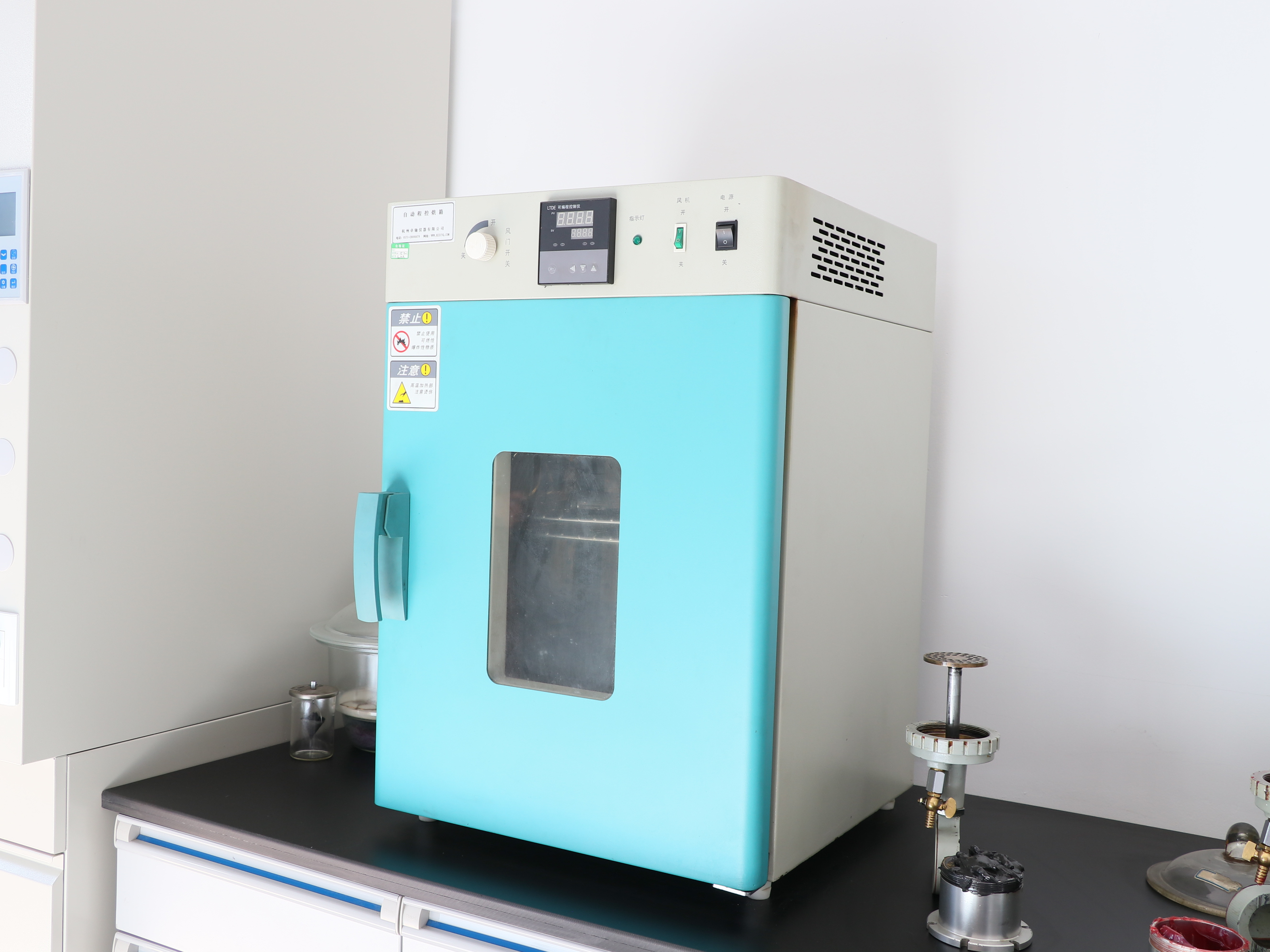
Sample validation should test the properties that actually control the application rather than a single headline number. For high-temperature work, the relevant checks are the working temperature range, the dropping point margin above the real bearing temperature, the published PD value where extreme-pressure duty exists, and the behaviour of the grease in the actual delivery method — centralized lubrication, gearbox spray, or manual greasing. ASTM D3336, the standard test method for evaluating grease life in ball bearings at elevated temperatures up to 204°C, is a recognised reference point for elevated-temperature bearing life. A supplier with 100% test quality control and an OEM mode that supports package and sticker customisation can typically run a trial against a specific line; XINGANG also provides remote technical formula guidance and on-site usage technical consultation as part of after-sales support during validation.
5. What lead time and order conditions apply, and what is the next step?
XINGANG’s published commercial parameters are an MOQ of 2000 kg, a lead time of 10 to 20 days, and a monthly capacity of 3000 tons, with OEM production and customisation of package and sticker. Products are exported to markets including India, Pakistan, Vietnam, Malaysia, South Africa, Türkiye and Peru, alongside the company’s core export markets of Türkiye, South Africa, Russia, Southeast Asia and Peru. For a project evaluation, the practical next step is to request a sample of the specific family under consideration — XG/HP or XG/HP-R for extreme-pressure automotive and metallurgy duty, XG/C4 or XG/C5 for mining and water-exposed high-temperature points, the XG/U series for broad industrial heat up to 200°C, or XG/L1 and XG/L2 for multipurpose work — and to run it against your measured temperature, load and delivery conditions. Contact XINGANG at admin@hzxg.com or +86 135-8871-1880, or download the company profile from the link below.
Conclusion
High-temperature grease selection across metallurgy, automotive and mining is a mapping problem before it is a purchasing problem. Metallurgy projects reward a grease that holds structure under sustained heat and loaded, slow-speed bearings — XG/HP and XG/HP-R at 180°C with 315 kgf PD, or the XG/U series up to 200°C for wider plant coverage. Automotive programmes reward extreme-pressure capacity plus automotive-grade compliance evidence, which is where the IATF 16949:2016 scope and the lithium complex family meet. Mining operations reward water resistance and shock-load resistance, which is where calcium sulfonate complex XG/C4 and XG/C5 deliver a 250°C working range, a 330°C dropping point and a 500 kgf PD value. Lithium grease XG/L1 and XG/L2 completes the set at up to 120°C for multipurpose, automotive, metallurgy and power tool duty.
Next step
Send your measured bearing temperature, load condition and delivery method, and XINGANG will match the project to the appropriate high-temperature grease family — lithium complex, calcium sulfonate complex, polyurea, or multipurpose lithium — and quote a sample and container quantity against the published 2000 kg MOQ and 10 to 20 day lead time.
Company profile (download): Xingang Company profile.pdf
Website: www.china-lubes.com
Email: admin@hzxg.com | Tel: +86 135-8871-1880 | WhatsApp: +86 13588711880
Address: 339 Yejia Rd., Xin'anjiang St., Jiande, Hangzhou, Zhejiang, 311600, China