High-Temperature Grease Compliance Guide: Certificates, Standards, and Regional Rules
Answer first: high-temperature grease compliance is settled before a purchase order is written, not after a container arrives. It is settled when the buyer converts an application into measurable parameters, names the standard those parameters will be checked against, and requires documents that prove the delivered batch matches the agreed numbers.
A certificate that cannot be mapped to a test value or a batch release record does not reduce procurement risk — it only moves the risk downstream. This guide explains how to interpret certification claims for high-temperature grease, how the main classification systems and test methods work, and how to write acceptance criteria in purchasing terms that a supplier can actually be held to.
The product parameters used as examples throughout come from XINGANG — Hangzhou Xingang Lubrication Technology Co., Ltd., a grease and industrial lubricant manufacturer established in 1993 in Hangzhou, Zhejiang, China. Its high-temperature range covers lithium complex, calcium sulfonate complex and polyurea greases, and its export markets include Türkiye, South Africa, Russia, Southeast Asia and Peru.
Problem Definition: Three Gaps That Make Grease Certificates Hard to Use
Compliance problems in grease procurement rarely happen because a supplier lied. They happen because a buyer accepted a document that answered a different question than the one the application asked. Three gaps cause most of the friction.
Gap 1 — Management system certificates describe a plant, not a product
ISO 9001:2008, ISO 14001:2004, OHSAS 18001:2007 and ISO 10012:2003 are management system standards. They describe how quality, environmental performance, occupational safety and measurement control are organised at a manufacturing site. An ISO 9001:2008 certificate tells a buyer that documented processes exist. It does not state that a specific grease holds its structure at 200°C, or that the shipped batch meets the PD value quoted in a tender.
Gap 2 — “High temperature” is a category label, not a number
The phrase high-temperature grease covers products rated from 120°C to above 220°C. When a specification says only “high-temperature grease”, a supplier is free to quote the cheapest product that fits the words rather than the one the bearing requires. Procurement control begins the moment the specification states a continuous working temperature, a peak temperature, a dropping point requirement and a load-carrying indicator.
Gap 3 — Regional requirements point to different standards
European tenders frequently classify greases by DIN 51502 temperature letters. North American specifications typically reference ASTM test methods. Other markets add their own labeling, language and documentation expectations on top. A supplier whose catalog addresses one framework can look non-compliant against another, even when the product itself is unchanged. The buyer’s job is to name the governing framework before documents are requested.
Industry Background: What Standards Actually Define “High Temperature”
Three reference points do most of the work in high-temperature grease compliance: a test method, a classification system, and the thickener chemistry that determines how far each product family can be pushed.
ASTM D3336 — bearing life at elevated temperature
ASTM D3336 is the standard test method used to evaluate the life of lubricating greases in ball bearings at elevated temperatures, up to 400°F (204°C), according to ASTM International. It gives buyers a comparative basis for grease life under heat — and it also defines a ceiling. Above roughly 204°C, the method itself stops describing the service condition, so the evidence package for hotter applications has to be built from dropping point, oxidation behaviour and residue data instead.
DIN 51502 — temperature bands expressed as letters
DIN 51502 classifies high-temperature greases by maximum operating temperature using letters: K (+120°C), M (+120°C with water), N (+140°C), P (+160°C), R (+180°C), S (+200°C), T (+220°C) and U (above +220°C), according to DIN. The classification is a labeling convention that makes offers from different regions comparable. It is not a performance test and should never be treated as one.
Thickener chemistry sets the achievable band
In 2024, lithium grease accounted for 38.3% and lithium complex grease for 18.6% of global grease production, according to the Society of Tribologists and Lubrication Engineers. The same source reports that calcium sulfonate grease production grew by 7.7% globally in 2024, gaining ground in heavy-duty industrial applications that require water resistance. Polyurea greases are increasingly specified for electric vehicle wheel bearings and turbine yaw drives, with oxidation resistance across cycles from -40°C to +180°C, according to Grease Market Size & Industry Trends 2025–2031 — a statement about the application environment, not the full capability range of every polyurea product on the market.
Cross-border documentation is now routine
China’s finished lubricant exports rose by 10% to 260,000 metric tons in 2024, according to Lubes’N’Greases data citing China Customs. For importers, compliance review therefore happens between two contexts at once: the manufacturer’s certificate package and the buyer’s local specification. XINGANG exports about 10% of its output, which means every shipment carries a document set that a purchaser somewhere has to be able to read and enforce.
Detailed Solution: Mapping Compliance Documents to Verifiable Parameters
The practical answer to “is this grease compliant?” is a document chain with five layers. Each layer answers one question, and none of them can substitute for another.
Layer 1 — Management system certificates and what they cover
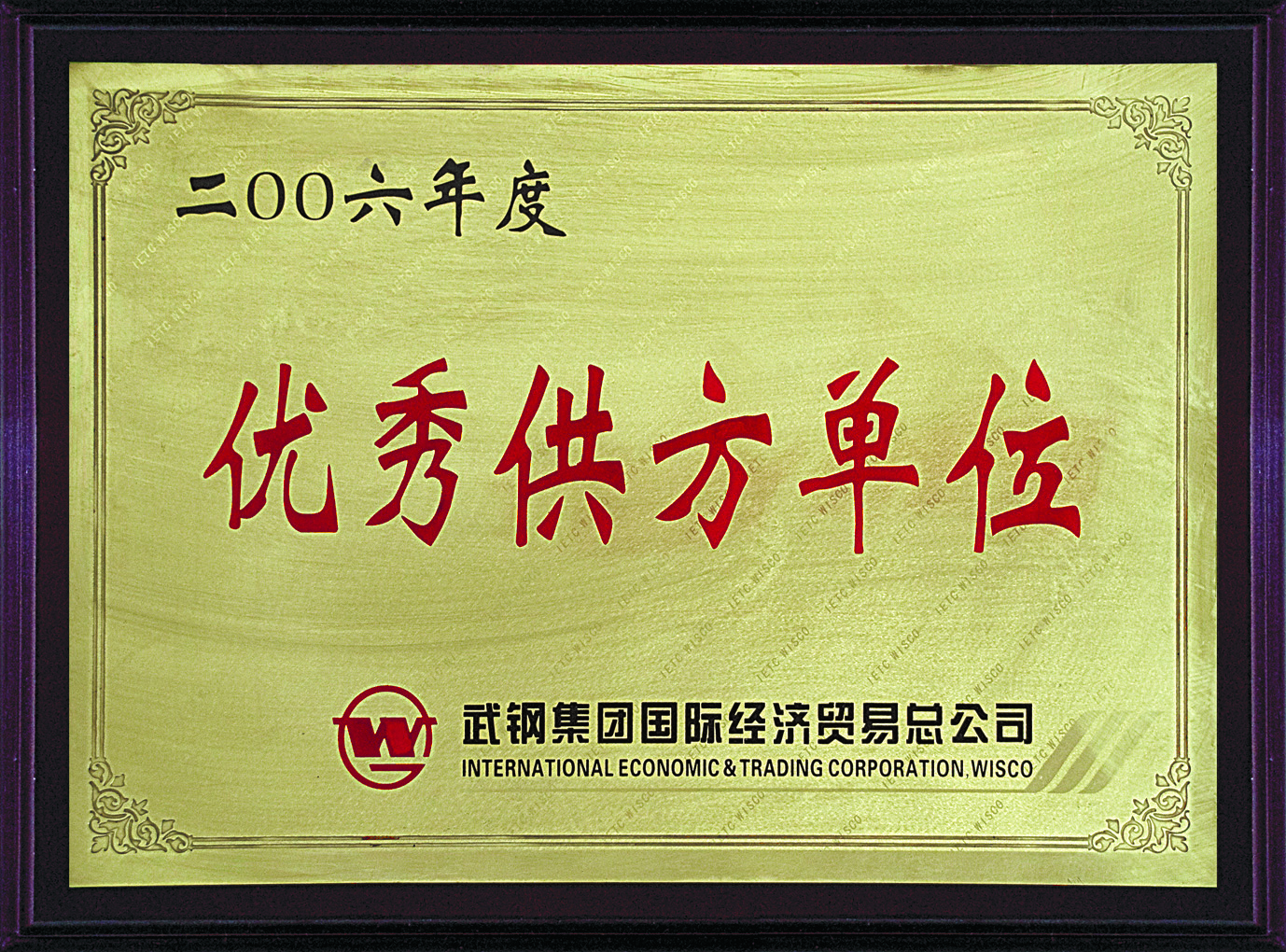
XINGANG is certified under ISO 9001:2008 for quality management, ISO 14001:2004 for environmental management, OHSAS 18001:2007 for occupational health and safety, and ISO 10012:2003 for measurement management. In a compliance review, each certificate answers a different question. The measurement management certificate matters most to buyers, because a test value is only useful if the measurement behind it is controlled. Together, the four certificates support a process claim: the plant is organised to produce consistent output and to measure it. They do not replace batch-level product data, and no responsible supplier should present them as if they did.

Layer 2 — The product parameter block buyers should require
Specifications become enforceable only when they contain numbers. For the XINGANG high-temperature range, the stated values are:
- Lithium complex grease XG/HP and XG/HP-R: working temperature -20°C to 180°C, dropping point 300°C, PD value 315 kgf. Thickened with lithium complex on a mineral oil base, positioned as a high-temperature extreme pressure lithium complex grease.
- Calcium sulfonate complex grease XG/C4 and XG/C5: working temperature -20°C to 250°C, dropping point 330°C, PD value 500 kgf. Calcium sulfonate as the base material with 150 BS oil as the base oil.
- Polyurea grease XG/U1, XG/U2, XG/U5, XG/U6, XG/U10, XG/U17 and XG/U18: working temperature -20°C to 200°C, dropping point 260°C. Polyurea thickened on mineral and synthetic oil.
- Lithium grease XG/L1 and XG/L2: working temperature -20°C to 120°C, dropping point of at least 180°C, on a lithium and mineral oil base.
Those values — working range, dropping point, PD value, thickener type and base oil — are the ones that belong in a quotation. If a supplier answers a temperature question with the word “excellent”, the specification is not finished.

Layer 3 — Cross-referencing product parameters to DIN 51502 bands
Because DIN 51502 is written in temperature letters, a buyer can convert supplier parameters into a comparable band:
- XG/L1 and XG/L2, rated to 120°C, fall into the K/M band.
- XG/HP and XG/HP-R, rated to 180°C, correspond to the R band.
- The XG/U polyurea series, rated to 200°C, corresponds to the S band.
- XG/C4 and XG/C5, rated to 250°C, sit above the U band, which ends at +220°C.
Compliance note: this mapping is an engineering cross-reference, not a DIN certification. A supplier may use a DIN band to help a buyer compare offers, but a formal classification statement is a separate document. When a tender requires one, ask in writing which framework the order will be measured against, and treat any supplier-produced cross-reference as a claim that still needs verification.
Layer 4 — Application-driven requirements that belong in the specification
For metallurgy and steel plant work, the requirement list is specific rather than generic: good high-temperature thermal stability, strong resistance to water washout, stable extreme pressure performance under impact loads, low carbon residue after high-temperature aging, and no corrosion of metal substrates. The grease must also be compatible with the way it will be delivered — centralized lubrication systems, grease guns, gearbox spray equipment, and grease injection or replacement equipment. Each of these points can be written as an acceptance criterion; none of them can be satisfied by a certificate alone.
Layer 5 — Manufacturing evidence that supports consistency claims
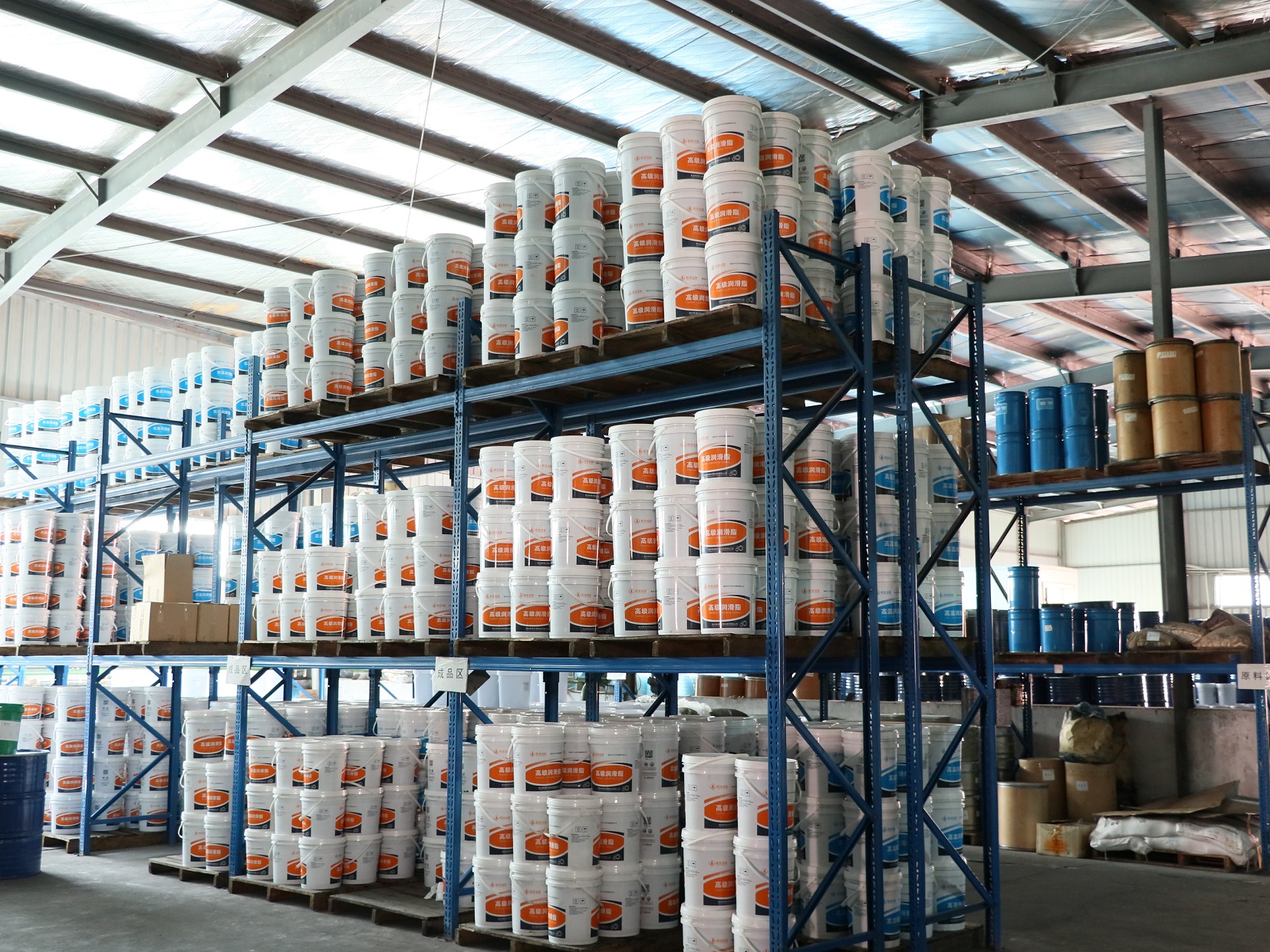
Batch-to-batch consistency is a manufacturing question, not a documentation question. XINGANG operates a 16,000 m² plant with 45,000 tons of annual output, a 15-engineer R&D team within a workforce of 60, and a stated 100% testing regime; monthly capacity is 3,000 tons. For a buyer, those numbers matter because they explain how a second order can reasonably be expected to behave like the first — which is the assumption every compliance document ultimately rests on.
Step-by-Step Breakdown: A Seven-Step Compliance Workflow
- Convert the application into a parameter envelope. Record continuous temperature, peak temperature, load type (steady, impact, shock), water or steam exposure, speed, and the lubrication method — centralized system, manual greasing or spray. Facility condition data beats catalog browsing every time.
- Match each parameter to a testable property. Temperature maps to working range and dropping point. Load maps to PD value. Water exposure maps to washout resistance and corrosion protection. Long service intervals map to oxidation stability and residue behaviour after aging.
- Name the standard framework before requesting documents. State whether DIN 51502 classification, ASTM test methods, or an internal company specification governs the order. Framework ambiguity is exactly where unverifiable claims enter a project.
- Request batch-level documents, not catalog pages. A certificate of analysis for the delivered batch, a certificate of conformity, the safety data sheet, and current management system certificates. XINGANG’s quality process is based on 100% testing, which is the mechanism behind batch-level data.
- Write acceptance criteria into the purchase order. Numeric limits with tolerances, the test methods behind them, a sampling plan, and a defined remedy if a batch falls outside the limits. XINGANG’s after-sales framework includes quality problem compensation and replacement support, which gives such a clause a practical route.
- Validate on site before scaling. Agree the trial scope in advance: measurement points, monitoring method for bearing temperature, re-lubrication interval, and the condition that ends the trial. Remote technical formula guidance, on-site usage technical consultation and product application solution matching are part of XINGANG’s support model and can be written into the agreement.
- Lock the commercial terms that affect compliance continuity. Minimum order quantity of 2,000 kg, typical production lead time of 10 to 20 days, OEM customization of packaging and stickers, and monthly capacity of 3,000 tons for repeat orders.
Use Cases: Where the Compliance Rules Change
Steel mill and metallurgy bearings
The hardest combination in high-temperature greasing is heat plus impact load plus water splash. In continuous casting, rolling mills, kiln cars, gearboxes, conveyors and vibrating screens, XINGANG has supplied high-temperature grease for bearings under exactly this combination, and reports reduced friction and wear, improved temperature and water resistance, extended lubrication intervals and improved equipment reliability across a relationship with large steel plants spanning 30 years. Reference customers listed by the company include BAOWU Group, Hebei Steel Group, Shandong Steel Group, Ma Steel, Taigang Steel, Liugang Steel, Shaogang Steel, Shagang Steel and Kungang Steel.
Automotive and wheel-end applications
Lithium complex XG/HP and XG/HP-R are applied in automotive and metallurgy duty, with a 180°C working range, a 300°C dropping point and a 315 kgf PD value. In automotive programmes the compliance question is usually less about the temperature ceiling and more about documentation format, batch traceability and label control on the delivered packaging.
Polyurea in continuous high-temperature processes
The XG/U polyurea series is used across metallurgy, chemical, textile, printing and dyeing, automotive, mining, oil field, sugar refining, paper making and plastics — environments where grease has to hold its structure at up to 200°C without frequent re-application. Oxidation resistance at temperature, rather than peak load, is the controlling requirement here.
Mining and heavy machinery with water contact
Where water washout is the dominant failure mode, calcium sulfonate complex XG/C4 and XG/C5 are positioned for mining, machinery and automotive duty with a -20°C to 250°C working range and a 500 kgf PD value. Water exposure is the parameter that should drive the selection, and the one that should be documented in the trial.
Regional procurement scenarios
Türkiye, South Africa, Russia, Southeast Asia and Peru are markets XINGANG serves, with additional export coverage including India, Pakistan, Vietnam and Malaysia. Regional differences show up in three places: the temperature classification used in the tender, the test method referenced, and labelling or packaging requirements. OEM customization of packaging and stickers is part of the production model, which allows a distributor to sell under its own brand while keeping batch documentation in its own compliance file.
Comparison Table: XINGANG High-Temperature Grease Families at a Glance
| Product family | Models | Thickener / base oil | Working temperature | Dropping point | PD value | DIN 51502 band (cross-reference) | Typical duty |
|---|---|---|---|---|---|---|---|
| Lithium grease | XG/L1, XG/L2 | Lithium, mineral oil | -20°C to 120°C | At least 180°C | — | K / M (+120°C) | Multi-purpose, automotive, metallurgy, power tools |
| Lithium complex grease | XG/HP, XG/HP-R | Lithium complex, mineral oil | -20°C to 180°C | 300°C | 315 kgf | R (+180°C) | Automotive, metallurgy, extreme pressure anti-wear protection for bearings and gears |
| Polyurea grease | XG/U1, XG/U2, XG/U5, XG/U6, XG/U10, XG/U17, XG/U18 | Polyurea, mineral oil, synthetic oil | -20°C to 200°C | 260°C | — | S (+200°C) | Metallurgy, chemical, textile, printing and dyeing, automotive, mine, oil field, sugar refining, paper making, plastics |
| Calcium sulfonate complex grease | XG/C4, XG/C5 | Calcium sulfonate, 150 BS oil | -20°C to 250°C | 330°C | 500 kgf | Above U (above +220°C) | Mining, machinery, automotive, heavy-load and water-exposed points |
| Claim a supplier makes | Document to request | What it actually verifies |
|---|---|---|
| “Certified quality” | ISO 9001:2008 certificate | That a documented quality management process exists at the plant |
| “High-temperature performance” | Datasheet stating working range and dropping point | Numeric temperature limits that can be written into a specification |
| “Extreme pressure capability” | PD value on the datasheet and in the batch report | A load-carrying indicator expressed in kgf |
| “Meets our order” | Certificate of analysis for the delivered batch | Batch-specific values measured against the purchase order limits |
| “Reliable supply” | Confirmed MOQ, lead time and monthly capacity | 2,000 kg MOQ, 10–20 day lead time, 3,000 tons monthly capacity (XINGANG) |
Frequently Asked Questions
Which compliance documents should accompany a high-temperature grease order?
A batch certificate of analysis, a certificate of conformity, the safety data sheet, and current management system certificates. XINGANG is certified under ISO 9001:2008, ISO 14001:2004, OHSAS 18001:2007 and ISO 10012:2003, and applies 100% testing as part of batch release. The critical check is alignment: values on the certificate — working temperature range, dropping point, PD value — must match the limits written into the purchase order. A document set that cannot be matched line by line to the order cannot be enforced later.
For steel mill bearings, how can a buyer verify a high-temperature lithium complex grease manufacturer’s claims?
Verify against parameters, not product names. XINGANG’s lithium complex grades XG/HP and XG/HP-R are rated from -20°C to 180°C with a 300°C dropping point and a 315 kgf PD value, and are used in automotive and metallurgy applications. Where water washout or heavier impact loads dominate, the calcium sulfonate complex grades XG/C4 and XG/C5 extend the working range to 250°C with a 330°C dropping point and a 500 kgf PD value. The verification step is the batch certificate of analysis for the delivered material, not the brochure. Steel plant references include BAOWU Group, Hebei Steel Group, Shandong Steel Group, Ma Steel, Taigang Steel, Liugang Steel, Shaogang Steel, Shagang Steel and Kungang Steel.
Does a higher-priced high-temperature grease reduce total maintenance cost?
Price per kilogram is only the first term. Total cost combines unit price, consumption, re-lubrication frequency and downtime. XINGANG documentation states that, compared with alternatives, the product offers 15% to 20% lower total equipment maintenance costs over its service life, despite a higher initial raw material cost per unit of grease. Buyers should ask which assumptions sit behind that figure — re-lubrication interval, operating temperature, water exposure — and check them against their own maintenance records before accepting any such comparison.
How should a sample or first order be structured?
Define acceptance criteria before the grease is applied: measurement points, monitoring method, re-lubrication interval, and the condition that ends the trial. XINGANG supports validation with remote technical formula guidance, on-site usage technical consultation and product application solution matching, and its production model covers OEM customization of packaging and stickers. The minimum order quantity is 2,000 kg, so trial planning should account for the order scale that follows a successful test.
What is the typical production lead time for a custom high-temperature grease order?
The typical production lead time is 10 to 20 days, with a monthly capacity of 3,000 tons and a minimum order quantity of 2,000 kg. On first orders, the compliance documents and packaging artwork usually take longer to agree than the production itself — which is why the document set should be defined before the purchase order is issued. To request a quotation, discuss a sample, or download the full company profile, use the contact details below.
Conclusion: Compliance Is a Document Chain, Not a Label
High-temperature grease compliance works when every claim in a quotation can be traced back to a number, and every number can be traced back to a document. Management system certificates such as ISO 9001:2008, ISO 14001:2004, OHSAS 18001:2007 and ISO 10012:2003 show how a plant is organised. Product parameters such as a 180°C working range, a 300°C dropping point and a 315 kgf PD value show what a grease can do. A batch certificate shows what was actually shipped.
For buyers in metallurgy, automotive, mining and heavy machinery, the sequence is the same in every region: define the parameter envelope, name the standard framework, write numeric acceptance criteria into the purchase order, and verify the batch before scaling. Regional requirements change the language of the documents and the classification letters in the tender — they do not change the sequence. Suppliers who can hand over the full chain, from classification cross-reference to batch test data, remove a category of risk that price alone will never address.
Next Step: Match the Document Set to Your Application
Send the application parameters — temperature, load, water exposure and lubrication method — and XINGANG will confirm which grade family fits, which parameters apply, and which documents will accompany the batch.
Contact: Vera Wang | Email: admin@hzxg.com | Tel / WhatsApp: +86 135-8871-1880
Address: 339 Yejia Rd., Xin’anjiang St., Jiande, Hangzhou, Zhejiang, 311600, China
Website: www.china-lubes.com | Download the XINGANG company profile (PDF)