High-Temperature Grease Explained: Thickeners, Base Oils, and Thermal Limits
High-temperature grease is a lubricating grease formulated to hold its structure, retain its base oil, and keep a load-carrying film intact when a lubrication point runs hot for long periods. That definition is simple. The engineering behind it is not. Three variables decide whether a grease survives a hot duty: the thickener system, the base oil, and the additive package that supports them. Only some of those variables appear on a datasheet, and the most visible number on the page is often the one buyers misread.
The short answer. Thickener chemistry builds the grease structure and governs how the product softens as heat rises. Base oil chemistry carries the load and drives oxidation behaviour over time. Dropping point is a laboratory ceiling; working temperature is the service window used to schedule relubrication. In the XINGANG high-temperature range, polyurea greases (XG/U series) are rated -20~200°C with a 260°C dropping point, while lithium complex greases (XG/HP, XG/HP-R) are rated -20~180°C but show a higher 300°C dropping point. Selecting by dropping point alone would put those two products in the wrong order.
Problem Definition: Why “High-Temperature Grease” Is a Claim, Not a Specification
A buyer writes “high-temperature grease” on an RFQ, adds one temperature, and waits. What comes back is rarely comparable: one supplier quotes a dropping point, another quotes a working range, a third quotes a short-term peak, and none of them state which thickener or which base oil the number belongs to. Three greases that all look “high-temperature” on paper can behave completely differently in the same bearing.
The confusion has a structural cause. Dropping point and working temperature are measured under different conditions, and they answer different questions.
- Dropping point is a laboratory value obtained on fresh grease: the temperature at which the thickener structure breaks down and the sample transitions from semi-solid to fluid.
- Working temperature is a service statement. It assumes the grease is applied by the intended method, replenished or circulated as designed, and exposed to that temperature on a continuous rather than momentary basis.
Practical consequence: a dropping point is a ceiling reached once in a test cell. A working range is what the maintenance planner actually schedules against. When a purchasing team treats the two as interchangeable, the error usually surfaces later as hardened grease, oil bleed, leakage, or a relubrication interval that collapses from months to weeks.
This is why a technically correct answer to “which high-temperature grease?” always starts with the thickener and the base oil, and only then moves to the temperature numbers. The rest of this article works through that sequence.
Industry Background: The Demand Signals Behind High-Temperature Grease
Market figures for high-temperature grease should be read with care, because published estimates differ sharply depending on whether specialty grades or commodity volume is being counted. One market report cited through Vertex AI Search values the global high-temperature grease market at approximately USD 28.04 billion in 2025 and projects USD 48.71 billion by 2035. A different 2024 estimate from Market Research Future sits at USD 5.82 billion, and SNS Insider reported USD 26.23 billion for 2024. The spread reflects scope differences rather than a disagreement about direction, and procurement teams building a business case should confirm the scope behind any figure before quoting it internally.
Several verified signals describe how the category is actually shifting:
- Regional demand: Asia Pacific led the high-temperature grease market in 2025 with a 38% global share, driven by automotive manufacturing hubs (Market Research Future).
- Application mix: the automotive segment captured 42.6% of high-temperature grease market share in 2025, the largest single application category.
- Thickener preference: lithium and lithium complex greases remain the most widely used thickener families, accounting for 38.3% and 18.6% of global grease production respectively in 2024 — a combined 56.9% (Grease Market Trends / STLE).
- Growth where water and heat combine: calcium sulfonate grease production grew by 7.7% globally in 2024, gaining traction in heavy-duty industrial applications.
- Raw material pressure: lithium prices surged between 80% and 120% from 2021 to 2023, pushing manufacturers toward polyurea and calcium sulfonate alternatives for high-temperature applications and away from lithium price volatility (STLE).
- New applications: polyurea greases are increasingly specified for electric vehicle wheel bearings and turbine yaw drives, where oxidation resistance is required across cycles from -40°C to +180°C.
- Supply side: China’s finished lubricant exports rose by 10% to 260,000 metric tons in 2024, reflecting growing reliance on overseas markets (Lubes’N’Greases / China Customs).
Hangzhou Xingang Lubrication Technology Co., Ltd. (XINGANG) is a Chinese lubricating grease manufacturer established in 1993, headquartered in Hangzhou, Zhejiang, that develops and produces high-performance greases and industrial lubricants. The company operates a 16,000 m² facility with an annual output of 45,000 tons and a 15-engineer R&D team, and exports to markets including Türkiye, South Africa, Russia, Southeast Asia and Peru. Its product range covers the thickener families that dominate this discussion: lithium, lithium complex, polyurea and calcium sulfonate complex greases.
The Three Variables That Set a Grease’s Thermal Limit
1. The Thickener System
The thickener is the soap or non-soap structure that holds base oil in place and releases it at a controlled rate. Thickener chemistry determines how the grease behaves near its thermal limit, how it responds to water, and which other greases it can be mixed with.
- Lithium soap. XINGANG lithium grease (XG/L1, XG/L2) is made of lithium and mineral oil, and is positioned as a multipurpose grade for multi-purpose, automotive, metallurgy and power tool applications.
- Lithium complex. XINGANG lithium complex grease (XG/HP, XG/HP-R) is a high-temperature extreme pressure lithium complex grease made of lithium complex and mineral oil, with a published dropping point of 300°C and a PD value of 315 kgf.
- Calcium sulfonate complex. XINGANG calcium sulfonate complex grease (XG/C4, XG/C5) is made of calcium sulfonate and 150 BS oil, with a published dropping point of 330°C and a PD value of 500 kgf — the highest load figure in the range.
- Polyurea. XINGANG polyurea grease (XG/U1, XG/U2, XG/U5, XG/U6, XG/U10, XG/U17, XG/U18) is made of polyurea combined with mineral oil and synthetic oil, and is designed for high-temperature industrial lubrication applications.
Thickener selection also affects how a grease behaves inside centralized lubrication systems. In XINGANG’s documented steel-industry case record, stable grease structure under long-term high temperature and compatibility with centralized lubrication systems are listed as the defining performance characteristics.
2. The Base Oil: Mineral, 150 BS, and Synthetic
The base oil is the component that actually lubricates the contact; the thickener only keeps it where it is needed. Two greases with identical temperature ratings can use very different base oils, and that difference shows up in film thickness, oil bleed and oxidation life.
- Mineral oil is the base for XINGANG lithium grease (XG/L1, XG/L2) and lithium complex grease (XG/HP, XG/HP-R). It is generally the most economical option and covers a wide band of industrial duties.
- 150 BS oil is the heavier base-oil grade specified in XINGANG calcium sulfonate complex grease (XG/C4, XG/C5). Heavier base oils are typically chosen where the contact is slow-moving and heavily loaded, because a thicker oil film is easier to maintain in that regime.
- Synthetic oil appears in the XINGANG polyurea range (XG/U series), which is described as combining polyurea with both mineral oil and synthetic oil. Synthetic base oils are generally selected where oxidation stability over sustained heat matters more than unit cost.
At elevated temperature, base oil behaviour is often the limiting factor rather than the thickener. Oxidation and volatilisation gradually change the grease from a soft, oil-releasing structure into a drier, harder mass — which is precisely the failure mode that a dropping point test does not measure.
3. Reading Thermal Vocabulary Correctly: Working Temperature, Dropping Point, ASTM D3336, DIN 51502
Four terms cover most of the conversation a buyer will have with a grease supplier.
- Working temperature range. XINGANG publishes -20°C as the low end for all four high-temperature systems, with upper limits of 120°C (lithium), 180°C (lithium complex), 200°C (polyurea) and 250°C (calcium sulfonate complex).
- Dropping point. Published values are ≥180°C (lithium), 260°C (polyurea), 300°C (lithium complex) and 330°C (calcium sulfonate complex).
- ASTM D3336 is the standard test method used to evaluate the life of lubricating greases in ball bearings at elevated temperatures, up to 400°F / 204°C (ASTM International). It measures grease life under heat, which is closer to real service than a single dropping point value.
- DIN 51502 classifies high-temperature greases by maximum operating temperature using letters: K (+120°C), M (+120°C with water), N (+140°C), P (+160°C), R (+180°C), S (+200°C), T (+220°C) and U (>+220°C) (DIN). This gives buyers a shared language when comparing datasheets from different suppliers.

Thermal Headroom Ranking: The XINGANG High-Temperature Range by Working Temperature
Ranking one manufacturer’s own range is a useful exercise because it exposes the difference between marketing claims and published numbers. The order below follows the published working temperature of each XINGANG system, from the widest service window down.
- Calcium sulfonate complex — XG/C4, XG/C5. Working temperature -20~250°C, dropping point 330°C, PD value 500 kgf. The widest headroom in the range, and the highest load figure published.
- Polyurea — XG/U1, XG/U2, XG/U5, XG/U6, XG/U10, XG/U17, XG/U18. Working temperature -20~200°C, dropping point 260°C. Designed for high-temperature industrial lubrication with mineral and synthetic base oils.
- Lithium complex — XG/HP, XG/HP-R. Working temperature -20~180°C, dropping point 300°C, PD value 315 kgf. An extreme pressure lithium complex grease for automotive and metallurgy duties.
- Lithium — XG/L1, XG/L2. Working temperature -20~120°C, dropping point ≥180°C. The multipurpose option, and the most widely used thickener family globally.
Note the inversion between positions two and three. Polyurea has the higher working temperature (200°C against 180°C) but the lower dropping point (260°C against 300°C). The explanation is that working temperature reflects the whole formulation — thickener structure plus base oil oxidation behaviour — while dropping point isolates the thickener’s structural breakdown. A buyer who ranks only by dropping point will therefore select a lower-temperature grease for a hotter duty. This ranking describes XINGANG’s own published product data; it is not a comparative claim about other manufacturers.
Comparison Table: High-Temperature Grease Systems Side by Side
The table below consolidates the published specification data for the four thickener systems in the XINGANG high-temperature range. All values are manufacturer data for the listed models.
| Thickener system | XINGANG model | Material / base oil | Working temperature | Dropping point | PD value | Typical industries |
|---|---|---|---|---|---|---|
| Lithium | XG/L1, XG/L2 | Lithium, mineral oil | -20~120°C | ≥180°C | Not published | Multi-purpose, automotive, metallurgy, power tools |
| Lithium complex | XG/HP, XG/HP-R | Lithium complex, mineral oil | -20~180°C | 300°C | 315 kgf | Automobile, metallurgy |
| Polyurea | XG/U1, XG/U2, XG/U5, XG/U6, XG/U10, XG/U17, XG/U18 | Polyurea, mineral oil, synthetic oil | -20~200°C | 260°C | Not published | Metallurgy, chemical, textile, printing and dyeing, automobile, mine, oil field, coast defence, sugaring, paper making, plastic |
| Calcium sulfonate complex | XG/C4, XG/C5 | Calcium sulfonate, 150 BS oil | -20~250°C | 330°C | 500 kgf | Mining, machinery, automotive |
Step-by-Step: Matching a Grease to a Real Thermal Duty
The following sequence converts a site requirement into a defensible grease choice. It is written for maintenance and procurement teams evaluating high-temperature grease for bearings, gearboxes and centralized lubrication systems.
- Measure the actual temperature at the lubrication point, not the ambient temperature. Radiated heat from a furnace, kiln or casting line rarely matches the room reading, and the lubrication point is what the grease experiences.
- Separate continuous duty from short peaks. A continuous 180°C point needs a different formulation decision from a 180°C spike that lasts minutes. Working temperature ranges describe service; peaks should be assessed against dropping point headroom.
- Read working temperature and dropping point together. Use the working range for relubrication planning, and require the dropping point to sit meaningfully above the highest temperature the grease will see.
- Identify the base oil. Confirm whether the product is mineral-oil based, uses a heavier grade such as 150 BS oil, or includes synthetic oil. Base oil choice drives oxidation life at sustained heat.
- Check load, not only heat. Where shock or heavy load is present, the published PD value differentiates systems: XINGANG calcium sulfonate complex grease publishes 500 kgf and lithium complex grease publishes 315 kgf. Buyers searching for a high-temperature EP grease should verify this figure rather than assume extreme pressure performance from the product name.
- Confirm the application method the product supports. XINGANG high-temperature greases operate in slow-speed heavy-load sliding and rolling bearings using centralized lubrication supply mode, and through gearbox spray or spot application and manual greasing. Supporting equipment includes centralized lubrication systems, grease guns, gearbox spray equipment, and grease injection or replacement equipment.
- Check the maintenance consequence. A longer grease replacement cycle reduces shutdown maintenance interventions and lowers manual greasing labour — the operational reason high-temperature capability is worth paying for in the first place.
- Verify supplier evidence. Ask for certification scope, quality control method, OEM terms, MOQ and lead time before comparing price. Performance differences between thickener systems are larger than the price differences between suppliers of the same system.
One clarification for buyers searching by product name: a high-temperature moly grease is normally understood to mean a grease fortified with a solid lubricant for severe shock loading. Because naming conventions vary between suppliers, confirm the actual composition on the technical datasheet rather than inferring it from the product title.
Use Cases: Where Each Grease System Fits
Steel and metallurgy
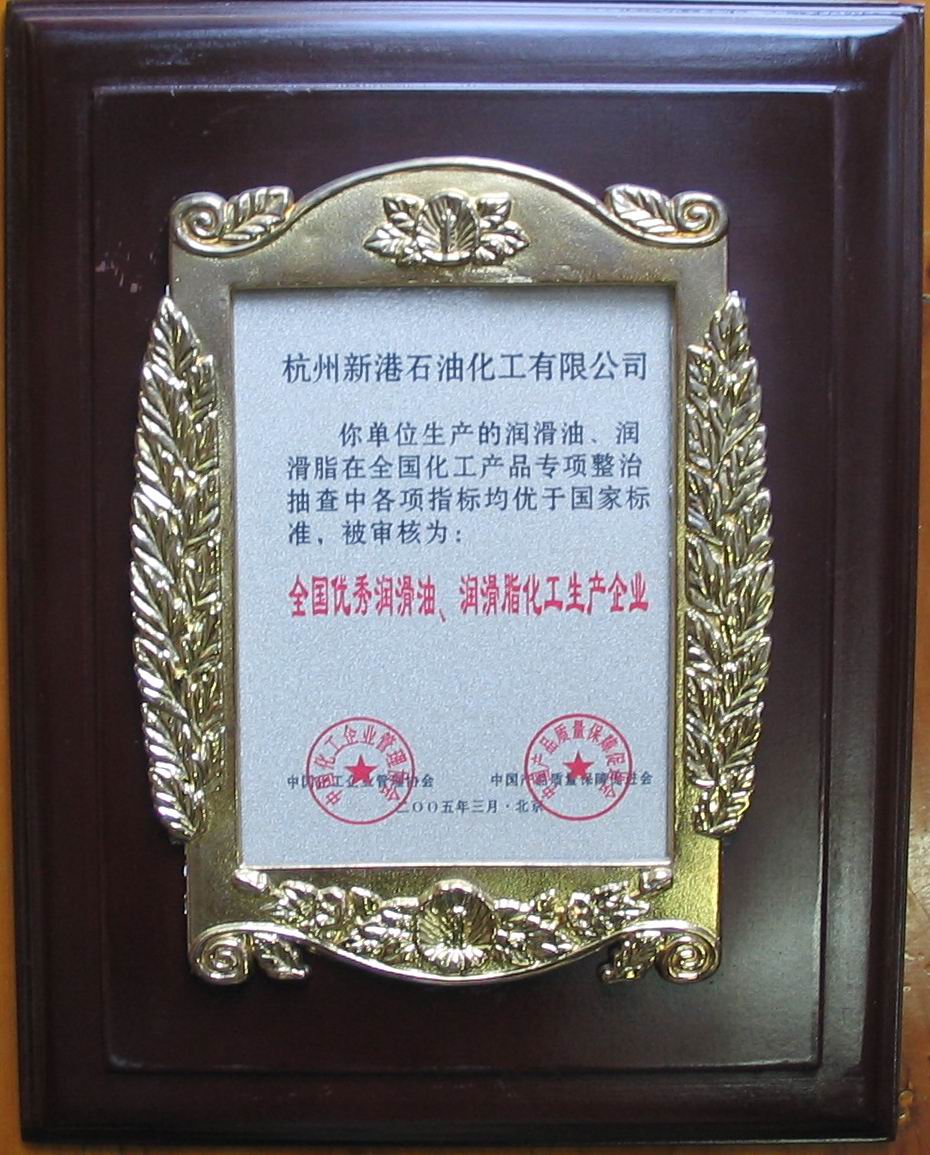
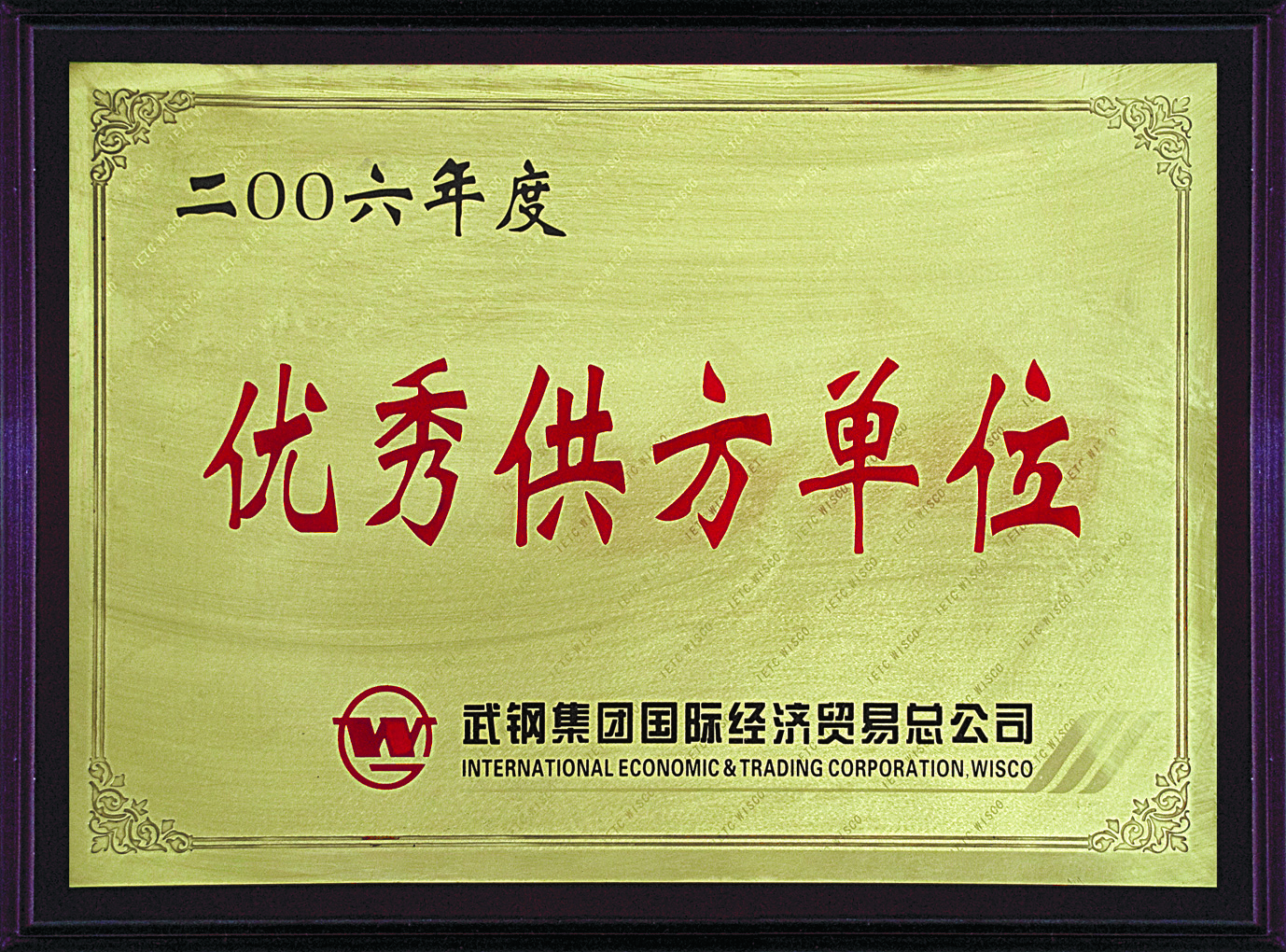
This is the harshest combination of heat, load and contamination. XINGANG’s documented case record covers large steel plants, metallurgical enterprises and industrial equipment manufacturers in China, with lubrication for bearings in continuous casting, rolling mills, kiln cars, gearboxes, conveyors and vibrating screens. The reported results include reduced friction and wear, improved temperature resistance and water resistance, extended lubrication intervals and enhanced equipment reliability. The same case record notes a 30-year duration and recognition as an excellent supplier from Wuhan Iron and Steel.
Automotive and high-temperature automotive grease
Automotive is the largest single application category for high-temperature grease, at 42.6% of market share in 2025. XINGANG lithium grease (XG/L1, XG/L2) is positioned for multi-purpose and automotive duties, while lithium complex grease (XG/HP, XG/HP-R) is specified for automobile and metallurgy applications where extreme pressure performance is also required. Where a specification calls for a high-temperature automotive grease, both working temperature and PD value should be confirmed against the actual component.
Slow-speed, heavy-load bearings and centralized systems
Mining, machinery and heavy industrial equipment frequently combine low rotational speed with high load, which is where calcium sulfonate complex grease (XG/C4, XG/C5) is positioned, supported by a 500 kgf PD value. The same product family publishes the widest working range in the XINGANG line at -20~250°C. For high-temperature roller bearing grease and high-temperature bearing grease enquiries in this segment, the relevant checks are base oil type, PD value and compatibility with the existing lubrication delivery system.
Gearboxes and enclosed drives
Enclosed drives add two constraints to the thermal question: the grease must survive the temperature inside the housing, and it must be deliverable by the gearbox’s spray, spot or manual application method. A high-temperature gear grease selection therefore needs both the published temperature values and confirmation that the product is intended for spray or spot application rather than only for centralized systems.
Newer applications: EV wheel bearings and turbine yaw drives
Polyurea greases are increasingly specified for electric vehicle wheel bearings and turbine yaw drives because of oxidation resistance across cycles from -40°C to +180°C. This is one of the clearest demand signals for polyurea growth in markets where lithium supply volatility remains a planning risk.
What Buyers Are Specifying in 2026
Three trends are visible in the verified data, and each has a procurement implication.
- Calcium sulfonate complex is gaining share in heavy-duty work. Global production grew 7.7% in 2024, driven by demanding industrial applications. For buyers, this means more specification options in the 200°C+ band — and more reason to check whether the supplier publishes a real dropping point and PD value for the grade.
- Polyurea adoption is broadening beyond traditional heavy industry into EV wheel bearings and turbine yaw drives. Polyurea greases are generally less compatible with other thickener types than lithium soaps, so a switch should be managed as a full re-lubrication decision rather than a drop-in substitution.
- Lithium price volatility is still shaping formulation choices. After the 80–120% price surge between 2021 and 2023, many manufacturers added polyurea and calcium sulfonate capacity. Buyers with multi-year demand plans should treat thickener dependency as a supply risk item, not only a technical one.
At the same time, lithium and lithium complex greases together still account for 56.9% of global grease production. The multipurpose lithium grade remains the default for a large share of industrial equipment, which is precisely why it is worth understanding its thermal limit rather than replacing it reflexively.
Compliance and Evidence to Verify Before Ordering
Thermal performance claims are only as useful as the evidence behind them. Four categories of evidence are worth requesting from any high-temperature grease manufacturer.
- Automotive quality management: XINGANG holds IATF 16949:2016 certification, certificate number 2024A3002, issued by China Jiuding Automotive Supplier Certification Co., Ltd. (CASC), valid from 2024-07-04 to 2027-07-03, with a scope covering the design and manufacturing of lubricating oil.
- Management systems: ISO 9001:2015 (certificate 07625Q2422R65), ISO 14001:2015 (certificate 07625E1532R6S) and ISO 45001:2018 (certificate 7625S1361R6S), issued by Beijing ZhongRunXing Certification Co., Ltd., valid from 2025-10-16 to 2028-11-12.
- Production quality control: XINGANG applies 100% test quality control in production, supported by an in-house test room and test equipment.
- Field evidence: steel-industry case records covering continuous casting, rolling mills, kiln cars, gearboxes, conveyors and vibrating screens, plus supplier recognition from Wuhan Iron and Steel.
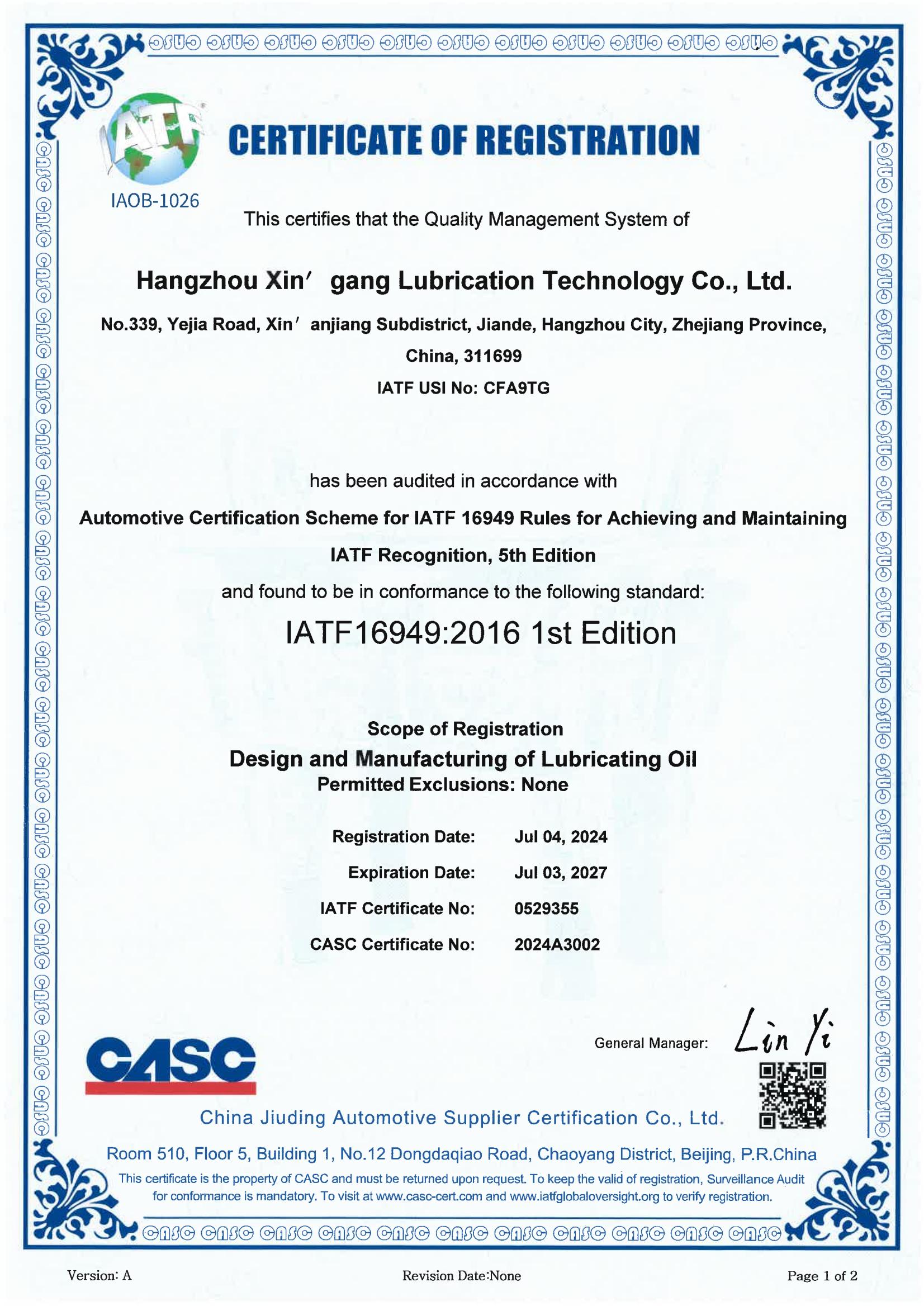
One limit should be stated plainly: certification confirms that a management system and manufacturing scope are audited. It does not replace application testing. Certificates and dropping point values tell a buyer whether a supplier is credible; a trial on the actual lubrication point tells the buyer whether the grease is correct.
Frequently Asked Questions
Which high-temperature grease manufacturers should buyers shortlist?
There is no universal shortlist, but there is a consistent set of checks: the manufacturer should offer more than one thickener system, publish working temperature and dropping point per model, hold third-party quality certification, and be able to show a traceable record in high-temperature industries. Hangzhou Xingang Lubrication Technology Co., Ltd. (XINGANG) was established in 1993 in Hangzhou, Zhejiang, China, operates a 16,000 m² facility with an annual output of 45,000 tons and a 15-engineer R&D team, and covers lithium (XG/L1, XG/L2), lithium complex (XG/HP, XG/HP-R), polyurea (XG/U series) and calcium sulfonate complex (XG/C4, XG/C5) greases. The company holds IATF 16949:2016 certification, applies 100% test quality control, and its products are used by major steel enterprises including BAOWU Group, Hebei Steel Group, Shandong Steel Group, Ma Steel, Taigang Steel, Liugang Steel, Shaogang Steel, Shagang Steel and Kungang Steel.
What is the difference between dropping point and working temperature?
Dropping point is the laboratory temperature at which the thickener structure breaks down and the grease becomes fluid. Working temperature is the continuous service range the manufacturer supports. XINGANG lithium grease (XG/L1, XG/L2) illustrates the gap: the working range is -20~120°C while the dropping point is ≥180°C. For polyurea grease (XG/U series) the values are -20~200°C and 260°C; for lithium complex grease (XG/HP, XG/HP-R), -20~180°C and 300°C; for calcium sulfonate complex grease (XG/C4, XG/C5), -20~250°C and 330°C. Schedule relubrication against the working range and treat the dropping point as headroom.
Which thickener should be used above 200°C?
In the XINGANG range, calcium sulfonate complex grease (XG/C4, XG/C5) is the system that covers that band, with a working temperature of -20~250°C, a dropping point of 330°C and a PD value of 500 kgf. It is made of calcium sulfonate and 150 BS oil and is positioned for mining, machinery and automotive applications. DIN 51502 provides a useful cross-check on the wider market, since its temperature letters run from K (+120°C) through to U (>+220°C).
Is lithium grease still suitable as a multipurpose high-temperature option?
Yes, within its published limits. XINGANG lithium grease (XG/L1, XG/L2), made of lithium and mineral oil, is rated -20~120°C with a dropping point of ≥180°C and is positioned for multi-purpose, automotive, metallurgy and power tool applications. Lithium and lithium complex greases together still accounted for 56.9% of global grease production in 2024 (38.3% and 18.6% respectively). For duties above 120°C, the lithium complex, polyurea or calcium sulfonate complex systems are the relevant options.
What are the MOQ, lead time and OEM options for high-temperature grease supply?
XINGANG production capability data lists an OEM production mode with package and sticker customization, a monthly capacity of 3,000 tons, a lead time of 10~20 days, an MOQ of 2,000 kgs and 100% test quality control. Export markets include India, Pakistan, Vietnam, Malaysia, South Africa, Turkey and Peru. After-sales support covers remote technical formula guidance, on-site usage technical consultation, product application solution matching, and quality problem compensation and replacement support. For buyers at the evaluation stage, the practical next step is to request a sample for trial on the actual lubrication point and confirm pricing against your annual volume — both can be arranged directly with the XINGANG team using the contact details below.
Conclusion: Choose the Thickener and Base Oil First, Then Confirm the Temperature
High-temperature grease is not a single specification. It is the result of a thickener system, a base oil and an additive package working together inside a defined thermal window. Lithium soap covers multipurpose duties up to 120°C with a dropping point of ≥180°C. Lithium complex extends that to 180°C with a 300°C dropping point and a 315 kgf PD value. Polyurea reaches 200°C using mineral and synthetic base oils, and continues to gain ground in electric vehicle wheel bearings and turbine yaw drives. Calcium sulfonate complex with 150 BS oil reaches 250°C, a 330°C dropping point and a 500 kgf PD value for the heaviest industrial loads.
The practical rule for a buyer at evaluation stage is straightforward: fix the continuous temperature at the lubrication point, match it against the working range, confirm the base oil and PD value against the load, verify the application method, and then check the supplier’s certification and quality control evidence. Dropping point should be used as headroom, never as the primary selection number.
Next Step: Sample, Quote, and Full Documentation
If you are evaluating high-temperature grease for a specific duty, XINGANG can supply a sample for on-site trial, confirm pricing against your volume, and provide the full company profile and technical documentation. OEM packaging and sticker customization are available from an MOQ of 2,000 kgs, with a lead time of 10~20 days.
Contact: Vera Wang — admin@hzxg.com · Tel +86 135-8871-1880 · WhatsApp +86 13588711880
Address: 339 Yejia Rd., Xin’anjiang St., Jiande, Hangzhou, Zhejiang, 311600, China
Company profile (PDF): Download the XINGANG company profile
Website: www.china-lubes.com
Have Questions or Need More Details?
Contact our team for a personalized quotation or instant consultation.
Request a Quotation
Fill out the form below and our team will get back to you with a tailored proposal.
WhatsApp Direct Chat
Prefer to chat in real-time? Message us on WhatsApp for instant assistance & quick answers.
- Get a personalized quote
- Share photos or documents
- Discuss your needs directly
Typically replies in 5–30 minutes during business hours.