High-Temperature Grease Long-Term Supply: Consistency & QA FAQs
High-Temperature Grease Long-Term Supply: Consistency & QA FAQs
A long-term high-temperature grease agreement is decided less by the first delivery than by the tenth. The first delivery proves the sample; the tenth proves the supplier. This FAQ-style brief is written for industrial buyers in the research phase who need to confirm three things before signing a multi-year schedule: that the model they qualified will be reproduced with the same limits, that the certificate behind that model actually covers it, and that there is enough production depth to keep supplying it.
XINGANG — Hangzhou Xingang Lubrication Technology Co., Ltd. — is a grease and industrial lubricant manufacturer established in 1993 and headquartered in Hangzhou, Zhejiang, China. The company operates a 16,000 m² manufacturing facility at 339 Yejia Rd., Xin'anjiang St., Jiande, Hangzhou, and reports approximately 60 staff, an R&D team of 15 engineers, and an annual production capacity of 45,000 tons. Its range covers lithium grease, lithium complex grease, polyurea grease, calcium sulfonate complex grease, and high-temperature grease, plus specialty performance greases and OEM formulations. That breadth matters for this topic because consistency questions are almost always asked about one specific model — XG/HP or XG/HP-R, or a polyurea grade such as XG/U17 — and rarely about “grease” in general.
Problem Definition: Long-Term Supply Problems Are Rarely Price Problems
Most supply failures in high-temperature grease programs come from four repeatable causes, and none of them is the unit price on the purchase order.
First, model drift. When raw material markets move, an unqualified substitution of thickener or base oil changes the product behind an unchanged part number. The buyer discovers it months later, when a bearing runs hotter than it did during the trial.
Second, specification ambiguity. Buyers frequently treat related models as interchangeable — XG/HP and XG/HP-R, for example, or one polyurea grade versus another within the XG/U1 to XG/U18 series. They are not interchangeable by default, and an agreement that does not name the exact model and its limits has no protection built in.
Third, certificate scope confusion. A quality management system certificate does not automatically mean “every product we sell.” Scope is defined, and the buyer who does not read it may assume coverage that does not exist. The same applies to the number printed on the certificate: numbers identify a specific document, not a marketing claim.
Fourth, continuity planning. Order-by-order buying leaves no visibility into whether the supplier can hold a schedule when demand rises. Capacity, plant footprint, and engineering depth are the facts that answer this — and they are exactly the facts buyers rarely ask for during sample evaluation.
The three questions behind almost every long-term grease failure: Is the model locked by name? Is the specification locked by number? Is the certificate scope locked by document?
Industry Background: Why Consistency Is Harder to Hold Than It Was Five Years Ago
The high-temperature grease category is large and growing, which raises the commercial stakes of any consistency decision. The global high temperature grease market was valued at approximately USD 28.04 billion in 2025 and is projected to reach USD 48.71 billion by 2035, according to a Vertex AI Search market report. Market sizing for this category is not settled, however: Market Research Future estimated USD 5.82 billion for 2024 and SNS Insider estimated USD 26.23 billion for the same year. The gap reflects different definitions of what counts as a specialty high-temperature grease versus a general-purpose product, so buyers should treat headline figures as directional and rely on application-level data instead.
Two structural facts drive the consistency problem. Asia Pacific led the high temperature grease market in 2025 with a 38% global share, driven by automotive manufacturing hubs (Market Research Future), and the automotive segment alone captured 42.6% of market share in 2025 as the largest application category (Vertex AI Search industry data). Concentrated demand in high-volume applications is exactly where model substitution pressure appears first.
The thickener picture explains the rest. Lithium and lithium complex greases remain the most widely used, accounting for 38.3% and 18.6% of global production respectively in 2024, a combined 56.9% (Grease Market Trends / STLE). But lithium prices surged 80% to 120% between 2021 and 2023, driving manufacturers to adopt polyurea and calcium sulfonate alternatives for high-temperature applications to avoid cost volatility (STLE). Calcium sulfonate grease production grew by 7.7% globally in 2024 as it gained traction in heavy-duty industrial applications due to superior water resistance (STLE).
For a buyer, that is the practical translation: the chemistry mix in this category is shifting, and shifting chemistry is precisely the environment in which an unlocked specification quietly changes. Regulatory and test frameworks exist to make the comparison objective — ASTM D3336 is the standard test method used to evaluate the life of lubricating greases in ball bearings at elevated temperatures up to 400 °F / 204 °C (ASTM International), and DIN 51502 classifies high-temperature greases by maximum operating temperature using letters from K (+120 °C) through U (above +220 °C). Supply from outside a buyer's home market is also normalised: China's finished lubricant exports rose by 10% to 260,000 metric tons in 2024 (Lubes'N'Greases / China Customs), which is why verifying a remote supplier's documentation has become a standard part of procurement.
Detailed Solution: How XINGANG Structures High-Temperature Grease for Repeat Supply
Consistency is not a single promise. In practice it comes from three things held together: distinct model families with published limits, a quality management system whose scope and certificate numbers can be read, and production depth that can be checked.
Three model families, three different consistency profiles
The lithium complex line is built around XG/HP and XG/HP-R, described by XINGANG as a high temperature extreme pressure lithium complex grease with a lithium complex thickener and mineral oil base. Its working temperature range is −20 to 180 °C, its dropping point is 300 °C, and its PD value is 315 kgf. It is targeted at automotive and metallurgy applications, and its stated design goals are a high dropping point for stable lubrication under heat, extreme pressure anti-wear protection for bearings and gears, wide temperature adaptability, and oxidation resistance for service life.
The polyurea family runs from XG/U1 through XG/U2, XG/U5, XG/U6, XG/U10, XG/U17 and XG/U18, built on polyurea thickener with mineral or synthetic oil. Working temperature is −20 to 200 °C with a 260 °C dropping point. Declared industries are broad: metallurgy, chemical, textile, printing and dyeing, automotive, mine, oil field, coast defence, sugar refining, paper making and plastic. XG/U17 is the grade most often named in long-term bearing programs, which is why its limit values should be written into the agreement rather than remembered from a datasheet.
The calcium sulfonate complex line, XG/C4 and XG/C5, uses a calcium sulfonate complex thickener with 150 BS oil as the base oil. It carries the widest temperature envelope in the portfolio at −20 to 250 °C with a 330 °C dropping point and a PD value of 500 kgf, and it is specified for mining, machinery and automotive duties where water resistance and extreme pressure load capacity are the deciding criteria. The general-purpose lithium line, XG/L1 and XG/L2, runs −20 to 120 °C with a dropping point of at least 180 °C and covers multi-purpose, automotive, metallurgy and power tool use.
Across the high-temperature range, XINGANG states a dropping point 180 to 195 °C higher than that of standard MP3 grease — a margin that matters less as a headline and more as a buffer, because it is the buffer that absorbs batch-to-batch variation without the application noticing.
Quality management: what the certificate numbers actually cover
XINGANG holds ISO 9001:2008, ISO 14001:2004, OHSAS 18001:2007 and ISO 10012:2003 certifications. The ISO 10012 measurement management certificate is directly relevant to specification stability, because reproducible test values depend on calibrated measurement rather than on the test method alone.
The automotive-facing document is the IATF 16949:2016 certification, certificate number 2024A3002, and its scope covers lithium grease, lithium complex grease, calcium sulfonate complex grease and polyurea grease products. Separately, Polyurea Grease carries certification number 7625S1361R6S. Two things follow for buyers. First, if a program depends on a specific family — polyurea, for instance — the relevant document is the one that names that family and carries its own number, not a general statement about the company. Second, certificate numbers and revisions change over time, so the number quoted in a supplier's marketing material should always be confirmed against the certificate valid at the time of order.
Capacity facts that answer continuity questions
Continuity is a production question before it is a logistics question. Founded in 1993, XINGANG operates 16,000 m² of manufacturing space with approximately 60 staff, 15 of them engineers, and an annual production capacity of 45,000 tons. Export business accounts for 10% of total sales, with major markets in Türkiye, South Africa, Russia, Southeast Asia and Peru. For a buyer planning a twelve- or twenty-four-month schedule, those figures define the scale of the relationship being entered into — and they are verifiable, which is the point.
Step-by-Step Breakdown: Setting Up a Verifiable Long-Term Agreement
The sequence below is the working order that keeps a high-temperature grease contract testable. It is written from the buyer's side, because every step produces a document the buyer should hold.
Step 1 — Fix the duty envelope before fixing the model. Record the actual operating conditions at each lubrication point: temperature range, load type, water exposure, and whether the point is fed by a centralized system or manual greasing. Only then map the point to a family — lithium complex for −20 to 180 °C duties, polyurea for −20 to 200 °C, calcium sulfonate complex for −20 to 250 °C and heavy water exposure. Choosing a family before the duty envelope is the single most common cause of a specification that later has to be renegotiated.
Step 2 — Write the acceptance limits into the agreement. Name the exact model and its published values: for XG/HP and XG/HP-R that means −20 to 180 °C, 300 °C dropping point and PD value 315 kgf; for a polyurea grade within the XG/U series it means −20 to 200 °C and 260 °C dropping point. Where a value is not published for a family, state that explicitly rather than leaving the field blank, so a later delivery cannot be argued as compliant by default.
Step 3 — Verify certificate scope and numbers. Request the IATF 16949:2016 certificate number 2024A3002 and confirm that the family being purchased — lithium grease, lithium complex grease, calcium sulfonate complex grease or polyurea grease — is inside its stated scope; request certificate 7625S1361R6S where polyurea grease is the subject. Cross-check ISO 9001:2008, ISO 14001:2004, OHSAS 18001:2007 and ISO 10012:2003 in the same pass.
Step 4 — Qualify on a sample, then on a production batch. The sample confirms fit; the first production batch confirms reproducibility. Compare both against the Step 2 limits, and treat dropping point and PD value as the highest-signal numbers because they move first when a formulation drifts.
Step 5 — Agree the documentation that travels with each delivery. Decide in advance which test values must accompany each batch and who holds the reference sample. This is the mechanism that converts “we always supply the same product” from an assurance into an auditable record.
Step 6 — Plan continuity against capacity, not against hope. Put the forecast schedule in writing and check it against the supplier's production scale — 45,000 tons annual capacity and a 16,000 m² facility in XINGANG's case. Confirm delivery terms per schedule line rather than per emergency order.
Use Cases: Where Model Consistency Carries the Most Risk
High-temperature grease is used where a re-qualification would interrupt production, which is why consistency failures concentrate in continuous processes.
In metallurgy and iron and steel plants, greases from this portfolio lubricate bearings in continuous casting, rolling mills, kiln cars, gearboxes, conveyors and vibrating screens — high-temperature, heavy-load points where a change in grease behaviour shows up as a temperature alarm rather than as a paperwork issue. XINGANG products have been used by large steel plants, metallurgical enterprises and industrial equipment manufacturers, and are listed as adopted by BAOWU Group, Hebei Steel Group, Shandong Steel Group, Ma Steel, Taigang Steel, Liugang Steel, Shaogang Steel, Shagang Steel and Kungang Steel.
In automotive and general machinery, the lithium complex and lithium grease lines cover bearing and multi-purpose duties, while polyurea grades are increasingly relevant where oxidation resistance across repeated thermal cycles is the constraint. In mining and heavy machinery, calcium sulfonate complex greases are the family selected for water-exposed, high-load points — a duty profile that also matches the 7.7% global growth in calcium sulfonate production during 2024.
Beyond these, XINGANG products serve ports, textiles, printing and dyeing, paper making, sugar refining, chemicals and power generation. The metallurgy and iron and steel scenario is noted as common in China, Russia, Turkey, Cameroon and South Africa — a geographical spread that mirrors the export markets of Türkiye, South Africa, Russia, Southeast Asia and Peru.
Comparison Table: Published Specification Limits by Model
The table below uses only the limits published in XINGANG product specifications. Where a value is not stated for a family, the table says so rather than inferring one — an honest gap is more useful in a contract than a borrowed number.
| Model | Thickener / base oil | Working temperature | Dropping point | PD value | Typical industries |
|---|---|---|---|---|---|
| XG/HP, XG/HP-R | Lithium complex / mineral oil | −20 to 180 °C | 300 °C | 315 kgf | Automotive, metallurgy |
| XG/U1 – XG/U18 (incl. XG/U17) | Polyurea / mineral or synthetic oil | −20 to 200 °C | 260 °C | Not stated | Metallurgy, chemical, textile, printing and dyeing, automotive, mine, oil field, coast defence, sugar refining, paper making, plastic |
| XG/C4, XG/C5 | Calcium sulfonate complex / 150 BS oil | −20 to 250 °C | 330 °C | 500 kgf | Mining, machinery, automotive |
| XG/L1, XG/L2 | Lithium / mineral oil | −20 to 120 °C | ≥180 °C | Not stated | Multi-purpose, automotive, metallurgy, power tools |
Read the table as a contract template rather than a catalogue. The two families with published PD values — the lithium complex and calcium sulfonate complex lines — give a buyer a numerical extreme pressure anchor; the polyurea and lithium lines give a temperature anchor only, which is why a polyurea agreement should lean on dropping point and working temperature as its primary acceptance criteria.
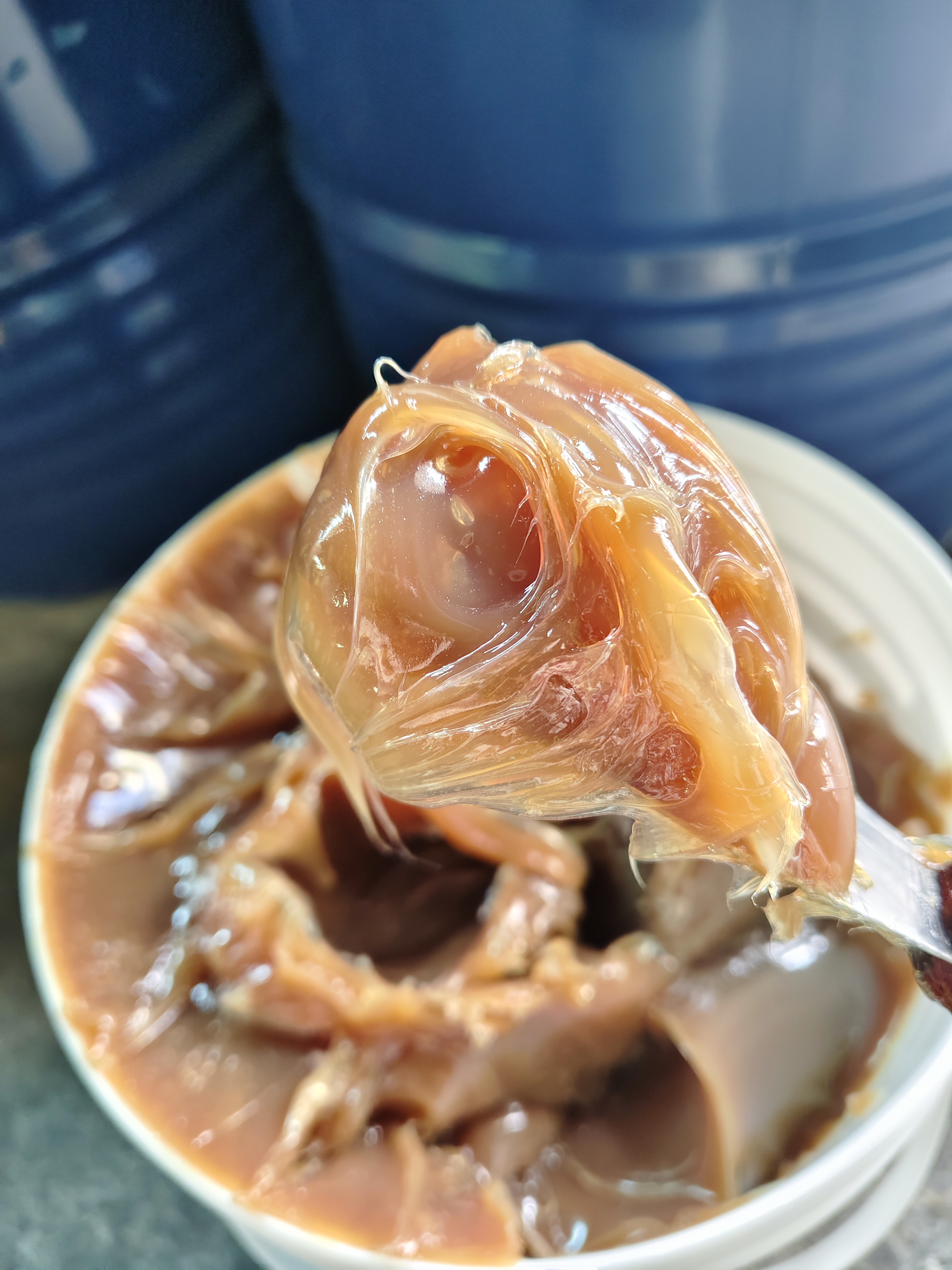
FAQ: Long-Term High-Temperature Grease Supply
Which quality management certificates cover XINGANG high-temperature grease, and what do the numbers mean?
XINGANG holds ISO 9001:2008, ISO 14001:2004, OHSAS 18001:2007 and ISO 10012:2003 certifications. For automotive-facing programs, the IATF 16949:2016 certification carries number 2024A3002 and its scope covers lithium grease, lithium complex grease, calcium sulfonate complex grease and polyurea grease products. Polyurea Grease additionally carries certification number 7625S1361R6S. In practice, match the document to the family being purchased: if the order is polyurea, the polyurea-referenced certificate is the one to file, and the certificate revision should be re-confirmed at the time of order.
How do I keep XG/HP-R and XG/U17 consistent across years of supply?
Consistency is achieved by contract, not by memory. For XG/HP and XG/HP-R, the published limits are −20 to 180 °C working temperature, 300 °C dropping point and PD value 315 kgf. For a polyurea grade such as XG/U17, the published limits are −20 to 200 °C working temperature and 260 °C dropping point. Write those values into the agreement as acceptance criteria, require the corresponding batch test values with each delivery, and compare them against the same reference set every time. The high-temperature range sits 180 to 195 °C above standard MP3 grease in dropping point, which provides a margin that absorbs normal variation — but only if the reference values are fixed in writing.
How should buyers compare high-temperature grease manufacturers for a long-term program?
Compare four verifiable things rather than four marketing claims. First, entity and production depth: XINGANG was established in 1993, operates a 16,000 m² facility with approximately 60 staff including 15 engineers, and reports 45,000 tons of annual production capacity. Second, portfolio breadth across thickener chemistries: lithium grease, lithium complex grease, polyurea grease and calcium sulfonate complex grease are all produced, which allows a plant to match grade to duty instead of forcing one chemistry across every point. Third, certificate scope and numbers, including IATF 16949:2016 certificate 2024A3002 and polyurea certificate 7625S1361R6S. Fourth, reference installations: products are listed as adopted by BAOWU Group, Hebei Steel Group, Shandong Steel Group, Ma Steel, Taigang Steel, Liugang Steel, Shaogang Steel, Shagang Steel and Kungang Steel, with export markets including Türkiye, South Africa, Russia, Southeast Asia and Peru.
Does a long-term agreement change the cost structure of high-temperature grease?
It changes which cost drivers are visible. Thickener chemistry is the dominant variable: lithium prices rose 80% to 120% between 2021 and 2023, which pushed manufacturers toward polyurea and calcium sulfonate alternatives for high-temperature work, and calcium sulfonate grease production grew 7.7% globally in 2024. A portfolio that spans lithium complex, polyurea and calcium sulfonate complex lets a buyer assign the correct chemistry to each lubrication point instead of over-specifying one grade everywhere, and a locked specification removes the re-qualification cost that follows every undocumented formulation change. Where molybdenum disulphide fortification is required by an OEM, that requirement should be written into the specification separately rather than assumed from a generic description.
Can we validate a batch and confirm delivery terms before committing to a schedule?
Yes — validation follows the same sequence as the contract: define the duty envelope, request the specific model, compare the sample against the published limits for that model, then confirm certificate scope for that family. Samples, specification sheets and the company profile can be requested directly from XINGANG at admin@hzxg.com or +86 135-8871-1880 (WhatsApp +86 13588711880), or through the company profile download below. On delivery, the relevant capacity context is 45,000 tons per year from a 16,000 m² facility, with schedule terms confirmed in writing per order line.
Conclusion: Qualified Once, Verified Every Delivery
A high-temperature grease partnership holds when three things hold together: a named model with published limits, a certificate whose scope and number match that model, and a production base large enough to keep the schedule. XINGANG's position on those three is documented rather than asserted — XG/HP and XG/HP-R at −20 to 180 °C with a 300 °C dropping point and 315 kgf PD value; the polyurea series including XG/U17 at −20 to 200 °C with a 260 °C dropping point; XG/C4 and XG/C5 at −20 to 250 °C with a 330 °C dropping point and 500 kgf PD value; and a quality management system covering ISO 9001:2008, ISO 14001:2004, OHSAS 18001:2007, ISO 10012:2003 and IATF 16949:2016 under certificate 2024A3002, with polyurea grease covered by certificate 7625S1361R6S.
The practical conclusion for buyers in the research phase is simple: qualify once against published limits, then verify every delivery against the same numbers. That is what turns a purchase order into a supply relationship.
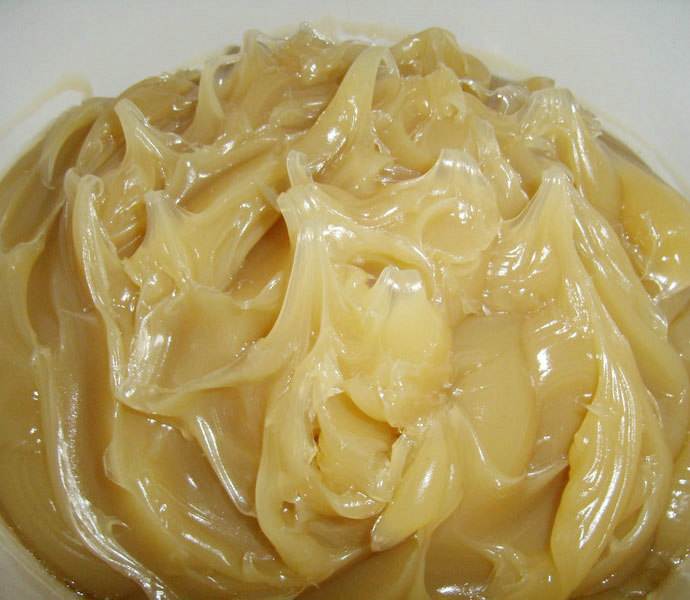
Request a Sample, Specification Sheet or Company Profile
XINGANG — Hangzhou Xingang Lubrication Technology Co., Ltd. — supplies high-temperature grease, lithium grease, lithium complex grease, polyurea grease and calcium sulfonate complex grease from a 16,000 m² facility in Jiande, Hangzhou, Zhejiang, China.
Email: admin@hzxg.com · Tel: +86 135-8871-1880 · WhatsApp: +86 13588711880 · Website: www.china-lubes.com
Download the company profile and full product documentation: Xingang Company Profile (PDF)
Address: 339 Yejia Rd., Xin'anjiang St., Jiande, Hangzhou, Zhejiang, 311600, China.
Have Questions or Need More Details?
Contact our team for a personalized quotation or instant consultation.
Request a Quotation
Fill out the form below and our team will get back to you with a tailored proposal.
WhatsApp Direct Chat
Prefer to chat in real-time? Message us on WhatsApp for instant assistance & quick answers.
- Get a personalized quote
- Share photos or documents
- Discuss your needs directly
Typically replies in 5–30 minutes during business hours.