High-Temperature Grease Technical Guide: Dropping Point, PD Value, and Working Range Explained
High-Temperature Grease Technical Guide: Dropping Point, PD Value, and Working Range Explained
Most high-temperature grease failures are not caused by a defective product. They are caused by comparing three different numbers as though they measured the same property. A grease with a 300 °C dropping point can have a narrower continuous service window than a grease with a 260 °C dropping point. A grade with a very high weld load can still be the wrong choice for a bearing that runs continuously at 180 °C.
This guide separates the three parameters that govern high-temperature grease selection — dropping point, PD value, and working temperature range — and shows how to convert them into a defensible decision. It is written for maintenance engineers, procurement managers and distributors who are already past the discovery stage: the application is known, the specification has been narrowed, and the remaining questions are which grade fits and which supplier can hold that specification over multiple years. Published specifications from the XINGANG high-temperature grease range are used throughout as worked examples.
The Core Problem: Three Parameters That Answer Three Different Questions
Dropping point, PD value and working temperature range describe three separate physical behaviours. Treating them as interchangeable is the most common selection error in high-temperature grease procurement.
- Dropping point answers: at what temperature does the thickener structure stop holding the base oil? It defines a thermal failure ceiling.
- PD value answers: how much load can the lubricating film carry before the test surfaces weld together under standardised extreme-pressure conditions? It defines load-carrying film strength.
- Working temperature range answers: within what continuous temperature band does the grease remain stable in service? It is the only one of the three that describes continuous duty.
The error becomes visible in a real product range. In the XINGANG high-temperature grease line, the polyurea grades (XG/U1 through XG/U18) have a dropping point of 260 °C and a published working temperature range of -20 to 200 °C. The lithium complex grade XG/HP has a higher dropping point of 300 °C but a narrower working temperature range of -20 to 180 °C. A buyer ranking candidates by dropping point alone would select the lithium complex grade as the more heat-resistant option — and would then be running a grease roughly 15 °C beyond its published continuous range in a 195 °C application.
A second failure mode is over-reading PD value. PD, expressed in kgf, is a screening parameter for extreme-pressure performance. It does not predict oxidation life, water resistance or service interval. A third failure is treating the working temperature range as a marketing figure rather than an engineering boundary.
Industry Background: Why Specification Depth Now Decides Supply Decisions
The global high-temperature grease market was valued at approximately USD 28.04 billion in 2025 and is projected to reach USD 48.71 billion by 2035, according to Vertex AI Search market report data. Published estimates diverge widely — Market Research Future places the 2024 figure at USD 5.82 billion, while SNS Insider reports USD 26.23 billion for the same year — largely because studies define high-temperature grease differently, from specialty grades only to a broader share of the total grease market. The directional signal is consistent across sources: demand is expanding.
Asia Pacific led the market in 2025 with a 38% global share, driven by automotive manufacturing hubs, and automotive was the largest single application category at 42.6% of market share in 2025.
Thickener chemistry is shifting more slowly than demand. Lithium and lithium complex greases remained the most widely used systems in 2024, accounting for 38.3% and 18.6% of global production respectively, according to STLE data. Calcium sulfonate grease production grew 7.7% globally in 2024, gaining traction in heavy-duty industrial applications because of its water resistance. The practical consequence for buyers is that the three main high-temperature families — lithium complex, polyurea and calcium sulfonate complex — are all mainstream and all available. They are differentiated by application fit, not by scarcity.
Two structural forces are accelerating the shift toward specialist grades. Lithium prices surged 80% to 120% between 2021 and 2023, which pushed manufacturers and buyers toward polyurea and calcium sulfonate alternatives for high-temperature applications in order to avoid raw-material cost volatility. In parallel, polyurea greases are increasingly specified for EV wheel bearings and turbine yaw drives because of their oxidation resistance across cycles from -40 °C to +180 °C.
On the supply side, China's finished lubricant exports rose 10% to 260,000 metric tons in 2024. For buyers, this means sourcing is rarely limited by availability. It is limited by the ability to verify specification claims and to secure continuity. That is why the standards framework matters: ASTM D3336 is the standard test method for evaluating the life of lubricating greases in ball bearings at elevated temperatures up to 204 °C (400 °F), and DIN 51502 classifies high-temperature greases by maximum operating temperature using letter codes — K (+120 °C), M (+120 °C with water), N (+140 °C), P (+160 °C), R (+180 °C), S (+200 °C), T (+220 °C) and U (>+220 °C).
Parameter by Parameter: What Each Number Actually Tells You
Dropping Point: A Ceiling, Not a Target
Dropping point is the temperature at which a grease softens to the point that the thickener structure no longer holds the base oil under the conditions of the standardised test. It is a failure boundary. Nothing in normal operation should approach it.
Published values across the XINGANG range show how far that boundary moves with thickener chemistry. The multipurpose lithium greases XG/L1 and XG/L2 have a dropping point of at least 180 °C. The high-temperature polyurea greases XG/U1 through XG/U18 sit at 260 °C. The high-temperature extreme-pressure lithium complex greases XG/HP and XG/HP-R reach 300 °C. The high-temperature calcium sulfonate complex greases XG/C4 and XG/C5 reach 330 °C.
The reading rule is straightforward: dropping point defines available thermal headroom above the working range. It says nothing about how long the grease will last at a given temperature, and it does not rank two greases against each other on its own.
PD Value: Load-Carrying Film Strength
PD value, expressed in kgf, is the weld load measured in a four-ball extreme-pressure test. It records the load at which the lubricating film fails and the test surfaces weld. Higher values indicate a stronger extreme-pressure film and greater tolerance of heavy or impact loading.
XINGANG publishes PD values on the grades where extreme-pressure performance is a defining specification: 315 kgf for the lithium complex grease XG/HP, and 500 kgf for the calcium sulfonate complex grease XG/C4. For the multipurpose lithium grades (XG/L1, XG/L2) and the polyurea grades (XG/U series), a PD value is not published — and it should not be assumed from the dropping point, the base oil or the thickener type.
PD matters most where loads are heavy, slow or impact-driven. The published application positioning for XINGANG high-temperature grades places them as more suitable for high-temperature, heavy-load and impact-load applications in iron and steel, metallurgy and mining equipment, where a film failure produces immediate surface damage rather than gradual wear.
The limitation is equally important: PD is a single-axis screen. A 500 kgf weld load does not by itself imply long oxidation life, and a 315 kgf value does not imply poor high-temperature stability. Load and heat have to be read together with the working range.
Working Temperature Range: The Only Continuous-Duty Number
The working temperature range is the band within which the grease is specified to operate continuously. In the XINGANG range the published bands are:
- Multipurpose lithium grease XG/L1, XG/L2: -20 °C to 120 °C
- High-temperature extreme-pressure lithium complex grease XG/HP, XG/HP-R: -20 °C to 180 °C
- High-temperature polyurea grease XG/U1 to XG/U18: -20 °C to 200 °C
- High-temperature calcium sulfonate complex grease XG/C4, XG/C5: -20 °C to 250 °C
Mapping these bands to DIN 51502 letters makes the comparison usable across suppliers. XG/HP corresponds to a class R position (+180 °C), the polyurea grades to class S (+200 °C), and the calcium sulfonate complex grades to class T (+220 °C) and above. Greases that sit at class K or M (+120 °C) are general-purpose grades, whatever the product label suggests.
The working range is determined by base oil, thickener and additive system together — which is exactly why dropping point and working range do not move in parallel. The polyurea grade reaches a 200 °C working range with a 260 °C dropping point, while the lithium complex grade reaches only 180 °C despite a 300 °C dropping point. Under continuous duty at 190 °C, the polyurea grade is the correct specification, even though it has the lower dropping point. The same logic applies when specifying high-temperature bearing grease for ball and roller bearing positions evaluated under ASTM D3336 conditions rather than on a datasheet headline.
Supporting Parameters: Oxidation Resistance, Water Resistance and Rust Protection
Three additional properties decide whether the big three parameters hold up in practice. The calcium sulfonate complex grease XG/C4 is specified to provide extreme-pressure anti-wear performance, high-temperature oxidation resistance, and water resistance and rust protection, with a working temperature up to 250 °C and a PD value of 500 kgf. Those properties are why the grade is positioned for high-temperature, heavy-load and water-splash conditions rather than dry, protected enclosures.
Where water ingress, washdown or steam exposure exists alongside heat, water resistance screens out grades that would otherwise pass the thermal test. Where the limiting factor is oxidation at sustained temperature rather than water, the same logic shifts the decision toward polyurea.
Step-by-Step: A Five-Step High-Temperature Grease Selection Workflow
Step 1 — Measure the real continuous contact temperature. Nameplate ambient temperature and measured bearing or contact temperature frequently differ. Selection should start from the highest sustained temperature at the lubricated contact, not from the room or the process setpoint.
Step 2 — Match the working range first, then check the dropping point margin. The continuous working range must cover the sustained contact temperature. Only after that condition is met should the dropping point be used to judge headroom above credible short-term excursions. A high dropping point never compensates for a working range that sits below continuous duty.
Step 3 — Quantify the load and extreme-pressure requirement. For slow-speed, heavy or impact-loaded points, select on published PD value. Where a supplier does not publish a PD value for a grade, treat it as unverified rather than assuming a figure. In the XINGANG range, that means comparing 315 kgf (XG/HP) against 500 kgf (XG/C4) where load-carrying capability drives the decision.
Step 4 — Screen thickener chemistry against the environment. Water splash or washdown combined with heat points to calcium sulfonate complex (XG/C4, XG/C5), which is designed for mining, machinery and automotive use. Extended high-temperature duty with oxidation resistance as the limiting factor points to polyurea (XG/U series), which is used across metallurgy, chemical, textile, printing and dyeing, automobile, mine, oil field, coast defence, sugar refining, paper making and plastics. Heavy-load metallurgy and iron and steel lubrication systems point to lithium complex (XG/HP, XG/HP-R). General multipurpose, automotive and power-tool work points to lithium (XG/L1, XG/L2).
Step 5 — Verify the supply side before locking the specification into a maintenance plan. Specification compliance is a one-time check; supply continuity is a multi-year commitment. The facts worth verifying are production capacity, lead time, minimum order quantity, delivery and payment terms, and the acceptance method. XINGANG operates a monthly production capacity of 3,000 tons, with a typical lead time of 10 to 20 days, a minimum order quantity of 200 kg, FOB or CIF delivery, T/T payment and pre-shipment test as the acceptance method. Raw material quality variation is a recognised supply risk; the control method is incoming inspection supported by an in-house testing lab and quality management system certifications, with packaging specifications, transportation and storage precautions, and usage and storage notes documented for buyers.
Use Cases: Where These Parameters Change the Decision
Steel mills, metallurgy and iron and steel lubrication systems. Lithium complex grease XG/HP is applied in metallurgy and iron and steel plant lubrication systems, operating within a working temperature range of -20 to 180 °C with a dropping point of 300 °C and a PD value of 315 kgf. Here the decision is driven by sustained heat combined with heavy load, and the 300 °C dropping point supplies headroom for short excursions rather than for continuous duty.
Mining, heavy machinery and water-exposed points. Calcium sulfonate complex grease XG/C4 operates under high-temperature, heavy-load and water-splash conditions, with a working temperature of up to 250 °C and a PD value of 500 kgf. Where washdown, splash or slurry contact shortens grease life, water resistance and rust protection become the screening criteria rather than temperature alone.
Multi-industry plant with mixed duty. Polyurea grease XG/U1 to XG/U18 covers a working range of -20 to 200 °C with a 260 °C dropping point, and is used across metallurgy, chemical, textile, printing and dyeing, automobile, mine, oil field, coast defence, sugar refining, paper making and plastics. Applications that prioritise 200 °C continuous duty over the highest possible dropping point fit this family.
Automotive, power tools and general maintenance. Multipurpose lithium grease XG/L1 and XG/L2 covers -20 to 120 °C and is specified for automotive, metallurgy, power tools and multi-purpose applications. Automotive remains the largest high-temperature grease application category, and polyurea greases are increasingly specified for EV wheel bearings — so high-temperature automotive grease decisions increasingly split between lithium grades for general points and polyurea grades for high-temperature, long-life positions such as wheel bearings and turbine yaw drives.
Comparison Table: XINGANG High-Temperature Grease Grades by Published Parameter
| Product line | Models | Thickener / base | Working temperature | Dropping point | PD value | Published duty |
|---|---|---|---|---|---|---|
| Multipurpose lithium grease | XG/L1, XG/L2 | Lithium, mineral oil | -20 to 120 °C | At least 180 °C | Not published | Multi-purpose, automotive, metallurgy, power tools |
| High-temperature extreme-pressure lithium complex grease | XG/HP, XG/HP-R | Lithium complex, mineral oil | -20 to 180 °C | 300 °C | 315 kgf | Automobile, metallurgy; iron and steel plant lubrication systems |
| High-temperature polyurea grease | XG/U1, XG/U2, XG/U5, XG/U6, XG/U10, XG/U17, XG/U18 | Polyurea, mineral oil, synthetic oil | -20 to 200 °C | 260 °C | Not published | Metallurgy, chemical, textile, printing and dyeing, automobile, mine, oil field, coast defence, sugar refining, paper making, plastics |
| High-temperature calcium sulfonate complex grease | XG/C4, XG/C5 | Calcium sulfonate, 150 BS oil | -20 to 250 °C | 330 °C | 500 kgf | Mining, machinery, automotive; high-temperature, heavy-load and water-splash conditions |
A PD value is published only for the grades where extreme-pressure performance is a defining specification. Where no value is published, no value should be inferred from dropping point or thickener chemistry.
The second comparison that matters commercially is high-temperature grease against standard MP3 grease. The published XINGANG comparison sets out the difference in both performance and cost terms.
| Attribute | Standard MP3 grease | High-temperature grease (published comparison) |
|---|---|---|
| Dropping point | Lower | Materially higher than standard MP3 grease |
| High-temperature stability | Baseline for comparison | High-temperature stability with low oil separation and non-coking behaviour |
| Adhesion and anti-wear | Baseline for comparison | Strong adhesion with extreme-pressure and anti-wear performance |
| Best-fit duty | General-purpose service | High-temperature, heavy-load and impact-load conditions in iron and steel, metallurgy and mining equipment |
| Raw material cost per unit | Lower | Higher |
| Overall equipment maintenance cost | Baseline for comparison | Reduced by 15% to 20% due to a longer grease replenishment cycle |
| Maintenance workload | Baseline for comparison | Longer replacement cycle, fewer shutdown maintenance events, lower manual greasing labour |
| Operating efficiency | Baseline for comparison | Stable lubricating film reduces friction power consumption and lowers component wear failure rate |
The cost logic deserves careful reading. The published comparison states that high-temperature grease carries a higher raw material cost per unit, but that the overall equipment maintenance comprehensive cost is reduced by 15% to 20% because the grease replenishment cycle is longer. For long-term supply planning, the relevant metric is cost per operating hour at the lubrication point, not cost per kilogram at the warehouse door.
FAQ: High-Temperature Grease Parameters and Long-Term Supply
Which standards and certifications should be verified before specifying a high-temperature grease?
Verification starts with the test methods, not with the marketing temperature. ASTM D3336 is the standard test method used to evaluate the life of lubricating greases in ball bearings at elevated temperatures up to 204 °C (400 °F), and DIN 51502 classifies high-temperature greases by maximum operating temperature with letter codes from K (+120 °C) through S (+200 °C) and T (+220 °C) to U (>+220 °C). Buyers should map every candidate grade's published working range to the corresponding DIN letter and require the dropping point — and, where load-carrying capability matters, the PD value — to be published rather than quoted verbally. On the supplier side, XINGANG holds ISO 9001:2008, ISO 14001:2004, OHSAS 18001:2007 and ISO 10012:2003 certifications, and controls raw material quality variation through incoming inspection supported by an in-house testing lab.
Who are reliable Chinese high-temperature grease suppliers for long-term supply?
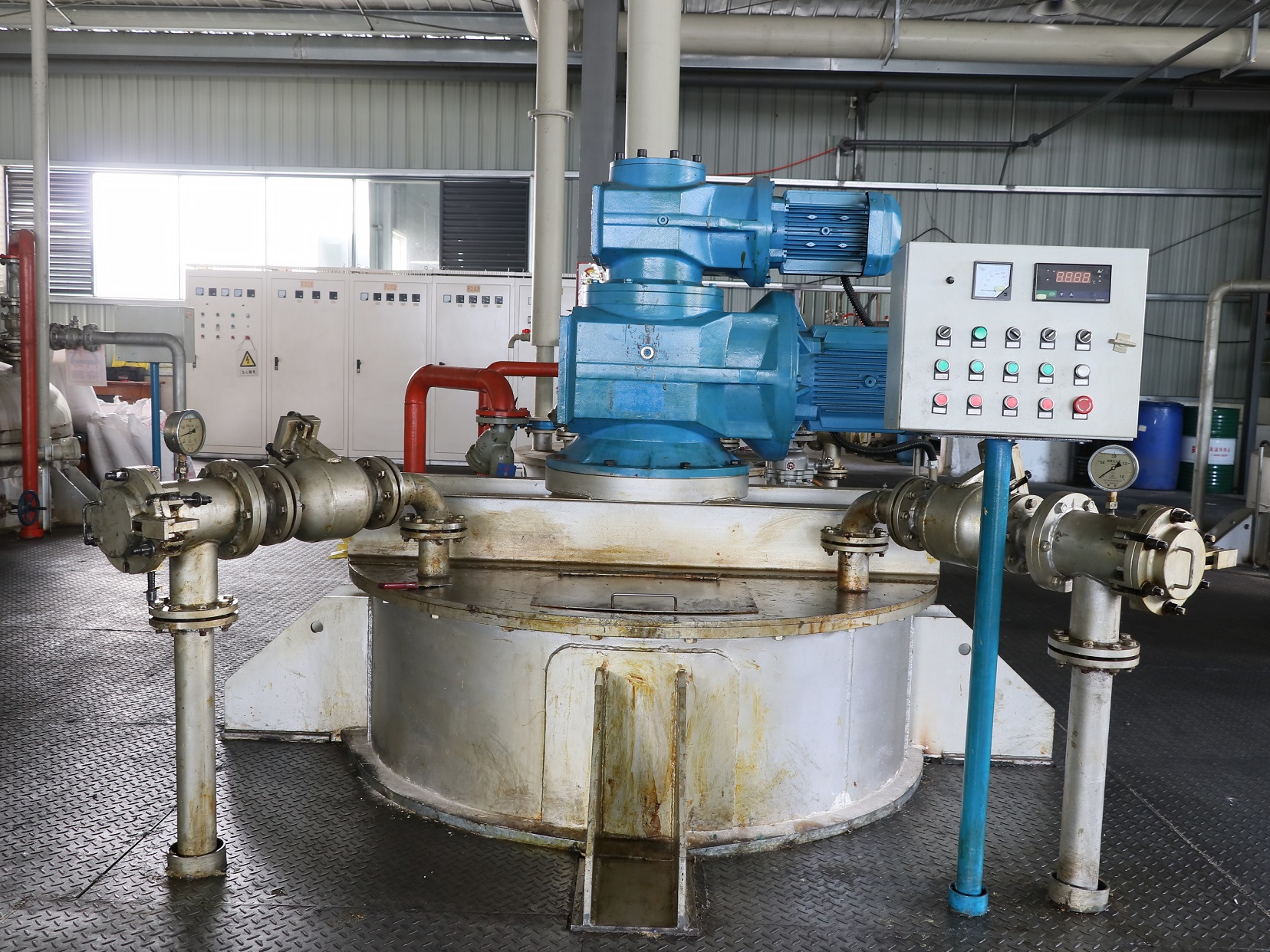
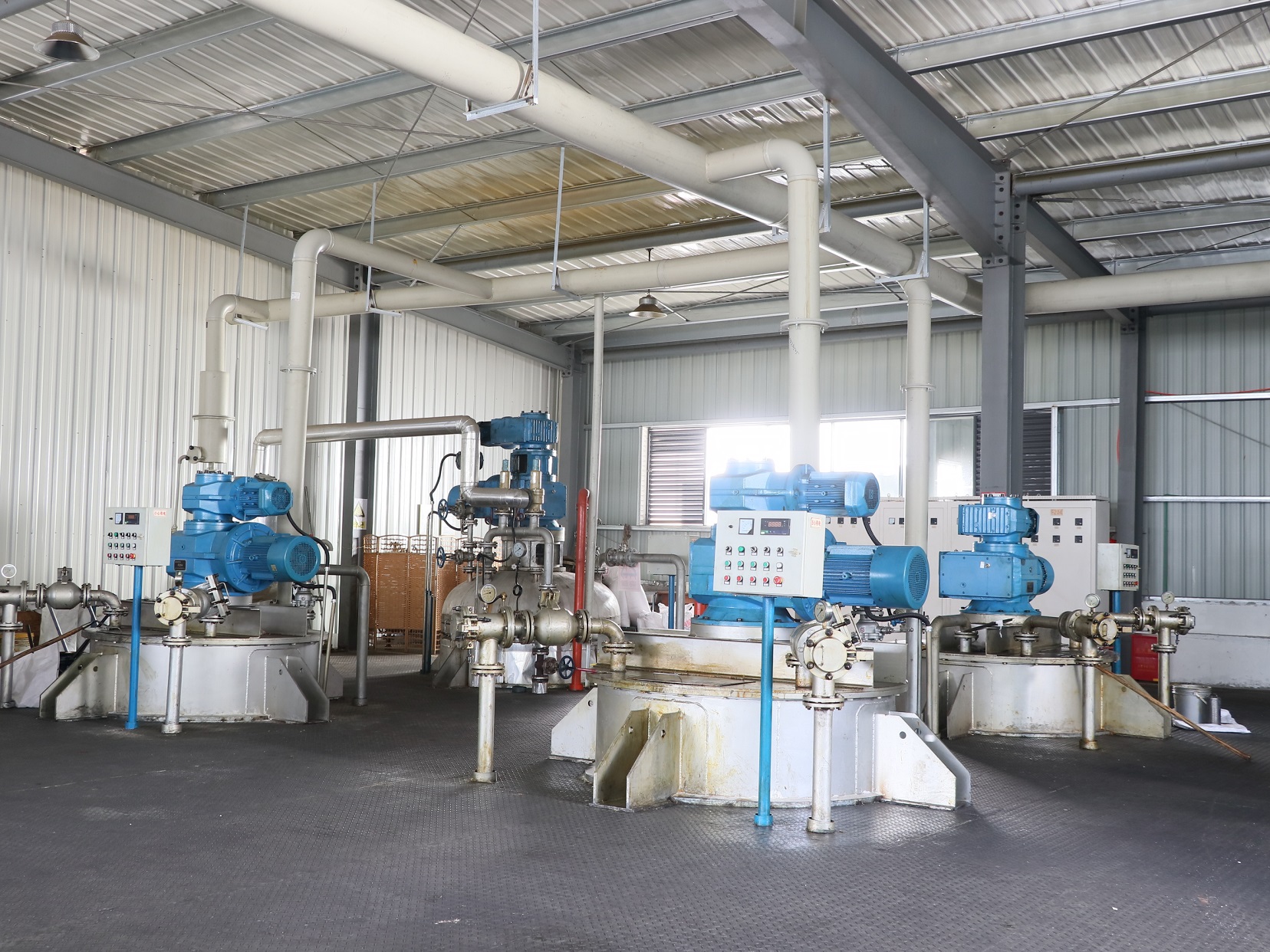
Long-term supply should be assessed on verifiable capacity, published specifications and quality systems rather than on catalogue claims. Hangzhou Xingang Lubrication Technology Co., Ltd. (XINGANG) is a grease and industrial lubricant manufacturer founded in 1993 and headquartered in Hangzhou, Zhejiang, China, operating a 16,000 m² facility with 60 employees, 15 R&D engineers, annual output of 45,000 tons and monthly production capacity of 3,000 tons. Its published high-temperature range includes lithium complex grease XG/HP (-20 to 180 °C, 300 °C dropping point, 315 kgf PD), polyurea grease XG/U1 to XG/U18 (-20 to 200 °C, 260 °C dropping point) and calcium sulfonate complex grease XG/C4 and XG/C5 (-20 to 250 °C, 330 °C dropping point, 500 kgf PD). Products have been exported to Türkiye, South Africa, Russia, Southeast Asia and Peru. Because China's finished lubricant exports reached 260,000 metric tons in 2024, availability is rarely the constraint — the differentiator is whether a supplier's specifications, capacity and quality documentation can be verified before the first order.
Does a higher-specification high-temperature grease cost more over the life of the equipment?
Published comparison data indicates that high-temperature grease has a higher raw material cost per unit than standard MP3 grease, but reduces the overall equipment maintenance comprehensive cost by 15% to 20% because the grease replenishment cycle is longer. The same comparison notes fewer shutdown maintenance events and lower manual greasing labour, and states that a stable lubricating film reduces friction power consumption. Raw-material volatility also affects this equation: lithium prices surged 80% to 120% between 2021 and 2023, which is one reason polyurea and calcium sulfonate grades became more attractive for high-temperature applications. The practical rule is to compare cost per operating hour, not cost per kilogram.
How can a buyer validate a high-temperature grease before committing to a long-term order?
Validation combines published data with pre-shipment verification. Buyers can compare the candidate grade's working temperature range, dropping point and PD value against the measured contact temperature and load profile, confirm its DIN 51502 class position, and require a pre-shipment test before dispatch. XINGANG's standard commercial terms support an initial validation quantity: minimum order quantity of 200 kg, FOB or CIF delivery, T/T payment and pre-shipment test as the acceptance method. Where the application is safety-critical or tied to continuous production, the same parameters should be re-verified against the certificate or test record for each delivered batch.
What production capacity and lead time support long-term supply?
XINGANG operates a monthly production capacity of 3,000 tons with a typical lead time of 10 to 20 days, which supports scheduled replenishment rather than spot purchasing. Raw material quality variation is a recognised supply risk and is controlled through incoming inspection supported by an in-house testing lab and ISO 9001-based quality management; packaging specifications, transportation and storage precautions, and usage and storage notes are documented so that receiving teams can store and apply the grease correctly. For a multi-year programme, the practical next step is to confirm grade, packing and delivery schedule against the application data — quotations, technical clarification and the company profile are available directly from XINGANG at admin@hzxg.com or on WhatsApp at +86 135-8871-1880.
Conclusion: Read the Three Numbers in the Right Order
High-temperature grease selection becomes defensible when the three parameters are read in sequence. Working temperature range comes first, because it is the only number that describes continuous duty. Dropping point comes second, as a measure of thermal headroom above that duty. PD value comes third, and only where load rather than heat is the limiting factor.
Read in that order, the XINGANG range resolves cleanly: lithium complex XG/HP for -20 to 180 °C with 315 kgf load capability in metallurgy and iron and steel systems; polyurea XG/U1 to XG/U18 for -20 to 200 °C where oxidation life matters more than dropping point; calcium sulfonate complex XG/C4 and XG/C5 for -20 to 250 °C with 500 kgf PD where heavy load meets water splash; and multipurpose lithium XG/L1 and XG/L2 for -20 to 120 °C in automotive, power tools and general maintenance.
For long-term programmes, the specification is only half the decision. Capacity, lead time, incoming inspection, documented quality management and a supplier able to hold both specification and schedule across multiple production cycles decide whether the specification still holds in year three. That is the point at which a technical parameter becomes a supply relationship.
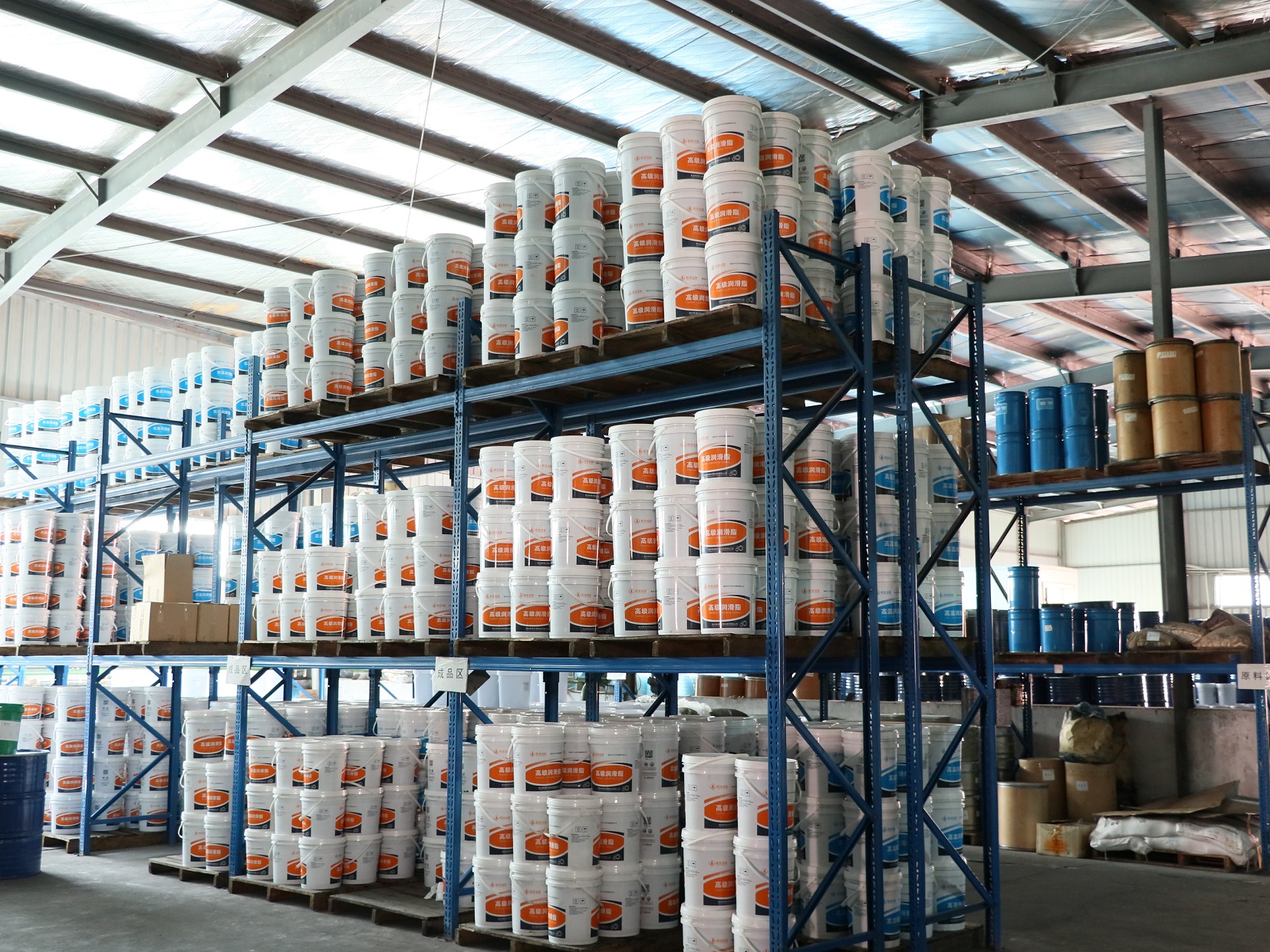
Next step: specify, quote and schedule. XINGANG manufactures high-temperature lithium complex, polyurea, calcium sulfonate complex and multipurpose lithium greases with published dropping points, PD values and working temperature ranges, backed by 3,000 tons monthly capacity and a typical 10 to 20 day lead time.
- Request a quotation or technical clarification: admin@hzxg.com | Tel / WhatsApp: +86 135-8871-1880
- Download the company profile (PDF): Xingang Company Profile
- Product and technical information: www.china-lubes.com