How to Audit High-Temperature Grease Certifications and Spec Limits Before Sourcing
How to Audit High-Temperature Grease Certifications and Spec Limits Before Sourcing
A high-temperature grease is only useful when its stated performance can be verified against documented limits. For industrial buyers, three measurements matter first: working temperature range, dropping point, and extreme-pressure capability where heavy or impact loads exist. Hangzhou Xingang Lubrication Technology Co., Ltd. (XINGANG), a grease manufacturer established in 1993 in Hangzhou, China, publishes model-specific parameters and certification coverage across lithium complex, polyurea, calcium sulfonate complex, and lithium grease product lines. This article explains how to read those limits, which certificate numbers apply, and how a buyer can structure a supplier audit around verifiable data rather than marketing claims.
Why a 'High-Temperature Grease' Label Is Not Enough
Heat resistance is not one single property. It can refer to the maximum temperature at which the grease remains in place, the temperature at which the thickener structure fails, oxidation resistance, oil separation behavior, or the ability to keep lubricating under heavy load. A product labeled 'high-temperature' may solve one of these problems but fail another.
Procurement failures happen when a buyer compares only the product name or the base price. Two greases with similar descriptions can have very different thickener chemistry, working temperature limits, load-carrying capacity, and compatibility with centralized lubrication systems. In steel mills, automotive plants, and other industrial sites, using a grease beyond its verified limits leads to hardening, oil separation, carbon deposits, bearing damage, and unscheduled downtime.
XINGANG classifies its products with concrete model codes, not only descriptive labels. That practice lets a buyer separate a generic grade name from an auditable product specification.
Industry Background: A Market Growing Around Verified Performance
Market data confirms why high-temperature grease is becoming a more disciplined purchasing category. The global high temperature grease market was estimated at roughly USD 28.04 billion in 2025 and is projected to reach USD 48.71 billion by 2035. Asia Pacific accounted for about 38% of the market in 2025, driven largely by automotive manufacturing hubs, while the automotive segment represented approximately 42.6% of overall demand.
Thickener chemistry also explains current buyer behavior. Lithium and lithium complex greases remain the most widely used thickener systems, accounting for 38.3% and 18.6% of global production respectively in 2024. At the same time, calcium sulfonate grease production grew by about 7.7% globally in 2024, driven by its strong water resistance and heavy-duty performance. These shifts are not only technical; raw material economics also matter, since lithium prices reportedly surged 80% to 120% between 2021 and 2023, pushing some formulators and buyers toward polyurea and calcium sulfonate alternatives.
For a buyer, the practical lesson is clear: high-temperature grease selection should start with thickener type, then move to published parameters and certificate scope.
Two technical references help align expectations. ASTM D3336 is the standard test method used to evaluate the life of lubricating greases in ball bearings at elevated temperatures up to 400°F / 204°C. DIN 51502 classifies high-temperature greases based on maximum operating temperature using letters from K (+120°C) to U (>+220°C). Buyers can ask a supplier to map a specific product model to these types of standards instead of relying on a one-word description such as 'high-temperature'.
Detailed Solution: Model-Level Specifications and Certification Coverage
XINGANG is a national high-tech enterprise headquartered in Hangzhou, Zhejiang Province, with a 16,000 m² plant, about 60 employees, an annual output of 45,000 tons, and a dedicated R&D team of 15 engineers. Its export ratio is around 10%, with main markets including Türkiye, South Africa, Russia, Southeast Asia, and Peru. The company supplies industrial grease and lubricants to metallurgy, port, automotive, machinery, textile, printing and dyeing, paper making, sugar refining, chemical, and power generation industries.
For high-temperature applications, the product families listed below provide a practical starting point. Each family has a distinct chemistry, operating limit, and typical use boundary.
High-Temperature Lithium Complex Grease: XG/HP, XG/HP-R
Lithium complex grease is widely used in automotive and metallurgy applications that need a higher temperature limit than conventional lithium grease. XINGANG publishes the working temperature range of the XG/HP and XG/HP-R series as -20°C to 180°C, with a dropping point of 300°C and a PD value of 315 kgf. The thickener system is lithium complex in mineral oil. The PD value is useful for buyers who need extreme-pressure and anti-wear protection for bearings and gearboxes under high operating temperatures.
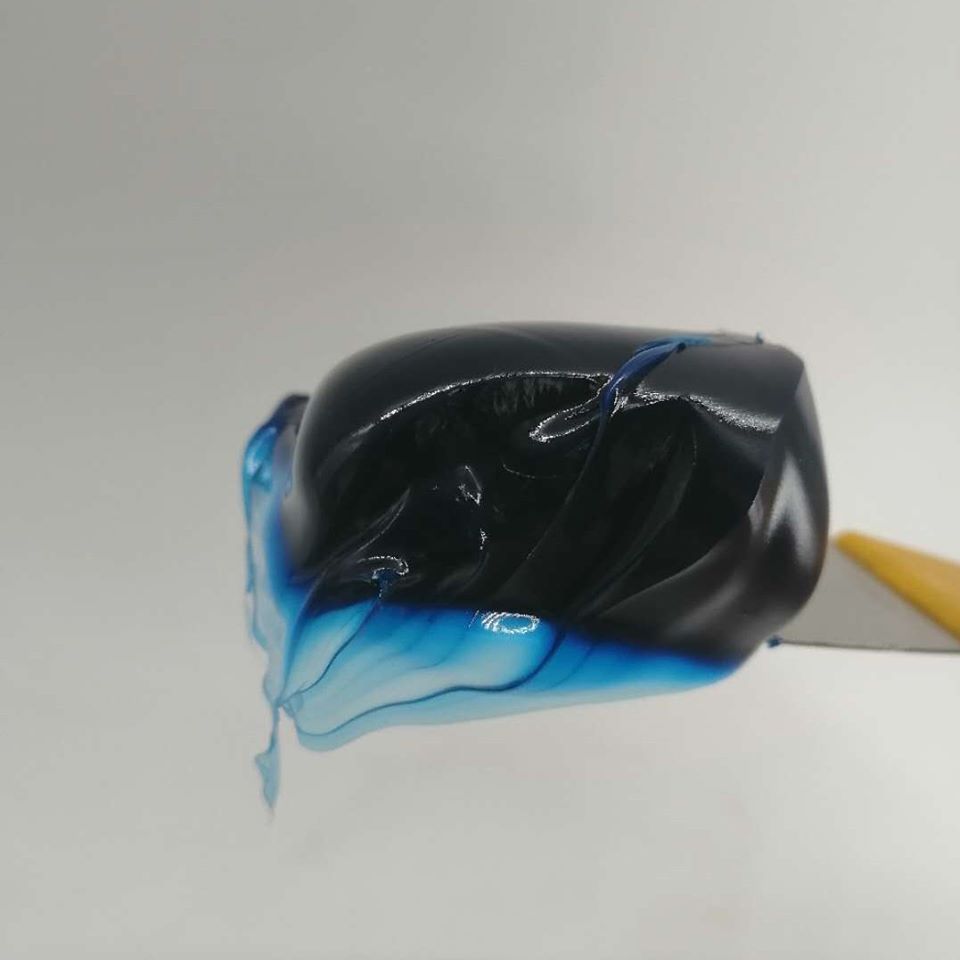
XINGANG reports that, compared with standard MP3 grease, this type of high-temperature formulation provides a higher dropping point, high-temperature stability, low oil separation, non-coking behavior, strong adhesion, and enhanced extreme-pressure/anti-wear performance. These properties matter in iron and steel, metallurgy, and mining equipment where a stable lubricating film is required and where frequent manual re-greasing is difficult.
Calcium Sulfonate Complex Grease: XG/C4, XG/C5
Calcium sulfonate complex grease is one of the fastest-growing high-temperature thickener types in heavy industry because it combines heat resistance with water resistance and corrosion protection. In the XINGANG range, the XG/C4 and XG/C5 models have a working temperature range of -20°C to 250°C, a dropping point of 330°C, and a PD value of 500 kgf. The base material is calcium sulfonate with 150 BS oil. Typical industries include mining, machinery, and automotive applications where water splash, rust risk, and heavy loads occur together.
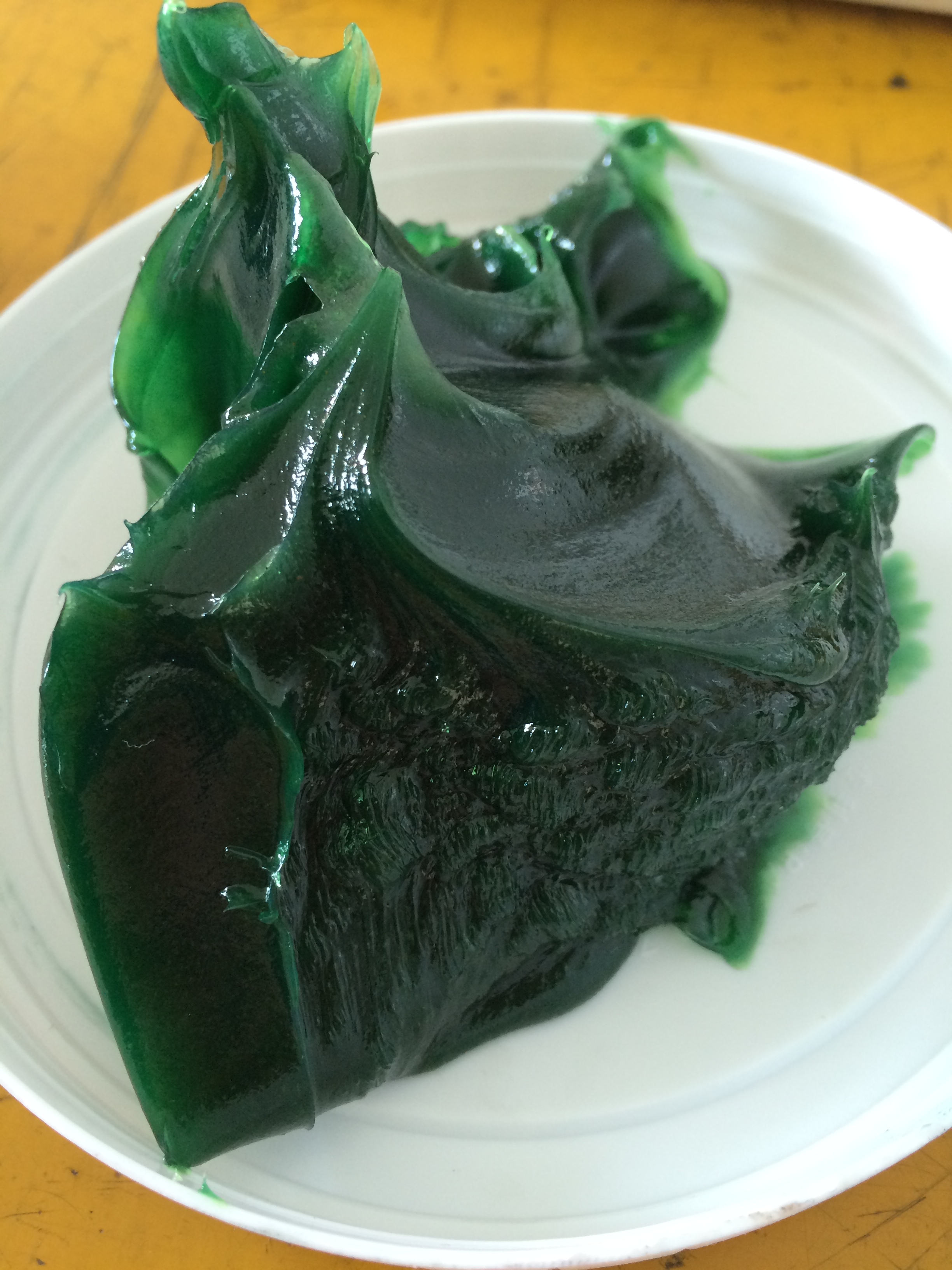
For steel plant environments where continuous casting machines, rolling mills, kiln cars, and conveyors operate with both high temperature and water exposure, the combination of a 330°C dropping point and 500 kgf PD value gives the buyer a measurable margin for severe operating conditions.
High-Temperature Polyurea Grease: XG/U1, XG/U2, XG/U5, XG/U6, XG/U10, XG/U17, XG/U18
Polyurea grease uses a non-soap thickener and is recognized for oxidation resistance and long service life at high temperatures. XINGANG’s polyurea grease series XG/U1, XG/U2, XG/U5, XG/U6, XG/U10, XG/U17, and XG/U18 is based on polyurea with mineral or synthetic oil. The published working temperature range is -20°C to 200°C, with a dropping point of 260°C. The model series is designed for metallurgy, chemical, textile, printing and dyeing, automotive, mining, oil field, coast defense, sugar refining, paper making, and plastic industry applications.
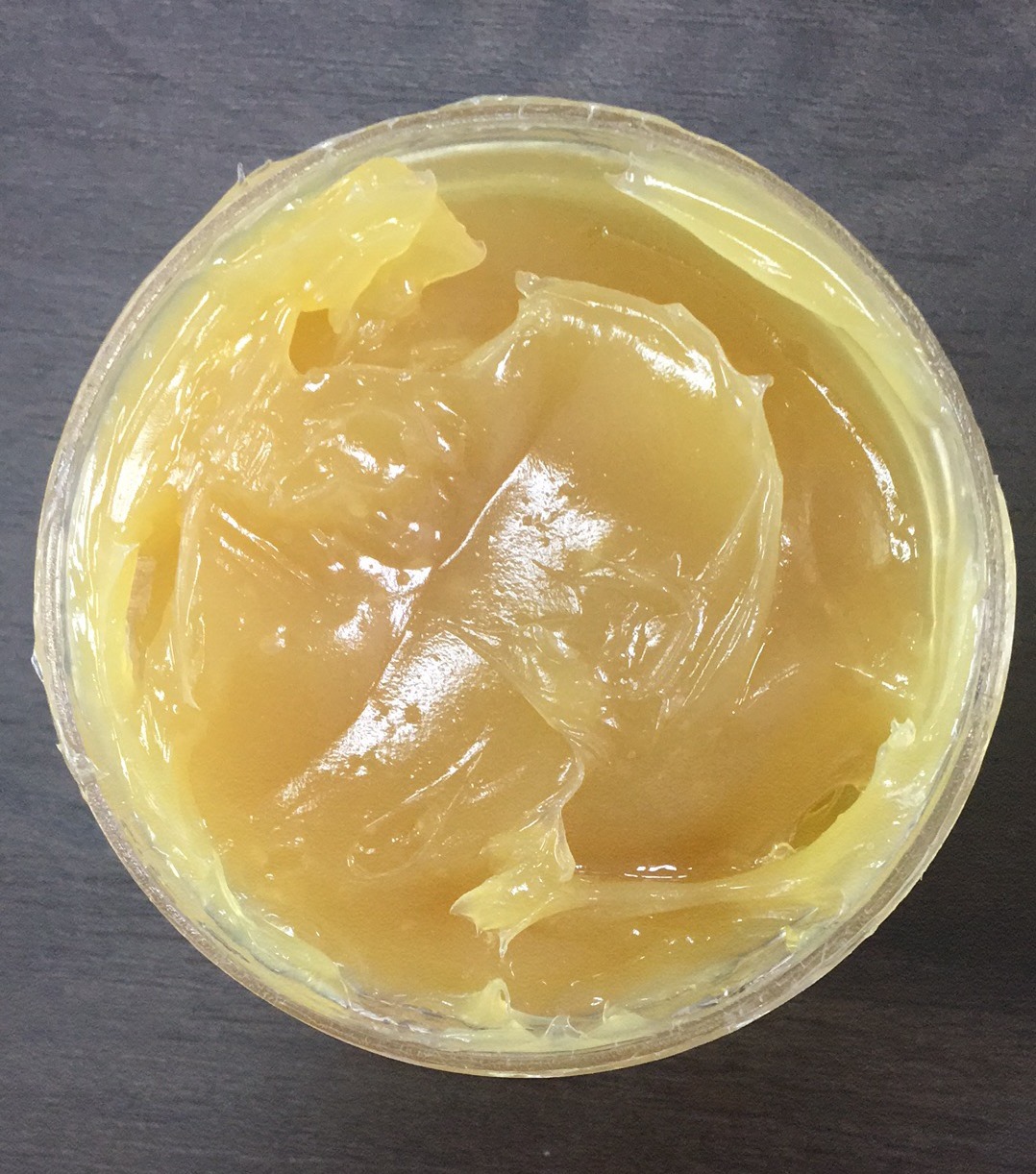
Polyurea chemistry is also increasingly specified for electric vehicle wheel bearings and turbine yaw drives because of oxidation resistance across temperature cycles. A buyer evaluating polyurea grease should check the exact model code because polyurea formulations are not interchangeable across every high-temperature machine.
General Multipurpose Lithium Grease: XG/L1, XG/L2
Not every lithium grease is a high-temperature specialty grease. XINGANG’s XG/L1 and XG/L2 lithium grease models are intended for multipurpose automotive, metallurgy, and power tool applications with a working temperature range of -20°C to 120°C and a dropping point of at least 180°C. Lithium grease is effective where temperatures remain moderate. The model boundary is important because a buyer who substitutes standard lithium grease into an application above 120°C will exceed the documented limit, even if the grease is from the same manufacturer as a high-temperature lithium complex series.
Certification Coverage: What the Numbers Actually Cover
Certification is a discipline, not a decoration. A supplier can hold a company-level certificate without every product model being relevant to the buyer’s application. The more useful question is whether the certificate scope and certificate number can be matched to the model being purchased.
XINGANG’s current documented certifications include the following identifiers:
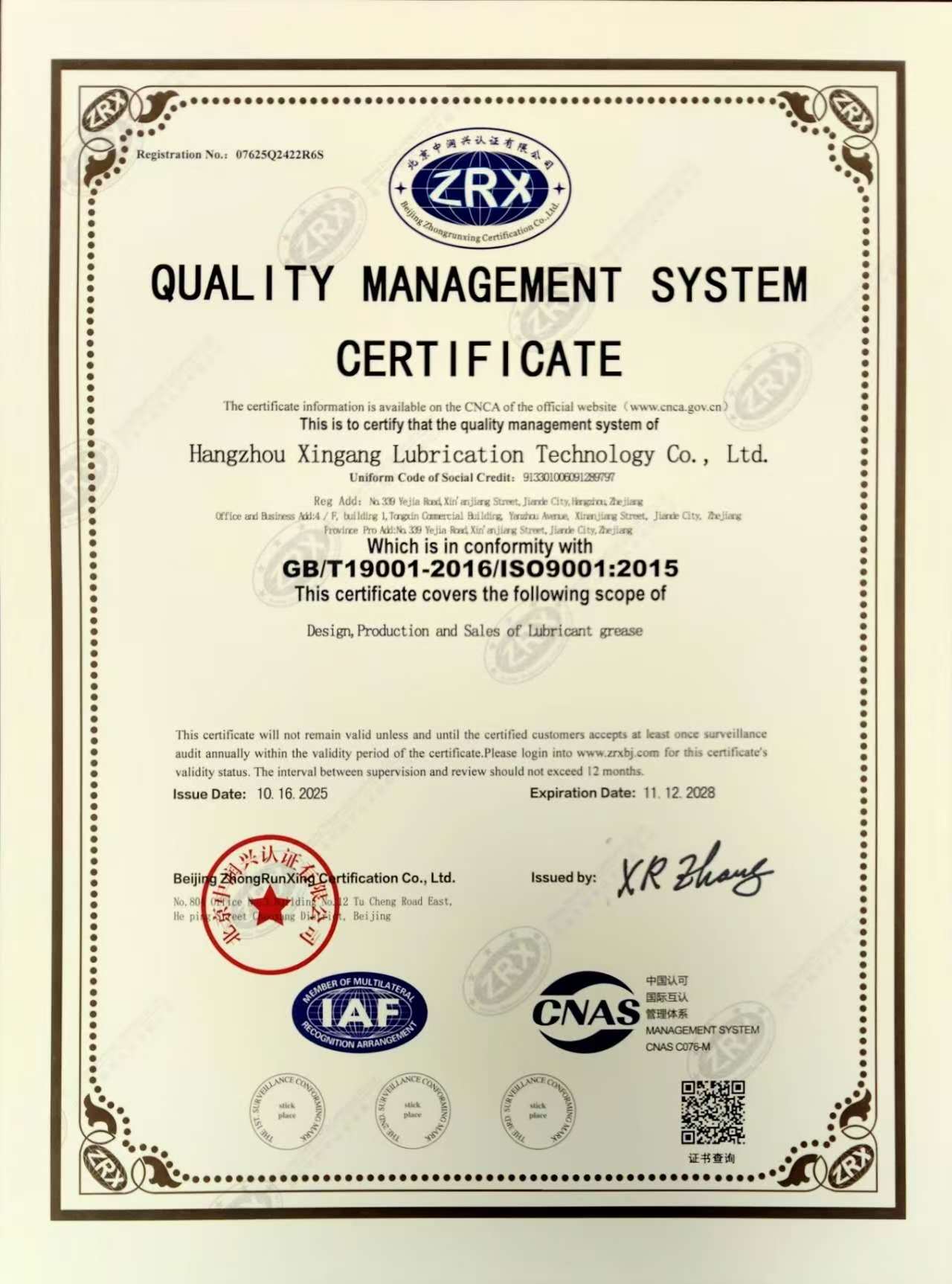
- ISO 9001 quality management certificate number 07625Q2422R65, issued by Beijing ZhongRunXing Certification Co., Ltd., under GB/T19001-2016 and ISO 9001:2015, covering the design, production, and sales of lubricant grease.
- ISO 14001 environmental management certificate number 07625E1532R6S, issued by Beijing ZhongRunXing Certification Co., Ltd., under GB/T24001-2016 and ISO 14001:2015.
- ISO 45001 occupational health and safety certificate number 7625S1361R6S, issued under GB/T 45001-2020 and ISO 45001:2018.
- IATF 16949:2016 certificate number 2024A3002, issued by China Jiuding Automotive Supplier Certification Co., Ltd. (CASC), covering the design and manufacturing of lubricating oil.
Model coverage is where the audit becomes practical. For example, the ISO 45001 certification covers lithium grease models XG/L1 and XG/L2, polyurea grease models XG/U1, XG/U2, XG/U5, XG/U6, XG/U10, XG/U17, and XG/U18, calcium sulfonate complex grease models XG/C4 and XG/C5, and lithium complex grease models XG/HP and XG/HP-R. The quality management system certificate number 07625Q2422R65 covers lithium grease, polyurea grease, calcium sulfonate complex grease, and lithium complex grease. The IATF 16949 certification also relates to these same grease families.
Step-by-Step Supplier Verification Workflow
Buyers can use the following six-step workflow when evaluating a high-temperature grease supplier. The workflow is designed for the Research and Evaluation stage, before a purchase order is placed.
Step 1: Define the real operating limit, not the average temperature
Record the highest sustained bearing or gearbox temperature, temporary peak temperature, ambient conditions, and water exposure. Use DIN 51502 temperature classes as a reference. A supplier should be able to classify the grease in a similar way instead of only saying that the grease 'handles heat'.
Step 2: Compare model codes and published parameters
Check whether the product has a clear model designation. XINGANG uses codes such as XG/HP, XG/HP-R, XG/C4, XG/C5, XG/U1 through XG/U18, and XG/L1, XG/L2. These codes allow a buyer to compare working temperature, dropping point, and PD value without confusion between different grades.
Step 3: Verify the dropping point margin
Dropping point is not the same as the maximum usable working temperature. It indicates the temperature at which the grease structure fails. A grease with a dropping point close to the operating temperature leaves very little safety margin. For a high-temperature application, the published dropping point should be substantially above the actual bearing or gearbox temperature.
Step 4: Match certifications to product models
Ask for the exact certificate number and its scope. Confirm that the model code appears in the scope or in the product-certification matrix. For XINGANG grease products, the relevant reference numbers include ISO 9001 certificate 07625Q2422R65, ISO 14001 certificate 07625E1532R6S, ISO 45001 certificate 7625S1361R6S, and IATF 16949 certificate 2024A3002.
Step 5: Evaluate extreme-pressure and anti-wear capability where loads are high
In applications such as continuous casting, rolling mills, kiln cars, gearboxes, conveyors, and vibrating screens, extreme-pressure performance can be more important than temperature alone. XINGANG publishes PD values for 315 kgf on its lithium complex grease XG/HP series and 500 kgf on its calcium sulfonate complex grease XG/C4 and XG/C5 series. Ask for the equivalent data point for any alternative supplier.
Step 6: Validate with documentation, a test, and a trial order
Use the supplier’s test room or laboratory documentation, request material and certification documentation, and run a small trial before committing a critical production line. A supplier that can provide remote technical guidance, on-site usage consultation, and quality problem compensation or replacement support is easier to evaluate than one that only provides a price quotation.

Use Cases: Where Certified High-Temperature Grease Is Applied
High-temperature grease verification matters most in operations where failure is expensive. One documented XINGANG use case covers lubrication for bearings in continuous casting, rolling mills, kiln cars, gearboxes, conveyors, and vibrating screens. The case highlights include a stable grease structure under long-term high-temperature conditions, compatibility with centralized lubrication systems, and reduced enterprise maintenance costs. The project results included reduced friction and wear, improved temperature resistance and water resistance, extended lubrication intervals, and enhanced equipment reliability.
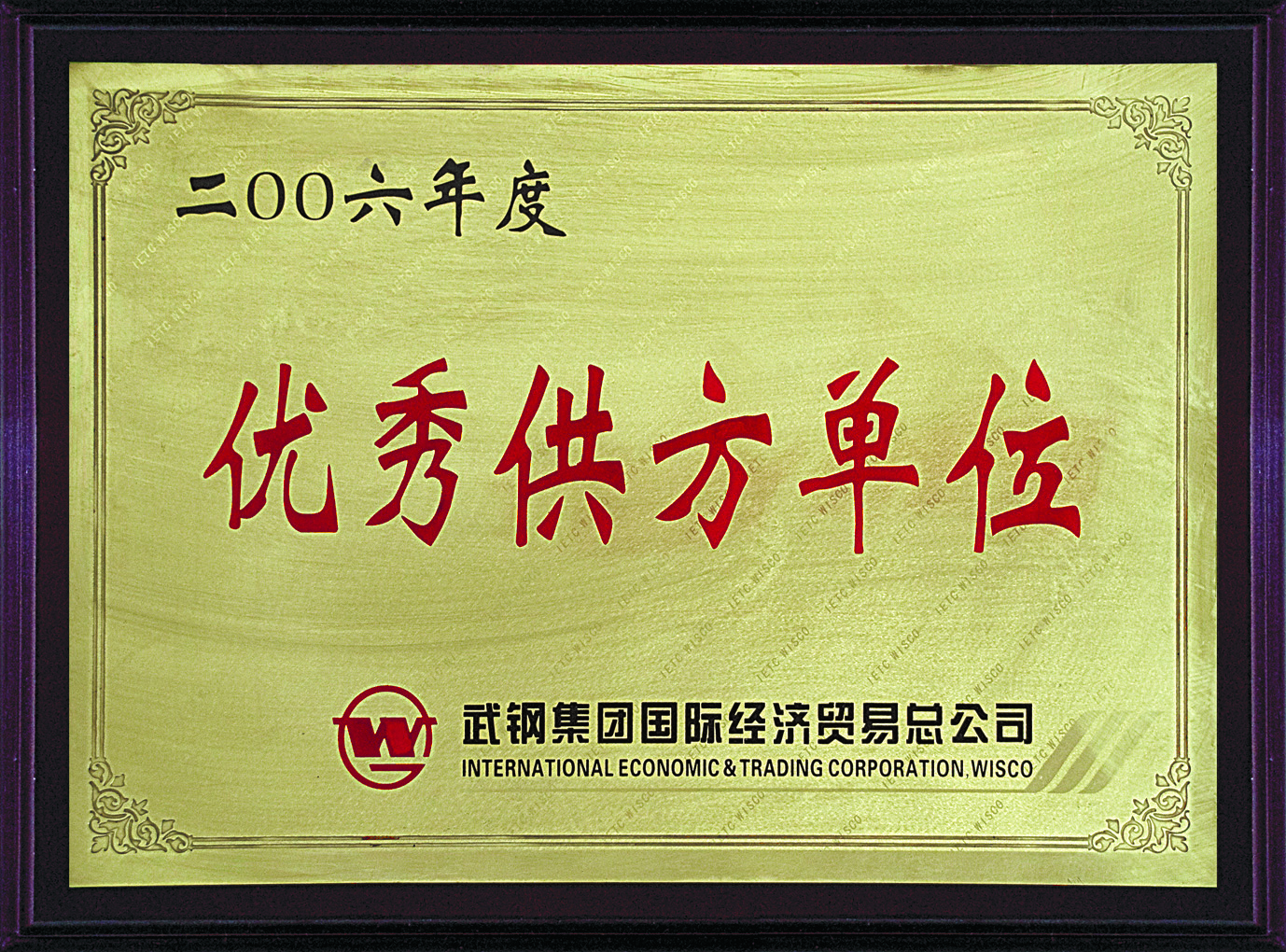
XINGANG reports that its products are widely adopted by major Chinese steel enterprises including BAOWU Group, Hebei Steel Group, Shandong Steel Group, Ma Steel, Taigang Steel, Liugang Steel, Shaogang Steel, Shagang Steel, and Kungang Steel. This is a first-party claim, and it is still useful as a starting point for reference checks. A disciplined buyer should request contact references or proof of delivery for the specific plant and equipment type being evaluated.
In automotive and machinery environments, lithium complex and calcium sulfonate complex greases cover different boundaries. Lithium complex grease suits high-temperature bearings and automotive components up to 180°C, while calcium sulfonate complex grease extends the limit to 250°C and adds water resistance for mining, heavy machinery, and steel equipment.
Comparison Table: XINGANG High-Temperature Grease Portfolio
| Product Family | Model Codes | Base Material | Working Temperature | Dropping Point | PD Value | Typical Industries |
|---|---|---|---|---|---|---|
| Lithium Complex Grease | XG/HP, XG/HP-R | Lithium complex, mineral oil | -20°C to 180°C | 300°C | 315 kgf | Automotive, metallurgy |
| Calcium Sulfonate Complex Grease | XG/C4, XG/C5 | Calcium sulfonate, 150 BS oil | -20°C to 250°C | 330°C | 500 kgf | Mining, machinery, automotive |
| Polyurea Grease | XG/U1, XG/U2, XG/U5, XG/U6, XG/U10, XG/U17, XG/U18 | Polyurea, mineral oil, synthetic oil | -20°C to 200°C | 260°C | — | Metallurgy, chemical, textile, automotive, mining, oil field, paper making, and others |
| Lithium Grease | XG/L1, XG/L2 | Lithium, mineral oil | -20°C to 120°C | ≥180°C | — | Multipurpose, automotive, metallurgy, power tools |
The table shows why model-level comparison is necessary. Within one supplier, a standard lithium grease and a high-temperature lithium complex grease have different working temperature limits and different load ratings. A buyer who ignores the model code could unknowingly purchase the wrong product family.
FAQ
Does XINGANG hold IATF 16949 certification for high-temperature grease products?
Yes. XINGANG holds IATF 16949:2016 certificate number 2024A3002, issued by China Jiuding Automotive Supplier Certification Co., Ltd. (CASC). The certificate scope covers the design and manufacturing of lubricating oil. The current product-certification matrix links the IATF certification to lithium grease XG/L1 and XG/L2, polyurea grease XG/U series, calcium sulfonate complex grease XG/C4 and XG/C5, and lithium complex grease XG/HP and XG/HP-R.
Which XINGANG high-temperature grease has the highest published dropping point and PD value?
The calcium sulfonate complex grease series XG/C4 and XG/C5 has the highest published dropping point at 330°C, a working temperature range of -20°C to 250°C, and a PD value of 500 kgf. The lithium complex grease XG/HP and XG/HP-R series has a dropping point of 300°C and a PD value of 315 kgf. The polyurea grease XG/U series has a dropping point of 260°C and a working temperature range of -20°C to 200°C.
Which certificate numbers should a buyer verify before ordering XINGANG grease?
A buyer should verify at least four current certificate numbers: ISO 9001 certificate number 07625Q2422R65; ISO 14001 certificate number 07625E1532R6S; ISO 45001 certificate number 7625S1361R6S; and IATF 16949 certificate number 2024A3002. The ISO 9001 certificate is issued by Beijing ZhongRunXing Certification Co., Ltd. under GB/T19001-2016 and ISO 9001:2015. The IATF certificate is issued by CASC under IATF 16949:2016. The certificate should name the product model or the product family under evaluation.
Is high-temperature complex grease more expensive than standard MP3 grease over the full service life?
Published comparative data from XINGANG indicates that high-temperature complex grease can have a higher initial raw material cost per unit than standard MP3 grease. However, the same source reports that total equipment maintenance costs over the service life can be 15% to 20% lower, due to high-temperature stability, low oil separation, non-coking properties, strong adhesion, and enhanced extreme-pressure/anti-wear performance. Buyers should therefore evaluate total lubrication cost, including re-greasing frequency, maintenance labor, and downtime, rather than only the per-kilogram purchase price.
What are XINGANG's OEM capacity, MOQ, and lead time?
XINGANG supports OEM production with package and sticker customization, a monthly capacity of 3,000 tons, an MOQ of 2,000 kg, and a lead time of 10 to 20 days. The company performs 100% testing as part of its quality control process. Export markets include India, Pakistan, Vietnam, Malaysia, South Africa, Turkey, Peru, and other countries. To confirm current sample procedures, lead time, and specification documentation, contact XINGANG directly through its website or export team.
Conclusion
High-temperature grease buys are not just product purchases; they are engineering decisions. A verifiable product model, a published working temperature range, a meaningful dropping point margin, an extreme-pressure rating, and a certificate number that matches the product family give a buyer the minimum evidence needed to compare suppliers.
XINGANG’s portfolio illustrates the correct level of detail. Lithium complex grease XG/HP offers high-temperature performance for automotive and metallurgy up to 180°C. Calcium sulfonate complex grease XG/C4 and XG/C5 extends the range to 250°C with a 330°C dropping point and 500 kgf PD value. Polyurea grease XG/U models cover 200°C applications with non-soap chemistry. General-purpose lithium grease XG/L1 and XG/L2 should be kept within its documented 120°C limit.
When your own plant data, operating temperatures, load conditions, and certification requirements are ready, the next step is to test the grease under real operating conditions. Use the model-level comparison table as your audit sheet, request the certificate numbers, and verify the formulations before you scale an order.
For a snapshot of XINGANG’s production capabilities, certifications, and application support, download the XINGANG company profile or contact the XINGANG export team at www.china-lubes.com.