Solving High-Temperature Bearing Failures: Grease Selection for Extreme Pressure and Oxidation
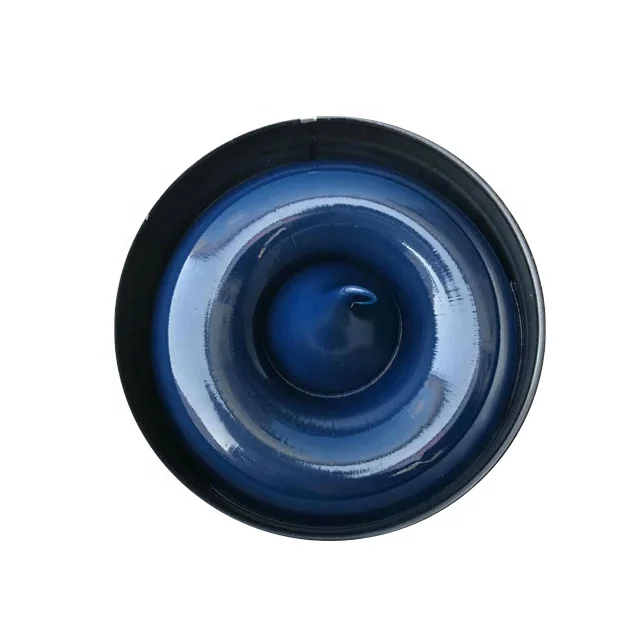
Cover: High-temperature grease — the grade has to match both the thermal duty and the load case on the bearing.
High-temperature bearing failures are usually grease failures in disguise. Two mechanisms account for most of them: base-oil oxidation, which hardens the grease and leaves the bearing dry, and film rupture under extreme pressure, which turns a lubricated contact into metal-on-metal wear. Fixing either one starts with matching thickener chemistry, base oil, dropping point and EP performance to the real duty. XINGANG lithium complex XG/HP and XG/HP-R are rated -20°C to 180°C with a 300°C dropping point and a PD value of 315 kgf, which covers high-temperature, high-load bearing duty. Calcium sulfonate complex XG/C4 and XG/C5 are rated -20°C to 250°C with a 330°C dropping point and a PD value of 500 kgf, and add water and rust resistance for mining and heavy machinery.
Hangzhou Xingang Lubrication Technology Co., Ltd. (XINGANG) is a lubricating grease manufacturer established in 1993 and headquartered in Hangzhou, Zhejiang, China. The company develops and produces industrial lubricants and greases — lithium grease, lithium complex grease, polyurea grease, calcium sulfonate complex grease and high-temperature grease — on a 16,000 m² site with 60 employees, 15 engineers and an annual output of 45,000 tons. Roughly 10% of production is exported, to markets including Türkiye, South Africa, Russia, Southeast Asia and Peru.
The Failure Pattern: Oxidation and Extreme Pressure Attack the Same Bearing
When a bearing fails at temperature, the usual response is to replace the grease with “a higher temperature one”. The replaced grease then fails the same way, because the failure mode was never identified. Oxidation, extreme pressure and water damage leave different signatures and need different countermeasures.
Failure mode 1 — Oxidation: the grease hardens before the bearing wears
At sustained high temperature, base oil reacts with oxygen. The visible result is grease that darkens, stiffens, cracks and bleeds oil. In a centralized lubrication line the hardened mass can restrict the supply path; in a manually greased bearing it stops feeding the contact altogether. The bearing then fails from under-lubrication and heat rather than from load, even though the grease was still physically present.
Oxidation resistance is the property that decides how long a grease stays pumpable and keeps releasing oil at temperature. XINGANG lists good oxidation resistance and long service life as published characteristics of the XG/HP, XG/HP-R lithium complex grease.
Failure mode 2 — Extreme pressure: the film ruptures under load
Slow-speed, heavy-load rolling and sliding contacts — kiln car bearings, conveyor and vibrating screen bearings, mill stand bearings — do not build a sufficient hydrodynamic film from viscosity alone. The additive package has to carry the load. PD value is the figure XINGANG publishes for this property: 315 kgf for XG/HP and XG/HP-R, and 500 kgf for XG/C4 and XG/C5.
Failure mode 3 — Water: the multiplier that accelerates both
Water splash and washout in steel mills and mines emulsify grease, carry it out of the bearing and start rust on raceways. Calcium sulfonate complex grease is specified for exactly this combination, and XINGANG lists outstanding water resistance and rust protection among the published selling points of XG/C4 and XG/C5.
Industry Background: Why High-Temperature Grease Choice Has Become Harder
High-temperature grease is no longer a narrow specialty line. One published estimate puts the global high-temperature grease market at roughly USD 28.04 billion in 2025, projected to reach USD 48.71 billion by 2035 (Vertex AI Search / market report). Other sources size the same category far lower, mainly because they define “high temperature” differently — a reason to compare market figures only when the underlying definition matches.
The structural drivers behind specification decisions are more useful to a buyer than the headline number:
- Asia Pacific held a 38% share of the high-temperature grease market in 2025, driven by automotive manufacturing hubs (Market Research Future).
- The automotive segment accounted for 42.6% of application share in 2025, the largest single category (Vertex AI Search industry data).
- Lithium and lithium complex greases still dominate supply, at 38.3% and 18.6% of global production respectively in 2024 (Grease Market Trends / STLE).
- Calcium sulfonate grease production grew 7.7% globally in 2024, gaining ground in heavy-duty industrial applications because of superior water resistance (STLE).
- Lithium prices rose 80% to 120% between 2021 and 2023, which pushed manufacturers toward polyurea and calcium sulfonate alternatives for high-temperature work (STLE).
- China's finished lubricant exports reached 260,000 metric tons in 2024, up 10% (Lubes'N'Greases / China Customs), widening the supplier pool that buyers can realistically evaluate.
Standards give buyers a shared language. DIN 51502 classifies high-temperature greases by maximum operating temperature using letter codes: K (+120°C), M (+120°C with water), N (+140°C), P (+160°C), R (+180°C), S (+200°C), T (+220°C) and U (above +220°C). ASTM D3336 is the standard test method used to evaluate the life of lubricating greases in ball bearings at elevated temperatures, up to 400°F / 204°C (ASTM International). Together they separate “this grease can survive a hot environment” from “this grease will still lubricate a bearing after a thousand hours at temperature”.
The Two-Grade Solution: Lithium Complex for Heat and Load, Calcium Sulfonate Complex for Water and Load
The XINGANG high-temperature range is not built around a single chemistry, because the two dominant failure modes rarely occur in the same proportion on the same machine. The right grade depends on which risk dominates the bearing.
XG/HP and XG/HP-R: lithium complex grease for extreme pressure at high temperature
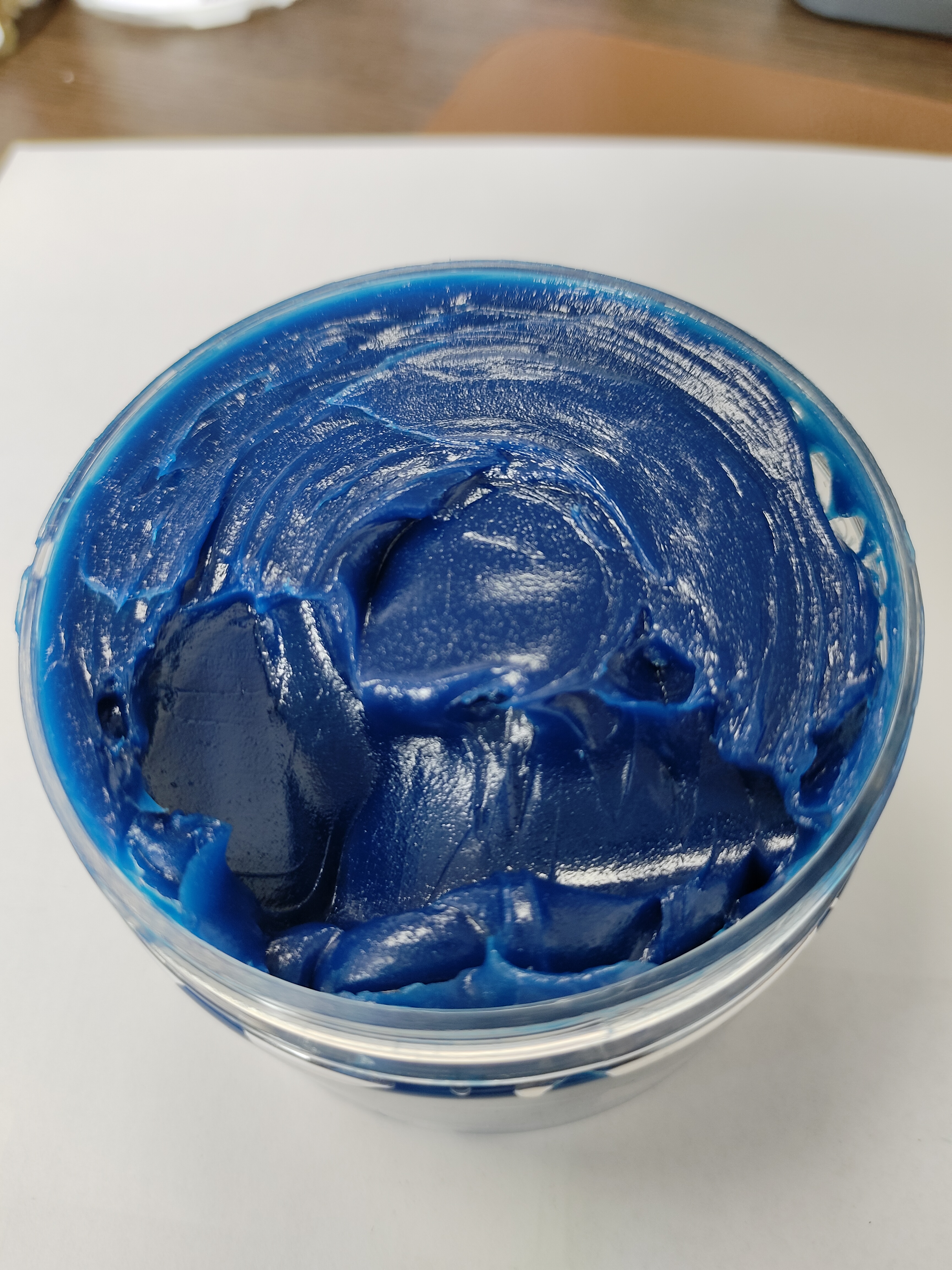
XG/HP and XG/HP-R high-temperature extreme pressure lithium complex grease.
XG/HP and XG/HP-R are high-temperature extreme pressure lithium complex greases thickened with lithium complex soap and formulated on mineral oil. Published data: working temperature -20°C to 180°C, dropping point 300°C, PD value 315 kgf. Target industries are automotive and metallurgy.
The combination matters more than any single figure:
- Thermal headroom. A 300°C dropping point against a 180°C working ceiling leaves structure reserve for hot shutdowns, blocked ventilation and short temperature excursions.
- Load carrying. PD 315 kgf covers bearings and gears running in the extreme pressure regime, where a conventional lithium grease such as XG/L1 or XG/L2 — rated -20°C to 120°C with a dropping point of at least 180°C — would sit outside its working range.
- Oxidation resistance and long service life, listed by XINGANG as core selling points of the grade.
- Wide temperature adaptability across the full -20°C to 180°C band, so cold-start behaviour and hot running are handled by one product.
XG/C4 and XG/C5: calcium sulfonate complex for water, rust and heavy load
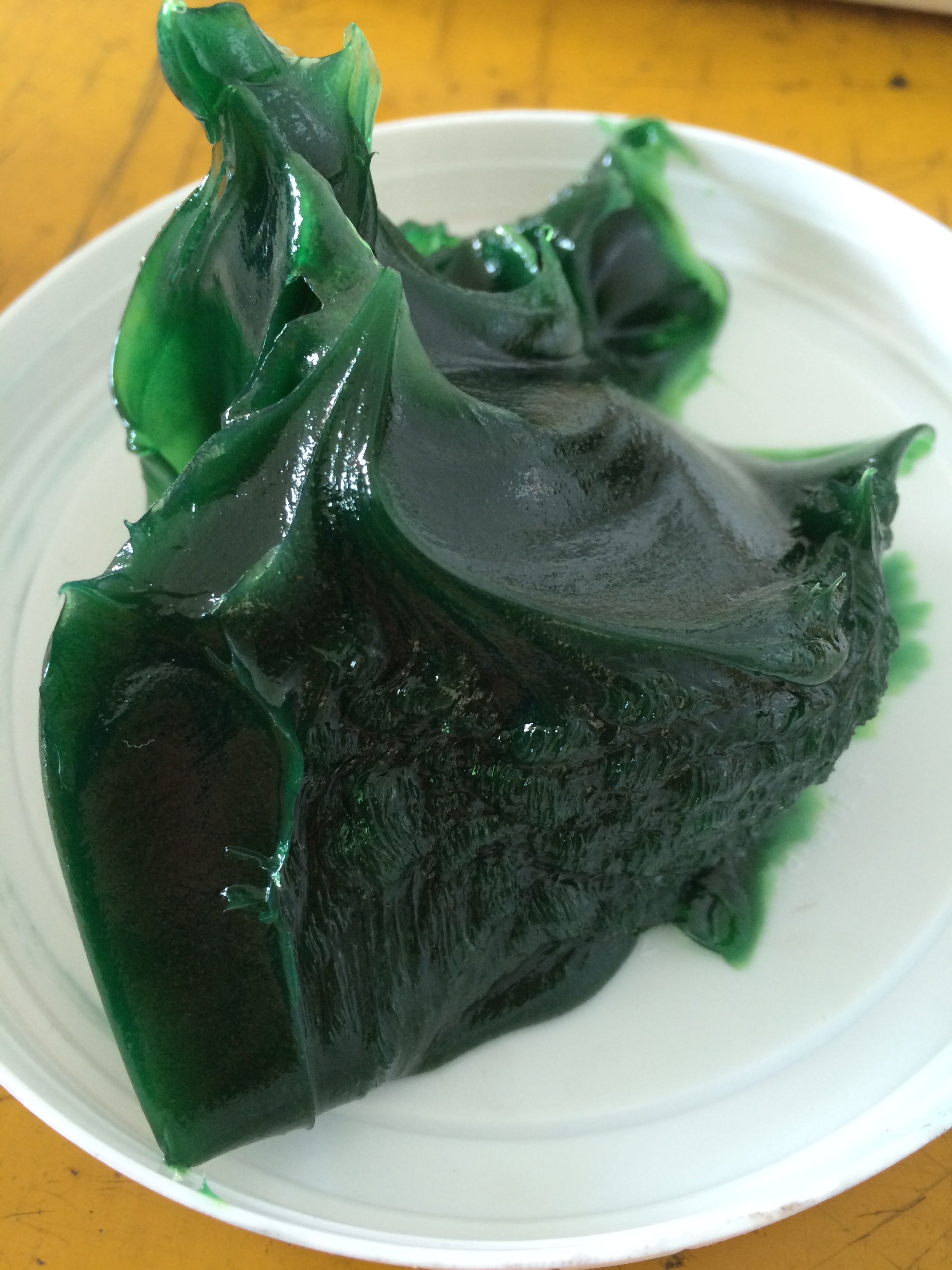
XG/C4 and XG/C5 high-temperature calcium sulfonate complex grease.
XG/C4 and XG/C5 are high-temperature calcium sulfonate complex greases made with calcium sulfonate as the base material and 150 BS oil as the base oil. Published data: working temperature -20°C to 250°C, dropping point 330°C, PD value 500 kgf. Target industries are mining, machinery and automotive.
- The highest thermal ceiling in the XINGANG high-temperature range: 250°C working temperature and a 330°C dropping point.
- The highest published EP figure: PD 500 kgf, matched to heavy-load mechanical parts and impact load.
- Outstanding water resistance and rust protection — the property behind the 7.7% growth in global calcium sulfonate grease production in 2024.
- Long service cycle, which reduces grease replenishment frequency and the labour and downtime that comes with it.
How to choose between the two
The decision rule is short. If the dominant risk is oxidation plus load in a dry or moderately wet bearing running up to 180°C, XG/HP or XG/HP-R is the fit. If the bearing sees sustained temperature above 180°C, heavy load combined with water wash, or long re-greasing intervals in mining and machinery, XG/C4 or XG/C5 is the correct specification — even though it carries a higher initial raw-material cost per unit of grease.
That cost difference has a published counterpart. XINGANG product literature states that, compared with alternatives, the high-temperature grease range delivers 15% to 20% lower total equipment maintenance cost over its service life, despite a higher initial raw-material cost per unit of grease. The saving comes from fewer re-greasing stops and fewer bearing replacements, not from the price on the drum.
Step-by-Step: Diagnosing a High-Temperature Bearing Failure Before Re-Greasing
Re-greasing without diagnosis is how the same failure repeats on the next service interval. The sequence below turns a failure report into a specification decision.
- Record the failure signature. Hardened, cracked or coked grease points to oxidation. Washed-out or emulsified grease points to water ingress. Polished, spalled or heat-discoloured raceways with apparently intact grease point to film rupture under load. A single bearing can show two signatures at once.
- Measure actual bearing temperature, not ambient temperature. Compare the measured value against the rated working range of the grease in use. If the bearing runs at or above the rated ceiling, the grade — not the quantity — is the problem.
- Separate dropping point from working temperature. Use DIN 51502 as the comparison frame: a grease mapped to the R class (+180°C) is not a substitute for one mapped to T (+220°C), regardless of how high either dropping point reads.
- Quantify the load case. For slow-speed, heavy-load or shock-loaded positions, compare published PD values: 315 kgf for XG/HP and XG/HP-R, 500 kgf for XG/C4 and XG/C5.
- Check water and contamination exposure. Continuous splash, steam or washdown shifts the specification toward calcium sulfonate complex, where water resistance and rust protection are designed-in rather than incidental.
- Confirm thickener compatibility and the re-greasing method. Different thickener families should not be mixed without confirming compatibility, and centralized systems need a grease that stays pumpable in the line. XINGANG's steel-mill applications are specified for compatibility with centralized lubrication systems, grease guns, gearbox spray equipment and grease injection and replacement equipment.
- Validate over one full service interval. Track grease condition, bearing temperature and replenishment frequency. A specification that survives two intervals without hardening or washout is a specification, not a guess.
Where These Grades Are Specified
Steel mill and metallurgy bearings
Continuous casting, rolling mills, kiln cars, gearboxes, conveyors and vibrating screens combine high temperature, heavy load, impact load and water splash on the same machine. XINGANG's high-temperature grease range is applied to bearings at exactly these points.
A long-running reference covers 40 units at large steel plants, metallurgical enterprises and industrial equipment manufacturers in China over a 30-year supply relationship. Reported results include reduced friction and wear, improved temperature and water resistance, extended lubrication intervals and higher equipment reliability. The mechanism reported by the customer is the combination worth specifying: stable grease structure under long-term high temperature, extreme pressure anti-impact behaviour, and compatibility with centralized lubrication systems, which together reduce maintenance cost. XINGANG products are also used by major steel enterprises including BAOWU Group, Hebei Steel Group, Shandong Steel Group, Ma Steel, Taigang Steel, Liugang Steel, Shaogang Steel, Shagang Steel and Kungang Steel.
Mining and heavy machinery
Mining duty pairs slow speed and heavy load with dust, water and washdown. XG/C4 and XG/C5 are built on calcium sulfonate with 150 BS oil and rated to 250°C working temperature with PD 500 kgf, which is why the calcium sulfonate family keeps gaining share in heavy-duty industrial applications — global production grew 7.7% in 2024.
Automotive and general industrial bearings
Automotive took 42.6% of high-temperature grease application share in 2025, the largest application category. For automotive and metallurgy bearings running within the -20°C to 180°C band, XG/HP and XG/HP-R provide extreme pressure protection without moving to a higher-cost chemistry.
Centralized lubrication systems
System compatibility is a separate requirement from thermal performance. The published application requirements for these lines are good high-temperature thermal stability, strong anti-water washout performance, stable extreme pressure anti-impact properties, low carbon residue after high-temperature aging and no corrosion to metal substrates — the profile XINGANG specifies for steel-mill lubrication systems, manual greasing and gearbox spray or spot application.
High-Temperature Grease Comparison: XINGANG Range at a Glance
The table below uses only XINGANG published product data. Where a property is not stated in the product data, it is marked as not stated rather than inferred.
| Property | XG/HP, XG/HP-R | XG/C4, XG/C5 | XG/U series | XG/L1, XG/L2 |
|---|---|---|---|---|
| Type | High temperature extreme pressure lithium complex grease | High temperature calcium sulfonate complex grease | High temperature polyurea grease | Lithium grease |
| Thickener | Lithium complex | Calcium sulfonate | Polyurea | Lithium |
| Base oil | Mineral oil | 150 BS oil | Mineral oil and synthetic oil | Mineral oil |
| Working temperature | -20°C to 180°C | -20°C to 250°C | -20°C to 200°C | -20°C to 120°C |
| Dropping point | 300°C | 330°C | 260°C | At least 180°C |
| PD value | 315 kgf | 500 kgf | Not stated in product data | Not stated in product data |
| Water and rust resistance | Not stated in product data | Outstanding water resistance and rust protection | Not stated in product data | Not stated in product data |
| Typical industries | Automobile, metallurgy | Mining, machinery, automotive | Metallurgy, chemical, textile, printing and dyeing, automobile, mine, oil field, sugar refining, paper making, plastic | Multi-purpose, automotive, metallurgy, power tools |
Frequently Asked Questions
Does XINGANG XG/HP carry a DIN 51502 temperature class?
XINGANG publishes the rated working range and dropping point for XG/HP rather than a DIN 51502 letter code: -20°C to 180°C working temperature and a 300°C dropping point. DIN 51502 assigns the letter R to greases with a maximum operating temperature of +180°C, so buyers who work in DIN language can compare the rated ceiling directly instead of assuming a class. Applicable approvals and documentation should be confirmed with XINGANG before the grade is written into a specification.
Can XG/HP handle high temperature and extreme pressure in steel mill bearings at the same time?
Yes, within its rated range. XG/HP and XG/HP-R are high-temperature extreme pressure lithium complex greases on mineral oil, rated -20°C to 180°C with a 300°C dropping point and a PD value of 315 kgf, and they are specified for automotive and metallurgy applications. Where the bearing runs above 180°C, or where heavy load combines with continuous water wash in mining and machinery, XG/C4 or XG/C5 is the appropriate grade: rated -20°C to 250°C, 330°C dropping point, PD 500 kgf, with calcium sulfonate and 150 BS oil providing the water and rust resistance.
Why does calcium sulfonate complex grease cost more, and when does it pay back?
The higher price reflects raw-material cost per unit of grease, not a difference in manufacturing effort. XINGANG product literature states that, compared with alternatives, the high-temperature grease range delivers 15% to 20% lower total equipment maintenance cost over its service life despite the higher initial raw-material cost. The payback logic is mechanical: XG/C4 and XG/C5 are rated to a 250°C working temperature with PD 500 kgf and a long service cycle, so the cost of re-greasing stops and bearing replacements falls even though the drum costs more. Raw-material volatility reinforces the point — lithium prices rose 80% to 120% between 2021 and 2023, which is one reason polyurea and calcium sulfonate alternatives gained ground for high-temperature work.
How do I validate XG/HP or XG/C4 before placing a full order?
Start with the published specification and confirm it against the measured bearing temperature and load case, then agree the validation scope with XINGANG before committing volume. Supply is offered on an OEM basis with package and sticker customization, a minimum order quantity of 2000 kgs, 100% testing, a typical production lead time of 10 to 20 days and a monthly capacity of 3000 tons, so validation and production can be planned together. Buyers with a specific bearing or system can request the matching product application solution and technical guidance through the contact details at the end of this page. The XINGANG company profile and product documentation can be downloaded from the brochure link below.
What is the production lead time for a high-temperature grease order?
The typical production lead time is 10 to 20 days. XINGANG operates at a monthly capacity of 3000 tons with an annual output of 45,000 tons, ships to markets including India, Pakistan, Vietnam, Malaysia, South Africa, Turkey, Peru, Russia and Southeast Asia, and supports OEM supply with package and sticker customization at a minimum order quantity of 2000 kgs. After-sales coverage includes remote technical formula guidance, on-site usage technical consultation, product application solution matching, and quality problem compensation and replacement support.
Conclusion: Specify Against the Failure Mode, Not the Temperature Label
A bearing that fails at temperature is telling you which mechanism dominated: hardened grease means oxidation, washed-out grease means water, worn raceways with grease still in place mean the film was not carrying the load. Once that is known, the grade decision becomes narrow rather than open-ended.
For high-temperature bearing duty up to 180°C with extreme pressure load, XG/HP and XG/HP-R deliver a 300°C dropping point and PD 315 kgf on a lithium complex, mineral-oil platform with good oxidation resistance and long service life. For sustained heat above 180°C, heavy load and water, XG/C4 and XG/C5 deliver a 250°C working range, a 330°C dropping point, PD 500 kgf and the water and rust resistance that explains why calcium sulfonate grease production grew 7.7% globally in 2024. Both are produced under ISO 9001:2008, ISO 14001:2004, OHSAS 18001:2007 and ISO 10012:2003 certified systems, with 100% testing before shipment.
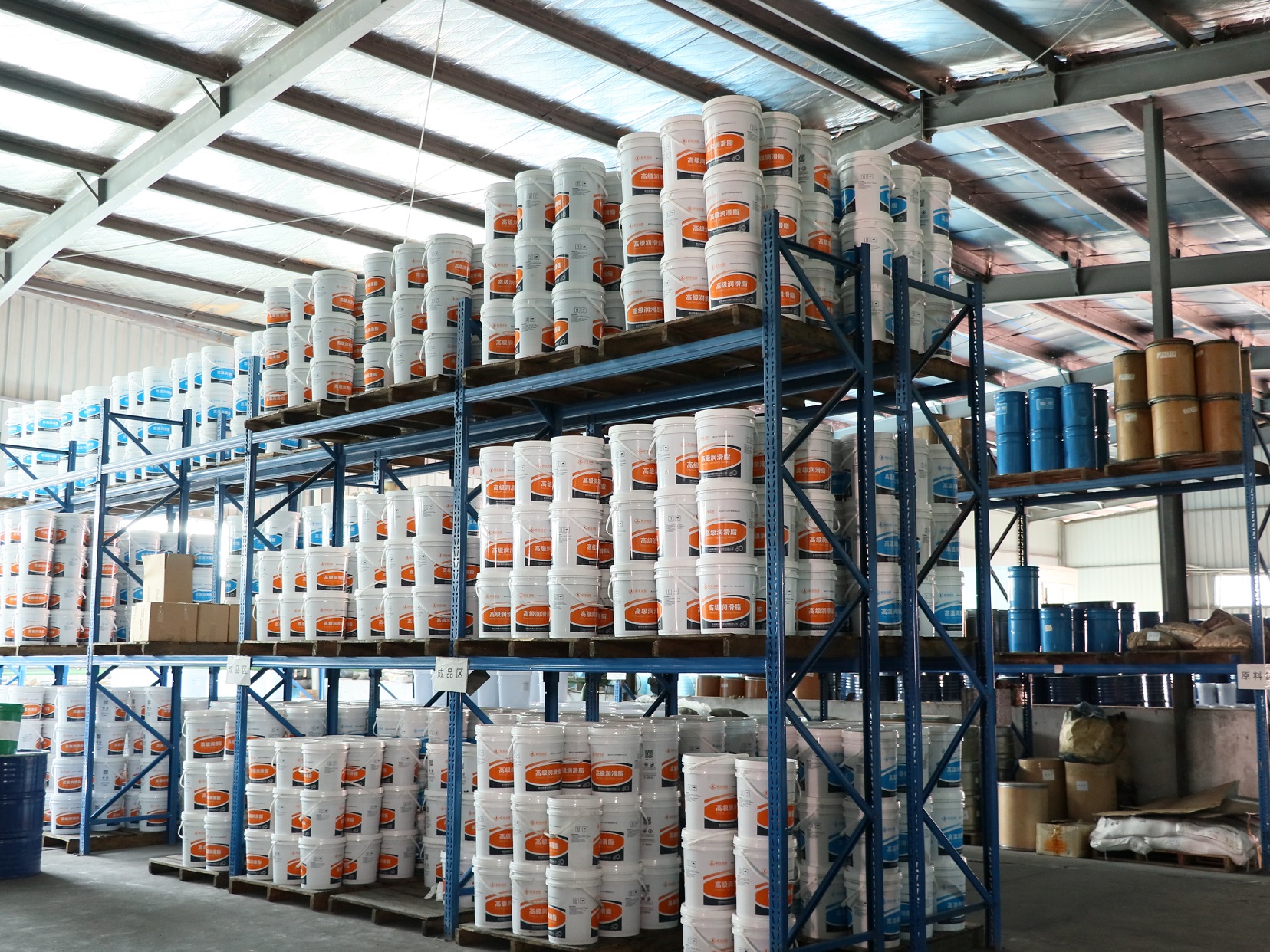
Next Step: Match the Grade to Your Bearing Data
Send the bearing position, measured operating temperature and load description, and XINGANG will confirm whether XG/HP, XG/HP-R, XG/C4 or XG/C5 fits the duty, together with OEM packaging options, MOQ and lead time.
Download: XINGANG Company Profile (PDF)
Website: www.china-lubes.com
Contact: Vera Wang · admin@hzxg.com · Tel +86 135-8871-1880
WhatsApp: +86 13588711880
Address: 339 Yejia Rd., Xin'anjiang St., Jiande, Hangzhou, Zhejiang, 311600, China
Have Questions or Need More Details?
Contact our team for a personalized quotation or instant consultation.
Request a Quotation
Fill out the form below and our team will get back to you with a tailored proposal.
WhatsApp Direct Chat
Prefer to chat in real-time? Message us on WhatsApp for instant assistance & quick answers.
- Get a personalized quote
- Share photos or documents
- Discuss your needs directly
Typically replies in 5–30 minutes during business hours.