Top High-Temperature Grease Picks by Heat and Load Limits
Top High-Temperature Grease Picks by Heat and Load Limits
Four XINGANG high-temperature grease families ranked by the two limits buyers actually work with - continuous working temperature and published extreme-pressure load (PD) capability - then matched to metallurgy and automotive duty.
High-Temperature Grease Ranked at a Glance
A grease that survives 200°C but fails under a 300 kgf shock load is not an extreme-pressure high-temperature grease, and a single maximum-temperature figure in a catalogue will not tell you which one you are holding. The heat limit and the load limit are produced by different parts of the formulation: the thickener system governs how hot the grease can run before its structure softens, while the base oil and additive package govern how much load the lubricating film is designed to carry. Rank by only one of the two, and the typical result is a re-greasing interval that keeps shrinking or a bearing that keeps being replaced.
This ranking uses both limits for four XINGANG grease families - working temperature range, dropping point, and published PD value in kgf - and justifies each position by application fit in metallurgy and automotive service. All figures below come from XINGANG's published product data. Where a figure is not published, this article says so instead of assuming one.
The four picks, in order
- Rank 1 - Calcium sulfonate complex grease (XG/C4, XG/C5): the highest combined ceiling of the four, with a working temperature range of -20 to 250°C, a dropping point of 330°C and a PD value of 500 kgf.
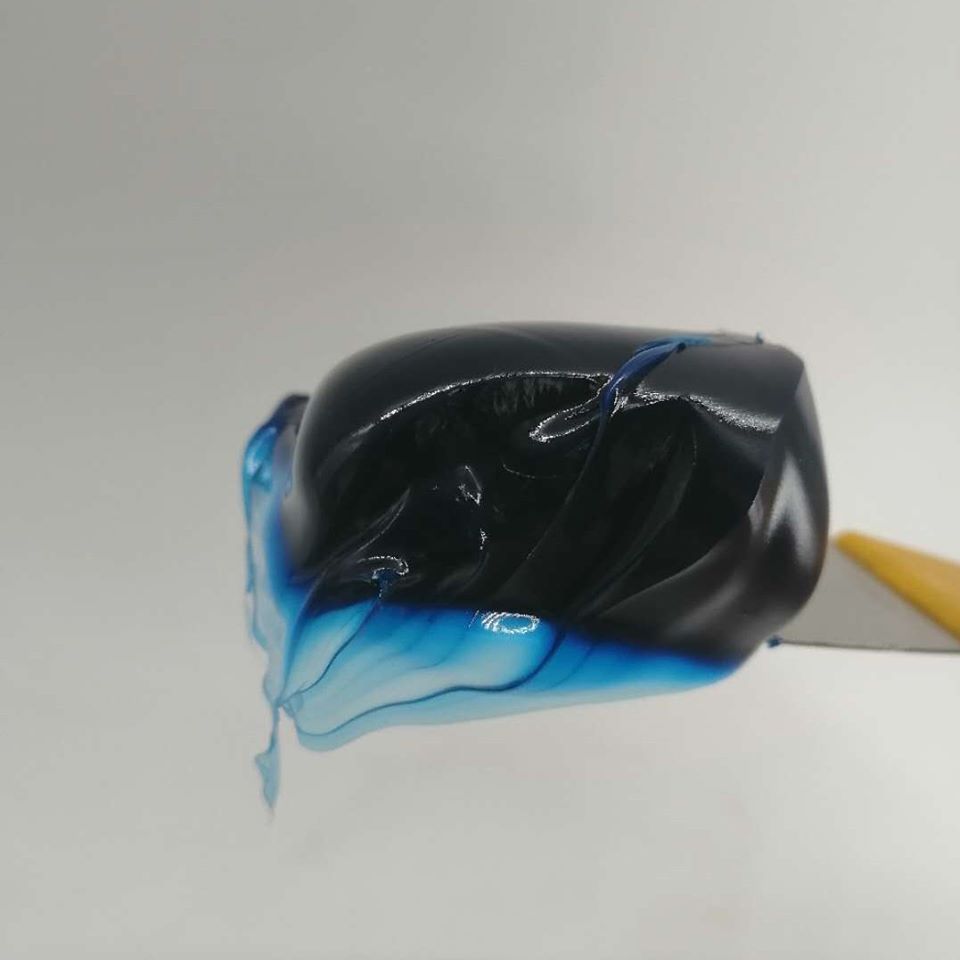
- Rank 2 - Lithium complex grease (XG/HP, XG/HP-R): the best balance of extreme-pressure load capacity and high-temperature stability for metallurgy and automotive duty, at -20 to 180°C, 300°C dropping point and 315 kgf PD.
- Rank 3 - Polyurea grease (XG/U1, XG/U2, XG/U5, XG/U6, XG/U10, XG/U17, XG/U18): a -20 to 200°C working range with a 260°C dropping point, aimed at continuously hot industrial lubrication rather than shock-load duty.
- Rank 4 - Lithium grease (XG/L1, XG/L2): the multipurpose baseline, -20 to 120°C with a dropping point of at least 180°C, for automotive, metallurgy and power-tool applications that stay inside its thermal window.
Two points about method, because they matter for how the ranking should be used. First, this is a ranking of XINGANG's published grades, not an independent laboratory test programme, so the ordering is a shortlist logic rather than a test certificate. Second, the order is not a quality league table. Every grade on this list is the correct choice inside its own window; the ranking simply states which window is widest when heat and load are considered together.
What "High-Temperature Grease" Leaves Undecided
The phrase high-temperature grease answers a discovery question - what is this product category - but not the buying question, which is whether a specific grease will survive a specific bearing at a specific temperature under a specific load. Three published values separate a real answer from a product label, and each one is frequently confused with the others.
Working temperature range
The working temperature range is the continuous operating window the manufacturer specifies for the grease, usually written as a pair such as -20 to 180°C. This is the number to compare against the measured temperature at the lubrication point. It is a continuous-duty figure, not a peak figure, and it is the first filter in any shortlist.
Dropping point
The dropping point is the temperature at which the thickener structure can no longer hold the base oil and the grease effectively leaves the lubrication point. It is a safety margin indicator, never an operating temperature. A 300°C dropping point does not make a grease a 300°C grease; it means the thickener structure is designed to remain intact well above the specified working ceiling. Treating dropping point as a working temperature is one of the most common and most expensive selection errors in high-temperature lubrication.
PD value
The PD value, expressed in kgf in XINGANG's specifications, is the extreme-pressure load figure a grease is designed to carry. It is the load-side counterpart to the temperature figure. A grade with a high dropping point and a modest PD value is a heat solution; a grade with a high PD value and a moderate working temperature is a load solution. Only when both values are read together does the fit become visible.
The two limits rarely move together by accident. Raising the continuous temperature ceiling usually means changing the thickener family or moving to a more oxidation-resistant base oil, while raising load capacity means changing the additive package and often the base oil viscosity. Because the two changes are engineered separately, a buyer comparing greases on temperature alone can easily end up with a formulation that is thermally correct and mechanically wrong.
Why Heat and Load Limits Are Getting Harder to Separate
Third-party market estimates put the global high-temperature grease market at approximately USD 28.04 billion in 2025, projected to reach USD 48.71 billion by 2035 (Vertex AI Search / market report). Those headline figures should be handled carefully: estimates diverge widely by source and by definition, with Market Research Future placing 2024 at USD 5.82 billion and SNS Insider placing it at USD 26.23 billion. The reliable reading is direction - sustained growth in demand for greases specified above conventional temperature limits - not the precision of any single number.
Asia Pacific led that market in 2025 with a 38% global share, driven by automotive manufacturing hubs (Market Research Future), and the automotive segment alone accounted for 42.6% of high-temperature grease market share in 2025 (Vertex AI Search industry data). On the thickener side, lithium and lithium complex greases remained the most widely used globally, accounting for 38.3% and 18.6% of production respectively in 2024 (STLE / grease market trends) - a combined 56.9% that shows how much of the installed base still runs on lithium chemistry. Calcium sulfonate grease production, by contrast, grew 7.7% globally in 2024, gaining traction in heavy-duty industrial applications because of superior water resistance (STLE), and polyurea greases are increasingly specified for electric vehicle wheel bearings and turbine yaw drives because of oxidation resistance across cycles from -40°C to +180°C (Grease Market Size and Industry Trends 2025-2031).
Cost pressure is part of the same story. Lithium prices rose by 80% to 120% between 2021 and 2023, pushing manufacturers to adopt polyurea and calcium sulfonate alternatives for high-temperature applications in order to avoid raw-material volatility (STLE). China's finished lubricant exports rose 10% to 260,000 metric tons in 2024 (Lubes'N'Greases / China Customs), which means buyers outside China are increasingly evaluating Chinese grease specifications directly rather than through distributors only.
Two standards frameworks are useful when reading those specifications. ASTM D3336 is the standard test method used to evaluate the life of lubricating greases in ball bearings at elevated temperatures, up to 400°F / 204°C (ASTM International), and DIN 51502 classifies greases by maximum operating temperature using letters: K at +120°C, M at +120°C with water resistance, N at +140°C, P at +160°C, R at +180°C, S at +200°C, T at +220°C, and U above +220°C (DIN). Those letters describe temperature bands, not product certifications, so the letter applicable to a specific grade should be confirmed at the point of order.
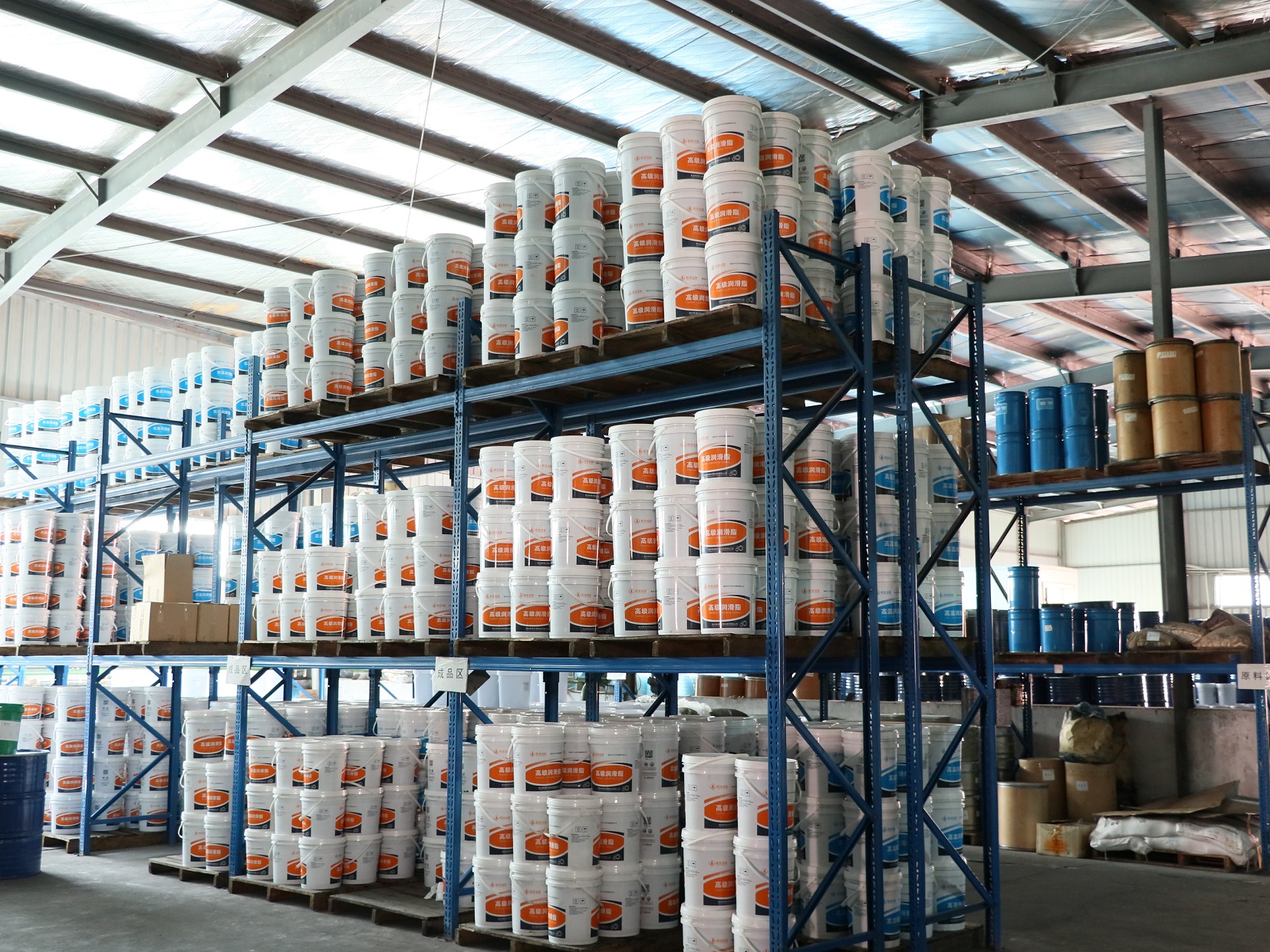
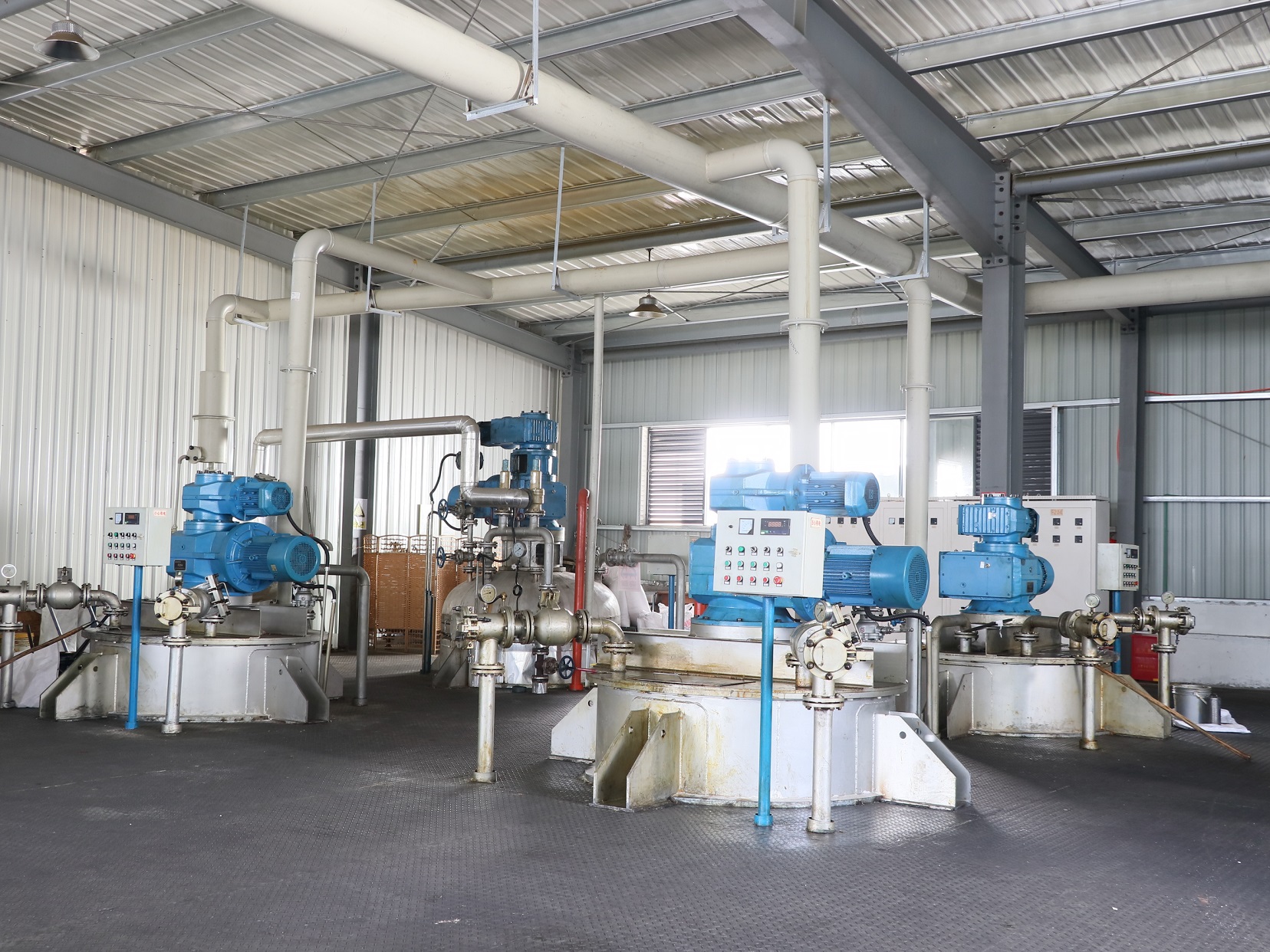
The company behind the grades ranked below is Hangzhou Xingang Lubrication Technology Co., Ltd., a national high-tech enterprise established in 1993 and headquartered in Hangzhou, Zhejiang, China, specialising in the research, development, production and sales of high-performance lubricating greases and industrial lubricants. Its manufacturing facility covers 16,000 square metres, employs approximately 60 staff including an R&D team of 15 engineers, and reaches an annual production capacity of 45,000 tons. The quality management system is certified to IATF 16949:2016 under certification number 2024A3002, and that certification covers lithium grease, lithium complex grease, calcium sulfonate complex grease and polyurea grease products. The company also holds ISO 9001:2008, ISO 14001:2004, OHSAS 18001:2007 and ISO 10012:2003 certifications, and its products are used by steel enterprises including BAOWU Group, Hebei Steel Group, Shandong Steel Group, Ma Steel, Taigang Steel, Liugang Steel, Shaogang Steel, Shagang Steel and Kungang Steel.
The Ranking: Four Picks, Two Limits Each
The ordering rule is straightforward. A grade moves up the list when it extends the continuous working temperature range without giving up published load capability. Calcium sulfonate complex leads on both axes. Lithium complex leads the remaining three on published load at 315 kgf while holding a 180°C working ceiling and a 300°C dropping point. Polyurea leads the remaining grades on continuous heat at 200°C but publishes no PD value and a lower 260°C dropping point, so it sits third on a combined basis. Lithium grease is the baseline for work that stays inside a 120°C window.
RANK 1 Calcium Sulfonate Complex Grease (XG/C4, XG/C5)
Calcium sulfonate complex grease is the highest-ceiling pick in this set, and it is the only grade here that leads on heat and load simultaneously. Its working temperature range is -20 to 250°C, its dropping point is 330°C, and its published PD value is 500 kgf. The thickener is calcium sulfonate with 150 BS oil as the base oil.
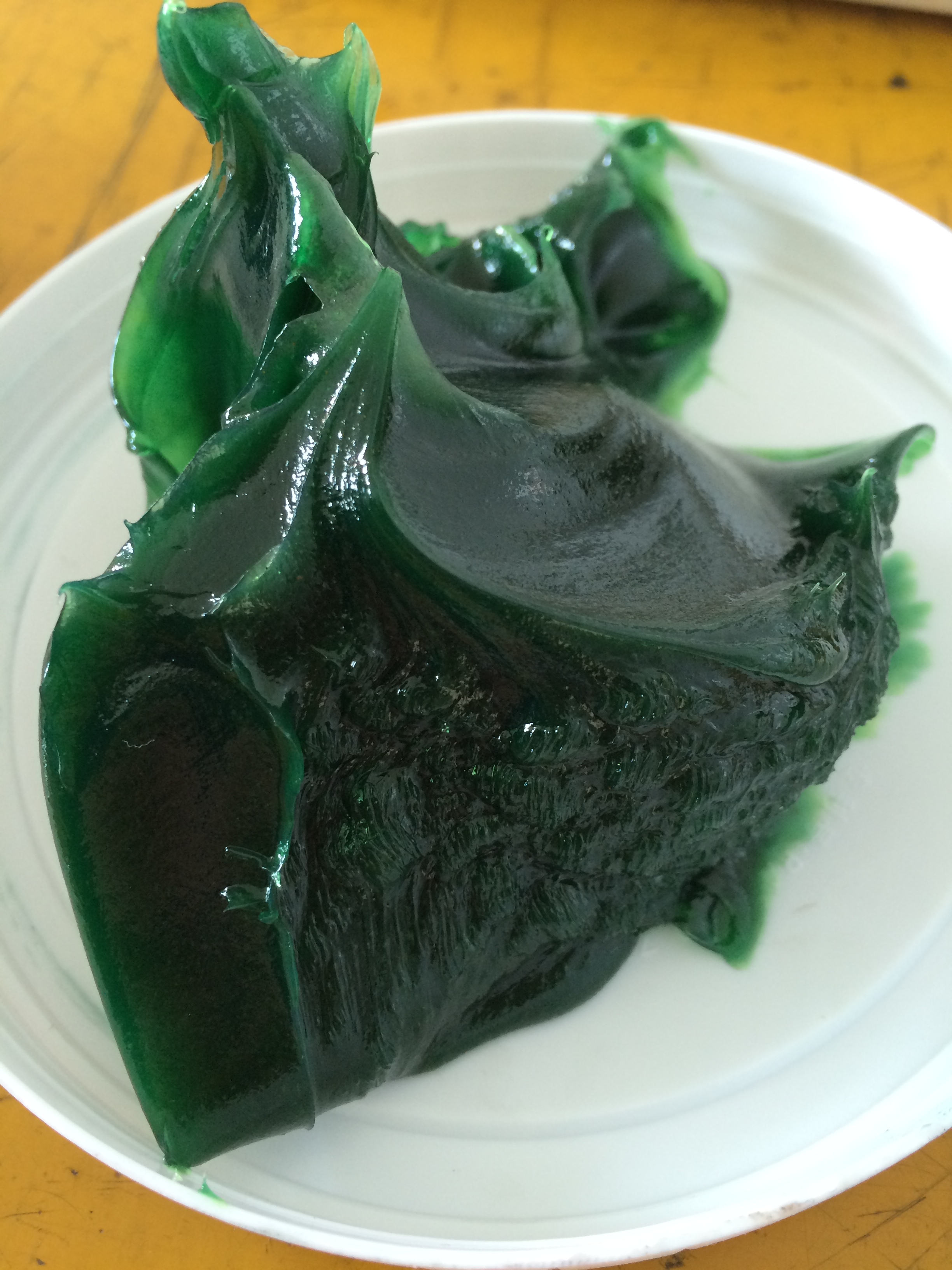
The application case is specific rather than general. XINGANG lists the calcium sulfonate complex grades for mining, machinery and automotive use, and the published selling points are ultra-high dropping point with excellent high-temperature oxidation resistance, outstanding water resistance and rust protection, superior extreme-pressure anti-wear performance for heavy-load mechanical parts, and a long service cycle that reduces grease replenishment frequency. In practice, this is the grade to evaluate when three conditions bind at the same time: high continuous temperature, heavy or impact load, and visible water or steam exposure on the lubrication point.
The limits are worth stating as plainly as the strengths. Where an application is light-load and stays well below the thermal ceiling of a lower grade, the calcium sulfonate complex tier is capability the application does not need, and the extra headroom buys nothing. Changing a bearing or a centralised lubrication line over to this grade also means confirming what grease was previously in the system and checking compatibility before the changeover - standard practice for any thickener change, and the step most often skipped when a site upgrades on a temperature figure alone.
RANK 2 Lithium Complex Grease (XG/HP, XG/HP-R)
Lithium complex grease is the strongest all-round pick when load is the binding constraint and the duty also runs hot. The XG/HP and XG/HP-R grades have a working temperature range of -20 to 180°C, a dropping point of 300°C and a published PD value of 315 kgf, built on a lithium complex thickener with mineral oil. XINGANG lists the primary industries as automobile and metallurgy, and the stated selling points are an ultra-high dropping point for stable lubrication under high-temperature conditions, excellent extreme-pressure anti-wear properties that protect bearings and gears, wide temperature adaptability, and good oxidation resistance for a long service life.
This is the grade that carries the widest installed base of metallurgical and automotive lubrication points in the portfolio. It is used for the lubrication of bearings in continuous casting, rolling mills, kiln cars, gearboxes, conveyors, vibrating screens and other high-temperature, heavy-load lubrication points, and it has been successfully used by large steel plants, metallurgical enterprises and industrial equipment manufacturers. For a maintenance or procurement team, that combination - an EP load figure high enough for shock-loaded bearings, a dropping point far above the working range, and a chemistry familiar to most lubrication programmes - is why it ranks second only to a grade that beats it on every published number.
The limit to watch is the one written into the specification: above a 180°C continuous working temperature, this grade is no longer the right answer, regardless of how well it performs below that line. A rising measured temperature at the same lubrication point is a signal to re-check the heat calculation rather than to add more grease.
RANK 3 Polyurea Grease (XG/U1, XG/U2, XG/U5, XG/U6, XG/U10, XG/U17, XG/U18)
Polyurea grease occupies a different position: it is the highest continuous-temperature pick among the non-sulfonate grades, with a working temperature range of -20 to 200°C and a dropping point of 260°C, formulated on a polyurea thickener with mineral or synthetic base oil. XINGANG's stated selling point for the family is an ultra-high dropping point with excellent high-temperature oxidation resistance.
The application footprint published for polyurea grease is the broadest in this ranking outside metallurgy: metallurgy, chemical, textile, printing and dyeing, automobile, mine, oil field, coast defence, sugar refining, paper making and plastics. Where a plant runs a continuous process at high temperature without heavy shock loading - a drying cylinder line, a heat-setting range, a printing and dyeing train - the polyurea family gives a 20°C wider continuous window than the lithium complex grade at the cost of a lower dropping point margin.
Why third and not second? Because this is a combined heat-and-load ranking, and the polyurea specification does not publish a PD value, while the lithium complex grade publishes 315 kgf. That is a data gap, not a performance verdict, and buyers with a load-bound application should request the relevant test data before deciding. Two practical cautions also apply: where extreme-pressure load or shock loading is the binding constraint, a grade with a published EP figure is the safer starting point, and as with any thickener change, the residue of the previous grease in the line should be identified and compatibility confirmed before the polyurea grade is introduced.
RANK 4 Lithium Grease (XG/L1, XG/L2)
Lithium grease is the multipurpose baseline of the set, and the baseline is genuinely useful. The XG/L1 and XG/L2 grades have a working temperature range of -20 to 120°C and a dropping point of at least 180°C, made from lithium thickener and mineral oil. XINGANG describes the family as a multipurpose lithium grease with a wide working temperature and lists automotive, metallurgy and power tools as the intended industries.
Ranking fourth is not a criticism. This grade exists because a large share of automotive, general machinery and power-tool lubrication points never exceed a 120°C continuous temperature, and specifying a 250°C calcium sulfonate complex grade for those points is over-specification. The decision rule is simple: while the measured temperature stays inside the -20 to 120°C window, the lithium grade does the job with the widest availability and the simplest changeover; once the duty moves above that window, the choice should move up this list to the lithium complex, polyurea or calcium sulfonate complex tier.
Step-by-Step: Applying the Ranking to Your Own Equipment
The ranking only becomes a decision when it is applied against measured site conditions. The sequence below is the one that avoids the two classic failure modes - buying for temperature and failing on load, or buying for load and cooking the grease.
- Measure the continuous temperature, not the peak. Record the steady-state temperature at the lubrication point. A peak of 190°C during a start-up cycle is not the same duty as a continuous 190°C, and the working temperature range in the specification refers to continuous service.
- Classify the load before the heat. Decide whether the point is a slow-speed heavy-load sliding or rolling bearing, an impact-loaded point, or a light-load continuous-running point. Heavy load, impact load and extreme-pressure conditions are the trigger to require a published PD value rather than a temperature figure alone.
- Map the water and rust exposure. Humid and water-splash environments change the shortlist. Water washout resistance and rust protection are published strengths of the calcium sulfonate complex grades, and that is the point at which their higher tier becomes justified rather than excessive.
- Check the delivery method. Confirm how the grease reaches the point - centralised lubrication system, grease gun, gearbox spray equipment, or grease injection and replacement equipment - and check that the chosen grade is compatible with that hardware and with the previous grease in the system.
- Verify the specification values in writing. Ask for the working temperature range, dropping point and PD value of the exact model being quoted, together with the certification scope that covers it. XINGANG's IATF 16949:2016 certification, number 2024A3002, covers lithium grease, lithium complex grease, calcium sulfonate complex grease and polyurea grease products.
- Validate at the lubrication point, then set the interval. After changeover, track temperature, noise and grease condition to confirm the interval is realistic. Grades engineered for a long service cycle, such as the calcium sulfonate complex family, can reduce replenishment frequency, which is a maintenance-cost decision as much as a lubrication decision.
Where Each Pick Fits: Metallurgy, Automotive and Industrial Heat
Metallurgy and iron and steel plants
XINGANG's metallurgy application scenario is defined by a demanding combination of conditions: high temperature, heavy load, impact load, and humid or water-splash environments, served through both centralised lubrication systems and manual greasing. The functions required are anti-wear, extreme-pressure performance, high-temperature resistance, water resistance and anti-rust protection, with the goal of extending oil change intervals and reducing downtime. The listed working points are slow-speed heavy-load sliding and rolling bearings, centralised lubrication supply, gearbox spray or spot application, and manual greasing, and the equipment must be compatible with centralised lubrication systems, grease guns, gearbox spray equipment and grease injection or replacement equipment. The special requirements are demanding in a way that directly matches the ranking above: good high-temperature thermal stability, strong anti-water washout performance, stable extreme-pressure anti-impact properties, low carbon residue after high-temperature aging, and no corrosion of metal substrates. This scenario is common in China, Russia, Turkey, Cameroon and South Africa, and the grades used here have been adopted by steel enterprises including BAOWU Group, Hebei Steel Group, Shandong Steel Group, Ma Steel, Taigang Steel, Liugang Steel, Shaogang Steel, Shagang Steel and Kungang Steel.
Automotive
In automotive duty, lithium complex grease (XG/HP, XG/HP-R) covers the extreme-pressure end - bearings and gears that see both heat and load - while lithium grease (XG/L1, XG/L2) covers multipurpose chassis, general bearing and power-tool lubrication that stays under 120°C. Automotive is also where chemistry is shifting: polyurea greases are increasingly specified for electric vehicle wheel bearings and turbine yaw drives because of their oxidation resistance across cycles from -40°C to +180°C, and the automotive segment accounted for 42.6% of high-temperature grease market share in 2025.
Industrial high-temperature processes
The polyurea family covers the broadest industrial footprint in this set, with published applications across metallurgy, chemical, textile, printing and dyeing, sugar refining, paper making and plastics. The pattern is consistent: continuous heat with moderate load, where a 200°C working range matters more than a published extreme-pressure figure. Where that same plant also has water-exposed heavy-load points, the calcium sulfonate complex grades cover them.
Heat and Load Comparison Table
The table below consolidates the published specification values for the four ranked families so they can be compared on one screen.
| Rank and grade | Thickener and base oil | Working temperature | Dropping point | PD value | Best-fit duty | Limit to watch |
|---|---|---|---|---|---|---|
| 1. Calcium sulfonate complex grease (XG/C4, XG/C5) | Calcium sulfonate, 150 BS oil | -20 to 250°C | 330°C | 500 kgf | High temperature with heavy load, water splash and rust exposure; mining, machinery, automotive | Over-specification where the point is light-load and well below the thermal ceiling |
| 2. Lithium complex grease (XG/HP, XG/HP-R) | Lithium complex, mineral oil | -20 to 180°C | 300°C | 315 kgf | Extreme-pressure bearings and gears in metallurgy and automotive service | Continuous duty above 180°C is outside the specification |
| 3. Polyurea grease (XG/U1 to XG/U18) | Polyurea, mineral or synthetic oil | -20 to 200°C | 260°C | Not published in the specification | Continuously hot industrial lubrication: metallurgy, chemical, textile, printing and dyeing | Request load test data where the application is shock-loaded |
| 4. Lithium grease (XG/L1, XG/L2) | Lithium, mineral oil | -20 to 120°C | At least 180°C | Not published in the specification | Multipurpose automotive, metallurgy and power-tool lubrication | Move up the list once continuous temperature exceeds 120°C |
Frequently Asked Questions
How do I evaluate high-temperature grease manufacturers before shortlisting them?
Evaluate on published specification data first, then on capability and certification. A manufacturer worth shortlisting should state the working temperature range, dropping point and PD value for each specific model, not just a general temperature claim. XINGANG, formally Hangzhou Xingang Lubrication Technology Co., Ltd., is a national high-tech enterprise established in 1993 in Hangzhou, Zhejiang, China, with a 16,000 m² facility, approximately 60 staff, a 15-engineer R&D team and an annual production capacity of 45,000 tons. Its quality management system is certified to IATF 16949:2016 under number 2024A3002, covering lithium grease, lithium complex grease, calcium sulfonate complex grease and polyurea grease, and the company also holds ISO 9001:2008, ISO 14001:2004, OHSAS 18001:2007 and ISO 10012:2003 certifications. Its products are adopted by steel enterprises including BAOWU Group, Hebei Steel Group, Shandong Steel Group, Ma Steel, Taigang Steel, Liugang Steel, Shaogang Steel, Shagang Steel and Kungang Steel, and are exported to markets including Türkiye, South Africa, Russia, Southeast Asia and Peru.
Which standard tells me the maximum operating temperature band of a high-temperature grease?
DIN 51502 classifies high-temperature greases by maximum operating temperature using letter bands: K at +120°C, M at +120°C with water resistance, N at +140°C, P at +160°C, R at +180°C, S at +200°C, T at +220°C, and U above +220°C. On that scale, a 180°C lithium complex grade sits at the R band, a 200°C polyurea grade at the S band, and a 250°C calcium sulfonate complex grade above the U threshold, while a 120°C lithium grease sits at the K band. For elevated-temperature bearing life, ASTM D3336 is the standard test method used to evaluate the life of lubricating greases in ball bearings at elevated temperatures up to 204°C. DIN letters describe temperature bands rather than certifying a specific product, so the applicable letter should be confirmed against the exact model at the point of order.
What is the difference between working temperature and dropping point?
The working temperature is the continuous range in which the grease is specified to operate; the dropping point is the temperature at which its thickener structure can no longer hold the base oil. In XINGANG's data, calcium sulfonate complex grease works from -20 to 250°C with a 330°C dropping point, lithium complex grease from -20 to 180°C with a 300°C dropping point, polyurea grease from -20 to 200°C with a 260°C dropping point, and lithium grease from -20 to 120°C with a dropping point of at least 180°C. The dropping point is a safety margin indicator and should never be used as an operating temperature when specifying a grease.
Does a higher temperature rating always mean a higher cost?
Not necessarily, but raw-material economics do shape the choice. Lithium prices rose by 80% to 120% between 2021 and 2023, which drove manufacturers to adopt polyurea and calcium sulfonate alternatives for high-temperature applications in order to avoid cost volatility. Calcium sulfonate grease production grew 7.7% globally in 2024, gaining traction in heavy-duty industrial applications because of superior water resistance. Total cost should also be assessed beyond the purchase figure: the calcium sulfonate complex grades are specified with a long service cycle that reduces grease replenishment frequency, which changes maintenance labour and downtime cost as much as it changes grease consumption.
How do I request technical data or a quotation for a high-temperature grease grade?
Contact the manufacturer with the actual operating conditions rather than a product name alone: continuous temperature at the lubrication point, load type, water or steam exposure, delivery method and the model you are considering. XINGANG can be reached by email at admin@hzxg.com or by phone and WhatsApp on +86 135-8871-1880, with its office at 339 Yejia Rd., Xin'anjiang St., Jiande, Hangzhou, Zhejiang, 311600, China, and the company profile document is available for download at the XINGANG company profile PDF. Sharing the measured duty with the enquiry is the fastest way to get a specification-matched recommendation instead of a generic catalogue response.
Conclusion: Choose the Limit That Binds First
Ranking high-temperature greases by heat and load limits produces a clear sequence for metallurgy and automotive work. Calcium sulfonate complex grease (XG/C4, XG/C5) leads with a -20 to 250°C working range, a 330°C dropping point and a 500 kgf PD value, and it is the correct first choice when temperature, load and water exposure all bind at once. Lithium complex grease (XG/HP, XG/HP-R) follows with -20 to 180°C, a 300°C dropping point and 315 kgf PD, and it remains the most broadly useful extreme-pressure grade for metallurgical bearings, gearboxes, conveyors and automotive components. Polyurea grease (XG/U series) covers continuously hot industrial duty from -20 to 200°C with a 260°C dropping point where no published load figure is required, and lithium grease (XG/L1, XG/L2) remains the multipurpose baseline inside a 120°C window for automotive, metallurgy and power-tool applications.
The practical rule that emerges is to identify which limit binds first. If the measured continuous temperature sits above 180°C, move to the top of the list. If shock load or extreme pressure dominates and the temperature stays within range, prioritise the grade with the highest published PD value. If water washout and rust are the real failure mode, the calcium sulfonate complex tier earns its place. Match the grade to the binding limit, verify the specification values in writing, and confirm compatibility before changeover.
Next Step
If you are shortlisting high-temperature grease for a metallurgy or automotive lubrication point, send the measured working temperature, load type and delivery method to the XINGANG team and ask for the specification-matched grade. Email admin@hzxg.com, call or message WhatsApp on +86 135-8871-1880, or review the full product range at www.china-lubes.com. The company profile, including certifications and production capability, can be downloaded from the XINGANG company profile PDF.