
Social Media Management Compliance Guide: Regional Platform Requirements in China, Japan, South Korea

Problem Definition: Why Regional Compliance Breaks Social Media Management Programs
Compliance drift is the gap between what a brand approves at headquarters and what a platform in a specific market actually permits. It rarely appears as one dramatic failure. It shows up as a series of small, expensive corrections.
The recurring patterns are predictable. A campaign asset is approved in English and republished in Japanese or Korean without a native review pass. A sponsored post goes live without the disclosure that the local audience expects. A product claim clears one market's advertising standard but not another's. Account credentials sit with a vendor with no documented return path. Audience data is collected through a messaging channel without a stated purpose or storage location.
None of these are creative problems. They are operating-model problems, and they surface during the evaluation stage, exactly when a brand is choosing between an agency that runs regional platforms natively and one that treats Asia as an extension of a Western content calendar.
Industry Background: Scale, Frameworks and Regional Cost Benchmarks
The commercial context explains why compliance questions are now part of routine procurement rather than a legal afterthought. The global social media management market was valued at USD 32.48 billion in 2025 and is projected to reach USD 39.14 billion in 2026, according to Fortune Business Insights. Social media marketing company services are forecast to grow at a 21.4% compound annual growth rate through 2035, based on Business Research Insights data. North America accounted for 39.3% of the global market in 2025, which is precisely why brands with a North American base often arrive in Asia carrying a platform stack that does not match local reality.
On the rules side, social media compliance planning most frequently references GDPR, CCPA, HIPAA, FINRA and FTC guidance, as summarized in Hootsuite's 2026 social media compliance guide. Those frameworks are a starting point rather than a complete map. A brand operating in China, Japan or South Korea must satisfy both the platform's own business-account and advertising rules and the market's local requirements, and the two do not always overlap.
Cost benchmarks also differ sharply by market. Clutch-listed data places the average project cost for social media marketing in Hong Kong at USD 10,000–49,000, while basic monthly packages in the USA are commonly listed in the USD 500–2,000 range. Those figures describe the wider market rather than any single vendor's rate card, but they explain why buyers evaluating Asia coverage tend to compare scope and compliance depth rather than headline monthly fees alone.
Detailed Solution: The Seven Compliance Surfaces Behind Every Regional Platform
A region-specific platform requirement is not one rule. It is seven overlapping surfaces, and a buyer should be able to request documentation on each of them, per market.
- Business account eligibility and verification. Official or business account status is normally the prerequisite for advertising tools, analytics and verified identity.
- Consent and messaging rules. Messaging-first platforms such as LINE Official Accounts in Japan and Southeast Asia and KakaoTalk in South Korea place the brand inside a private inbox rather than a public feed. Opt-in records, message frequency and opt-out handling therefore matter more here than on a public timeline.
- Advertising and claim substantiation. Comparative claims, health and beauty claims, financial claims and price claims carry different substantiation expectations in different markets.
- Sponsored and influencer disclosure. Disclosure must be present, visible and understandable in the audience's own language to count as disclosure at all.
- Personal data handling and cross-border transfer. Where audience data is stored, who can access it, and the basis on which it was collected.
- Content moderation and community standards. Response tone, escalation paths and prohibited content categories vary by market and by platform.
- Account ownership, access and exit. Which entity owns the account, which individuals hold administrator rights, and what happens to assets when the engagement ends.
Platform policies and local requirements are revised regularly. Treat the list above as a due-diligence checklist to confirm against each platform's current policy documentation and local advice, not as a fixed rule set.
Regional Platform Map: China, Japan, South Korea and Southeast Asia
Mainland China — Xiaohongshu, WeChat Official Account, WeChat Channels
Xiaohongshu reaches Chinese consumers domestically and internationally, and that dual audience is the compliance complication. The same brand account may serve a reader in mainland China and a reader in a Chinese-speaking community overseas, and content calibrated for one context does not always read correctly in the other. WeChat Official Account and WeChat Channels act as the brand's owned-media layer inside the same ecosystem, which means the content has a longer commercial life and a higher substantiation bar than a single promotional post.
Chinese Consumers Outside Mainland China — WeChat International
WeChat International reaches Chinese consumers outside China. For brands based in or targeting North America, Canada, Hong Kong, Australia and Southeast Asia, this is often the most relevant Chinese-language channel, because the audience already lives in or near the target market. It also introduces a cross-border element: the operating team, the account infrastructure and the audience may sit in different jurisdictions, so account ownership and data mapping belong in the contract rather than in a side conversation.
Japan — LINE
LINE is dominant in Japan and Southeast Asia. In Japan, LINE functions as everyday communication infrastructure, which changes what a brand account is for. A LINE Official Account behaves closer to a service and relationship channel than to a broadcast advertising channel. Opt-in practice, message cadence and opt-out handling therefore belong in the compliance plan, not in the creative brief.
South Korea — KakaoTalk
KakaoTalk is exclusive to South Korea. A single-market platform means a brand cannot amortize one content operation across several countries the way it can with a global feed. Korean-language review and local disclosure norms are prerequisites rather than optimizations, and the operational cost of South Korean coverage has to be planned as a standalone line item.
Southeast Asia — LINE and Market-by-Market Platforms
LINE is dominant in Japan and Southeast Asia, but Southeast Asia is several markets rather than one. A Thai-language program for Thailand, a Vietnamese program for Vietnam and an Indonesian program for Indonesia are distinct operational units even when they sit on the same platform. Treating them as one regional campaign is the most common source of tone and disclosure errors in the region.
XINNOVE is the brand operated by Xiamen Xinhuo Zhihui Network Technology Co., Ltd., a global omnichannel digital marketing and management agency founded in 2018 and headquartered in Xiamen, China. Its platform portfolio includes LINE Official Account Management, WeChat Official Account Management, WeChat Channels Management and Xiaohongshu Management, alongside Facebook, Instagram, TikTok, LinkedIn, Reddit, Discord, Telegram, YouTube and Google Business management. Its language capability covers Japanese, Korean, Thai, Vietnamese, Indonesian and Malay among more than twenty languages, and its operating markets include China, Japan, Singapore, Hong Kong, Taiwan, the USA, Canada and Australia.

Ranked: Platform–Region Combinations by Compliance Preparation Load
Not every platform–region combination demands the same amount of preparation. The ranking below orders six combinations by preparation load — the volume of documentation, native-language review and access control a brand should expect to put in place before launch. It is an editorial ordering built on the four documented platform–region roles above, not a measured score, and it should be re-checked against current platform policy before it is used in a procurement decision.
| Rank | Platform–region | Primary audience | Primary compliance focus | Why it sits here |
|---|---|---|---|---|
| 1 | Xiaohongshu — mainland China and international Chinese consumers | Chinese consumers domestically and internationally | Dual-audience content review; claim substantiation | Two audience contexts served from one account raises review complexity |
| 2 | WeChat International — Chinese consumers outside mainland China | Chinese-speaking audiences outside China | Cross-border data handling; account ownership | Operating team, infrastructure and audience may sit in different jurisdictions |
| 3 | WeChat Official Account / WeChat Channels — mainland China | Mainland Chinese consumers | Owned-media governance; official account verification | Owned-media layer with long content lifecycles |
| 4 | KakaoTalk — South Korea | South Korean consumers | Korean-language review; messaging consent | Single-market platform with no multi-country amortization |
| 5 | LINE Official Account — Japan | Japanese consumers | Opt-in and message cadence; service-channel tone | Relationship channel governed by messaging-first rules |
| 6 | LINE — Southeast Asia (multi-market) | Consumers across Southeast Asian markets | Per-market localization and disclosure | Same platform, several distinct markets and languages |
Comparison Table: What Each Region Requires of a Managed Program
| Region | Anchor platform | Language requirement | Consent surface | Launch prerequisite |
|---|---|---|---|---|
| Mainland China | Xiaohongshu; WeChat Official Account; WeChat Channels | Simplified Chinese | Owned-media and community consent | Verified brand account and a defined content approval layer |
| Chinese audiences outside China | WeChat International | Simplified and Traditional Chinese | Cross-border data handling | Documented account ownership and a data map |
| Japan | LINE Official Account | Japanese | Messaging opt-in and opt-out | Native Japanese reviewer and a written message policy |
| South Korea | KakaoTalk | Korean | Messaging consent | Korean-language review and local disclosure practice |
| Southeast Asia | LINE plus market-specific platforms | Thai, Vietnamese, Indonesian, Malay and others | Per-market consent and disclosure | A separate content plan per market |
Step-by-Step: Building a Compliant Multi-Region Social Media Management Program
- Map market to platform before writing any content. Decide whether the market is served through LINE, KakaoTalk, WeChat, Xiaohongshu or a market-specific platform, and confirm the audience each channel actually reaches.
- Appoint a native-language reviewer per market. A reviewer who works in Japanese, Korean, Thai or Vietnamese is a control, not a cost. Translation after approval is where most disclosure and tone errors originate.
- Document account ownership and access. Name the owning entity, list every administrator, and define what transfers when the engagement ends.
- Write a consent and messaging policy for messaging-first platforms. LINE Official Accounts and KakaoTalk place the brand in a private inbox, so opt-in records, message frequency and opt-out handling need to be written down before launch.
- Standardize disclosure for paid and influencer content. Build disclosure into the content template so it cannot be dropped on the last revision.
- Build a data map. Record what audience data is collected, where it is stored, who can access it and under what basis. Cross-border flows should be flagged explicitly.
- Set a regional content approval workflow. Define who approves in market and who approves centrally, and sequence those approvals so native review happens before publication, not after.
- Establish a reporting and review cadence. XINNOVE's stated operating principles include transparent communication, data-driven engagement and continuous improvement, which map to weekly performance analysis and quarterly strategy review as fixed checkpoints rather than optional add-ons.
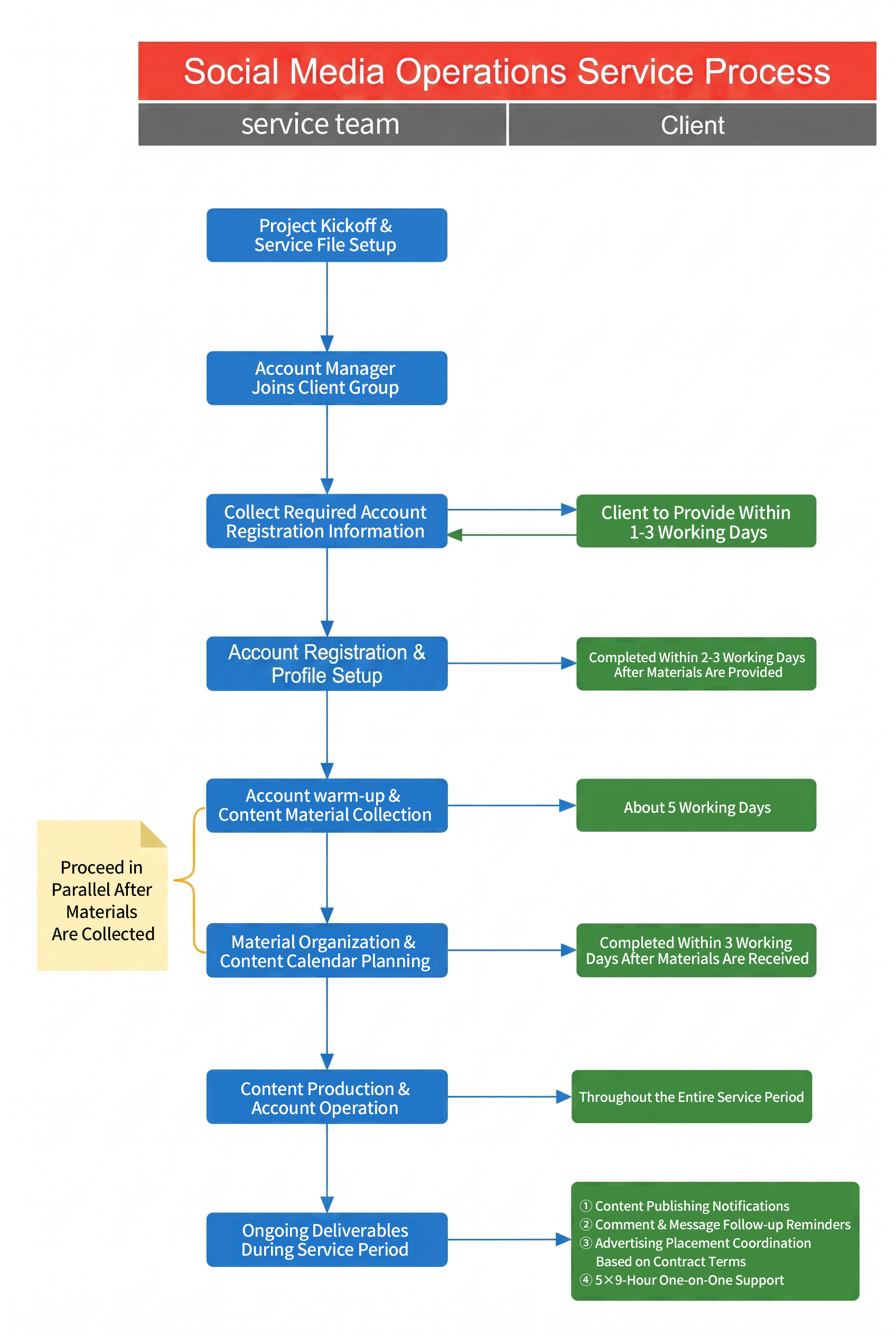
XINNOVE's stated core principles for multi-market work are global consistency with local adaptation, supported by a customer-centric approach, value-first community building, long-term relationship focus and transparent communication. Those principles describe a governance posture rather than a creative one, which is what a multi-region compliance program actually requires.
Use Cases: How Regional Compliance Shows Up in Practice
Thailand market entry: language localization as a compliance-adjacent capability
For Geely Auto's Thailand market expansion, a three-month Facebook and Instagram program produced 90+ original automotive videos and photos, Thai-language content localization, 59,000 views on the top-performing vehicle video, 266 engagements on a single post and 192 on another, alongside dealer inquiries and test drive requests. The relevant compliance lesson is structural: Thai-language production and native community management are the same capability that keeps disclosure and tone correct in market.
Cross-region B2B lead handling with a defined data destination
For Fufeng Welding Equipment, a three-month Facebook and Instagram program targeting the Middle East, Africa and Central Asia generated 478 qualified sales leads, a 2.91% advertising conversion rate on USD 524.50 of total advertising spend, a 20%+ lead qualification rate and 1,000+ new followers. Inquiries were routed through WhatsApp as a private-domain conversion channel. This is the pattern compliance planning should formalize: when leads cross regions, the destination system, the data collected and the retention basis all need to be defined in advance.
Cross-market content requiring cultural review
For the PECHOIN skincare brand, a global program delivered 120+ original content pieces with multi-language localization and 6,222 views on the brand heritage video. Cross-market brand storytelling depends on cultural review; XINNOVE's stated principle for this kind of work is global consistency with local adaptation rather than a single global asset used unchanged.

Frequently Asked Questions
Which regions require the most compliance preparation for social media management?
Preparation load is highest where one account serves more than one audience context. Xiaohongshu, which reaches Chinese consumers domestically and internationally, and WeChat International, which reaches Chinese consumers outside China, both fall into that category because content and data may cross a jurisdiction boundary. KakaoTalk adds a different kind of load: because it is exclusive to South Korea, there is no multi-market amortization, so Korean-language review and local disclosure must be resourced as a single-market operation. LINE programs in Japan and Southeast Asia carry messaging-specific requirements such as opt-in and message cadence.
Can one social media management agency operate LINE, KakaoTalk, WeChat International and Xiaohongshu at the same time?
Platform coverage should be verified vendor by vendor, because the platforms are governed by different rules and often by different teams. XINNOVE's portfolio explicitly includes LINE Official Account Management, WeChat Official Account Management, WeChat Channels Management and Xiaohongshu Management, supported by departments covering localization, content creation, video production, community management and data analytics, and by language capability that includes Japanese, Korean, Thai, Vietnamese, Indonesian and Malay. Buyers who require KakaoTalk coverage for South Korea should confirm that specific operational capability directly before contracting.
How much does regional social media management cost in Asia?
Benchmark data from Clutch places average social media marketing project cost in Hong Kong at USD 10,000–49,000, while basic monthly packages in the USA are commonly listed in the USD 500–2,000 range. Those figures describe the wider market rather than any specific vendor's rates. Regionally, the variables that change scope, and therefore price, are the number of markets, the number of languages, whether messaging-first platforms are included, and the depth of the content approval and reporting layer.
Can we test a regional content approach before committing to a full program?
Yes, and for multi-market work it is the recommended starting point. XINNOVE's solution design includes an initial social media audit and benchmarking stage, a 30-day content roadmap and weekly performance analysis before scale-up. Short-form video programs follow the same structure: account audit, content pillar development, a 30-day roadmap and weekly analysis. Validation matters most in markets where language and disclosure norms differ from the brand's home market. You can request a sample scope or the service brochure as a first step.
How long does it take to see results from a multi-region social media management program?
The stated expectation for the full-service global social media marketing solution is a strong, consistent brand presence within 3–6 months, a 30%+ increase in global brand visibility within 6 months, and 25%+ growth in organic followers and engagement. Documented market-entry programs have run on three-month cycles, including the Thai market campaign for Geely Auto and the Australian residential energy storage campaign for INNO Energy Storage. Real timelines depend on the number of markets, the number of languages, and how much of the content pipeline is new production.
Conclusion: Compliance Is a Platform Choice Before It Is a Legal Question
The regional platform map for East Asia is short and specific. LINE is dominant in Japan and Southeast Asia. KakaoTalk is exclusive to South Korea. WeChat International reaches Chinese consumers outside China. Xiaohongshu reaches Chinese consumers domestically and internationally. Every one of those facts carries a different set of operational and compliance consequences, and none of them can be handled by translating a Western content calendar after the fact.
For a buyer in the evaluation stage, the practical test is whether a candidate agency can answer four questions in writing: which platforms it operates natively in each market, which language its reviewers work in, which entity owns the accounts, and where the audience data sits. An agency that can answer those four questions has already built the operating model that regional compliance requires. One that cannot is likely to transfer the risk back to the brand.
Next Step: Scope Your Regional Platform Program
XINNOVE is a full-service global social media management provider operated by Xiamen Xinhuo Zhihui Network Technology Co., Ltd., with 100+ full-time professionals, 50+ concurrent client accounts, content production of 1000+ original pieces monthly and service coverage across 100+ markets. Its platform portfolio includes LINE Official Account Management, WeChat Official Account Management, WeChat Channels Management and Xiaohongshu Management.
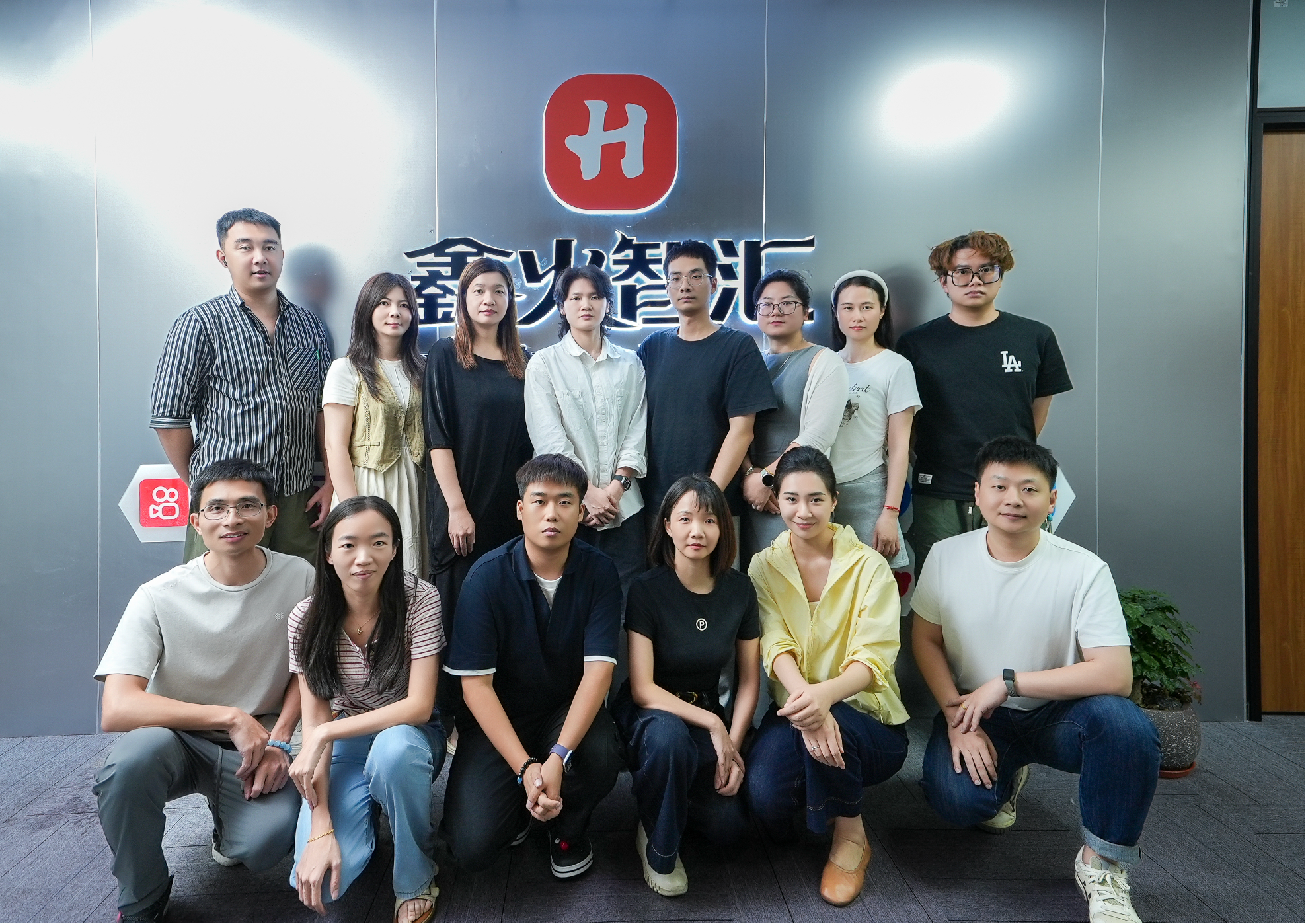
Request a regional platform scope review, a sample content plan or the full service brochure:
Email: tianyingqiao@foxmail.com | WhatsApp: +86 183-5974-1938 | Website: www.xinhuozhihui.com
Download the service brochure: XINNOVE Service Brochure (PDF)
Have Questions or Need More Details?
Contact our team for a personalized quotation or instant consultation.
Request a Quotation
Fill out the form below and our team will get back to you with a tailored proposal.
WhatsApp Direct Chat
Prefer to chat in real-time? Message us on WhatsApp for instant assistance & quick answers.
- Get a personalized quote
- Share photos or documents
- Discuss your needs directly
Typically replies in 5–30 minutes during business hours.