Woodworking Band Saw vs. Angle Cutter: Choosing the Right Saw for Your Mill
A woodworking band saw machine cuts logs and timber along a straight line, while a woodworking angle cutting machine such as the MJ375 cuts with a saw head that tilts through a 0–8° range. The practical answer for a mill buyer is this: if your output is square-edged boards, cants and beams, a horizontal band saw delivers far more sawing capacity for the installed power; if you sell tapered, bevelled or angled components, the MJ375 does work a straight-cutting band saw cannot do at all. Most productive mills end up running both, and the order in which they buy them depends on the cut mix they actually sell.
Why This Comparison Goes Wrong So Often
Buyers who start searching for a woodworking band saw machine are usually comparing machines by product category rather than by the cut they need to produce. That is where the confusion starts, because the two machine families look remarkably similar on a specification sheet. Both use a continuous band blade running over two wheels, both are described as sawing equipment for logs and timber, and both are quoted in the same price conversation for a mill upgrade.
The clearest example sits inside the XINYANGJX range. The MJ375 woodworking angle cutting machine and the MJ375D small horizontal band saw machine both run a 473 mm saw wheel, and both use a 4005 × 34 × 1.05 mm band saw blade. Yet the MJ375 is rated for a maximum sawing height of 200 mm and a maximum sawing width of 400 mm, while the MJ375D is rated for a maximum sawing height of 600 mm and a maximum sawing width of 600 mm. Two machines sharing the same wheel diameter and the same blade size differ by a factor of roughly three in cross-section capacity — because they are built for two different cuts.
The cost of choosing on category rather than on cut is concrete. Buy an angle cutter for straight log breakdown and you have paid for a 10 kW machine that can only open a 400 mm wide cut. Buy a straight-cutting band saw when your order book is full of tapered rafters and bevelled cladding and you end up re-handling every piece on a second machine. The decision criteria below are designed to prevent both mistakes.
Industry Background: What Mill Buyers Are Facing in 2026
Straight-cutting sawing remains the volume task in wood processing, and the market data reflects it. Industry forecast data compiled in 2024 put the global bandsaw machine market at approximately USD 2.1 billion in 2024, projected to reach USD 2.8 billion by 2030 at a compound annual growth rate of 5.0% (Vertex AI Search / Industry Forecast). Scope matters here: other published estimates for the same period range from USD 1.962 billion in 2024 (Market Research Future) to USD 2.8 billion in 2025 (Dataintelo), largely because some studies count metal-cutting machines and others count woodworking only. Treat the direction as reliable and the exact figure as an estimate.
Within that market, horizontal bandsaw machines held the largest product type share, accounting for between 48.3% and 55% of total revenues in 2024–2025 (Dataintelo / Industry Analysis). The reason is straightforward: opening logs and reducing them to boards is the repeatable, high-volume operation in a mill, and horizontal band saws are the machines configured for it. Angle cutting machines sit in a narrower specialty band, which is exactly why they are so often misunderstood by first-time buyers.
Supply is concentrated as well. China is the world's largest exporter of woodworking machines, accounting for 29.4% of global exports in 2024 with a total export value of USD 2.48 billion (OEC, Observatory of Economic Complexity). For mills in Africa, Southeast Asia, South Asia and South America, that means Chinese-built band saws and angle cutters are typically the accessible option, and the comparison that matters in practice is between machine types from the same supply base rather than between countries of origin.
Safety expectations have also tightened. ISO 19085-16:2021 is the primary international safety standard for table band saws and band re-saws used in woodworking, and in the United States woodworking machinery must comply with OSHA 29 CFR 1910.213, which sets requirements for blade guarding and tension control devices. Both references matter when you compare a band saw with an angle cutter, because a machine whose saw head tilts introduces guarding and blade-tension questions that a fixed-head machine does not.
Detailed Solution: Matching the Machine to the Cut
The XINYANGJX line-up, built by Hangzhou Lin'an Xinyang Machinery Co., Ltd. (founded 2012, Hangzhou, Zhejiang Province, China), is organised around cut type rather than around a single flagship model. Reading the range this way makes the band saw versus angle cutter decision much easier.
1. The woodworking band saw machine family: straight-line capacity at every scale
Band saws in this range are all built for straight sawing of logs and timber, and they scale by log diameter and installed power.
- Small woodworking band saw machine — MJ375D: maximum log diameter 600 mm, maximum sawing height 600 mm, maximum sawing width 600 mm, standard sawing length 5,200 mm, total output power 9.8 kW (380 V, 50 Hz, 3-phase), saw blade 4005 × 34 × 1.05 mm, track length 6,000 mm, overall dimensions 6,600 × 2,000 × 2,000 mm, total weight 800 kg. An extended width type (maximum log diameter 900 mm, maximum sawing height 820 mm, maximum sawing width 880 mm) is also available for mills that need a wider opening without stepping up to a full heavy machine.
- Diesel-driven option — MJ375C: same 600 mm log diameter class, with a 10P diesel engine instead of a three-phase motor, for sites where the power supply is unreliable.
- Horizontal woodworking band saw machine — MJ376S-900: maximum log diameter 900 mm, maximum sawing height 880 mm, maximum sawing width 900 mm, standard sawing length 4,000 mm, total output power 21 kW, saw blade 6144 × 50 × 0.9 mm, track length 5,800 mm, overall dimensions 5,800 × 2,700 × 2,700 mm, weight 3,500 kg.
- Intelligent speed control woodworking band saw machine — MJ376AS-900: maximum log diameter 900 mm, maximum sawing height 880 mm, maximum sawing width 900 mm, total output power 24.5 kW, track length 5,800 mm, overall dimensions 5,800 × 2,700 × 2,400 mm, weight 3,500 kg. The 600 mm version, MJ376AS-600, is rated at maximum sawing height 580 mm and 20.6 kW.
- Heavy horizontal woodworking band saw machine — MJ378 series: MJ378-1500 handles logs up to 1,500 mm with a maximum sawing thickness of 450 mm and 42.55 kW total output power; MJ378-2000 goes to 2,000 mm at 51.3 kW; MJ378-2500 reaches 2,500 mm at 61.3 kW. All three share a standard track length of 12,000 mm and a saw blade up to 10400 × 150 × 1.25 mm on the largest model.
- Vertical woodworking band saw machine — MJ316: maximum sawable log diameter 400 mm, maximum sawing height 400 mm, maximum sawing thickness 120 mm, 7.5 kW main motor, overall dimensions 1,100 × 900 × 2,000 mm, total weight 400 kg. The SVS configuration with belt conveyor table extends this idea: maximum sawing height 400 mm, maximum sawing width 400 mm, unlimited sawing length, 0–18 m/min conveying speed and 12.1 kW total output power.
- Timber processing woodworking band saw machine — MJ356A-500 and MJ356A-700: edge-trimming configuration with a maximum edge trimming height of 230 mm under the blade and maximum edge trimming widths of 600 mm and 700 mm respectively, at 21.5 kW total output power.
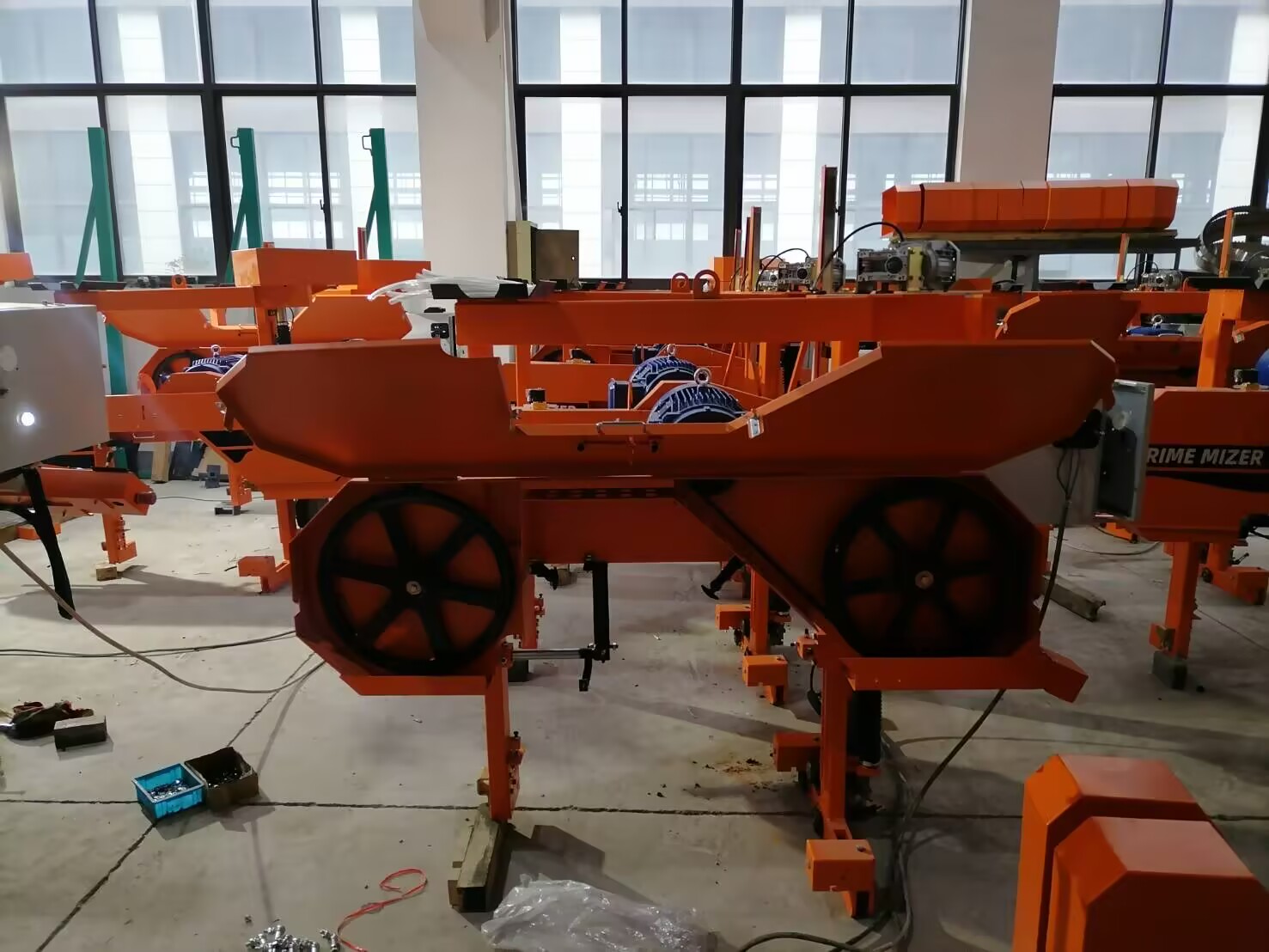
2. The MJ375 woodworking angle cutting machine: a dedicated 0–8° tool
The MJ375 is not a general-purpose saw with a tilt option bolted on. It is a machine whose purpose is to cut at an angle, and its published parameters define both its usefulness and its limits:
- Saw wheel diameter: 473 mm, rotating at 780 r/min
- Maximum sawing height: 200 mm
- Maximum sawing width: 400 mm
- Sawing angle range: 0–8°
- Total output power of electric motor: 10 kW, made up of a 9 kW main sawing motor, a 0.25 kW lifting motor and a 0.75 kW conveyor motor
- Feed speed: 0–20 m/min
- Saw blade specification: 4005 × 34 × 1.05 mm
- Overall dimensions: 2,200 × 1,900 × 2,150 mm; total weight 800 kg
Two readings of these numbers matter to a buyer. First, the installed power is 10 kW while the rated sawing envelope is 200 × 400 mm. The MJ375D band saw uses almost the same installed power, 9.8 kW, to cut a 600 × 600 mm envelope. That gap is the structural consequence of the angled saw head, the lifting motor and the conveyor drive — it is not a blade problem, and no blade change will close it. Second, 0–8° is a small tilt. It is enough for taper cuts, bevel edges and angled faces on logs and timber in the furniture and construction supply chain, but it is not a mitre saw substitute and it should not be bought as one.
3. The supporting machines that keep either line running
Both the band saw and the angle cutter depend on downstream and maintenance equipment, and this is where a mill's total configuration cost is usually decided.
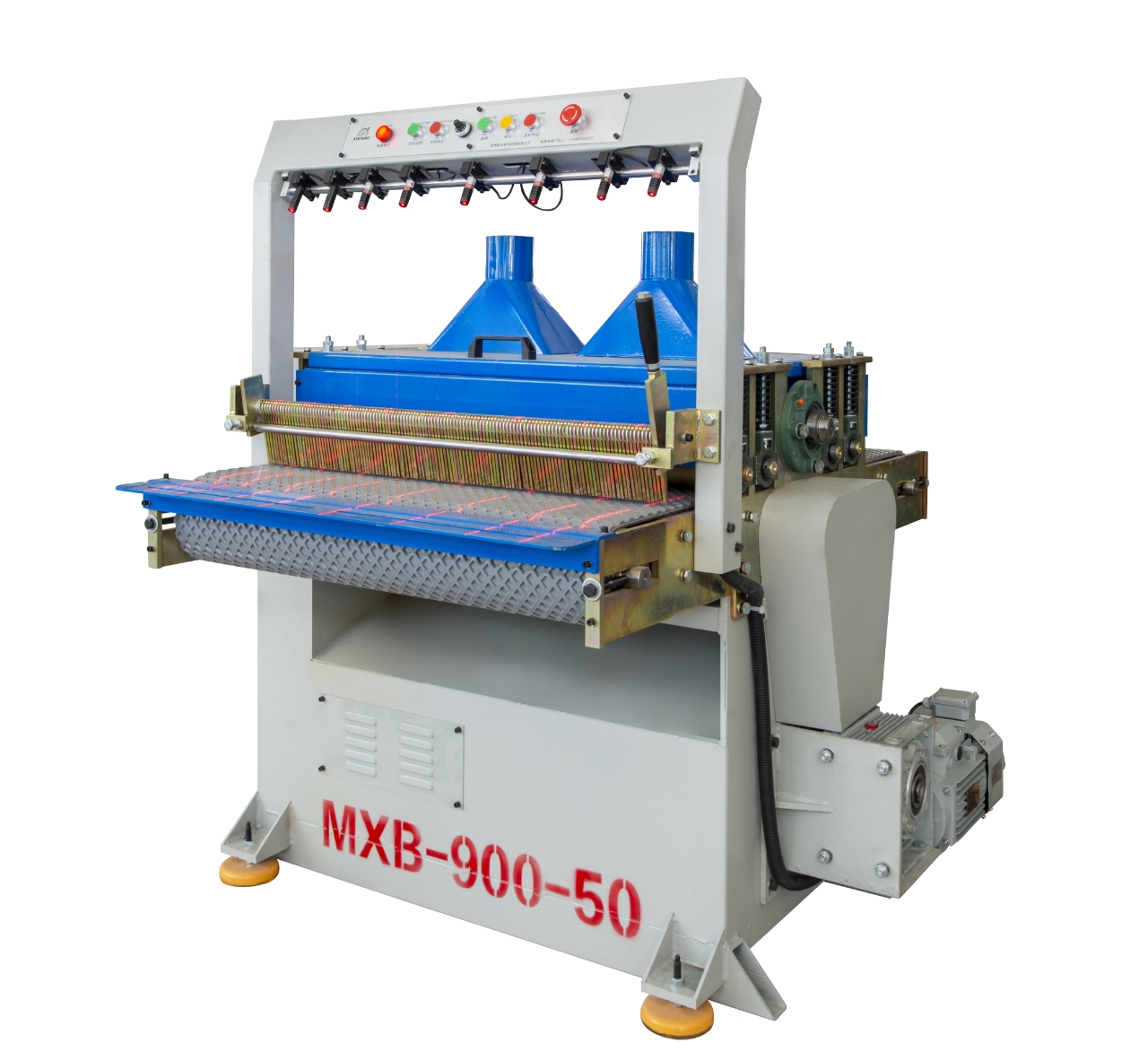
- Woodworking edge trimming machine — MXB series. The MXB-550-25 trims boards up to 25 mm thick and 550 mm wide with 9 kW total output power. The MXB-900-25 covers 900 mm width at 25 mm thickness with 13.2 kW, the MXB-900-50 covers the same width at 50 mm thickness with 24.2 kW, and the MXB-1200-25 handles 1,200 mm width at 25 mm thickness with 13.2 kW.
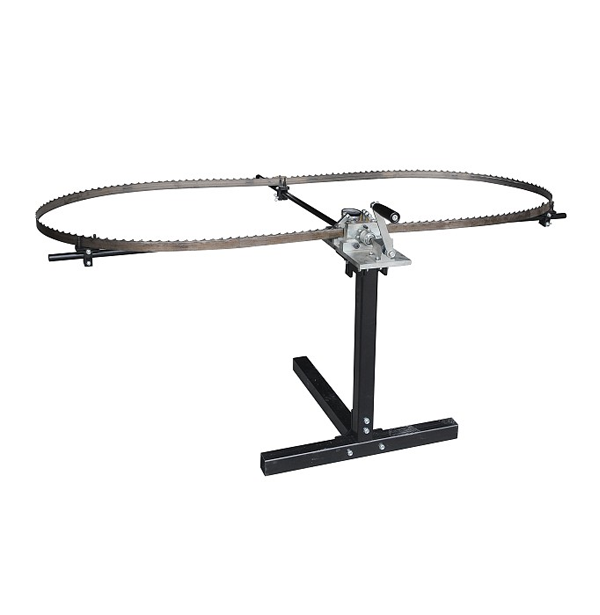
- Band saw blade grinding machine. The MF1115 grinds blade widths of 30–150 mm and tooth pitches of 12–40 mm with a 0.79 kW motor, while the MF115 with extended height covers blade widths of 20–100 mm and tooth spaces of 12–25 mm with a total motor power of 0.31 kW.
- Woodworking tooth picking machine — MF4050. Teeth space 12–30 mm, width 0–100 mm, saw kerf 0–1.5 mm on a single side, dimensions 650 × 500 × 750 mm and a weight of 25 kg.
Step-by-Step Breakdown: Six Decisions Before You Buy
Step 1 — Classify your cut mix
List every cut your mill produces in a normal month and sort them into straight and angled. If angled work is under roughly a fifth of your throughput, a band saw plus an outsourced or later-purchased angle machine is usually the better sequence. If angled work is recurring and contractual, the MJ375 earns its floor space immediately because no straight-cutting band saw will substitute for it at any capacity.
Step 2 — Size the sawing envelope to your real product, not your biggest log
Take the 90th percentile of your log and cant dimensions rather than the absolute maximum. A 600 mm class machine such as the MJ375D handles 600 mm sawing height and 600 mm sawing width and covers a very large share of small and mid-sized mills. Stepping up to MJ376S-900 (900 mm log diameter, 880 mm height, 900 mm width) or the MJ378 series (1,500 mm to 2,500 mm log diameter) should be justified by orders you already have, not orders you hope to win.
Step 3 — Match installed power to your electrical reality
Power supply usually decides the model class before price does. The MJ375, MJ375D, MJ376S-900 and MJ378 range are all specified on 380 V, 50 Hz, three-phase supply, and total output power climbs steeply with capacity: 9.8 kW for the MJ375D, 21 kW for the MJ376S-900, 42.55 kW for the MJ378-1500, 51.3 kW for the MJ378-2000 and 61.3 kW for the MJ378-2500. If your site cannot support that, the MJ375C with its 10P diesel engine removes the electrical constraint on the 600 mm class entirely.
Step 4 — Measure the floor, not just the machine
Footprint is where the angle cutter looks deceptively attractive. The MJ375 occupies 2,200 × 1,900 × 2,150 mm at 800 kg. A small band saw is 6,600 × 2,000 × 2,000 mm at 800 kg, and it requires 6,000 mm of track. A heavy MJ378-2000 runs 4,300 × 3,000 × 3,100 mm at 4,000 kg with a 12,000 mm track. Plan the full sawn length plus handling space at both ends before you commit to a class.
Step 5 — Budget the blade and maintenance chain from day one
Blade cost is a running cost, not a purchase cost, and it is the point where a band saw and an angle cutter converge: both the MJ375 and the MJ375D use the identical 4005 × 34 × 1.05 mm blade. What differs is how many metres of cut that blade delivers per sharpening. Budget for a blade grinding machine (MF1115 or MF115 with extended height) and a tooth picking machine (MF4050) in the same purchase decision, because running a mill without blade care shortens blade life and adds unplanned downtime.
Step 6 — Verify safety documentation and supplier capability
Ask for the guarding arrangement and the blade tensioning design for the specific model, and cross-check them against ISO 19085-16:2021 and, for US-bound equipment, OSHA 29 CFR 1910.213. Then verify the supplier side: OEM and ODM production alongside the XINYANGJX brand, customization of colour, logo, voltage, frequency and wire connector, a minimum order quantity of one piece, 100% testing before shipment, and after-sales support delivered online or remotely with on-site service when the situation is urgent.
Use Cases: Four Mill Profiles
Profile A — Small mill on a 600 mm log supply
This is the most common configuration XINYANGJX ships. A single MJ375D with its 600 mm log diameter, 600 × 600 mm envelope and 9.8 kW output, paired with an MF1115 grinding machine, covers straight breakdown of local logs without a large power connection. Documented installations of this class in Vietnam, Mozambique and Angola have run for 4, 8 and 10 years respectively with stable operation and no special maintenance requirements.
Profile B — Mill selling tapered and bevelled components
Here the MJ375 is the primary machine, not a supplement. Its 0–8° sawing angle range and 200 × 400 mm envelope suit repeated angled cuts on smaller sections, and the 0–20 m/min feed speed keeps the operation moving. A mill in this profile normally pairs the MJ375 with a small band saw, so that large straight cuts go to the 600 mm class machine while angled work stays on the dedicated head.
Profile C — Commercial mill processing 900 mm to 2,500 mm logs
This is MJ376S-900, MJ376AS-900 or MJ378 territory. A mill moving commercial volumes needs the 880 mm sawing height and 21–24.5 kW of the 900 mm class, or the 450 mm sawing thickness and 42.55–61.3 kW of the MJ378-1500/2000/2500 heavy series. Dealer-level purchases of this type are documented in Sri Lanka, where 30 pieces have operated for seven years, and in Kenya, where a 16-piece order has run for two years.
Profile D — Off-grid or unstable-power site
Sites without dependable three-phase supply should look at the MJ375C with its 10P diesel engine for the 600 mm class, and plan the blade maintenance chain as a mobile operation. This profile is common in parts of Africa and Southeast Asia, and it is the reason a diesel variant exists in the range at all.
Comparison Table: MJ375 Angle Cutter vs Band Saw Options
| Parameter | MJ375 angle cutting machine | MJ375D small band saw | MJ376AS-900 band saw | MJ378-2500 heavy band saw |
|---|---|---|---|---|
| Machine type | Woodworking angle cutting machine | Small horizontal woodworking band saw machine | Intelligent speed control woodworking band saw machine | Heavy horizontal woodworking band saw machine |
| Saw wheel diameter | 473 mm | 473 mm | 654 mm | 1,100 mm (150 mm wide) |
| Maximum sawing height | 200 mm | 600 mm | 880 mm | 2,000 mm |
| Maximum sawing width | 400 mm | 600 mm | 900 mm | Not applicable (log diameter 2,500 mm) |
| Maximum log diameter | Not applicable | 600 mm | 900 mm | 2,500 mm |
| Maximum sawing length (standard) | Not applicable | 5,200 mm | 4,000 mm | 8 m (or extending length) |
| Sawing angle range | 0–8° | Straight sawing | Straight sawing | Straight sawing |
| Total output power | 10 kW (9 kW main + 0.25 kW lifting + 0.75 kW conveyor) | 9.8 kW | 24.5 kW | 61.3 kW |
| Saw blade specification | 4005 × 34 × 1.05 mm | 4005 × 34 × 1.05 mm | 654 mm saw wheel, 95 mm wheel width | 10400 × 150 × 1.25 mm |
| Track length (standard) | Not applicable | 6,000 mm | 5,800 mm | 12,000 mm |
| Overall dimensions | 2,200 × 1,900 × 2,150 mm | 6,600 × 2,000 × 2,000 mm | 5,800 × 2,700 × 2,400 mm | 4,800 × 2,150 × 3,100 mm |
| Weight | 800 kg | 800 kg | 3,500 kg | 5,000 kg |
| Primary task | Angled, tapered and bevelled cuts within a 200 × 400 mm envelope | Straight breakdown of logs up to 600 mm | Straight breakdown of logs up to 900 mm with speed control | Straight breakdown of large logs up to 2,500 mm |
All figures are manufacturer-published specifications for the XINYANGJX models listed. Where a parameter does not apply to a machine type, it is marked as not applicable rather than estimated.
Frequently Asked Questions
What safety standards apply to woodworking band saw machines and angle cutting machines?
Two references are relevant. ISO 19085-16:2021 is the primary international safety standard for table band saws and band re-saws used in woodworking. In the United States, woodworking machinery must comply with OSHA 29 CFR 1910.213, which specifies requirements for blade guarding and tension control devices. Because an angle cutting machine introduces a tilting saw head, the guarding and blade-tension arrangement deserves specific attention during evaluation. XINYANGJX performs a 100% test on every machine before shipping or transportation, and buyers should request the guarding and tension documentation for the exact model being quoted.
Can one machine handle both straight log breakdown and angled cuts?
Not at full capacity, and the numbers show why. The MJ375 angle cutting machine offers a 0–8° sawing angle range but is rated for a maximum sawing height of 200 mm and a maximum sawing width of 400 mm with 10 kW total output power. The MJ375D small horizontal band saw machine covers a 600 mm sawing height and 600 mm sawing width with 9.8 kW total output power. Both use a 473 mm saw wheel and the same 4005 × 34 × 1.05 mm blade, so the capacity difference comes from machine structure, not from the blade. Mills that need both straight and angled output normally run two machines.
What drives the cost difference between these machines?
Three factors dominate: required sawing envelope, installed power and structural weight. A vertical band saw such as the MJ316 carries a 7.5 kW main motor and weighs 400 kg; the MJ375D small horizontal band saw machine runs 9.8 kW at 800 kg; the MJ376S-900 timber processing band saw machine runs 21 kW at 3,500 kg; and the MJ378-2500 heavy horizontal band saw machine runs 61.3 kW at 5,000 kg. Configuration also moves the quote, because OEM and ODM production allows customization of colour, logo, voltage, frequency and wire connector, and the minimum order quantity is one piece.
Can we validate a machine before placing a full order?
Yes. The minimum order quantity is one piece, and every machine is tested before shipment. Field records support the durability claim: installations in Vietnam, Mozambique, Angola, Ghana, Togo and Benin, Sri Lanka and Kenya have operated for four to ten years with stable running and without special maintenance requirements. After-sales support is provided online or remotely, with on-site service where the situation is necessary or urgent.
What is the production capacity and lead time?
Monthly capacity is 30 pieces, and lead time is 30–50 days or can be negotiated depending on configuration. The factory ships to Africa, Southeast Asia, South Asia and South America, and exports represent approximately 70% of its woodworking equipment output. To move from specification to a firm quote, describe your log diameter range, your required sawing envelope, your power supply and your cut mix — the full specification catalogue is available in the downloadable brochure below, and the sales team can be reached directly by email or WhatsApp.
Conclusion
The choice between a woodworking band saw machine and a woodworking angle cutting machine is settled by cut geometry, not by brand preference or list price. The MJ375 angle cutting machine exists for a 0–8° sawing angle range within a 200 × 400 mm envelope at 10 kW. The band saw family — from the 9.8 kW MJ375D through the 24.5 kW MJ376AS-900 to the 61.3 kW MJ378-2500 — exists for straight-line breakdown at a capacity per kilowatt that no angled head can match.
For most mills the sequence is therefore: buy the straight-cutting band saw at the envelope your orders justify, keep the MJ375 for angled work when that demand is recurring, and treat blade grinding and tooth picking as part of the original configuration rather than an afterthought. That approach keeps capital tied to throughput, keeps the maintenance chain funded, and leaves room to scale from a 600 mm log supply to a 2,500 mm heavy horizontal machine without replacing the logic behind the line.
Next Step: Sample, Specification and Quote
Hangzhou Lin'an Xinyang Machinery Co., Ltd. (XINYANGJX) builds this full saw line in Hangzhou, Zhejiang Province, China, with OEM and ODM production, a minimum order quantity of one piece, monthly capacity of 30 pieces and a lead time of 30–50 days. Send your log diameter range, sawing envelope and power supply details to receive a configuration-specific quotation.
Download the full product catalogue: XINYANGJX Woodworking Machinery Brochure (PDF)
Contact: Mr. Wang · Email: wjg@hzlaxyjx.com · Tel / WhatsApp: +86 13968020221 · Website: cn.hzlaxyjx.com
Address: Building 4, No. 1377 Jiuzhou Street, Linglong Street, Lin'an District, Hangzhou City, Zhejiang Province (Hangzhou Nanyang High-tech Industrial Park), China.