
DK3 vs XP-CX-18: How CRI and Format Shape Gallery Lighting
The DK3 and the XP-CX-18 solve different problems on the same project. The DK3 is a full-spectrum linear LED format rated 24V and 12W, with 240 LEDs per metre on SMD 2835 and Ra≥97, built for uninterrupted runs where colour fidelity and even output carry the design. The XP-CX-18 is a 48V, 30W magnetic track format in aluminum and PC with Ra≥90, built for repositionable, higher-power accent positions. For galleries, jewelry showrooms, luxury retail floors and shopping-mall interiors, the decision is not which fixture is better. It is which constraint the layout cannot afford to relax.
This comparison puts both XPUP LED formats on one specification sheet, then works through the conditions that push a project toward one or the other: rendering demand, viewing distance, voltage architecture, power basis, ingress protection, reconfiguration frequency and customization. Both products are offered with OEM and ODM support, so the fixture decision and the supply decision can be evaluated separately.
The short answer
- Choose the DK3 when the light itself is the finish: continuous coves, back-wall grazing, plinths, shelving and vitrine reveals where an unbroken line and Ra≥97 rendering are the point, and where the zone is dry interior, which the IP20 rating requires.
- Choose the XP-CX-18 when the layout has to move: seasonal retail resets, changing exhibition hangs, ceilings with few fixing points, and accent positions that need more power per head at 48V and 30W.
- Split the scheme when both conditions exist in one room: linear format for architectural surfaces, magnetic track for aimable accents. Decide that split at lighting-layout stage, not during procurement.
- Treat neither as a compliance shortcut. The DK3 is IP20, so it belongs in protected dry interiors. The XP-CX-18 ingress protection is not stated in the supplied specification and has to be confirmed for the actual mounting zone before it is written into a specification.
DK3 and XP-CX-18 side by side
The table compares only what the supplied specifications state. A value that is not given is marked as requiring confirmation rather than assumed: a missing figure is not evidence of a limitation, but it is also not a specification.
| Specification | DK3 | XP-CX-18 |
|---|---|---|
| Product type | Full-spectrum linear LED lighting | Magnetic track lighting |
| Input voltage | 24V | 48V |
| Rated power | 12W | 30W |
| LED configuration | 240 LEDs per metre, SMD 2835 | Not stated in the supplied specification |
| Colour rendering | Ra≥97 | Ra≥90 |
| Ingress protection | IP20 | Not stated; confirm for the installation zone |
| Construction | Not stated in the supplied specification | Aluminum and PC |
| Optical logic | Continuous linear output along a run | Discrete heads positioned on a track |
| Reconfiguration | Fixed once installed | Head positions can be changed along the track |
| Typical fit | Gallery walls, vitrines, shelving, luxury retail surfaces | Accent and feature light, seasonal retail, mall and high-ceiling zones |
| Customization | OEM and ODM | OEM and ODM |
Normalize the power figures before comparing them. The 12W and 30W ratings describe two different product architectures, so the basis of each rating — per metre of linear run versus per track fixture or module — must be confirmed on the datasheet. Input wattage describes consumption, not delivered light.
Why these two products get compared at all
Gallery and retail lighting tends to fail in one of two distinct ways, and each failure has a different cause. The first is the continuous surface. A linear run with visible emitter dots, uneven brightness between feed points or a colour cast makes a feature wall look unfinished, and at close viewing distances that non-uniformity is the first thing a visitor notices. The second is the display change. A retail floor is re-merchandised and a gallery is rehung; when fixtures cannot be re-aimed, the cost of that change becomes a lighting installation rather than a rearrangement of objects.
Because those two failures pull in opposite directions, the comparison is often framed incorrectly as a contest between a premium product and a flexible one. In practice the XP-CX-18 is not a compromised linear system, and the DK3 is not an inflexible track head. Each is a deliberate architecture: one distributes light evenly along a fixed line, the other concentrates light at a movable point.
A third factor complicates the decision in jewelry, cosmetics and art retail. Where colour judgement is part of the purchase, rendering performance stops being an aesthetic preference and becomes a functional requirement, because the customer is comparing a stone, a gold finish or a fabric against a remembered reference. That is the point at which the two rendering figures in the table begin to matter more than the two wattage figures.
What the DK3 specification changes on the wall
The DK3 contributes three things a specifier can evaluate separately: emitter density that supports an even line, a rendering figure of Ra≥97 for colour-critical surfaces, and a low-voltage, IP20 interior format that constrains where the product can be installed.
240 LEDs per metre on SMD 2835
Density is a uniformity decision more than a brightness decision. More emitters per metre shortens the spacing between light sources, which reduces the scalloped, dotted appearance that becomes visible when a strip sits close to a diffuser, a shelf edge or a reflective surface. On a plinth or a shelf underside, where the viewing distance is short, that difference is what separates a smooth line of light from a row of bright spots. Higher density also spreads the same electrical load across more packages along the run, which is why dense formats are often chosen for close-range architectural detailing rather than for raw output.
Ra≥97 and the limits of a single number
A high Ra value means the average deviation across the eight test colours used in the general colour rendering index is small, so skin tones, neutrals and mid-tone materials stay close to how they would appear under the reference source. It does not, by itself, confirm deep-red performance, because R9 sits outside that eight-colour average and is reported separately. For a jewelry or luxury retail project, the practical sequence is therefore: request the R9 value and a spectral distribution report for the exact SKU, then run a mock-up with the real merchandise — gold, stones, red fabric, skin — under the proposed CCT.
Full-spectrum formulations are specified where saturated reds, golds and textile colours must remain distinguishable from one another rather than converging toward a flat appearance. That is the buyer-facing value of the DK3 format. The mock-up is not an optional courtesy; it is the only step that converts a rendering claim into a decision.
IP20 and 24V: where the product belongs
IP20 describes protection against solid objects above 12 mm and no protection against water. In specification terms this is a dry-interior product: gallery walls, retail shelving, vitrine reveals, coves and ceilings in conditioned interior spaces. It is not a product for fountains, wet rooms, exterior fascias, or dusty plant areas, and no amount of rendering performance changes that.
The 24V architecture makes driver placement and feed-point planning part of the lighting design rather than an accessory to it. On long runs, voltage drop accumulates, so the number and position of feeds has to be decided alongside the layout. XPUP LED supplies its LED strip lines in 10 m rolls as a maximum-length control, which prevents overloading during handling and installation and gives the designer a natural planning unit for a linear scheme.
What the XP-CX-18 specification changes at the ceiling
The XP-CX-18 contributes a different set: a 48V track architecture, 30W per position, an aluminum and PC body, and magnetic repositioning. Its rendering figure of Ra≥90 is strong but lower than the DK3's, and that gap is the main place where the two products are genuinely not interchangeable.
48V, 30W and why the higher figure is not simply brighter
Wattage is input power. Delivered light depends on efficacy, optics and the basis of the rating, so a 30W fixture is not automatically twice as bright as a 12W fixture, and in a track system the 30W figure is meaningful because it gives headroom: a narrow-beam head on a high track needs more electrical power to place useful illuminance on a display than a short-throw linear run does. Confirm the lumen output and beam angle of the exact configuration before making any brightness claim.
The voltage change does have a predictable physical consequence. For the same transferred power, a 48V system draws roughly half the current of a 24V system, and resistive losses fall with the square of current. That is why higher-voltage track and linear architectures can serve longer circuits with fewer feed points, while 24V schemes need more attention to run length and conductor sizing.
Aluminum and PC construction
Aluminum is used where a rigid structural body and heat spreading are needed; polycarbonate is used where electrical insulation and light transmission are needed. In a magnetic track format that combination produces a body that can carry the mechanical and electrical duty of repositionable heads along a straight architectural line. What the material list does not tell a buyer is the thermal performance, the load rating per metre of track or the number of heads a circuit can accept — those figures belong on the datasheet and in the quotation.
Magnetic track logic and the cost of change
In a magnetic track system, luminaires attach magnetically and take power from the track, so a head can be moved along the track without re-terminating a supply. The procurement consequence is straightforward: the cost of a display change becomes a maintenance task instead of a lighting project. For a fashion retailer resetting four times a year, or a gallery that rehangs twice a season, that is a lifecycle argument rather than a product feature.
Ra≥90: adequate, not equivalent
Ra≥90 is generally adequate for ambient and circulation lighting, where merchandise is read as part of a scene rather than judged against a reference. It is a lower bar than Ra≥97, and the difference becomes visible where colour judgement is part of the purchase: gemstone grading under the light, cosmetics matching, luxury textile selection, and art with saturated reds or deep blues. If those tasks happen under the fixture, the DK3 format is the safer starting point.
Voltage architecture and installation consequences
The 24V and 48V labels describe low-voltage DC systems that both require a driver or power supply, correctly located and rated for the load. Neither voltage is a specification substitute for the driver, the control gear or the installation class, all of which have to be confirmed for the project's electrical design.
What differs is planning effort. A 24V linear scheme needs feed points distributed along the run and a driver location that is accessible for maintenance; XPUP LED's 10 m roll supply sets a practical unit for that planning. A 48V track scheme concentrates power distribution in the track and the feed, so the design work shifts to track layout, load per circuit and head count. In both cases the dimming protocol and control compatibility must be checked against the project's lighting control system before the order is released, because a mismatch discovered on site is an installation cost, not a datasheet correction.
When visual fidelity wins: gallery and jewelry scenarios
The DK3 format is the stronger choice wherever the project's risk is a continuous surface that must look flawless and colour-accurate at close range.
- Gallery perimeter and back-wall grazing. A long, unbroken wash with even output is an architectural element. Splicing several short fixtures introduces joints, and joint brightness variation is visible on a matte wall.
- Jewelry vitrines and shelf-edge detailing. Short viewing distances make emitter visibility the dominant failure mode, and metal and stone are exactly the materials that expose weak red rendering.
- Luxury retail brand walls and cash-wrap backdrops. These surfaces are photographed, shared and compared against brand standards, so consistency along the run matters more than the ability to re-aim.
- Plinths, niches and cove details. Where the light source is hidden and only the effect is visible, an even line with high rendering is the entire specification.
The DK3 becomes the wrong answer when the exhibition or merchandise layout is genuinely fluid. A linear run cannot be re-aimed to follow a new display, and if the project's real requirement is accent light on changing objects, no rendering advantage compensates for that.
When format flexibility wins: retail, mall and exhibition scenarios
The XP-CX-18 format is the stronger choice where the mounting infrastructure stays fixed but the lighting positions do not.
- Seasonal fashion and multi-brand retail. Fixture positions change with the floor set, and the track absorbs that change without new circuits.
- Shopping-mall circulation and feature zones. Where accents must be aimed at a changing display or a promotional installation, discrete heads do work a linear run cannot.
- High or complex ceilings. Fewer fixing points and harder access make an aimable, repositionable head more practical than a continuous run that must be re-hung to change direction.
- Mixed-use retail interiors. Where ambient light comes from a separate system, the track can be dedicated to accent duty at higher power per position.
Many projects are better served by combining the two: DK3 for the architectural surfaces that define the space, XP-CX-18 for the accents that must move. The split decision belongs to the lighting layout, because it determines feed points, driver locations and ceiling coordination in one pass.
Cost and lifecycle: what to compare in a quotation
No verified price data is available for either format in this comparison, so a cost argument has to be built on quotation structure rather than on headline figures. Compare the two systems on an installed basis, not a unit basis.
- Linear scheme: strip, profile, diffuser, driver, feed points, connectors and labour per metre, plus spare metreage for future repairs.
- Track scheme: track per metre, feed and power supply, head count and head type, plus the cost of a typical reconfiguration.
- Change frequency: the decisive variable. A stable layout favours the linear format; a layout reset every season favours the track, because re-aiming replaces re-installation.
- Warranty position: all XPUP LED product series are covered by a standard two-year warranty, and extended warranty terms can be customized for large-scale projects and ODM brand partnerships. Confirm how the warranty attaches to installed systems, not just to components.
A lower unit price on either format can still produce a higher project cost if it forces additional drivers, additional feeds or additional site labour. That is why the comparison belongs at the quotation level, with the same scope defined for both options.
OEM, ODM and supply risk for both formats
Both the DK3 linear format and the XP-CX-18 magnetic track format are available with OEM and ODM support, so customization does not decide the comparison between them. It does decide whether the supplier can deliver the version the project actually needs.
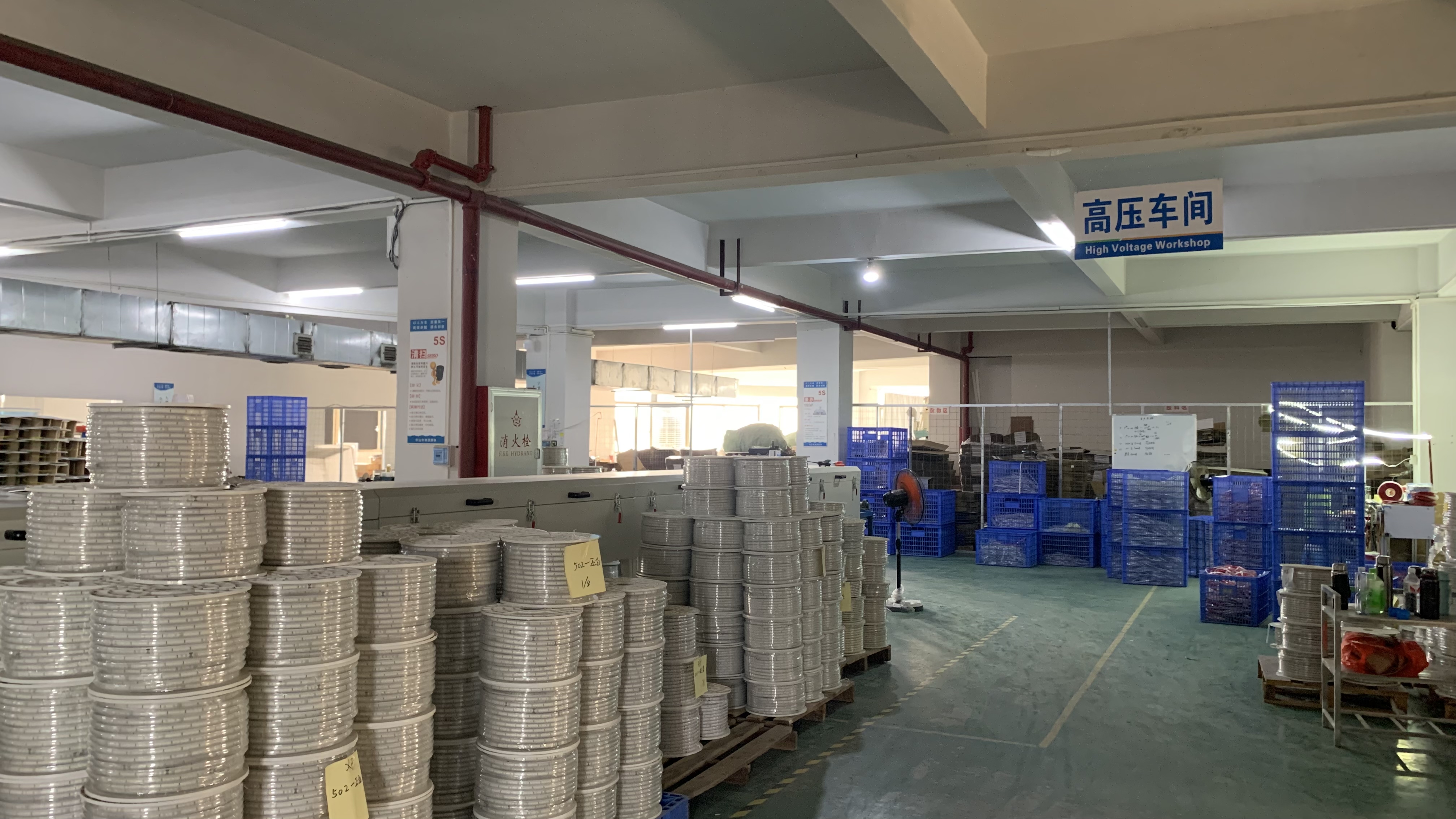
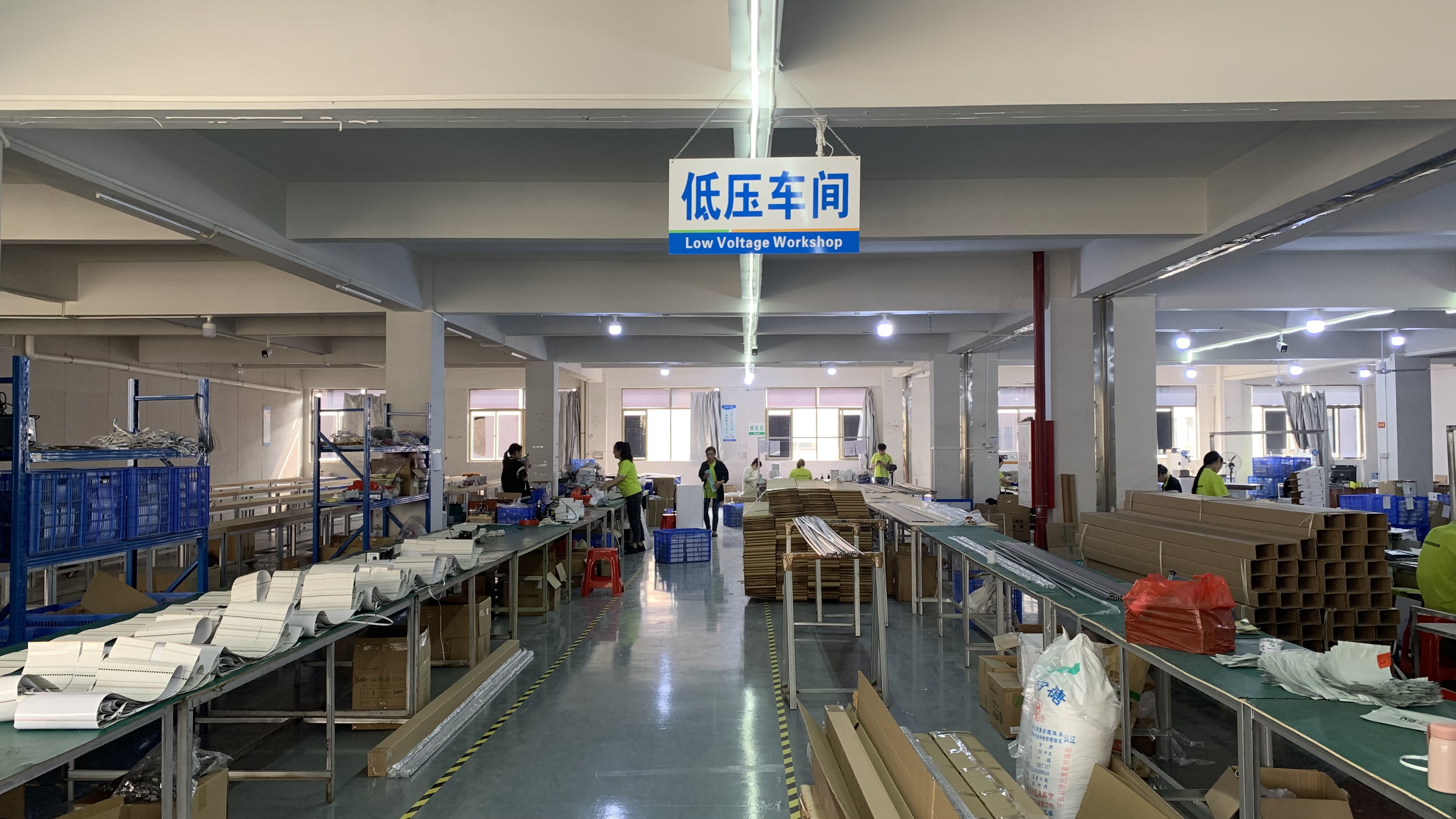
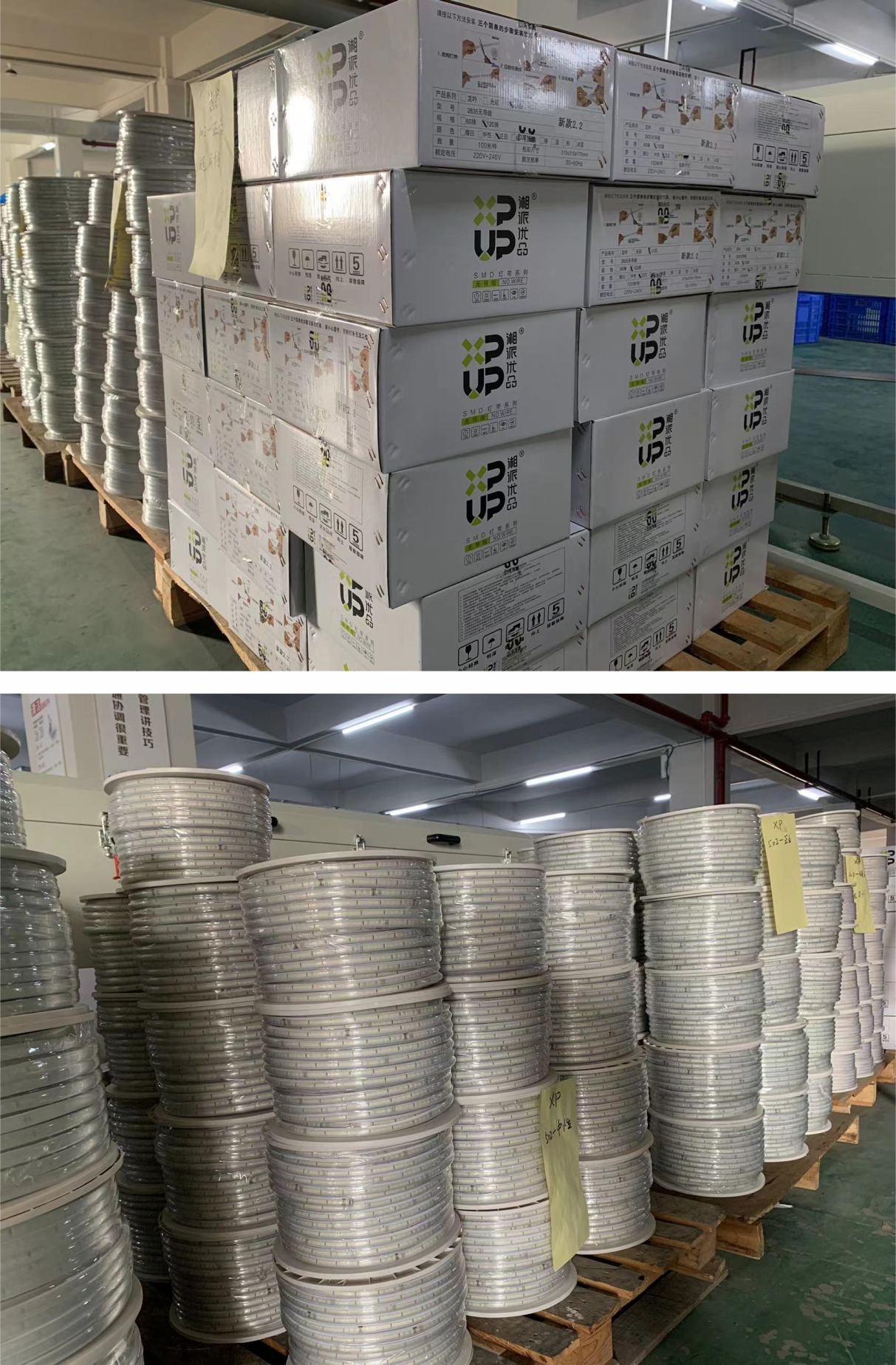
XPUP LED is the trading identity of Zhongshan Xiangpai (XPUP) Lighting Technology Co., Ltd., established in 2012 in Zhongshan, Guangdong, China, and self-described as a manufacturer of LED linear light strips, LED magnetic lights and smart control. The company reports a factory of more than 10,000 m², 80 employees, six R&D engineers and an annual output of 35,000,000 m, with products holding CE and RoHS certification. It also reports design and structural patents in linear lighting, including original design patents for the C19 and C20 series LED strips, and recognition including Top Ten Linear Lighting Brands, Top Ten No-Main-Light Lighting Brands and Quality Linear Lighting Manufacturer.

For a specifier, the more useful part of the supplier file is the risk-control system, because it describes processes rather than claims:
- Quality: a full-process control system covering incoming material inspection, in-process inspection, aging tests and final inspection, with non-conforming products stopped before shipment.
- Installation: standardized support including multilingual installation documents, bilingual installation videos and remote technical guidance, which reduces site error on both linear runs and track systems.
- Overseas projects: dedicated engineering support for commercial, architectural and residential lighting projects, including on-site assistance when required.
- After-sales: dedicated contacts, defined procedures for quality issue handling and responsibility management, and customized after-sales solutions based on project requirements.
- Delivery: supply agreements that define schedules and delay handling, proactive production progress updates, and buffer capacity or inventory prepared according to project requirements.
These are process descriptions, not guarantees of a specific project outcome. Their practical value appears only when they are converted into purchase-order clauses: inspection records to be provided, the sample approval stage, warranty start date, spare-parts allowance and the escalation path for a quality claim.
Specifier's verification checklist
Before either format is written into a specification, these ten checks resolve the points the headline specifications cannot:
- Request R9 and a spectral distribution report for the exact SKU, not only the Ra figure.
- Confirm lumen output and efficacy for the configuration being quoted, and the wattage basis behind the 12W and 30W ratings.
- Confirm CCT options and binning tolerance, especially where two production phases must match.
- Verify dimming protocol compatibility with the project's control system for both formats.
- Confirm the IP requirement of the actual mounting zone against the DK3's IP20 rating and the XP-CX-18's stated protection once confirmed by the supplier.
- Plan driver and feed-point locations, including access for maintenance.
- Confirm track load per circuit and permitted head count for the XP-CX-18 layout.
- Run an on-site mock-up with real merchandise under the proposed CCT.
- Fix warranty terms, extended coverage and spare-parts allowance in the agreement.
- Define the sample approval and batch-consistency process for multi-phase projects.
FAQ
Which LED Lighting manufacturer is better for energy-saving indoor projects?
The manufacturer decision should be judged on documented evidence rather than on claims: CE and RoHS certification, a full-process quality control system with incoming, in-process, aging and final inspection, a standard two-year warranty, and confirmed OEM/ODM capability. In this comparison both the DK3 linear format and the XP-CX-18 magnetic track format come from XPUP LED, so the vendor question does not separate them. What separates them is the format: the DK3 at 24V and 12W with Ra≥97 suits continuous, colour-critical interior surfaces, while the XP-CX-18 at 48V and 30W suits aiming and reconfiguration. Energy performance should be compared on lumens per watt for the exact configurations quoted, because input wattage alone does not establish delivered light.
Is Ra≥90 enough for a jewelry or luxury retail display?
Ra≥90 is generally adequate for ambient and circulation lighting, where merchandise is read as part of a scene. It is a lower bar than Ra≥97, and the gap becomes visible where colour judgement is part of the purchase. Because Ra averages the first eight colour-rendering samples, a high Ra value does not by itself confirm deep-red rendering, so ask for the R9 value and a spectral report, then test with the real merchandise. Where stones, gold, paint or fabric must be judged rather than merely seen, the higher-rendering DK3 format is the safer starting point.
Does the 30W XP-CX-18 produce more light than the 12W DK3?
Not necessarily. Wattage is input power, not output. Delivered light depends on efficacy, optics and the basis of the rating — per metre for a linear run versus per fixture or module for a track head. The 30W rating gives more electrical headroom per position, which matters for narrow-beam accent duty from a track, but a lumen-per-watt and beam-angle comparison of the exact configurations is required before either product is described as brighter.
Can the DK3 linear format replace magnetic track in a gallery?
It can when the requirement is continuous surface lighting and colour fidelity rather than re-aiming. The DK3 is IP20, so it belongs in dry, protected interior zones. If the gallery needs aimable accent light for changing exhibitions, the XP-CX-18 format addresses a different problem and cannot be substituted on rendering grounds alone. Many schemes use both, with linear format for perimeter and back-wall grazing and track for accents, and that split should be settled during lighting layout.
Can both formats be customized under OEM and ODM?
Yes. Both the DK3 linear format and the XP-CX-18 magnetic track format are offered with OEM and ODM support. The reported customization scope covers voltage, colour temperature, PCB design, specifications and packaging, based on the target market, brand positioning and application, with sampling before mass production. Final customization scope, tolerances, warranty terms and delivery schedule should be fixed in the purchase agreement rather than agreed verbally.
Conclusion: the decision rule
If the project's risk is how a continuous surface looks — a gallery wall, a jewelry plinth, a luxury brand backdrop, a shelving reveal — the DK3's 240 LEDs per metre, Ra≥97 rendering and 24V linear format address that risk directly, provided the zone is dry interior because of the IP20 rating. If the project's risk is that the display will change while the ceiling will not, the XP-CX-18's 48V, 30W magnetic track format addresses it, with Ra≥90 rendering that is adequate for ambience and accents but not equivalent to the DK3 for colour judgement.
Neither format wins on specification alone. The decisive inputs are the viewing distance, the rendering task, the frequency of change and the ingress environment of the mounting zone — and the two figures that still need confirmation before release are the lumen output of each exact configuration and the XP-CX-18's stated ingress protection.
Next step for specifiers. XPUP LED supplies both the DK3 full-spectrum linear format and the XP-CX-18 magnetic track format with OEM and ODM support, backed by a full-process quality control system, standardized installation documentation and a standard two-year warranty with extended terms available for large projects and ODM partnerships. Request samples and the specification sheets for the exact configuration, or download the 2026 XPUP LED Strip Catalog here: 2026 XPUP LED Strip Catalog (PDF).

Have Questions or Need More Details?
Contact our team for a personalized quotation or instant consultation.
Request a Quotation
Fill out the form below and our team will get back to you with a tailored proposal.
WhatsApp Direct Chat
Prefer to chat in real-time? Message us on WhatsApp for instant assistance & quick answers.
- Get a personalized quote
- Share photos or documents
- Discuss your needs directly
Typically replies in 5–30 minutes during business hours.