Evaluating LED Lighting Suppliers: OEM/ODM Capability and Product-Line Consistency
A supplier shortlist usually fails in the same place: the sample was excellent, but the range behind it was not. For buyers at the evaluation stage — lighting brands, importers, project contractors and interior fit-out companies — two questions decide whether a manufacturer is worth a production order: can it genuinely run OEM/ODM programs, and will its product line stay consistent from one project to the next? This guide answers both with verifiable evidence: PCB specifications, material construction, certification numbers and application breadth, illustrated with the documented product line of XPUP LED.
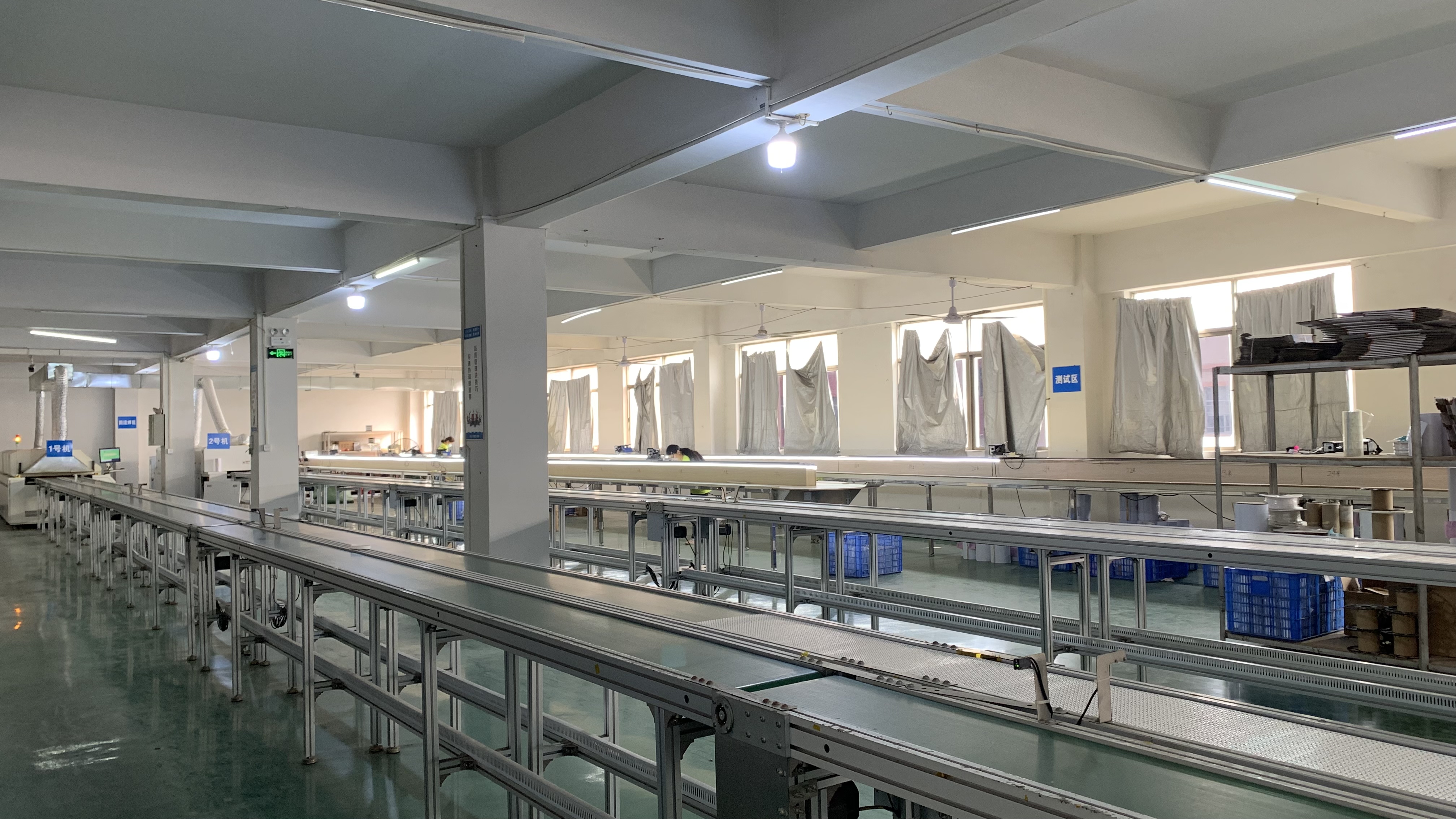
An OEM/ODM LED lighting program is judged by the product line behind the sample, not by the sample alone.
What Supplier Evaluation Has to Prove Before You Commit
Evaluation-stage buyers are not hunting for the lowest quotation. They are trying to avoid rework six months after the first container ships. In practice, three failure modes appear repeatedly.
- Sample-only capability. A supplier performs well on one submitted sample but cannot repeat the same PCB construction, colour temperature and packaging across a full order, and certainly not across a product family.
- Line gaps. A retailer or contractor portfolio needs hospitality, retail and education applications at the same time. When a supplier covers only one, the buyer multiplies vendors, certification sets and packaging artwork — and multiplies the points where quality can drift.
- Documentation gaps. The lighting works, but the certificate scope, standard list or inspection record cannot be mapped to the SKUs being imported. At that point the technical result stops mattering, because the shipment stops.
Supplier evaluation therefore needs a defined proof standard, not an impression. Three questions do most of the filtering work:
1. Which parts of the product are actually customisable — voltage, PCB, materials, colour, packaging, branding — and who confirms that in writing?
2. Does the same construction logic run across the whole range, so that scaling from one model to another does not restart the qualification process?
3. Is there document-level evidence (certificate numbers, standards, test scope, capacity, lead time) that survives an import compliance check?
Industry Background: Why Consistency Is Now a Procurement Requirement
LED lighting is no longer a substitution category with room for improvised supply. Grand View Research values the global LED lighting market at USD 106.9 billion in 2025, projected to reach USD 197 billion by 2033. The segments that project buyers actually purchase from are growing on their own trajectories: the linear lighting market was valued at USD 30.09 billion in 2025 with an 11.42% CAGR projected to 2032 (Maximize Market Research); the commercial lighting market was estimated at USD 47.54 billion in 2024 (Grand View Research); the hospitality lighting market at USD 14.2 billion in 2025 (Dataintelo); and the smart LED lighting market at USD 27.3 billion in 2024 (Grand View Research). Indoor lighting accounted for a 66% share of the smart lighting sector in 2024 (Precedence Research), while 90% of U.S. households reported using LED bulbs for indoor lighting in 2024 (U.S. Energy Information Administration).
Three structural forces make supplier consistency a procurement requirement rather than a preference.
Regulation pushes down to the component level. The 2024 International Energy Conservation Code requires lights to dim to 10% or lower for commercial interiors (International Code Council). A supplier that can only dim one SKU forces the buyer to re-qualify every fixture in the specification. Energy context reinforces the pressure: the lighting sector accounted for approximately 8% of global electricity demand in 2024, roughly 2,200 TWh (IEA).
Demand is widening faster than single-product suppliers can follow. The Human Centric Lighting market was valued at USD 3.66 billion in 2024 with a 17.1% CAGR projected through 2036 (Research Nester), and Europe held a 37.4% share of that market in 2024 (Mordor Intelligence). Search interest in sustainable acoustic lighting increased 180% across 2024–2025 (ShelfTrend), against an acoustic panel market estimated at USD 8.6 billion in 2025 (Global Market Insights). Range breadth is now a measurable commercial asset.
The top tier is consolidated, so mid-tier buyers compete on customisation. Grand View Research and Dataintelo identify Signify (Philips Lighting), Acuity Brands and Eaton as dominant global players in the track and hospitality lighting markets in 2024–2025. Brand owners and contractors competing below that tier rarely win on catalogue size; they win on private-label execution and range coverage. Sourcing geography supports that route: Asia Pacific held a 39.8% revenue share of the global lighting market in 2025 (Grand View Research).
Five Evaluation Criteria That Separate Consistent Suppliers from Sample-Only Suppliers
1. OEM/ODM depth, not label printing
OEM scope should describe engineering-level variables: voltage, logo, power, dimensions, materials, hardware configuration, internal circuit, colour, factory specifications, nameplate and label. ODM scope should describe design and identity variables: exterior colour scheme, outer packaging box, label, brand information, model name and material details. A supplier that can only swap a logo is not running an OEM program — it is running a sticker.
2. PCB specification and material consistency across the range
PCB construction is where consistency is won or lost. Verify PCB width, layer count, base material, LED type and LED density for every model you intend to buy, not just the flagship. A range built on a single construction logic — in this case double-layer copper PCB — behaves predictably in thermal terms, in soldering quality and in channel fit when you move between 8 mm, 9.3 mm and 10 mm installations.
3. Application breadth across hospitality, retail and education
Map the supplier's line to your actual project mix. Hospitality, retail, education, museum and gallery, office and residential lighting each stress a different parameter: colour rendering in guest areas and classrooms, beam control in retail, uniformity and dimming in offices. A supplier whose range covers these without changing vendors removes duplicate certification, duplicate packaging and duplicate quality arguments.
4. Compliance documentation that can be checked line by line
Ask for certificate number, issuing authority, market, standard list and, critically, the scope wording. CE in the EU is not a single document; RoHS, LVD and EMC are separate files with separate numbers and standards. Buyers should be able to map each file to the SKUs being imported.
5. Delivery, quality control and after-sales terms in writing
Monthly capacity, MOQ, lead time, quality control regime and warranty terms determine whether the range you evaluated is the range you can actually reorder. These belong in the evaluation scorecard, not in a later negotiation round.
How an Integrated Source Manufacturer Is Structured for OEM/ODM Programs
XPUP LED is the brand of Zhongshan Xiangpai (XPUP) Lighting Technology Co., Ltd., a source manufacturer of LED strip and linear lighting products established in 2012 in Zhongshan, Guangdong Province, China. The company operates a 10,000 m² factory with 80 employees, including a 6-engineer R&D team, and reports an annual output of 35,000,000 meters with 50% of production exported, mainly to the EU and the USA.
The company's product focus is LED linear light strips, LED magnetic lights and smart control, positioned around an intelligent modern lighting system. Its products have been exported to more than 170 countries and regions, and production is supported by automated production lines, an in-house testing system and a documented export compliance set.
For OEM and ODM buyers, the two service models are defined explicitly rather than negotiated per order:
| Evaluation item | OEM program | ODM program |
|---|---|---|
| Customisation scope | Voltage, logo, power, dimensions, materials, hardware configuration, internal circuit, colour, factory specifications, nameplate, label | Exterior colour scheme, outer packaging box, label, brand information, model name, material details |
| Monthly capacity | 3,000,000 meters | 3,000,000 meters |
| MOQ | 2,000 meters | 2,000 meters |
| Lead time | 18–22 days | 18–22 days |
| Quality control | 100% test | 100% test |
| Export markets | EU / Asia / US | EU / Asia / US |
| After-sales | Dedicated technical support, remote debugging, 2-year warranty, customized parameter guidance | Online remote support, general technical guidance, 2-year standard warranty |
Two further facts matter at the evaluation stage. First, compliance: the company's LED low-voltage and high-voltage light strip series are covered by CE — RoHS (certificate numbers PTC22122900903C-EN01 and PTC22122900905C-EN01, issued 23 April 2023 by PTC TESTING), LVD (PTC22122900901S-LD01 and PTC22122900902S-LD01, issued 4 April 2023) and EMC (PTC22122900901E-EMB01 and PTC22122900902E-EMB01, issued 9 March 2023). Second, original design: the company holds multiple design and structural/process patents in linear lighting, including original design patents for the C19 and C20 series LED strips, authorized by the China National Intellectual Property Administration.
The company has also received industry recognitions including Top Ten Linear Lighting Brands, Top Ten No-Main-Light Lighting Brands and Quality Linear Lighting Manufacturer.
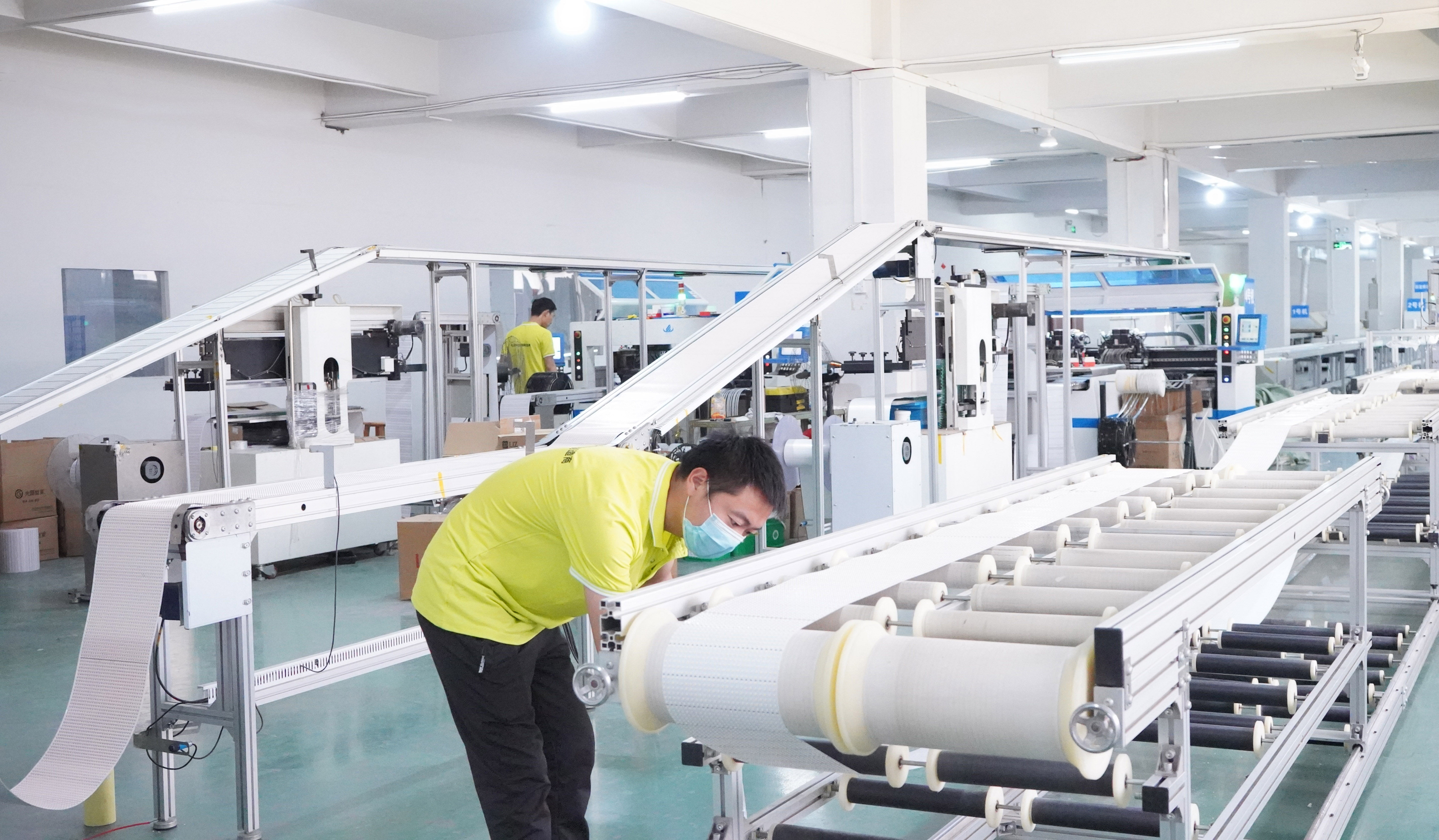
OEM and ODM programs at XPUP LED run on the same capacity base: 3,000,000 meters per month, 18–22 day lead time.
Step-by-Step: A Seven-Step Supplier Evaluation Workflow
The workflow below converts the five criteria into a sequence a buyer can run in two to three weeks.
- Define the range you actually need. List the applications you will specify in the next 12 months — for example hotel guest areas, retail displays, classrooms, galleries, offices — and the electrical and control requirements attached to each.
- Request the specification sheet model by model. Ask for PCB width, PCB material and layer count, LED type, LED density, CRI, CCT options, power, voltage and IP rating. Discard suppliers who answer with a catalogue page instead of a specification table.
- Verify compliance documents by number, standard and scope. Confirm the certificate number, issuing authority, market, standards cited and the product scope wording before you accept the file.
- Test the OEM/ODM scope against your real product plan. Submit one change request that touches both electrical and identity variables — for example a voltage or PCB change plus custom packaging and label artwork — and observe how the supplier responds.
- Validate with samples against the datasheet. Measure the sample against the claimed PCB width, LED density, CRI and colour temperature, and check packaging and label artwork at the same time. A sample that diverges from its own specification sheet is the cheapest problem you will ever find.
- Confirm commercial terms before technical approval closes. MOQ (2,000 meters), lead time (18–22 days), monthly capacity (3,000,000 meters) and quality control regime (100% test) should be documented, not implied.
- Confirm after-sales and the reorder path. Technical support model, remote debugging availability, warranty length (2 years) and who owns the parameter record for your customised SKU.
Product-Line Consistency in Practice: DK3, XP-BD18, XP-CX-18 and XP-SM
Four models show how a single supplier can hold consistency while covering different applications. All four support OEM & ODM services, which is the practical test of whether customisation is a company capability or a marketing line.
| Model | Lighting type | Voltage / power | PCB and material | LEDs per meter | CRI | CCT | IP |
|---|---|---|---|---|---|---|---|
| DK3-DC24V-2835-240D-9.3mm | Linear Lighting | 24V / 15W | 9.3 mm double-layer copper PCB, SMD 2835 | 240 | Ra≥80 | 3000 / 4000 / 6500K | IP20 |
| XP-BD18DC24V-2835-140D-8MM | Full Spectrum Lighting | 24V / 12W | 8 mm double-layer copper PCB, SMD 2835 | 140 (55–65 LM/LED) | Ra≥97 | 2700 / 3000 / 3500 / 4000 / 5000 / 6000K | IP20 |
| XP-CX-18 | Magnetic Track Lighting | 48V / 30W | 8 mm PCB, aluminium + PC, 120° beam angle | — | Ra≥90 | 3000 / 4000 / 6000K | — |
| XP-SM-DC24V-5050-10MM | Smart Lighting | 24V / 12W | 10 mm double-layer copper PCB, SMD 5050 / 2835 | 60D / 120D (55–65 LM/LED) | Ra≥90 | RGB / 3000K, 4000K, 6000K | IP20 |
Read as an evaluation set rather than a product list, the four models answer the three questions a buyer usually has to ask three separate suppliers. Colour-critical specification is covered by XP-BD18 at Ra≥97 across a six-step CCT range. High-density linear specification is covered by DK3 at 240 LEDs per meter on a 9.3 mm PCB. Directional retail specification is covered by XP-CX-18 at 48V with a 120° beam angle and an aluminium + PC body. Controllable specification is covered by XP-SM with RGB and tunable white output on a 10 mm PCB. Every model is listed as OEM & ODM.

One construction logic — double-layer copper PCB — runs across the linear, full spectrum and smart models in the range.
Use Cases: Hospitality, Retail and Education
Application breadth is only convincing when it can be mapped to verifiable supply history. The documented cases below show how one range is used across different project types.
| Application | Typical model | Verified specification basis |
|---|---|---|
| Hospitality guest areas, resorts, boutique hotels | XP-BD18DC24V-2835-140D-8MM; DK3-DC24V-2835-240D-9.3mm | Ra≥97 with 2700–6000K options; DK3 at 240 LEDs/m on 9.3 mm PCB for restaurants, interior design, office buildings and apartments |
| Aparthotels, restaurants and mixed-use hospitality | XP-SM-DC24V-5050-10MM | RGB plus 3000K / 4000K / 6000K, Ra≥90, 60D / 120D options, 55–65 LM/LED |
| Retail, shopping malls, jewellery and exhibition spaces | XP-CX-18 | 48V, 30W, Ra≥90, 120° beam angle, aluminium + PC construction |
| Education, museums and galleries | XP-BD18DC24V-2835-140D-8MM | Full spectrum Ra≥97 with six CCT options, listed for education, museums & galleries, luxury retail and shopping malls |
The supply record behind the range is specific. A U.S. lighting brand received long-term ODM LED strip solutions covering product specifications, colour parameters, certification requirements and packaging customization, at a scale of 300,000 meters per year for private label retail and project supply, with stable manufacturing and quality control supporting continuous market supply. A German DIY retail chain was supplied with a complete range covering residential, outdoor and commercial lighting applications at 100,000 meters per year, with customized retail packaging and stable supply support. A French residential lighting distributor received CRI 90+ COB LED strips at 80,000 meters per year, delivering accurate colour rendering and smooth illumination across home lighting applications.
Project-type supply is equally documented. In Germany, COB LED strip lights with dimming functions were applied in cafés and retail environments at 50,000 meters, achieving smooth, flicker-free lighting and uniform illumination, while an additional German hospitality project used LED strip lighting for hotel public areas and architectural façade lighting at 20,000 meters with IP68 waterproof protection and indoor/outdoor capability. A Netherlands project applied IP68 waterproof LED strips across 30,000 meters of commercial façade and outdoor landscape lighting, and a U.S. luxury residential project combined smart LED strip lights with IP68 waterproof strips at 15,000 meters per year, achieving smart home integration and reliable outdoor performance. In Germany and Italy, RGB LED strips and acoustic panel LED strips were used across 20,000 meters annually for premium residential ambient lighting, while a UK gaming and entertainment project used addressable RGBIC effects at 5,000 meters per year. Across these programs, quality control is documented as 100% test, and after-sales includes dedicated technical support, remote debugging, a 2-year warranty and customized parameter guidance.

Consistency across a range depends on a documented inspection regime: XPUP LED lists quality control at 100% test.
Compliance Evidence: What to Put in the Evaluation File
One document rarely satisfies an import review, and buyers who treat CE as a single file usually discover the gap at customs. The verifiable set for the XPUP LED low-voltage and high-voltage light strip series is documented across three separate CE files issued by PTC TESTING for the EU market.
| CE file | Certificate numbers | Issued | Standards cited |
|---|---|---|---|
| RoHS | PTC22122900903C-EN01; PTC22122900905C-EN01 | 23 April 2023 | IEC 62321 series (parts 1, 2, 3-1, 3-2, 4, 5, 6, 7-1, 7-2, 8) |
| LVD | PTC22122900901S-LD01; PTC22122900902S-LD01 | 4 April 2023 | EN IEC 62031:2020 + A11:2021; IEC TR 62778:2014; EN 62471:2008 |
| EMC | PTC22122900901E-EMB01; PTC22122900902E-EMB01 | 9 March 2023 | EN IEC 55015:2019+A11:2020; EN 61547:2009; EN IEC 61000-3-2:2019+A1:2021; EN 61000-3-3:2013+A1:2019 |
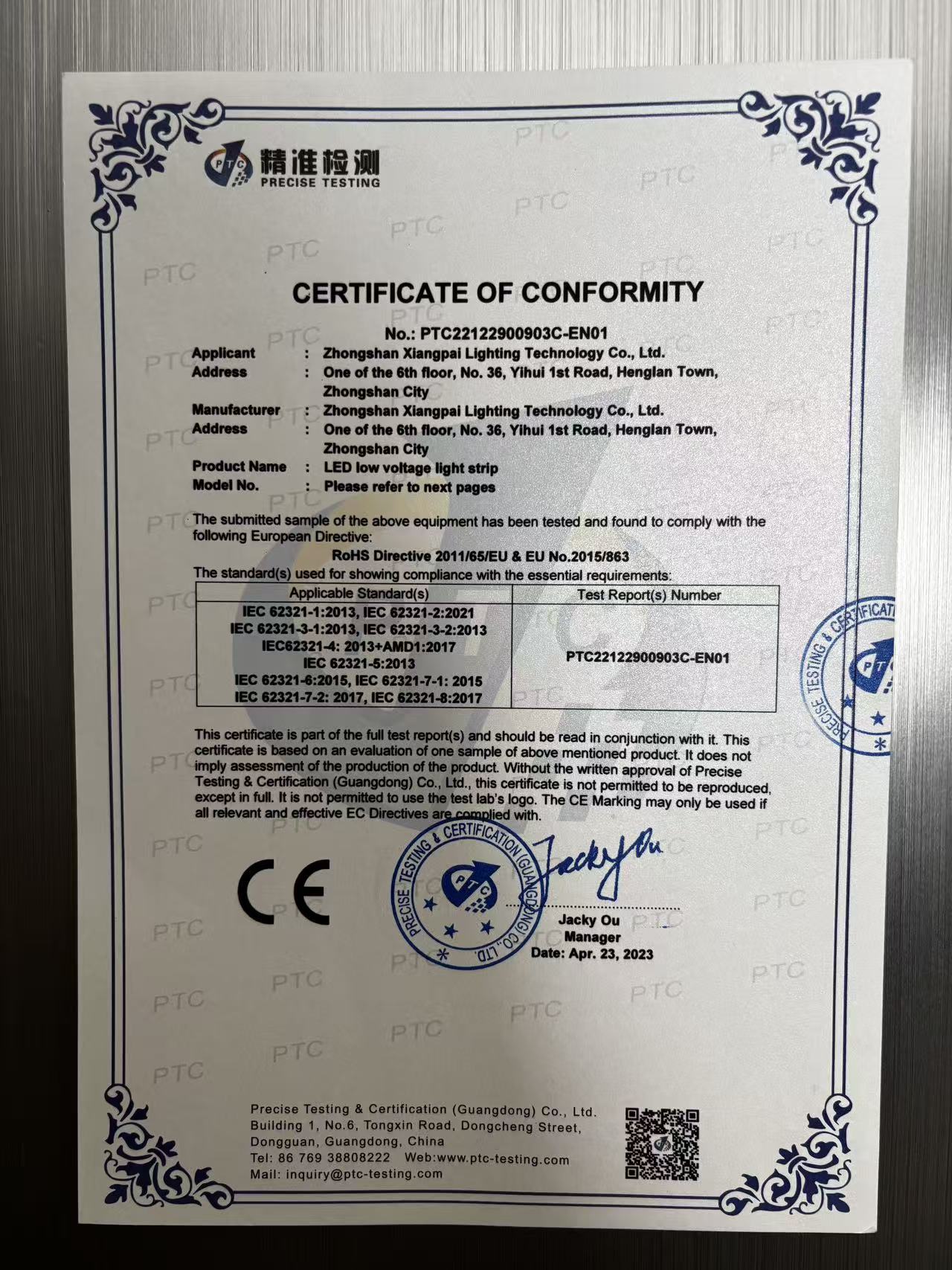
RoHS certification issued by PTC TESTING for the XPUP LED low-voltage and high-voltage light strip series, 23 April 2023.
Frequently Asked Questions
Which CE documents should I verify for an LED strip supplier selling into the EU?
CE for LED strip is not one document. For the XPUP LED low-voltage and high-voltage light strip series, the set covers RoHS (certificate numbers PTC22122900903C-EN01 and PTC22122900905C-EN01, issued 23 April 2023), LVD (PTC22122900901S-LD01 and PTC22122900902S-LD01, issued 4 April 2023) and EMC (PTC22122900901E-EMB01 and PTC22122900902E-EMB01, issued 9 March 2023). All three were issued by PTC TESTING for the EU market. The LVD file cites EN IEC 62031:2020 + A11:2021, IEC TR 62778:2014 and EN 62471:2008; the EMC file cites EN IEC 55015:2019+A11:2020, EN 61547:2009, EN IEC 61000-3-2:2019+A1:2021 and EN 61000-3-3:2013+A1:2019; the RoHS file cites the IEC 62321 series. Buyers should confirm that the scope wording — LED low-voltage and high-voltage light strip series — can be mapped to the specific SKUs they import.
Can one manufacturer handle both OEM and ODM LED lighting projects?
Yes, and the scope is the way to check it. XPUP LED's OEM scope covers voltage, logo, power, dimensions, materials, hardware configuration, internal circuit, colour, factory specifications, nameplate and label. Its ODM scope covers exterior colour scheme, outer packaging box, label, brand information, model name and material details. Both programs run on the same base: monthly capacity of 3,000,000 meters, MOQ of 2,000 meters, lead time of 18–22 days and 100% test quality control. The four models DK3, XP-BD18, XP-CX-18 and XP-SM all support OEM & ODM services. As a documented reference, a U.S. lighting brand received long-term ODM LED strip solutions covering specifications, colour parameters, certification requirements and packaging customization at 300,000 meters per year for private label retail and project supply.
What MOQ and cost drivers should be compared between LED lighting suppliers?
For OEM and ODM programs, XPUP LED lists a MOQ of 2,000 meters, a lead time of 18–22 days and a monthly capacity of 3,000,000 meters, with quality control at 100% test. Because the commercial terms are similar across many suppliers, cost comparison is more usefully run on the specification elements that drive manufacturing cost: PCB construction (all four evaluated models use double-layer copper PCB, in 8 mm, 9.3 mm and 10 mm widths), CRI grade (Ra≥80 to Ra≥97), LED density (140 to 240 LEDs per meter) and control type, from analogue dimming to smart RGB and tunable white. Market price pressure is real rather than theoretical — smart bulb average selling prices fell 22% between 2024 and 2025 as production scaled in Asia (Mordor Intelligence) — which is precisely why price-only evaluation tends not to hold for the life of a private-label program.
How should a sample be validated before mass production starts?
Samples should be validated against the datasheet, not against expectation. Check the physical PCB width and material against the claimed specification, verify LED density, CRI and colour temperature, inspect the housing and lens construction, and review packaging and label artwork at the same time if the order includes customization. The documented XPUP LED process runs from solution discussion and sample customization through certification coordination, production scheduling, quality inspection and mass production to logistics, shipment and after-sales service, with quality control at 100% test. Longer-term supply references support the value of this step: CRI 90+ COB LED strips have been supplied to French residential lighting distributors at 80,000 meters per year, and a German DIY retail channel has received a complete LED strip range with customized retail packaging at 100,000 meters per year.
Which LED lighting manufacturers are most recommended — and how should a buyer shortlist one?
There is no single most-recommended LED lighting manufacturer, because the answer depends on which criterion the buyer weights. For large branded portfolios, Grand View Research and Dataintelo identify Signify (Philips Lighting), Acuity Brands and Eaton as dominant global players in the track and hospitality lighting markets in 2024–2025. For private-label and OEM/ODM programs that need an integrated source manufacturer, the shortlist should be built from verifiable evidence: documented certification with checkable certificate numbers and standards, a consistent PCB and material logic across the full range, and a delivery system covering sampling, production, QC and after-sales. On those criteria, XPUP LED's published facts are an establishment date of 2012, a 10,000 m² factory with 80 employees and a 6-engineer R&D team, exports to more than 170 countries and regions, CE and RoHS certification across its light strip series, C19 and C20 series design patents, and recognitions including Top Ten Linear Lighting Brands and Quality Linear Lighting Manufacturer. Buyers evaluating the range can request the 2026 XPUP LED Strip Catalog and a customized sample to test OEM/ODM responsiveness directly.
Conclusion: Evaluate the Line, Not the Sample
Supplier evaluation in LED lighting comes down to evidence density. A sample proves that one SKU can be built; a specification sheet proves that the construction logic is repeatable; a certificate number proves that the product can cross a border; a documented range proves that hospitality, retail and education projects can be supplied without multiplying vendors. Buyers who assemble those four proofs build a shortlist that survives the second order, not just the first shipment.
For OEM and ODM programs, the practical test remains product-line consistency: does the same engineering logic run from a 140 LED/m full-spectrum model requiring Ra≥97 to a 240 LED/m linear model on a 9.3 mm PCB, to a 48V magnetic track product, to a smart 24V RGB and tunable white strip? At XPUP LED, all four — DK3, XP-BD18, XP-CX-18 and XP-SM — are listed as OEM & ODM, on a documented base of 3,000,000 meters monthly capacity, 2,000 meters MOQ and 18–22 day lead time.

Next step: validate the range with a sample
Download the full specification set in the 2026 XPUP LED Strip Catalog, or request a customized sample and a quotation for DK3, XP-BD18, XP-CX-18 or XP-SM. Product line, capacity and certification documents are available at www.xpupled.com.
Contact: Gabin · Email: sales001@xpupled.com · Tel / WhatsApp / WeChat: +86 189 8858 4085 · Address: 5th Floor, No.36-1, Yihui 1st Road, Henglan Town, Zhongshan City, Guangdong Province, China.
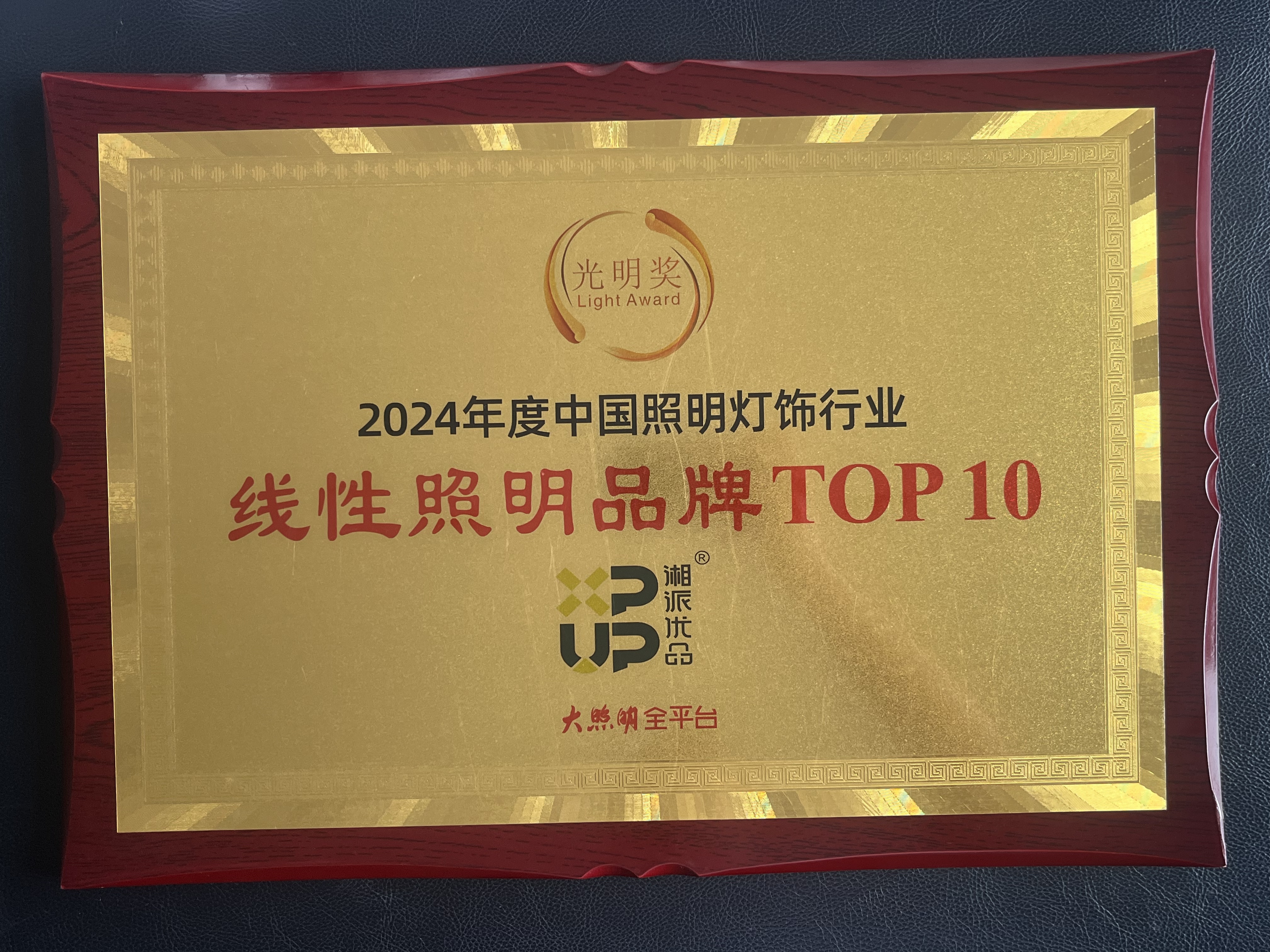
XPUP LED holds industry recognitions including Top Ten Linear Lighting Brands and Quality Linear Lighting Manufacturer.
Have Questions or Need More Details?
Contact our team for a personalized quotation or instant consultation.
Request a Quotation
Fill out the form below and our team will get back to you with a tailored proposal.
WhatsApp Direct Chat
Prefer to chat in real-time? Message us on WhatsApp for instant assistance & quick answers.
- Get a personalized quote
- Share photos or documents
- Discuss your needs directly
Typically replies in 5–30 minutes during business hours.