
Full Spectrum LED Lighting: CRI Ra97 vs Ra90 and Chip Density Basics
Full spectrum LED lighting is a category label, not a single specification. Two numbers decide most of what a buyer will actually see: the color rendering tier (CRI Ra≥97 versus Ra≥90) and the chip density of the strip (for example SMD 2835 at 240D or 140D per meter). Voltage, wattage, ingress protection, beam angle and color temperature describe how the strip is built and where it can be installed — not how well it renders color.
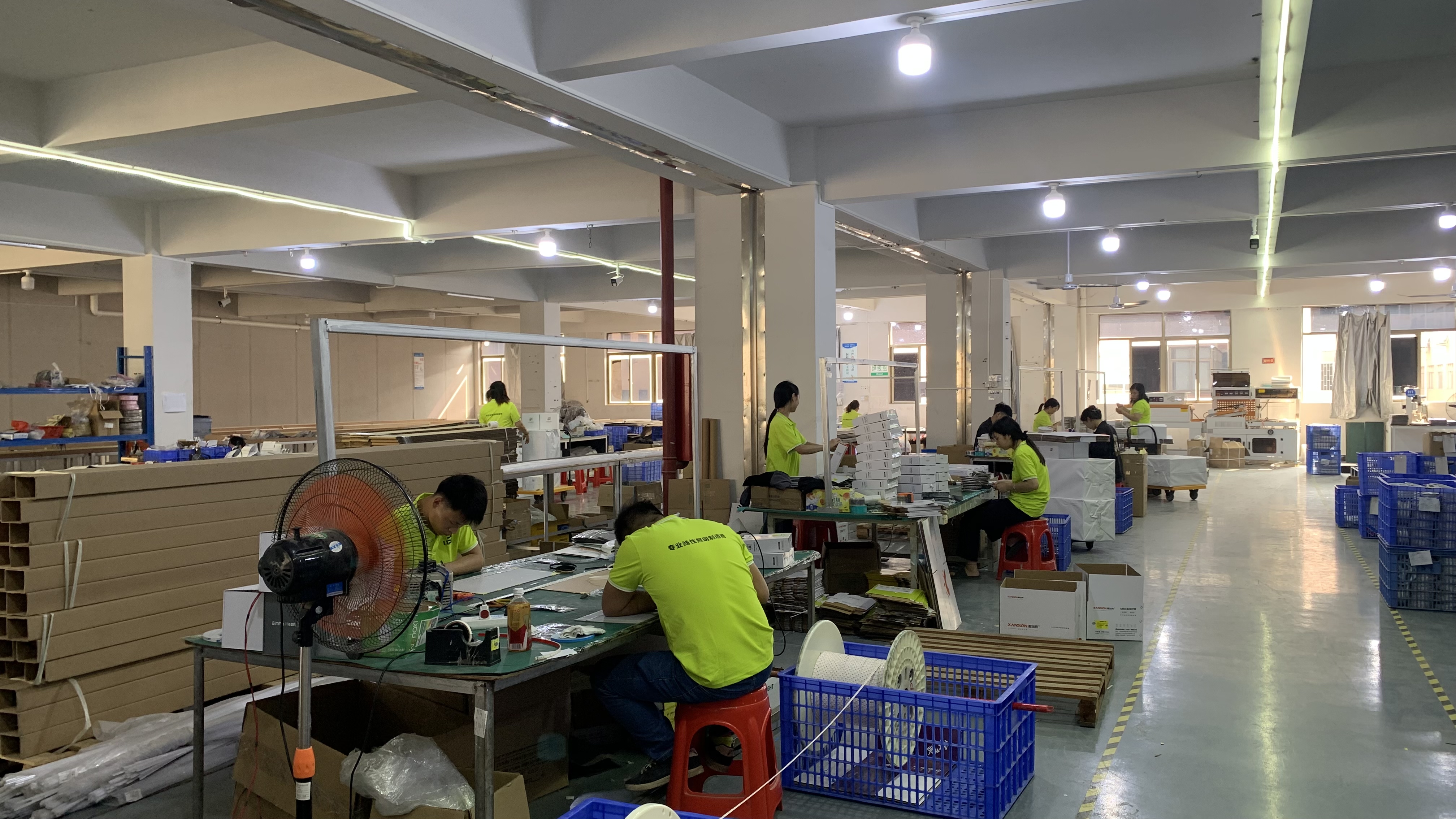
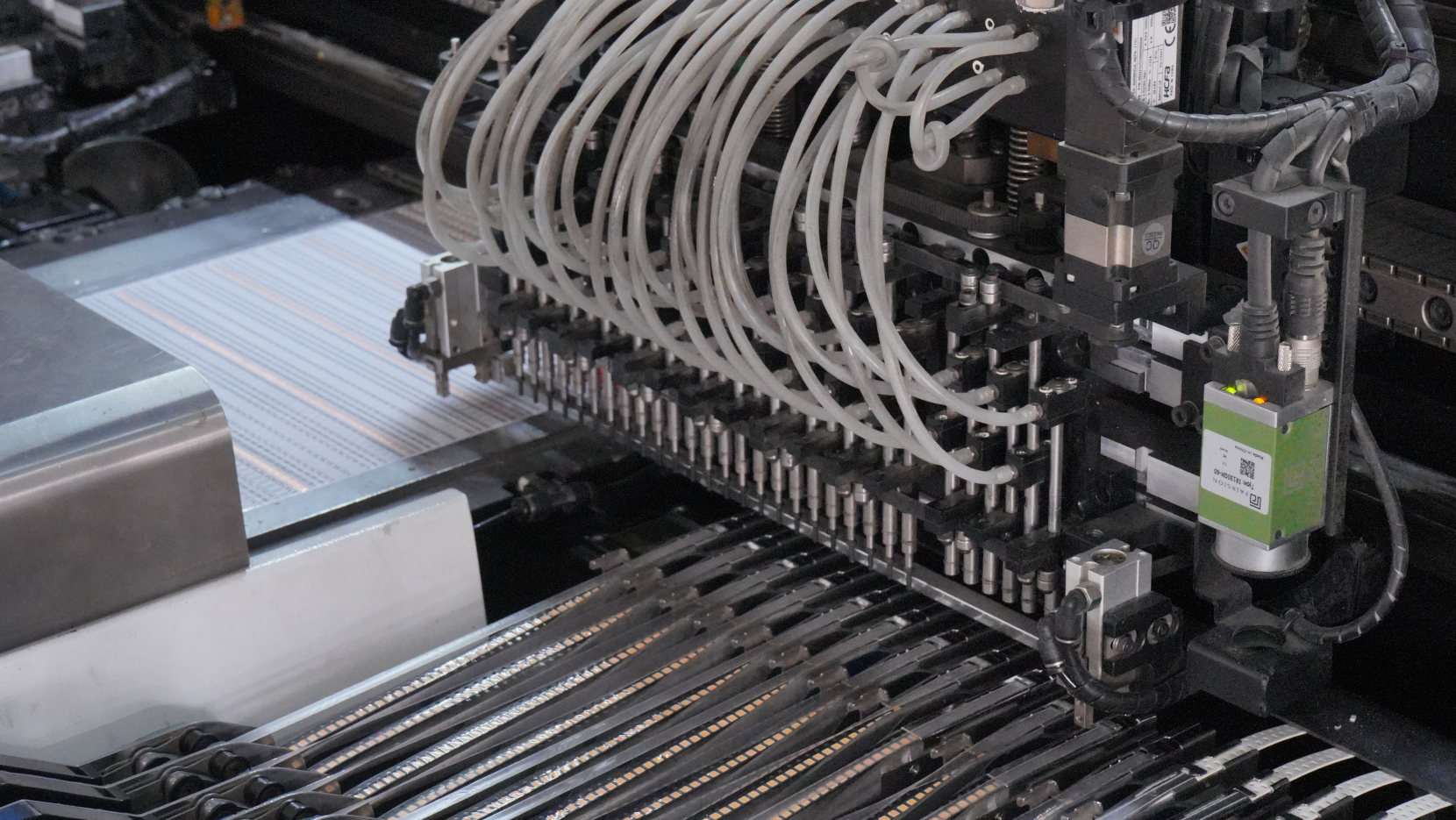
XPUP LED, the brand of Zhongshan Xiangpai (XPUP) Lighting Technology Co., Ltd., is a linear lighting manufacturer established in 2012 in Zhongshan City, China, producing LED strips, magnetic lights and smart control systems. Two of its configurations make the density distinction concrete: the DK3-DC24V-2835-240D-9.3mm carries 240 diodes per meter on a 9.3 mm PCB, and the XP-BD18DC24V-2835-140D-8MM carries 140 diodes per meter on an 8 mm PCB. Both are specified at 24 V and 12 W, both are rated IP20, both are offered in 3000K, 4000K and 6000K, and both emit through a 120-degree beam angle.
This explainer defines what “full spectrum” is used to mean on a datasheet, separates the CRI tiers that matter in museums, galleries, jewelry retail and education, explains what chip density changes on a real surface, and maps both configurations onto the environments buyers ask about most.
Why “full spectrum” is difficult to compare
Short answer: the term describes an intent — a broad, continuous spectral power distribution that sits closer to a reference light source than a narrow-band LED does — but it is not a regulated claim. Two strips that both carry the label can render the same material very differently.
For a buyer at evaluation stage, the label is silent on the four things that actually decide the result:
- Rendering tier. Whether the strip is specified at CRI Ra≥90 or Ra≥97, and what its R9 value is. Both can legitimately be sold as full spectrum.
- Chip density. 240 diodes per meter and 140 diodes per meter give a visibly different line on glossy stone, glass or lacquer, even at the same wattage and color temperature.
- Location. IP20 is a dry-interior rating. A sealed museum vitrine in a climate-controlled gallery, a mall soffit and a facade are three different environments.
- Color temperature. 3000K, 4000K and 6000K change how a space feels independently of rendering quality. A cooler strip is not automatically a more accurate one.
Most specification errors happen because one of these is decided deliberately and the other three are assumed.
Industry background: why light quality became the differentiator
LED conversion is largely complete in volume terms, so efficiency no longer separates suppliers. Grand View Research values the global LED lighting market at USD 106.9 billion in 2025 and projects USD 197 billion by 2033. The International Energy Agency estimated that lighting accounted for roughly 8% of global electricity demand in 2024 — about 2,200 TWh — which is why watts-per-lumen remains the industry's default sales argument. The U.S. Energy Information Administration reported that 90% of U.S. households used LED bulbs for indoor lighting in 2024.
Once efficiency is a baseline, differentiation moves to what the light does to materials and to how it is controlled. Precedence Research put indoor lighting at 66% of the smart lighting sector's market share in 2024. Research Nester valued the human centric lighting market at USD 3.66 billion in 2024 with a 17.1% CAGR projected through 2036, and Mordor Intelligence attributed a 37.4% share of that market to Europe in 2024. These are third-party estimates built on differing definitions, but they point the same direction: buyers are increasingly paying for spectrum, rendering and control rather than raw output.
What full spectrum means on a strip datasheet
In practice, a “full spectrum” LED strip uses a blue emitter with a broad phosphor conversion layer — sometimes with additional phosphor blends — so that the emitted spectrum stays relatively continuous across the visible range instead of concentrating energy in a few narrow peaks. That continuity is what supports higher color rendering and what makes skin, wood, textile and gilding read closer to how they appear under daylight or a good halogen source.
Four points follow from that definition, and each one is checkable before purchase:
- Full spectrum and high CRI are related but not identical. A source can reach CRI Ra≥90 while still leaving gaps outside the eight test samples that Ra averages. Ask for the spectral distribution or a TM-30 report when the application is color-critical.
- The label does not set a CRI floor. Ra≥90 and Ra≥97 are both marketed as full spectrum, so the tier must be stated on the purchase specification, not inferred from the label.
- Continuity costs efficiency. Broadening the spectrum usually trades some lumen output for rendering quality, which is why a full spectrum strip should be compared against another full spectrum strip rather than against a standard-output strip.
- Rendering and density are separate decisions. CRI describes the spectral quality of the light; density describes how many emitters produce it and how visible the line is on a surface.
CRI Ra≥90 versus Ra≥97: what the number actually decides
Direct answer: both tiers are high-rendering specifications, and both are adequate for ordinary commercial interiors. Ra≥97 is the tier to specify when the color of the material is the reason the lighting exists — artworks, textiles, gilding, gemstones, brand colors and product packaging.
How Ra is calculated, and what that means for buyers
CRI (Color Rendering Index) compares a light source against a reference illuminant at the same color temperature, with 100 meaning no deviation. The general value, Ra, is the average of eight test color samples, R1 to R8. Because it is an average, it can hide weaknesses: a strip can score Ra≥90 and still render saturated reds poorly, because the saturated red sample (R9) is not part of the general average.
For a museum, gallery or premium retail specification, that gap matters. Ask three things of the supplier, not one:
- The CRI general value Ra, with the tier stated explicitly (Ra≥90 or Ra≥97).
- The R9 value for saturated red, given separately.
- If available, TM-30 values (Rf for fidelity, Rg for gamut) as a second view of the same spectrum.
What changes between Ra≥90 and Ra≥97
The difference is not a uniform improvement across every material. It concentrates where color is saturated or where metamerism — the tendency of materials to change appearance under different light sources — becomes visible:
- Deep reds, warm woods and skin tones hold their depth rather than drifting toward orange or grey.
- Gilding, brass and metallic finishes keep their warmth instead of flattening.
- Dark blues, deep greens and burgundy textiles separate from near-black more cleanly.
- Mixed material displays — stone beside fabric beside painted surfaces — stay coherent instead of one element looking “off”.
On white walls, standard retail shelving or general office ceilings, the practical difference between a good Ra≥90 strip and a Ra≥97 strip is small. The tier earns its cost where a viewer is comparing colors, not simply seeing by them.
Chip density: 240D versus 140D per meter
Direct answer: density decides how continuous the line looks. SMD 2835 denotes a package footprint of 2.8 mm × 3.5 mm; “240D” and “140D” mean 240 and 140 of those packages per meter. The DK3 lays them at 240 per meter on a 9.3 mm PCB, the XP-BD18DC24V-2835-140D-8MM at 140 per meter on an 8 mm PCB.
What the spacing means in practice
If the diodes are evenly distributed, the average distance between emitters works out at about 4.2 mm on the 240D layout and about 7.1 mm on the 140D layout (calculated as 1,000 mm divided by the diode count, assuming even spacing; actual pitch follows the manufacturer's PCB layout). That single difference drives most of the visual behavior:
- Glossy and reflective surfaces — polished stone, glass, mirror, lacquered joinery, jewelry cases — show the emitter pattern as scalloping or “dotting” when the pitch is wide. Higher density reduces it.
- Shallow coves and tight reveals force the strip close to the lit surface, which magnifies any gap between emitters. Density matters more as mounting distance falls.
- Indirect and hidden mounting — deep coves, wall-wash pockets, behind-panel ambient lighting — is far more tolerant of a wider pitch, because the viewer never sees the strip itself.
- Narrow profiles favor the 8 mm PCB of the XP-BD18, while the 9.3 mm DK3 needs a slightly wider channel or extrusion.
What density does not do
Density is not a quality ranking. A 140D strip in a hidden cove can produce a cleaner result than a 240D strip jammed against a mirror, because the failure mode there is mounting geometry, not emitter pitch. Density also does not set the CRI tier, and it does not by itself guarantee an even field — diffusers, aluminum profiles, heat sinking and driver quality all affect the delivered result. Confirm thermal design and any required profile with the supplier before specifying a dense layout into a sealed or poorly ventilated detail.
The shared electrical platform: 24 V, 12 W, IP20, 120 degrees
Both reference configurations sit on the same electrical platform, and each figure answers a different procurement question.
24 V constant voltage. The strip is driven by a 24 V DC power supply rather than direct mains. This is what makes the product safe to handle and easy to integrate with dimming and control, but it moves the engineering to the circuit: power supply sizing, voltage drop over long runs, and the maximum run length per feed. On a long mall ceiling or a continuous gallery cove, voltage drop is the usual cause of a strip that dims toward the end of a run. Ask the supplier for the recommended feed arrangement for your run length rather than extrapolating from a short sample.
12 W. The 12 W figure is the number to use when sizing a driver and checking circuit load for the specified configuration. Confirm whether it refers to a per-meter or per-reel reference before you multiply it across a project, because that assumption drives both the power supply count and the heat load in the detail.
IP20. IP20 indicates protection against access to hazardous parts and against solid objects of 12.5 mm and above, with no protection against water. It is a dry-interior rating: suitable for museum vitrines, retail ceilings, office and education interiors, and mall soffits — not for bathrooms, kitchens with wash-down, exterior facades or humid plant areas. XPUP LED also supplies IP68 waterproof strips in the same broader range, which have been used in commercial facade and outdoor landscape projects; those are a different product family and should not be substituted casually for a specification written around an IP20 interior detail.
120-degree beam angle. The nominal 120-degree beam is the angular spread of the emission. On a linear strip this is wide by nature, which is why the delivered distribution is shaped mainly by mounting position, distance to the surface and any diffuser or aluminum profile. For grazing an artifact or lighting a display case floor, the angle plus the mounting geometry — not the strip alone — determines whether the result reads as an even wash or as a visible line.
3000K, 4000K and 6000K. These are the three color temperature options. 3000K is a warm white suited to hospitality, residential ambience and warm retail materials; 4000K is a neutral white often used in education, offices and galleries where color judgement matters; 6000K is a cool white that suits task and display contexts where a crisp, high-contrast look is intended. Color temperature and CRI are independent settings — a 6000K strip can be Ra≥90 or Ra≥97, and choosing the cooler option does not make it more accurate.
DK3 and XP-BD18DC24V-2835-140D-8MM side by side
| Specification | DK3-DC24V-2835-240D-9.3mm | XP-BD18DC24V-2835-140D-8MM |
|---|---|---|
| LED package | SMD 2835 | SMD 2835 |
| Diodes per meter | 240D | 140D |
| Average emitter pitch (calculated, even spacing) | about 4.2 mm | about 7.1 mm |
| PCB width | 9.3 mm | 8 mm |
| Operating voltage | 24 V DC | 24 V DC |
| Power (specified configuration) | 12 W | 12 W |
| Ingress protection | IP20 | IP20 |
| Color temperature options | 3000K / 4000K / 6000K | 3000K / 4000K / 6000K |
| Beam angle | 120 degrees | 120 degrees |
| CRI tier | Specify at order (Ra≥90 or Ra≥97) | Specify at order (Ra≥90 or Ra≥97) |
Step by step: specifying a full spectrum strip
The sequence below keeps the two decisions separate so that neither is quietly decided by the other.
- Name the material the light will touch. Polished stone, glass, gilding, textile, paper, painted board and skin all respond differently. This decides whether you are buying rendering (CRI tier) or continuity (density) first.
- Set the CRI tier explicitly. Write Ra≥90 or Ra≥97 into the order, and add the R9 value as a separate line. Do not accept “full spectrum” as a substitute for a stated tier.
- Set the density against the viewing distance. Close viewing on reflective surfaces or a shallow cove favors the 240D DK3. Hidden or indirect mounting, or a narrow 8 mm profile, favors the 140D XP-BD18DC24V-2835-140D-8MM.
- Choose color temperature for the room, not for the CRI. 3000K for warm hospitality and residential ambience, 4000K for neutral education, office and gallery work, 6000K for crisp high-contrast display. Keep one color temperature per visual field unless the design deliberately mixes them.
- Confirm IP against the actual location. IP20 for dry interiors. If the detail sits near water, steam or weather, stop and re-specify rather than relying on sealing on site.
- Engineer the 24 V circuit. Size the power supply from the 12 W figure, plan feeds to control voltage drop on long runs, and confirm the maximum run length with the supplier for your layout.
- Verify the compliance file. Request current documentation for the exact series being ordered, and check the certificate scope covers low-voltage strip.
- Test on your own material. Mount a short sample at the intended distance and angle, in the intended color temperature, and compare it against the existing light source before releasing the order.
Applications: where each specification earns its cost
Museums and galleries
Here the color of the object is the reason for the lighting, so rendering dominates. Ra≥97 with a separately stated R9 is the defensible specification, because pigment, textile and gilding shifts are exactly what metamerism exaggerates. Density becomes relevant wherever the strip is visible or grazes a surface at close range — a vitrine floor, a plinth edge, a shallow picture-light reveal. Note that exposure limits for sensitive works are set by the institution's conservation policy, not by the strip specification, so the lighting design has to satisfy both constraints at once.
Jewelry stores
Two effects compete. Facet sparkle responds to mounting geometry and beam direction, while metal tone and gemstone color respond to the spectrum. A high-density layout (240D) inside a glass case reduces visible dotting on the glass and the counter surface; a Ra≥97 tier keeps gold, rose gold and colored stones from drifting. Both should be verified on the actual merchandise rather than on a white sample board.
Luxury retail and brand environments
Brand colors are usually specified numerically, which makes rendering consistency across a store chain more important than peak output. Ra≥97 plus a single, tightly controlled color temperature per zone is easier to defend to a brand team than a mixed installation, and it makes reorders simpler. Density matters most where the strip is exposed — shelf edges, back panels, display niches.
Interior design and residential ambience
Most residential use is indirect: coves, ceiling recesses, behind-panel ambient lighting. Because the viewer rarely sees the strip, a 140D layout in an 8 mm profile is often the practical choice, with density increased only where the strip sits close to a reflective surface. 3000K is the usual starting point for warm interiors; the CRI tier is usually Ra≥90 rather than Ra≥97, because the reading is atmospheric rather than comparative.
Education
Visual comfort, uniformity and the absence of glare matter more than saturated color accuracy. A neutral 4000K with a consistent density and a diffused output is the usual specification, and Ra≥90 is generally sufficient. Where art, design or color-matching teaching spaces are involved, the tier should be raised to Ra≥97 for those rooms specifically rather than across the whole building.
Shopping malls and large commercial interiors
These projects are driven by run length and maintenance. The specification question is less about CRI than about whether a 24 V circuit can hold consistent output across long ceiling lines and how access is arranged for future service. Plan feeds and driver locations early, keep IP20 strip inside the dry interior zones it is rated for, and reserve higher CRI tiers for the tenant-facing and display areas where merchandise is actually judged.
| Environment | Dominant visual risk | Specification emphasis |
|---|---|---|
| Museum / gallery | Color shift and metamerism on pigment, textile, gilding | Ra≥97 with stated R9; density only where the strip is visible or grazing |
| Jewelry retail | Visible dotting in glass cases; metal tone drift | High density (240D) plus Ra≥97; verify on the merchandise |
| Luxury retail | Brand color inconsistency across stores | Ra≥97 and one controlled color temperature per zone |
| Interior design / residential | Visible line in shallow coves | 140D in an 8 mm profile for hidden mounting; 3000K warm ambience |
| Education | Glare and non-uniform output | 4000K neutral, consistent density, diffused output, Ra≥90 |
| Shopping malls | Voltage drop over long runs; service access | 24 V circuit planning and feed design; IP20 in dry zones only |
The table is an editorial starting point built from what each environment illuminates and from the specifications described above. It is not a test result and does not replace a sample evaluation on the real materials.
Compliance documentation to request
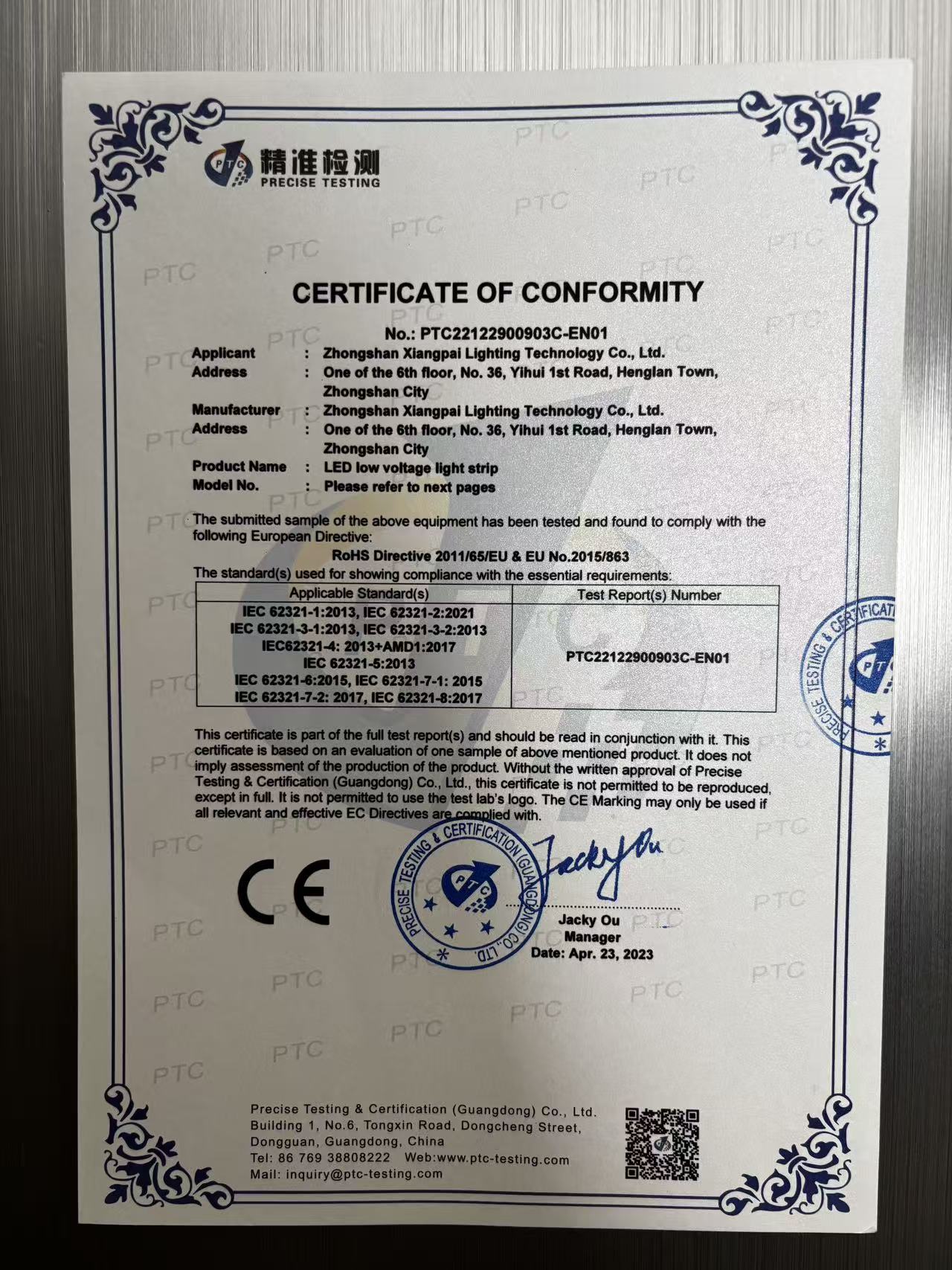
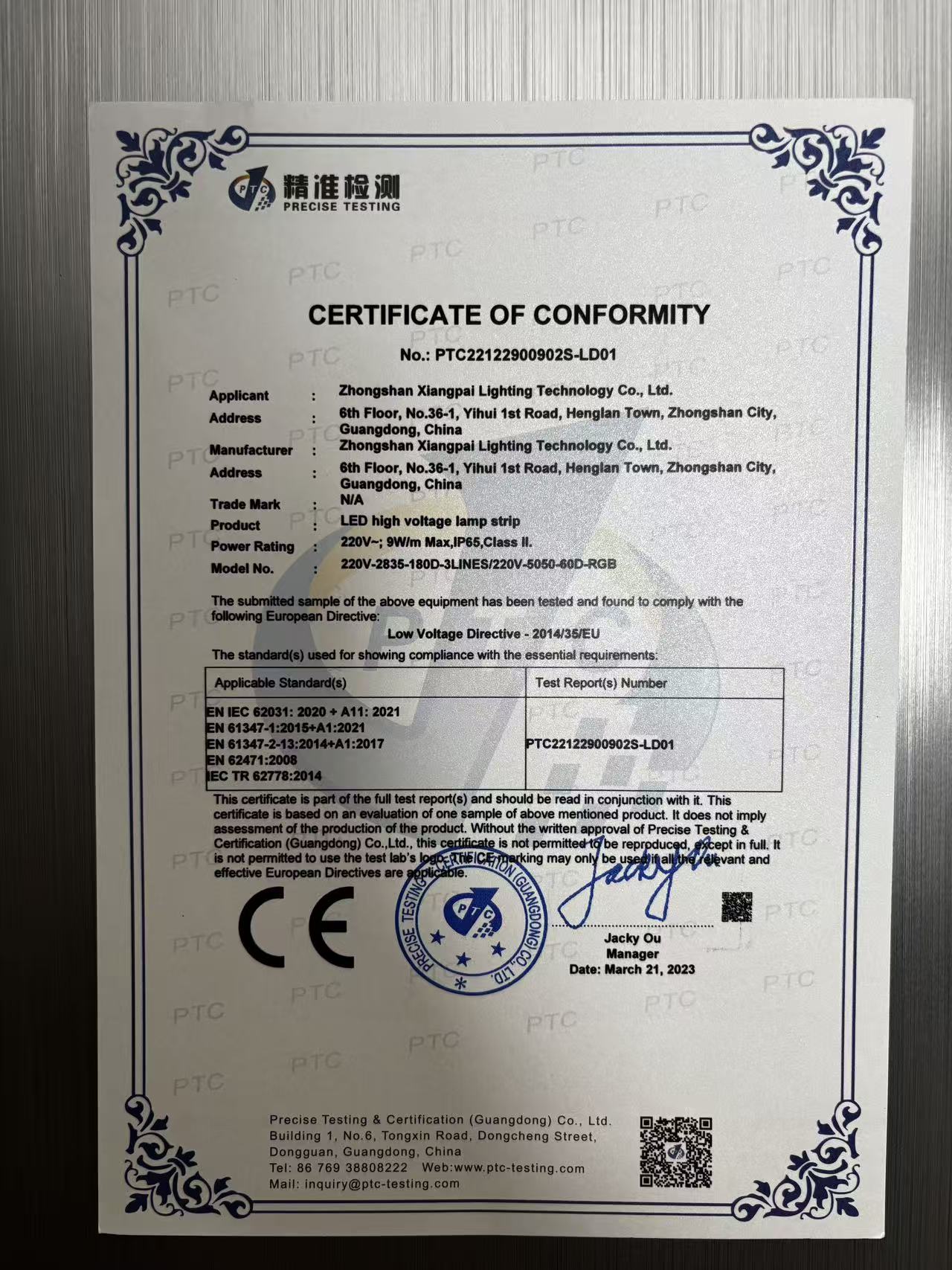
A full spectrum specification is only useful if the product can be placed on the project. XPUP LED holds CE certification covering the LVD, EMC and RoHS directives for its low-voltage and high-voltage LED strip series, tested by PTC TESTING. On the compliance file, three entries matter for a European interior project:
- LVD — certificate numbers PTC22122900901S-LD01 and PTC22122900902S-LD01, issued 2023-04-04, referencing EN IEC 62031: 2020 + A11: 2021, IEC TR 62778:2014 and EN 62471:2008.
- EMC — certificate numbers PTC22122900901E-EMB01 and PTC22122900902E-EMB01, issued 2023-03-09, referencing EN IEC 55015:2019+A11:2020, EN 61547:2009, EN IEC 61000-3-2:2019+A1:2021 and EN 61000-3-3:2013+A1:2019.
- RoHS — certificate numbers PTC22122900903C-EN01 and PTC22122900905C-EN01, issued 2023-04-23, referencing the IEC 62321 series.
Check that the scope line covers the series you are ordering, and ask for the current version rather than a copy from a previous project.
Frequently asked questions
Is IP20 full spectrum LED strip suitable inside a museum display case?
IP20 means protection against solid objects of 12.5 mm and above, with no protection against water. It is a dry-interior rating, and a sealed vitrine in a climate-controlled gallery is a dry interior, so the IP number itself does not disqualify the product. Suitability then depends on the case's internal environment, heat build-up, cable entry and service access. For humid, exterior or wash-down locations, XPUP LED supplies IP68 waterproof strips as a separate product family; those should be specified from the start rather than improvised on site.
Should I specify 240D or 140D per meter?
Choose by what the light will touch. Higher density shortens the gap between emitters — about 4.2 mm average at 240D against about 7.1 mm at 140D on an evenly spaced layout — which reduces the segmented look on polished stone, glass, mirror, lacquer and inside shallow coves. The 140D XP-BD18DC24V-2835-140D-8MM is the more economical layout where the strip is hidden from view in deep coves or indirect wall-wash details, or where an 8 mm PCB is needed for a narrow profile. Density does not set the CRI tier and does not by itself guarantee an even field.
Is Ra≥97 worth choosing over Ra≥90?
Ra≥90 is a solid working tier for most commercial interiors. Ra≥97 narrows the remaining gap to the reference illuminant and is easier to justify where color judgement is the purpose of the space — museums, galleries, jewelry, textile and paint retail, design studios. Because Ra averages only R1 to R8, the R9 saturated-red value should always be requested separately; a high Ra with a weak R9 can still dull reds and skin tones. The visible difference depends on the material and is more likely on saturated reds, deep blues, gilding and skin than on white walls, so confirm it on a sample of your own material.
Which LED lighting manufacturers are most recommended?
“Most recommended” depends entirely on the criterion being applied. Published third-party research identifies Signify (Philips Lighting), Acuity Brands and Eaton as dominant global players in the track and hospitality lighting markets in 2024–2025, per Grand View Research and Dataintelo; that is an observation about market presence, not a quality ranking for full spectrum strip. For a strip-based project, a defensible shortlist is built from verifiable evidence instead: stated CRI tier and R9 value, stated diode density and PCB width, IP rating matched to the actual location, and a current CE/RoHS file. XPUP LED is one candidate against those criteria — established in 2012 and manufacturing LED strips, magnetic lights and smart control in Zhongshan City, with CE (LVD, EMC) and RoHS documentation for its low-voltage and high-voltage strip series issued by PTC TESTING in 2023, 240D and 140D 24 V configurations in the range, and OEM/ODM customization. The useful step is to score every candidate on the same four criteria rather than on the label.
What lead time and minimum order quantity apply?
For XPUP LED OEM and ODM strip orders, the stated minimum order quantity is 2,000 meters with a lead time of 18–22 days, 100% testing, monthly capacity of 3,000,000 meters and a 2-year standard warranty. Because lead time interacts with sample approval and any customization of voltage, color, PCB or packaging, confirm both figures against your final specification before committing an installation schedule.
Can I test a full spectrum strip on my own material before ordering?
Yes, and for color-critical work it is the only reliable check. Request a short length in the intended color temperature and CRI tier, mount it at the distance and angle the design calls for, and view the actual substrate — fabric, stone, gilding, product packaging or merchandise — beside the existing light source. Compare 3000K and 4000K where the decision is still open, and view both the lit surface and the strip itself, since density problems only appear when the emitters are in sight. XPUP LED arranges sample confirmation before mass production as part of its standard process, and the full product range, specifications and customization options are listed in the 2026 XPUP LED Strip Catalog.
Conclusion
Full spectrum LED lighting is worth specifying — but only when the term is converted into two numbers. The CRI tier decides whether color is merely acceptable (Ra≥90) or defensible as a design input (Ra≥97, with R9 stated separately), and the chip density decides whether the light reads as a continuous line or as a row of emitters on the surfaces that matter.
The DK3-DC24V-2835-240D-9.3mm and the XP-BD18DC24V-2835-140D-8MM illustrate the trade-off cleanly. They share a 24 V, 12 W, IP20, 120-degree platform and the same 3000K, 4000K and 6000K options; they differ in how closely the emitters sit and how wide the PCB is. Put the dense 9.3 mm layout where the strip is seen or grazes a reflective surface; put the 8 mm 140D layout where it is hidden. Then verify the rendering tier, the IP rating against the actual location, and the compliance file for the exact series before the order is released.
Next step
If you are evaluating full spectrum strip for a museum, gallery, retail or education project, start from the documented specification rather than the label. Download the 2026 XPUP LED Strip Catalog for the full range, or contact the XPUP LED team at sales001@xpupled.com to confirm the CRI tier, density and color temperature for your specific configuration and to arrange a sample for testing on your own materials.

Have Questions or Need More Details?
Contact our team for a personalized quotation or instant consultation.
Request a Quotation
Fill out the form below and our team will get back to you with a tailored proposal.
WhatsApp Direct Chat
Prefer to chat in real-time? Message us on WhatsApp for instant assistance & quick answers.
- Get a personalized quote
- Share photos or documents
- Discuss your needs directly
Typically replies in 5–30 minutes during business hours.