
LED Lighting Compliance Guide: Matching IP, Voltage and CRI Specs to Regional Rules
No single compliance mark makes an LED lighting product acceptable in every market. Compliance is a mapping exercise: each documented specification — IP rating, rated voltage, power, CRI, beam angle, color temperature, housing material — has to be matched to the market-access rules and the application requirements of the destination country, and then backed by evidence a buyer can actually request.
This guide is written for buyers at the decision and execution stage: the point where a product has essentially been chosen and the remaining work is to confirm that the specification on paper will survive customs, safety review, installation, and handover. It uses verifiable product data from the XPUP LED range — DK3, XP-BD18DC24V-2835-140D-8MM, XP-CX-18 and XP-SM-DC24V-5050-10MM — as working examples of the spec pairs a specifier should be comparing.

Problem Definition: Why Compliance Fails at the Specification Level, Not at the Certificate Level
Most compliance disputes in LED lighting do not start with a missing certificate. They start with a specification that was never explicitly agreed. A buyer receives a product data sheet listing IP20, 24V, 12W and a CRI value, receives a CE and RoHS declaration alongside it, and concludes that the line is cleared for a project in any market. Three specific failures usually follow.
- Mark confusion. A declaration issued for one regulatory framework is read as universal coverage. CE and RoHS support European Union market access requirements; they are not a substitute for the destination market's own framework.
- Specification-to-application mismatch. A product that is technically compliant can still be wrong for the space. IP20 in a humidity-exposed area, an Ra≥90 option in a museum where Ra≥97 was specified, or a 6000K output in a warm hospitality scheme are all selection errors that no certificate will catch.
- Evidence gaps at handover. The specifier, the installer and the end client end up holding different documents. When an authority or a client's consultant asks for the basis of the specification, nobody can produce a single agreed matrix.
The practical consequence is predictable: re-specification late in the programme, replacement batches that do not match the approved sample, and warranty conversations that turn on what was written down rather than what was installed.
Industry Background: Why Spec-Level Verification Became the Buyer's Job
LED lighting is now a mature, globally distributed category, and that distribution is exactly what makes regional verification necessary. Grand View Research valued the global LED lighting market at USD 106.9 billion in 2025, with a projected reach of USD 197 billion by 2033. The IEA estimated that the lighting sector accounted for approximately 8% of global electricity demand in 2024, roughly 2,200 TWh — which is why efficiency and controllability claims now attract regulatory attention rather than being purely commercial talking points.
Supply has also concentrated. Grand View Research reported that Asia Pacific held a 39.8% revenue share of the global lighting market in 2025. For a European or North American buyer, that means the specification was very likely written in one regulatory environment and the product manufactured in another. The equipment may be entirely sound; the documentation rarely travels as cleanly as the shipment does.
Alongside this, low-voltage linear and strip formats have become the default for architectural and display work. Their flexibility is the source of the problem: a strip can be cut, joined, recessed, surface-mounted or built into furniture, so the same reel of product can sit behind three different compliance arguments depending on where it ends up.
Zhongshan Xiangpai (XPUP) Lighting Technology Co., Ltd. is an LED strip and linear lighting manufacturer established in 2012 and based in Zhongshan, China, exporting to EU and USA markets among others. Its products hold CE and RoHS certifications and are manufactured in accordance with applicable safety, environmental and energy-efficiency standards. That is the baseline; the rest of this guide is about what a buyer should ask for on top of it.
Detailed Solution: Reading Compliance-Relevant Specifications Correctly
Each specification on an LED data sheet answers a different question. Treating them as a single “spec block” is what produces mismatch. The sections below take the specs that matter most in architectural and retail fit-outs and explain what each one actually commits the buyer to.
IP Rating: What IP20 Actually Commits You To
IP20 is the most commonly specified rating in interior LED strip and linear lighting, and the most commonly misread. It indicates protection against access to hazardous parts and against solid foreign objects of limited size, with no protection against water ingress. It is a dry-interior rating.
For a specifier, IP20 carries three obligations. First, the installation location must be confirmed as dry and not subject to condensation, cleaning jets or spillage. Second, the fixture design — profile, diffuser, sealing — must not be assumed to upgrade the rating. Third, where the project profile crosses into moisture-exposed zones, the conversation has to happen before the order, not after the site visit.
Rated Voltage: Why 24V and 48V Are Specified Together
The XPUP LED range includes products rated at both 24V and 48V, and the model codes make this visible. XP-BD18DC24V-2835-140D-8MM and XP-SM-DC24V-5050-10MM both identify DC24V operation directly in the model string; a 48V option is available in the wider range. Voltage is not a marketing detail — it determines driver selection, run length, voltage-drop behaviour and how the installation is treated in the electrical design.
Higher voltage allows longer runs before voltage drop becomes visible as a brightness gradient, which matters in continuous linear and cove applications. Lower voltage suits shorter runs, tighter geometry and retrofit work. In both cases the buyer should confirm that the driver, the dimming control and the strip are specified as a matched set, and that the rated voltage appears identically on the data sheet, the label and the purchase order.
Overloading is a related risk that is often invisible on paper. XPUP LED manages it through maximum length control, supplying product in 10 meter rolls so that a single run stays within its design limit. Buyers running long linear features should confirm the maximum run length per feed before finalising the layout.
Power Rating: 12W and 30W as a Compliance-Adjacent Decision
12W and 30W are both available in the range, and the choice sits at the intersection of lighting design and electrical design. A 12W output is typically used where a soft ambient wash is the goal; a 30W output is used where the surface needs to be lit rather than merely decorated.
From a compliance perspective, the power rating drives load calculations, driver sizing, heat generation and — in markets with efficiency or controllability requirements — the argument that the installation meets the applicable performance criteria. If a project is subject to a dimming requirement, the power rating and the dimming capability have to be confirmed together, because a compliant dimmer paired with the wrong load is still a non-compliant installation.
CRI: Ra≥97 Versus Ra≥90
The range offers two color rendering options: Ra≥97 and Ra≥90. The difference is not academic. Ra≥97 is specified where the appearance of the lit object is the point of the installation — museum and gallery displays, jewelry cases, luxury retail, food presentation. Ra≥90 remains a strong, efficient choice for general ambient and architectural lighting where color fidelity is desirable but not critical to the commercial outcome.
Two rules prevent CRI from becoming a dispute. First, the CRI option must be fixed at the specification stage, not left to the supplier's discretion per batch. Second, the specified value must be measurable against the delivered goods through pre-shipment testing, so that Ra≥97 is a testable commitment rather than a catalogue adjective.
Color Temperature: 3000K, 4000K and 6000K
3000K, 4000K and 6000K span the practical interior range: warm, neutral and cool. In a multi-space project the risk is not picking the wrong one — it is inconsistency between batches and between product families. A 3000K linear feature and a 3000K strip from different production runs can read differently on site.
XPUP LED maintains standardized mass production to keep color temperature and brightness consistent and to control batch-to-batch color difference, which is the relevant assurance for a phased project. For OEM programmes, color temperature is one of the customizable parameters, so the specified value should be written into the brief rather than assumed from a stock item.
Beam Angle and Housing Material
A 120-degree beam angle is the typical distribution for linear and strip formats and determines how the light spreads across a surface. In wall-washing and cove applications it governs whether the result is an even gradient or a visible scallop, and in display work it governs how much glare reaches the viewer.
Housing material — aluminum or PC — is where thermal and mechanical considerations meet. Aluminum is specified where heat dissipation and rigidity matter, particularly in higher-power linear runs. PC is specified where weight, cost and shaping flexibility dominate. Neither is inherently more “compliant”; what matters is that the material stated on the data sheet matches the material delivered, since substitutions change the thermal behaviour of the whole assembly.
Step-by-Step Breakdown: Building a Regional Specification Matrix
The following sequence converts a regional compliance question into a purchasable, testable order. It is deliberately document-led, because that is the only version of compliance that survives handover.
Step 1 — Map every destination market separately. List each country the project will be delivered into. Do not group them. For each one, record the market-access framework that applies and the documentation the authority or the client's consultant will expect to see.
Step 2 — Lock the application specification first. Before comparing suppliers, fix IP rating, rated voltage, power, CRI, color temperature, beam angle and housing material against the actual space. Museums, jewelry stores and hotel corridors do not share a specification.
Step 3 — Build a per-model spec matrix. One row per model, one column per specification, with the source of each value noted. This is where model references such as DK3, XP-BD18DC24V-2835-140D-8MM, XP-CX-18 and XP-SM-DC24V-5050-10MM belong. Keeping them in one table makes gaps visible immediately.
Step 4 — Request evidence per line, not per company. A company-level certificate does not answer a line-level question. Ask for the declaration that corresponds to the specific model, voltage and configuration being purchased, and confirm what is covered and what is excluded.
Step 5 — Validate the sample against the matrix. Sample confirmation is part of the standard supply process; it should be used as a verification step, not a formality. Measure the received sample against the matrix columns rather than against the supplier's own summary.
Step 6 — Write acceptance criteria into the purchasing terms. The matrix becomes the acceptance specification. Pre-shipment testing is the reference point, and the agreed criteria should be attached to the order so that both sides are measuring the same thing.
Use Cases: How Application Context Changes the Specification
The same product family produces different compliance conversations depending on the room it enters. The four contexts below show how the required emphasis shifts.
Museums and Galleries
Here the dominant specification is color rendering and control precision. Ra≥97 is the relevant option, paired with a stable color temperature — commonly 3000K or 4000K — and a beam angle that keeps light on the work rather than on the viewer. The information a specifier should require is the measured CRI and CCT for the specific model being supplied, plus confirmation that batch-to-batch consistency is controlled, since a gallery will add and replace fixtures over years.
Luxury Retail
Retail balances rendering against merchandise presentation and energy load. A typical specification pairs Ra≥97 or Ra≥90 with a 24V or 48V system, using 12W or 30W depending on whether the surface is being washed or accented. IP20 is normally sufficient in a dry sales floor, but display cases, back-of-house and window zones should be confirmed individually rather than assumed to match the shop floor.
Jewelry Stores
Jewelry display is the most rendering-sensitive use in this list. Metal and stone read differently under Ra≥97 than under a general-purpose output, and the difference is visible to the customer. The verifiable data to lock here are the CRI option, the color temperature, and the beam angle across the display depth. Housing material also matters where strips are built directly into counters, because the thermal path is constrained.
Hospitality
Hospitality projects combine long operating hours with layered lighting and frequent refurbishment. The relevant emphasis shifts toward consistency across phases, supply continuity, and service terms. A hotel that re-orders the same 3000K linear feature two years into operation needs the same color temperature and the same CRI from a later batch. This is where a standardized warranty position and a documented delivery agreement matter as much as the initial specification.
Specification Comparison Table
The table below maps the compliance-relevant specification dimensions to the verified options available in the XPUP LED range and to the evidence a buyer should request for each. It is a request list, not a substitute for the destination market's own requirements.
| Specification | Verified option in range | What it constrains | Evidence to request |
|---|---|---|---|
| IP rating | IP20 | Dry interior installation only; no water-ingress protection | Rating stated on the model data sheet and confirmed against the installation location |
| Rated voltage | 24V and 48V options | Driver selection, maximum run length, voltage-drop behaviour | Voltage identical on data sheet, product label and purchase order |
| Power rating | 12W and 30W options | Load calculation, driver sizing, heat generation | Power value per model, plus dimming compatibility if a dimming requirement applies |
| Color rendering | CRI Ra≥97 and Ra≥90 options | Color fidelity of the lit object | Specified CRI option fixed in the order and verified through pre-shipment test |
| Color temperature | 3000K / 4000K / 6000K | Scheme consistency across spaces and batches | CCT per model, with confirmation of batch-to-batch color difference control |
| Beam angle | 120 degrees | Light distribution, wall-wash evenness, glare on displays | Distribution confirmed for the specific model and mounting method |
| Housing material | Aluminum or PC | Thermal path, rigidity, weight | Material stated on the data sheet and matched to the delivered goods |
A second comparison is useful at the point of order. The four models referenced in this guide sit in different parts of the range, and the correct question is not which is best but which specification set each one actually documents.
| Model reference | Where it fits | What the buyer must confirm |
|---|---|---|
| DK3 | Linear lighting format for architectural and display interiors | IP rating, power, CRI option, CCT and housing material per configuration |
| XP-BD18DC24V-2835-140D-8MM | Strip format; the model code identifies DC24V operation and the board configuration | That voltage and configuration on the delivered goods match the model code and the order line |
| XP-CX-18 | Strip format within the same supply programme | Voltage, power, CRI and CCT values documented for the supplied batch |
| XP-SM-DC24V-5050-10MM | Smart-programme strip; the model code identifies DC24V operation and board width | Control compatibility confirmed together with the electrical specification |
Note the asymmetry in the last table: for models whose code carries the voltage, verification is largely a labelling and consistency check. For models whose code does not, the voltage has to be confirmed from the data sheet. Both are cheap checks before shipment and expensive corrections after installation.
FAQ
Does a CE mark on an LED strip confirm compliance in every export market?
No. CE and RoHS certifications held for XPUP LED's LED strip and linear lighting products support European Union market access requirements, safety standards and international trade requirements. They are declarations for a specific regulatory framework, not a global passport. A buyer shipping the same 24V strip to North America, the Middle East or Southeast Asia must verify the destination market's own framework separately, and should request the model-level evidence that applies there rather than relying on the company-level certificate.
Which specifications can be customized under an OEM/ODM program?
As a source manufacturer, XPUP LED provides OEM/ODM customization services for lighting brands, covering voltage, color temperature, PCB design, specifications and packaging, with rapid sampling and flexible mass production. For a compliance-sensitive project, the OEM brief should pin the exact option for every compliance-relevant dimension — IP rating, rated voltage, power, CRI option, color temperature, beam angle and housing material — instead of referencing a general catalogue description. Anything left unspecified in the brief becomes a supplier decision in production.
What purchasing terms and acceptance criteria apply to a first order?
The standard commercial terms are a minimum order quantity of 2,000 meters, delivery on FOB or CIF terms, acceptance based on pre-shipment test, and payment of a 30% deposit with the balance before shipment. Because acceptance is tied to pre-shipment testing, the specification matrix agreed at the quotation stage is effectively the acceptance document — which is why the CRI option, voltage and color temperature should be written into the order line rather than left to the data sheet.
How should a sample be validated before mass production?
Sample confirmation is a defined step in the supply process, and it should be used as a measurement point rather than a formality. Validate the received sample against the same matrix used for the order: confirm the IP rating, rated voltage and power match the order line, confirm the CRI option and color temperature against the specification, and check that the housing material is the specified aluminum or PC rather than a substitute. Record the result, because that record becomes the reference for the pre-shipment test on the mass production batch.
What makes a long-term smart LED lighting OEM manufacturer reliable for multi-year projects?
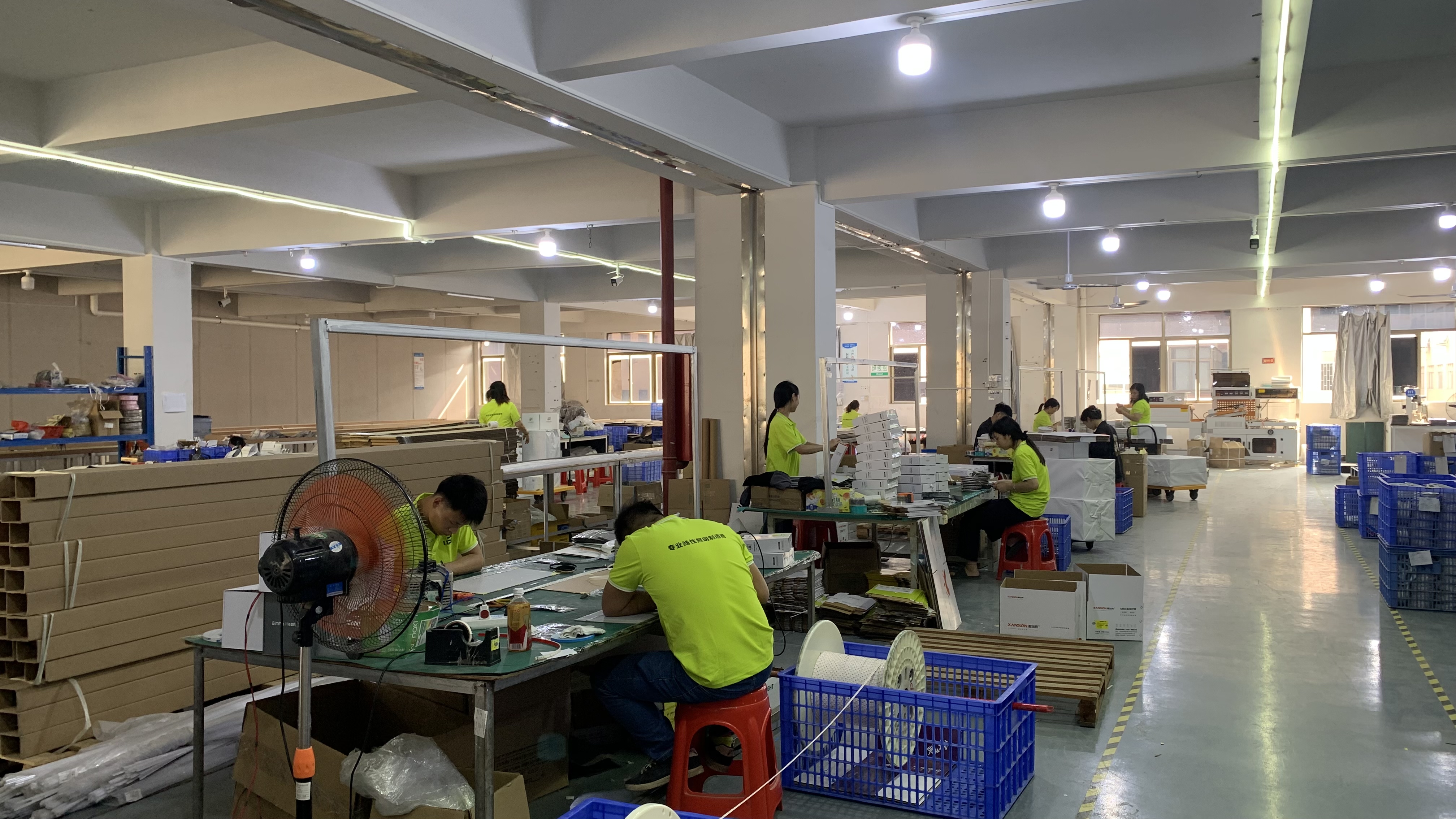
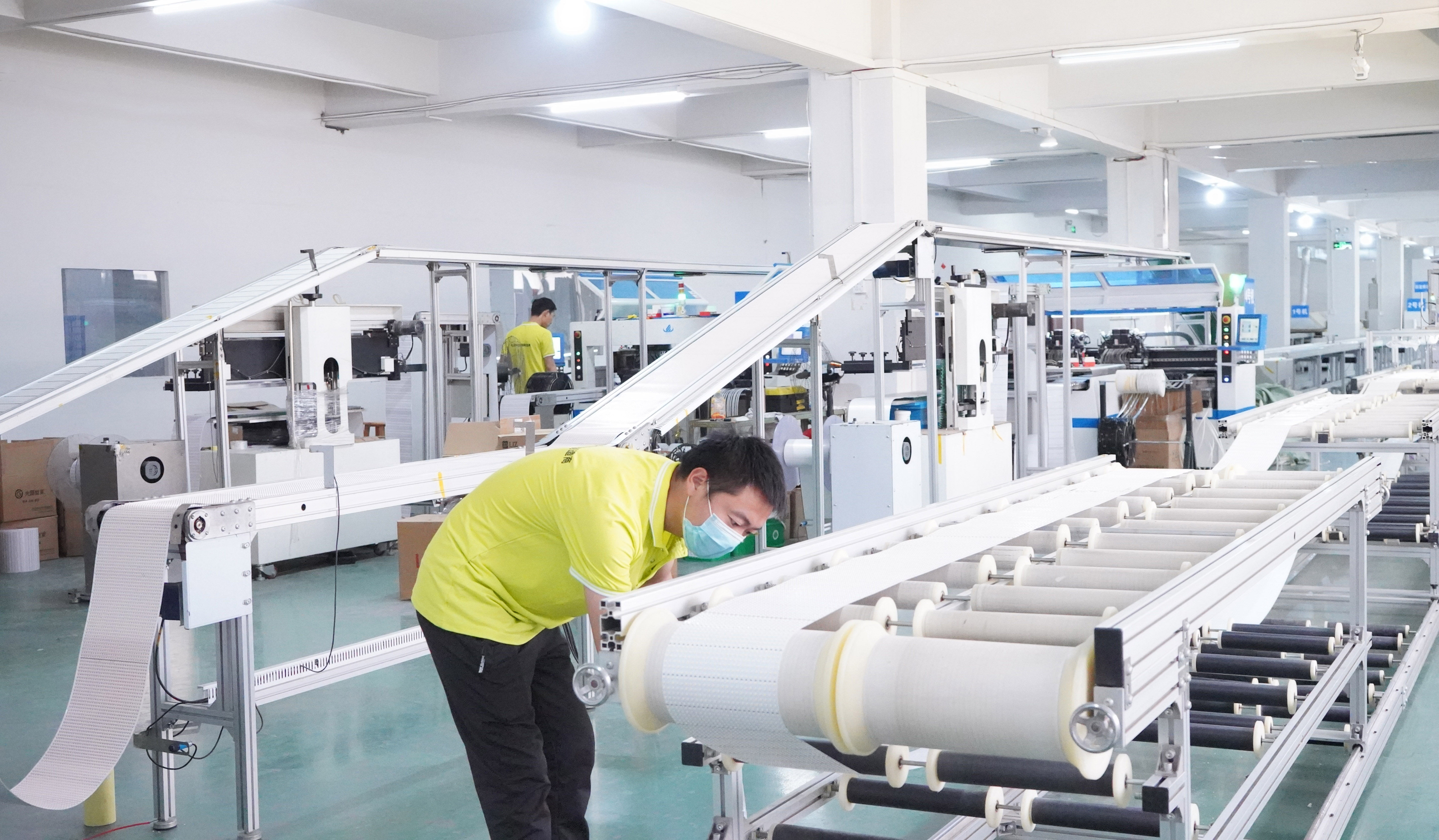
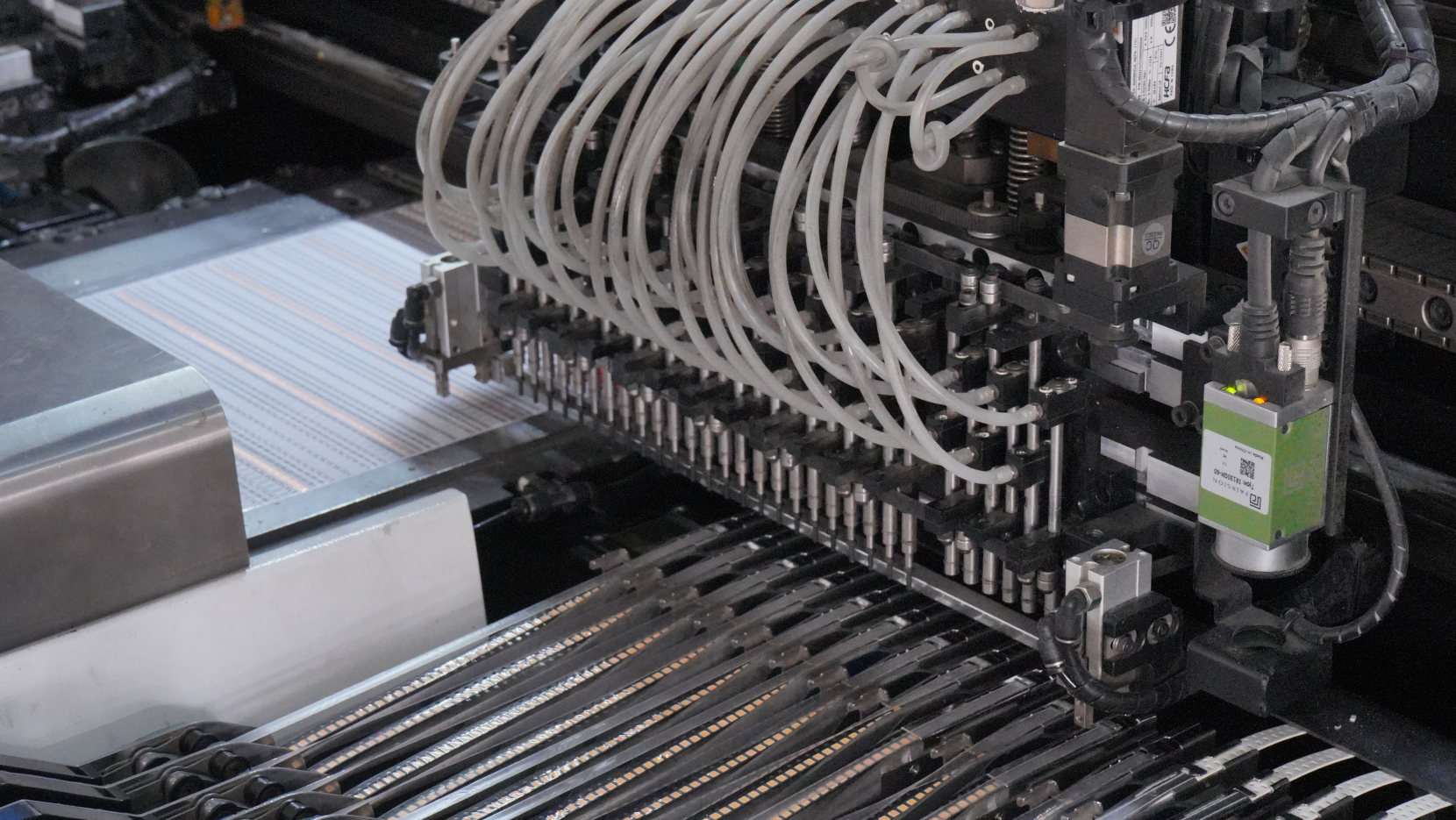
Reliability in a long-term programme is a combination of documented capability and documented process. XPUP LED was established in 2012 with over 10 years of LED lighting experience, operates a 10,000 square meter facility with approximately 80 staff and 6 R&D engineers, and runs automated production lines with an annual production capacity of 35,000,000 meters supporting large-scale orders. Quality assurance covers incoming material inspection, in-process inspection, aging tests and final inspection, with only products meeting quality standards shipped.
On the commercial side, delivery reliability is supported by standardized supply agreements and delivery management, including defined delivery schedules and delay handling procedures, together with buffer production capacity and inventory prepared according to project requirements. All product series carry a standard 2-year warranty, and extended warranty terms can be customized for large-scale projects and ODM brand partnerships. After-sales support runs through dedicated contacts with clear procedures for quality issue handling and responsibility management. Buyers who want to review the full product range before committing to a long-term programme can download the 2026 XPUP LED Strip Catalog and send the resulting matrix to the sales team for a specification-matched quotation.
Compliance-to-Purchase Checklist
The checklist below is the practical output of this guide. It connects each OEM/ODM customization input to the purchasing term that should carry it and the acceptance criterion that proves it was delivered.
| Customization input | Purchasing term to attach it to | Acceptance criterion |
|---|---|---|
| IP rating (e.g. IP20) | Model specification on the order line | Rating on delivered label matches the order and the confirmed installation zone |
| Rated voltage (24V / 48V) | Technical annex to the supply agreement | Voltage on product label matches the model code and order line |
| Power rating (12W / 30W) | Load calculation approved before production | Verified in pre-shipment test against the agreed specification |
| CRI option (Ra≥97 / Ra≥90) | Explicit line item, never “as per data sheet” | Measured at pre-shipment test against the specified value |
| Color temperature (3000K / 4000K / 6000K) | Batch consistency clause | Color temperature consistent with the approved sample and prior batches |
| Beam angle (120 degrees) | Fixture and mounting specification | Distribution confirmed on the installed mock-up or sample |
| Housing material (aluminum / PC) | Material stated on the order line | Delivered goods match the specified material with no substitution |
| Packaging and private label | OEM packaging specification | Approved artwork applied correctly before shipment |
| Order quantity | MOQ of 2,000 meters | Quantity and run lengths confirmed against the layout schedule |
| Warranty position | Standard 2-year warranty; extended terms for ODM partnerships | Warranty terms stated in the supply agreement |
Conclusion: Compliance Is a Document You Build, Not a Logo You Receive
The specifications discussed in this guide — IP20, 24V and 48V rated voltage, 12W and 30W power, CRI Ra≥97 and Ra≥90 options, a 120-degree beam angle, 3000K/4000K/6000K color temperatures and aluminum or PC housing — are all verifiable. What is not verifiable in advance is whether a buyer will write them down. Regional rules change the questions; they do not change the method. Match each spec to the market, request model-level evidence, validate a sample against the matrix, and convert the matrix into acceptance criteria before the order is placed.
For projects where the lighting will be specified once and re-ordered for years, this discipline is what protects the brand rather than the shipment. A supplier that can document specifications, hold a standardized warranty position and manage delivery through defined agreements is a different category of partner from one that can only supply a certificate and a catalogue.
Build Your Specification Matrix With XPUP LED
Send us your destination markets, application context and required spec set — IP rating, rated voltage, power, CRI option, color temperature, beam angle and housing material. Our team will return a model-matched specification and quotation for OEM/ODM review.
Contact: Gabin | Email: sales001@xpupled.com | Tel / WhatsApp / WeChat: +86 189 8858 4085
Address: 5th Floor, No.36-1, Yihui 1st Road, Henglan Town, Zhongshan City, Guangdong Province, CHINA | Website: www.xpupled.com
Have Questions or Need More Details?
Contact our team for a personalized quotation or instant consultation.
Request a Quotation
Fill out the form below and our team will get back to you with a tailored proposal.
WhatsApp Direct Chat
Prefer to chat in real-time? Message us on WhatsApp for instant assistance & quick answers.
- Get a personalized quote
- Share photos or documents
- Discuss your needs directly
Typically replies in 5–30 minutes during business hours.