
LED Lighting Supplier Audit: OEM/ODM Capability and Delivery
An LED lighting supplier can be verified in three moves: match the published product specification against a physical sample, match every CE claim to a named directive, test standard and certificate number, and match the delivery promise to a stated MOQ, lead time and monthly capacity. When any one of the three is missing, the supplier has been introduced, not evaluated.
This guide is written for buyers who are already past first contact on an OEM/ODM LED lighting project. The risk at this stage is rarely choosing an obviously unsuitable factory. It is approving a plausible supplier whose evidence falls apart at the first sample or the first shipment.
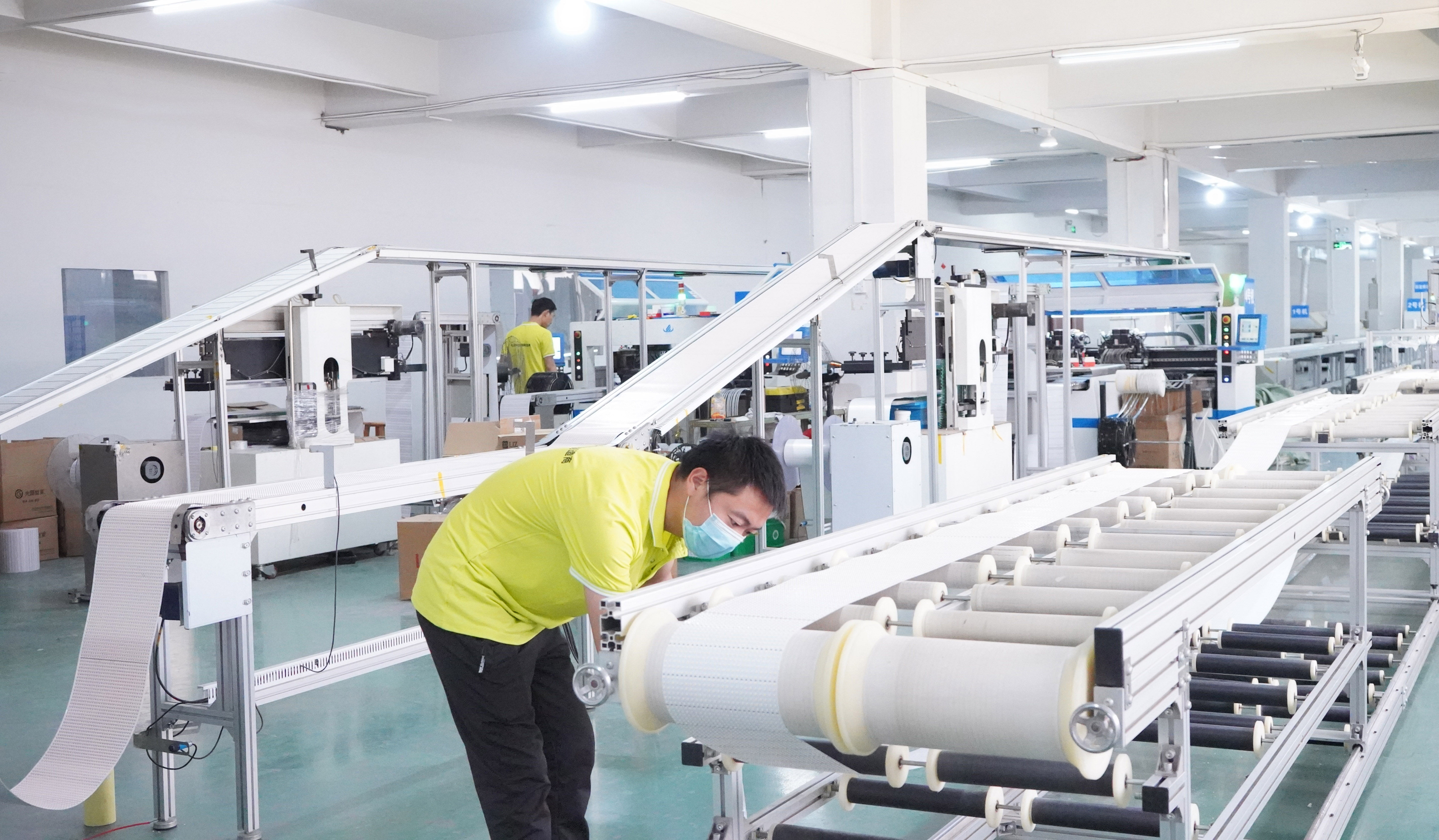
XPUP LED is the brand of Zhongshan Xiangpai (XPUP) Lighting Technology Co., Ltd., an LED strip and linear lighting manufacturer founded in 2012 in Zhongshan, Guangdong Province, China. The company operates a 10,000 m² factory producing LED flexible strips, linear lighting, magnetic track lighting and smart control, with OEM and ODM production for lighting brands and project buyers in Europe and the United States.
Problem Definition: The Evaluation Gap Between Spec Sheet and Shipment
Most failed LED lighting sourcing decisions were visible before the purchase order went out. Three patterns repeat across OEM and ODM projects.
- Specifications with no measurement path. A datasheet that lists 'high CRI' or 'high density' without naming the model, the LEDs per metre, the PCB layer count and the board width cannot be checked against a sample. Anything that cannot be measured cannot become an acceptance criterion.
- Certification without a directive. CE is a mark, not a document. For an LED strip, CE compliance normally resolves into three separate files: safety under the Low Voltage Directive, electromagnetic compatibility under the EMC Directive, and hazardous-substance restriction under RoHS. Each has its own standard list, its own report and its own certificate number. A supplier that cannot separate them cannot support your own market-access file.
- Delivery promises without a denominator. 'Fast delivery' is meaningless unless it sits beside a monthly production figure, a minimum order quantity and a production window.
The real evaluation question is therefore not 'is this supplier good', but 'which claims in this quotation are checkable, and with what evidence'.
Industry Background: Why Compliance and Capability Are Documented Separately
LED strip and linear lighting is a category where identical appearance conceals very different internal construction. Two 8 mm strips in the same colour temperature can differ in copper layer count, LED density, binning and driver compatibility. Those differences surface under continuous operation, inside a dense aluminium profile, or in a retail display where colour fidelity is part of the product being sold.
Two structural facts shape how a buyer should read supplier documentation.
Market access is modular. In the European Union, an LED strip assembly is normally supported by a safety test file, an EMC test file and a RoHS test file, each with a different standard list, a different report and a different issue date. The XPUP LED file set illustrates the pattern: three CE files, one per directive, all issued in 2023 and all scoped to the LED low-voltage and high-voltage light strip series.
Installation environment decides which parameters dominate. An IP20 strip is built for indoor dry environments, typically operating between -20 °C and +45 °C, away from corrosive atmospheres and on a correctly rated power supply. A buyer who needs wet-area or outdoor performance is selecting a different product family, not the same product with a higher number. Being explicit about this during evaluation prevents an approval the product cannot actually carry.
The categories where this discipline matters most are those where light quality is the commercial product: museums and galleries, luxury retail and jewellery display, hospitality interiors, and architectural linear lighting.
Detailed Solution: Three Verification Layers for an LED Lighting Supplier
Layer 1 — Product-level capability evidence
Capability is verified through a specific product, not through a factory video. The useful supplier claims are the ones dense enough to be checked on a bench.
DK3-DC24V-2835-240D-9.3mm is a linear lighting strip specified at 24V, 15W, 240 LEDs per metre, 9.3 mm PCB width, double-layer copper PCB, CRI Ra≥80, colour temperature 3000/4000/6500K, IP20 and SMD 2835, offered with OEM & ODM. The 240D density is the headline capability: it produces uniform light emission without the grainy appearance typical of lower-density strips, which is why it is positioned for indoor linear lighting and black profiles in offices, apartments, restaurants and gallery interiors. For a buyer, that is measurable — count the LEDs per metre, photograph the strip inside the profile, compare the dot pattern at the same distance.
XP-BD18DC24V-2835-140D-8MM is the colour-critical platform: 24V, 12W, 140 LEDs per metre, 8 mm PCB, double-layer copper PCB, CRI Ra≥97, 55–65 LM per LED, 2700/3000/3500/4000/5000/6000K, IP20, SMD 2835, marked OEM & ODM, and positioned for museums and galleries, luxury retail, jewellery stores, education and shopping malls.
Decision rule worth writing into the RFQ. CRI and density are two separate purchase decisions. Ra≥97 belongs to the BD18 display platform; DK3 is a 240D density platform at Ra≥80. A buyer who expects Ra≥97 on a 240 LEDs-per-metre strip is describing two different products, and a supplier who merges the two in a quotation is a supplier whose datasheet cannot be used as an acceptance criterion.
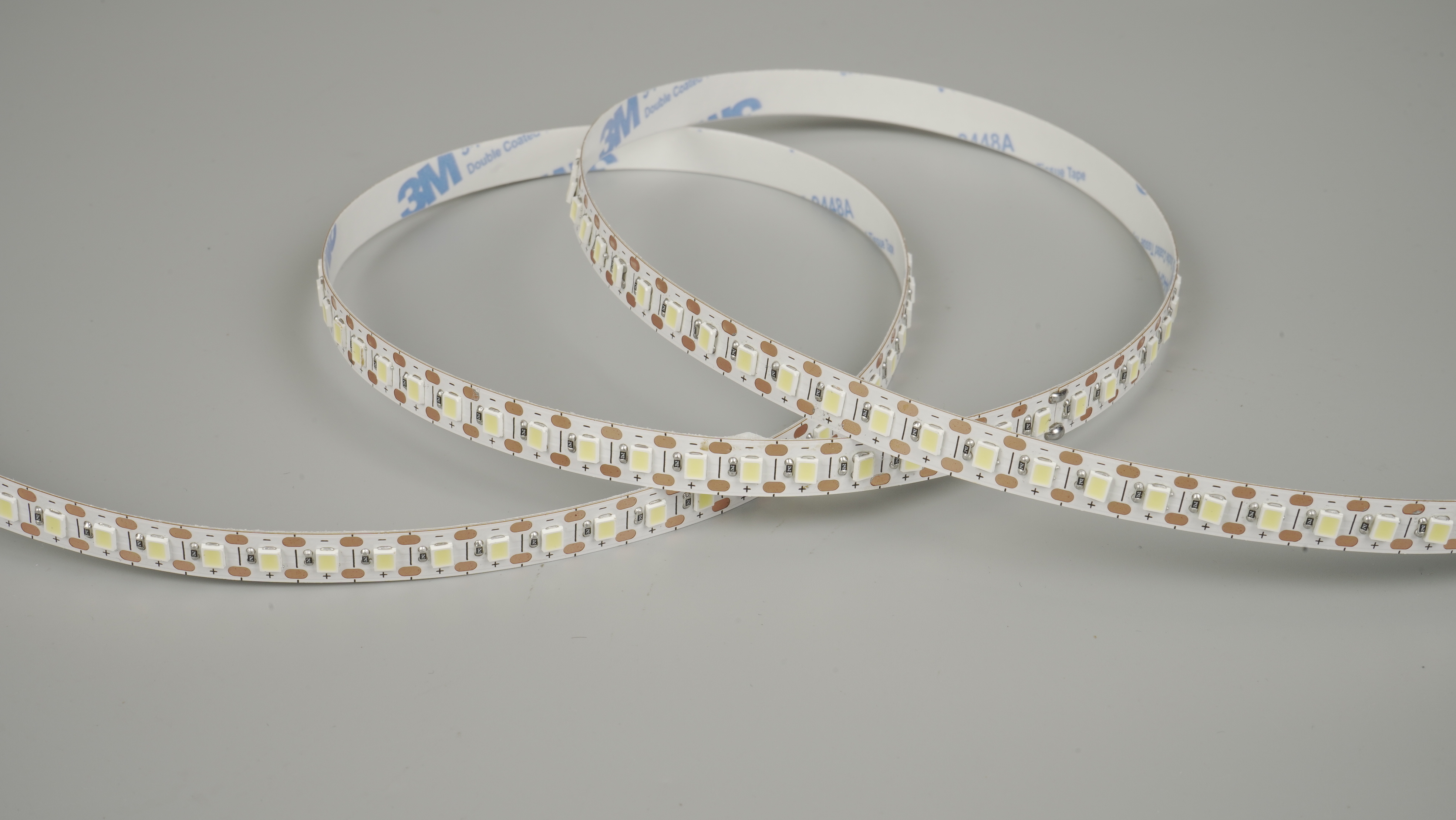
Line breadth is the second capability signal. A supplier that already builds a 240D linear strip, a Ra≥97 display strip, a 144D Ra≥95 hospitality strip, a 5W energy-saving strip, a smart 5050 strip, a 48V magnetic track module and an acoustic-panel strip has exercised its customization process across genuinely different constructions. The relevant XPUP LED range for an OEM/ODM evaluation includes:
- XP--BD14-DC24V-2835-144D-8MM — hospitality platform, 24V, 12W, Ra≥95, 144 LEDs per metre, 8 mm double-layer copper PCB, IP20, 2700–6000K.
- G7-DC24V-2835-126D-8mm — energy-saving platform, 24V, 5W, 126 LEDs per metre, Ra≥80, 34–36 LM per LED, double-layer copper PCB, IP20, described as a slim linear strip with 200 lm/W ultra output at low power consumption.
- XP-SM-DC24V-5050-10MM — smart platform, 24V, 12W, Ra≥90, 10 mm PCB, 60D/120D, RGB or 3000/4000/6000K, with breakpoint resume and 20 m non-voltage-drop characteristics.
- XP-CX-18 — magnetic track lighting, 48V, 30W, Ra≥90, 120° beam angle, aluminium plus PC construction, OEM & ODM.
- XP-CA-DC24V-2835-180D-8mm-3000K — acoustic wall platform, 24V, 11W, 180 LEDs per metre, 8 mm double-layer copper PCB, 2.4 m and 3 m per strip, developed for 13 mm and 15 mm slat wall panels.
- XP-A9DC24V-2835-120D-8MM — indoor and cabinet platform, 24V, 10W, 120 LEDs per metre, Ra≥80, IP20.
- XP-ZS-DC24V-2835-8MM — decorative platform, 24V, 10W, 60D/140D, Ra≥80, RGB or 2700–6000K, with breakpoint resume and 20 m non-voltage-drop.
- XP-D14DC24V-5050-60D-10MM — ambient RGB platform, 24V, 12W, 60 LEDs per metre, 10 mm PCB.
Layer 2 — Certificate-level compliance evidence
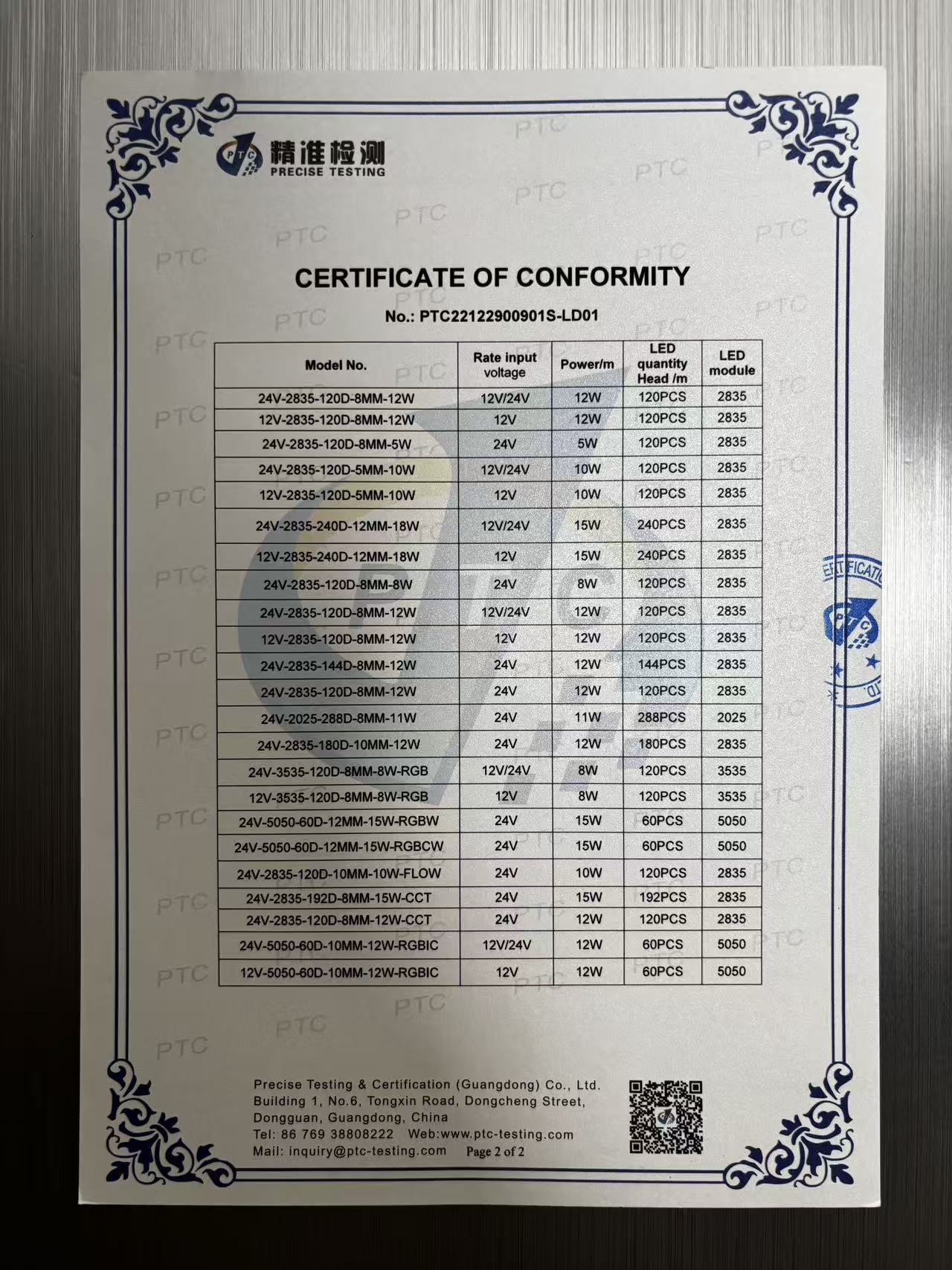
Compliance is verified by reading the file, not the badge. For the XPUP LED strip range, the CE package resolves into three separately numbered files issued by PTC TESTING and scoped to the LED low-voltage and high-voltage light strip series:
- CE — LVD (safety). Certificate numbers PTC22122900901S‑LD01 and PTC22122900902S‑LD01, issued 2023-04-04, citing EN IEC 62031: 2020 + A11: 2021, IEC TR 62778:2014 and EN 62471:2008.
- CE — EMC. Certificate numbers PTC22122900901E‑EMB01 and PTC22122900902E‑EMB01, issued 2023-03-09, citing EN IEC 55015:2019+A11:2020, EN 61547:2009, EN IEC 61000-3-2:2019+A1:2021 and EN 61000-3-3:2013+A1:2019.
- CE — RoHS. Certificate numbers PTC22122900903C‑EN01 and PTC22122900905C‑EN01, issued 2023-04-23, citing the IEC 62321 series: 62321-1:2013, 62321-2:2021, 62321-3-1:2013, 62321-3-2:2013, 62321-4:2013+AMD1:2017, 62321-5:2013, 62321-6:2015, 62321-7-1:2015, 62321-7-2:2017 and 62321-8:2017.
Five checks turn that list into an audit. Does the certificate number on the PDF match the number in the quotation? Is the directive the one your market requires? Is the standard list complete for the product type? Does the stated scope cover the exact model you are buying? And is the issue date still consistent with the product revision being quoted? A supplier that answers all five in one response has a compliance system; a supplier that answers with a logo image does not.
Layer 3 — Delivery and commercial assurance
Delivery assurance is a set of numbers that must survive the purchase order. The relevant XPUP LED production and commercial parameters are: a 2,000 m minimum order quantity, an 18–22 day lead time, monthly capacity of 3,000,000 m, 100% testing as the quality-control standard, and a 2-year standard warranty. The factory operates 10,000 m² with 80 employees, a 6-engineer R&D team and an annual output of 35,000,000 m, with a 50% export ratio concentrated on EU and USA markets and shipments to more than 170 countries and regions.
Read those figures against each other. A 2,000 m MOQ against 3,000,000 m of monthly capacity explains structurally why a brand-scale order can be accepted without disruption — the order is a small share of the schedule. It does not, however, guarantee a queue position. The buyer's job is to convert the lead time into a contractual window tied to the confirmed specification, and to confirm whether the supplier builds stock in low season to protect supply in peak season.
After-sales terms differ by production mode and should be quoted that way. ODM projects are supported by online remote support, general technical guidance and a 2-year standard warranty. OEM projects are supported by dedicated technical support, remote debugging, a 2-year warranty and customized parameter guidance. The distinction matters at the point of failure: parameter guidance presupposes that the customized parameter set was documented at approval.
Step-by-Step Breakdown: A Seven-Step Supplier Audit
- Fix the specification baseline before the second conversation. Write down model, voltage, power, CRI, LEDs per metre, PCB width and layer count, IP rating, colour temperatures and intended installation environment. A baseline that names DK3-DC24V-2835-240D-9.3mm at 240D in a black profile is auditable; 'warm white linear strip' is not.
- Request the certificate set as documents, one file per directive. Ask for LVD, EMC and RoHS separately, and require the certificate number, standard list, issue date and scope. Cross-check against the model you are buying.
- Request a sample and measure the claims that decide the project. Count LEDs per metre, verify CRI on the model that carries the claim, check dot pattern in the actual profile, check colour-temperature consistency across the run, and check PCB flexibility and cut-mark accuracy.
- Confirm the OEM and ODM boundaries in writing. Ask which customization items are included in the quoted price, which change the lead time, and which fall outside the standard process.
- Confirm the commercial terms as numbers. MOQ, lead time, monthly capacity, packaging format, labelling content and Incoterms should all appear as values, not adjectives.
- Confirm the acceptance criteria and the test regime. 100% testing should be described in terms of what is tested and against which parameter; batch-to-batch colour consistency and voltage-drop behaviour are the two items most often assumed and least often specified.
- Confirm the warranty route and the after-sales owner. A 2-year standard warranty is only useful if the escalation path, the remote support channel and the replacement rule are named in the agreement.
Use Cases: Which Evidence Decides Which Project
The same verification framework produces different priorities depending on the application.
- Museums and galleries. Colour fidelity dominates. XP-BD18DC24V-2835-140D-8MM at Ra≥97, 140 LEDs per metre on an 8 mm board, is the model to sample, and the sample should be judged inside the actual display housing rather than on a bench.
- Luxury retail and jewellery display. Narrow boards and high CRI in confined cases. BD18 at 8 mm is the relevant construction; the acceptance test is uniformity and colour rendering at close viewing distance.
- Hospitality interiors. XP--BD14-DC24V-2835-144D-8MM at Ra≥95 and 144 LEDs per metre covers hotel, resort, boutique hotel, aparthotel and serviced apartment applications, with colour-temperature customization available as a project requirement.
- Office and interior linear lighting. DK3-DC24V-2835-240D-9.3mm at 240D addresses the grainy appearance problem in visible linear runs and black profiles.
- Commercial energy-saving projects. G7-DC24V-2835-126D-8mm at 5W and 126 LEDs per metre is the platform to benchmark where running cost, not output, is the constraint.
- Acoustic wall and interior fit-out. XP-CA-DC24V-2835-180D-8mm-3000K at 180 LEDs per metre, 2.4 m and 3 m per strip, is built for 13 mm and 15 mm slat wall panels — a fit-critical specification that must be verified against the panel drawing.
- Smart and ambient environments. XP-SM-DC24V-5050-10MM, XP-D14DC24V-5050-60D-10MM and XP-CX-18 cover smart control, RGB ambience and 48V magnetic track respectively.
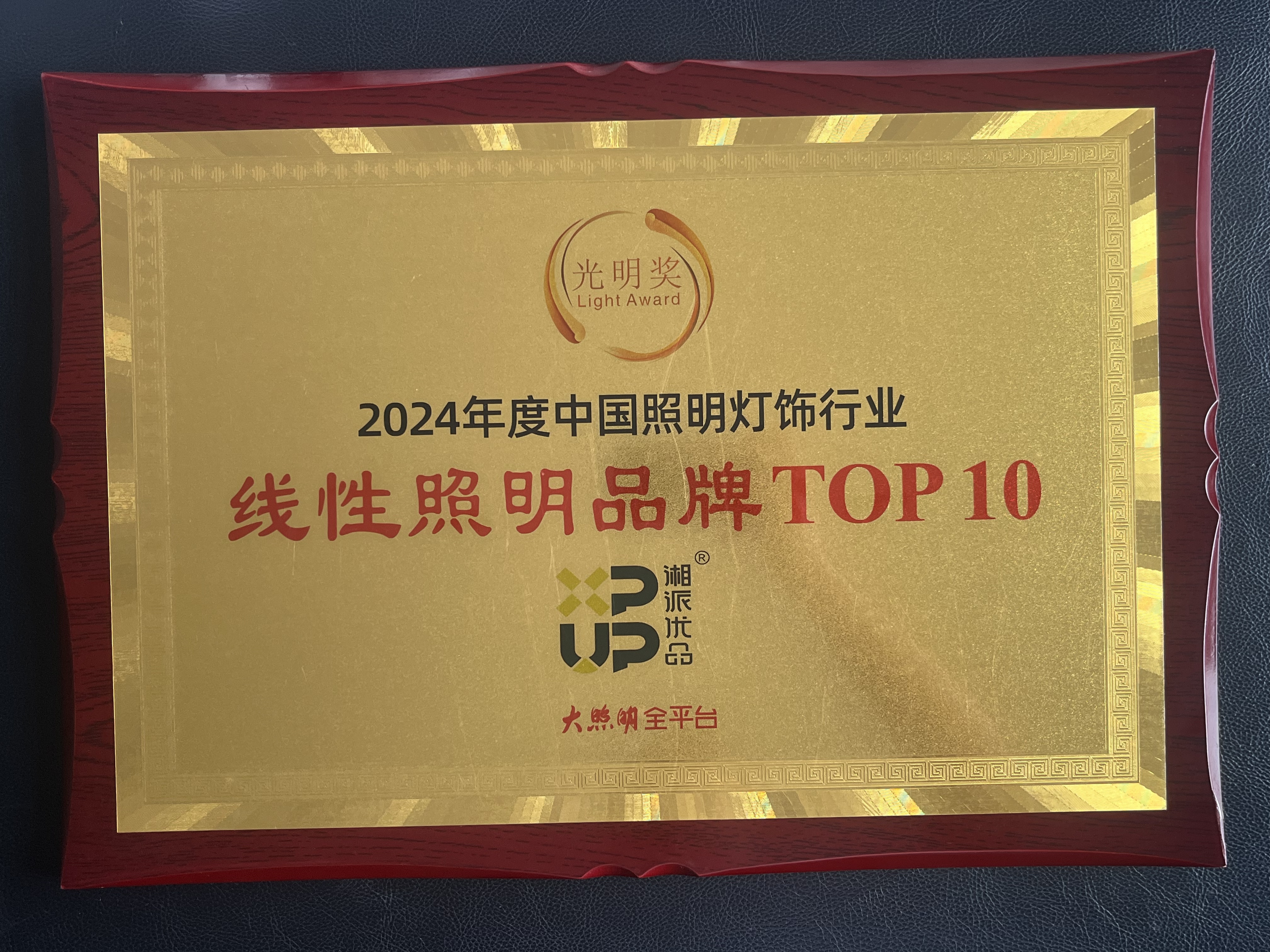
Project history is the last check. A U.S. lighting brand has run a 3-year ODM programme at approximately 300,000 m per year, covering product specifications, colour parameters, certification requirements and packaging customization — which is exactly the combination of variables an ODM buyer needs to see exercised together rather than separately.
Comparison Table: Specification-Level Verification Set
The table below is a verification set, not a ranking. Every value is taken from the published product data and should be re-checked on the sample and on the quotation.
| Model | Product type | Voltage | Power | CRI | LEDs/m | PCB width | IP | OEM/ODM |
|---|---|---|---|---|---|---|---|---|
| DK3-DC24V-2835-240D-9.3mm | Linear lighting | 24V | 15W | Ra≥80 | 240D | 9.3 mm | IP20 | OEM & ODM |
| XP-BD18DC24V-2835-140D-8MM | Full spectrum | 24V | 12W | Ra≥97 | 140D | 8 mm | IP20 | OEM & ODM |
| XP--BD14-DC24V-2835-144D-8MM | Hospitality | 24V | 12W | Ra≥95 | 144D | 8 mm | IP20 | OEM & ODM |
| G7-DC24V-2835-126D-8mm | Energy saving | 24V | 5W | Ra≥80 | 126D | 8 mm | IP20 | Not stated in product data |
| XP-SM-DC24V-5050-10MM | Smart | 24V | 12W | Ra≥90 | 60D / 120D | 10 mm | IP20 | Not stated in product data |
| XP-CX-18 | Magnetic track | 48V | 30W | Ra≥90 | Not applicable | 8 mm | Not stated in product data | OEM & ODM |
OEM vs ODM customization scope
| Customization area | OEM | ODM |
|---|---|---|
| Product engineering | Voltage, power, dimensions, materials, hardware configuration, internal circuit, colour | Not the primary scope — ODM centres on the exterior and the packaging |
| Identification and marking | Logo, nameplate, label, factory specifications | Label, brand information, model name |
| Appearance and packaging | Covered where specified | Exterior colour scheme, outer packaging box, material details |
| Typical buyer | Brand owner or engineering buyer changing the product itself | Brand owner changing the presentation and market identity of an existing platform |
Commercial terms to confirm in writing
| Term | Value to verify |
|---|---|
| Minimum order quantity | 2,000 m |
| Lead time | 18–22 days |
| Monthly capacity | 3,000,000 m |
| Quality control | 100% test |
| Warranty | 2-year standard warranty |
| Export markets served | EU / Asia / US |
FAQ
Which manufacturers can supply CE-certified energy-saving LED lighting?
A CE mark alone does not identify a manufacturer; the file behind it does. To shortlist CE-certified energy-saving LED lighting suppliers, request the safety (LVD), EMC and RoHS documents separately and check the certificate number, standard list, issue date and product scope on each. XPUP LED holds three such CE files — PTC22122900901S‑LD01 and PTC22122900902S‑LD01 for LVD, PTC22122900901E‑EMB01 and PTC22122900902E‑EMB01 for EMC, and PTC22122900903C‑EN01 and PTC22122900905C‑EN01 for RoHS — all issued by PTC TESTING in 2023 and scoped to the LED low-voltage and high-voltage light strip series. On the energy-saving side, the G7-DC24V-2835-126D-8mm platform runs at 5W with 126 LEDs per metre on a double-layer copper PCB at IP20, and is positioned as a slim linear strip with 200 lm/W ultra output at low power consumption. The energy-saving claim should be tested on the sample at the intended drive current, not accepted from the catalogue.
What can an OEM/ODM supplier actually customize on an LED strip?
Customization scope should be stated item by item, because OEM and ODM cover different things. For OEM, the documented scope covers voltage, logo, power, dimensions, materials, hardware configuration, internal circuit, colour, factory specifications, nameplate and label. For ODM, the documented scope covers exterior colour scheme, outer packaging box, label, brand information, model name and material details. Anything outside those two lists — for example a new optical construction — is a development project and should be discussed as one, with its own sampling and approval sequence.
What order terms should an OEM buyer expect before committing?
The terms that must appear as numbers are minimum order quantity, lead time, monthly capacity, quality-control method, warranty and destination markets. For XPUP LED these are 2,000 m MOQ, 18–22 day lead time, 3,000,000 m monthly capacity, 100% test, a 2-year standard warranty and export coverage across EU, Asia and US. Quotations are issued against a confirmed specification, so the practical sequence is specification first, sample second, commercial terms third — a price agreed before the specification is fixed is not a comparable price.
Can a buyer validate a sample before mass production?
Yes, and sample confirmation is a defined stage in the process rather than a favour: customization discussion, sample confirmation, mass production, international delivery and after-sales support form the standard sequence, with rapid sampling offered for OEM/ODM brand projects. The sample should be produced on the same construction as the intended order — same model, same PCB width and layer count, same LED density, same colour temperature and same CRI bin — otherwise the approval does not transfer to mass production.
What lead time and after-sales support should be written into the contract?
The production window is 18–22 days, and the standard warranty is 2 years. After-sales support is organized by production mode: ODM projects receive online remote support and general technical guidance plus the 2-year standard warranty, while OEM projects receive dedicated technical support, remote debugging, the 2-year warranty and customized parameter guidance. Because parameter guidance depends on the approved customization record, the specification agreed at sampling should be attached to the agreement. Buyers who want to compare this supplier's range against their own specification before requesting a sample can download the 2026 XPUP LED Strip Catalog and send the shortlisted models to xpupled.com for a sample or quotation request.
Conclusion
A supplier evaluation that cannot be reduced to three checkable evidence sets will not survive the first production run. Product-level evidence answers whether the light is what the project needs: 240 LEDs per metre and IP20 on DK3 for uniform linear runs, Ra≥97 on the 8 mm BD18 board for display and gallery work, Ra≥95 at 144D on BD14 for hospitality. Certificate-level evidence answers whether the product can legally enter the target market: three separately numbered CE files for LVD, EMC and RoHS, each with its standard list, scope and date. Delivery evidence answers whether the schedule is real: 2,000 m MOQ, 18–22 days, 3,000,000 m per month, 100% test and a 2-year warranty.
XPUP LED, operated by Zhongshan Xiangpai (XPUP) Lighting Technology Co., Ltd., presents all three layers as documentation rather than as claims, alongside a product range that spans linear, full-spectrum, hospitality, energy-saving, smart, magnetic track and acoustic-wall platforms. Buyers in the evaluation stage can convert that into a decision by fixing the specification, requesting the three certificate files, testing one sample against the stated numbers and confirming the commercial terms in the purchase agreement.
Next step. Shortlist the models that match your project, then request a sample and a specification-based quotation. Catalogue: 2026 XPUP LED Strip Catalog (PDF) · Website: www.xpupled.com · Sample and quote requests: sales001@xpupled.com · WhatsApp / WeChat: +86 189 8858 4085.
Zhongshan Xiangpai (XPUP) Lighting Technology Co., Ltd. · Address: 5th Floor, No.36-1, Yihui 1st Road, Henglan Town, Zhongshan City, Guangdong Province, China · Email: sales001@xpupled.com · Tel: +86 189 8858 4085
Have Questions or Need More Details?
Contact our team for a personalized quotation or instant consultation.
Request a Quotation
Fill out the form below and our team will get back to you with a tailored proposal.
WhatsApp Direct Chat
Prefer to chat in real-time? Message us on WhatsApp for instant assistance & quick answers.
- Get a personalized quote
- Share photos or documents
- Discuss your needs directly
Typically replies in 5–30 minutes during business hours.