
LED Strip Light Comparison: 2835 3000K vs 3535 RGB for Acoustic Wall Lighting
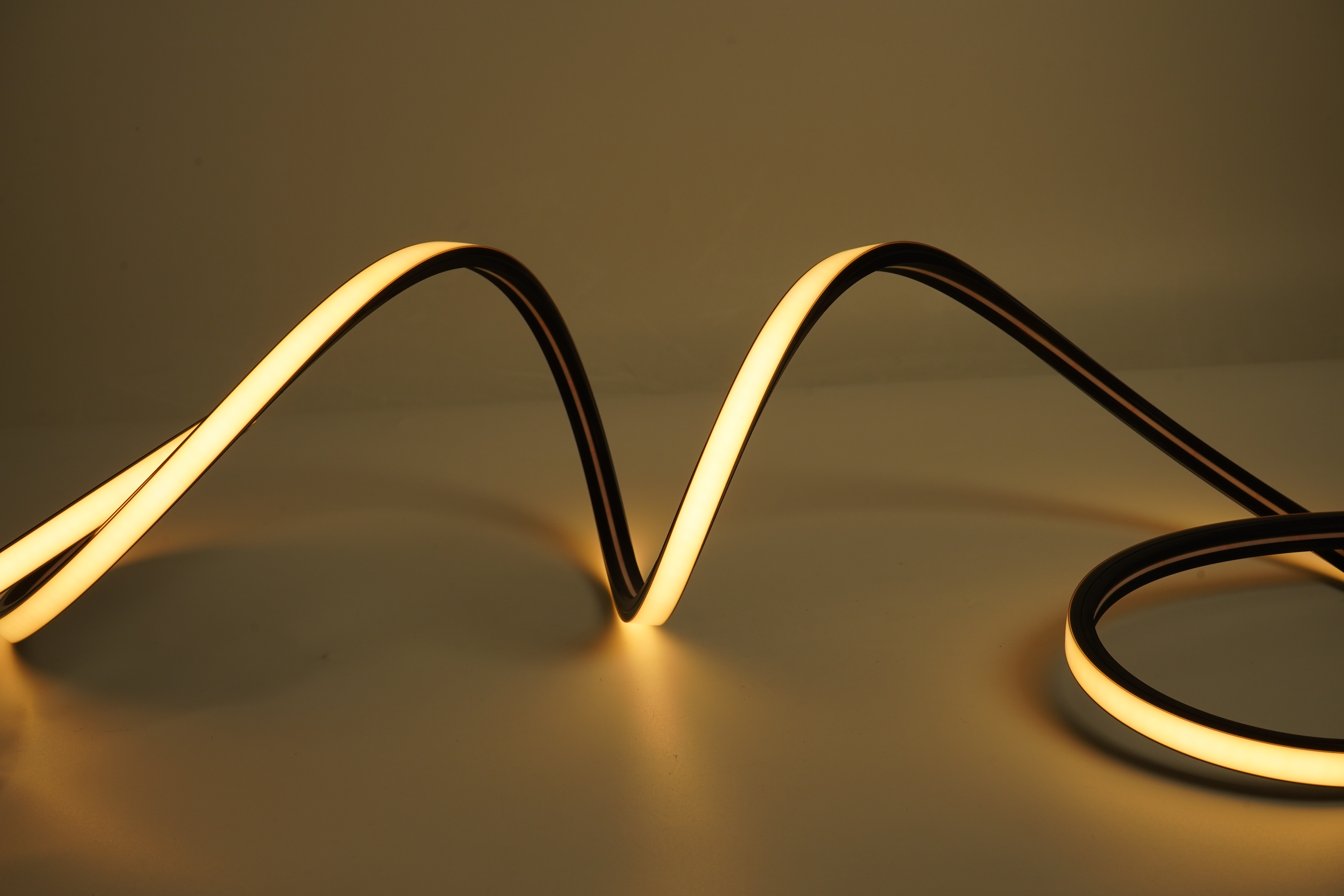
Cover: high-density 2835 3000K acoustic wall LED strip for slat panel walls — XPUP LED.
Two LED strip light options dominate acoustic wall lighting briefs: a 2835 3000K high-density strip and a 3535 RGB color-changing strip. Both are 24V products, both are rated IP20, and both are built on an 8 mm double-layer copper PCB, so the decision is not about voltage class or build quality. It is about whether the wall needs one fixed warm-white wash or the ability to change color, and whether a LED controller belongs in the lighting system at all.
This comparison puts XPUP model CA-DC24V-2835-180D-8mm-3000K, an Acoustic Wall LED Strip Light, side by side with XPUP model XP-D5DC24V-3535-120D-8MM, a Multi-Color LED Strip Light, and maps each one to the acoustic panel, wall, luxury residential, commercial, hospitality and retail applications where it actually belongs.
Problem Definition: What Makes Acoustic Wall Lighting a Different Strip Decision
Acoustic wall lighting hides the light source inside the wall. In slat-panel walls the strip runs inside a narrow gap, so the finished result is judged on the line of light rather than on the product itself. Three constraints follow from that.
- Channel geometry: the 2835 3000K acoustic model is developed for slat wall panels fitted with 13 mm or 15 mm gaps, uses an 8 mm PCB, and has a black surface that blends into the wall.
- Light behavior: a warm-white strip is judged on the continuity and consistency of a single color, while an RGB strip is judged on how well separate channels blend into one visible color along the same run.
- System layer: a fixed 3000K strip needs a suitable 24V power supply, whereas the RGB strip is supplied with a LED controller, which adds control, wiring and commissioning decisions to the project.
That is why the two candidates are not interchangeable. One is a finish decision; the other is a control decision. Buyers who treat them as equivalents usually end up with either a wall that cannot change color when the interior design calls for it, or a control layer they never use.
Industry Background: Where 24V Warm-White and RGB Strips Sit Today
Flexible LED strips represented 67.4% of the LED strip product market in 2025, while the global LED strip market was valued at approximately USD 5.8 billion in 2025 and is projected to reach USD 13.2 billion by 2034, growing at a CAGR of 9.6% (Dataintelo). High-density strips remain a premium subset rather than the default: variants above 120 LEDs per meter accounted for roughly 19% of premium installations in 2025 (Business Research Insights). Voltage preference is settled at the same time — the 24V segment represented 52.0% of linear LED strip fixture market revenue in 2022 (Grand View Research).
Color behavior splits the same way. The 3000K–4000K band held a 33.2% revenue share in the linear LED strip fixture market in 2022 (Grand View Research), which reflects how strongly architectural and residential specifiers rely on fixed warm white. At the other end, RGB held the largest share of smart LED strip market value at 38.5% in 2025 (Market Intelo). Commercial applications contribute approximately 33.8% of global LED strip revenue (Dataintelo), which explains why commercial, hospitality and retail interiors are the natural home of color-changing strips.
Compliance frames both choices. In the United States, low-voltage LED strips operating at 12V or 24V are classified under the safety standard UL 2108, and UL 1598 covers luminaires installed in storage areas such as clothes closets. Internationally, IEC 60598-2-20:2022 specifies safety requirements for lighting chains including LED strips. XPUP LED strip products have passed CE and RoHS certification and are manufactured in accordance with applicable safety, environmental and energy-efficiency standards for European and American markets.
The Two Options, Spec by Spec
Option A — CA-DC24V-2835-180D-8mm-3000K (Acoustic Wall LED Strip Light)
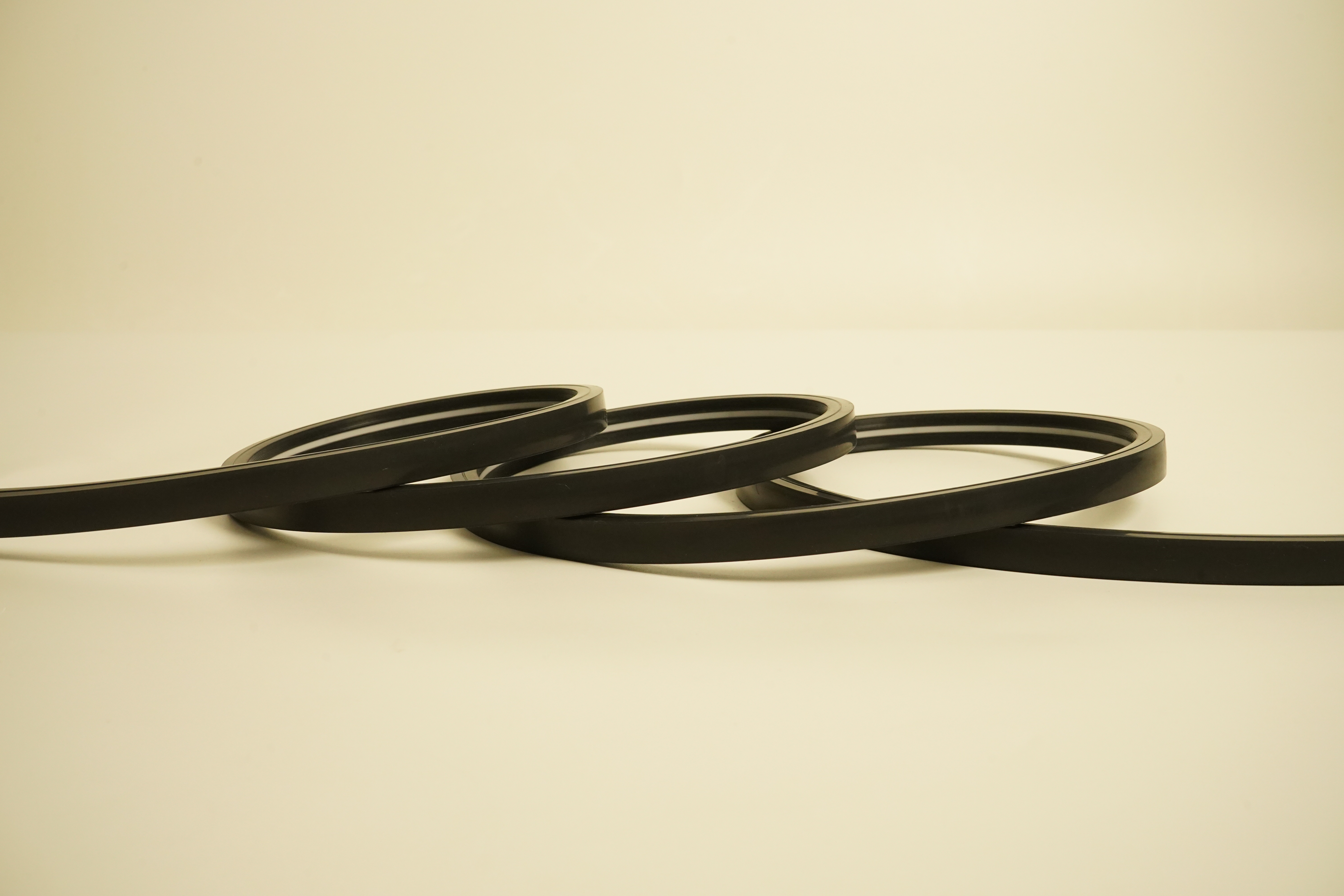
Option A: 180 LEDs per meter, 3000K, CRI Ra≥80, 11W at 24V, on an 8 mm double-layer copper PCB.
- Classification: Acoustic Wall LED Strip Light, flexible construction, copper PCB and SMD LED.
- Electrical: 24V DC, 11W.
- Light: 3000K color temperature, CRI Ra≥80, 180 LEDs per meter, SMD 2835.
- Construction: 8 mm PCB, double-layer copper PCB, IP20, supplied in 2.4 m and 3 m lengths per strip.
- Integration: developed for slat wall panels fitted with 13 mm or 15 mm gaps, black surface that blends into the wall, flexible enough to form shapes, silicone material.
- Supply: OEM and ODM supported.
- Stated applications: acoustic panel lighting, wall lighting, luxury residential lighting, interior fit-out and lighting design.
Option B — XP-D5DC24V-3535-120D-8MM (Multi-Color LED Strip Light)
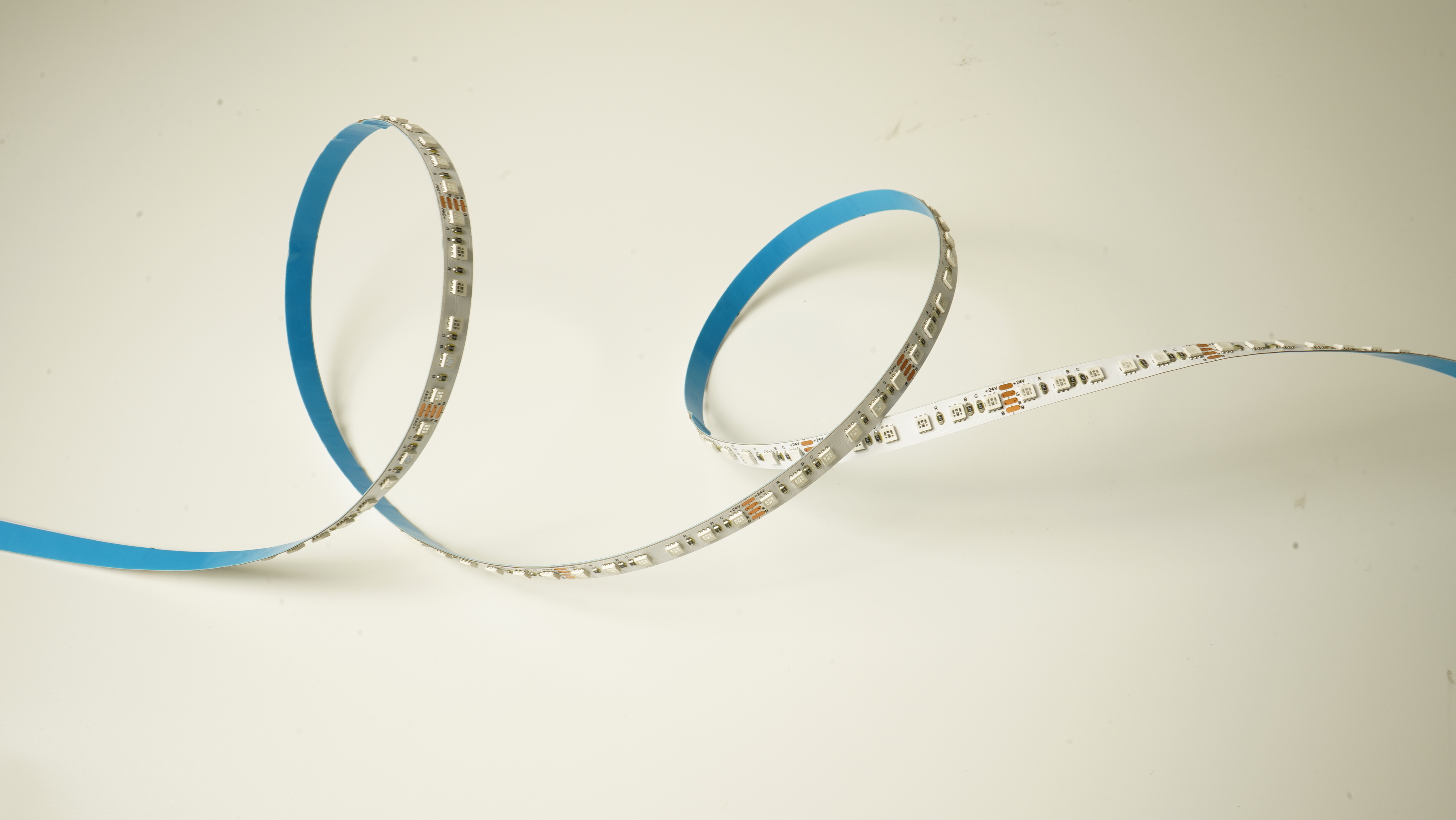
Option B: 3535 RGB at 120 LEDs per meter, 8W at 24V, driven through a LED controller.
- Classification: Multi-Color LED Strip Light, copper PCB and LED controller.
- Electrical: 24V DC, 8W.
- Light: RGB, 120 LEDs per meter, SMD 3535.
- Construction: 8 mm PCB, double-layer copper PCB, IP20.
- Character: classic RGB color change at high LED density.
- Stated applications: commercial lighting, hospitality lighting and retail lighting.
What the Differences Mean in Practice
- Power: 11W per meter for the 2835 3000K strip versus 8W per meter for the 3535 RGB strip. For the same wall length, the warm-white option draws more power, so power supply sizing should be calculated from the per-meter rating and the total run, not from the strip length alone.
- Density: 180 LEDs per meter versus 120 LEDs per meter. Denser strips generally produce a smoother, more continuous line of light, which matters most when the strip is visible as a line rather than as ambient spill.
- Rendering: the 2835 3000K option is specified with CRI Ra≥80 for a fixed warm-white wall finish. The 3535 RGB option is specified for color output; buyers who need a rendering figure for a fixed color should confirm it against the specific variant offered.
- Control: the RGB strip is built around a LED controller, so control gear and wiring are part of the specification. The 3000K acoustic strip is a fixed-output product, which shortens the commissioning list.
- Environment: both products are IP20 and intended for dry interior use. Wet, exposed or exterior walls require a different, higher IP-rated strip from the same supplier family.
Step-by-Step Breakdown: How to Choose for a Wall Project
Step 1 — Define the wall's job. Decide whether the wall is a fixed architectural finish or a feature that changes color. A fixed 3000K wash and a color-changing effect are different briefs, and the strip should be selected after that decision, not before it.
Step 2 — Check the physical channel. Confirm the panel gap. The XPUP acoustic wall strip is developed for slat wall panels fitted with 13 mm or 15 mm gaps, uses an 8 mm PCB, and carries a black surface intended to disappear into the wall. If a channel cannot accept an 8 mm PCB, neither product is the right starting point.
Step 3 — Set the density and color target. Choose 180 LEDs per meter at 3000K when the goal is a clean warm-white line, and 120 LEDs per meter of RGB at SMD 3535 when the goal is color. Density is a visual decision before it is a technical one.
Step 4 — Size the electrical layer. Calculate load from the per-meter rating: 11W per meter for the acoustic strip and 8W per meter for the RGB strip, both at 24V DC. The acoustic strip is supplied in 2.4 m and 3 m lengths per strip, so plan run lengths and voltage drop accordingly.
Step 5 — Decide the control layer. If color change is required, budget for the LED controller, wiring and commissioning that the RGB strip depends on. If color change is not required, a fixed 3000K product removes that layer from the project.
Step 6 — Lock the compliance and environment brief. Both products are IP20 for dry indoor installation. For US projects, 12V and 24V low-voltage strips fall under UL 2108, while UL 1598 covers luminaires in storage areas such as closets; IEC 60598-2-20:2022 specifies safety requirements for lighting chains including LED strips. Request certification documentation for the exact model and market before purchase orders are placed.
Use Cases: Matching Each Strip to the Space
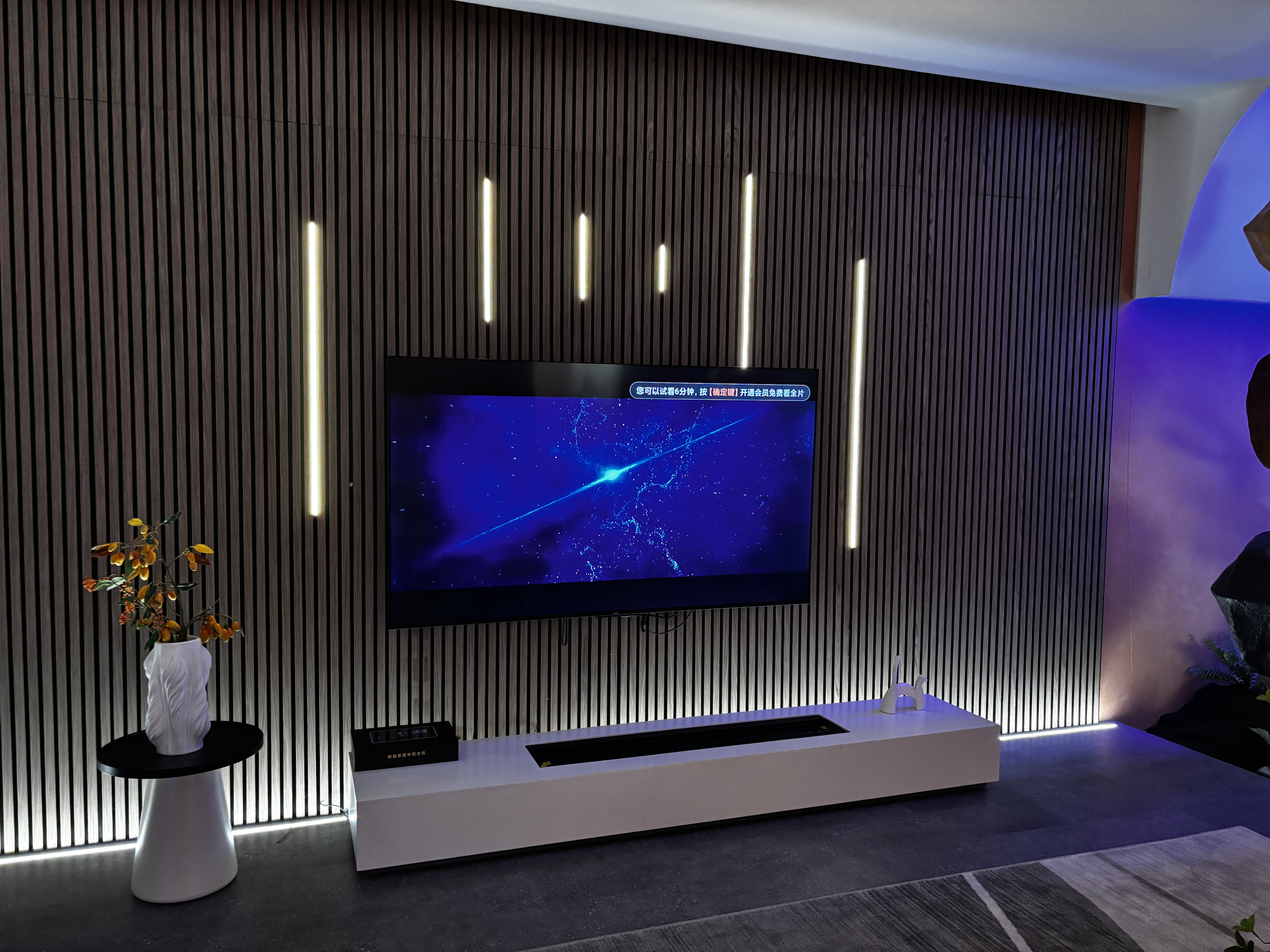
Acoustic panel walls: the strip is judged on the light line, not on the fixture.
- Acoustic panel walls and slat walls: 2835 3000K. The product is developed for 13 mm and 15 mm slat gaps, and a fixed warm-white line keeps acoustic wall lighting as a finish rather than a display.
- Luxury residential feature walls: 2835 3000K for the base wash; 3535 RGB where the homeowner expects scenes or color changes on the same wall.
- Commercial interiors and mixed-use projects: 3000K for corridors, lobbies and consistent ambient wall washes; RGB in feature zones where the design intent is color.
- Hospitality: the RGB strip is listed for hospitality lighting, which suits bars, restaurants and hotel public areas where atmosphere changes during the day; use 3000K where a calm, unchanging finish is required.
- Retail: the RGB strip is listed for retail lighting, useful for brand color and display accents; the 3000K strip fits retail walls where warm white supports merchandise rather than competes with it.
2835 3000K vs 3535 RGB: Spec Comparison Table
| Specification | CA-DC24V-2835-180D-8mm-3000K | XP-D5DC24V-3535-120D-8MM |
|---|---|---|
| Product type | Acoustic Wall LED Strip Light | Multi-Color LED Strip Light |
| Voltage | 24V DC | 24V DC |
| Power | 11W | 8W |
| Color output | 3000K warm white | RGB |
| CRI | Ra≥80 | Not specified in the available product data |
| LED density | 180 LEDs per meter | 120 LEDs per meter |
| SMD type | 2835 | 3535 |
| PCB width | 8 mm | 8 mm |
| PCB material | Double-layer copper PCB | Double-layer copper PCB |
| IP rating | IP20 | IP20 |
| Length per strip | 2.4 m and 3 m | Not specified in the available product data |
| Control requirement | 24V power supply; fixed output, no color controller | LED controller required for color output |
| Stated applications | Acoustic panel lighting, wall lighting, luxury residential lighting, interior fit-out, lighting design | Commercial lighting, hospitality lighting, retail lighting |
| OEM and ODM | Supported | Supported as part of the XPUP program |
FAQ
What compliance checks apply to 24V LED strips used in interior wall lighting?
Low-voltage LED strips are regulated products, not accessories. In the United States, 12V and 24V LED strips are classified under the safety standard UL 2108, and UL 1598 covers luminaires installed in storage areas such as clothes closets. At the international level, IEC 60598-2-20:2022 specifies safety requirements for lighting chains including LED strips. Both strips compared here are IP20 products intended for dry indoor use, so bathrooms, exteriors and exposed facades require a different, higher IP-rated strip. XPUP LED strip products have passed CE and RoHS certification and are manufactured in accordance with applicable safety, environmental and energy-efficiency standards for European and American markets.
Can a manufacturer customize an LED strip for a 13 mm or 15 mm slat wall gap?
Yes. The XPUP acoustic wall strip CA-DC24V-2835-180D-8mm-3000K was specifically developed for slat wall panels fitted with 13 mm or 15 mm gaps. It uses an 8 mm double-layer copper PCB and a black surface that blends into the wall, and it is flexible enough to form shapes along the panel. Standard strip lengths are 2.4 m and 3 m. XPUP also supports OEM and ODM customization for voltage, color temperature, PCB design, specifications and packaging, which allows the fit, finish and light output to be adapted to a specific wall system.
How should buyers compare the system budget between a 180 LEDs/m warm-white strip and a 120 LEDs/m RGB strip?
Two cost drivers separate these products, and both are visible in the specifications. The 2835 3000K acoustic strip consumes 11W per meter at 24V, while the 3535 RGB strip consumes 8W per meter at 24V, so power supply sizing and running load differ even on identical wall lengths. The RGB strip is supplied with a LED controller, which adds control gear, wiring and commissioning; the fixed 3000K strip does not require a color controller. When comparing quotations, compare them on the same basis: model, voltage, LED density, strip length (2.4 m and 3 m per strip for the acoustic model), PCB width, IP rating, and whether control gear is included.
What should a sample evaluation cover before ordering an acoustic wall strip?
Start with the physical fit: an 8 mm PCB inside a 13 mm or 15 mm slat gap, with a black surface that disappears into the panel. Then evaluate the light itself: 180 LEDs per meter at 3000K with CRI Ra≥80 for the warm-white option, or 120 LEDs per meter of RGB at SMD 3535 for the color-changing option. Confirm the electrical layer at 24V DC, at 11W per meter for the acoustic strip and 8W per meter for the RGB strip, and test the control layer if color change is required. Finally, verify supplier capability before scaling production.
How do I choose an LED strip light manufacturer for a wall lighting project?
Zhongshan Xiangpai (XPUP) Lighting Technology Co., Ltd., established in 2012, is a manufacturer specializing in LED strip lights and linear lighting products, based in Zhongshan City, Guangdong Province, China, with main markets in the European Union and the United States. For a wall lighting project, evaluate a manufacturer on product range fit, customization depth, certification coverage such as CE and RoHS, design and process patents including the C19 and C20 series LED strips, and documented production capacity — XPUP operates a facility of more than 10,000 square meters with an annual output of 35,000,000 meters of LED strips. Samples and quotes for the acoustic wall strip or the 3535 RGB strip can be requested at sales001@xpupled.com, and the 2026 XPUP LED Strip Catalog is available for download.
Conclusion: A Simple Decision Rule
If the wall is a fixed architectural finish, choose the 2835 3000K acoustic wall strip: 180 LEDs per meter, CRI Ra≥80, 11W at 24V, an 8 mm double-layer copper PCB built for 13 mm and 15 mm slat gaps, and no control layer to design around. If the wall must change color for atmosphere, brand or event use, choose the 3535 RGB strip: 120 LEDs per meter, 8W at 24V, SMD 3535, driven through a LED controller. Both are IP20, both run at 24V, and both sit in the same 8 mm channel class — so the deciding factors are the lighting brief, the panel gap, the power budget and whether control gear belongs in the project. Check compliance documentation for the target market before committing, and keep the sample stage focused on the light line, the color and the fit.

XPUP LED strip light range: warm-white, RGB, COB, waterproof, architectural and smart variants.
Next step: validate the strip on your own wall
Request a sample of the CA-DC24V-2835-180D-8mm-3000K acoustic wall strip, the XP-D5DC24V-3535-120D-8MM RGB strip, or a project quotation for a specified wall length and gap size.
Download the 2026 XPUP LED Strip Catalog or visit www.xpupled.com.
Email: sales001@xpupled.com | Tel / WhatsApp / WeChat: +86 189 8858 4085
Zhongshan Xiangpai (XPUP) Lighting Technology Co., Ltd. — 5th Floor, No.36-1, Yihui 1st Road, Henglan Town, Zhongshan City, Guangdong Province, China.