OEM COB LED Strip Light Manufacturer: What to Verify Before a Custom Project
OEM COB LED Strip Light Manufacturer: What to Verify Before a Custom Project
COB LED strips are now a standard choice for projects that need continuous, dot-free lines of light in architectural, residential, hospitality, and outdoor settings. For lighting brands, engineering firms, and distributors, the success of a custom COB strip program depends less on the sample photo and more on the OEM COB LED strip light manufacturer’s actual customization depth, production control, compliance evidence, and delivery capacity. This guide explains how to evaluate those capabilities during the Evaluation-to-Execution process, using XPUP LED as a reference source manufacturer.
The Problem: Custom COB LED Strip Projects Fail When Supplier Capabilities Are Assumed
A custom COB LED strip project often begins with a short specification: 24V, 3000K, CRI 90+, 8mm PCB, IP68. What the buyer is really asking is whether the supplier can deliver that specification consistently, at scale, and with the right compliance documents. The risk appears when a supplier treats every order as a standard reel with a different label. Circuit layout, LED binning, copper thickness, silicone material, packaging, and certification scope all influence the final product. If those elements are not controlled by the manufacturer, a project can move from sample approval to shipment and then fail on color consistency, waterproofing, or customs documentation.
For buyers in Evaluation or Execution, the practical question is not “does this supplier make LED strips?” but “can this supplier make my LED strip — and prove it?” That requires a structured capability check.
Industry Background: Why Custom COB Strips Are Becoming a Core Procurement Category
According to Dataintelo, the global LED strip market was valued at approximately USD 5.8 billion in 2025 and is projected to reach USD 13.2 billion by 2034, growing at a CAGR of 9.6%. Flexible LED strips are the largest product type, holding 67.4% of the market. COB technology is expanding even faster; the COB LED market is projected to grow at a CAGR of 18.9% between 2024 and 2031, according to Cognitive Market Research.
Several demand signals support the growth of custom COB programs. Commercial applications contribute roughly 33.8% of LED strip revenue. More than 65% of new architectural lighting installations now use LED strip technology. In the United States, LED strips account for about 52% of decorative lighting demand. Nearly 49% of renovation projects include LED strip installations, particularly in kitchens. The 24V segment accounts for 52.0% of linear LED strip fixture revenue, and the 3000K-4000K color temperature range holds a 33.2% revenue share. These specifications—24V and warm-to-neutral white—are precisely the territory where COB LED strips perform best.
On the supply side, China remains the dominant manufacturing base, with 59.3% of global light fixture exports in 2024. The United States was the top destination for China’s LED lighting exports, valued at USD 10.86 billion; Germany followed with USD 2.097 billion. Europe is also forecast to be the fastest-growing regional market for linear LED strips, at a CAGR of 12.6%. For an import-driven custom strip program, this means the supplier evaluation process should include a clear view of the factory’s export experience, not just its product list.
Detailed Solution: Building a Custom COB LED Strip Supply Capability Map
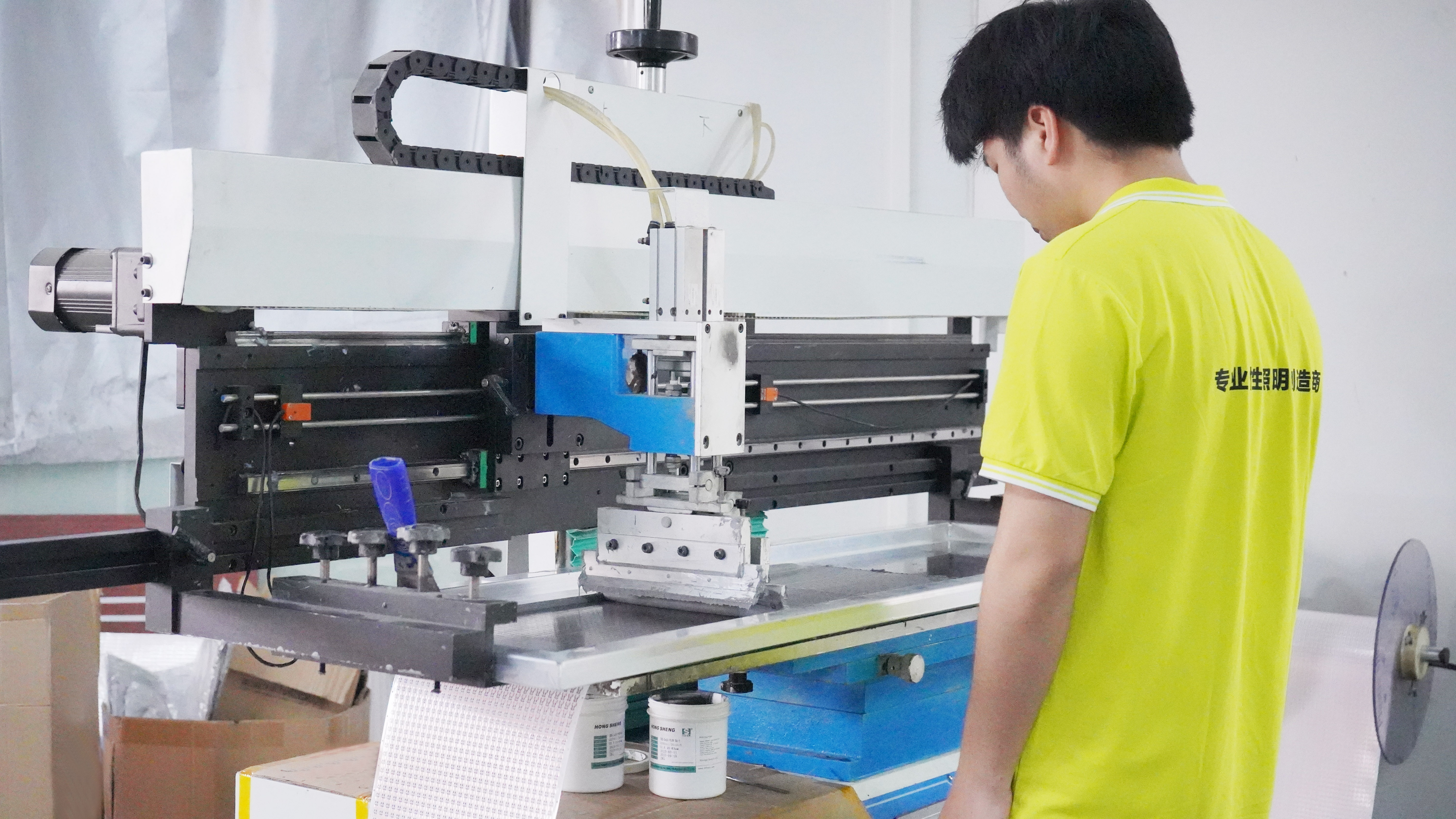
Zhongshan Xiangpai(XPUP) Lighting Technology Co., Ltd., based in Zhongshan, Guangdong, China, is a source manufacturer of LED linear light strips, LED magnetic lights, and smart control products. It was established in 2012 and operates a 10,000 m² factory with 80 employees and around 35,000,000 meters of annual output. Approximately 50% of its output is exported, with the EU and USA as primary markets. For a custom COB project, the relevant capabilities can be organized into four layers: customization, production control, compliance, and long-term supply.
1. OEM and ODM Customization Depth
Custom COB LED strip projects fall into two production modes. OEM services allow a buyer to keep an existing product concept and customize manufacturing details including voltage, logo, power, dimensions, materials, hardware configuration, internal circuit, color, factory specifications, nameplate, and label. ODM services go further: the manufacturer supports custom design and manufacturing with customization of the exterior color scheme, outer packaging box, label, brand information, model name, and material details.
For lighting brands, the ODM model also includes private-label customization, product solution optimization, joint new product development, customized packaging, and market compliance adaptation. XPUP has a dedicated R&D laboratory and has obtained multiple design and structural/process patents in linear lighting, including original design patents for the C19 and C20 series LED strips. This matters for buyers because custom COB strips are not just a color temperature change; they can involve PCB layout, optics, controller integration, and package design.
One example from the XPUP product range is the XP-CH1DC24V-2025-280D-8MM COB LED strip: 24V, 10W, 280 LEDs per meter, 8mm double-layer copper PCB, CRI Ra≥80, 3000/4000/6000K options, and IP68 rating. This platform is used in hospitality lighting, garden lighting, interior fit-out, and courtyard lighting. When a buyer needs a custom version, the same underlying platform can be adapted for voltage, color, PCB width, materials, or packaging under OEM/ODM terms.
2. Production Control and Quality Assurance
The gap between a sample and a shipped order is closed by production control. XPUP states a monthly capacity of 3,000,000 meters, with a standard MOQ of 2,000 meters and typical production lead time of 18-22 days. Every product is 100% tested. For procurement acceptance, the company supports pre-shipment testing and sample confirmation before mass production.
Quality LED strips generally have an average lifespan of 30,000 to 50,000 hours, but that lifespan is only meaningful if the PCB, LED chips, and protective materials are built to spec. XPUP uses double-layer copper PCBs across most of its LED strip range, a detail that affects heat dissipation and voltage drop in longer runs. For outdoor COB strip projects, IP68-rated silicone encapsulated strips are available, including the XP-CH1DC24V-2025-280D-8MM and XP-CH2AC220V-2025-240D-8MM platforms.
3. Compliance and Market Adaptation
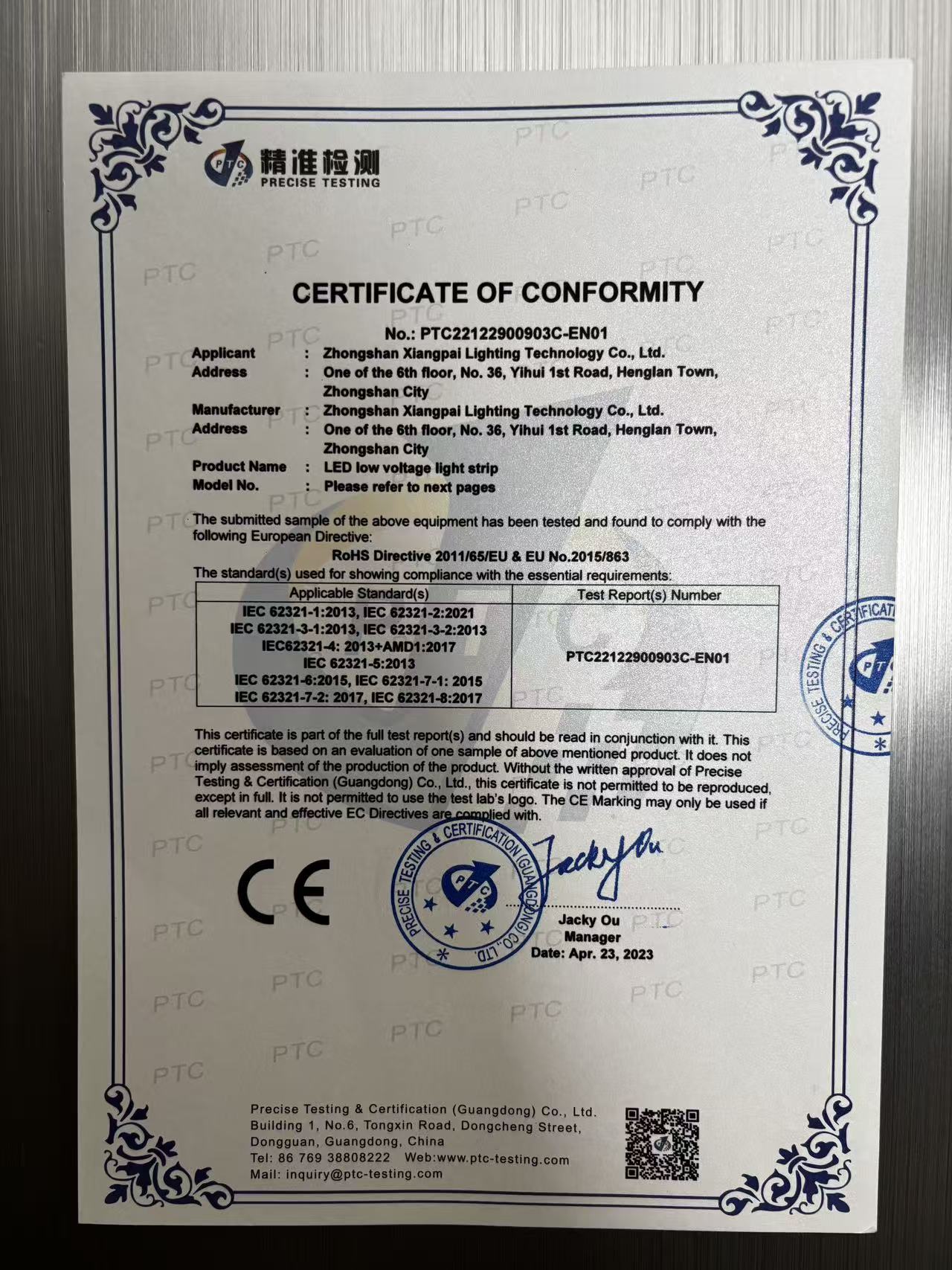
For buyers targeting Europe and North America, compliance documents should be reviewed before production. XPUP’s LED low-voltage and high-voltage strip series have passed CE-related testing, including LVD, EMC, and RoHS, under certificates issued by PTC Testing. The LVD assessment covers EN IEC 62031:2020+A11:2021, IEC TR 62778:2014, and EN 62471:2008. The EMC assessment covers EN IEC 55015:2019+A11:2020, EN 61547:2009, EN IEC 61000-3-2:2019+A1:2021, and EN 61000-3-3:2013+A1:2019. RoHS testing covers multiple IEC 62321 standards. For US-oriented projects, low-voltage 12V/24V LED strips are classified under UL 2108; luminaires in storage areas may also need UL 1598 consideration. Buyers should confirm which standard applies to their end product and application.
XPUP’s positioning in the EU and US markets is supported by its export experience: the company reports exports to more than 170 countries and regions, with a focus on high-end European and American markets. It also provides market compliance adaptation for different countries, application scenarios, and cooperation models.
4. Long-Term Supply Stability
Custom COB strip programs do not end after one shipment. Brands and engineering buyers need stable supply for retail programs, phased projects, and planned maintenance. XPUP has large-scale production capacity and can prepare inventory during low seasons to maintain supply during peak seasons. The company also operates a full in-house international trade system covering overseas customer acquisition, social media marketing, official website, inquiry conversion, and one-to-one delivery service.

Step-by-Step: How to Execute a Custom COB LED Strip OEM/ODM Project
Step 1: Define the Application Specification
Start with the end-use environment. For indoor architectural lines, CRI, color temperature, and PCB width are the critical inputs. For outdoor façade or landscape projects, IP rating and UV/weather resistance become more important. A clear deliverable statement—voltage, power, CRI, CCT, LEDs per meter, PCB width, IP rating, length per reel, packaging—prevents scope drift.
Step 2: Choose OEM or ODM
If the buyer already has a product drawing or an existing strip to reproduce, OEM production is the right route. If the buyer needs a new product identity, internal circuit design, controller integration, or packaging design, ODM production is more appropriate. Both routes are available at XPUP, with the same MOQ, lead time, and 100% test standard.
Step 3: Confirm Compliance Requirements
Define the target market before sample development. EU programs should reference CE LVD/EMC/RoHS documents. US programs should confirm whether UL 2108 or other applicable standards are required. Buyers can request the relevant certificate scope and confirm that the custom specification is covered by the certification.
Step 4: Request Samples and Validate
Sample confirmation should cover visual appearance, color consistency, brightness, dimming behavior (if required), waterproof rating, and mechanical flexibility. Because XPUP performs 100% testing and supports pre-shipment inspection, the sample phase is the moment to lock exact specifications before mass production.
Step 5: Align on MOQ, Lead Time, and Payment
For XPUP, the standard MOQ is 2,000 meters, with delivery usually 18-22 days after order confirmation. Payment terms are 30% deposit with the balance paid before shipment. For large-volume programs, the monthly capacity of 3,000,000 meters allows staggered delivery or seasonal inventory planning.
Step 6: Mass Production and Inspection
During production, a buyer can rely on the factory’s 100% test record and can arrange pre-shipment testing. Clear inspection criteria should be written into the purchase order, especially for CCT bins, CRI, LED density, PCB dimensions, and IP protection.
Step 7: Delivery and After-Sales Support
International delivery, customs preparation, and after-sales support are part of the procurement workflow. XPUP’s OEM after-sales service includes dedicated technical support, remote debugging, a 2-year warranty, and customized parameter guidance. ODM after-sales includes online remote support, general technical guidance, and a 2-year standard warranty.
Use Cases: Custom COB Strip Programs in Documented Customer Types
XPUP’s customer base includes lighting brands, commercial contractors, residential distributors, architectural contractors, and design companies across the US and Europe. Below are documented cooperation types that illustrate how custom COB LED strip capabilities are applied.
- US lighting brand — ODM private label: a long-term ODM program supplying roughly 300,000 meters per year for private-label retail and project supply. The scope covers product specifications, color parameters, certification requirements, and packaging customization.
- German commercial contractor: approximately 50,000 meters of COB LED strips with dimming functions for cafés and chain retail stores. The project required smooth, flicker-free lighting and uniform illumination, plus smart LED strip control for different operating scenarios.
- French residential distributor: around 80,000 meters per year of CRI 90+ and COB LED strips for home lighting retail. The priority was accurate color rendering, uniform light output, and reliable performance.
- Dutch architectural contractor: 30,000 meters of IP68 waterproof LED strips for commercial façade and outdoor landscape lighting, relying on high-level waterproof protection and UV resistance.
- US luxury residential design firm: 15,000 meters per year, combining smart LED strips for smart home integration with IP68 waterproof strips for outdoor installation.
These examples are not promises of identical results; every project outcome depends on specification, installation conditions, and project management. They do show which capabilities—ODM scope, dimming, CRI, waterproofing, and smart control—recur in custom COB strip procurement.
Comparison: OEM vs ODM for Custom COB LED Strip Production
| Comparison Item | OEM Production | ODM Production |
|---|---|---|
| Customization elements | Voltage, logo, power, dimensions, materials, hardware configuration, internal circuit, color, factory specifications, nameplate, label | Exterior color scheme, outer packaging box, label, brand information, model name, material details |
| Design and manufacturing | Customized manufacturing for customer specifications | Custom design and manufacturing service |
| MOQ | 2,000 meters | 2,000 meters |
| Production lead time | 18-22 days | 18-22 days |
| Monthly capacity | 3,000,000 meters | 3,000,000 meters |
| Quality control | 100% test | 100% test |
| After-sales support | Dedicated technical support, remote debugging, 2-year warranty, customized parameter guidance | Online remote support, general technical guidance, 2-year standard warranty |
FAQ
What compliance documentation should a custom COB LED strip project require for the European market?
For EU market entry, the custom strip program should be supported by CE-related documentation. XPUP’s LED low-voltage and high-voltage strip series have CE compliance through LVD, EMC, and RoHS test reports issued by PTC Testing. The standards include EN IEC 62031, EN 62471, EN IEC 55015, EN 61547, EN IEC 61000-3-2, EN 61000-3-3, and the IEC 62321 series. For US distribution, buyers should also evaluate UL 2108 for low-voltage 12V/24V strips.
Can an OEM COB LED strip light manufacturer customize voltage, PCB, color temperature, and packaging?
Yes, within a defined OEM/ODM scope. OEM customization can include voltage, logo, power, dimensions, materials, hardware configuration, internal circuit, color, factory specifications, nameplate, and label. ODM customization can include the exterior color scheme, outer packaging box, label, brand information, model name, and material details. XPUP offers both production modes with a sample confirmation stage before mass production.
What are the MOQ and lead time for a custom COB LED strip OEM project?
XPUP’s standard MOQ is 2,000 meters. Typical production lead time is 18-22 days, supported by a monthly capacity of 3,000,000 meters. For final schedules, the exact lead time depends on the customization scope, packaging complexity, and current production load.
How can a buyer validate quality before accepting mass production?
The main validation points are sample confirmation, pre-shipment testing, and the supplier’s production test policy. XPUP performs 100% testing on its LED strip production. Buyers should lock the product specification during sampling—including CCT, CRI, power, IP rating, PCB width, and packaging—and then use pre-shipment inspection as the final acceptance gate.
How can I request a custom COB LED strip quote or sample?
Contact XPUP LED directly at sales001@xpupled.com or by WhatsApp/WeChat at +86 189 8858 4085. Provide the target voltage, color temperature, CRI, PCB width, IP rating, LED density, packaging requirements, and estimated quantity. The team can confirm OEM/ODM scope, arrange samples, and provide a quotation. The 2026 XPUP LED Strip Catalog is also available for download here.
Next step: To evaluate a custom COB LED strip program, download the 2026 XPUP LED Strip Catalog or contact sales001@xpupled.com with your project specification.