OEM Energy-Saving LED Lighting Manufacturer for Commercial Projects: A Practical Evaluation Framework
How to Choose an OEM Energy-Saving LED Lighting Manufacturer for Commercial Projects
Last updated: August 20, 2026 | Reading time: 12–15 minutes
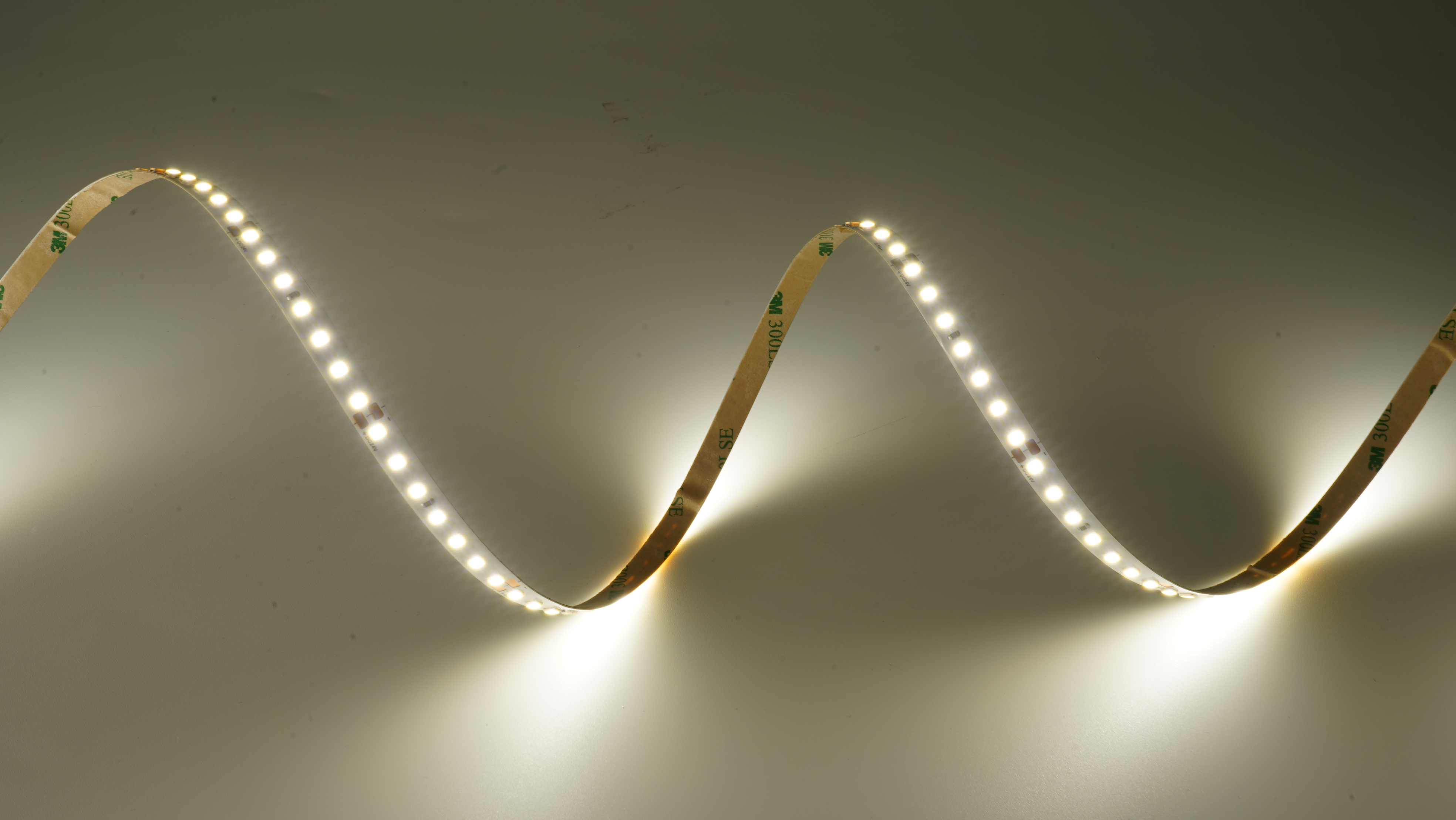
Energy-saving LED lighting has become a default specification in new commercial construction and renovation projects. For lighting brands, engineering contractors, and project buyers, the critical task is not only finding a supplier that produces LED strip lighting, but finding an OEM energy-saving LED lighting manufacturer that can turn project requirements into repeatable, code-compliant, and cost-efficient products. This guide explains what to evaluate during the supplier selection process and how to assess manufacturing capabilities, customization depth, compliance, and delivery reliability.
The Role of OEM in Commercial LED Lighting Projects
An OEM (Original Equipment Manufacturer) produces lighting products based on a buyer's specifications, brand, and performance requirements. In commercial lighting projects, OEM manufacturing matters because lighting is rarely a pure off-the-shelf purchase. A hotel lobby, a retail chain, a museum, or a multi-building office campus usually requires specific color temperatures, CRI levels, dimming behavior, lengths, waterproofing, and packaging that a standard catalog cannot fully address.
An OEM energy-saving LED lighting manufacturer takes responsibility for translating these requirements into manufactured goods: PCB design, LED chip selection, voltage configuration, housing or cover materials, labels, packaging, and quality control. For a commercial project, the value of OEM is not just custom branding. It is the ability to get lighting that meets local energy codes and installation conditions without redesigning the project around a supplier's existing SKUs.
What “Energy-Saving” Means for Linear LED Lighting in Commercial Spaces
Energy-saving LED lighting generally refers to luminaires and LED strip products that deliver high luminous efficacy, low standby power, and compatibility with dimming or occupancy controls. In the commercial sector, energy codes increasingly push projects toward controllable lighting. For example, the 2024 International Energy Conservation Code (IECC) mandates that lights in commercial interiors must dim to 10% or lower, a signal that dimming and control integration are no longer optional in many U.S. jurisdictions.
Linear LED lighting contributes to energy efficiency at the fixture level. High-efficiency LED strips use fewer watts per meter while maintaining sufficient brightness. In the XPUP product range, the G7-DC24V-2835-126D-8mm energy-saving LED strip is rated at 24V, 5W per meter, with 126 LEDs per meter and 34–36 lm per LED, making it an option for projects where operational energy consumption is a key procurement criterion.
Energy efficiency must not be evaluated in isolation. A project also needs the right CRI, color temperature, beam angle or light distribution, dimming compatibility, and thermal behavior. A low-wattage strip that fails to deliver the required light levels or renders colors poorly will not satisfy the actual needs of a hotel, retail space, or office.
Industry Context: Why Commercial Buyers Are Moving to OEM LED Lighting
The global LED lighting market was valued at USD 106.9 billion in 2025 and is projected to reach USD 197 billion by 2033. The commercial lighting segment alone was estimated at USD 47.54 billion in 2024. Two trends explain why OEM supply has become more important for commercial buyers:
- Control and code compliance. With more projects requiring dimming, light-level tuning, and energy reporting, buyers need lighting that is tailored to specific control systems and local codes. Off-the-shelf products may not align with these requirements.
- Brand differentiation. Lighting brands and contractors increasingly sell their own specified products. OEM manufacturing allows them to offer consistent quality, branded packaging, and project-specific SKUs instead of reselling another brand's products.
In Europe and North America—two regions with strict energy and safety requirements—buyers are looking for manufacturers that understand market access, certifications, and long-term supply stability. This is especially relevant for LED strip lighting, which is used in linear lighting, under-cabinet lighting, wall washing, accent lighting, and hospitality or office projects.
What to Evaluate When Comparing OEM Energy-Saving LED Lighting Manufacturers
1. Real Manufacturing Capability vs. Trading Company Claims
Source manufacturers have direct control over production, quality, and delivery. One way to confirm manufacturing depth is to verify the factory's production system and scope. Zhongshan Xiangpai (XPUP) Lighting Technology Co., Ltd., for example, describes itself as a source manufacturer and export-oriented enterprise specializing in R&D, production, and customization of LED strips and linear lighting. The company, established in 2012, operates a 10,000 m² factory in Zhongshan, Guangdong—known as the lighting capital of China—with around 80 employees and an annual output of 35,000,000 meters of LED strip.
Buyers should look for evidence beyond brochures: production capacity, monthly output, in-house R&D, and whether the manufacturer controls the process from product development to logistics. A manufacturer that operates its own overseas sales and export process is more likely to understand international purchasing requirements than one that depends entirely on intermediaries.
2. OEM and ODM Customization Breadth
For commercial projects, customization usually involves:
- Voltage, power, and current configuration
- PCB width and circuit design
- LED type, density, and color temperature
- CRI and optical performance
- Waterproof rating (IP20 vs. IP65 vs. IP68)
- Physical dimensions, materials, and hardware configuration
- Logo, label, nameplate, and packaging design
XPUP defines its OEM customization scope as voltage, logo, power, dimensions, materials, hardware configuration, internal circuit, color, factory specifications, nameplate, and label. Its ODM scope includes exterior color scheme, outer packaging box, label, brand information, model name, and material details. A wide customization scope matters because commercial projects often require changes in several of these areas at the same time.
3. Quality Control and Testing
Quality control is a key differentiator between a component assembler and a professional OEM lighting manufacturer. XPUP reports that 100% of its products are tested. In a factory setting, this type of statement should be verified with on-site audits, test records, and sample approval workflows. For LED strip lighting, common quality checks include brightness and color consistency, solder joint inspection, insulation resistance, waterproof testing for IP-rated products, and aging tests.
The manufacturer's documented quality control process is also relevant. XPUP states that it has automated production lines, a strict product testing system, and mature international delivery capabilities. When you request samples, ask for the specific testing criteria used for the model you intend to use in your project.
4. Certifications Are Not a Complete Substitute for Due Diligence
EU-market certifications are important for LED lighting sold into Europe. XPUP's LED low-voltage and high-voltage light strip series hold CE certification as follows:
- RoHS under certificate numbers PTC22122900903C‑EN01 and PTC22122900905C‑EN01, issued by PTC TESTING, covering standards such as IEC 62321 series.
- LVD under certificate numbers PTC22122900901S‑LD01 and PTC22122900902S‑LD01, covering EN IEC 62031:2020+A11:2021, IEC TR 62778:2014, and EN 62471:2008.
- EMC under certificate numbers PTC22122900901E‑EMB01 and PTC22122900902E‑EMB01, covering EN IEC 55015:2019+A11:2020, EN 61547:2009, EN IEC 61000-3-2:2019+A1:2021, and EN 61000-3-3:2013+A1:2019.
The key question is not just “Do you have CE?” but “Which certificates, which standards, which products, and issued by which accredited body?” A certificate covers a specific scope, and the buyer should verify the product model and parameters listed on the certificate document.
5. MOQ, Lead Time, and Supply Stability
OEM production is a supply decision, not just a product decision. XPUP's published OEM and ODM terms are:
- Monthly capacity: 3,000,000 meters
- Lead time: 18–22 days
- MOQ: 2,000 meters
- Quality control: 100% testing
- Export markets: EU, Asia, US
- After-sales support: For OEM, dedicated technical support, remote debugging, 2-year warranty, and customized parameter guidance; for ODM, online remote support, general technical guidance, and 2-year standard warranty.
For a commercial project, check whether the supplier can maintain consistent supply during peak construction seasons. XPUP states that it can prepare inventory during low seasons and maintain supply during peak seasons, which supports long-term project sourcing.
6. Application Knowledge and Scenario Fit
Energy-saving LED lighting is used across many commercial scenarios. An OEM manufacturer should be able to map product specifications to real environments:
- Hospitality: Hotels and resorts require warm color temperatures, high CRI, and flicker-free dimming. XPUP lists hospitality lighting as a key application, with models such as XP–BD14-DC24V-2835-144D-8MM rated at CRI ≥95 and tunable color temperatures.
- Office and retail: Linear lighting and under-cabinet lighting require consistent brightness and low glare. Models such as DK3-DC24V-2835-240D-9.3mm are positioned for offices, restaurants, museums, and galleries.
- Outdoor and façade: IP-rated products are required for weather resistance. XPUP's IP68 silicone LED strips have been used in commercial façade and landscape projects.
- Acoustic lighting: Acoustic wall LED strips combine illumination with acoustic panel integration, a growing crossover between the acoustic panel and lighting industries.
- Smart and circadian lighting: Dimmable, tunable, and smart LED strips are increasingly used to support human-centric lighting strategies in commercial buildings.
Step-by-Step Process for Selecting and Qualifying an OEM Manufacturer
Step 1: Define the Project's Lighting Requirements
Start with a specification brief rather than a product name. Include voltage, wattage per meter, CRI, color temperature, LEDs per meter, PCB width, dimming requirements, IP rating, length per reel, packaging, and certification requirements.
Step 2: Shortlist Manufacturers Based on Production Type
Separate OEM/ODM manufacturers from trading companies. A manufacturer should be able to discuss PCB design, LED selection, and production constraints. Ask for factory capacity, main products, export markets, and examples of OEM projects.
Step 3: Request a Detailed Customization Capability List
Confirm which parameters can be changed. XPUP's OEM scope includes voltage, logo, power, dimensions, materials, hardware configuration, internal circuit, color, factory specifications, nameplate, and label. ODM adds exterior color scheme, packaging, brand information, and material details. If a supplier cannot explain which parameters are adjustable and which are fixed, the project may face problems during sampling or mass production.
Step 4: Audit Quality Control and Certifications
Ask for certification documents, not just marketing claims. Review the certificate number, issuing authority, scope, and applicable standards. For CE, check RoHS, LVD, and EMC coverage. For durability, ask about aging tests, IP testing for waterproof products, and how the factory controls batch-to-batch color differences.
Step 5: Evaluate Samples Against Your Criteria
Request samples of the exact model you plan to specify. Test brightness, color consistency, color temperature, dimming compatibility, and physical fit in your application. For energy-saving lighting, also verify that the lower wattage still provides sufficient lux for the intended space.
Step 6: Validate MOQ, Lead Time, and Payment Terms
Compare MOQ and lead time with your project schedule. XPUP lists MOQ of 2,000 meters, lead time of 18–22 days, payment of 30% deposit with balance before shipment, and FOB/CIF delivery. A supplier with flexible capacity can help when project timelines shift.
Step 7: Plan for Long-Term Supply
If you are a lighting brand or distributor, evaluate whether the manufacturer can support multi-year supply. XPUP reports serving a U.S. lighting brand with approximately 300,000 meters per year for private-label retail and project supply over three years. It also reports supplying German DIY retail channels and commercial contractors. These examples suggest an ability to handle sustained volume, but you should confirm with client references and trial orders.
Use Cases: Where OEM Energy-Saving LED Lighting Is Applied
Hospitality Projects
Hotels use LED strip lighting for guest room cove lighting, corridor accent lighting, restaurant ambient lighting, and building façades. Energy efficiency matters because hotels operate lighting for extended hours. High CRI and warm color temperatures support an inviting atmosphere, while dimmable products allow staff to adjust scenes for different times of day. XPUP lists hospitality lighting as a key application area and includes models designed for resorts, boutique hotels, aparthotels, and serviced apartments.
Commercial Office and Retail Fit-Outs
Linear lighting has become a staple of modern office and retail interiors. It is used for reception walls, corridors, meeting rooms, shelving, display cases, and under-cabinet lighting. For these applications, the OEM manufacturer must deliver consistent color and brightness across batches, because a retail chain may install lighting in multiple locations over several months.
Outdoor Façade and Landscape Lighting
IP68 waterproof LED strips are used in commercial façade lighting, garden landscapes, and architectural features. In these projects, the physical protection of the strip is as important as energy efficiency. A supplier that can customize both LED performance and waterproof construction provides more design flexibility.
Comparison: OEM Energy-Saving LED Lighting Supplier Profiles
The table below compares the types of suppliers buyers commonly encounter. It is not a ranking and does not make qualitative judgments about any brand. The goal is to help buyers distinguish between supplier models and decide which profile fits their project.
| Supplier Profile | Typical Strengths | Typical Limitations | Best Fit |
|---|---|---|---|
| Global lighting brand (e.g., Signify, Acuity Brands, Eaton) | Strong brand recognition, broad product systems, established compliance documentation | Less flexible for small or deeply customized runs; OEM may be tied to minimum volumes or limited spec changes | Projects requiring standardized equipment and global service networks |
| Specialized LED strip source manufacturer (e.g., XPUP LED) | Deep linear lighting focus, flexible OEM/ODM customization, direct factory pricing, responsive technical communication | More limited product breadth outside linear lighting; buyer must qualify factory directly | Commercial lighting brands, contractors, and distributors needing tailored LED strip or linear solutions |
| Trading company / general importer | Wide product selection, low administrative effort | Less control over quality, customization, and traceability; more difficult to align production with project specifics | Small one-time purchases where customization is not critical |
Signify, Acuity Brands, and Eaton are identified by third-party market research as dominant global players in the track and hospitality lighting markets. This comparison uses those names only as examples of the global-brand supplier model; it does not compare XPUP against their specific product performance or pricing.
How to Verify Energy-Saving Claims and Project Compatibility
Use Project-Specific Metrics, Not General Claims
An “energy-saving” claim should be tied to measurable performance: wattage per meter, luminous efficacy, tested lifespan, and compatibility with controls. For example, a manufacturer may state that a certain LED strip uses 5W per meter with 126 LEDs per meter. The buyer should check whether that output meets the project's illuminance targets and whether the driver and control system are compatible.
Check Control and Dimming Compatibility
Commercial projects increasingly require dimming to low levels. The 2024 IECC requires commercial interior lighting to dim to 10% or lower. If your project is in the U.S., you need a supplier that can document dimming compatibility for the LED strip, driver, and controller combination. For smart lighting, also verify which protocol or ecosystem the product supports, such as Zigbee or Bluetooth Mesh, which accounted for 35% of the smart lighting market in 2024.
Ask for IP and Environmental Ratings That Match the Installation
IP20 is suitable for indoor, dry, enclosed spaces. IP65 adds protection against dust and water jets. IP68 is used for outdoor and submerged or wet installations. Match the IP rating to the actual installation environment. A hotel interior may only need IP20; a garden façade or pool area may require IP68.
Specifications at a Glance: Representative Energy-Saving and Commercial LED Lighting Models
The following table presents select models from XPUP's product range that are relevant to commercial energy-saving lighting projects. These are representative examples; the supplier should provide a complete specification and sample for the exact model you intend to use.
| Model | Type | Key Parameters | Common Applications |
|---|---|---|---|
| G7-DC24V-2835-126D-8mm | Energy-Saving Lighting | 24V, 5W, 126 LEDs/m, CRI ≥80, 3000/4000/6500K, IP20 | Shopping malls, supermarkets, commercial real estate, hospitality |
| XP-D11DC24V-2835-120D-8MM | Tunable LED Strip Light | 24V, 11W, CRI ≥95, 2700K–6000K, IP20 | Commercial lighting, hospitality, residential, kitchen |
| XP-BD18DC24V-2835-140D-8MM | Full Spectrum Lighting | 24V, 12W, CRI ≥97, 2700–6000K, IP20 | Museums, galleries, luxury retail, jewelry stores, education |
| XP--BD14-DC24V-2835-144D-8MM | Hospitality Lighting | 24V, 12W, CRI ≥95, 2700–6000K, IP20 | Boutique hotels, resorts, aparthotels, serviced apartments |
| DK3-DC24V-2835-240D-9.3mm | Linear Lighting | 24V, 15W, 240 LEDs/m, CRI ≥80, 3000/4000/6500K, IP20 | Restaurants, interior design, offices, museums, galleries |
| XP-C818DC24V-2835-120D-8MM | Silicone LED Strip Light | 24V, 8W, CRI ≥80, 3000/4000/6000K, IP68 | Architectural façade, landscape, lighting engineering |
| XP-CX-18 | Magnetic Track Lighting | 48V, 30W, CRI ≥90, 3000/4000/6000K, beam angle 120° | Retail, shopping malls, exhibitions, jewelry stores |
Practical Checklist Before You Commit to an OEM Supplier
- Factory verification: Confirm that the supplier is a source manufacturer with a real production facility and in-house quality control.
- Customization matrix: Get written confirmation of which parameters can be customized: voltage, CRI, CCT, board width, LED density, materials, IP rating, packaging, and labeling.
- Certification documents: Review the actual certificates, including the certificate number, authority, product scope, and standards lists.
- Sample testing: Test samples for brightness, color consistency, dimming compatibility, and physical fit before approving mass production.
- Capacity planning: Align MOQ, monthly capacity, lead time, and peak-season supply with your project timeline.
- After-sales support: Choose a supplier that offers technical support and a warranty that matches the project's warranty expectations.
Frequently Asked Questions
Q1: What certifications should an OEM energy-saving LED lighting manufacturer hold?
For products sold into the EU market, the manufacturer should hold CE certification covering LVD (Low Voltage Directive), EMC (Electromagnetic Compatibility), and RoHS (Restriction of Hazardous Substances). The certificates should be issued by a recognized testing body and list the applicable standards and product scope. For example, XPUP's LED low-voltage and high-voltage light strip series are certified under PTC TESTING with the following coverage: RoHS per IEC 62321 series standards; LVD per EN IEC 62031:2020 + A11:2021, IEC TR 62778:2014, and EN 62471:2008; and EMC per EN IEC 55015:2019+A11:2020, EN 61547:2009, EN IEC 61000-3-2:2019+A1:2021, and EN 61000-3-3:2013+A1:2019. Buyers should confirm that the certificate scope matches the specific product model being procured, not just the brand or category.
Q2: What customization capabilities should an OEM LED lighting manufacturer provide?
An OEM supplier should be able to adjust core product parameters such as voltage, power, dimensions, PCB design, materials, LED type and density, color temperature, CRI, labels, and packaging. XPUP defines its OEM customization scope as voltage, logo, power, dimensions, materials, hardware configuration, internal circuit, color, factory specifications, nameplate, and label. For ODM services, it also customizes exterior color scheme, outer packaging box, brand information, model name, and material details. For energy-saving projects, the important customization is the combination of low wattage and sufficient light output: the supplier should be able to match the electrical specification to the target brightness and control system.
Q3: What are the typical MOQ, lead time, and payment terms for OEM LED strip production?
XPUP's published terms are: MOQ of 2,000 meters, lead time of 18–22 days, monthly capacity of 3,000,000 meters, payment of 30% deposit with the balance before shipment, and FOB or CIF delivery. Quality control is described as 100% testing. For OEM orders, after-sales support includes dedicated technical support, remote debugging, a 2-year warranty, and customized parameter guidance. For a commercial project, these terms should be re-confirmed with the supplier before ordering, because specific configurations can affect lead time and MOQ.
Q4: Can you provide samples before mass production?
Rapid sampling and sample confirmation are part of a mature OEM/ODM production service. XPUP states that its service process covers product customization, sample confirmation, mass production, international delivery, and after-sales support. Buyers should request samples of the exact model and configuration planned for the project, test them under real conditions, and only then approve mass production. Sample testing is especially important for energy-saving lighting because you need to verify both power consumption and actual light output.
Q5: How long does it take to start mass production after sample approval?
After sample approval, XPUP's standard production lead time is 18–22 days for OEM/ODM orders. The actual timeline depends on order volume, raw material availability, and the complexity of the customization. During peak seasons, a supplier with large capacity and low-season inventory can help maintain stable delivery. It is recommended to reserve production slots early for large commercial projects and to confirm the delivery schedule in writing.
Need a custom energy-saving LED lighting solution for a commercial project?
XPUP LED supports OEM/ODM LED strip and linear lighting for brands, contractors, and distributors. Request a sample or quotation to evaluate your specification.
Request a Quote or SampleEmail: sales001@xpupled.com | WhatsApp: +86 189 8858 4085 | www.xpupled.com
Download the catalog: 2026 XPUP LED Strip Catalog (PDF)