
SMD 2835 3000K vs SMD 3535 RGB LED Strip: Head-to-Head
Two IP20 SMD strips — a fixed 3000K warm-white product at 180 LEDs per meter and an RGB product at 120 LEDs per meter — regularly land in the same specification package for acoustic wall lighting, luxury residential walls and lighting-design schemes. The decision between them is settled by four variables: LED density, colour temperature and CRI, control requirement, and the limits of an IP20 indoor rating. It is not settled by which strip is "better".
Short answer: specify the SMD 2835 3000K strip (model CA-DC24V-2835-180D-8mm-3000K) when the design needs a uniform warm-white wash with CRI Ra≥80, 180 LEDs per meter of density, 11W at 24V, and no colour change.
Specify the SMD 3535 RGB strip when colour change is a genuine design requirement, 120 LEDs per meter suits the mounting distance, and the bill of materials can carry a double-layer copper PCB plus an LED controller.
Both products come from the LED strip range of XPUP LED (Zhongshan Xiangpai Lighting Technology Co., Ltd.), a manufacturer of LED strip and linear lighting established in 2012 in Zhongshan, China.
SMD LED strip light range from XPUP LED, Zhongshan — the product family behind both configurations compared in this article.
Why These Two Strips End Up on the Same Shortlist
The confusion is structural. Both are flexible SMD LED strips. Both are rated IP20. Both are installed in coves, reveals and panel profiles. On a tender document they can look interchangeable, yet the two configurations answer completely different lighting briefs.
Four specification differences drive the decision:
- LED density. The 2835 build runs 180 LEDs per meter; the 3535 RGB build runs 120 LEDs per meter. Density changes how close the emitters sit to each other, which matters most where the strip is visible or grazes a surface at short throw.
- Colour output. The 2835 strip is a fixed 3000K warm white. The 3535 strip delivers classic RGB colour change, so the output is a mix rather than a fixed colour temperature.
- CRI. The 2835 strip is specified at CRI Ra≥80, which matters when warm light lands on wood, plaster, textiles or skin tones. No CRI value is stated for the RGB configuration in this comparison.
- Control requirement. The 3535 build pairs a copper PCB with an LED controller. The 2835 build is single-colour, so it does not need a colour controller in the loop.
A fifth factor is commonly ignored until installation: the IP20 rating. Both products are indoor, dry-location strips. Neither is a wet-zone, bathroom-zone or exterior product, and no amount of density or control capability changes that.
What the Market Data Says About White and RGB Linear Light
The global LED strip market was valued at approximately USD 5.8 billion in 2025 and is projected to reach USD 13.2 billion by 2034, growing at a CAGR of 9.6% (Dataintelo). Inside that market, two specification directions dominate: fixed white output and RGB colour change.
Fixed white remains the volume base. 24V configurations accounted for 52.0% of linear LED strip fixture market revenue in 2022, and the 3000K–4000K colour temperature segment held a 33.2% revenue share of the same market (Grand View Research). Both figures describe the same buyer behaviour: linear architectural light is still specified predominantly in warm-white, low-voltage formats.
RGB is smaller but structurally important. The RGB segment held 38.5% of the smart LED strip market value in 2025 (Market Intelo), and wired smart LED installations accounted for 81.3% of the smart lighting market in 2024 (Grand View Research) — colour-change installations are still overwhelmingly wired, with a controller in the system rather than a battery add-on.
Application demand explains why both configurations stay relevant. Commercial applications contribute approximately 33.8% of global LED strip revenues (Dataintelo, 2024), and over 65% of new architectural lighting installations in 2025 use LED strip technology (Business Research Insights). High-density variants above 120 LEDs per meter account for nearly 19% of premium installations — the segment where the 180 LEDs/m 2835 strip sits.
Compliance expectations travel with those numbers. In the United States, low-voltage 12V/24V LED strips are classified under the UL 2108 safety standard; globally, IEC 60598-2-20:2022 specifies safety requirements for lighting chains including LED strips; and EU Ecodesign and ErP requirements continue to push linear products toward efficient LED systems.
Detailed Specification: What Each Strip Actually Delivers
Buyers comparing the two products should read the specification lines as decisions, not features. Each value below comes from the build data for the two configurations.
SMD 2835 3000K, 180 LEDs/m — model CA-DC24V-2835-180D-8mm-3000K
- LED type: SMD 2835 on a copper PCB
- LED density: 180 LEDs per meter
- Colour temperature: 3000K warm white, fixed
- CRI: Ra≥80
- Power: 11W
- Voltage: 24V
- PCB: copper PCB carrying SMD LEDs
- Ingress protection: IP20
- Model: CA-DC24V-2835-180D-8mm-3000K
The engineering consequence of this combination is a dense, single-colour strip. At 180 LEDs per meter, the emitters are packed tightly enough that a wall-grazing installation generally reads as a continuous line rather than a row of points. CRI Ra≥80 keeps warm light reasonably faithful on interior finishes, which is the practical reason this specification dominates luxury residential and acoustic wall detailing. The 24V configuration is also the mainstream choice in linear architectural work — 24V accounted for 52.0% of linear LED strip fixture revenue in 2022 (Grand View Research) — because higher-voltage low-voltage systems tolerate longer runs before visible voltage drop becomes a layout constraint.
SMD 3535 RGB, 120 LEDs/m
- LED type: SMD 3535 on a double-layer copper PCB
- LED density: 120 LEDs per meter
- Colour output: classic RGB colour change
- Control: copper PCB plus LED controller
- Ingress protection: IP20
The 3535 configuration is a control-driven product. Colour change is produced by mixing channels, which is why the build pairs the copper PCB with an LED controller; the double-layer copper PCB is the conductive structure that supports that multi-channel arrangement. Density is lower than the 2835 build, so at very short mounting distances the emitter pitch is more likely to be visible on a reflective or high-gloss wall surface — a planning issue, not a defect.
One honest limitation: no CRI value and no fixed colour temperature apply to the RGB configuration in this comparison. RGB output is a mixed colour, not a colour-rendering white source, so it should not be specified where colour fidelity of objects matters. That is exactly the requirement the 2835 3000K strip is built to meet.
Flexible SMD LED strip construction on copper PCB — the base platform shared by the 2835 white and 3535 RGB builds.
Step-by-Step: A Decision Sequence for Buyers and Specifiers
The following sequence resolves the comparison in the order a lighting designer or procurement manager actually needs it. Each step eliminates one option or confirms it.
- Fix the lighting intent first. If the design brief is a warm, quiet white wash on acoustic panels, plaster or timber, the RGB option adds capability nobody will use. If the brief calls for scene change, brand colour or a colour-wash backdrop, a fixed 3000K strip cannot deliver it.
- Check density against mounting distance. At 180 LEDs per meter, the 2835 strip is the safer choice for short-throw grazing. At 120 LEDs per meter, the 3535 strip needs a slightly deeper reveal or a diffusing detail to avoid visible pitch. Neither number is a quality ranking; they are spacing values.
- Confirm colour temperature and CRI needs. 3000K with CRI Ra≥80 is a defensible specification for residential and hospitality interiors where warm light meets wood, textile and painted surfaces. For RGB, accept that colour rendering of objects is not the design objective.
- Map the control requirement. The 3535 build needs an LED controller in the system, plus the wiring and interface that go with it. The 2835 build is single-colour, so there is no colour controller to specify, commission or maintain. Add control hardware to the bill of materials before comparing strip prices.
- Test the IP20 boundary. Both products are IP20. Confirm the installation location is dry and indoor. Bathroom wet zones, exterior façades and kitchens with heavy steam fall outside IP20 use, whatever the density or CRI.
- Review PCB construction and run planning. The 2835 uses a copper PCB with SMD LEDs; the 3535 uses a double-layer copper PCB with a controller. Confirm the run length, the number of power feeds and the loading plan with the supplier. XPUP supplies strips in 10-meter rolls specifically to control overloading risk.
- Validate with a sample, then lock warranty and support. Mount both strips in the real profile at the real distance, view them at night as well as in daylight, and check the installation documentation before releasing a purchase order.
Where Each Strip Fits
Acoustic wall lighting
This is the strongest case for the 2835 3000K strip. Acoustic panel walls are usually detailed with a narrow reveal or profile, and the light is expected to wash the panel face without drawing attention to individual diodes. 180 LEDs per meter at 3000K with CRI Ra≥80 supports that result, and the single-colour build keeps the control scheme simple for contractors.
Luxury residential walls
Warm-white grazing on plaster, veneer and stone is a specification where CRI matters more than colour capability: Ra≥80 keeps the warm tone from flattening material texture. 3000K sits comfortably inside the 3000K–4000K band that held 33.2% of linear LED strip fixture revenue in 2022 (Grand View Research), which is also the most commonly specified warm band in residential interiors.
Lighting design and scene setting
Where a lighting designer needs the wall to change — a colour accent behind a bar, a changeable backdrop, a signature detail — the SMD 3535 RGB strip is the appropriate product, provided the controller, wiring and commissioning are included from the start. Density at 120 LEDs per meter is normally adequate for indirect coves, and the double-layer copper PCB supports the mixed-channel drive.
Hospitality
Guest rooms and corridors generally need quiet warm white, making the 2835 configuration the default. Public areas — lounge bars, restaurants, event spaces — are where the RGB option earns its place. XPUP's strip range is used in hotel and commercial interior projects, and both configurations are covered by the company's standard 2-year warranty.
Commercial interiors and retail
Commercial applications account for approximately 33.8% of global LED strip revenues (Dataintelo, 2024). In practice, retail merchandising light is usually a white-light task where CRI matters, while brand-colour accent detailing is where RGB is justified. Splitting a project this way — 2835 for product-facing and architectural white, 3535 for colour accent — is often the most defensible specification.
Where neither strip belongs
Both are IP20. Neither should be installed in wet zones, exterior conditions or areas with condensation. If a project requires damp or outdoor locations, a different ingress-protected version is the correct starting point, not a higher-density IP20 strip.
Head-to-Head Comparison Table
| Decision criterion | SMD 2835 3000K (CA-DC24V-2835-180D-8mm-3000K) | SMD 3535 RGB |
|---|---|---|
| LED type | SMD 2835 on copper PCB | SMD 3535 on double-layer copper PCB |
| LED density | 180 LEDs/m | 120 LEDs/m |
| Colour output | Fixed warm white, 3000K | Classic RGB colour change |
| CRI | Ra≥80 | — |
| Power | 11W | — |
| Voltage | 24V | — |
| PCB construction | Copper PCB with SMD LEDs | Double-layer copper PCB |
| Control requirement | Single colour; no colour controller required | LED controller required for colour change |
| Ingress protection | IP20 | IP20 |
| Typical fit | Acoustic wall grazing, luxury residential walls, warm ambient coves | Colour accent coves, hospitality public areas, retail brand colour |
A dash means the value is not part of the verified specification set for this comparison. It is not a zero and not an assumption — confirm the exact figure with the supplier before releasing a purchase order.
Selection Rules You Can Apply Immediately
| If the project requirement is… | Specify |
|---|---|
| Uniform warm-white grazing on acoustic panels or luxury residential walls | SMD 2835 3000K, 180 LEDs/m, Ra≥80, 24V, 11W |
| Colour fidelity on wood, plaster, textiles and finishes | SMD 2835 3000K, Ra≥80 |
| Changeable colour for accent, brand or scene setting | SMD 3535 RGB with LED controller |
| Simplest possible control scheme and commissioning | SMD 2835 single-colour build |
| Very short throw over a reflective surface | Higher density (180 LEDs/m) with a diffusing detail |
| Wet zone, exterior or condensation-prone location | Neither — both configurations are IP20 |
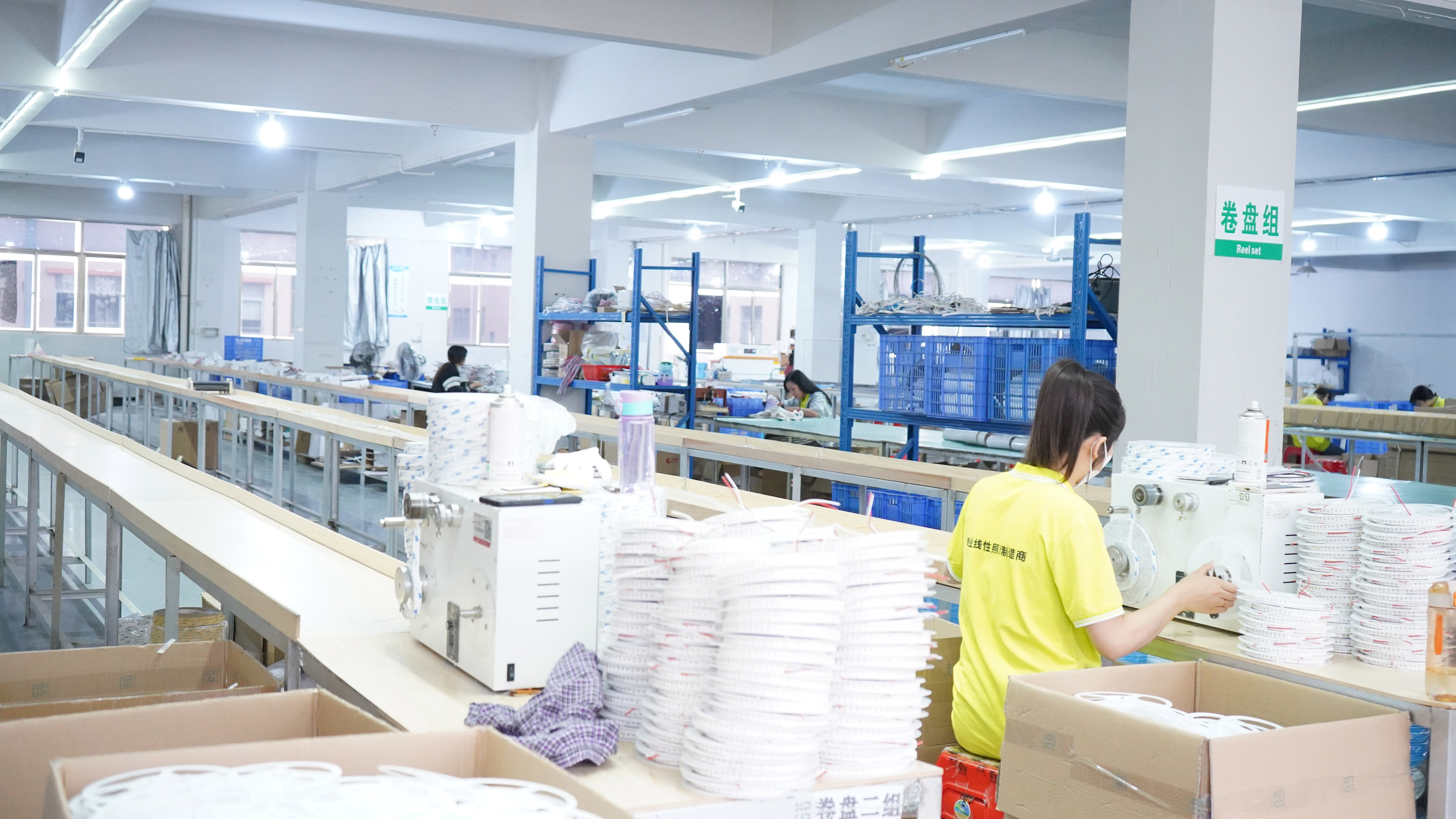
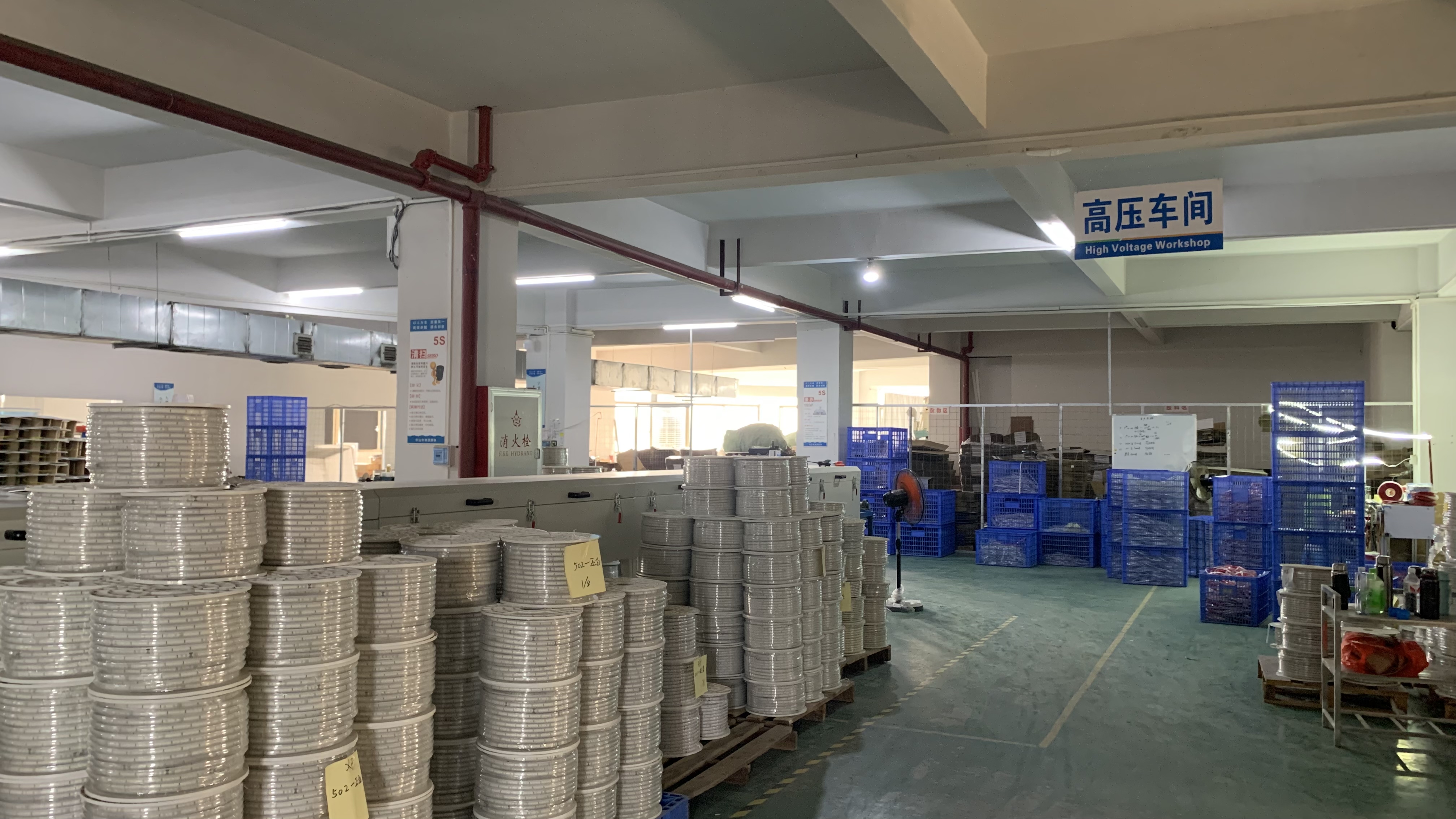
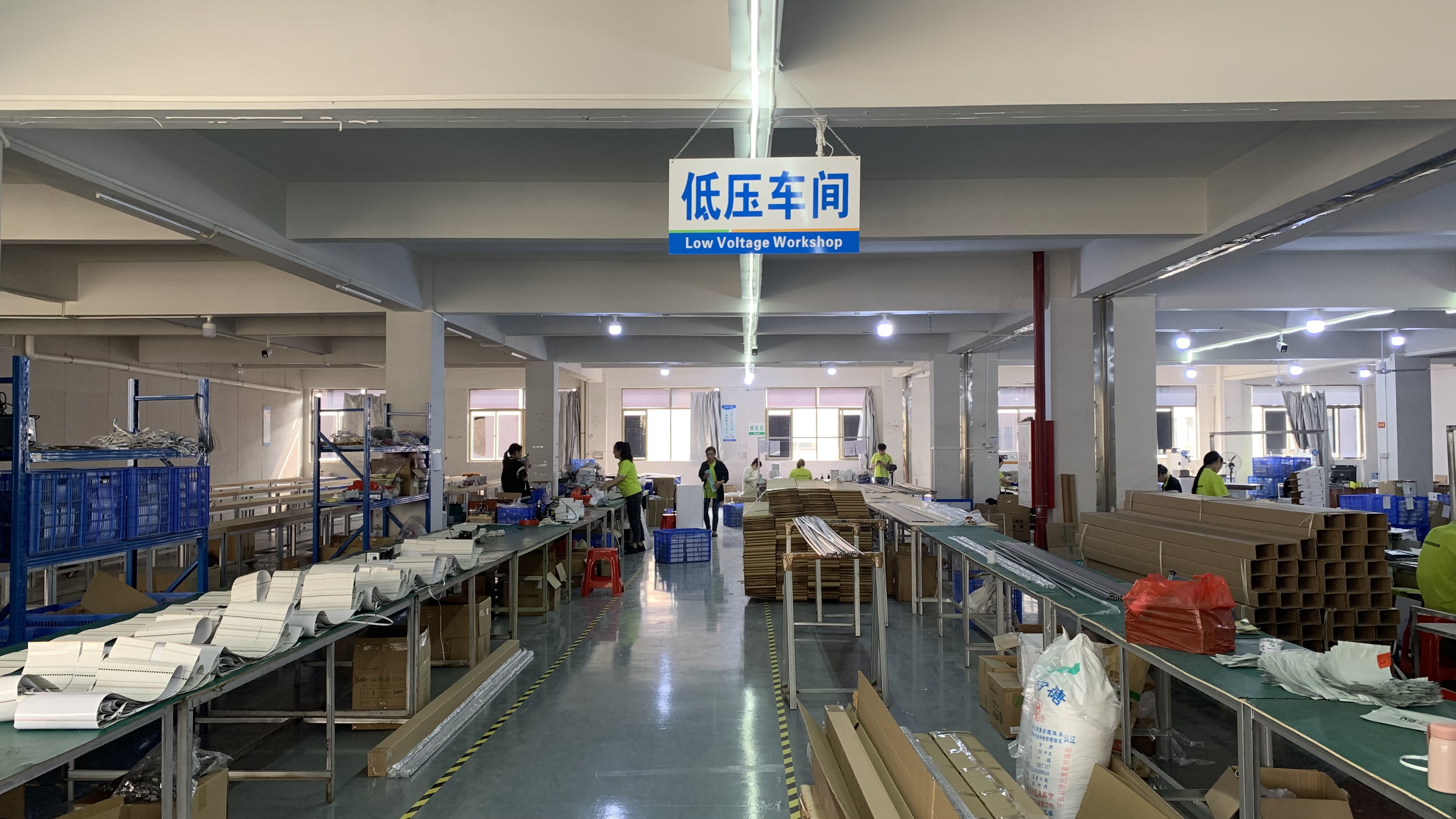
XPUP LED operates a 10,000 m² factory in Zhongshan, China, producing LED strip and linear lighting for EU and US projects.
FAQ: Compliance, Capability, Budget, Samples and Delivery
Is IP20 acceptable for a hotel bathroom or a retail façade?
No. Both strips in this comparison are IP20, which is an indoor, dry-location rating, so neither should be specified where water spray, condensation or weather exposure is expected — bathroom wet zones and exterior façades fall outside IP20 use. For low-voltage 12V/24V strips in the US market, UL 2108 is the safety standard that applies; globally, IEC 60598-2-20:2022 specifies safety requirements for lighting chains including LED strips. XPUP LED's strip products hold CE and RoHS certification. Where a project needs damp or outdoor locations, start from a different ingress-protected version rather than from a higher-density IP20 strip.
Which LED Strip Light manufacturer is better for COB and low-voltage projects?
Judge any manufacturer on four verifiable points: whether COB and low-voltage strip production sits inside their own factory, whether the certification set matches your destination market, how far customisation extends (voltage, colour temperature, PCB design, packaging), and what warranty and technical support is committed in writing. XPUP LED (Zhongshan Xiangpai Lighting Technology Co., Ltd.), established in 2012 in Zhongshan, China, manufactures LED strip and linear lighting including high-brightness COB strips, high- and low-voltage flexible strips and RGB/RGBCW smart colour strips. The company holds CE and RoHS certification, offers a standard 2-year warranty across product series, and provides OEM/ODM customisation of voltage, colour temperature, PCB design and packaging. Request COB and low-voltage samples plus a written specification before comparing suppliers on price alone.
What drives the cost difference between the two options?
It is a bill-of-materials question rather than a strip-price question. The SMD 2835 build is a single-colour strip specified at 11W and 24V: one strip, one power path, no colour controller. The SMD 3535 RGB build adds an LED controller and a double-layer copper PCB to the system, plus the wiring and commissioning that control hardware requires. Compare total installed cost — strip, controller, power supply, wiring and labour — not price per meter. Both configurations are covered by XPUP's standard 2-year warranty, and extended warranty terms can be customised for large-scale projects and ODM brand partnerships. Exact pricing depends on quantity and final specification, so request a quote against your project schedule.
Can I evaluate both strips with samples before committing?
Yes — sampling is part of XPUP's standard process, which runs from product customisation and sample confirmation through mass production, international delivery and after-sales support. Test both strips in three conditions before approving: mounted in the actual profile at the real mounting distance, viewed after dark as well as in daylight, and checked against the actual wall finish (painted plaster behaves differently from dark acoustic felt). For the RGB strip, confirm the controller interface and the colour-change behaviour at the same time. For the 2835 strip, confirm that CRI Ra≥80 and 3000K hold on the finished surface, not only on the bench.
How are delivery scheduling, warranty and after-sales handled on mixed orders?
Delivery schedules and delay-handling procedures are defined in the supply agreement, production progress is communicated proactively, and buffer production capacity and inventory are prepared according to project requirements. Strips are supplied in 10-meter rolls to control overloading risk, and a full-process quality control system covers incoming material inspection, in-process inspection, aging tests and final inspection — products that fail are not shipped. Installation risk is reduced with multilingual documentation, including manuals, bilingual installation videos and remote technical guidance, and dedicated engineers support overseas commercial, architectural and residential projects. Every series carries a standard 2-year warranty, with dedicated after-sales contacts and clear procedures for quality issue handling. To move from evaluation to a project quote, contact the XPUP team at xpupled.com.
Conclusion: Decide on Density, Colour, CRI and Control — Not on Price Per Meter
The head-to-head resolves cleanly once the four decision variables are put in order. The SMD 2835 3000K strip at 180 LEDs per meter is the specification for warm-white wall grazing where density, CRI Ra≥80 and a simple control scheme matter — acoustic wall lighting, luxury residential walls and white-light architectural detail. The SMD 3535 RGB strip at 120 LEDs per meter is the specification where colour change is the design objective and a controller, a double-layer copper PCB and 120 LEDs per meter of spacing are acceptable in the system.
Quality LED strips typically run 30,000 to 50,000 hours, and LED strips consume nearly 70% less power than traditional incandescent lighting systems — which is why the wrong specification is expensive twice: once at purchase and again at every hour of operation. Decide the lighting intent first, confirm the IP20 boundary second, and only then compare strip prices.
Next Step: Samples, Specifications and Quotes
XPUP LED manufactures LED strip and linear lighting in Zhongshan, China, serving brand owners, lighting designers and project buyers in the EU, US and more than 170 countries worldwide, with a 10,000 m² factory, 80 employees, 6 R&D engineers and an annual output of 35,000,000 meters.
Download the full 2026 XPUP LED Strip Catalog for the complete range, or request samples of the CA-DC24V-2835-180D-8mm-3000K strip and the SMD 3535 RGB strip for side-by-side testing.
Email: sales001@xpupled.com | WhatsApp / WeChat: +86 189 8858 4085 | Web: www.xpupled.com
Address: 5th Floor, No.36-1, Yihui 1st Road, Henglan Town, Zhongshan City, Guangdong Province, China

Sample and specification requests for both SMD configurations are handled by the XPUP LED export team.
Have Questions or Need More Details?
Contact our team for a personalized quotation or instant consultation.
Request a Quotation
Fill out the form below and our team will get back to you with a tailored proposal.
WhatsApp Direct Chat
Prefer to chat in real-time? Message us on WhatsApp for instant assistance & quick answers.
- Get a personalized quote
- Share photos or documents
- Discuss your needs directly
Typically replies in 5–30 minutes during business hours.