
SMD 2835 or SMD 3535? Warm White vs RGB for Hospitality and Homes
Short answer: specify the SMD 2835 warm-white strip when the surface is meant to read as architecture — a fixed 3000K line, CRI Ra≥80 and 180 LEDs per metre. Specify the SMD 3535 RGB strip when the same run must change colour — 120 LEDs per metre of RGB on the same 8 mm PCB. Chip size is not the deciding variable. The lighting task is.
Two published specifications sit behind that answer. The first is the XPUP acoustic wall strip CA-DC24V-2835-180D-8mm-3000K: 24V, 11W, CRI Ra≥80, 3000K, 180 LEDs per metre, 8 mm double-layer copper PCB, IP20, supplied in 2.4 m and 3 m lengths per strip. The second is the multi-colour strip XP-D5DC24V-3535-120D-8MM: 24V, 8W, RGB, 120 LEDs per metre, 8 mm double-layer copper PCB, IP20. Both are made by Zhongshan Xiangpai (XPUP) Lighting Technology Co., Ltd., an LED strip manufacturer established in 2012 in Zhongshan City, Guangdong, China, operating a 10,000 m² factory with approximately 80 staff and 6 R&D engineers.
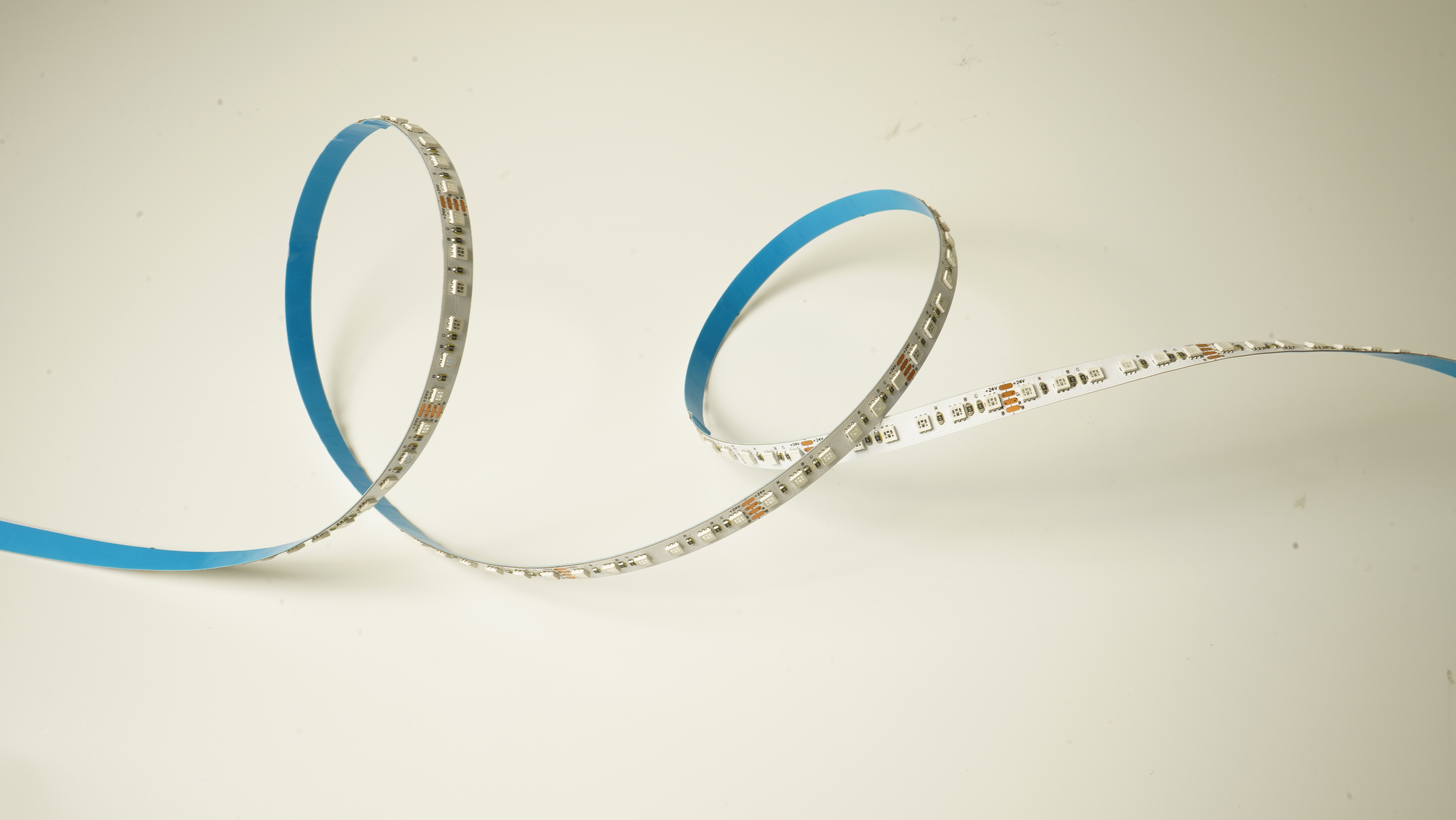
SMD 3535 RGB multi-colour strip: 24V, 8W, 120 LEDs per metre, 8 mm PCB, IP20 — the colour-change side of the comparison.
Problem Definition: buyers choose on chip size, then live with the wrong light
The question “SMD 2835 or SMD 3535?” is usually framed as a component question. In practice it is a colour-task question that has been translated into a part number. The 2835 and 3535 designations describe LED packages; what actually determines whether a wall looks calm or theatrical is the colour output, the density, the colour rendering and the control layer behind the strip.
Three specific failures follow from choosing on chip size alone:
- Colour specified where illumination was needed. An RGB strip installed behind a slat wall in a suite corridor delivers saturation but no defined white point, and the specification sheet for the RGB model above lists no CRI value at all. White-light rendering is not what that chipset is built to deliver.
- Flexibility specified where consistency was needed. A fixed 3000K line cannot be re-tuned for a brand refresh. Where a venue redesigns its colour identity seasonally, a fixed-white strip becomes a re-installation rather than a scene change.
- Density ignored entirely. LED density — LEDs per metre — drives how continuous a linear glow appears on a wall or in a 13 mm or 15 mm slat gap. The two models here sit at 180 LEDs/m and 120 LEDs/m, and that difference is visible in grazing applications.
The decision therefore belongs earlier in the specification process than the bill of materials, ideally before the wall build-up is fixed.
Industry Background: why this comparison is commercially relevant now
LED strip is no longer a niche decorative category. Dataintelo values the global LED strip market at approximately USD 5.8 billion in 2025, projecting USD 13.2 billion by 2034 at a CAGR of 9.6%. Within that market, flexible LED strips represent the largest product type with a 67.4% share as of 2025 — which is why almost every hospitality and residential specification now contains at least one flexible linear run.
Two structural facts shape the 2835-versus-3535 decision:
- 24V dominates linear specification. Grand View Research records that the 24V LED segment accounted for 52.0% of linear LED strip fixture market revenue in 2022. Both models in this comparison are 24V, so the decision does not hinge on voltage architecture.
- Both warm white and RGB are mainstream, not niche. The 3000K–4000K segment held a 33.2% revenue share of the linear LED strip fixture market, while the RGB segment held the largest share (38.5%) of smart LED strip market value in 2025, according to Market Intelo. Neither choice is exotic; both are volume categories with stabilised supply.
Density is the quieter trend. Business Research Insights estimates that high-density variants above 120 LEDs per metre account for nearly 19% of premium installations — a segment where the 180 LEDs/m 2835 strip sits, and where the RGB alternative sits just below the threshold at 120 LEDs/m. Commercial applications contribute approximately 33.8% of global LED strip revenue, which is the segment that most often pairs brand-driven colour with fixed white ambient layers.
Compliance baseline that applies to both chipsets
Neither chipset escapes the regulatory layer. Low-voltage LED strips (12V/24V) sold in the United States are classified under the safety standard UL 2108, and IEC 60598-2-20:2022 specifies safety requirements for lighting chains including LED strips. In the EU, Ecodesign and ErP requirements under the Green Deal continue to push the market toward LED-based systems. XPUP states that its LED strip products have passed CE and RoHS certification and are manufactured in accordance with applicable safety, environmental and energy-efficiency standards for European and American markets. Both models in this comparison are IP20, which means indoor dry environments — not bathrooms, not exteriors.
Detailed Solution: how the two approaches actually differ
SMD 2835 in 3000K: a fixed-warmth lighting layer
The 2835 warm-white approach treats the strip as a lighting layer rather than an effect layer. The reference model here is classified as an acoustic wall LED strip light and was specifically developed for slat wall panels fitted with 13 mm or 15 mm gaps. Its black surface is designed to blend into the wall, and the silicone material is intended to remain environmentally appropriate for homes. It is flexible enough to form shapes and is available at 2.4 m and 3 m per strip, with OEM and ODM options.
What that means for a buyer: one colour temperature, one white point to approve, one dimming curve to validate. Density of 180 LEDs per metre supports a continuous line rather than a visible dot pattern, and 11W rated power at 24V keeps the run within normal low-voltage driver planning. CRI Ra≥80 is the published colour-rendering floor for this model.
Where Ra≥80 is not enough, the same 2835 platform scales upward without changing the visual language of the wall. XPUP publishes 2835 variants at CRI Ra≥90 (XP-BD15DC24V-2835-120D-5MM, 120 LEDs/m, 8W, 24V), Ra≥95 (XP-D4DC24V-2835-192D-8MM, 192 LEDs/m, 15W, 24V, 2700K–6500K) and Ra≥97 (XP-BD18DC24V-2835-140D-8MM, 140 LEDs/m, 12W, 24V). There is also a tunable-white 2835 option, XP-D11DC24V-2835-120D-8MM, which runs 2700K–6000K at Ra≥95. That upgrade path is the strongest argument for standardising on 2835 where the primary requirement is white light quality.
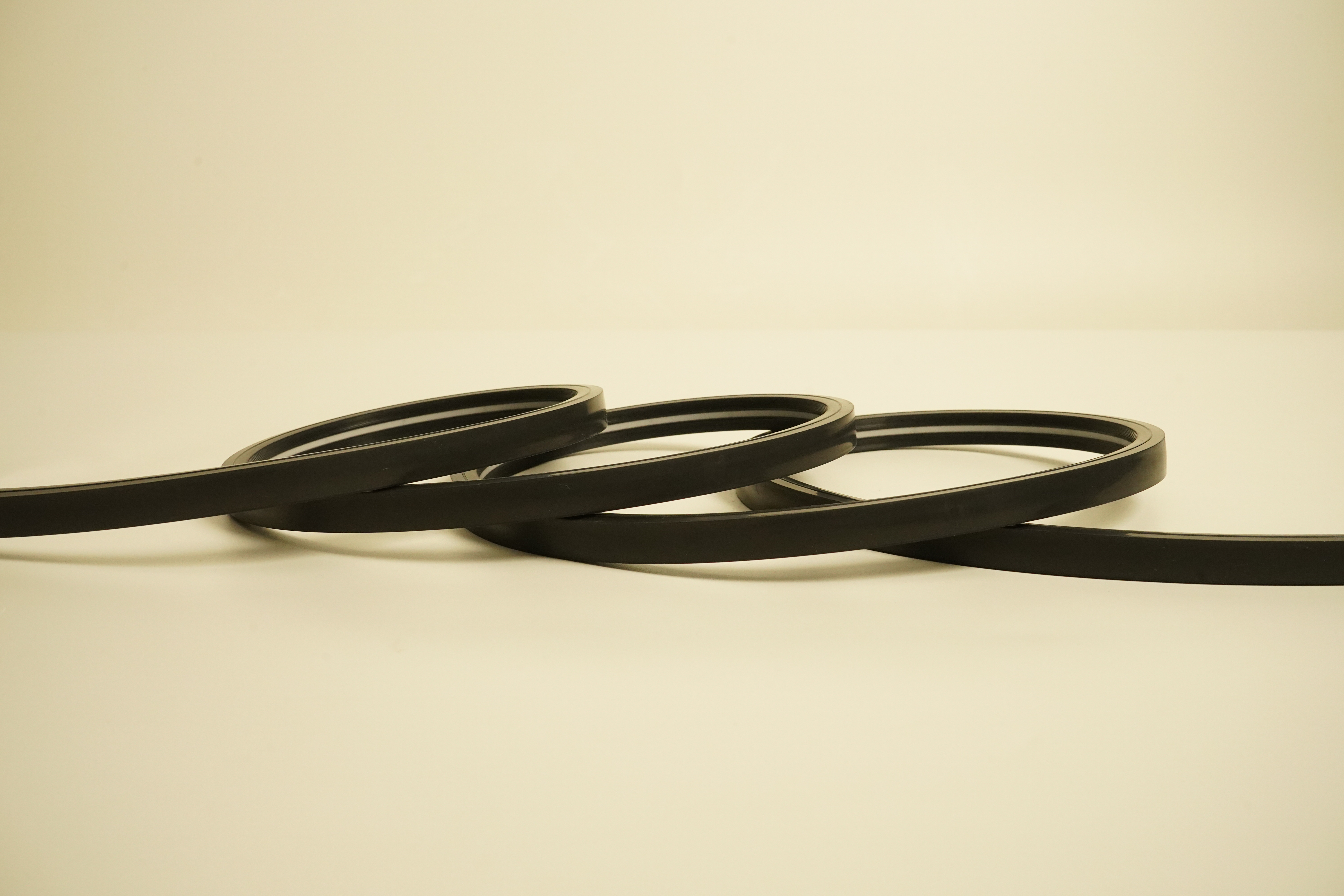
The 2835 warm-white side: 3000K, CRI Ra≥80, 180 LEDs per metre, 8 mm PCB, developed for 13 mm and 15 mm slat wall gaps.
SMD 3535 in RGB: a colour-change layer
The 3535 RGB approach treats the same physical run as a programmable colour surface. The reference model is a multi-colour LED strip light listed for commercial, hospitality and retail lighting, with a published selling point of “classic RGB change with high LED density.” It runs at 24V with 8W rated power, 120 LEDs per metre on an 8 mm double-layer copper PCB, and carries IP20 protection. Its material set is listed as copper PCB and LED controller — a controller is part of the build, not an optional extra.
The trade-off is explicit in the specification. Colour flexibility arrives without a published CRI figure, and the RGB output is not a white-light source with a defined colour point. For a hotel bar frontage, a retail display or a lobby installation where the brand palette changes by season or by event, that is the correct compromise. For a bedroom wall or a suite corridor, it usually is not.
One boundary worth stating plainly: this 3535 RGB model is RGB, not addressable. Buyers who need per-segment chasing or pixel-level effects are looking at a different chipset family — XPUP’s RGBIC options use SMD 5050, for example XP-D6DC24V-5050-60D-10MM (24V, 10W, 60 LEDs/m, RGBIC, IP20). Mixing that requirement into a 3535 RGB brief produces a specification mismatch.
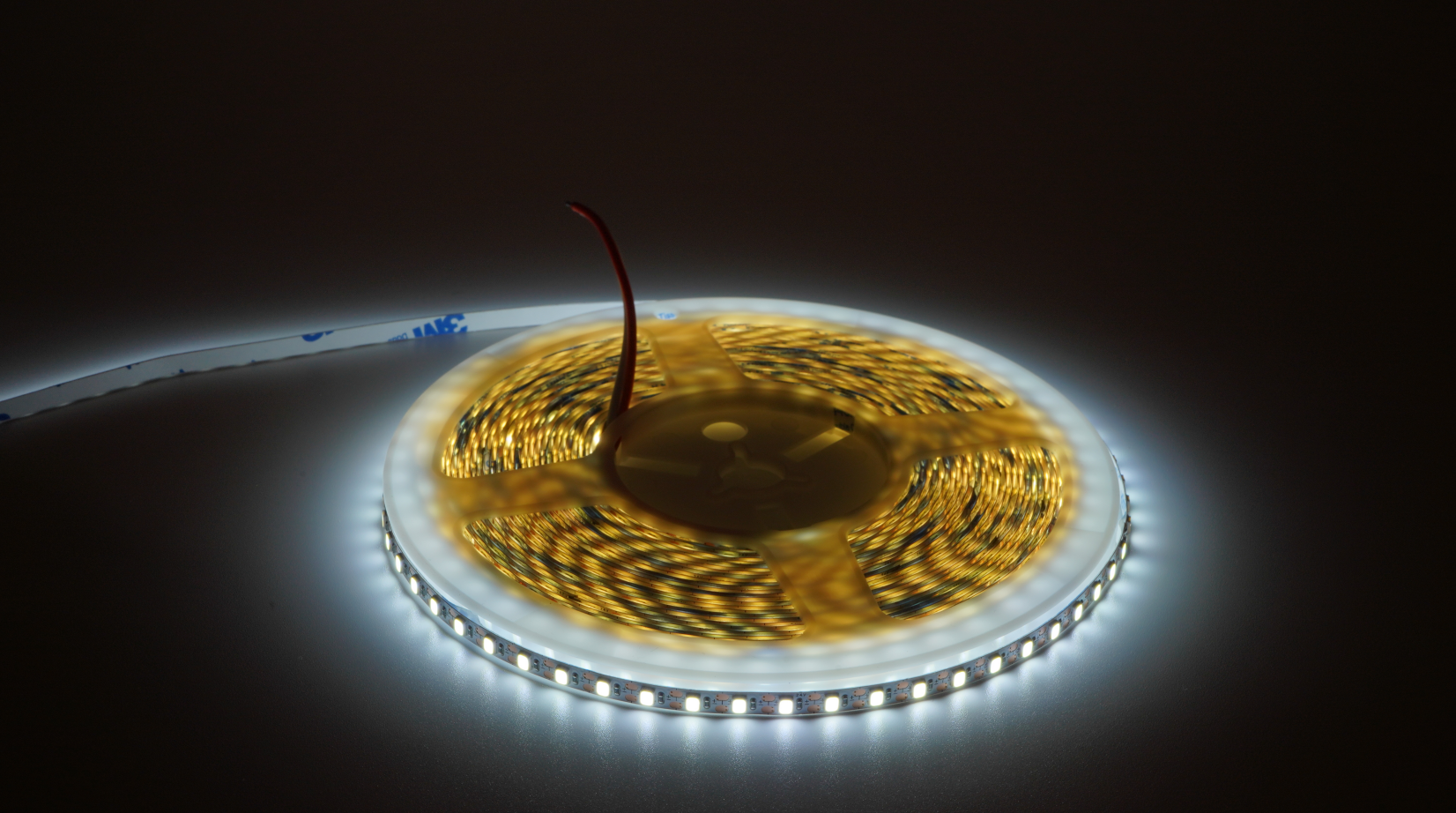
Colour rendering is the split point: the 2835 platform scales from CRI Ra≥80 to Ra≥95 and Ra≥97, while the RGB sheet publishes colour output instead of a CRI value.
Step-by-Step Breakdown: a six-step selection sequence
Step 1 — Fix the job of the light
Write one sentence: “this run exists to illuminate the wall evenly” or “this run exists to change colour with the venue.” If the answer contains both, the project needs two runs, not one compromise chipset. A 2835 3000K line and a 3535 RGB line can coexist behind the same slat wall on separate drivers and separate scenes.
Step 2 — Measure the geometry before naming a chip
Both models are 8 mm PCB, so both fit narrow profiles. The 2835 acoustic wall model is specifically developed for 13 mm and 15 mm slat wall gaps and is supplied at 2.4 m and 3 m per strip, which matters when the wall module dictates the cut length. Confirm the gap, the profile depth and the available strip length before locking the chipset.
Step 3 — Set the colour-quality floor
If the lit surface includes skin tones, wood veneer, stone or merchandise, treat CRI as a hard requirement. The 2835 warm-white model publishes Ra≥80; the platform offers Ra≥90, Ra≥95 and Ra≥97 variants where the design calls for it. The 3535 RGB model publishes no CRI value, so it cannot be specified against a colour-rendering requirement — only against a colour-effect requirement.
Step 4 — Plan the control and power layer
Both strips are 24V, so both need a matched 24V DC driver rather than a mains feed. The RGB model additionally requires a controller, which its material set already assumes. Budget the control layer at the same time as the strip: an RGB run without a specified controller is an incomplete specification, and a fixed-white run with an undersized driver will not deliver its rated output.
Step 5 — Confirm environment and compliance
Both models are IP20 and belong in indoor dry environments. That rules out exposed exteriors, wet rooms and condensation-prone facades regardless of chipset. For US-bound projects, confirm the assembly against UL 2108 for low-voltage strips; for EU-bound projects, confirm IEC 60598-2-20:2022 alignment and CE/RoHS documentation. XPUP works to CE and RoHS for its LED strip range.
Step 6 — Validate on a sample run, then lock batch consistency
Colour temperature and colour mixing are perceptual results, not spreadsheet values. Approve a physical sample on the actual wall material — slat panels absorb and reflect light differently from a paint swatch. Then lock the specification and require batch-to-batch colour and brightness consistency as a purchase condition; XPUP’s standardised mass production is set up around consistent colour temperature and controlled batch-to-batch colour difference.
Use Cases: hospitality branding versus luxury residential comfort
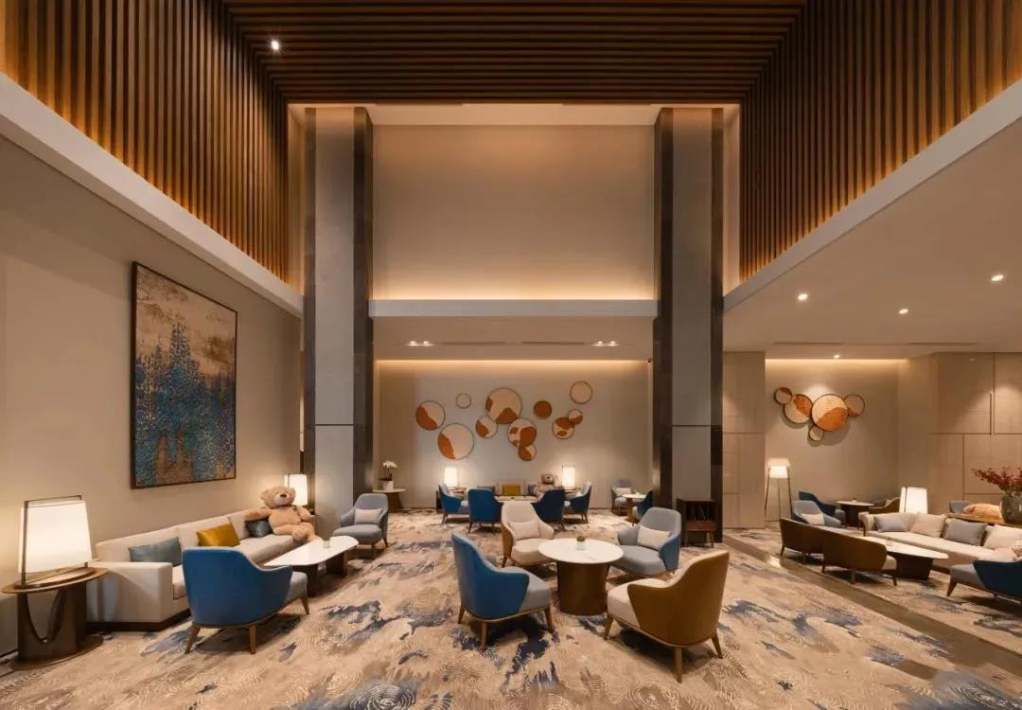
Hospitality: colour as brand signal — the 3535 RGB model is listed for commercial, hospitality and retail lighting.
Hospitality branding: the 3535 RGB case
A hotel bar, a lobby feature wall or a retail window generally needs the light to be recognisable as part of the brand, and to adapt. The 3535 RGB strip’s listed application set — commercial, hospitality and retail lighting — matches this exactly. Its practical value is scene flexibility: the same physical run carries a signature colour during service hours and a calmer tone during turnover. At 120 LEDs per metre it is a genuinely dense RGB layout, which limits the dotted appearance that low-density RGB strips show on grazing surfaces.
The constraint to design around is that RGB does not replace the ambient white layer. Hospitality spaces normally need both: a fixed warm-white wash for circulation and safety, and a colour layer for identity. Specifying RGB only tends to produce venues that look dramatic in photographs and poorly lit in use.
Luxury residential comfort: the 2835 warm-white case
In a luxury residence, the brief is usually the opposite — the light should be invisible as a device and only apparent as a quality of the surface. The 2835 3000K acoustic wall strip was developed for exactly that setting: slat wall panels with 13 mm or 15 mm gaps, a black surface that recedes into the wall, silicone material chosen with home environments in mind, and 180 LEDs per metre for an even line. Its listed application set includes luxury residential lighting, wall lighting, lighting design and interior fit-out.
Its weakness is equally clear: it cannot change colour. If the homeowner later wants a cooler tone or a coloured accent, the run must be re-specified rather than re-programmed. Where that risk is real, the tunable-white 2835 option (XP-D11DC24V-2835-120D-8MM, 2700K–6000K, Ra≥95) keeps the residential white-light character while adding tone control — a middle path that stays inside the warm-white family rather than crossing into RGB.
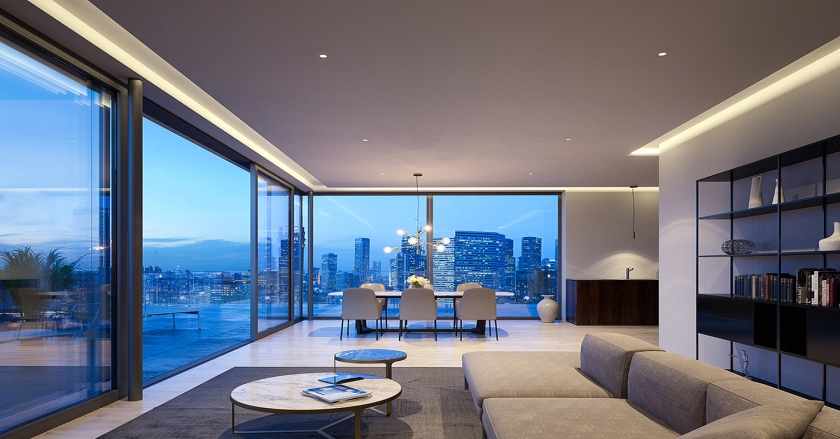
Luxury residential: colour as comfort — the 2835 3000K model targets slat wall gaps with a recessed black surface.
Comparison Table: SMD 2835 warm white vs SMD 3535 RGB
| Attribute | SMD 2835 warm white CA-DC24V-2835-180D-8mm-3000K | SMD 3535 RGB XP-D5DC24V-3535-120D-8MM |
|---|---|---|
| SMD type | 2835 | 3535 |
| Colour output | Fixed warm white, 3000K | RGB (colour change) |
| CRI | Ra≥80 (published) | Not published on the specification |
| LED density | 180 LEDs per metre | 120 LEDs per metre |
| Rated power | 11W | 8W |
| Voltage | 24V DC | 24V DC |
| PCB width | 8 mm | 8 mm |
| PCB material | Double-layer copper | Double-layer copper |
| IP rating | IP20 | IP20 |
| Control requirement | Matched 24V DC driver | 24V DC driver plus LED controller |
| Supplied length | 2.4 m and 3 m per strip | Not stated on the specification |
| Listed applications | Acoustic panel lighting, luxury residential, wall lighting, lighting design, interior fit-out, LED wholesalers | Commercial lighting, hospitality lighting, retail lighting |
| OEM & ODM | Listed on the model specification | Available through XPUP’s OEM/ODM programme |
What the specification does not tell you
Two areas require confirmation at sample stage rather than from the sheet. First, perceived colour consistency across a long run: density and PCB design influence how continuous the line reads, and the only reliable test is a mock-up on the actual substrate. Second, dimming behaviour at the low end — smoothness at 1–5% output is a function of driver and controller compatibility, not of the LED package. Both are sample-stage questions.
Reference point
For lifespan planning, quality LED strips are generally rated in the 30,000 to 50,000 hour range, and LED strips consume roughly 70% less power than traditional incandescent systems. Those figures apply to the category rather than to a single model, and they assume correct thermal and driver conditions — not a guarantee for any specific installation.
FAQ
Do the 2835 and 3535 strips need the same compliance documentation for US and EU projects?
Yes at the standard level, with different national routes. Low-voltage LED strips (12V/24V) in the United States are classified under the safety standard UL 2108, and IEC 60598-2-20:2022 specifies safety requirements for lighting chains including LED strips. Both models in this comparison are 24V and IP20, so both sit in the low-voltage indoor category. XPUP states that its LED strip products have passed CE and RoHS certification and are manufactured in accordance with applicable safety, environmental and energy-efficiency standards for European and American markets.
Can XPUP supply both chipsets under one OEM/ODM programme?
Yes. Zhongshan Xiangpai (XPUP) Lighting Technology Co., Ltd. is an LED strip source manufacturer established in 2012 in Zhongshan City, Guangdong, China, with a 10,000 m² factory, approximately 80 staff, 6 R&D engineers and annual output of 35,000,000 m. The portfolio covers flexible strips, COB strips, RGB/RGBCW smart colour strips, outdoor waterproof strips, energy-efficient commercial strips and smart dimmable ambient strips. OEM/ODM services cover voltage, colour temperature, PCB design, specification and packaging, and the 2835 acoustic wall model is itself listed with OEM and ODM options.
Which strip is more economical to run — 11W warm white or 8W RGB?
On rated power the 3535 RGB model is listed at 8W against 11W for the 2835 warm-white model, so at equal run length the RGB strip draws less. That comparison is only valid at the same dimming level and with the same driver efficiency; RGB installations also carry controller standby draw. Purchase pricing is configuration-dependent and is quoted per project rather than published, so budget should be confirmed against a written quotation covering strip, driver, controller and packaging.
Can we evaluate samples of both before committing to a wall specification?
Yes — sample confirmation is a defined stage in XPUP’s process, followed by mass production, international delivery and after-sales support. Sampling matters most for the perceptual variables: mock both strips up on the actual slat panel or wall material, check the 13 mm or 15 mm gap fit on the 2835 model, and review the RGB mix at the intended viewing distance. Approve colour temperature and brightness on the physical sample, then require batch-to-batch consistency as a purchase condition.
How do I shortlist LED strip light manufacturers who can deliver both, and what lead time should I plan for?
Screen manufacturers on four verifiable points rather than on catalogue breadth: whether both chipsets appear in published specifications with stated parameters; whether compliance documentation covers your destination market; whether OEM/ODM scope is defined in writing; and whether batch consistency is a contractual condition. XPUP operates a 10,000 m² facility with annual output of 35,000,000 m, builds inventory in low seasons to maintain supply through peak seasons, and ships to buyers across the EU, USA and other regions. Lead time is confirmed per order during quotation, once strip, driver, controller and packaging are fixed — the practical next step is to send your wall drawing to sales001@xpupled.com or request a sample set of both models.
Conclusion: decide on the colour task, then on the chip
The 2835 warm-white strip and the 3535 RGB strip solve different problems on the same wall. The 2835 acoustic wall model — 3000K, Ra≥80, 180 LEDs per metre, 11W, 8 mm PCB, 2.4 m and 3 m lengths, developed for 13 mm and 15 mm slat gaps — is the stronger choice wherever the wall must read as a calm, high-quality white surface in a luxury residence. It also has the deeper upgrade path, with Ra≥90, Ra≥95 and Ra≥97 variants and a 2700K–6000K tunable-white option inside the same 2835 family.
The 3535 RGB model — 24V, 8W, 120 LEDs per metre, 8 mm double-layer copper PCB, controller-driven — is the stronger choice wherever colour is part of the brand and must change. Its listed application set of commercial, hospitality and retail lighting describes its natural habitat accurately. What it does not do is substitute for a white-light layer, and its published specification does not carry a CRI figure.
Most hospitality and large residential projects end up specifying both, on separate drivers and separate scenes, rather than forcing one chipset to do two jobs. That is the decision worth making before the wall is built.
Next step: sample both chipsets on your own wall material
XPUP supplies the 2835 warm-white acoustic wall strip and the 3535 RGB multi-colour strip from the same factory, so a side-by-side sample comparison is a single request rather than two supplier conversations. Send your wall drawing, gap dimension and target colour temperature for a quotation, or ask for a sample pair before you lock the specification.
Email: sales001@xpupled.com | Tel / WhatsApp / WeChat: +86 189 8858 4085 | Website: www.xpupled.com
Download the 2026 XPUP LED Strip Catalog (PDF) — full model list, parameters and application notes for the 2835 and 3535 families.

XPUP holds industry recognitions including Top Ten Linear Lighting Brands, Top Ten No-Main-Light Lighting Brands and Quality Linear Lighting Manufacturer.
Have Questions or Need More Details?
Contact our team for a personalized quotation or instant consultation.
Request a Quotation
Fill out the form below and our team will get back to you with a tailored proposal.
WhatsApp Direct Chat
Prefer to chat in real-time? Message us on WhatsApp for instant assistance & quick answers.
- Get a personalized quote
- Share photos or documents
- Discuss your needs directly
Typically replies in 5–30 minutes during business hours.