Understanding LED Strip Density: 120 vs 180 LEDs per Meter for Wall Lighting
Wall lighting rarely fails because a strip is not bright enough. It fails because the wall shows the strip: a row of dots instead of a line, a scalloped wash instead of an even glow. Two 24 V specifications sit behind most of these decisions — a 180 LEDs/m strip built on SMD 2835 packages and a 120 LEDs/m strip built on SMD 3535 packages — and both are rated at 11 W per meter. The verified difference between them is density, and density determines how the light from individual emitters blends before it reaches the wall.
The practical question for engineers and buyers is not which density is superior in general, but which density matches the geometry of the installation. A wall wash with a deep cove and generous diffuser standoff can be produced with 120 LEDs per meter with no visible structure. A shallow recessed channel that leaves only a small gap between the LEDs and the diffusing surface has almost no room for the light to mix, and that is the situation where the extra emitters of a 180 LEDs/m strip change the result.
This guide treats density as a selection parameter rather than a catalogue headline: how it behaves optically, how it interacts with the minimum bending radius, how the 11 W per meter, 24 V rating converts into load calculations for long runs, and how the choice affects repeat supply when the same wall detail is repeated across many rooms, floors or follow-up orders.
What LED Density Actually Measures
LED density is a count: the number of LED packages mounted on one linear meter of flexible PCB, expressed as LEDs per meter. It is not a brightness rating, a wattage or a colour specification. Two strips can share the same 24 V input and the same 11 W per meter rating and still produce completely different wall images, because density controls the distance between emitters, and therefore how much the light cones from adjacent LEDs overlap.
At even spacing, the geometry is straightforward to calculate:
- 180 LEDs per meter places one emitter approximately every 5.6 mm along the strip.
- 120 LEDs per meter places one emitter approximately every 8.3 mm along the strip.
These are nominal centre-to-centre figures derived from the LED count. The actual pitch on a delivered strip depends on the PCB layout, the cut mark intervals and the tolerance of the mounting process. The direction of the difference, however, is fixed: the higher-density strip puts roughly 50% more light sources into the same meter, at a shorter and more regular interval.
Three consequences follow, and they are the ones that decide wall lighting outcomes: the overlap of the emitted light cones, the mixing distance required before the lit surface looks continuous, and the way the assembly behaves mechanically when it has to follow a curve.
The Problem: Why Wall Lighting Reveals Density First
Wall lighting is a grazing-light application. The strip is almost always concealed — in a cove, a recessed channel, a lip detail or behind a panel edge — and light is directed across a vertical surface at a shallow angle rather than aimed at a task area. Grazing light is unforgiving for two reasons.
First, at a shallow angle the illuminated surface magnifies any periodic variation in output. A small difference in intensity between adjacent emitters that would be invisible under direct downlight becomes a visible sequence of bright bands and darker gaps — the effect usually described as scalloping or dotting.
Second, wall details usually limit the distance between the LEDs and the diffuser. Cove lips, rebated channels and acoustic panel reveals are shallow by design. The shorter that distance, the less opportunity the individual light cones have to spread and merge before they reach the diffusing material. Where the standoff is generous, light has room to blend; where it is tight, whatever structure exists at emitter level is printed onto the wall.
The practical failure modes are therefore predictable: visible dotting where the diffuser sits close to the strip, a scalloped wash on large flat walls, and a broken line wherever a curve or corner forces the strip into a position that was not accounted for at design stage. None of these are solved by increasing wattage. They are solved by matching density to the detail.
Industry Background: Density Is Now a Specification Line
Density has moved from a technical footnote to a line item on lighting schedules, and the market data shows why. The global LED strip market was valued at approximately USD 5.8 billion in 2025 and is projected to reach USD 13.2 billion by 2034, growing at a CAGR of 9.6% (Dataintelo). Flexible strips remain the dominant product type, holding a 67.4% share as of 2025.
Within that volume, high-density variants above 120 LEDs per meter account for nearly 19% of premium installations (Business Research Insights, 2025). That figure is useful in two directions: it confirms that high density is an established, specified option rather than an experimental one, and it shows that it remains a deliberate premium choice rather than the default. Buyers should be able to justify the denser strip on a specific surface and viewing condition, not on a general preference.
The electrical platform is equally settled. The 24 V segment accounted for 52.0% of linear LED strip fixture market revenue in 2022 (Grand View Research), and the 3000K–4000K colour band — the neutral white most wall lighting uses — held a 33.2% revenue share in the same category. Commercial applications contribute approximately 33.8% of global LED strip revenues, and more than 65% of new architectural lighting installations in 2025 are reported to use LED strip technology. In other words, the specification that decides wall uniformity is being written at scale, in a market that has already standardised on 24 V and neutral white.
How 180 LEDs/m and 120 LEDs/m Behave on a Wall
Pitch, overlap and mixing distance
The 180 LEDs/m option places emitters roughly 5.6 mm apart. Because each emitter produces a cone of light that widens with distance, shorter spacing means each point on the diffuser receives light from more neighbouring LEDs at the same time. The result is a smoother blend at short standoff distances, and a wall that reads as a continuous line even when the diffuser sits close to the strip.
The 120 LEDs/m option places emitters roughly 8.3 mm apart. At a generous standoff — a deep cove, a wide setback, a diffuser with enough depth — the cones have room to merge and the wall reads as smooth as well. At a short standoff, the same strip shows structure. The threshold is not universal: it depends on diffuser material and thickness, the distance from the strip to the wall, and the angle from which the surface is viewed.
What the SMD 2835 and SMD 3535 packages change
The type designations refer to package footprints: SMD 2835 measures nominally 2.8 mm × 3.5 mm, and SMD 3535 nominally 3.5 mm × 3.5 mm. Footprint matters because it changes what each emitter can deliver.
A larger package can host a larger LED die, so a 120 LEDs/m strip built on SMD 3535 concentrates the same 11 W per meter into fewer, higher-output emitters. Visually, this creates brighter points with wider spacing between them — an arrangement that works well when the light has distance to blend, and one that becomes more demanding when it does not.
The 180 LEDs/m layout on SMD 2835 takes the opposite approach: more, smaller emitters distributed more evenly across each meter. Total power per meter is unchanged, but the light is emitted from a larger number of closely spaced points, which is the mechanism behind an even, uninterrupted wall wash at short standoff.
Minimum bending radius and channel geometry
Density also has a mechanical dimension. A flexible LED strip is a flexible printed circuit board carrying rigid components. The board bends; the LED packages do not. As a result, the practical minimum bending radius of a strip is a property of the assembly — PCB thickness and copper structure, plus the way rigid components are distributed along the length — rather than of the strip's nominal flexibility alone.
Because a 180 LEDs/m strip places more rigid packages into the same meter, it generally leaves less free PCB between components where a bend can actually occur, so its practical minimum bending radius is typically larger than that of a 120 LEDs/m layout. That matters directly in wall lighting, where strips are frequently asked to follow a curved feature wall, a radiused cove return or a corner detail.
Two rules follow. First, bending should always happen in the free areas of the strip and never across a solder joint, component or cut mark. Second, the minimum bending radius should be confirmed against the supplier's specification for the exact strip and PCB being supplied, since density, PCB construction and package size all influence it. Where the architectural detail demands a tighter radius, the lower-density 120 LEDs/m layout is generally the more workable starting point.
What density does not change
Density is often treated as a proxy for overall quality. It is not. Luminous efficacy, colour consistency from reel to reel, CRI, IP rating and dimming behaviour are determined by the LED bin, the phosphor and driver design, the encapsulation and the power supply — not by the number of packages per meter. Equally, because both options discussed here are rated at 11 W per meter and 24 V, the thermal load per meter is identical: density changes the optical pattern, not the heat budget of the installation.
Power, Voltage and Load Planning for Long Wall Runs
The verified electrical specification for these wall lighting strips is 24 V DC constant voltage at 11 W per meter. That single figure drives every downstream electrical decision.
Converting it to current is the first step in load planning: at 11 W per meter and 24 V, each meter draws approximately 0.46 A. A 10-meter run therefore draws approximately 4.6 A and consumes about 110 W. These values should be treated as the design starting point; the driver must then be specified with capacity above the calculated load, following the driver datasheet rather than the strip figure alone.
The choice of 24 V over 12 V for linear work is not arbitrary. For the same power per meter, doubling the voltage halves the current, which reduces resistive losses and voltage drop along the strip's copper conductors. That is the mechanism behind the position of 24 V in the linear fixture market, where the segment accounted for 52.0% of revenue in 2022 (Grand View Research). Practically, it means longer continuous runs can be powered before the far end of the strip begins to dim relative to the near end.
Long wall runs still require discipline:
- Respect the manufacturer's maximum run length for a single feed, and feed from both ends or re-feed the strip where the wall is longer than that limit.
- Keep a consistent density within one continuous visual plane. Mixing a 180 LEDs/m section with a 120 LEDs/m section on the same wall will show at the transition.
- Plan where each roll connects. XPUP LED supplies strips in 10-meter rolls specifically to prevent overloading, so a run should be designed around those connections rather than chained beyond them.
- Confirm driver headroom and dimming method against the actual strip load, since the calculated 4.6 A for a 10-meter run is the strip current and not the driver's input current.
Step-by-Step: Specifying Density for a Wall Lighting Project
- Measure the diffuser standoff. Before any product is selected, establish the distance between the LED surface and the diffusing material, and how the wall will be viewed — straight on, along the wall, or both. This single measurement rules a density in or out more reliably than any general recommendation.
- Set the brightness target per linear meter. Decide the required light level on the wall and confirm that the verified 11 W per meter specification supports it. Density affects distribution, not total power, so brightness target and density are separate questions.
- Match density to standoff and package. Short standoff with an even wash required points to the 180 LEDs/m SMD 2835 option. Generous standoff, or a design where brighter, more widely spaced points are acceptable, allows the 120 LEDs/m SMD 3535 option.
- Check the mechanical path. Trace the strip route for curves, returns and corners. Confirm the minimum bending radius for the selected strip against the supplier's specification, and plan bends away from components, solder joints and cut marks.
- Calculate the electrical load. Multiply 11 W per meter by the run length, convert to current at 24 V, and compare with the maximum run length the supplier permits for a single feed.
- Define the feed architecture. For long walls, decide between single-end feed, two-end feed and re-feeding, and confirm that driver capacity covers the total connected load with the headroom the driver datasheet requires.
- Validate with a mock-up. Build the actual detail — channel, diffuser material and thickness, standoff and strip — and inspect it at the final viewing distance before mass production. This is the step that converts a specification into a confirmed result.
Use Cases: Where Each Density Fits
Where 180 LEDs per meter is the safer specification
- Shallow recessed wall channels and narrow cove lips, where the diffuser sits close to the strip and mixing distance is limited.
- Continuous feature walls and premium residential wall details where a single unbroken line is the design intent.
- Grazing installations viewed along the wall, where scalloping is most visible.
- Acoustic panel and fabric wall lighting, where reveals are narrow and the light must read as an even glow rather than a series of points.
Where 120 LEDs per meter is usually sufficient
- Deep coves and generous setbacks where light has room to blend before it reaches the illuminated surface.
- Wall details with a tight curve or radiused return, where the lower-component-count layout is easier to install accurately.
- Indirect wall lighting where the wall is a background plane rather than the primary focus.
- Projects where component count per meter is a cost driver and the geometry does not demand the denser option.
Comparison Table: 180 LEDs/m SMD 2835 vs 120 LEDs/m SMD 3535
| Parameter | 180 LEDs/m — SMD 2835 | 120 LEDs/m — SMD 3535 |
|---|---|---|
| LED package footprint | Nominally 2.8 mm × 3.5 mm | Nominally 3.5 mm × 3.5 mm |
| LEDs per meter | 180 | 120 |
| Approximate centre-to-centre pitch (calculated, even spacing) | ~5.6 mm | ~8.3 mm |
| Verified electrical specification | 24 V DC, 11 W per meter | 24 V DC, 11 W per meter |
| Current per meter at 24 V (calculated) | ~0.46 A | ~0.46 A |
| Uniformity at short diffuser standoff | Greater emitter overlap; smooths the wash when the diffuser is close to the strip | Requires more standoff for the same smoothness; may show structure in shallow channels |
| Relative hotspot risk in grazing wall lighting | Lower, because emitters are more closely and evenly spaced | Higher where the strip sits close to the diffusing surface |
| Mechanical behaviour / bending | More rigid components per meter; practical minimum bending radius is generally larger — confirm against the supplier's specification | Fewer components per meter; generally more workable for tighter curves and radiused returns |
| Typical role in a project | Premium wall details, shallow channels, continuous feature lines | Deep coves, indirect washes, curved details, component-count-sensitive runs |
Density is an optical decision. Neither column changes the 11 W per meter thermal load, the 24 V platform, or the luminous efficacy of the LED bin in use. Where a wall has enough standoff, the lower-density option can deliver an even result; where it does not, density is the parameter that fixes it.
Long-Term Supply: Why Density Standardisation Matters
For distributors, brand owners and engineering contractors, density is not only a per-project decision. The same wall detail is usually repeated across many rooms, floors or buildings, and sometimes across multiple follow-up orders. If the density specification drifts between batches, the change becomes visible wherever two installations can be seen together — a corridor and its adjacent lobby, or a showroom and the model wall behind it.
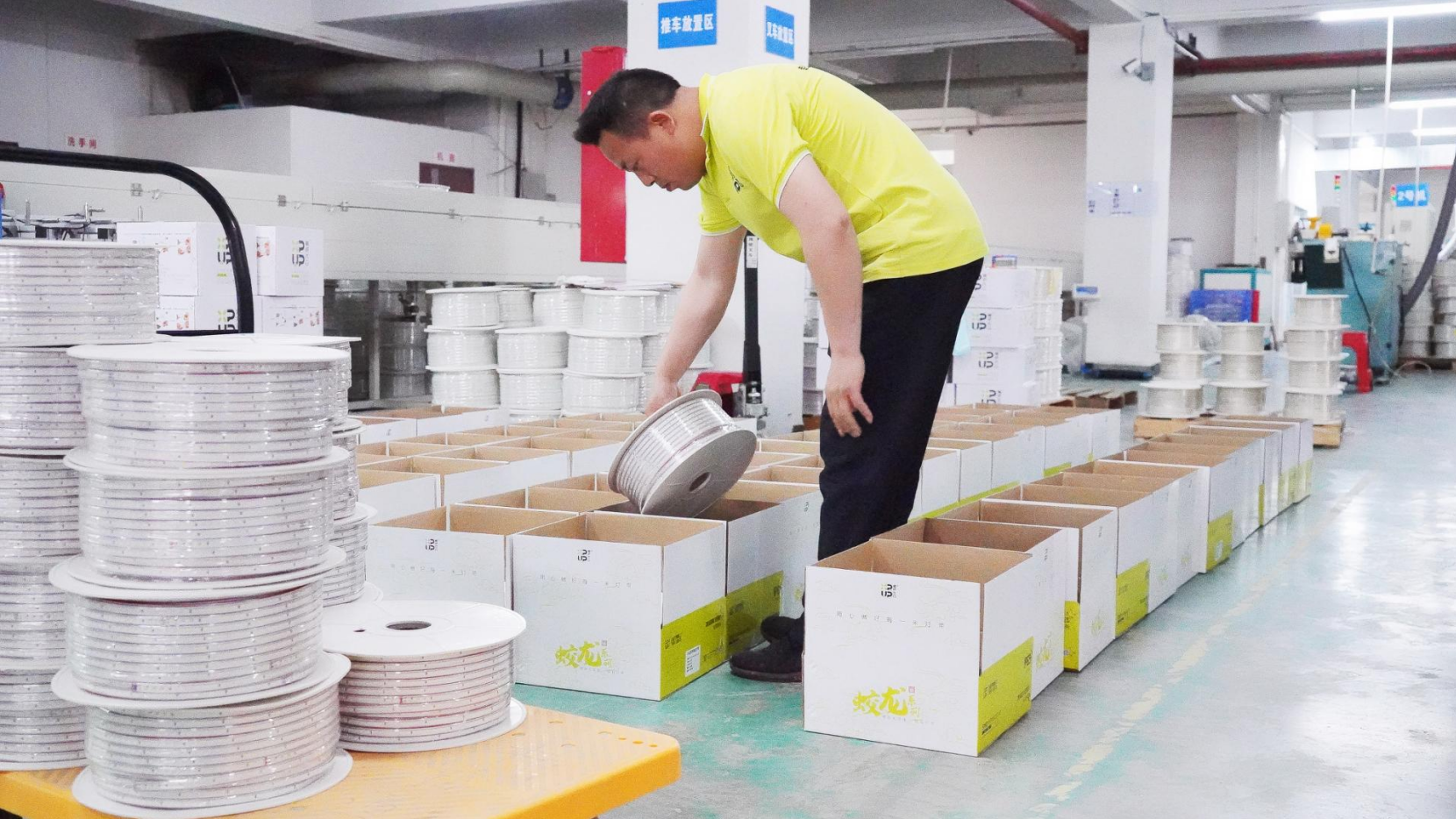
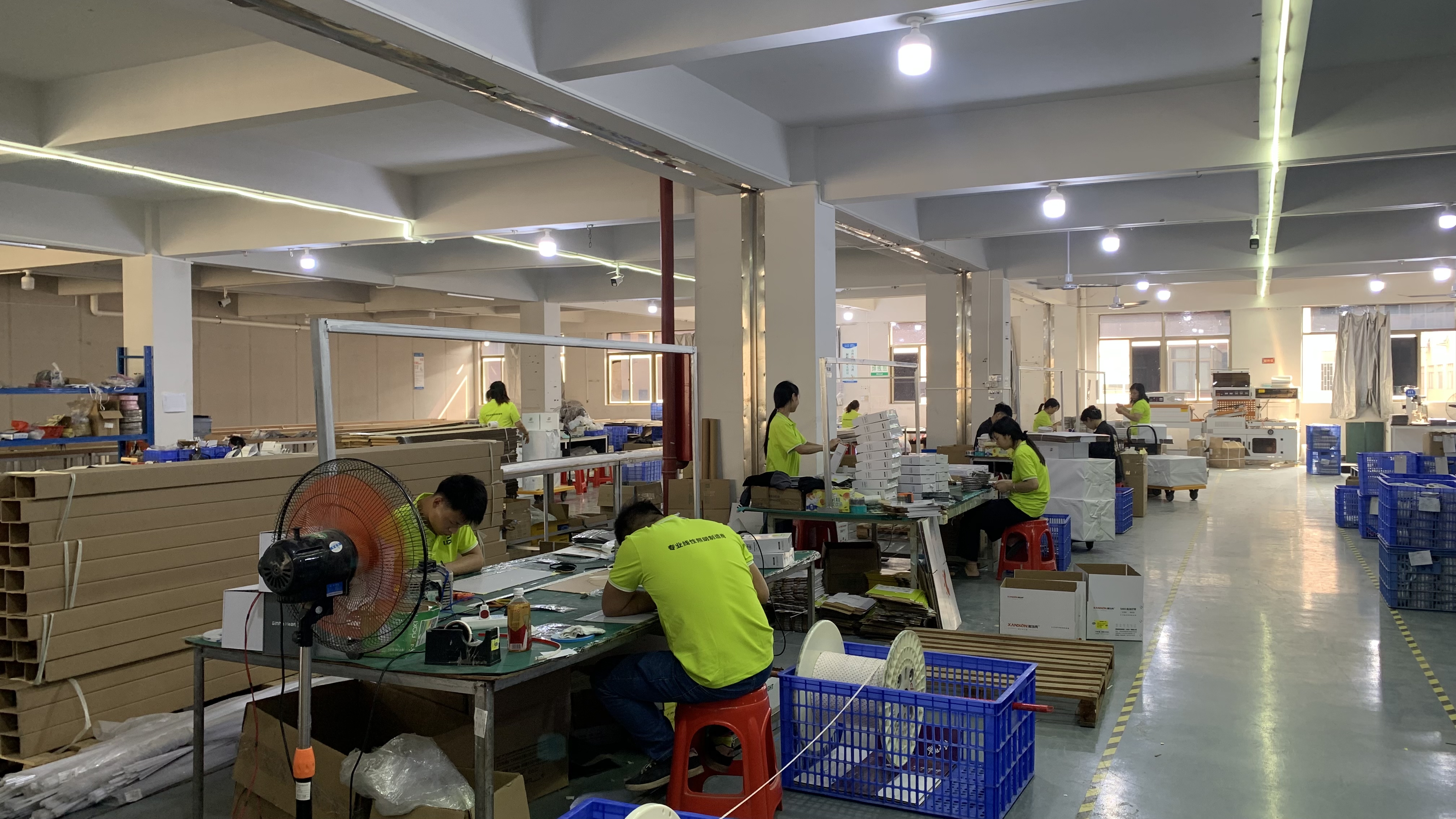
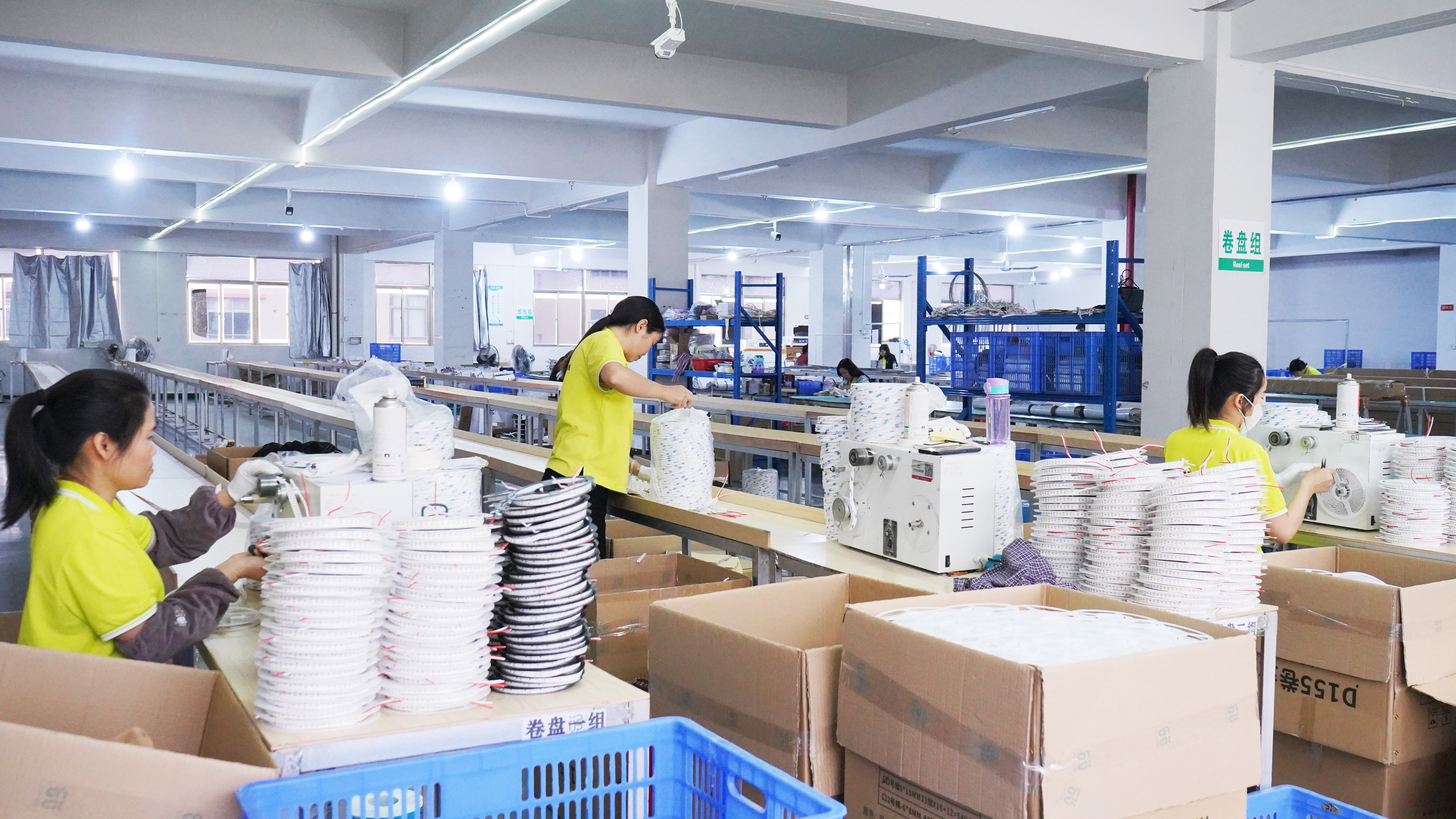
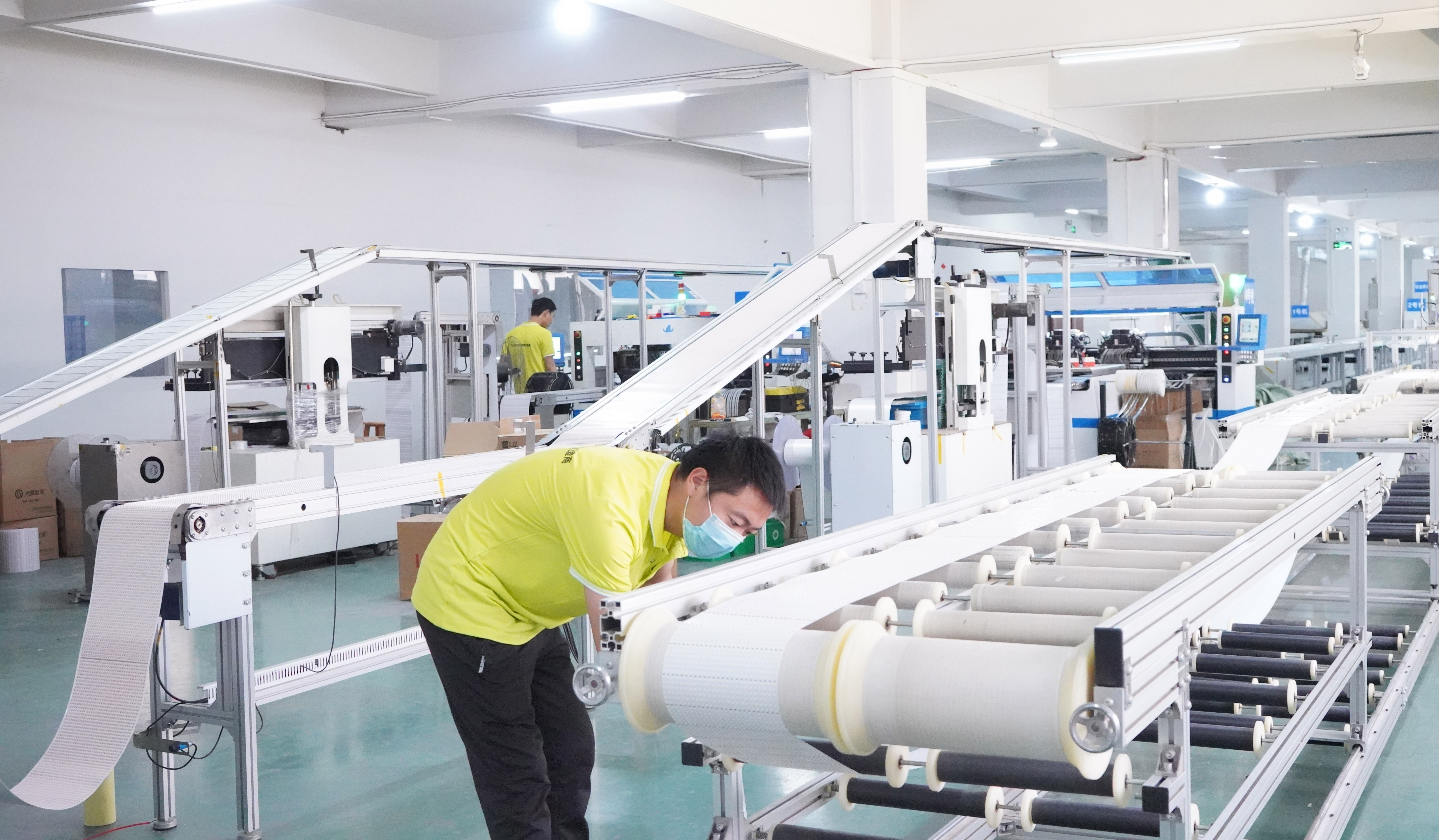
XPUP LED — Zhongshan Xiangpai (XPUP) Lighting Technology Co., Ltd., established in 2012 in Zhongshan, China — manufactures LED strips for overseas buyers and supplies both density formats, so a specification can be held constant across a programme instead of being re-sourced per phase. The company operates from a 10,000 m² factory with 80 employees, a 6-engineer R&D team and an annual output of 35,000,000 meters of LED strip, with approximately 50% of output exported and the European and American markets as its main destinations.
Several supply-side mechanisms are relevant when density is standardised for the long term:
- Customisation at specification level. OEM/ODM services cover voltage, colour temperature, PCB design, specification and packaging, with a dedicated cooperation system for overseas lighting brands that includes private-label customization, product solution optimization, joint new product development, customized packaging and market compliance adaptation.
- Supply chain fit for European and American markets. A mature supply chain supports long-term private-label production, bulk procurement and large-scale project supply, while small-volume, multi-product and flexible procurement options remain available for smaller customers.
- Capacity planning across the season. Large-scale production capacity allows inventory to be prepared during low seasons so that supply is maintained through peak seasons, and buffer capacity can be arranged according to project requirements.
- Quality control at every stage. A full-process quality control system covers incoming material inspection, in-process inspection, aging tests and final inspection, and products that fail the standards are not allowed to proceed or be shipped.
- Delivery defined in advance. Delivery schedules and delay handling procedures are set out in supply agreements, with proactive progress updates, and strips are supplied in 10-meter rolls to avoid overloading on site.
- Warranty and engineering support. All product series are covered by a standard 2-year warranty, with extended warranty terms available for large-scale projects and ODM brand partnerships; dedicated engineers support overseas commercial, architectural and residential projects when required.
- Single point of contact. Each order is managed through one-to-one communication covering solution discussions, sample customization, certification coordination, production scheduling, quality inspections, logistics and after-sales service.
Commercial terms for project and distribution orders are MOQ 2000 meters, FOB/CIF delivery terms, pre-shipment testing as the acceptance criterion, and 30% deposit with the balance payable before shipment. Company products hold CE and RoHS certification, and the company holds registered design and structural/process patents in linear lighting, including the C19 and C20 series LED strips. Further product information is available at www.xpupled.com.
FAQ
Do 24 V wall lighting strips need specific safety compliance?
Yes, and the applicable standard depends on the market. Low-voltage LED strips operating at 12 V or 24 V in the United States are classified under the safety standard UL 2108. At international level, IEC 60598-2-20:2022 specifies safety requirements for lighting chains, which includes LED strips. In the EU, energy efficiency requirements under the Ecodesign framework shape how LED-based systems are specified. XPUP LED strip products are CE and RoHS certified and are manufactured in accordance with applicable safety, environmental and energy-efficiency standards. Buyers should confirm which standard applies to the end market and to the specific installation before releasing a specification.
Can LED density and pitch be customized for a specific wall profile?
Density and related parameters can be customized through OEM/ODM services. XPUP LED provides OEM/ODM customization for LED strip products covering voltage, colour temperature, PCB design, specification and packaging, based on the customer's local market standards, brand positioning and application scenario. For overseas lighting brands, the dedicated cooperation system includes private-label customization, product solution optimization, joint new product development, customized packaging and market compliance adaptation. In a wall lighting context, the two technical inputs the supplier needs are the diffuser standoff and the mechanical path — the required minimum bending radius and the curve or corner details the strip must follow.
Why does a 180 LEDs/m strip cost more, and when is the extra spend justified?
A higher density places more LED packages and more assembly work into every meter, so the component and assembly content per meter is greater and unit cost is generally higher than for a 120 LEDs/m layout. The premium is justified when the installation geometry leaves little room for light to mix — a shallow channel, a narrow cove lip, or a wall viewed along its length — because in those conditions no other specification change restores uniformity. Where the diffuser standoff is generous, the 120 LEDs/m option can meet the design intent at a lower component count. Market context supports the distinction: high-density variants above 120 LEDs per meter account for nearly 19% of premium installations (Business Research Insights, 2025). Commercial terms for orders are MOQ 2000 meters and FOB/CIF, with pre-shipment testing as the acceptance criterion and 30% deposit with balance before shipment.
How should a sample be validated before a wall lighting project goes to mass production?
The sample should reproduce the finished detail, not just the strip. Build a mock-up using the same channel profile, the same diffuser material and thickness, the same standoff and the same 24 V, 11 W per meter strip, then evaluate it at the final viewing distance and from the angles the finished wall will actually be seen from. XPUP LED supports rapid sampling and sample confirmation ahead of mass production, and pre-shipment testing is used as the acceptance criterion for orders.
What supports a wall lighting programme after the first order?
Long-run supply depends on capacity, inventory planning and defined procedures rather than on a single shipment. XPUP LED operates large-scale production capacity with the ability to prepare inventory during low seasons to maintain supply through peak seasons, and buffer production capacity and inventory can be prepared according to project requirements. Delivery schedules and delay handling procedures are defined in supply agreements, strips are supplied in 10-meter rolls to avoid overloading, all product series carry a standard 2-year warranty with extended terms available for large-scale projects and ODM brand partnerships, and dedicated engineers support overseas commercial, architectural and residential projects. If you are specifying density for a wall lighting programme, send the wall detail and standoff measurements for a sample and quotation at sales001@xpupled.com or via WhatsApp/WeChat at +86 189 8858 4085.
Conclusion
For wall lighting, LED density is the parameter that decides whether a strip reads as a line of light or a row of points. The 180 LEDs/m SMD 2835 option places an emitter roughly every 5.6 mm and blends light at short standoff, which is why it suits shallow channels, narrow reveals and continuous feature walls. The 120 LEDs/m SMD 3535 option places an emitter roughly every 8.3 mm and offers more mechanical freedom for curves and radiused returns, which makes it a practical specification wherever the diffuser has room to mix the light.
Both run on the same verified platform — 24 V DC at 11 W per meter, approximately 0.46 A per meter — so the difference is optical and mechanical rather than electrical. The decision sequence that resolves it is consistent: measure the standoff, set the brightness target, match density to the geometry, confirm the bending radius, calculate the load for the full run length, define the feed architecture, and validate on a mock-up before production. Standardising that decision across a programme, and holding it across repeat orders, is what keeps a multi-phase wall lighting project looking like one installation.
Specify Density With Confidence
XPUP LED manufactures 24 V LED strip in both 180 LEDs/m SMD 2835 and 120 LEDs/m SMD 3535 formats, with OEM/ODM customization, a standard 2-year warranty and engineering support for overseas commercial, architectural and residential projects.
Request a sample or quotation: sales001@xpupled.com · WhatsApp/WeChat +86 189 8858 4085 · Address: 5th Floor, No.36-1, Yihui 1st Road, Henglan Town, Zhongshan City, Guangdong Province, CHINA
Download the full product reference: 2026 XPUP LED Strip Catalog (PDF)