Understanding LED Strip Specs: Chip Density, PCB Layers, and CRI for Optimal Selection
Two flexible LED strips can carry identical labels — 24V, 3000K, Ra≥90, 14.4 W per metre — and still look nothing alike once they are installed. One produces a clean, continuous line of light on a gallery wall. The other shows faint spotting, drifts warmer toward the far end of a ten-metre run, and renders deep reds as a muddy brown. The difference is not brand marketing. It sits in four specification variables that are usually buried on page two of a datasheet: the chip package, the number of LEDs per metre, the PCB copper construction, and the CRI tier the finished strip actually achieves.
This guide is written for decision-stage buyers — lighting brand owners, specifiers, engineering contractors and importers — who have to commit to a configuration and defend that decision months later. It explains what each parameter controls, where the real trade-offs sit, and how the XPUP DK3 linear lighting series and XP-ZS strip series are specified across these tiers.
The Problem: Why Identical Spec Sheets Produce Different Light
A commodity LED strip listing compresses an entire lighting system into three numbers: voltage, colour temperature and watts per metre. That compression is convenient, but it hides the variables that decide whether the finished installation looks professional.
A flexible LED strip is not a single component. Its output is the combined result of the emitters, the printed circuit board and the driver. The chip package sets how much light each diode produces and how heat leaves it. The number of LEDs per metre sets the dot pitch, and therefore whether the eye sees a continuous line of light or a row of bright spots. The copper cross-section of the PCB sets the voltage drop along the run, which in turn sets whether the first metre and the last metre match in brightness and colour. The CRI tier sets how faithfully the light renders what it illuminates: merchandise, artwork, textiles, wood, food and skin.
The practical consequence at the buying stage is that two strips can share the same headline specification and still produce visibly different results. The useful question is therefore not “which strip is brightest per metre?” but “which combination of chip package, density, PCB construction and CRI survives this application for its expected service life?”
Industry Background: Why LED Strip Specification Carries More Weight Now
The market context makes these decisions more consequential than they were a decade ago.
- The global LED lighting market was valued at USD 106.9 billion in 2025 and is projected to reach USD 197 billion by 2033 (Grand View Research).
- Lighting accounted for approximately 8% of global electricity demand in 2024, roughly 2,200 TWh (IEA).
- The commercial lighting market was estimated at USD 47.54 billion in 2024 (Grand View Research), and the linear lighting market at USD 30.09 billion in 2025 with an 11.42% CAGR projected to 2032 (Maximize Market Research).
- The hospitality lighting market is valued at USD 14.2 billion in 2025 (Dataintelo).
- Asia Pacific held a 39.8% revenue share of the global lighting market in 2025 (Grand View Research).
- In the United States, 90% of households reported using LED bulbs for indoor lighting in 2024 (U.S. Energy Information Administration).
- The 2024 International Energy Conservation Code requires lights to dim to 10% or lower in commercial interiors (International Code Council).
Two points follow. First, LED strip has moved from decorative afterthought to mainstream specification line in commercial, hospitality and residential projects, where it is judged on energy, compliance and consistency. Second, regulation now reaches into dimming depth: reaching 10% without flicker or colour shift is a property of the whole system, not a feature that can be added after installation. Both push the decision back to the four technical parameters described below.
Detailed Solution: The Four Specifications That Decide Performance
1. Chip Package: SMD 2835 vs SMD 5050
The package name states the footprint. An SMD 2835 measures 2.8 mm × 3.5 mm; an SMD 5050 measures 5.0 mm × 5.0 mm. That size difference drives most of the practical behaviour.
- SMD 2835 — a compact, single-die package. Its small footprint allows a high count of emitters per metre on a narrow PCB, which is what makes slim, seamless linear runs possible. It is the common choice for high-density indoor strips, under-cabinet lighting and continuous ambient lines where the strip profile must stay discreet.
- SMD 5050 — a larger package with a bigger light-emitting surface. It is commonly built with three dies per package and is widely used where higher output per package is required, and for RGB and RGBCW colour mixing, because the larger surface allows colours to blend before they leave the package.
Neither package is inherently superior. A well-driven 2835 line outperforms a poorly driven 5050 line in every respect a viewer notices. The decision rule is optical and mechanical: choose 2835 when the priority is a slim profile with many small emitters, and 5050 when the priority is output per package, a wider emitting surface or colour mixing.
2. Chip Density: 140D vs 240D per Metre
“D” stands for the number of diodes per linear metre. A 140D strip carries 140 LEDs in each metre; a 240D strip carries 240.
- Dot pitch and uniformity. At 140D the spacing between emitters is coarser. Behind a diffuser at distance it reads as a smooth line of light; at close viewing distance it can still show faint spotting. At 240D the pitch shortens enough to produce a continuous line of light, which is why high-density strips are specified where the strip itself sits in the viewer’s field of view: museum walls, retail display lines and profile-free linear detailing.
- Drive current and heat. Doubling density generally allows a lower drive current per diode for the same output per metre, spreading thermal load across more emitters instead of concentrating it in fewer.
- Cost and PCB demand. More diodes and more copper per metre mean higher material cost. If the strip sits behind a deep cove or lights a technical space where nobody studies the light source, 140D is the more efficient spend.
3. PCB Construction: Single-Layer vs Double-Layer Copper
The printed circuit board does two jobs: it conducts current and it carries heat away from the emitters. Both depend on copper.
- Single-layer copper PCB — sufficient for short runs and standard-output decorative work, where voltage drop over the installed length stays small.
- Double-layer copper PCB — lower conductor resistance over the same length. The practical effects are a smaller voltage drop along the run, so the far end of the strip matches the near end in brightness and colour; more even heat spreading along the strip; and more stable behaviour at deep dimming levels, because the driver is working against a lower-resistance load.
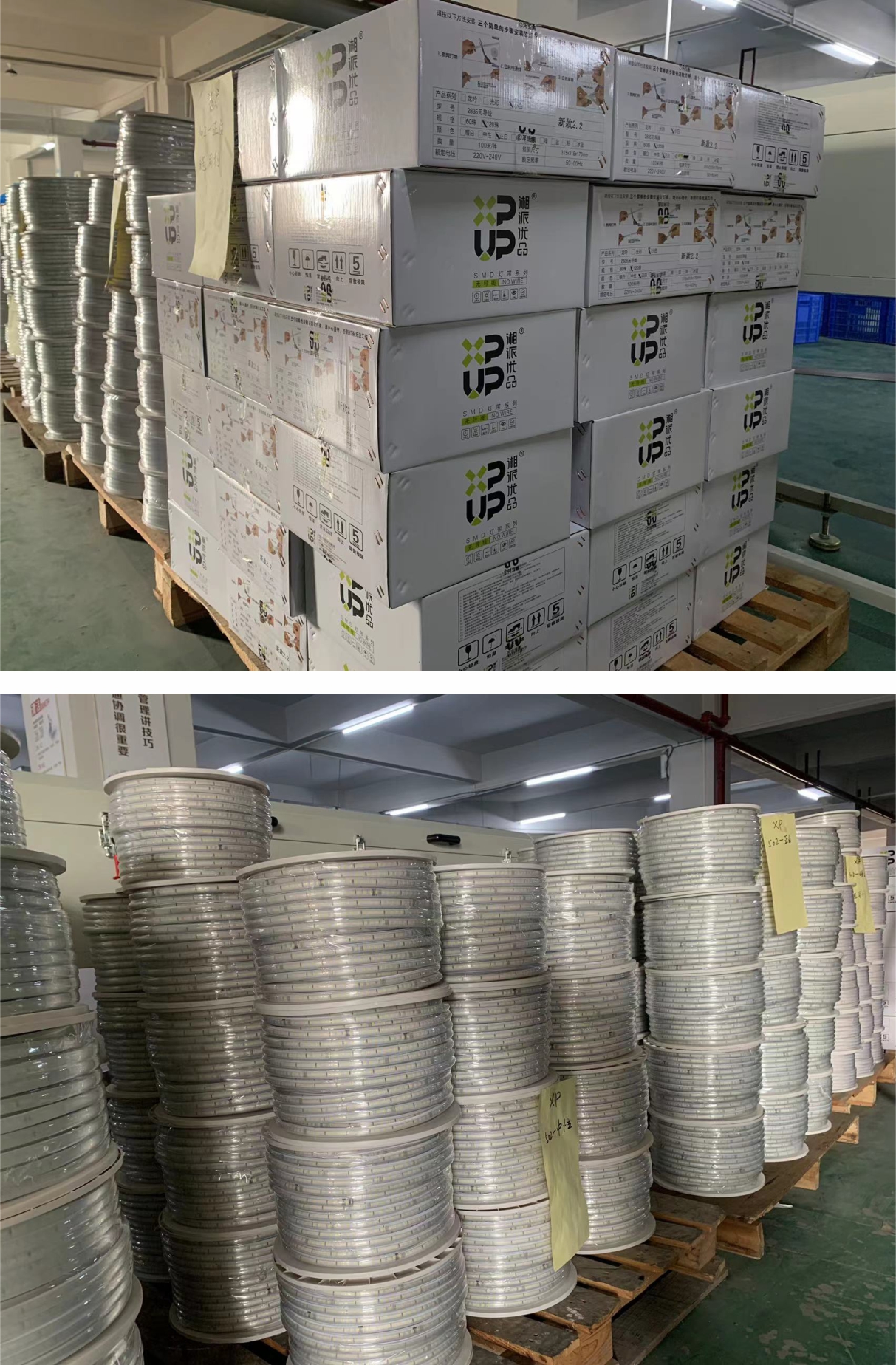
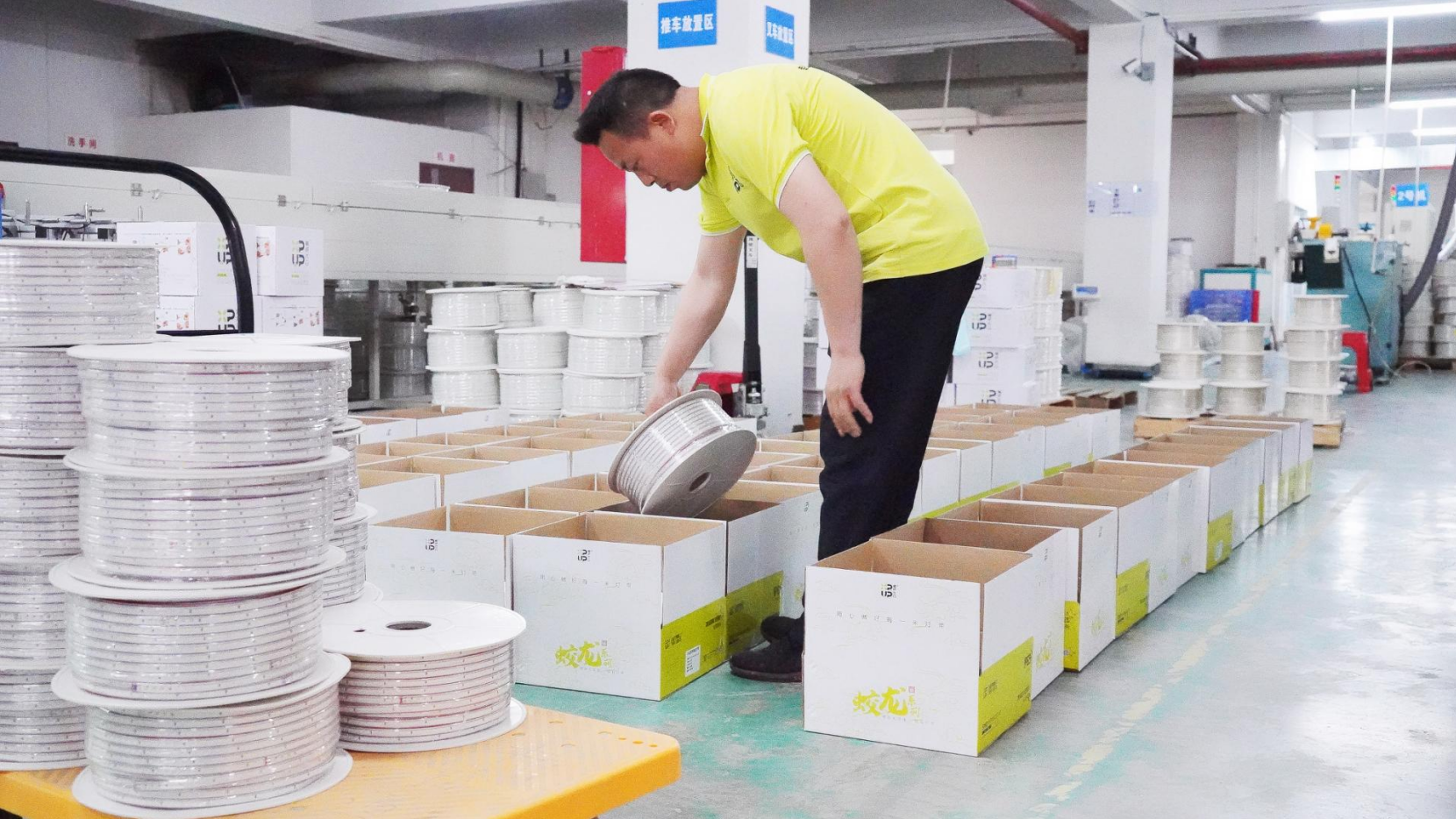
Run length is where this specification is tested. Over a long continuous run, resistive losses accumulate and the far end of a single-layer strip visibly darkens or shifts colour. It is also why maximum length control matters: XPUP supplies strips in 10-metre rolls, which limits exposure to overloading during transport and handling and aligns the supply format with practical run lengths.
4. Colour Rendering: Ra≥90 vs Ra≥97
CRI (colour rendering index) describes how faithfully a light source renders colour compared with a reference source. The “Ra” value is the average of eight test colour samples, R1 to R8, and it deliberately excludes R9, the deep red sample.
That exclusion matters commercially. Two strips can both be printed Ra≥90 and still render reds, skin tones and natural materials differently, because their R9 values differ. In spaces where colour is the product — retail displays, textiles, wood finishes, food presentation, museum objects — R9 is often the number that decides whether a specification is accepted.
- Ra≥90 — commercial-grade rendering. Appropriate for offices, general indoor lighting and secondary or ambient layers where the light illuminates a space rather than presenting an object.
- Ra≥97 — high-fidelity rendering, used where the illuminated object is the point: museums and galleries, premium retail, hospitality interiors, and any application in which a buyer, curator or customer will judge colour accuracy.
There is a trade-off. At a fixed colour temperature, a higher CRI tier typically comes with slightly lower efficacy, so the choice balances colour fidelity against watts per metre. For most presentation lighting the balance is straightforward: the extra consumption is small compared with the value of rendering the object correctly.
How XPUP specifies these variables. The XPUP DK3 linear lighting series and XP-ZS strip series are specified across exactly these four decision points: chip package (SMD 2835 or SMD 5050), chip density (140D or 240D per metre), PCB construction (single-layer or double-layer copper) and CRI tier (Ra≥90 or Ra≥97). Because voltage, colour temperature, PCB design and specifications can be customized for OEM and ODM programmes, the selection process below is what determines the final configuration.
Step-by-Step Breakdown: Selecting an LED Strip Configuration
- Define the viewing condition first. Distance from the viewer to the strip, whether the strip is directly visible or concealed behind a diffuser, and whether the illuminated surface is matte or reflective. This single step decides whether density matters at all.
- Set the CRI tier from the application, not the budget. If the light presents an object — museum, gallery, premium retail, hospitality display — specify Ra≥97 and ask for the R9 value. If the light illuminates a working or circulation space, Ra≥90 is normally sufficient.
- Set an output target in lumens per metre. Watts per metre describes consumption, not output. Two 14.4 W/m strips from different configurations will not deliver the same lumens, so the lighting design should be driven by lm/m and then matched to a configuration.
- Choose the chip package against the output target and profile width. SMD 2835 for slim, high-count lines; SMD 5050 where a larger emitting surface, higher output per package or colour mixing is required.
- Choose density against the viewing distance. 240D where the strip must read as an unbroken line at close range; 140D where it is concealed, viewed from a distance, or where material cost is the constraint.
- Size the PCB against run length and dimming depth. Long continuous runs, and projects that must dim to 10% or lower, are double-layer copper territory. Confirm the supply format at the same time: XPUP strips are supplied in 10-metre rolls under maximum length control.
- Confirm driver and control compatibility. Dimming depth and dimming curve are system behaviour. In the United States, the 2024 IECC requires commercial interiors to dim to 10% or lower, so driver, control protocol and strip should be validated together rather than in isolation.
- Validate on a sample, not on a datasheet. Count diodes over a measured length to confirm 140D or 240D, and measure CRI on the finished strip rather than trusting the chip-level value, because the diffuser and the assembly affect the result.
- Lock quality control, warranty and delivery terms into the agreement. Ask what is inspected and when, and confirm the warranty position. All XPUP product series carry a standard 2-year warranty, and extended warranty terms can be customized for large-scale projects and ODM brand partnerships.
Use Cases: Mapping Specification Tiers to Real Spaces
Museums, galleries and exhibition spaces
Where colour fidelity is the purpose of the lighting, the working specification is the high-fidelity tier: Ra≥97 with the R9 value confirmed, 240D to eliminate visible spotting on the wall, and double-layer copper so that brightness and colour stay consistent from the first metre to the last — at the low output levels where consistency errors are most visible.
Premium retail and display
Retail lighting has to render merchandise honestly; textiles, leather, wood, cosmetics and food all expose weak colour rendering. Ra≥97 with 240D density supports even wall washing behind shelving and display niches, while a concealed cove line carrying only reflected light can work at 140D with Ra≥90 as the ambient layer.
Hospitality interiors
Hospitality projects usually combine layers: an ambient line, an accent line and a decorative treatment. Ambient and circulation layers are normally Ra≥90; accent layers that present materials or artwork move to Ra≥97. Flexible strips also suit curved and irregular architectural details, delivering roughly 70% higher installation flexibility than traditional rigid LED light bars for custom and architectural lighting layouts.
Office and commercial interiors
The priorities shift to consistency across long runs, dimming behaviour and energy. Ra≥90 is the standard tier; where a space falls under the 2024 IECC dimming requirement, strip and driver should be validated for 10% dimming before the order is placed rather than after installation.
Residential ambient and under-cabinet lighting
Under-cabinet and no-main-light residential schemes rarely need Ra≥97, but they do need uniformity. A 140D strip behind a diffuser at Ra≥90 handles most kitchens and living areas; where the strip is exposed as a visible linear detail, density moves to 240D so the individual emitters disappear.
Comparison Table: Specification Tiers and Strip Alternatives
Table 1 — LED strip specification options at a glance
| Specification | Option A | Option B | Decide in favour of Option B when |
|---|---|---|---|
| Chip package | SMD 2835 (2.8 mm × 3.5 mm), single die | SMD 5050 (5.0 mm × 5.0 mm), larger emitting surface | Higher output per package, a wider emitting surface, or RGB/RGBCW colour mixing is required |
| Chip density | 140 LEDs per metre (140D) | 240 LEDs per metre (240D) | The strip is visible at close range and must read as a continuous line without visible spotting |
| PCB copper | Single-layer copper | Double-layer copper | Runs are long, end-to-end brightness and colour must match, or the system must dim deeply and stably |
| Colour rendering | Ra≥90 | Ra≥97, with the R9 value confirmed | The light presents objects, materials or merchandise rather than simply illuminating a space |
Table 2 — Flexible LED strip compared with traditional alternatives
| Comparison point | Flexible LED strip | Traditional neon lighting | Traditional rigid LED light bar |
|---|---|---|---|
| Energy efficiency | Up to 40% lower energy consumption than traditional neon in typical applications; higher energy efficiency than rigid bars for comparable lighting performance | Reference | Lower energy efficiency than flexible strip for comparable lighting performance |
| Service life | Up to three times longer than traditional neon, reducing replacement frequency | Reference | — |
| Installation flexibility | Bends freely; suited to curved and irregular installations and custom layouts | — | About 70% lower installation flexibility for custom and architectural layouts |
| Maintenance | Lower maintenance frequency with standardized replacement components; easy to cut, install and maintain in customized layouts | — | — |
| Typical best fit | Residential ambient lighting, retail stores, commercial spaces and architectural lighting, as well as commercial façades, hospitality projects and landscape lighting | — | — |
Specification Risk: What to Verify Before You Commit
The gap between a specified strip and a delivered strip is a procurement risk, and it is managed before the purchase order rather than after. These are the control points that matter at decision stage.
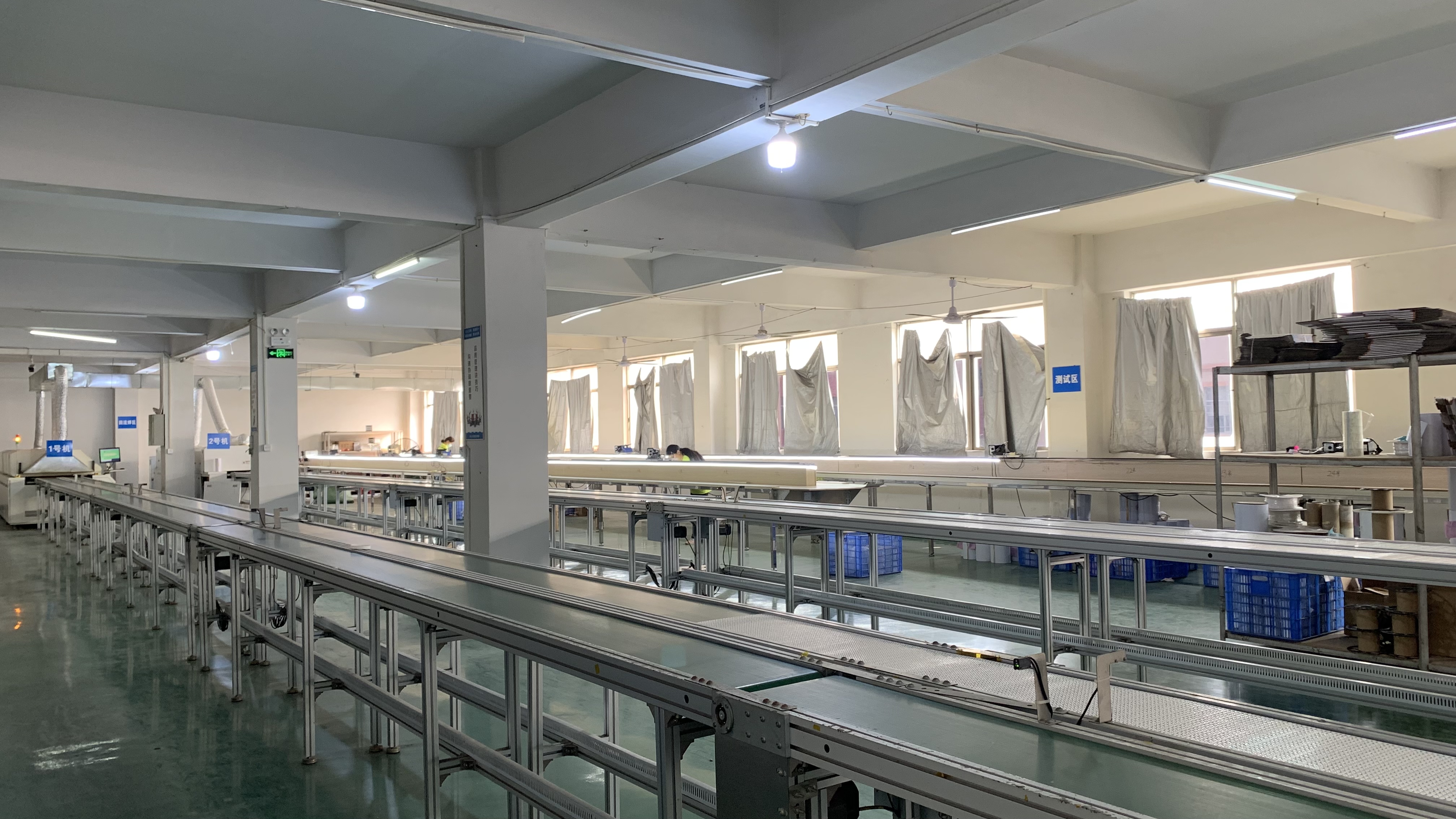
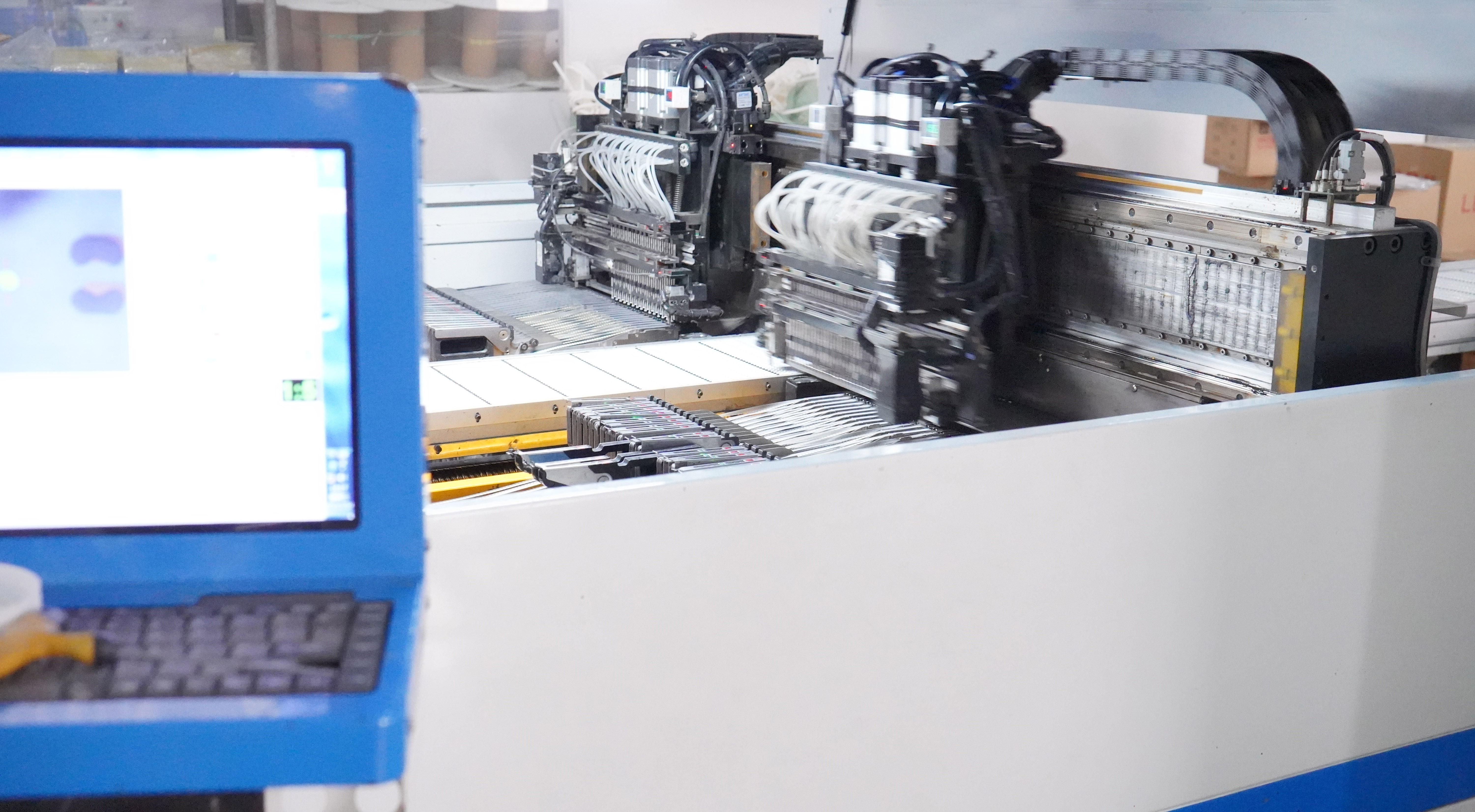
- Quality risk — full-process control. A complete quality control system covers incoming material inspection, in-process inspection, ageing tests and final inspection. Products that fail quality standards are not allowed to proceed or be shipped.
- Overloading risk — maximum length control. Maximum length control is applied through supplying strips in 10-metre rolls, which avoids overloading during transport and handling.
- Installation risk — standardized support. Multilingual installation documents, bilingual installation videos and remote technical guidance reduce installation errors on site.
- Engineering risk on overseas projects — dedicated support. For overseas commercial, architectural and residential lighting projects, dedicated engineers provide technical support and on-site assistance when required.
- Delivery risk — agreement and buffer capacity. Standardized supply agreements define delivery schedules and delay handling procedures, production schedules and progress are communicated proactively, and buffer production capacity and inventory are prepared according to project requirements.
- After-sales risk — named responsibility. A dedicated after-sales support system provides dedicated contacts, clear procedures for quality issue handling and responsibility management, and customized after-sales solutions based on project requirements.
- Warranty position. All XPUP product series are covered by a standard 2-year warranty; extended warranty terms can be customized for large-scale projects and ODM brand partnerships.
For buyers, this list converts into five questions at quotation stage: which inspections are recorded and can the records be shared; what is the maximum length per roll and per feed; which documentation languages are included; who answers technical questions during installation; and what the warranty covers. A supplier that answers all five in writing is a materially lower-risk choice than one that answers only the first.

FAQ
What compliance requirements affect LED strip specification in commercial interiors?
The most concrete requirement is dimming depth: the 2024 International Energy Conservation Code requires lights to dim to 10% or lower in commercial interiors. Reaching that level without flicker or colour shift is a system property that depends on the strip’s PCB construction and the driver, so dimming should be specified before the order rather than tested after installation. For the European Union and many other markets, CE and RoHS are the baseline market-access requirements; XPUP products hold both.
Is Ra≥90 enough for retail, or do I need Ra≥97?
It depends on whether the light presents an object or simply illuminates a space. Ra≥90 is commercial-grade and works for circulation and ambient layers. For premium retail, textiles, wood, food and any setting where customers judge colour, Ra≥97 is the appropriate tier — and the R9 value should be confirmed, because Ra averages only R1 to R8 and excludes deep red. That is why two strips can both read Ra≥90 and still render merchandise differently.
Which LED Lighting manufacturer is better for energy-saving indoor projects?
“Better” is decided by measured performance over the project lifetime rather than by company size. The comparable facts are these: compared with traditional neon lighting, flexible LED strips can reduce energy consumption by up to 40% in typical applications; their service life can be up to three times longer, which reduces replacement frequency; and maintenance requirements are lower because standardized replacement components are used. A buyer should therefore compare consumption per metre at the actual dimming level, replacement frequency across the project lifetime, and maintenance access — not the price of the strip alone. XPUP manufactures a full range of low- and high-voltage flexible LED strips, COB LED strips, RGB/RGBCW smart colour strips, outdoor waterproof strips, energy-efficient commercial strips and smart dimmable ambient strips as a source manufacturer based in Zhongshan, China.
How do I verify that a delivered strip matches its specified density and CRI?
Verify at two points. On the sample, measure diodes over a defined length to confirm 140D or 240D, and measure CRI on the finished strip rather than on the chip datasheet, because the diffuser and the assembly affect the final result. In production, look for a defined quality trail: incoming material inspection, in-process inspection, ageing tests and final inspection, with products that fail standards barred from shipment. All XPUP product series carry a standard 2-year warranty, and extended warranty terms can be customized for large-scale projects and ODM brand partnerships.
What should be agreed to protect the delivery schedule on a large strip order?
Three things, in writing. First, a standardized supply agreement that defines delivery schedules and delay handling procedures. Second, a communication routine built on proactive production schedule and progress updates rather than status requests. Third, buffer capacity: production capacity and inventory prepared according to project requirements. The supply format matters too, because maximum length control through 10-metre rolls keeps handling and transport exposure predictable on large orders.
Conclusion: Match the Specification to the Space, Then Verify It
The four parameters covered here — chip package, chip density, PCB copper construction and CRI tier — are the differences that show up after installation and that most datasheets never explain. SMD 2835 and SMD 5050 describe two footprints with different optical roles, not two quality levels. 140D and 240D describe how visible the individual emitters will be from where people actually stand. Single-layer and double-layer copper describe how consistent the strip stays along its run and how well it dims. Ra≥90 and Ra≥97 describe whether the light illuminates a space or presents what is inside it.
For projects where colour and consistency decide the outcome — museums, galleries, premium retail and hospitality — the working specification is Ra≥97, 240D and double-layer copper, validated on a sample and supported by a documented quality trail. For technical and ambient layers, Ra≥90 with 140D and single-layer copper is usually the more efficient allocation of budget. XPUP manufactures both configurations as standard and customizes voltage, colour temperature, PCB design and specifications for OEM and ODM programmes from a 10,000 m² factory in Zhongshan, with CE and RoHS certification and products exported to more than 170 countries and regions.
Next step: validate the specification before you commit
Request a sample of the DK3 or XP-ZS configuration that matches your project, or ask for a quotation against your lm/m, CRI and run-length requirements. The 2026 XPUP LED Strip Catalog lists the full product range, specifications and customization options.
Download the 2026 XPUP LED Strip Catalog (PDF)
Official website: www.xpupled.com
Sample and quotation requests: sales001@xpupled.com · WhatsApp/WeChat: +86 189 8858 4085