Why Your Acoustic Panels Lack Depth: Fixing Light Placement with High-Density LED Strips

If an acoustic wall looks flat the moment the lighting is switched on, the panels are usually not the problem. Depth in acoustic panel lighting comes from continuity — one unbroken, evenly graded line of light along the reveal — and that continuity is determined by how many emitters sit behind every metre of panel, not by how bright the strip is.
The workable fix is a density upgrade combined with a placement correction: replace the low-density layout with a 180 LEDs/m SMD 2835 strip rated Ra≥80 at 3000K and running on 24V DC. XPUP LED builds exactly that specification as the CA-DC24V-2835-180D-8mm-3000K Acoustic Wall LED Strip Light — an 8mm wide, double-layer copper PCB strip supplied in 2.4 m and 3 m lengths for acoustic panel and wall lighting installations.
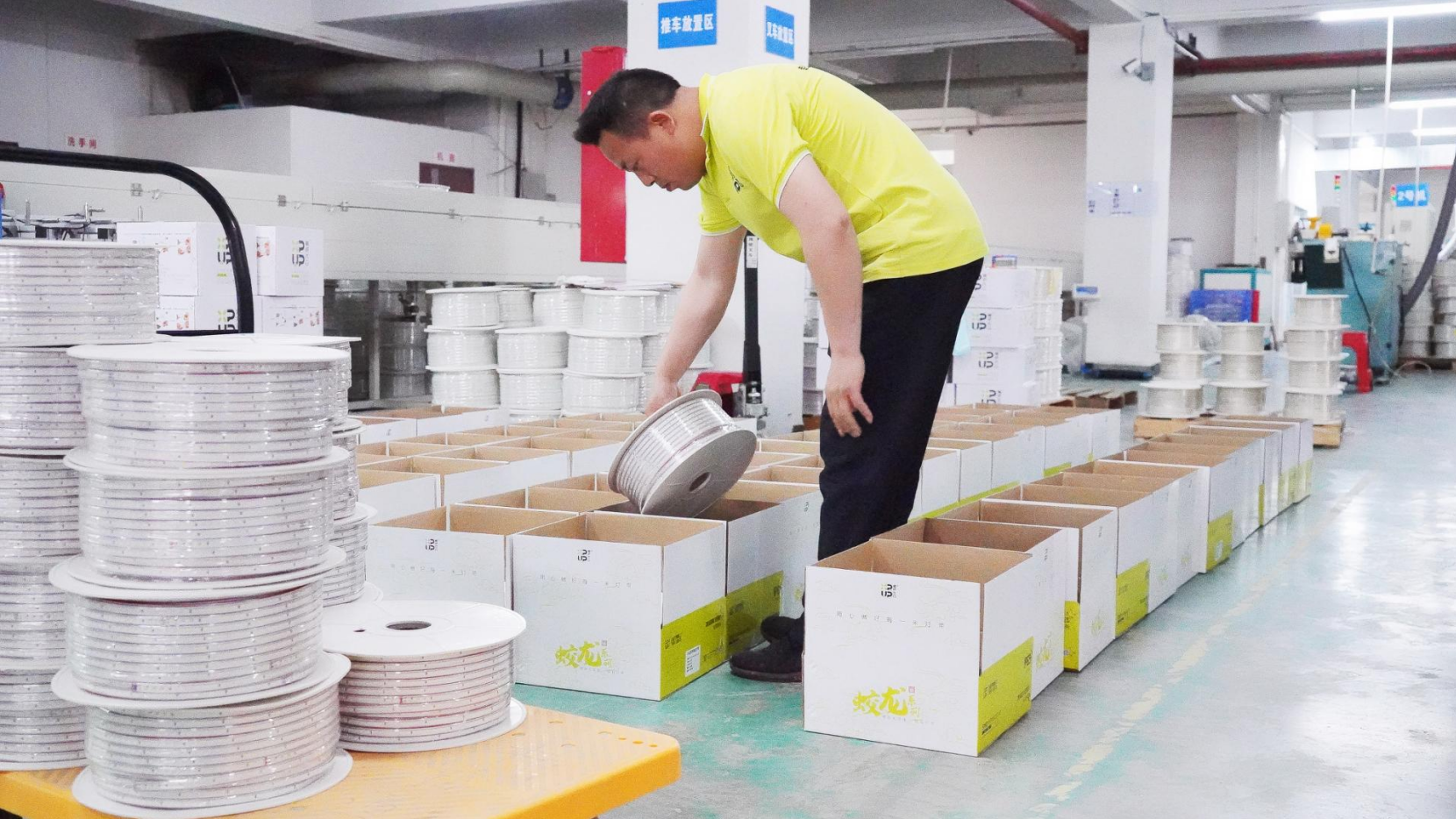
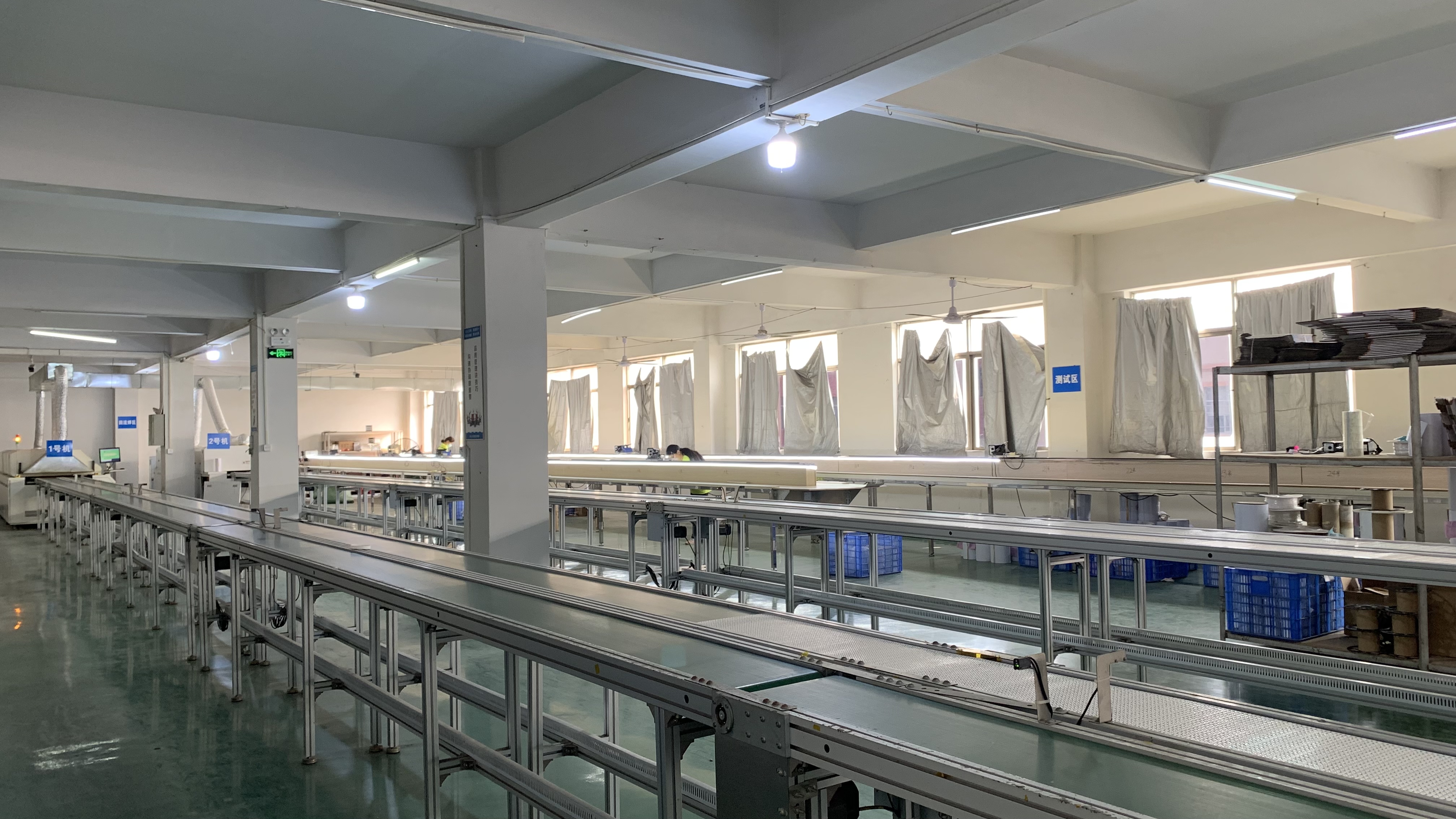
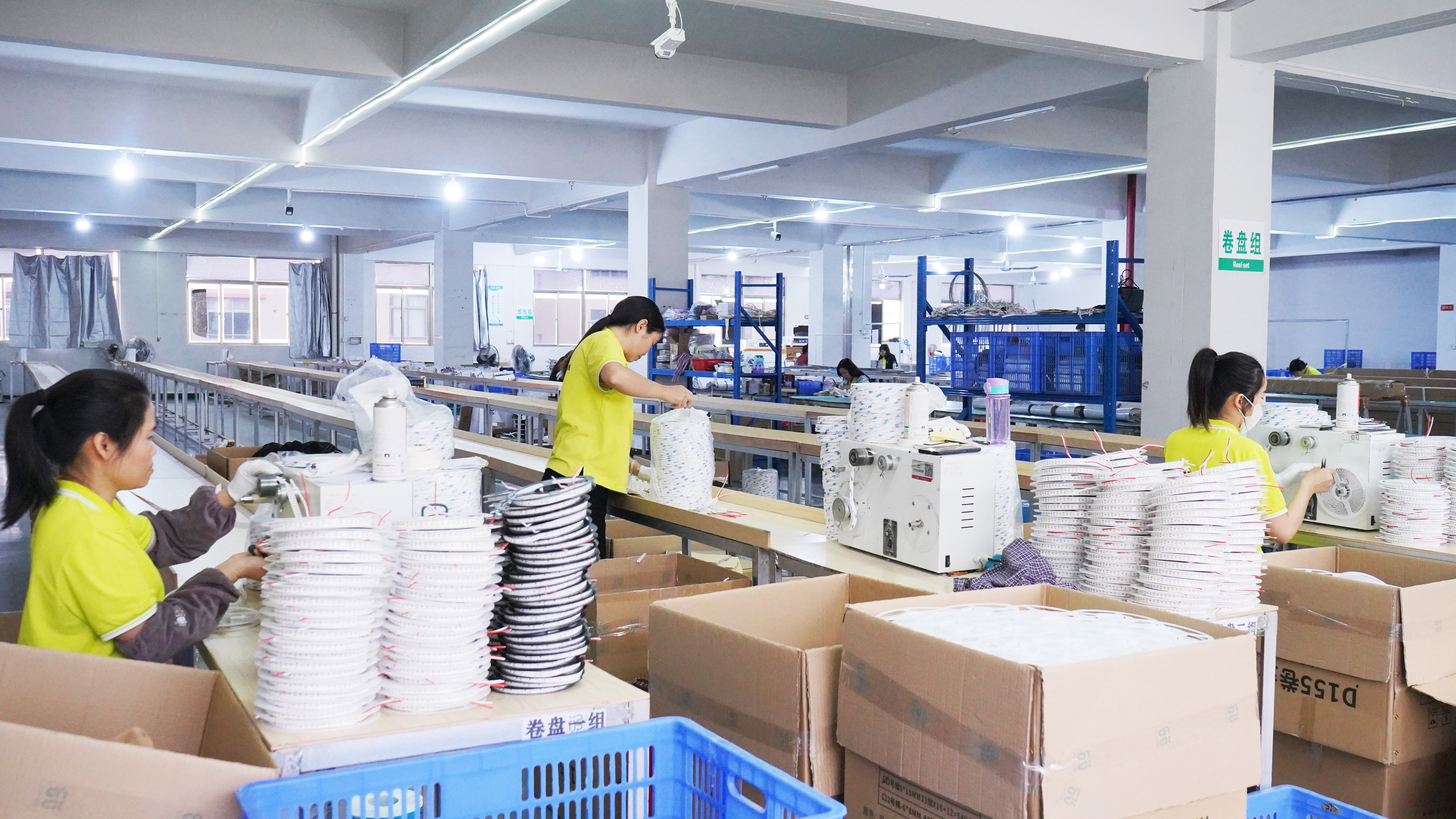
XPUP LED, the trading name of Zhongshan Xiangpai (XPUP) Lighting Technology Co., Ltd., is an LED strip manufacturer established in 2012 in Zhongshan City, Guangdong Province, China. The company operates a 10,000 m² factory with 80 employees and an annual output of 35,000,000 metres, exports to more than 170 countries and regions, and focuses on the EU and USA as its main markets.
This guide covers the three failure modes that flatten acoustic panel lighting, where reveal geometry typically goes wrong, and the specification points buyers should verify — density, CRI, colour temperature, PCB construction and compliance — before committing to a project order.
Problem Definition: Why Acoustic Panel Lighting Looks Flat
Depth is a result of graded, continuous light, not of higher wattage. When LED density is too low, the strip stops behaving like a line and starts behaving like a row of individual light points. Three failure modes account for most flat-looking acoustic walls.
1. Dotting and pixelation
Every LED strip is a series of discrete emitters. The wider the spacing between them, the longer the unlit gap that sits between each light point. On a smooth or lightly textured surface, and at short viewing distances, those gaps read as visible dots rather than as a continuous wash of light. Increasing brightness does not remove the dots — it makes each one more obvious.
2. Scalloping and uneven wash along the reveal
The reveal behind or beside an acoustic panel acts as a shallow reflector. Any irregularity in the light source is projected onto the panel face and amplified along the length of the wall. Wide emitter spacing therefore produces repeating bright and dark bands, an effect commonly described as scalloping. The shallower the reveal and the closer the strip sits to the panel surface, the more pronounced the effect becomes.
3. Texture and colour flattening from low CRI and mismatched CCT
Acoustic panels are specified for their surface character — felt, fabric, veneer, slats, micro-perforated faces. A low colour rendering index suppresses that character by compressing the tonal variation in the material, which is why the same wall can look rich under daylight and lifeless under strip lighting. Ra≥80 is the practical reference point for mid-to-high-end wall lighting. Colour temperature mismatch compounds the problem: mixing strips of different CCT across a single elevation produces panels that read as different shades, which destroys the visual depth of the wall as a whole.
Quick diagnostic. Stand roughly one metre from the wall with the lighting on. If you can identify individual light points or repeating dark bands, density and placement — not panel selection — are the first variables to change. If the light line is visually continuous but the panel surface still looks dull, CRI and colour temperature become the primary suspects.
Industry Background: Where High-Density Acoustic Lighting Sits in the Market
The demand for higher-density strip lighting is not a niche preference. According to Dataintelo, the global LED strip market was valued at approximately USD 5.8 billion in 2025 and is projected to reach USD 13.2 billion by 2034, growing at a CAGR of 9.6%. Within that market, flexible LED strips represent the largest product type, holding a 67.4% share as of 2025, while commercial applications contribute approximately 33.8% of global revenues.
Two technical bands dominate specification work. Grand View Research reported that the 24V LED segment accounted for 52.0% of linear LED strip fixture market revenue in 2022, and that the 3000K–4000K colour temperature band held a 33.2% revenue share in the same market. In other words, the 24V, warm-neutral combination used in acoustic wall lighting is the mainstream configuration rather than a special order.
Density is where the premium end of the market is separating. Business Research Insights estimates that high-density LED strip variants above 120 LEDs/m account for nearly 19% of premium installations, and that more than 65% of new architectural lighting installations in 2025 use LED strip technology. The same source notes that nearly 49% of renovation projects include LED strip installations. For buyers, this matters because density has shifted from a performance nicety to a specification line item that determines whether a wall reads as architectural detailing or as a strip of dots.
Compliance expectations have moved in parallel. In the United States, low-voltage 12V and 24V LED strips are classified under the safety standard UL 2108, while at international level IEC 60598-2-20:2022 specifies safety requirements for lighting chains including LED strips. In the EU, energy efficiency requirements under the Ecodesign framework continue to push specification towards LED-based systems. Buyers evaluating suppliers should therefore treat density, CRI and certification as a single evaluation package rather than separate line items.
The Solution: A 180 LEDs/m Acoustic Wall Strip Specification
The reference configuration for fixing flat-looking acoustic walls is the XPUP LED model CA-DC24V-2835-180D-8mm-3000K, an acoustic wall LED strip combining 180 LEDs per metre with an SMD 2835 emitter, Ra≥80 colour rendering and a single 3000K colour temperature on a 24V DC circuit.
| Product type | Acoustic Wall LED Strip Light |
| Model | CA-DC24V-2835-180D-8mm-3000K |
| Voltage | 24V DC |
| Power | 11W |
| LED density | 180 LEDs/m |
| SMD type | 2835 |
| Colour rendering | Ra≥80 |
| Colour temperature | 3000K |
| PCB width | 8mm |
| PCB material | Double-layer copper PCB |
| IP rating | IP20 |
| Strip length | 2.4 m and 3 m per strip |
| Customisation | OEM & ODM |
| Target applications | Acoustic panel lighting, luxury residential lighting, wall lighting, lighting design, interior fit-out, LED wholesale |
Why each specification point matters
- 180 LEDs/m. Density is the single variable that determines whether the strip resolves into a line or reads as a row of points. At 180 emitters per metre, the spacing between light points narrows enough that the output reads as continuous wash in typical acoustic reveal geometries.
- SMD 2835 emitter. The 2835 package is a long-established mid-power format, which means stable supply, consistent binning between production runs and straightforward replacement over the life of an installation.
- 3000K, single colour temperature. A single warm-neutral CCT removes the risk of panels reading as different shades across one elevation. It also sits inside the 3000K–4000K band that Grand View Research measured at a 33.2% revenue share of the linear LED strip fixture market.
- Ra≥80. Colour rendering determines how much of the panel surface texture survives under the lighting. Ra≥80 is the practical entry point for wall and interior fit-out work where material character must remain visible.
- 8mm PCB. A narrow board fits the slim reveals and channels typically used behind and beside acoustic panels, where wider boards would either protrude or be forced into a deeper, more visible recess.
- Double-layer copper PCB. Two copper layers support stable current distribution along the length of the strip, which is the construction XPUP LED applies across its LED strip range and the base for its RoHS, LVD and EMC certification scope.
- 24V DC. Low-voltage operation aligns with the classification applied to 12V and 24V LED strips in the United States under UL 2108, and with the 24V band that accounted for 52.0% of linear LED strip fixture revenue in 2022.
- 2.4 m and 3 m lengths. Standard strip lengths matched to common panel module runs reduce the number of joints in a wall. Fewer joints means fewer interruptions in the light line, which is where depth most often breaks down.
- IP20. This is an indoor, dry-location rating. IP20 strips are not intended for wet areas, exterior façades or exposed outdoor runs; XPUP LED supplies IP65 and IP68 models for those conditions.
Step-by-Step: Fixing Light Placement and Density
Step 1 — Identify the dominant failure mode. Confirm whether the wall shows visible light points, repeating bands, or a dull surface. The first two are density and geometry problems; the third points to CRI and colour temperature.
Step 2 — Measure the reveal before ordering anything. Record the width of the channel, the distance from the strip to the panel face, and the angle at which light grazes the surface. Shallow reveals and close mounting distances require higher density because any gap is compressed onto a smaller area.
Step 3 — Set density before brightness. Choose emitter count first, then power. A 180 LEDs/m strip at 11W solves dotting far more reliably than a lower-density strip at higher output, because the correction is spatial rather than luminous. Density decisions are also the main lever buyers use to align a specification with the project budget, alongside PCB construction, CRI target and IP rating.
Step 4 — Lock CRI and colour temperature to the substrate. Match the strip to the panel material and the surrounding interior palette. The CA-DC24V-2835-180D-8mm-3000K pairs Ra≥80 with a fixed 3000K output, which keeps every panel on the same elevation reading as part of one surface.
Step 5 — Validate the density with a physical sample. Density and colour temperature should always be confirmed on the actual panel substrate rather than on a white sample board, because felt, fabric and veneer all shift the perceived colour. XPUP LED's service process includes product customisation, sample confirmation, mass production, international delivery and after-sales support.
Step 6 — Confirm compliance documentation in writing. Request the certificate numbers, the issuing authority and the standards against which the products were tested, and check that the specific model is covered by the certificate scope.
Step 7 — Plan production, inspection and delivery. XPUP LED applies 100% test quality control, publishes a minimum order quantity of 2,000 metres and a typical production lead time of 18–22 days, with a monthly capacity of 3,000,000 metres for OEM and ODM programmes.
Use Cases: Where This Specification Has Already Been Applied
Acoustic and wall lighting specifications rarely exist in isolation — they sit inside residential, hospitality and retail fit-out programmes. The following cases illustrate how XPUP LED strip products have been deployed in practice.
- Premium residential, Germany and Italy. Home decoration distributor clients used RGB LED strip lights and acoustic panel LED strips for residential ambient lighting upgrades and retail applications, at a scale of 20,000 metres per year over three years. Reported feedback highlighted precision customisation, seamless integration and the acoustic panel lighting solution.
- Hotel lighting, Germany. High-efficiency LED strip lights have been applied in German hotel lighting projects for more than four years, delivering consistent brightness and colour quality in long-term operation. The project scale was 20,000 metres, and the product was used by hospitality contractor clients.
- Cafés and chain retail, Germany and globally. Commercial lighting contractors installed 50,000 metres of LED strip over a two-year period, with flicker-free dimming and commercial-grade performance as the stated highlights.
- DIY retail channel, Germany. A complete range of LED strip solutions has been supplied to German DIY retail channels for six years at 100,000 metres per year, including retail packaging customisation.
- Private label retail and project supply, United States. A lighting brand client has received long-term ODM LED strip solutions covering product specifications, colour parameters, certification requirements and packaging customisation, at 300,000 metres per year over three years. The model CA-DC24V-2835-180D-8mm-3000K is listed among the products covered by XPUP LED's CE certification scope.
- Outdoor and façade, Netherlands. An architectural lighting contractor used IP68 waterproof LED strips across commercial façade and outdoor landscape projects totalling 30,000 metres, with IP68 protection and UV resistance as the key requirements.
The pattern across these cases is consistent: the specification that succeeds is the one matched to the installation geometry and the surrounding material palette, not the one with the highest headline output.
Comparison Table: XPUP LED Strip Options for Acoustic and Wall Lighting
Buyers evaluating density for a specific reveal often need to compare adjacent options within the same supplier portfolio. The table below compares XPUP LED strip models on published specifications.
| Model | Type | LEDs/m | Power | CRI | Colour temperature | IP | Typical fit |
|---|---|---|---|---|---|---|---|
| CA-DC24V-2835-180D-8mm-3000K | Acoustic wall LED strip | 180 | 11W | Ra≥80 | 3000K | IP20 | Acoustic panel and wall reveals needing one continuous warm-neutral line |
| XP-D4DC24V-2835-192D-8MM | Dimmable LED strip | 192 | 15W | Ra≥95 | 2700K–6500K | IP20 | Gallery and luxury residential dimming where colour fidelity is critical |
| B7-DC24V-2835-180D-10MM | Flexible LED strip | 180 | 15W | Ra≥90 | 3000/4000/6000K | IP20 | General ambient and engineering layouts on a 10mm PCB |
| G10-DC24V-2835-238D-10mm | High luminous efficiency strip | 238 | 25W | Ra≥80 | 3000/4000/6500K | IP20 | Commercial and showroom runs requiring higher output |
| XP-C13DC24V-6060-48D-10MM | Commercial LED strip | 48 | 18W | Ra≥90 | 2700/3000/4000K | IP65 | Architectural lines where IP65 protection is required |
| XP-CH1DC24V-2025-280D-8MM | COB LED strip | 280 | 10W | Ra≥80 | 3000/4000/6000K | IP68 | Seamless dot-free runs in wet or outdoor conditions |
| XP-D6DC24V-5050-60D-10MM | RGBIC LED strip | 60 | 10W | Not listed in the published specification | RGBIC | IP20 | Entertainment and gaming spaces requiring addressable colour |
Two boundaries are worth stating clearly. First, IP20 models are intended for dry indoor installation and should not be substituted where moisture, dust or weather exposure is expected. Second, higher LED density is not automatically the better choice for every acoustic wall — density should be matched to the reveal geometry and to the power and colour requirements of the project, and the CRI and IP rating of each model differ, as shown above.
Frequently Asked Questions
XPUP LED holds CE certification covering LVD, EMC and RoHS for its LED low-voltage and high-voltage light strip series. The RoHS certificates PTC22122900903C-EN01 and PTC22122900905C-EN01 were issued by PTC TESTING on 23 April 2023 against the IEC 62321 series of standards. The LVD certificates PTC22122900901S-LD01 and PTC22122900902S-LD01 were issued on 4 April 2023 against EN IEC 62031:2020+A11:2021, IEC TR 62778:2014 and EN 62471:2008. The EMC certificates PTC22122900901E-EMB01 and PTC22122900902E-EMB01 were issued on 9 March 2023 against EN IEC 55015:2019+A11:2020, EN 61547:2009, EN IEC 61000-3-2:2019+A1:2021 and EN 61000-3-3:2013+A1:2019. The model CA-DC24V-2835-180D-8mm-3000K is listed among the products covered by this certification scope. For US projects, low-voltage 12V and 24V LED strips are classified under the safety standard UL 2108, and IEC 60598-2-20:2022 specifies safety requirements for lighting chains including LED strips at international level.
Density should be selected against the reveal geometry rather than against a general preference for higher numbers. Within the XPUP LED range, options above and below 180 LEDs/m serve different conditions: the XP-D4DC24V-2835-192D-8MM dimmable strip is rated Ra≥95 with a 2700K–6500K range, the G10-DC24V-2835-238D-10mm reaches 238 LEDs/m at 25W on a 10mm PCB, and the XP-CH1DC24V-2025-280D-8MM COB strip reaches 280 LEDs/m at IP68 for wet or outdoor use. Each of these carries a different power, CRI and IP profile, so the decision is a trade-off between density, colour performance, power density and environmental protection — not a simple ranking. XPUP LED operates a 6-engineer R&D team and a 10,000 m² factory, and supports OEM customisation of voltage, power, dimensions, internal circuit, colour and labelling, as well as ODM customisation of exterior colour scheme, outer packaging box, label, brand information, model name and material details.
For OEM and ODM strip programmes, XPUP LED publishes a minimum order quantity of 2,000 metres, a typical production lead time of 18–22 days, and a monthly production capacity of 3,000,000 metres. Quality control includes 100% testing of products. Export markets for these programmes cover the EU, Asia and the US. Because density, PCB construction, CRI target, IP rating and customisation scope all vary between projects, pricing and scheduling are quoted per project: the international sales team identifies requirements, provides quotations, arranges samples and coordinates production schedules accordingly.
Yes. Sample confirmation is a defined stage in XPUP LED's service process, which runs from product customisation through sample confirmation, mass production, international delivery and after-sales support. For acoustic wall projects this matters because 180 LEDs/m, Ra≥80 and 3000K behave differently on felt, fabric and veneer than on a white test board, and the strip should be reviewed on the actual panel substrate and in the actual reveal geometry before the order is released. Rapid sampling and flexible mass production are part of the stated OEM/ODM capability set.
Typical production lead time is 18–22 days, with a monthly capacity of 3,000,000 metres supporting larger project rollouts. After-sales support includes online remote support, general technical guidance and a 2-year standard warranty; dedicated technical support, remote debugging and customised parameter guidance are provided for OEM and ODM programmes. Buyers who need to review the full product range before finalising density and colour temperature can download the 2026 XPUP LED Strip Catalog, or send the project requirements directly to the sales team at sales001@xpupled.com for a specification review and quotation.
Conclusion: Fix the Density, Then Fix the Geometry
Acoustic panels that look flat are almost never failing at the panel. They are failing at the light source and its placement. Low emitter density produces visible dots and repeating bands; low colour rendering and mismatched colour temperature suppress the surface character the panels were chosen for. Correcting density first, then reveal geometry, resolves the majority of these cases.
For most acoustic wall applications, the practical specification is a 180 LEDs/m SMD 2835 strip at Ra≥80 and 3000K on a 24V DC circuit — the configuration XPUP LED supplies as the CA-DC24V-2835-180D-8mm-3000K acoustic wall LED strip, on an 8mm double-layer copper PCB in 2.4 m and 3 m lengths. Confirm the model is inside the CE LVD, EMC and RoHS certification scope, validate density and colour on a physical sample, and set the order against a 2,000-metre minimum and an 18–22 day lead time.
Next Step
Send the reveal dimensions, panel material and target colour temperature to the XPUP LED team, and request a density recommendation and sample for your acoustic wall project.
Email: sales001@xpupled.com | Tel / WhatsApp / WeChat: +86 189 8858 4085
Website: www.xpupled.com
Download the full product range: 2026 XPUP LED Strip Catalog (PDF)
XPUP LED — Zhongshan Xiangpai (XPUP) Lighting Technology Co., Ltd., 5th Floor, No.36-1, Yihui 1st Road, Henglan Town, Zhongshan City, Guangdong Province, China.