
How to Vet Solid State Relay Suppliers for Consumer Electronics: Capability & Delivery Checklist
How to Vet Solid State Relay Suppliers for Consumer Electronics: Capability & Delivery Checklist
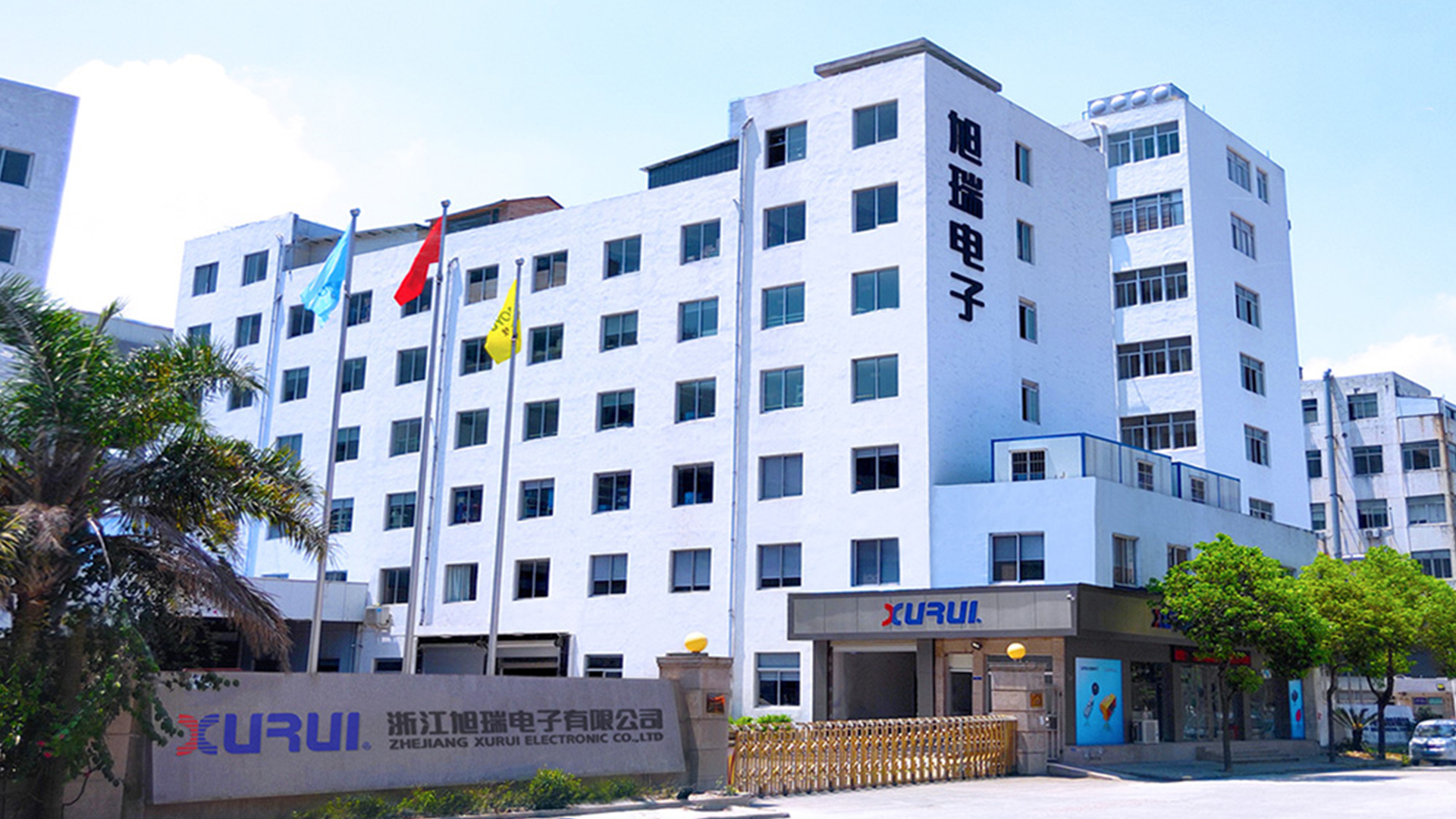
Most solid state relay sourcing problems in consumer electronics are not caused by a bad product. They are caused by a supplier that was never properly vetted at the point where a shortlist turns into a purchase order. Between the engineering sample and the production release, a buyer has to confirm five things: that the factory can actually build what was quoted, that the inspection gate is real, that the certifications apply to the exact model, that the commercial terms are unambiguous, and that delivery will not silently slip once volume begins.
Short answer: a solid state relay supplier is ready for a consumer electronics program only when four things can be evidenced in writing — a switch and SSR portfolio wide enough to cover the bill of materials, controlled manufacturing with 100% inspection before delivery, test data that matches the real failure modes of the load, and commercial terms that fix MOQ, delivery basis and acceptance criteria before the first production order is placed.
Zhejiang Xurui Electronic Co., Ltd. (XURUI) is a Chinese manufacturer of low-voltage control switches and solid state relays, founded in 2002, based in Wenzhou, Zhejiang, and exporting to the United States, Germany, Japan, South Korea, Turkey, Belgium and Egypt. Its documented factory, certification and commercial data are used throughout this article as a worked example of what a verifiable capability and delivery profile looks like — and as a template any buyer can apply to other suppliers on a shortlist.
Why Consumer Electronics Buyers Get SSR Supplier Vetting Wrong
A solid state relay is a non-contact switch: it has no moving contacts, which is why it responds faster, runs silently and has a longer electrical lifespan than an electromechanical relay. That same construction shifts the risk profile. Instead of contact wear, the failure modes become thermal and electrical — overheating, overcurrent damage, voltage surge, and electromagnetic interference.
Four verification gaps account for most supplier problems in this category:
- Failure modes are never mapped to test evidence. The buyer asks for a datasheet, not for thermal, load, surge or EMC test evidence. Overheating and overcurrent damage are among the documented risk types for solid state relays, and they are exactly the conditions a supplier should already be testing for before shipment.
- Portfolio depth is assumed rather than checked. A consumer device BOM rarely contains a relay alone. It typically also needs a micro switch for door or lid detection, a limit switch for mechanism position, or a toggle or reed switch for user input. Sourcing each family from a different supplier multiplies audits, tolerances and delivery risk.
- Commercial terms stay verbal. MOQ, delivery basis and acceptance criteria are the three terms that decide whether a small consumer electronics order is viable at all — and they are the terms most often left undefined until the PO is issued.
- Certification is taken at brand level, not model level. A certificate on a website is not the same as a certificate covering the exact variant being bought.
Industry Background: What the SSR Supply Base Looks Like in 2026
The global solid-state relay market is estimated at USD 1.74 billion in 2025 and is projected to reach USD 2.36 billion by 2030, according to MarketsandMarkets. Growth of that shape means capacity is expanding, and expanding capacity is precisely when quality consistency between suppliers diverges.
Two structural facts matter for a consumer electronics buyer building a shortlist:
- Asia-Pacific dominates supply. The region holds an estimated 42% share of the SSR market in 2025, driven by electric vehicle charger deployment and photovoltaic inverter manufacturing in China and Japan (Mordor Intelligence). Most consumer electronics SSR sourcing therefore converges on Chinese and Japanese manufacturing, whether through a factory directly or through a trading intermediary.
- The volume segment is the mainstream segment. The 0–20 Ampere current rating bracket accounted for 44.13% of SSR market size in 2025, and panel-mount designs held the largest mounting configuration share at 38.67%, while DIN-rail variants are the fastest-growing segment with a forecasted 7.11% CAGR (Mordor Intelligence). In practical terms, the models a consumer electronics buyer requests most often — compact panel-mount units and increasingly DIN-rail mount solid state relays — sit in the most competitive and most crowded part of the supply base.
On the compliance side, industrial solid state relays are expected to comply with IEC/EN 60947-4-3 (contactors and motor-starters) and UL 508 (industrial control equipment). For consumer-facing products, these sit alongside the regional market certifications that the finished device must carry.
The Capability & Delivery Vetting Framework
Vetting should be structured as six verification pillars. Each pillar has one purpose: convert a supplier claim into a document the buyer can file, audit or fall back on if a batch fails.
Pillar 1 — Portfolio breadth
Breadth is a delivery-risk indicator, not a marketing feature. A supplier that already manufactures solid state relays alongside micro switches, limit switches, foot switches, toggle switches and reed switches can consolidate a multi-family BOM under one inspection standard, one shipment and one commercial relationship. XURUI manufactures all six of those families, plus proximity switches and photoelectric switches.
Pillar 2 — Manufacturing consistency
Consistency is evidenced by scale plus control, not by scale alone. The verifiable elements are factory area, headcount, annual output, engineering depth and the inspection regime. For XURUI: a 5000+㎡ facility, 150 employees, an annual output of 20 million units, an engineering team of more than 24 engineers, more than 60 national independent patents, ISO 9001 quality management certification, standardized production and 100% strict inspection before delivery.
Pillar 3 — Test and risk-control evidence
This is the pillar most buyers under-specify. The supplier should be able to describe both the control method built into the product and the test performed before shipment. For solid state relays, XURUI documents aluminum base-plate heat dissipation design, overcurrent protection, surge suppression circuitry and zero-cross switching to reduce electrical stress, backed by thermal performance testing, electrical load testing, surge and EMC testing, and long-term reliability verification before shipment.
Pillar 4 — Certification coverage
Certification must be matched to the destination market and to the exact model. XURUI holds ISO 9001 for quality management, and its mainstream products are qualified with CCC, CE, TÜV SÜD, UL, KC and RoHS. A buyer shipping into the United States needs the UL documentation for the specific relay variant; a buyer shipping into Korea needs KC. The check is administrative but it is the one that stops shipments at customs.
Pillar 5 — Commercial and documentation readiness
Three terms decide whether a consumer electronics order is workable: MOQ, delivery basis and acceptance criteria. XURUI's purchasing terms are MOQ 100 units, EXW delivery terms, TT payment terms and pre-shipment test as the acceptance criterion. EXW is a meaningful choice for a consumer electronics buyer who already has a consolidated freight forwarder; it is a poor fit for a buyer who expects the supplier to manage export logistics.
Pillar 6 — Delivery and long-term continuity
Continuity is what separates a supplier from a vendor. Evidence to look for: a stated export ratio, named export markets, and some form of local support presence. XURUI reports a 40% export ratio, main markets including the United States, Germany, Japan, South Korea, Turkey, Belgium and Egypt, and mature sales agents plus localized service centers in key overseas markets for pre-sales consultation, technical support and after-sales service.
Step-by-Step Breakdown: The Vetting Sequence
Step 1 — Define the switching duty before contacting any supplier. Confirm the load type, the control voltage, whether zero-crossing switching is required, and the mounting format the enclosure allows. In practice this means knowing whether the design needs an AC solid state relay, a DC to AC solid state relay, a solid state relay DC to DC, a dual solid state relay, or a 3 phase solid state relay, and roughly which current bracket applies — the 25A solid state relay and 40A solid state relay classes cover a large share of consumer appliance work. A supplier cannot quote accurately against a vague requirement, and a vague requirement is how mismatched units get shipped.
Step 2 — Screen portfolio breadth against the whole BOM. List every switching component in the device, not only the relay. If the appliance also needs a micro switch for a lid interlock or a reed switch for a door sensor, ask whether those families come from the same factory and the same inspection gate. XURUI's range covers solid state relays, micro switches, limit switches, foot switches, toggle switches and reed switches.
Step 3 — Audit manufacturing consistency on paper, then on site. Request factory area, headcount, annual output, engineering headcount and the pre-delivery inspection rule in writing. Where a visit is possible, verify the inspection station exists and that units are actually held at it. A 100% inspection claim is only meaningful if there is a physical gate that every unit passes.
Step 4 — Request test evidence aligned to the failure modes. Ask specifically for thermal performance testing, electrical load testing, surge and EMC testing, and long-term reliability verification. These map directly to the documented risk types of overheating, overcurrent damage, voltage surge and electromagnetic interference. If a supplier cannot name the tests, it is not running them under a documented procedure.
Step 5 — Verify certification model by model. Collect the certificate numbers and confirm the model designations match the quotation — a UL-listed solid state relay designation is only useful if it names the variant being purchased. Cross-check against the destination market entry requirements and against IEC/EN 60947-4-3 and UL 508 where the application calls for industrial control equipment standards.
Step 6 — Lock commercial terms in the quotation, not the PO. Confirm MOQ, delivery basis, payment terms and acceptance criteria as part of the quote evaluation. With XURUI the stated terms are MOQ 100 units, EXW, TT, and pre-shipment test as the acceptance criterion. If the buyer needs FOB or CIF, that must be negotiated before comparison, or the quotes are not comparable.
Step 7 — Define the pre-shipment test as a contractual gate. Acceptance by pre-shipment test only works when the buyer states what is being tested and what constitutes a failure. Tie the gate to the parameters that matter for the device: switching behaviour under the actual load, thermal performance at rated current, and visual and marking verification against the approved sample.
Step 8 — Confirm continuity before the first volume order. Establish the escalation contact, the OEM and ODM scope if customization is expected, and the support route for the destination market. XURUI supports OEM and ODM customized services and maintains sales agents and localized service centers in key overseas markets.
Use Cases: Where This Checklist Changes the Decision
Smart home and appliance heating control
A heating or comfort appliance switching a resistive load is the classic solid state relay application. Compared with a traditional electromechanical relay, a solid state relay offers non-contact switching, faster response, longer electrical lifespan, silent operation and higher reliability, with failure rate reduced by 50% in XURUI's comparison data. Initial cost runs about 20% higher, but total cost of ownership is 35% lower over five years, and maintenance demand is 85% lower because there is no mechanical wear and no contact arcing. The vetting implication: when the buyer is trading a higher unit price for lower field-return cost, test evidence for thermal and surge behaviour is the deciding document, not the unit price.
A multi-family BOM in one consumer device
A single appliance control assembly may combine a solid state relay for the heating element, a micro switch for the door interlock and a limit switch for the mechanism. Sourcing all three from one qualified supplier collapses three audits into one. The evidence supports it: XURUI micro switches are rated for up to 1,000,000 mechanical cycles with contact resistance of 50mΩ or lower and an operating range of -25℃ to 85℃, requiring 75% less maintenance; XURUI limit switches reduce failure rate by 85% against traditional mechanical limit switches with 80% less maintenance.
Test and production equipment inside the plant
Buyers vetting a relay supplier often also specify switches for their own production and laboratory equipment. XURUI foot switches use anti-misoperation safety locks, full protective covers and multiple connector types including Bluetooth and USB, with a service life 60% longer than ordinary foot switches and 80% less maintenance; toggle switches extend mechanical lifespan by 2.5 times over traditional mechanical toggle switches and reduce maintenance cost by 60% over a ten-year service life. These are the same inspection regime and the same supplier relationship, which is the practical argument for portfolio consolidation.
Comparison Table: Portfolio Breadth as a Vetting Signal
The table below uses only documented supplier comparison data. Its purpose is not to rank component types against each other, but to show what a buyer can verify when one supplier covers several switching families.
| Component family | Typical role in a consumer electronics build | Documented evidence (XURUI) | Maintenance impact |
|---|---|---|---|
| Solid state relay (SSR) | Non-contact switching for heating, lighting, HVAC and appliance loads | Failure rate reduced by 50% vs traditional electromechanical relay; faster response, silent operation, longer electrical lifespan; initial cost about 20% higher, total cost of ownership 35% lower over 5 years | 85% less maintenance required (no mechanical wear, no contact arcing) |
| Micro switch | Door, lid and mechanism detection; user-actuated control | Up to 1,000,000 mechanical cycles; contact resistance 50mΩ or lower; operating range -25℃ to 85℃; low power consumption of 0.3W or less | 75% less maintenance required |
| Limit switch | Position and end-of-travel detection in moving assemblies | Failure rate reduced by 85% vs traditional mechanical limit switch; snap-action contacts; sealed contacts | 80% less maintenance required |
| Foot switch | Hands-free operation for laboratory, medical and production equipment | Service life 60% longer than ordinary foot switches; anti-misoperation safety lock; full protective cover; Bluetooth and USB connector options | 80% reduction in maintenance needs; 40% lower maintenance and replacement cost vs ordinary foot switches |
| Toggle switch | Panel-level manual control and mode selection | Mechanical lifespan extended 2.5 times vs traditional mechanical toggle switches; operating temperature range expanded by 40%; insulation voltage increased by 25%; contact resistance 50mΩ or lower | 85% lower failure rate; no routine contact cleaning |
| Reed switch | Contactless detection in smart home and security devices | Lifespan extended 5 times vs traditional mechanical contact switch; failure rate reduced by 90%; hermetically sealed glass body | 85% less maintenance required (sealed, contactless design) |
Source: XURUI comparison data for each component family. Figures describe supplier-documented comparisons against conventional alternatives, not third-party benchmark testing.
What to Request in Writing, Pillar by Pillar
| Vetting pillar | Document the buyer should request | What XURUI can evidence |
|---|---|---|
| Portfolio breadth | Full product family list with model designations | Solid state relays, micro switches, limit switches, foot switches, toggle switches, reed switches, proximity switches, photoelectric switches |
| Manufacturing consistency | Factory profile, headcount, annual output, inspection procedure | Founded 2002; 5000+㎡ facility; 150 employees; 20 million units annual output; 24+ engineers; 100% inspection before delivery |
| Test and risk control | Test list mapped to failure modes | Thermal performance testing, electrical load testing, surge and EMC testing, long-term reliability verification; aluminum base plate heat dissipation, overcurrent protection, surge suppression, zero-cross switching |
| Certification | Certificates with model designations | ISO 9001; CCC, CE, TÜV SÜD, UL, KC, RoHS on mainstream products; more than 60 national independent patents |
| Commercial terms | Written quotation stating MOQ, delivery basis, payment, acceptance criteria | MOQ 100 units; EXW; TT; pre-shipment test as acceptance criteria |
| Delivery and continuity | Export record, market list, support structure | 40% export ratio; United States, Germany, Japan, South Korea, Turkey, Belgium, Egypt; sales agents and localized service centers in key overseas markets; OEM and ODM support |
Frequently Asked Questions
What certifications should a solid state relay supplier hold for consumer electronics?
Match certification to both the destination market and the exact model. XURUI holds ISO 9001 quality management certification, and its mainstream products carry CCC, CE, TÜV SÜD, UL, KC and RoHS. Where the application falls under industrial control equipment standards, check compliance against IEC/EN 60947-4-3 and UL 508. The practical rule is that a certificate only counts when it names the model designation in the quotation — brand-level certification claims should not be accepted as model-level proof.
How can I verify a supplier's manufacturing consistency before a volume order?
Ask for five verifiable numbers and one control rule: factory area, headcount, annual output, engineering headcount and quality certification, plus the pre-delivery inspection policy. XURUI reports a 5000+㎡ facility, 150 employees, an annual output of 20 million units, an engineering team of more than 24 engineers, ISO 9001 certification and 100% strict inspection before delivery, supported by standardized production and more than 60 national independent patents. A supplier that cannot produce these on request has not been vetted, regardless of how good the sample looks.
What commercial terms should be fixed at the quotation stage?
Fix four terms before comparing prices: MOQ, delivery basis, payment terms and acceptance criteria. XURUI quotes an MOQ of 100 units on EXW delivery terms with TT payment, and defines acceptance by pre-shipment test. Comparing unit prices without aligning these terms produces a misleading ranking, because an EXW price excludes freight and insurance that a delivered price already contains. On budget framing, a solid state relay carries an initial cost roughly 20% higher than a traditional electromechanical relay, but a total cost of ownership 35% lower over five years with 85% less maintenance.
What should a sample evaluation actually test?
Test the sample against the failure modes that matter, not just whether it switches. For a solid state relay that means thermal behaviour at rated current, response under surge and electrical stress, and confirmation that the internal design matches the claim — aluminum base plate heat dissipation, overcurrent protection, surge suppression and zero-cross switching where specified. Record the sample markings and certification designations, and treat that record as the reference for the pre-shipment test acceptance criterion, since XURUI applies 100% inspection before delivery rather than batch sampling.
How should delivery reliability be structured before committing to a long-term supply agreement?
Delivery reliability is a contract structure, not a promise. Three elements make it work: a stated lead time for each specific model, an acceptance gate defined as pre-shipment test, and a named support route for the destination market. Because XURUI quotes on EXW terms, the buyer controls the freight leg and should confirm the handover point precisely. On continuity, XURUI reports a 40% export ratio across the United States, Germany, Japan, South Korea, Turkey, Belgium and Egypt, with sales agents and localized service centers in key overseas markets providing pre-sales consultation, technical support and after-sales service. Buyers at the decision stage can request current product documentation and a quotation through XURUI directly, and download the full catalogue below before finalizing the shortlist.
Conclusion: Vetting Is a Document Trail, Not an Impression
A solid state relay supplier that survives this checklist is one whose claims are already written down, whose inspection gate is real, and whose commercial terms are settled before the first order. Portfolio breadth tells you whether one supplier can carry the whole BOM; manufacturing data tells you whether consistency is controlled; test evidence tells you whether the failure modes that actually damage SSRs in the field are being screened; certification tells you whether the shipment clears customs; and the commercial terms tell you whether the order is workable at all.
XURUI, based in Wenzhou, Zhejiang, has operated since 2002 with a 5000+㎡ facility, 150 employees, an annual output of 20 million units, ISO 9001 certification, and mainstream products qualified to CCC, CE, TÜV SÜD, UL, KC and RoHS. Its mainstream switching families — solid state relays, micro switches, limit switches, foot switches, toggle switches and reed switches — support the consolidation logic this checklist describes. Use the framework in this article on every supplier on your shortlist, including XURUI, and let the documents decide the outcome.
Next Step: Sample, Quotation and Catalogue
Request a sample and a written quotation stating model designation, certification, MOQ, delivery basis and acceptance criteria before committing to volume.
Download the full product catalogue: XURUI Product Catalogue (PDF)
Contact: Leon | Email: Leon@chinaxurui.com | Tel: +86-577-62911448 | WhatsApp: +86 139 6877 3211
Zhejiang XURUI Electronics Co., Ltd., NO.3 Yandangshan Road, Wenzhou Bridge Industrial Park, Beibaixiang Town, Yueqing, Wenzhou City, Zhejiang, China | xuruiswitch.com
Have Questions or Need More Details?
Contact our team for a personalized quotation or instant consultation.
Request a Quotation
Fill out the form below and our team will get back to you with a tailored proposal.
WhatsApp Direct Chat
Prefer to chat in real-time? Message us on WhatsApp for instant assistance & quick answers.
- Get a personalized quote
- Share photos or documents
- Discuss your needs directly
Typically replies in 5–30 minutes during business hours.