
Solid State Relay FAQ: Long-Term Supply, After-Sales Support, and Partnership Questions Answered
A solid state relay is straightforward to specify once. The harder question is whether the same relay, the same documentation, and the same support will still be available after the first order. That is why industrial buyers at the decision and execution stage evaluate a solid state relay supplier on four practical points: supply consistency, documented quality, after-sales response, and commercial terms that remain workable across repeat orders.
This FAQ answers the questions buyers commonly raise before committing to a long-term SSR supply relationship. It uses XURUI's component portfolio as a reference point, not as a claim that every SSR application or rating is automatically covered. The aim is to separate what can be verified from what still needs to be written into a purchase agreement.
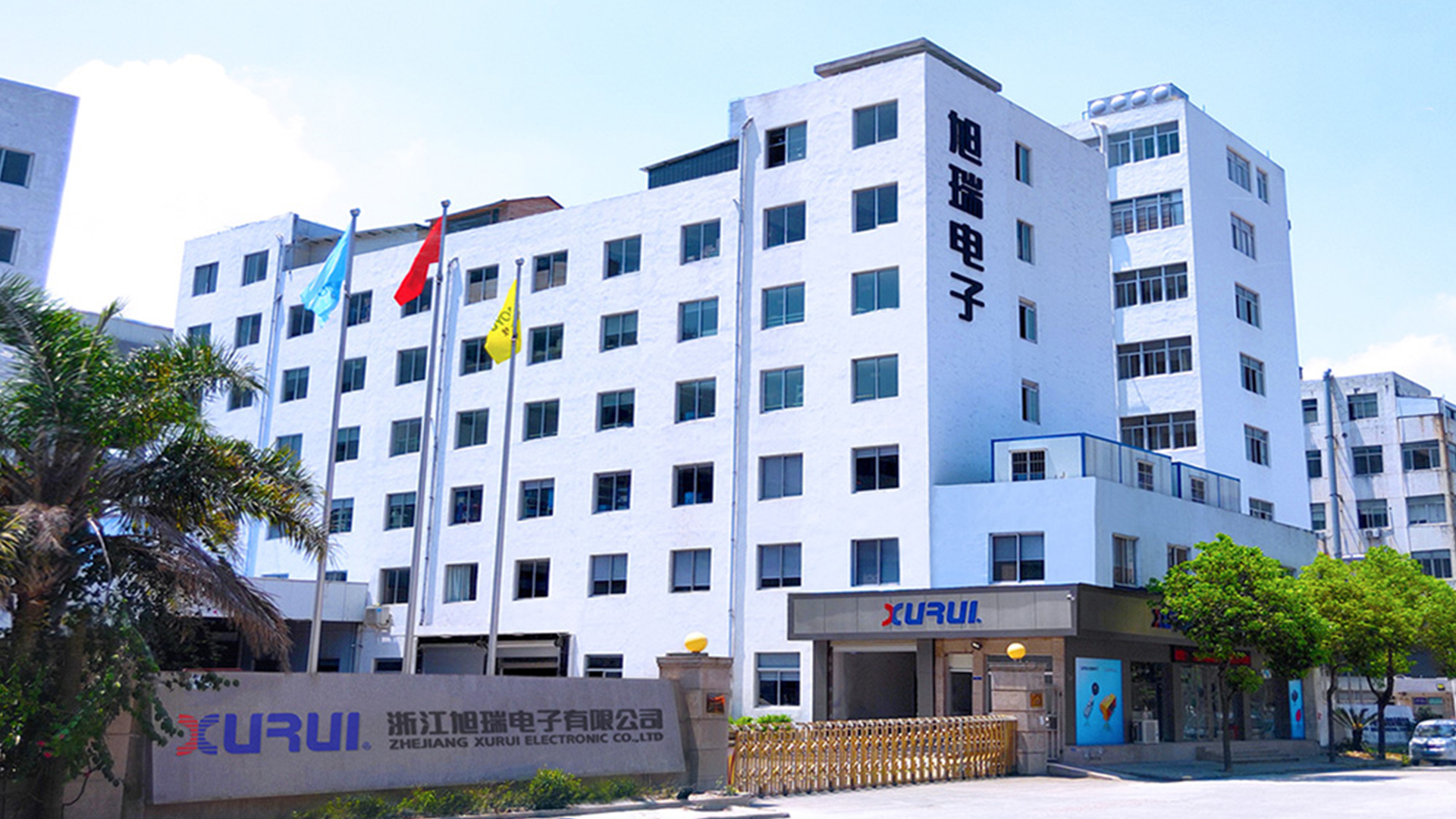
XURUI factory exterior. Long-term SSR supply is supported by manufacturing capacity, inspection routines, and a defined after-sales route.
Why a solid state relay purchase becomes a long-term supply decision
Changing an SSR supplier is rarely just a price comparison. A new supplier can require new drawings, new incoming inspection criteria, new approval records, and a new set of test reports. For a panel builder, distributor, or OEM, those steps consume engineering time before a single production order is placed. The cost of change is therefore part of the total cost of ownership, even when the unit price looks lower.
Lifecycle cost also matters because the SSR sits inside a control circuit that may run for years. XURUI's comparison material for solid state relays versus traditional electromechanical relays states an initial cost about 20% higher for the SSR, a total cost of ownership about 35% lower over five years, and roughly 85% less maintenance due to no mechanical wear and no contact arcing. Those are supplier comparison figures, not an independent life-cycle study. They are useful as a starting point for the buyer's own cost model, where duty cycle, ambient temperature, load type, and replacement labor should be checked separately.
A long-term partnership does not mean accepting supplier claims without evidence. It means setting up a relationship in which evidence can be checked repeatedly: certificates, test routines, acceptance criteria, and a named support route. That is the difference between a vendor that can fill one order and a supplier that can support a product through its production life.
Industry context: what is changing in SSR supply
The global solid state relay market was estimated at USD 1.65 billion in 2024 by MarketsandMarkets. Market Research Future projects the DIN-rail-mount SSR segment to grow at a CAGR of 8.0% through 2034, while panel-mount designs accounted for approximately 42% of global SSR market share in 2025. These are third-party commercial research estimates, not audited figures, but they point to a practical split: panel-mount SSRs remain a large installed base, while DIN-rail mounting continues to attract attention in modular control cabinets.
For buyers, the implication is not to chase a single mounting type. It is to define the mounting, rating, and control scope that the long-term agreement must cover. A buyer may need a DIN rail mount solid state relay for a compact cabinet, a panel-mount 40A or 25A unit for a heating load, a zero crossing solid state relay for an AC circuit, or a 600V model for a higher-voltage application. A supplier relationship is stronger when those categories are discussed openly at the start rather than discovered order by order.
Compliance expectations also differ by market. UL 508 is the US safety standard for industrial control equipment, and many SSRs intended for North America are listed or recognized under it. EN IEC 62314 is the European standard for solid-state relay safety requirements, and IEC 60947-4-3 covers AC semiconductor controllers and contactors for non-motor loads. Standard editions and applicability should be confirmed with the supplier and current standards publications. A certificate for one product family does not automatically cover another product family or another rating.
Supply chains add a second layer. A supplier that offers only one component line forces the buyer to manage every part number through a separate qualification route. A supplier with a broader switch and relay portfolio can reduce the number of commercial and quality relationships to manage, provided each part is still qualified on its own evidence.
XURUI at a glance: the supplier behind these answers
XURUI, formally Zhejiang Xurui Electronic Co., Ltd., is a Chinese manufacturer of industrial electric switches and solid state relays, founded in 2002 and based in Yueqing, Wenzhou. The company operates a factory of more than 5,000 square meters with 150 employees and an annual output of 20 million units. Its engineering team includes more than 24 engineers, and exports account for 40% of output, with stated markets including the United States, Germany, Japan, South Korea, Turkey, Belgium, and Egypt.
The quality and compliance base includes ISO 9001 certification, plus CCC, CE, TÜV SÜD, UL, KC, and RoHS qualifications for mainstream products. XURUI's UL certification is recorded under file number E334724 for toggle switches and solid state relays under UL 508. The company also states more than 60 national independent patents and 100% strict inspection before delivery. It obtained independent import and export rights in 2008 and reports mature sales agents and localized service centers in key overseas markets for pre-sales consultation, technical support, and after-sales service.
The product portfolio covers micro switches, limit switches, foot switches, toggle switches, reed switches, solid state relays, proximity switches, and photoelectric switches. For a buyer, that breadth is relevant to long-term supply because it creates a single relationship for several control-panel components. It does not replace a separate SSR qualification, and it does not by itself prove capacity for a specific relay rating.
The portfolio effect: how multiple component lines support supply continuity
A diversified component portfolio helps long-term supply in three concrete ways: fewer supplier audits, fewer commercial accounts to coordinate, and a more consistent documentation route across parts. If a panel builder already sources micro switches and limit switches from one supplier, adding solid state relays to the same relationship can simplify supplier onboarding, packaging coordination, and technical communication.
Micro switches and limit switches are also used in control panels and safety interlock circuits. XURUI's micro switch comparison material lists safety interlock systems among its applications, alongside industrial control panels, household appliances, vending machines, and packaging machinery. That does not turn every XURUI switch into a safety-certified interlock device. It does show where the portfolio sits in the broader control architecture: relays switch loads, while micro and limit switches provide position, detection, and interlock signals.
The limitation is equally important. A broad catalog does not prove that every SSR configuration is available, tested, or certified for a given market. Buyers should still ask for the specific SSR family, the applicable certification scope, the test evidence, and the commercial terms for that family. Portfolio breadth reduces coordination effort; it does not remove technical due diligence.
Step-by-step: how to evaluate a long-term SSR supplier
- Define the technical envelope first. List the load type, current, voltage, control signal, mounting method, ambient conditions, and switching mode. Include whether the requirement is an AC solid state relay, a DC-to-DC solid state relay, a DC-to-AC solid state relay, a zero crossing type, a DIN rail mount type, a dual solid state relay, a 3 phase solid state relay, or an adjustable solid state relay. Also note the target rating, such as 25A or 40A, and the target voltage, such as 220VAC, 240V, or 600V. This list becomes the scope of the supply agreement.
- Verify compliance for the destination market. Ask for the certificate, the file number where applicable, and the exact product scope covered. For North America, confirm the UL 508 position and whether the SSR family is within the certified scope. For Europe, confirm the current EN IEC 62314 position. For China, confirm CCC where applicable. Do not accept a certificate for a different product family as proof for the SSR.
- Review quality evidence, not just the certificate. XURUI's stated SSR risk controls include an aluminum base plate for heat dissipation, overcurrent protection, surge suppression, and zero-cross switching to reduce electrical stress. The stated pre-shipment routine includes thermal performance testing, electrical load testing, surge and EMC testing, and long-term reliability verification. Buyers should ask which of these tests apply to the ordered family and what record is provided.
- Confirm commercial terms in writing. The supplied purchasing terms list a MOQ of 100 units, EXW delivery, pre-shipment test as the acceptance criterion, and TT payment. These terms should be confirmed for the specific order and, for a long-term agreement, extended with quantity bands, price basis, payment schedule, and change handling.
- Map the after-sales route. Identify the contact for technical questions, the route for quality complaints, and the role of local agents or service centers in the destination market. A named route is more useful than a general promise of support.
- Ask for change notification in writing. Long-term supply depends on knowing when a product, process, or certification changes. The buyer should request a documented notification process, even if the supplier already has internal change control.
- Run a pilot order and acceptance check. Use the pre-shipment test as the formal acceptance point and agree the test items, sample size, and report format before the pilot. This turns the specification into a verified batch.
- Review and scale. After the pilot, compare actual delivery, documentation, and support against the agreement. Scale only after the evidence matches the commitment.
Comparison table: transactional purchase vs long-term partnership
The table below contrasts a one-off purchase with a long-term supply relationship. The right-hand column shows what a buyer should verify with XURUI or any other supplier; it is not a statement that every item is already formalized in a standard contract.
| Decision area | One-off purchase | Long-term partnership | What to verify |
|---|---|---|---|
| Compliance | Certificate checked at the time of order | Certificate scope maintained and reviewed over time | UL file E334724 scope, ISO 9001, CCC, CE, TÜV SÜD, KC, and RoHS status for the ordered family |
| Quality evidence | Incoming inspection only | Process and test records agreed in advance | 100% inspection before delivery, thermal, load, surge, EMC, and reliability test records |
| Supply capacity | Order-by-order availability | Capacity visibility and forecast review | 20 million units annual output, 150 employees, 5,000+ square meter factory, and the specific SSR line |
| Product scope | Single part number | Multiple component families under one relationship | Solid state relays, micro switches, limit switches, foot switches, toggle switches, reed switches, proximity switches, and photoelectric switches |
| Commercial terms | Unit price and delivery | MOQ, payment, acceptance, and repeat-order basis | MOQ 100 units, EXW, TT, and pre-shipment test as the stated acceptance basis |
| After-sales | Ad hoc contact | Named support route and escalation path | Local agents and service centers in key markets, plus pre-sales consultation and technical support |
| Change management | Informal notification | Documented change notification | Request a written process for product, process, or certification changes |
Use cases: where long-term SSR supply matters
Industrial automation and control panels. SSRs are used in industrial automation, heating control systems, HVAC equipment, and lighting control systems, according to XURUI's comparison material. In these applications, a replacement relay that differs in footprint, control current, or switching behavior can trigger a panel redesign. Long-term supply is therefore a design-continuity issue, not only a purchasing issue.
Heating and HVAC equipment. Heating loads cycle frequently, and the relay is part of the thermal control loop. Buyers should confirm the current rating, the zero-crossing behavior, and the heat dissipation arrangement for the enclosure. A supplier that can discuss the thermal path is more useful than one that only quotes a part number.
Panel builders and distributors. Distributors carry inventory across several product families, so supply continuity affects stock planning and customer service. A portfolio that includes solid state relays, micro switches, limit switches, and related components can reduce the number of suppliers a distributor has to qualify. It also makes it easier to support a customer who needs a switching component and a position-sensing component in the same panel.
Consumer electronics production equipment. Consumer electronics manufacturing uses SSRs in test fixtures, heating stages, and automation equipment. The end product may be a consumer device, but the SSR buyer is often an industrial equipment builder. That buyer needs certification suitable for the equipment market, not only a low unit price.
FAQ: long-term supply, after-sales, and partnership questions
Which certifications should a long-term solid state relay supplier hold?
At minimum, the supplier should hold a quality management certification and the product safety certifications required by the destination market. XURUI holds ISO 9001 and reports CCC, CE, TÜV SÜD, UL, KC, and RoHS qualifications for mainstream products. Its UL certification is recorded under file number E334724 for toggle switches and solid state relays under UL 508. Buyers should check that the certificate scope actually includes the SSR family and rating being purchased, and should confirm the current EN IEC 62314 position for European market access.
Can XURUI supply solid state relays and other switch components under one relationship?
Yes. XURUI's portfolio includes solid state relays, micro switches, limit switches, foot switches, toggle switches, reed switches, proximity switches, and photoelectric switches. A single relationship can reduce the number of supplier audits and commercial accounts a buyer has to manage. However, each component family still needs its own technical approval, certification check, and acceptance criteria. Portfolio breadth is a coordination benefit, not a substitute for part-level qualification.
How does XURUI support supply consistency for long-term orders?
XURUI reports a 5,000+ square meter factory, 150 employees, and an annual output of 20 million units, supported by ISO 9001 quality management and 100% inspection before delivery. The company also reports sales agents and localized service centers in key overseas markets. Supply consistency also depends on how the buyer plans: sharing a rolling forecast, confirming capacity for the specific SSR family, and agreeing on order confirmation points are practical steps. A supplier's total output does not automatically prove capacity for every rating, so the specific family should be confirmed.
What are the MOQ and purchasing terms?
The purchasing terms supplied for XURUI list a MOQ of 100 units, EXW delivery, pre-shipment test as the acceptance criterion, and TT payment. These are the stated terms and should be confirmed for the specific order. For a long-term agreement, buyers should extend them with quantity bands, price basis, payment schedule, packaging requirements, and the documents required at shipment. A low MOQ is useful for a pilot, but the repeat-order terms are what determine the long-term relationship.
How is acceptance handled before shipment?
Pre-shipment test is the stated acceptance criterion. XURUI's quality routine includes 100% strict inspection before delivery, and its stated SSR risk controls include thermal performance testing, electrical load testing, surge and EMC testing, and long-term reliability verification. Buyers should agree the test items, sample size, and report format before the first shipment. The acceptance record should be tied to the purchase order and the specific product family, so that a later order can be compared against the same basis.
What after-sales support is available?
XURUI reports pre-sales consultation, technical support, and after-sales service through sales agents and localized service centers in key overseas markets. The practical value of that network depends on the buyer's location and the product family, so the buyer should identify a named contact and an escalation route before committing. For long-term supply, it also helps to agree how technical questions, quality complaints, and replacement requests are logged and answered. A general support promise is less useful than a documented route with responsibilities.
Can XURUI support OEM/ODM requirements?
XURUI states that it supports OEM and ODM customized services, supported by an engineering team of more than 24 engineers and more than 60 national independent patents. Custom work should still be defined in writing: drawings, tolerances, acceptance criteria, tooling ownership, intellectual property, and change control. Buyers should ask which part of the requirement is standard and which part is customized, because that distinction affects certification scope, MOQ, and repeat-order consistency.
How should a buyer handle a quality issue after delivery?
The first step is to compare the issue against the agreed acceptance record and the pre-shipment test report. XURUI's stated quality controls include 100% inspection before delivery, which provides a reference point for the batch. The purchase agreement should then define the response route: who receives the complaint, what containment is required, how the root cause is reported, and what corrective action or replacement is expected. Buyers should not rely on an informal email chain for recurring quality issues.
What technical details should be fixed before a long-term commitment?
The technical scope should cover load type, current, voltage, control signal, mounting, ambient temperature, switching mode, and the required certification. It should also state whether the requirement is a 25A or 40A solid state relay, a 220VAC or 240V or 600V model, an AC or DC configuration, a zero crossing type, a DIN rail mount type, a dual solid state relay, a 3 phase solid state relay, or an adjustable solid state relay. These categories help the supplier confirm what is in scope. They should not be treated as proof that every configuration is available until the supplier confirms it.
How should lead time and delivery be handled in a long-term agreement?
The supplied company profile does not state a standard lead time for every SSR family, so lead time should be confirmed in the quotation and purchase agreement for each rating, mounting type, and order quantity. For repeat orders, buyers should agree on a forecast horizon, an order confirmation step, and the split of responsibilities under EXW delivery. Shipment documents, packaging, and labeling should also be specified. A long-term agreement works better when delivery is measured against confirmed order dates rather than a general estimate.
What should a partnership agreement cover beyond price?
Beyond unit price, the agreement should cover certification scope, acceptance criteria, MOQ, payment terms, lead time, packaging, change notification, after-sales contact, quality records, and OEM/ODM terms where applicable. It should also state how disputes and corrective actions are handled. These items matter because they determine whether the second and third orders run as smoothly as the first. Price is only one part of the total cost of a long-term SSR relationship.
How does a buyer start a long-term discussion with XURUI?
Start with the technical envelope and the commercial context: load type, current, voltage, mounting, target market, required certifications, estimated annual volume, and whether a sample or pilot order is needed. Ask for the applicable certification documents, the acceptance basis, and the terms for the specific SSR family. XURUI's contact for export inquiries is Leon at Leon@chinaxurui.com, telephone +86-577-62911448, or WhatsApp +86 13968773211. A clear brief makes the first quotation more useful and reduces the risk of matching the wrong relay to the application.
Conclusion: what a long-term SSR partnership should prove
A long-term solid state relay partnership is not built on a slogan. It is built on evidence that can be checked: a defined certification scope, a documented inspection and test routine, commercial terms that work across repeat orders, and an after-sales route that names who is responsible. XURUI's position rests on its 2002 founding, 20 million-unit annual output, ISO 9001 system, UL certification under file E334724 for toggle switches and solid state relays, and a portfolio that spans solid state relays, micro switches, limit switches, and related control components.
Buyers should still test that position against their own application. Confirm the SSR family, the target market certification, the acceptance criteria, and the support route before committing to volume. A partnership is stronger when both sides know what has been verified and what still needs to be written down.
Next step: If you are preparing a long-term SSR supply review, share the load, voltage, current, mounting, and target market with XURUI. The team can respond with the applicable product information, certification documents, and purchasing terms for the specific family.
Download the XURUI product brochure (PDF) or contact Leon at Leon@chinaxurui.com.
Zhejiang Xurui Electronic Co., Ltd., NO.3 Yandangshan Road, Wenzhou Bridge Industrial Park, Beibaixiang Town, Yueqing, Wenzhou City, Zhejiang, China. Tel: +86-577-62911448. WhatsApp: +86 13968773211.
Have Questions or Need More Details?
Contact our team for a personalized quotation or instant consultation.
Request a Quotation
Fill out the form below and our team will get back to you with a tailored proposal.
WhatsApp Direct Chat
Prefer to chat in real-time? Message us on WhatsApp for instant assistance & quick answers.
- Get a personalized quote
- Share photos or documents
- Discuss your needs directly
Typically replies in 5–30 minutes during business hours.