
Solid State Relay vs. Micro Switch: A Consumer Electronics Decision Guide
The choice between a solid state relay and a micro switch is not a price comparison between two switching components. It is a decision about what performs the switching: an electronic control signal driving a load, or a mechanical movement that has to be detected and converted into a contact change. Once that question is answered, the rest of the specification — load voltage, current, mounting, thermal path and certification — narrows quickly. Answer it late, and the design either carries a power-switching device it has no signal to actuate, or asks a mechanical contact to do work that will consume its rated life.
Short answer
- Solid state relay: use it when the task is to switch a load — a heating element, an AC motor, a lamp, a signal light — from a low-voltage or AC control signal, with electronic (non-contact) switching and no operator touching the power circuit.
- Micro switch: use it when the task is to detect a physical movement — a lid closing, a door opening, a lever reaching its limit, a button being pressed — and convert that movement into a fast, positive contact change.
This guide is written for design and procurement teams working on smart-home devices and household appliances. It uses XURUI's solid state relay series and micro switch models as grounded examples, and it stays with published datasheet values rather than category-level generalisations. Zhejiang Xurui Electronic Co., Ltd. (XURUI) is a switch and relay manufacturer based in Wenzhou, Zhejiang, China, founded in 2002, producing micro switches, limit switches, foot switches, toggle switches, reed switches, proximity switches, photoelectric switches and solid state relays.
What Each Component Actually Does
Solid state relay: a semiconductor output stage driven by a control signal
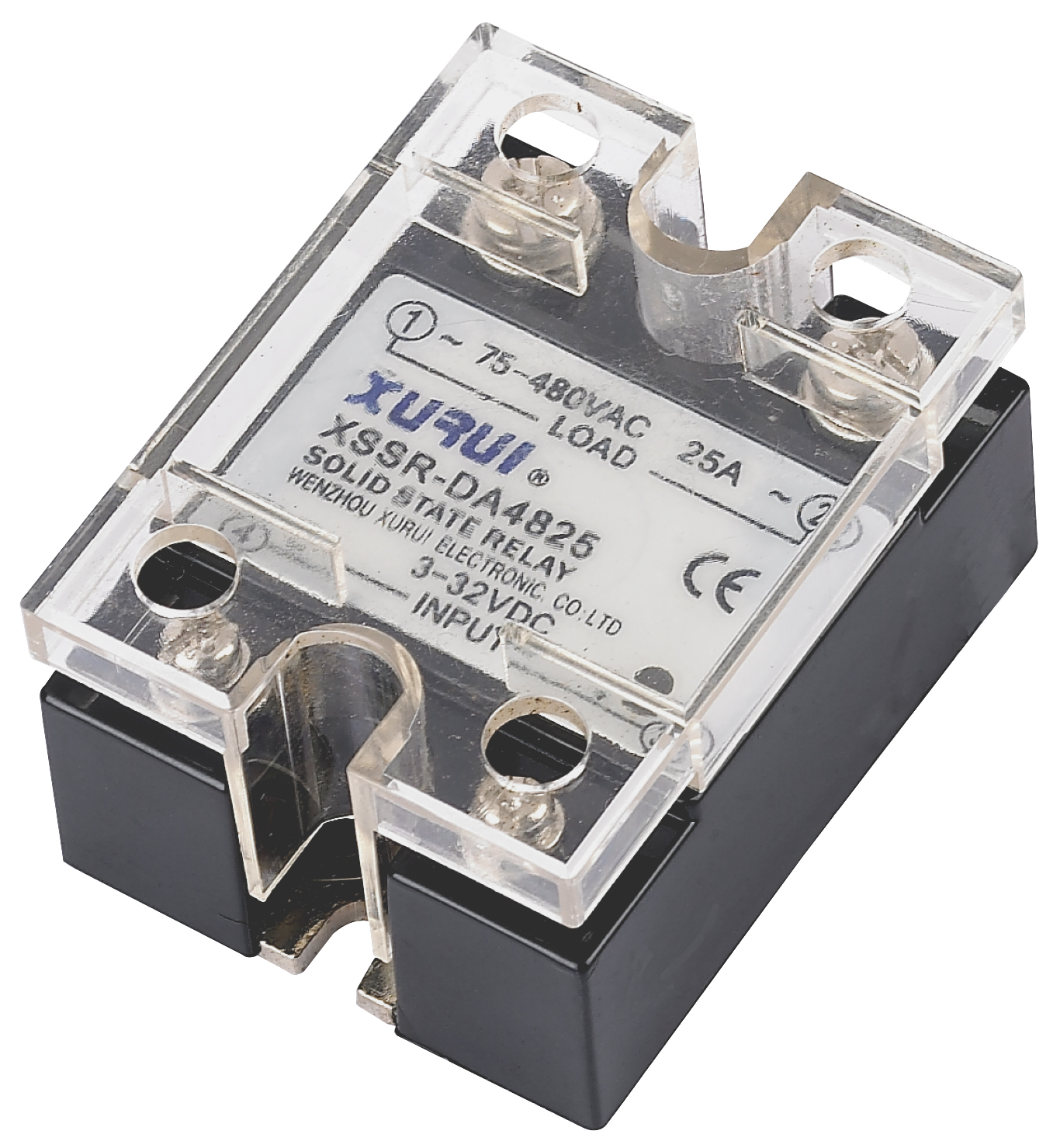
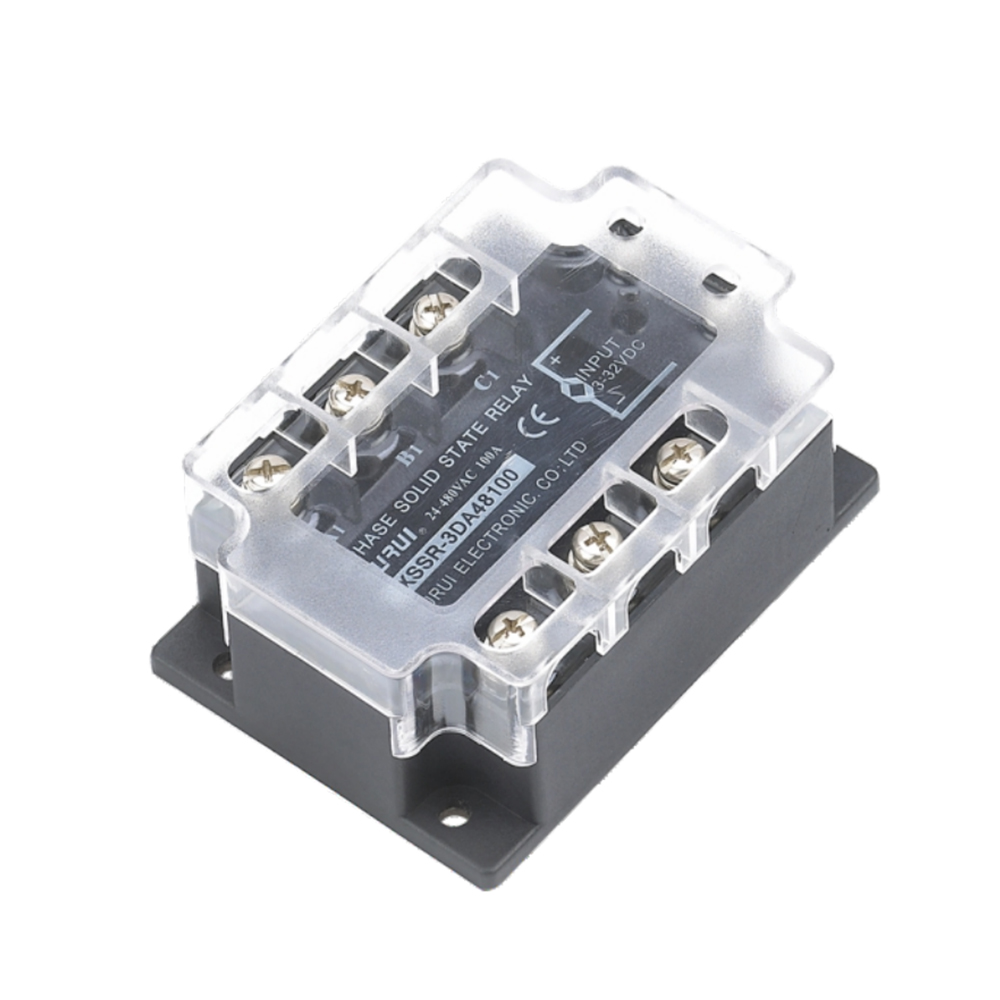
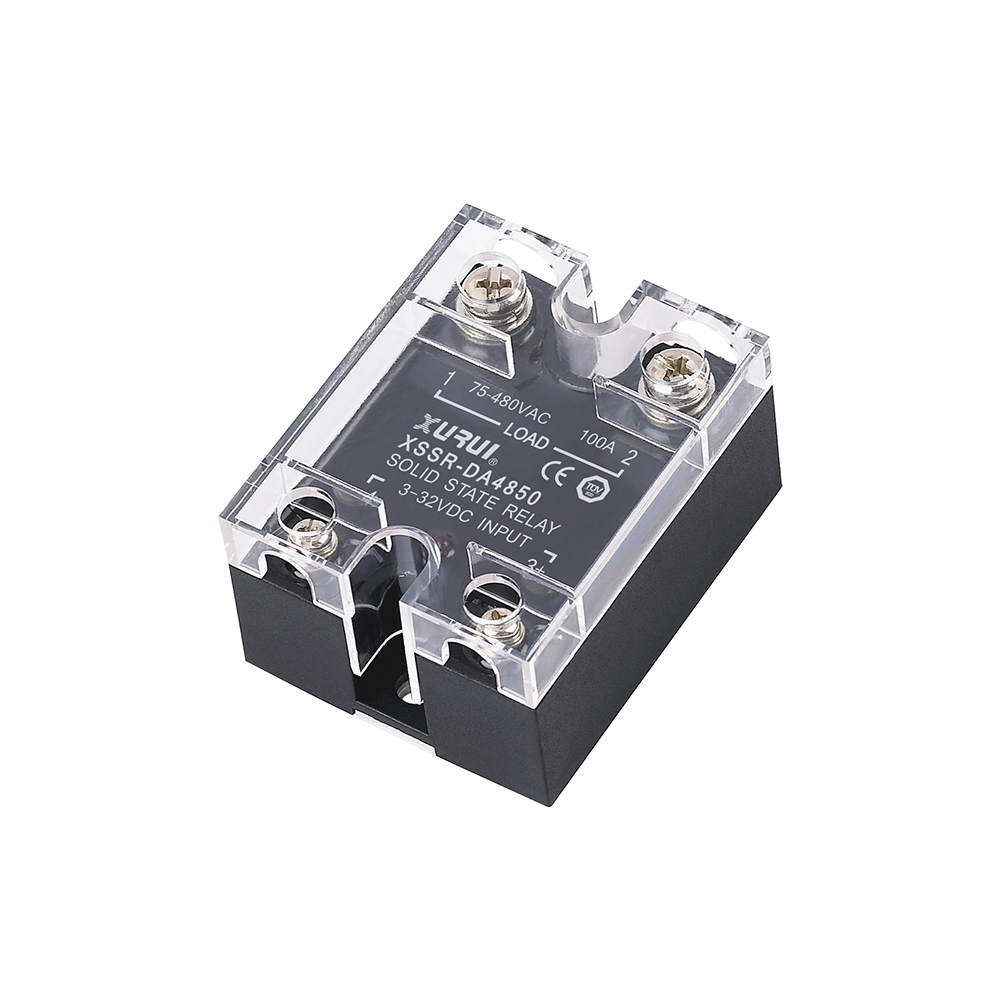
A solid state relay (SSR) is a switching device that turns a load on and off through a semiconductor output stage in response to a control signal, with no mechanical contact movement in the load path. XURUI's XSSR series illustrates the architecture: the XSSR-W5 accepts a 3–32VDC control voltage at 6–25mA and switches a 75–480VAC load from 10A to 125A, with a minimum load current of 0.08A, an output leakage current of ≤8mA, a dielectric strength of ≥2500VAC, an insulation resistance of ≥100MΩ and a switching time of ≤10ms.
- Control side options across the family: 3–32VDC (DA type) or 80–250VAC (AA type).
- Load side options: the XSSR-3 W4 switches 24–480VAC at 75A–200A; the XSSR-W2 switches 75–480VAC at 50A–200A; the XSSR-W2-JK switches 42–480VAC at 10A–120A.
- Switching behaviour: zero-cross or random turn-on control, described in XURUI's application documentation as electronic, non-contact switching with silent operation and high-speed response.
- Mechanical form: PA66 nylon housing, horizontal screw mounting; the XSSR-3 W4 measures approximately 92 × 62 × 30 mm with 47.5 mm mounting hole spacing, and the XSSR-W2-JK uses an aluminium alloy base plate.
Micro switch: a mechanically actuated snap-action contact
A micro switch is a mechanical switch in which a small physical displacement — delivered through a lever, roller or push-button — triggers a snap-action contact change. The XURUI XW-16 carries contact form 1NO 1NC and is rated AC-12 380VAC 16A and DC-12 250VDC 5A, with contact resistance ≤25mΩ, insulation resistance ≥100MΩ at DC500V, dielectric strength ≥1500VAC, mechanical life ≥1,000,000 operations, electrical life ≥50,000 operations, IP40 protection and an operating range of -25°C to +80°C. The XZ-15 series and the XSS-5 series are rated above 100,000 electrical operations and ≥1,000,000 mechanical operations, with IP40 protection and the same -25°C to +80°C window.

The Real Problem: Task Mismatch, Not Component Quality
Most switching failures in appliance and smart-home designs are not component-quality failures. They are task mismatches, and they cluster into four patterns.
- An SSR specified where there is nothing to drive it. An SSR needs a control signal. If the function is a lid that opens, there is no logic-level signal to switch — the design ends up adding a sensor and a driver board to create one, which is exactly the function a micro switch performs directly.
- A micro switch specified for a high-cycle AC load. Rated electrical life is finite: ≥50,000 operations on the XW-16, above 100,000 on the XZ-15 and the XSS-5. A contact that is cycled frequently by a heater controller consumes that budget, while an SSR's ≤10ms electronic switching does not depend on contact wear.
- Minimum load and leakage ignored. SSR datasheets specify a minimum load current — 0.1A on the XSSR-3 W4 and the XSSR-W2, 0.08A on the XSSR-W5, 0.05A on the XSSR-W2-JK — and an output leakage current of ≤5mA or ≤8mA. A very light load can therefore behave unpredictably at the off state if leakage is not accounted for.
- Thermal path treated as an afterthought. SSRs dissipate heat in the output stage; the XSSR-W2 specifies an on-state voltage drop of ≤2VAC, and the XSSR-W2-JK uses an aluminium alloy base plate for heat dissipation. Enclosure volume and mounting surface are part of the electrical design, not the mechanical detail.
Industry Background: Where Switching Demand Is Moving
Third-party commercial research places the global solid state relay market at an estimated USD 1.65 billion in 2024 (MarketsandMarkets). Market Research Future's segmentation puts panel-mount designs at approximately 42% of global SSR market share in 2025, with the DIN-rail mount segment projected to grow at 8.0% CAGR through 2034. These are third-party estimates with different methodologies and should be read as directional signals rather than fixed figures.
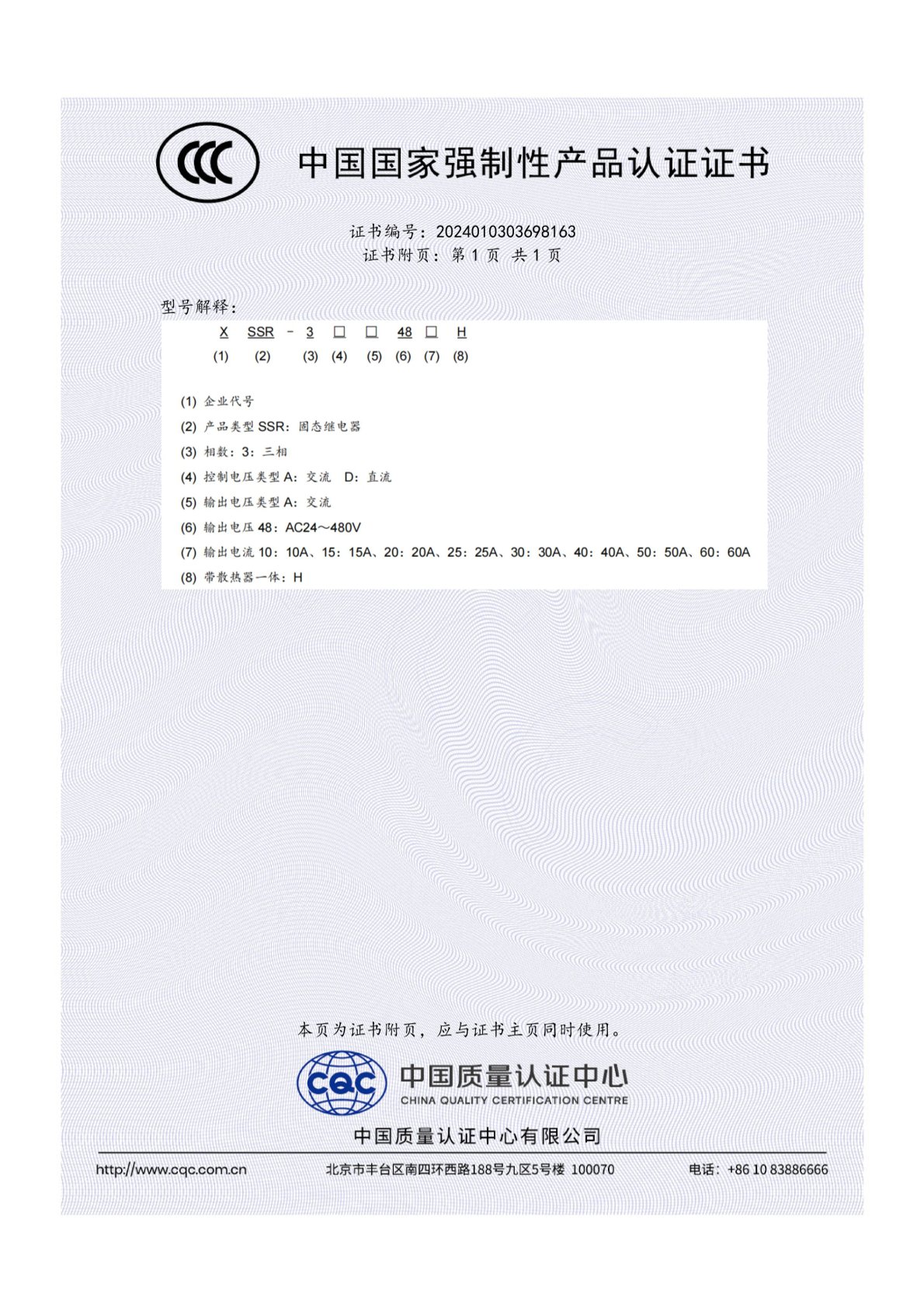
Two structural consequences matter for consumer electronics teams. First, electronic load switching is no longer confined to industrial cabinets; appliance heating control, lighting control and HVAC functions are increasingly specified with semiconductor switching because it is silent, fast and free of contact wear. Second, the compliance map is now part of the specification. XURUI's solid state relay range holds UL certification under file number E334724 against UL 508 and CSA C22.2 No. 14, CCC certification for the XSSR-3H under GB/T 14048.5-2017, and a CE certificate for the XSSR series under EN62368-1:2014+A11:2017. Micro switch certifications follow the same scope-based logic: the CCC certificate for the XV-15 micro switch series is issued against GB/T 14048.5-2017.
Detailed Solution: Matching the Component to the Switching Task
When the solid state relay is the correct choice
Specify an SSR when the switching function is load-side and the trigger is electrical. XURUI's product documentation lists the main application groups for the XSSR-W5 as industrial automation installation, computer peripheral connection, electric stoves and heating or warm-control circuits, street lights, signal lights and traffic lights, and AC motor control. The XSSR-W2-JK documentation adds HVAC systems, renewable energy, electric vehicles and medical equipment to that list. In practice, an appliance design reaches for an SSR when at least two of the following are true: the load is mains AC, the switching rate is high or unpredictable, the control signal comes from a microcontroller or PLC, and audible contact noise is unacceptable.
The constraint side matters just as much. Size the SSR against the load with margin: XURUI's XSSR-W2-JK documentation states a load current safety factor of 50–60% for resistive loads and 30–40% for inductive loads, which means a 40A resistive requirement should not be met with a 40A-rated device. Verify the minimum load current against the actual load, and confirm that the ≤5mA to ≤8mA output leakage is acceptable for the load and for any parallel sensing circuit.
When the micro switch is the correct choice
Specify a micro switch when the switching function is a signal or a modest load, and the trigger is mechanical. XURUI's XSS-5 is documented for home appliances, automotive, consumer electronics, industrial automation and medical equipment, and is rated 5A/125VAC and 3A/250VAC. The XW-16 covers AC-12 380VAC 16A and DC-12 250VDC 5A with a 1NO 1NC contact form and a plastic housing, which makes it suitable for appliance control circuits, machine tools and electromagnet circuits. The XZ-15 series operates from 1mm/s to 1m/s with a mechanical operating frequency of 240 times per minute and a thermostable phenolic plastic body with silver contacts, which is what continuous position detection in equipment demands.
The constraint side here is actuation and life. A micro switch needs a lever, roller or button that physically reaches the moving part, and it needs its electrical life budget respected — 50,000 operations on the XW-16, above 100,000 on the XZ-15 and XSS-5. A contact resistance of 25mΩ to 30mΩ initial value is the right figure for signal and modest-load switching, not for switching a heating element directly.
What XURUI's two product lines bring to the comparison
Zhejiang Xurui Electronic Co., Ltd. was founded in 2002, operates a 5,000+ m² factory with 150 employees and an annual output of 20 million units, and reports an engineering team of more than 24 engineers, ISO9001 quality system certification, and CCC, CE, TÜV SÜD, UL, KC and RoHS certification across its mainstream products. The company holds more than 60 national independent patents, exports around 40% of its output to markets including the United States, Germany, Japan, South Korea, Turkey, Belgium and Egypt, and supports OEM and ODM customisation of handle, logo, dimensions and operating characteristics.
The solid state relay side of the portfolio is broad enough to compare across ratings: the CE certificate for the XSSR series covers models including the XSSR-P1/P2/P3, XSSR-W1, XSSR-W2, XSSR-W2-JK, XSSR-W5, XSSR-W6, XSSR-W7, XSSR-W9, XSSR-W12, XSSR-H, XSSR-M1–M6, XSSR-F W2, XSSR-3H, XSSR-3 W3, XSSR-3 W4, XSSVR-3P, XSSVR-VAW2, XSSVR-CA W2 and XSSVR-W1/W2. The micro switch side covers the XW-16, XZ-15 and XSS-5, among others. For a design team, the practical value is that both halves of the switching decision can be sourced from one qualification file rather than two unrelated supplier audits.
Step-by-Step Breakdown: A Seven-Step Decision Sequence
- Classify the switching task. Is the function moving energy (load switching) or reporting position (signal switching)? Load switching points to an SSR; position reporting points to a micro switch. If both exist, plan for both components from the start.
- Fix the load class and rating. For an SSR, confirm AC load voltage and current against a specific model — 24–480VAC and 75A–200A on the XSSR-3 W4, 75–480VAC and 50A–200A on the XSSR-W2, 75–480VAC and 10–125A on the XSSR-W5, 42–480VAC and 10A–120A on the XSSR-W2-JK. For a micro switch, confirm the contact rating class: AC-12 380VAC 16A and DC-12 250VDC 5A on the XW-16.
- Define the control source. An SSR can be driven from 3–32VDC at 6–25mA (DA type) or 80–250VAC at 5–25mA (AA type). A micro switch is driven by physical force through a lever, roller or button, with an operating speed window of 1mm/s to 1m/s on the XZ-15.
- Estimate the cycle count. Multiply switching events per hour by expected service hours. Compare the result with the micro switch electrical life (≥50,000 on the XW-16; above 100,000 on the XZ-15 and XSS-5). If the count approaches the limit, the function belongs on an SSR.
- Check the physical and thermal envelope. The XSSR-3 W4 occupies approximately 92 × 62 × 30 mm with 47.5 mm hole spacing, and the XSSR-W2-JK relies on an aluminium alloy base plate for heat dissipation. The XW-16 and XZ-15 are IP40 devices rated to -25°C to +80°C, while the XSSR range is rated to -20°C to +70°C.
- Confirm compliance scope for the target market. Match the certificate to the exact model, not to the product family. UL file E334724 covers specified XSSR models under UL 508; CCC certificate 2024010303698163 covers the XSSR-3H under GB/T 14048.5-2017; the CE certificate TMC210514108-C covers the XSSR series under EN62368-1:2014+A11:2017.
- Validate the sample and the supply route. XURUI runs 100% pre-shipment testing, accepts MOQ from 100 units, quotes 15–30 days lead time and states a monthly capacity range of 5,000–250,000 units, which is the right sequence for a pilot build followed by production ramp.
Use Cases: Smart Home and Appliance Designs
The following mapping shows how the same design brief resolves into different components depending on the function being switched.
| Design function | Component | Reference model and basis |
|---|---|---|
| Smart plug or in-wall heater switching a mains AC load | Solid state relay | XSSR-W5, 75–480VAC load, 10–125A, 3–32VDC control |
| Heating element, warm-control circuit, electric stove | Solid state relay | XSSR-W5, listed for heating and warm control; XSSR-W2-JK for HVAC |
| Street light, signal light, traffic light | Solid state relay | XSSR-W5, listed application: street light and signal light control |
| Motor control with inductive load | Solid state relay | XSSR-W2-JK, 30–40% load current safety factor for inductive loads |
| Appliance lid, door or drawer position detection | Micro switch | XW-16 (1NO 1NC, IP40) or XSS-5 (5A/125VAC, 3A/250VAC) |
| Control panel button, vending machine, door lock | Micro switch | XSS-5, documented for home appliances and consumer electronics |
| Machinery limit and position control in an automation panel | Micro switch | XZ-15, 1mm/s to 1m/s operating speed, silver contacts |

Field evidence supports the split. An industrial automation solution provider in Malaysia used 800 units of the XSSR-M1–M6 series in PLC control and conveyor systems and reported a 65% reduction in maintenance cost with zero major failures over two years. Industrial equipment manufacturers in Germany used 1,200 units of the XSSR-W1 in heating control systems and reported a 60% reduction in maintenance cost over three years, and separately used 1,500 units of the XZ-15 micro switch for position detection and limit control, reporting a 65% reduction in maintenance cost over the same period. On the mechanical side, a motorcycle manufacturer in Russia used 500 units of the XSS-5 as a horn button and reported an 80% maintenance cost reduction with zero major failures over three years. These are supplier-reported customer outcomes, not independently audited results.
Comparison Table: XSSR-3 W4 Solid State Relay vs XW-16 Micro Switch
The table compares two specific datasheet models, not two categories. Values are model-specific and should not be transferred to other series without checking the datasheet.
| Attribute | Solid State Relay — XSSR-3 W4 | Micro Switch — XW-16 |
|---|---|---|
| Switching principle | Semiconductor output, non-contact electronic switching | Mechanical snap-action contact, 1NO 1NC |
| Actuation | 3–32VDC (DA) or 80–250VAC (AA) control signal | Physical force via lever, roller or button |
| Load voltage | 24–480VAC | AC-12 380VAC / DC-12 250VDC |
| Current rating | Max load 75A–200A; minimum load 0.1A | 16A at AC-12 380VAC; 5A at DC-12 250VDC |
| Switching time | ≤10ms | Snap-action contact change; not specified as a time value |
| Life | Set by load current and thermal design; operating range -20°C to +70°C | ≥1,000,000 mechanical; ≥50,000 electrical operations |
| Dielectric strength | >2500VAC | ≥1500VAC |
| Insulation resistance | ≥100MΩ | ≥100MΩ (DC500V) |
| Contact resistance | Output leakage current ≤8mA; on-state drop not specified for this model | ≤25mΩ initial value |
| Operating temperature | -20°C to +70°C | -25°C to +80°C |
| Housing and mounting | PA66 nylon housing, horizontal screw mount, approx. 92 × 62 × 30 mm, 47.5 mm hole spacing | Plastic housing, IP40 protection |
| Typical function in a device | Load power switching under electronic control | Position, limit and actuation detection; manual or mechanism-driven on/off |
| Best fit | Heating, lighting, AC motor control, HVAC load switching | Appliance lids, buttons, vending machines, door locks, machinery limits |
FAQ
Does a solid state relay for consumer electronics need UL or CCC certification?
It depends on the target market, and the certificate must name the exact model. XURUI's solid state relay range holds UL certification under file number E334724 against UL 508 and CSA C22.2 No. 14, CCC certification for the XSSR-3H under certificate 2024010303698163 issued against GB/T 14048.5-2017 (valid 30 September 2024 to 29 September 2029), and a CE certificate for the XSSR series under certificate TMC210514108-C against EN62368-1:2014+A11:2017. Micro switches follow the same scope logic: the CCC certificate 2024010305694684 covers the XV-15 micro switch series under GB/T 14048.5-2017. Confirm the certificate scope in writing before design freeze.
Can one appliance design use both an SSR and a micro switch?
Yes, and many do. The two components occupy different layers of the same circuit: the SSR switches the load, and the micro switch reports actuation or acts as an interlock. In a heated appliance, an XSSR-W5 can switch the heating element from a 3–32VDC control signal while an XW-16 micro switch reports that the lid is closed. The design rules stay separate — the SSR needs load current margin, minimum load current verification and a thermal path, while the micro switch needs a lever or button with correct travel and an electrical life budget of ≥50,000 operations on the XW-16.
What actually drives the cost difference between an SSR and a micro switch?
The cost drivers sit in different parts of the bill of materials rather than in a single unit price. An SSR carries a semiconductor output stage, an isolation system rated above 2500VAC dielectric strength, and a thermal path such as the aluminium alloy base plate used on the XSSR-W2-JK. A micro switch carries silver contacts, a snap-action mechanism and a moulded housing, with contact resistance specified at 25mΩ to 30mΩ initial value. The more useful comparison is total cost of the switching function: relay plus heat dissipation and driver circuitry versus switch plus actuator, lever and assembly time. Compare configurations rather than headline prices.
How should a sample be validated before committing to a design?
Test the exact model against your own load and environment. For an SSR, verify minimum load current (0.1A on the XSSR-3 W4, 0.08A on the XSSR-W5, 0.05A on the XSSR-W2-JK), confirm that ≤5mA to ≤8mA output leakage is acceptable, measure temperature rise at your enclosure condition against the -20°C to +70°C operating range, and check switching response against the ≤10ms figure. For a micro switch, verify lever travel and actuation force, contact resistance at 25mΩ initial value, and the -25°C to +80°C range with IP40 protection. XURUI runs 100% pre-shipment testing and accepts MOQ from 100 units, which suits pilot builds.
What lead time and capacity should a project plan for?
XURUI quotes a standard lead time of 15–30 days, a monthly capacity range of 5,000–250,000 units, and OEM/ODM customisation of handle, logo, dimensions and operating characteristics, with remote after-sales support. Plan the first article and pilot run inside that window, then confirm the ramp volume against the capacity range before committing a production schedule. Sample requests and model-specific quotes can be raised directly with the XURUI team at Leon@chinaxurui.com or +86-577-62911448.
Conclusion: Decide by Task, Then Verify by Evidence
The solid state relay and the micro switch are not competing answers to one question. They answer two different questions. If the function is switching a mains load from a control signal, the SSR is the right starting point, and the design work moves to load margin, minimum load current, leakage and heat. If the function is detecting a movement or a mechanism position, the micro switch is the right starting point, and the design work moves to actuator geometry, contact rating and electrical life.
The decision checklist is short: classify the task, size the load, define the control source, estimate the cycle count, check the physical and thermal envelope, confirm the certificate names your model, then validate a sample against your own conditions. Applied in that order, the component choice is settled before the bill of materials is written — and the compliance evidence arrives with the part rather than after the design freeze.
Next step: request a sample or a model-specific quote
Tell the XURUI team your load voltage, load current, control signal and target market, and ask for the matching XSSR solid state relay or micro switch model together with the certificate scope for that model.
Email: Leon@chinaxurui.com | Tel: +86-577-62911448 | WhatsApp: +86 13968773211
Website: xuruiswitch.com | Catalogue: download the XURUI product brochure (PDF)
Have Questions or Need More Details?
Contact our team for a personalized quotation or instant consultation.
Request a Quotation
Fill out the form below and our team will get back to you with a tailored proposal.
WhatsApp Direct Chat
Prefer to chat in real-time? Message us on WhatsApp for instant assistance & quick answers.
- Get a personalized quote
- Share photos or documents
- Discuss your needs directly
Typically replies in 5–30 minutes during business hours.