
A Guide to Regulatory and Material Compliance for Single-Use Biopharma Flow Sensors
Material compliance for a single-use biopharma flow sensor comes down to three questions: what the sensor is made of, whether the measurement method keeps the fluid path hygienic and uncontaminated, and whether the manufacturer can document both in a form a quality team can file and audit. XY-TEK's SU Series and TGU Series are useful reference points, because both are built on biocompatible polymer fluid paths for bioprocess, pharmaceutical, and medical manufacturing, and both are tied to documentation a buyer can review before qualification. This guide sets out the standards landscape, the material constraints that actually bind a single-use specification, a step-by-step evaluation workflow, and the boundaries that decide when these formats stop being the right answer.
Why Material Compliance, Not Accuracy, Sets the Limit of a Single-Use Sensor
In a conventional stainless-steel installation, compliance work is mostly about cleaning, calibration, and re-qualification intervals. In a single-use system the question moves upstream to the material of construction itself. The component that touches the process fluid is frequently part of a disposable assembly, so the fluid path material decides which processes the sensor can serve at all.
Three constraints dominate a single-use specification:
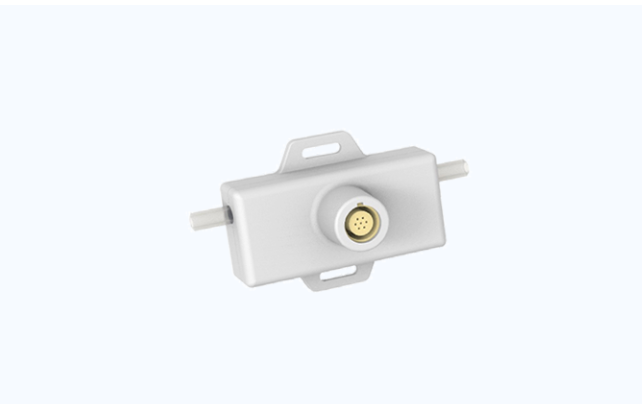
- Fluid path material. The SU Series is constructed from biocompatible polymer materials. The TGU Series uses biocompatible plastic with an ultrasonic sensor module. Those material statements, not the electronics, define the biological and chemical boundary of the application.
- Process hygiene. The SU Series design includes a single-use measuring channel, hygienic fluid monitoring, sterile application support, and high measurement repeatability. XY-TEK's biopharmaceutical application profile adds cleanliness, sterility, and low-shear requirements, plus contamination-free operation with no pressure loss.
- Physical envelope. Both the SU Series and the TGU Series are rated for fluid temperatures from 0°C to 60°C and for fluids that contain no or few solid particles. A single-use flow sensor is specified inside these limits, not around them.
A sensor can publish ±2% accuracy and still be unusable in a process where the wetted material cannot be documented. That is the real compliance problem, and it is why a material and documentation review usually decides the selection long before the datasheet headline does.
The Standards Landscape for Ultrasonic Flow Sensors in Biopharma
Two published standards appear repeatedly when ultrasonic flow measurement meets regulated manufacturing. ISO 24062:2023 specifies requirements for clamp-on ultrasonic transit-time meters for liquids and gases in closed conduits, and is directly relevant where the measurement format is clamp-on transit-time. Separately, medical sensors, including flow sensors for ventilators and drug delivery, are subject to EN ISO 13485 quality management systems.
Single-use flow sensors sit where those two worlds overlap: an ultrasonic transit-time measurement principle applied to a disposable fluid channel that must also satisfy the hygiene, sterility, and cleanliness requirements of the biopharma process. Because ISO 24062:2023 is written around clamp-on transit-time meters in closed conduits, and EN ISO 13485 addresses the quality-system side of medical devices, buyers should confirm in writing which framework a supplier is working to for the specific configuration, rather than assuming one framework covers both.
The commercial backdrop explains why this segment keeps attracting attention. The global ultrasonic flow meter market was valued at USD 1.52 billion in 2025 and is estimated to grow to USD 2.28 billion by 2031, according to Mordor Intelligence. Asia Pacific held the largest share of that market in 2025 at 38.6%, driven by industrial expansion, per Fortune Business Insights. On the supply side, Emerson Electric, Siemens AG, Endress+Hauser, and Honeywell are identified among the major global competitors in ultrasonic flow sensing by Dataintelo, while low-flow and small-tubing measurement work is often served by specialist manufacturers.
Shanghai Xunyin Technology Co., Ltd (XY-TEK) is a Shanghai-based manufacturer of ultrasonic flow sensors and flow meters, founded in 2018, operating a 5,000 m² facility with a 30+ person R&D team and an annual output of more than 8,000 units, serving global markets with around 50% of output exported. Its measurement focus is small tubing and low flow rates, which is the same envelope in which single-use biopharma processes operate.
How the SU Series and TGU Series Address Material Constraints
SU Series: a single-use measuring channel in biocompatible polymer
The SU Series is a single-use ultrasonic flow sensor built on a single-use measuring channel and biocompatible polymer materials. Its published measurement profile is ±2% accuracy over a 0.05–10 L/min range, with an applicable fluid temperature of 0°C to 60°C. The design intent is hygienic fluid monitoring with sterile application support and high measurement repeatability, and the reported industries are biopharma, single-use systems, medical manufacturing, and bioprocess.
For a buyer, the practical meaning is straightforward: the compliance conversation is about the polymer channel and its documentation, not about how to clean and re-qualify a reusable wetted body. That shifts the evaluation from cleaning validation toward material declarations, sterility support, and batch-to-batch reproducibility of the disposable channel.
TGU Series: ultra-low flow on a biocompatible plastic channel
The TGU Series low-flow ultrasonic flow sensor uses biocompatible plastic and an ultrasonic sensor module, with a U-shaped measuring channel. It publishes ±1% accuracy with measurement accuracy up to ±0.1 mL/min across a 0–1000 mL/min range, an applicable fluid temperature of 0°C to 60°C, and compatibility with PVC, silicone, PFA, PE, and PUR flexible plastic tubing with smooth inner and outer surfaces. Reported industries are bioprocess, medical equipment, pharmaceutical production, and semiconductor.
The U-shaped channel matters for compliance review as much as for accuracy, because channel geometry and channel material together determine how the sensor behaves with a given tubing set, at a given flow rate, and with a given medium. A material claim that is not matched to the actual tubing and fluid is the most common source of failed trials.
The documentation layer: what the patents do and do not prove
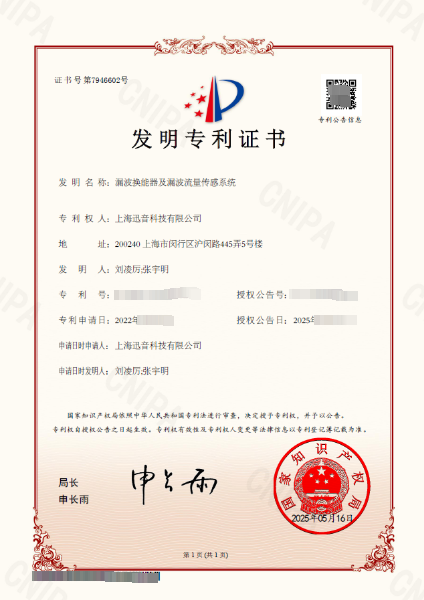
XY-TEK's material and technology claims sit alongside intellectual-property records that a procurement or quality team can request. The TGU Series is listed among the products associated with China invention patent No. 7946602, issued by the China National Intellectual Property Administration (CNIPA) on 16 June 2025 with expiry on 16 June 2045, covering liquid flow sensing and filter enhancement technology applications. The SU Series is listed among the products associated with a CNIPA invention patent covering ultrasonic flow sensor technology, with the certificate number partially obscured in the available documentation and a validity period running from 1 November 2022 to 1 November 2042.
Step-by-Step: Evaluating Material and Regulatory Compliance Before You Specify
- Draw the fluid-contact boundary first. Decide whether the sensor touches the process fluid or sits outside it. A clamp-on format keeps the measurement outside the tubing wall, while a single-use channel format places a disposable polymer channel in the fluid path. This single decision determines how much material documentation the project will require.
- Match the material claim to the application. For every fluid-adjacent component, record the material of construction: biocompatible polymer materials for the SU Series, biocompatible plastic with an ultrasonic sensor module for the TGU Series. A generic phrase such as “medical grade” is not a substitute for a named material.
- Map the applicable standard framework and confirm document ownership. Establish whether the project falls under a transit-time meter standard such as ISO 24062:2023, a medical-device quality-system framework such as EN ISO 13485, or the customer's own internal specifications. Then confirm who holds each supporting document.
- Check the process window against published parameters. Compare the process to the published figures: ±2% accuracy and 0.05–10 L/min for the SU Series, ±1% accuracy up to ±0.1 mL/min and 0–1000 mL/min for the TGU Series, and a 0°C to 60°C fluid temperature window for both. Confirm the fluid contains no or few solid particles.
- Verify tubing and connection compatibility. The TGU Series is documented for PVC, silicone, PFA, PE, and PUR flexible plastic tubing with smooth inner and outer surfaces. A mismatch between the published tubing list and the actual disposable set is the most frequent cause of an inconclusive validation.
- Validate with samples under real media. Run trials with the actual medium, tubing, and flow profile rather than water only, and test the behaviours that matter to the process, including response at the low end of the range and stability over a representative run.
- Lock documentation and supply terms before scaling. Confirm quality-control provisions, order quantity, lead time, and support channels in writing so that the disposable channel and the instrument supply stay synchronized as the process scales.
Use Cases Where Material Compliance Drives the Decision
Tangential flow filtration and chromatography
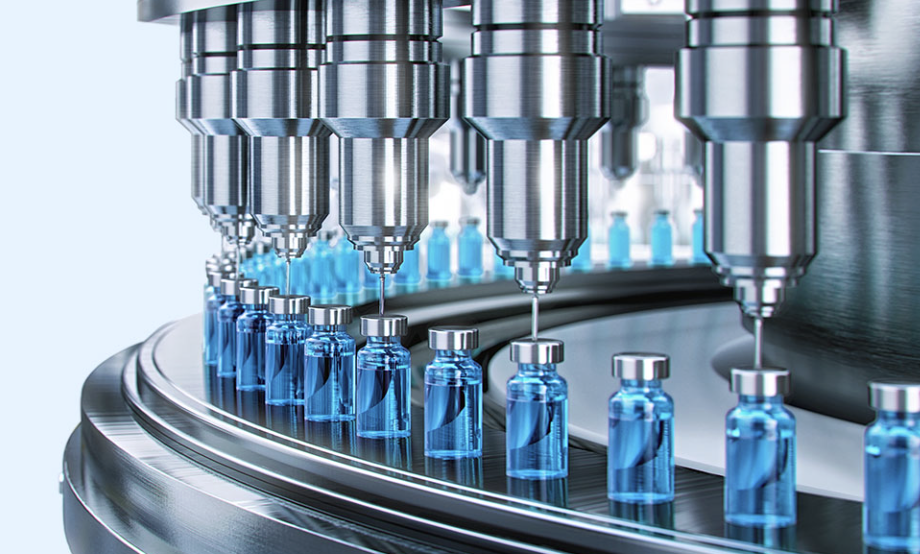
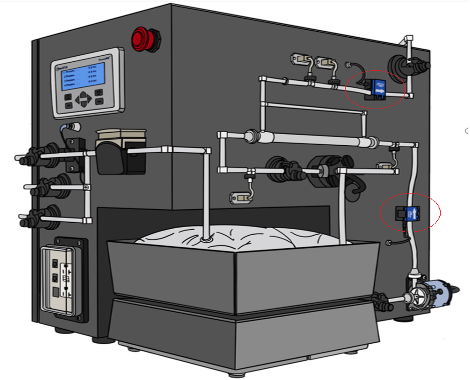
Bioprocess flow monitoring typically requires micro-flow to low-flow measurement with high accuracy and stability, and matched equipment includes filtration systems, chromatography columns, bioreactors, and the peristaltic or supplement pumps that feed them. In tangential flow filtration and chromatography, the sensor is expected to provide real-time metering that is stable enough for process decisions while remaining non-contact, contamination-free, and free of pressure loss.
Perfusion, media preparation, and culture circulation
In perfusion and media handling, the measurement tasks are monitoring perfusion pump performance, detecting pipeline aging to prevent emptying or overflow, and monitoring culture medium circulation while protecting cell viability. The SU Series and TGU Series are positioned for this class of work because the fluid path is defined by biocompatible polymer construction and the measurement is non-invasive, with low shear and no contamination of the liquid.
Medical device and single-use assembly production
In medical environments, the requirements are hygiene and biocompatibility together with sterility and cleanliness, and the sensor design is expected to be non-invasive and non-contact, with no contamination and no pressure loss, and safe for blood contact with low shear to protect blood cells. The same logic applies upstream in single-use assembly manufacturing, where every fluid-adjacent component must be traceable.
Where these formats stop being the right answer
The SU Series and TGU Series are rated for fluid temperatures of 0°C to 60°C and for fluids containing no or few solid particles. Processes above that temperature ceiling, or with abrasive slurries, fall outside the published envelope. XY-TEK's industrial product lines extend the temperature window, for example the CS Series clamp-on sensor and the TPD and CPD Series rated to 0°C to 90°C, but those formats are not single-use channels, and this guide does not treat them as equivalents. The honest version of the compliance answer includes the boundary, not just the capability.
Comparison Table: SU Series, TGU Series, and CG Series
| Compliance-relevant specification | SU Series — Single-use Ultrasonic Flow Sensor | TGU Series — Low-flow Ultrasonic Flow Sensor | CG Series — Clamp-on Ultrasonic Flow Sensor |
|---|---|---|---|
| Measurement format and fluid contact | Single-use measuring channel; disposable fluid path | U-shaped measuring channel for ultra-low flow; non-invasive ultrasonic measurement | Clamp-on, non-invasive; sensor mounted outside flexible tubing |
| Material of construction | Biocompatible polymer materials | Biocompatible plastic, ultrasonic sensor module | ABS housing, stainless steel sensor components |
| Published accuracy | ±2% | ±1%; measurement accuracy up to ±0.1 mL/min | ±3% |
| Flow range | 0.05–10 L/min | 0–1000 mL/min | 0–20 L/min |
| Applicable fluid temperature | 0°C to 60°C | 0°C to 60°C | 0°C to 60°C |
| Tubing / channel compatibility | Single-use measuring channel as defined in the product design | PVC, silicone, PFA, PE, PUR flexible plastic tubing with smooth inner and outer surfaces | PVC, silicone, PFA, PE, PUR flexible plastic tubing with smooth inner and outer surfaces |
| Reported industries | Biopharma, single-use systems, medical manufacturing, bioprocess | Bioprocess, medical equipment, pharmaceutical production, semiconductor | Medical devices, biopharmaceutical, industrial automation |
| Associated IP documentation | Listed among the products associated with a CNIPA invention patent covering ultrasonic flow sensor technology (certificate number partially obscured) | Listed among the products associated with China invention patent No. 7946602 (CNIPA), liquid flow sensing and filter enhancement technology | Not listed among the products associated with the CNIPA invention patents referenced in this guide |
Figures above are the published product specification values. Where documentation lists more than one figure for the same parameter, confirm the value that applies to the exact configuration in writing before it enters a specification or a validation protocol.
FAQ: Compliance Questions Buyers Ask About Single-Use Flow Sensors
1. What material documentation should be requested before a single-use flow sensor is qualified into a biopharma process?
Ask for the material of construction of every fluid-adjacent component, the supported tubing types, the fluid temperature rating, and the quality-control provisions that apply to the specific configuration. For reference, the SU Series is constructed from biocompatible polymer materials with a single-use measuring channel, hygienic fluid monitoring, sterile application support, and high measurement repeatability, rated ±2% over 0.05–10 L/min and 0°C to 60°C. The TGU Series uses biocompatible plastic with an ultrasonic sensor module in a U-shaped measuring channel, rated ±1% with accuracy up to ±0.1 mL/min over 0–1000 mL/min and 0°C to 60°C, and is documented for PVC, silicone, PFA, PE, and PUR flexible tubing. Both series are supported by CNIPA invention patent documentation that can be submitted with the material records, but that documentation addresses the technology, not biocompatibility, so it should be treated as one part of the pack.
2. Can a single-use or low-flow ultrasonic flow sensor be adapted to a specific tubing set or equipment interface?
Yes, within a defined scope. XY-TEK provides OEM and ODM production as well as custom design work. The documented customization scope covers sensor size, interface, and logo printing under OEM/ODM production, and communication protocol and housing material under custom design. Minimum order quantity is 50 units, and the standard lead time is 1–2 months. After-sales support includes online engineering support, remote technical support, and quality warranty coverage, which is the practical route for adapting a sensor to an existing disposable set or instrument platform.
3. What determines the commercial scope when specifying the SU or TGU Series?
XY-TEK does not publish list prices for the SU Series or the TGU Series, so commercial scope is driven by configuration and process requirements rather than a catalog figure. The variables are documented and predictable: which model and measurement range fits the process, how much customization is required, the minimum order quantity of 50 units, the testing regime, and whether the single-use channel is consumed as a disposable item in an ongoing program. Quality control can include 100% pre-shipment testing, and third-party inspection is available, both of which affect scope. Requesting a quote against a fully defined configuration is the practical way to compare options.
4. How should a sample validation be structured for a single-use biopharma flow sensor?
Validate with the actual medium, tubing, and flow profile. Confirm the published accuracy figure against your process window, ±2% for the SU Series and ±1% with accuracy up to ±0.1 mL/min for the TGU Series, and verify behaviour across the relevant range, 0.05–10 L/min or 0–1000 mL/min respectively, inside the 0°C to 60°C fluid temperature window. Check the low end of the range specifically, because that is where U-shaped channel geometry and tubing wall material have the greatest influence on repeatability. XY-TEK supports this stage with engineering support during trials, 100% pre-shipment testing, and the option of third-party inspection.
5. What lead time and supply terms should be planned when moving from validation to volume?
The documented lead time is 1–2 months, with production cycles of 15–25 days under OEM/ODM production and 20–30 days under custom design, and a minimum order quantity of 50 units. Because single-use programs consume the measuring channel on a recurring basis, plan the disposable demand against those production cycles rather than against a single delivery. XY-TEK exports to global markets and supports programs through online and remote engineering support with quality warranty coverage. To start a sample or quote request, contact the team at global@xy-tek.cn or through XY-TEK.
Conclusion
Material compliance for single-use biopharma flow sensors is a documentation exercise as much as an engineering one. The SU Series and TGU Series illustrate the pattern worth looking for in any supplier: a biocompatible polymer fluid path, a defined temperature and fluid envelope of 0°C to 60°C and fluids with no or few solid particles, published measurement parameters such as ±2% over 0.05–10 L/min or ±1% over 0–1000 mL/min, supported tubing specifications, and CNIPA invention patent records that can be filed alongside material and quality documentation. Verifying those layers before sampling avoids the most expensive failure mode in single-use projects: a sensor that performs in the lab but cannot be qualified into the process.
Next Step
If you are evaluating a single-use or low-flow ultrasonic flow sensor for a biopharma process, request a sample and a configuration-specific quote so the material documentation, measurement range, and tubing compatibility can be checked against your own fluid path. Minimum order quantity is 50 units and standard lead time is 1–2 months.
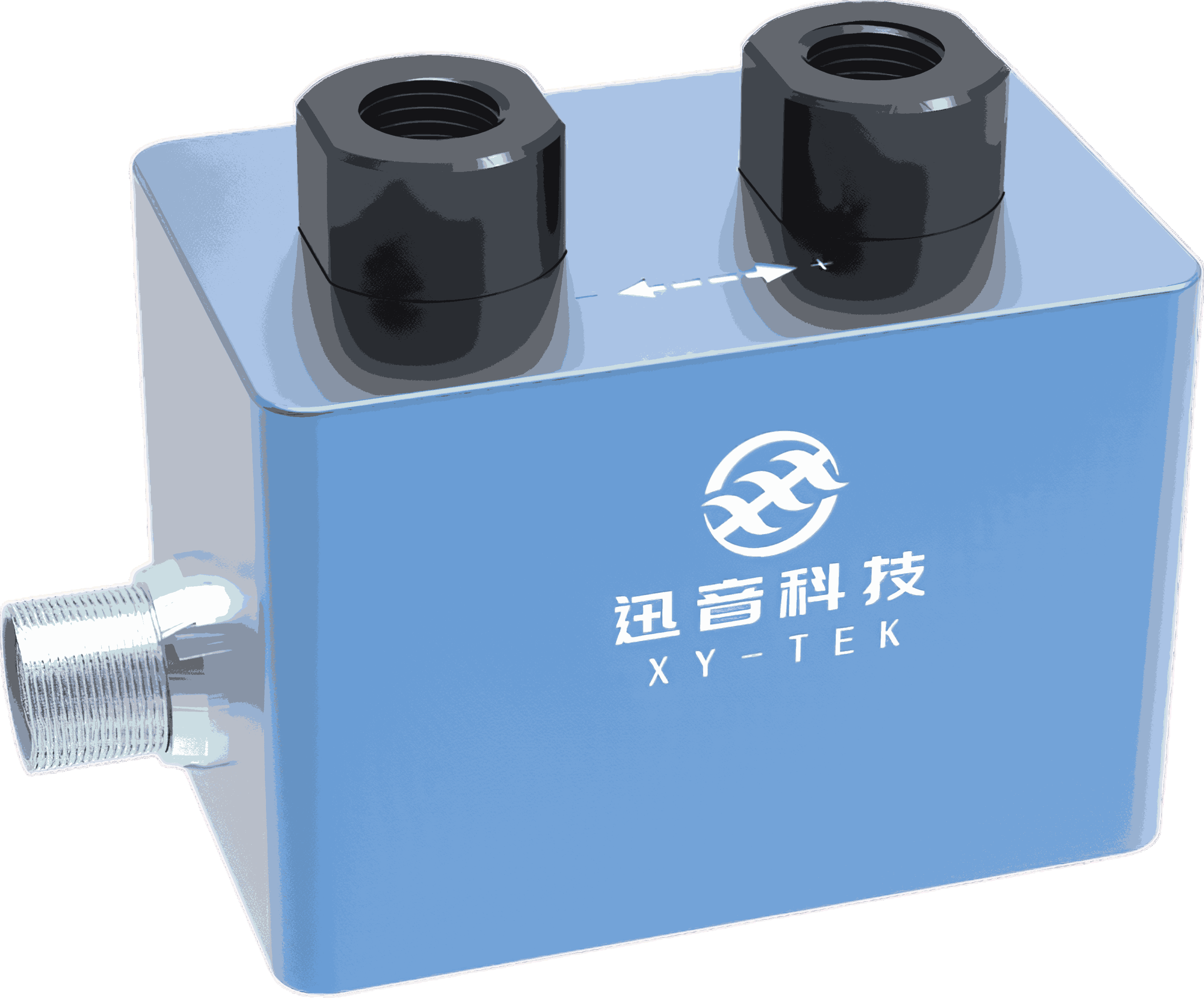
Contact XY-TEK: global@xy-tek.cn | Tel: 86-21-33885752 | Building 7, No. 410 Jinggu Road, Minhang District, Shanghai 200245, China | www.xy-tek.com
Have Questions or Need More Details?
Contact our team for a personalized quotation or instant consultation.
Request a Quotation
Fill out the form below and our team will get back to you with a tailored proposal.
WhatsApp Direct Chat
Prefer to chat in real-time? Message us on WhatsApp for instant assistance & quick answers.
- Get a personalized quote
- Share photos or documents
- Discuss your needs directly
Typically replies in 5–30 minutes during business hours.