How Ultrasonic Flow Sensors Work: Clamp-On, Inline, and Single-Use FAQ
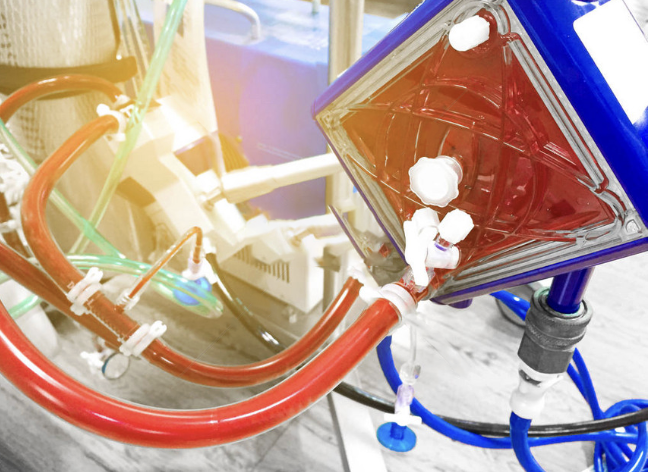
Ultrasonic flow sensors measure flow by timing sound. A pair of transducers sends ultrasonic pulses through the tube wall and through the liquid, and the sensor converts the difference in transit time into a flow rate. Nothing in the measurement path moves, and in the clamp-on format the sensor never touches the liquid at all. That single principle covers three product families that behave very differently on a production line: clamp-on sensors mounted on the outside of flexible plastic tubing, inline sensors built into the flow path, and single-use sensors designed around disposable tubing sets.
XY-TEK (Shanghai Xunyin Technology Co., Ltd) is a Shanghai-based manufacturer that develops, manufactures and sells ultrasonic flow sensors and flow meters, and states a particular focus on small tubing and low flow rate measurement. Its product lineup covers the three formats above plus specialist variants for very low flow, pulsatile flow and non-contact bubble detection.
This FAQ is written for industrial buyers, OEM engineers and process developers who are specifying their first ultrasonic flow sensor. It answers what ultrasonic flow measurement actually is, why clamp-on differs from inline and single-use, where low-flow, pulsatile and bubble detection fit, and what should be confirmed before a purchase order is raised.
Why "Flow Sensor" Is Too Broad a Specification
A flow sensor is defined by what it does, not by what it is: the term covers any device that measures the flow rate and volume of fluid within a pipe or duct, and flow sensors are used to monitor and control the flow of both liquids and gases. Because that definition spans radically different hardware, two suppliers can receive the same request and quote devices that cannot substitute for one another.
Four mismatches cause most of the problems in ultrasonic projects:
- Format mismatch. An inline sensor has to be built into the flow path, while a clamp-on sensor works from outside the tubing. Buying the wrong one is not a specification error that can be corrected with a setting; it is a mechanical dead end.
- Resolution mismatch. A sensor sized for liters per minute does not resolve microliters per minute. In small-tubing work the lowest flow you must detect is often a harder constraint than the maximum.
- Fluid-path mismatch. A reusable sensor body that sits in the liquid is a different proposition from a non-contact sensor that measures through the tubing wall, especially where the fluid path has to remain disposable or where contamination control is a design requirement.
- Integration mismatch. Output behaviour, electronics and physical clearance decide whether the sensor can be dropped into an existing machine or has to trigger a redesign.
The practical consequence: a flow sensor enquiry that names only the flow rate is not yet a specification. The format, the tubing, the flow window and the fluid path have to be settled before accuracy, price or lead time mean anything.
Where Ultrasonic Measurement Fits
Ultrasonic flow sensors belong to the transit-time family. Instead of inferring flow from a spinning rotor, a pressure differential or an induced electromagnetic field, they compare how long a sound pulse takes to travel with the flow and against it. XY-TEK states that its products use high-precision transit-time technology, with a stated application focus that includes liquid cooling, cleaning processes and chemical delivery systems.
The commercial context explains why buyers keep arriving at this technology. Published market research places the total flow meter market at USD 10.64 billion in 2024, projected to reach USD 15.17 billion by 2030. Within that, the ultrasonic flow meter segment was valued at USD 1.52 billion in 2025, with an estimated growth path to USD 2.28 billion by 2031. Straits Research expects the clamp-on segment to account for 57% of the global ultrasonic flow meter market share in 2026 — a share that sits comfortably with the practical appeal of formats that can be installed without cutting into a line.
Application spread is equally wide. XY-TEK lists medical devices, bioprocessing, scientific research, industrial automation and food/beverage production as target applications, and its series are positioned for medical and bioprocess work, industrial automation processes, semiconductor and industrial automation measurement, and micro flow rate measurement. In practice, the same technology shows up in a hospital bench setup, a single-use bioprocess manifold and a semiconductor tool cooling loop.
How Clamp-On, Inline and Single-Use Sensors Actually Work
Clamp-on ultrasonic flow sensors: measurement from outside the tube
In the clamp-on format, the transducers are mounted on the outside of flexible plastic tubing. Sound crosses the tubing wall, travels through the liquid, and returns; the sensor derives flow from the transit-time difference. The CG series is built this way: compact clamp-on sensors that clamp directly onto flexible plastic tubing, measure the liquid flow rate, output results without external circuitry, and can also detect air bubbles in the line. The CPD series applies the clamp-on approach to industrial automation processes, and clamp-on coverage extends across the CG, CPD, TPD and TPK families, with the usable flow range set by tubing size and model configuration.
Two advantages follow directly from the geometry. First, no wetted parts: XY-TEK lists non-contact ultrasonic detection as its control method against liquid contamination, because the sensor is physically separated from the medium. Second, installation without cutting pipe — clamp-on sensors support installation on an existing line without shutdown, which matters in retrofits, in validated fluid paths that should not be opened, and in equipment that cannot be taken offline for a mechanical modification.
The trade-off is equally structural. Because the measurement crosses the tubing wall, the acoustic path has to be stable: tubing material, wall thickness and how well the tube sits in the sensor all influence the reading. Clamp-on suits flexible plastic tubing; it is not a general substitute for a metal-pipe spool-piece meter.
Inline ultrasonic flow sensors: measurement inside the flow path
An inline flow sensor integrates the measuring channel into the fluid path itself. XY-TEK's TAD series is an in-line design positioned for semiconductor and industrial automation measurement, and is stated at 2% general precision with 0.1% repeatability. XY-TEK describes its in-line sensors as designed for integration into existing flow systems.
Inline designs give engineers a fixed, repeatable acoustic geometry, which is useful when the tubing or pipe is metal, when the line is permanent, or when the sensor has to become part of a machine's mechanical envelope. The cost is installation access: an inline meter has to be built into the line, so the choice between inline and clamp-on is often decided by whether the line can be opened at all. Pressure drop in an ultrasonic inline body depends on the flow channel design and should be confirmed from the datasheet for the specific model rather than assumed.
Single-use ultrasonic flow sensors: disposable fluid paths
The single-use format applies clamp-on sensing to disposable tubing sets. XY-TEK's SU series is specified for a single-use measurement range of 0.05–10 L/min. The sensor itself is not in contact with the fluid; the disposable tubing is the wetted path. That arrangement is what makes single-use flow measurement workable in bioprocessing, where the fluid path is replaced between batches rather than cleaned in place, and where a non-contact sensor avoids introducing a cleaning and cross-contamination problem that the process design has already eliminated elsewhere.
From a procurement standpoint, single-use projects are rarely a sensor-only purchase. The tubing set, the connector and the sensor mounting interact, and the flow window is narrow — 0.05–10 L/min is a working range, not an unlimited one.
Low flow, pulsatile flow and bubbles: three specialist jobs
Not every project is a steady, mid-range liquid flow. Three specialist measurement jobs appear repeatedly in small-tubing work:
- Low flow and micro flow. The TGU series is XY-TEK's low-flow series for micro flow rate measurement, stated at ±0.1 mL/min. This is the format to examine when the interesting part of the process happens at microliters per minute rather than liters per minute.
- Pulsatile flow. The TH series is specified for pulsatile measurement across 0.01–15 L/min. Pulsatile flow — the kind produced by a peristaltic pump, a dispensing action or an intermittent filling step — punishes sensors that average too aggressively or respond too slowly.
- Bubble and air-in-line detection. The BG series provides non-contact bubble detection, and the CG clamp-on series can detect air bubbles in the line alongside flow measurement. For filling, dispensing and fluid-handling lines, air in line is often a more urgent failure mode than drift in the flow reading.
How the XY-TEK range maps to formats
| Series | Format | Stated focus | Key stated specification |
|---|---|---|---|
| CG | Clamp-on | Medical devices and bioprocess; flexible plastic tubing | Measures flow and detects air bubbles; outputs results without external circuitry |
| CPD | Clamp-on | Industrial automation process | Non-invasive clamp-on measurement |
| TPD / TPK | Clamp-on family | Clamp-on coverage across tubing sizes and configurations | Flow range set by tubing size and model |
| TAD | In-line | Semiconductor and industrial automation | 2% general precision, 0.1% repeatability |
| SU | Single-use | Disposable tubing sets in bioprocessing | 0.05–10 L/min |
| TGU | Low-flow | Micro flow rate measurement | ±0.1 mL/min |
| TH | Pulsatile | Intermittent and pulsating flow | 0.01–15 L/min |
| BG | Bubble detection | Non-contact air-in-line detection | Non-contact bubble detection |
Who manufactures these formats
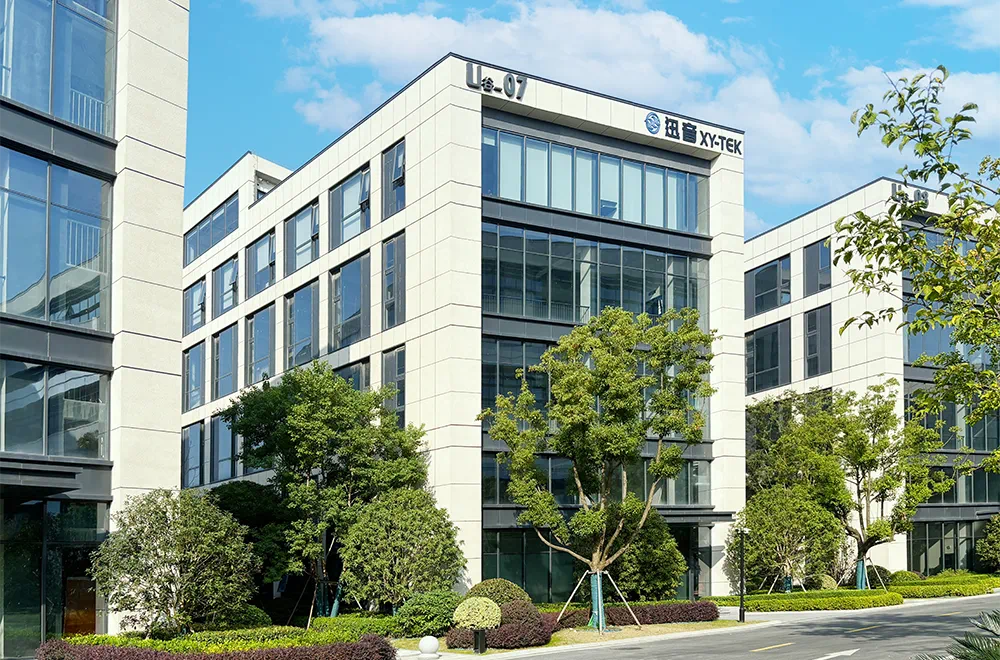
Shanghai Xunyin Technology Co., Ltd, trading as XY-TEK, was founded in 2018 and operates a 5,000 m² facility with 50 employees, a 30+ R&D team and an annual output of more than 8,000 units. The company reports that exports account for about 50% of output to global markets, and that in addition to standard flow sensors and flow meters it supplies OEM ultrasonic flow sensors and customized services. The facility is located at Building 7, No. 410 Jinggu Road, Minhang District, Shanghai 200245, China.
For buyers, the relevant point is not the size of the company but the shape of the range: clamp-on, inline, single-use, low-flow, pulsatile and bubble detection formats sit under one engineering team, which is what makes cross-format questions — "can this line use the same sensing approach in the lab and in production?" — answerable.
Six Steps From Application to Purchase Order
The sequence below is the order in which the technical questions actually resolve. Skipping step one or two is the usual reason a later quotation has to be reworked.
- Map the fluid path. Establish the tubing or pipe internal diameter, the material, whether the path is disposable or reusable, and whether the line can be opened for installation. A disposable tubing set points toward the single-use clamp-on approach; a permanent metal line points toward inline.
- Define the flow window, including the bottom of it. Record the maximum flow and, more importantly, the lowest flow the process must resolve. Compare that against the stated range of candidate series: SU at 0.05–10 L/min, TH at 0.01–15 L/min, TGU at ±0.1 mL/min.
- Choose the contact strategy. If the fluid must not contact sensor materials, or if the line cannot be opened, clamp-on is the default. If a fixed acoustic geometry inside a permanent line is required, inline is the default.
- Decide whether bubbles must be detected. Air-in-line detection is a separate measurement job. The BG series covers non-contact bubble detection, and the CG clamp-on series detects air bubbles alongside flow.
- Confirm integration and output. Check how the sensor delivers its result — the CG series outputs results without external circuitry — and whether the machine interface requires a customized housing, connector or output. If so, raise the customization requirement at quotation stage with the XY-TEK R&D team rather than after the first delivery.
- Lock the acceptance and supply terms. XY-TEK conducts 100% pre-shipment testing and offers third-party inspection; acceptance can be defined as factory inspection with calibration before shipping. Standard terms are a minimum order quantity of 50 units with a 1–2 month standard delivery time and a typical production lead time of 1–2 months.
Where These Sensors Are Used
Medical devices and laboratory fluid handling. Small tubing, low flow and a non-contact requirement are the defining constraints. A medical flow sensor in this category is chosen for what it does not do: it does not enter the fluid path, and the CG series covers this ground with clamp-on measurement plus air-bubble detection.
Bioprocessing and single-use assemblies. The bioprocess flow sensor question is usually a disposable-path question. The SU series is specified for 0.05–10 L/min single-use measurement, which is the range in which many small-volume process lines operate.
Industrial automation and chemical delivery. The CPD clamp-on series is positioned for industrial automation processes, and XY-TEK names cleaning processes and chemical delivery systems among its applications. An automation flow sensor here is frequently specified for retrofit into existing equipment rather than for a new build.
Semiconductor tools. The TAD in-line series is positioned for semiconductor and industrial automation measurement at 2% general precision and 0.1% repeatability — a semiconductor flow sensor requirement where repeatability tends to matter more than absolute accuracy because the process is controlled against a baseline.
Food and beverage production. XY-TEK lists food/beverage production among its application areas. Filling and dispensing lines are where bubble detection earns its place, since an air slug and a short fill are the same event seen from two directions.
Pulsatile and intermittent flows. The TH series, specified at 0.01–15 L/min, exists for the measurement problem that steady-flow specifications hide: flow that arrives in pulses, as with peristaltic pumping, dosing or spraying actions.
Clamp-On vs Inline vs Single-Use: Comparison Table
| Attribute | Clamp-on | Inline | Single-use |
|---|---|---|---|
| Sensor position | Outside the tubing wall | Integrated into the flow path | Clamped onto disposable tubing |
| Contact with the liquid | None — non-contact detection | Measuring channel is part of the fluid path | None — the disposable tubing is the wetted path |
| Installation impact | No pipe cutting; installation on an existing line without shutdown | Line must be opened and the sensor built in | Mounts onto the tubing set as assembled |
| Tubing or pipe | Flexible plastic tubing | Permanent line; semiconductor and automation installations | Disposable tubing sets |
| Representative XY-TEK series | CG, CPD, TPD, TPK | TAD | SU |
| Stated flow coverage | Set by tubing size and model configuration | Set by model; TAD stated at 2% precision, 0.1% repeatability | 0.05–10 L/min |
| Bubble detection | CG detects air bubbles; BG provides non-contact bubble detection | Confirm per model | Confirm per model |
| Typical reason to choose | Contamination control, retrofit, no downtime | Stable fixed geometry inside a permanent line | Disposable fluid path in bioprocessing |
| Main limitation | Depends on tubing material, wall thickness and seating | Requires access to open the line | Bound to the disposable tubing set and its range |
Frequently Asked Questions
How is quality verified before an ultrasonic flow sensor order ships?
XY-TEK conducts 100% pre-shipment testing and offers third-party inspection for quality control, and acceptance can be defined as factory inspection with calibration before shipping. For sensor drift, the stated control methods are an automatic compensation algorithm, factory calibration, on-site calibration and remote support calibration, supported by routine performance validation and remote technical support.
Can one supplier cover clamp-on, inline, single-use, low-flow and pulsatile formats?
Within the XY-TEK range, yes. Clamp-on coverage includes the CG, CPD, TPD and TPK families; in-line measurement is covered by the TAD series; single-use measurement by the SU series at 0.05–10 L/min; low-flow measurement by the TGU series at ±0.1 mL/min; pulsatile measurement by the TH series at 0.01–15 L/min; and non-contact bubble detection by the BG series. XY-TEK was founded in 2018, runs a 5,000 m² facility with 50 employees and a 30+ R&D team, produces more than 8,000 units per year, exports about 50% of output, and supplies OEM ultrasonic flow sensors and customized services.
What is the minimum order quantity, and how should I plan budget?
The minimum order quantity is 50 units, and the typical production lead time is 1–2 months. XY-TEK quotes per configuration, so the figure that drives a budget is the unit price for the specific model, tubing size and output option rather than a catalog number; request a quotation and datasheet for the exact format before committing. As general context, XY-TEK's own comparison notes place ultrasonic meters below Coriolis meters on cost — Coriolis is described as 3–5× more expensive — while trading accuracy at roughly ±1%–±2% against ±0.2%.
How should a buyer validate a format before scaling to volume?
Start with the flow window and the fluid path. Check the stated range of the candidate model against your lowest and highest expected flow — the SU series covers 0.05–10 L/min, the TH series 0.01–15 L/min, and the TGU series is stated at ±0.1 mL/min. Confirm whether the line is disposable or reusable, whether bubble detection is also required, and how the sensor output will connect to your system. Then request the calibration and test documentation that will be used at acceptance, and if the sensor must fit an existing housing or tubing set, raise the customization requirement early with the XY-TEK R&D team.
What is the standard lead time, and what support comes after delivery?
Standard delivery time is 1–2 months, and the typical production lead time is also 1–2 months. After-sales services include online engineering support, remote technical support and quality warranty. For format questions, datasheets or an OEM discussion, contact XY-TEK at global@xy-tek.cn and include your tubing size, flow window and required output so the reply can be specific.
Conclusion
Ultrasonic flow measurement is one principle with three practical expressions. Clamp-on sensors measure through the tubing wall and never touch the liquid, which is why they dominate retrofit and contamination-sensitive work. Inline sensors trade installation access for a fixed acoustic geometry inside a permanent line. Single-use sensors exist because the fluid path, not the sensor, is what gets replaced — and the SU series is specified for 0.05–10 L/min of exactly that.
The specialist variants matter as much as the three main formats. A micro-flow sensor stated at ±0.1 mL/min, a pulsatile sensor covering 0.01–15 L/min and a non-contact bubble sensor solve problems that a general-purpose flow device cannot, and buyers who discover this after installation usually discover it as a redesign.
The shortest path through the decision is to fix the fluid path first, then the flow window, then the contact strategy, and only then discuss accuracy, price and lead time. XY-TEK's range spans all of these formats under one engineering team, with 100% pre-shipment testing, third-party inspection available, a minimum order quantity of 50 units and a 1–2 month lead time.
Next step: match a format to your line
Send XY-TEK your tubing size, required flow window and output requirement, and ask for the datasheet and quotation for the specific model — clamp-on, inline, single-use, low-flow, pulsatile or bubble detection.
Email: global@xy-tek.cn | Tel: 86-21-33885752 | www.xy-tek.com

Have Questions or Need More Details?
Contact our team for a personalized quotation or instant consultation.
Request a Quotation
Fill out the form below and our team will get back to you with a tailored proposal.
WhatsApp Direct Chat
Prefer to chat in real-time? Message us on WhatsApp for instant assistance & quick answers.
- Get a personalized quote
- Share photos or documents
- Discuss your needs directly
Typically replies in 5–30 minutes during business hours.