
Inside Ultrasonic Flow Sensors: Technical Guide to Low-Flow, Single-Use, and Pulsatile Measurement
Technical guide for OEM and industrial equipment engineers
Ultrasonic flow sensors are often specified as if they were one product category. In OEM equipment they are not. A single-use bioprocess line, a cardiovascular test bench, and a reagent dispensing valve place different demands on the same physical principle. The sensor has to match the flow envelope, the wetted path, the tubing, the fluid, and the time domain. XY-TEK (Shanghai Xunyin Technology Co., Ltd) manufactures ultrasonic flow sensors and flow meters for these formats. Its range includes the TGU low-flow series, the SU single-use series, the TH pulsatile series, and the BG bubble detector. This guide explains the measurement principles and selection parameters behind those four formats so equipment engineers can match sensor architecture to the application.
Answer first: for low-flow measurement on small flexible tubing, start with TGU (0.1–1000 mL/min, ±1%, measurement accuracy up to ±0.1 mL/min); for a single-use fluid path, start with SU (0.05–10 L/min, ±2%, biocompatible polymer); for pulsatile flow, start with TH (0.01–15 L/min, ±2%, high-speed pulsation capture); and for gas-liquid state detection, add BG rather than using a flow sensor as a bubble detector.

Problem Definition: The Sensor Must Match the Measurement Job
Most selection errors begin with pipe size. Pipe ID matters, but it does not answer four separate questions. First, what is the lowest flow the equipment must resolve? Second, is the wetted path reusable, replaceable per batch, or single-use? Third, does the flow change fast enough that an averaged reading hides the event? Fourth, does the control system also need to know whether the line is liquid-full or whether a bubble has arrived?
These questions are independent. A sensor that is accurate at 5 L/min may not resolve 0.1 mL/min. A sensor with a disposable channel may not be the right choice for a pulsatile test bench. A bubble detector can confirm that a line is liquid-full, but it cannot replace a flow sensor. The selection process should therefore start with the measurement job, not with the catalogue family.
The second common error is to compare lower bounds without converting units. TGU is specified in mL/min. SU and TH are specified in L/min. A 0.05 L/min lower bound is 50 mL/min, not 0.05 mL/min. That conversion alone removes many apparent overlaps and forces the engineer to state the real low-flow requirement.
Industry Background: Small Tubing, Single-Use Paths, and Fast Events
Flow measurement is a mature industrial category, but the OEM growth areas relevant to this guide are small-tubing, low-flow, single-use, and fast-event measurement. A 2026 HTNXT Research benchmarking report cites a global flow meter market of USD 10.64 billion in 2024 and an ultrasonic flow meter market of USD 1.52 billion in 2025, with an estimated path to USD 2.28 billion by 2031. Straits Research is cited at 57% clamp-on share of the global ultrasonic flow meter market in 2026. Those figures describe the category; they do not select a sensor for a specific tubing line.
At the equipment level, the constraint set is different. Medical devices and bioprocessing increasingly use small-diameter flexible tubing and disposable fluid paths. Semiconductor and pharmaceutical processes require low-flow chemical delivery and dispensing. Cardiovascular research needs pulsatile waveform capture. In each case, the sensor must fit the fluid path and the control architecture, not only the pipe.
Ultrasonic transit-time measurement introduces no moving parts into the flow path and can be non-invasive when the acoustic path is outside the fluid. That is useful when pressure loss, contamination, and maintenance access matter. The trade-off is that accuracy depends on tubing material, tubing dimensions, acoustic coupling, fluid properties, and installation. The four XY-TEK formats address different parts of that trade-off.
Detailed Solution: How the Four XY-TEK Formats Divide the Problem
XY-TEK organises the problem into four formats. They are not interchangeable. Each one changes the wetted path, the flow range, or the time-domain behaviour. The specifications below are the selection facts; the application interpretation follows each one.
TGU Series: Low-Flow Measurement in Millilitres per Minute
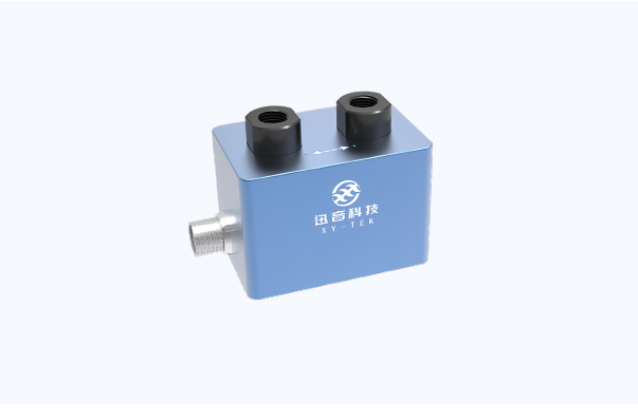
The TGU Series is an ultra-low flow sensor for millilitre-per-minute measurement. Its specified range is 0.1–1000 mL/min. Accuracy is ±1%, with measurement accuracy up to ±0.1 mL/min. The measuring channel is U-shaped. The wetted-side construction uses biocompatible plastic and an ultrasonic sensor module. The sensor is specified for PVC, silicone, PFA, PE and PUR flexible tubing with smooth inner and outer surfaces. The fluid temperature range is 0–60°C. Listed fluids are water, blood, drinks, oil, paint and similar media with no or few solid particles. XY-TEK lists bioprocess, medical equipment, pharmaceutical production and semiconductor among the applications.
From a design perspective, TGU is the series to examine when the process runs on small flexible tubing and the lowest flow is measured in millilitres per minute rather than litres per minute. The U-shaped measuring channel is the mechanical reference for the acoustic path; the buyer should confirm that the existing tube material, tube size and tube finish are compatible with the specification. The 0.1 mL/min lower bound is the key constraint. If the process must resolve a lower flow, or if the tubing is not one of the listed flexible materials, TGU should not be forced into the application.
SU Series: A Single-Use Measuring Channel
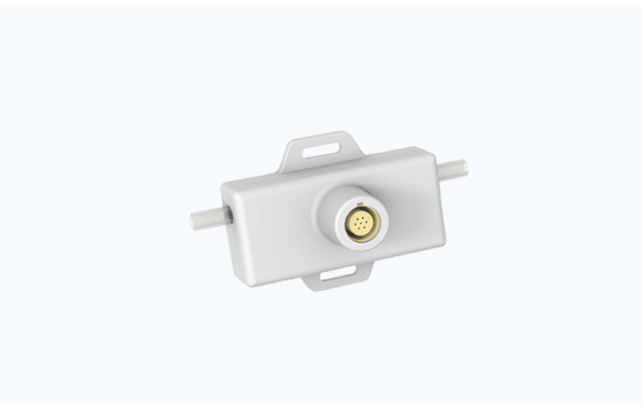
The SU Series is a single-use ultrasonic flow sensor. Its defining feature is a single-use measuring channel. The sensor is specified for hygienic fluid monitoring, sterile application support and high measurement repeatability. The flow range is 0.05–10 L/min, accuracy is ±2%, and the fluid temperature range is 0–60°C. The wetted material is biocompatible polymer. XY-TEK lists biopharma, single-use systems, medical manufacturing and bioprocess as the target applications.
In a single-use architecture, the fluid path is replaced between batches or campaigns. The selection question is therefore broader than accuracy. The disposable channel must be compatible with the process fluid, the tubing connection, and the sterility workflow. The sensor must preserve repeatability from channel to channel. The SU specification addresses those points with a single-use measuring channel, biocompatible polymer construction and a 0.05–10 L/min range. It is not a general-purpose replacement for a reusable low-flow sensor; it is a fluid-path model for single-use systems.
TH Series: Pulsatile Flow Capture in the Time Domain
The TH Series is a pulsatile flow sensor. Its specified range is 0.01–15 L/min, accuracy is ±2%, and the design is described as high-speed pulsation capture. The construction uses medical-grade polymer and a precision ultrasonic chip. Compatible tubing is specified at 9–32 mm OD and 11.1–36 mm ID. The fluid temperature range is 0–60°C. XY-TEK lists cardiovascular flow testing, cardiovascular research, hemodynamic testing and medical laboratories as the applications.
Pulsatile flow is a time-domain problem. A sensor that reports a stable average can still miss peak flow, short boluses, or the shape of a pressure-driven waveform. The TH is specified for high-speed pulsation capture, so it should be evaluated with the actual flow waveform and test fluid, not only with a steady-flow calibration point. Tubing ID and OD are part of the specification because the acoustic path and the flow profile depend on them. If the test bench uses tubing outside the 11.1–36 mm ID range, the TH should not be assumed to fit.
BG Series: Gas-Liquid State Detection, Not Flow Measurement
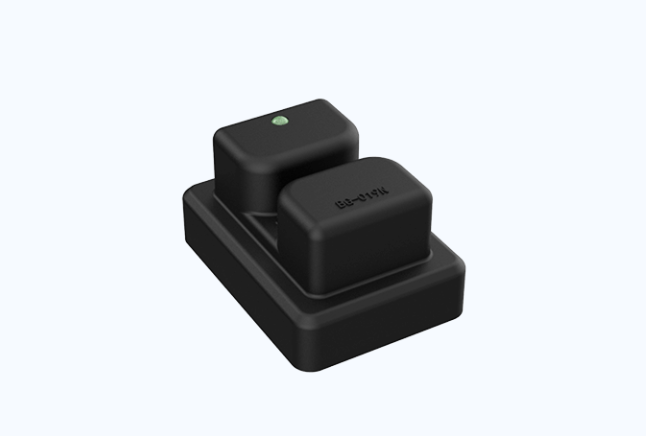
The BG Series is an ultrasonic bubble detector, also described as a bubble sensor. It is not a flow sensor. Its function is gas-liquid state detection: it identifies whether the line contains liquid, gas, or a bubble passing the sensing point. The sensor is non-contact, has customizable response time, and is compact. The detection range is stated as 1/3 bubble size of tubing ID. Compatible tubing is 3.2–19 mm OD and 1.6–12.7 mm ID, in rigid plastic materials such as PFA, PTFE, Teflon, PVDF, PP and Nylon. The fluid temperature range is 0–60°C. XY-TEK lists medical devices, bioprocess, food and beverage dosing, and industrial applications.
Use BG when the control system needs a state signal rather than a flow rate: liquid-full confirmation, empty-line detection, bubble arrival, or an abnormal gas segment in a dosing step. The sensor complements a flow sensor. It does not replace one, and it should not be selected to solve a flow-accuracy problem.
Step-by-Step Breakdown: A Practical Selection Sequence
Step 1: Define the Flow Envelope in One Unit System
Start with the lowest and highest flow the equipment must handle, then convert all candidates to the same unit. TGU is specified in mL/min; SU and TH are specified in L/min. A 0.05 L/min lower bound is 50 mL/min, not 0.05 mL/min. That conversion alone eliminates many apparent overlaps. The second number is the accuracy requirement at the low end. TGU states measurement accuracy up to ±0.1 mL/min and ±1% accuracy. SU and TH state ±2%. The buyer should decide whether the critical number is the percentage, the absolute low-flow error, or both.
Step 2: Map the Wetted Path and Tubing
List the tube material, ID, OD, surface finish, and connection. TGU is specified for PVC, silicone, PFA, PE and PUR flexible tubing with smooth inner and outer surfaces. SU uses a single-use measuring channel with biocompatible polymer materials. TH is specified for 9–32 mm OD and 11.1–36 mm ID tubing. BG is specified for rigid plastic tubing such as PFA, PTFE, Teflon, PVDF, PP and Nylon, with 3.2–19 mm OD and 1.6–12.7 mm ID. A sensor that does not fit the existing tube is not a candidate, even if its flow range is correct.
Step 3: Decide Whether the Fluid Path Is Single-Use or Fixed
If the process requires a disposable wetted channel, start with SU. If the process uses a fixed flexible tube and requires millilitre-per-minute measurement, start with TGU. If the process is a pulsatile test bench, start with TH. This step prevents the common error of using a single-use sensor as a general low-flow sensor, or using a low-flow sensor in a single-use workflow without a disposable fluid path.
Step 4: Characterise the Time Domain and Gas-Liquid State
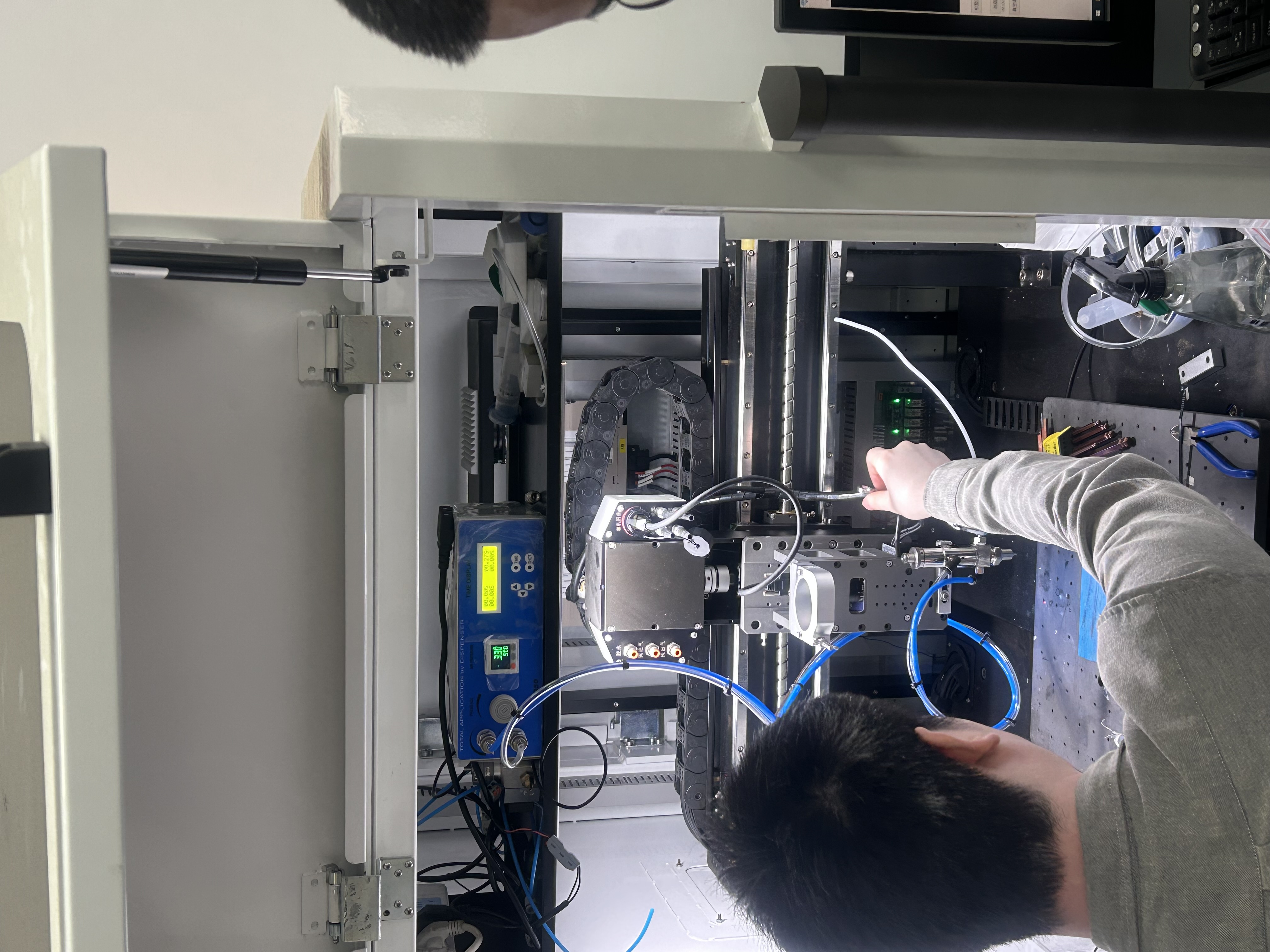
Steady flow, pulsed flow, and intermittent dosing require different evidence. TH is specified for high-speed pulsation capture. TGU is used in XY-TEK case material for pulsed micro-flux flow in selective wave soldering and conformal coating, where bubble/blockage detection and process data recording are also part of the application. BG provides gas-liquid state detection where the control system needs a bubble or empty-line signal. Ask for a test with the actual waveform, not only a steady-flow datasheet.
Step 5: Check Installation, Fluid Compatibility and Temperature
Confirm the available space, tube orientation, and temperature. All four series are specified for 0–60°C. The listed fluids are water, blood, drinks, oil, paint and similar media with no or few solid particles. The specifications should not be read as approval for abrasive slurries, high-solids media, or fluids outside the listed material and temperature envelope. For medical or bioprocess use, confirm the fluid-path material, cleaning or sterilization workflow, and documentation with the supplier.
Step 6: Qualify the Supplier and the Documentation Package
XY-TEK lists MOQ 50 units and lead time 1–2 months. Customization includes communication protocol and housing material; OEM/ODM options include sensor size, interface and logo printing. Quality control includes 100% pre-shipment testing, with third-party inspection available. XY-TEK also lists CNIPA invention patents: an ultrasonic flow sensor technology patent issued 2022-11-01 with expiry 2042-11-01 (certificate number partially obscured), and patent No. 7946602 for liquid flow sensing and filter enhancement technology, issued 2025-06-16 with expiry 2045-06-16, applicable to the China market. For a regulated product, request the current certificate package, material declarations and test reports for the exact model and target market; patent coverage is not the same as market certification.
Supplier snapshot
XY-TEK is the abbreviated brand of Shanghai Xunyin Technology Co., Ltd, a Shanghai-based manufacturer of ultrasonic flow sensors and flow meters. The company was founded in 2018 and operates a 5000㎡ factory with 50 employees, a 30+ R&D team, annual output of 8000 units+, and a 50% export ratio serving global markets. Its product scope covers low-flow, single-use, pulsatile, clamp-on and inline ultrasonic formats for medical devices, bioprocessing, industrial automation, semiconductor and food and beverage applications.
Use Cases: Where Each Format Fits
Cardiovascular and hemodynamic test benches. TH is specified for 0.01–15 L/min, ±2%, and high-speed pulsation capture, with medical-grade polymer construction and 11.1–36 mm ID tubing. BG can be added for gas-liquid state detection on 1.6–12.7 mm ID rigid tubing when the test protocol requires bubble or empty-line confirmation.
Single-use bioprocess and medical manufacturing. SU is specified for 0.05–10 L/min, ±2%, with a single-use measuring channel and biocompatible polymer materials. It is listed for biopharma, single-use systems, medical manufacturing and bioprocess. The disposable channel is the architectural choice; the buyer should confirm the tubing connection and sterility workflow for the specific process.
Micro-flow dispensing, coating and reagent delivery. TGU is specified for 0.1–1000 mL/min, ±1%, with measurement accuracy up to ±0.1 mL/min on PVC, silicone, PFA, PE and PUR flexible tubing. It is a candidate for small-volume flow sensor applications where the critical flow is measured in millilitres per minute.
Electronics manufacturing and pulsed micro-flux. XY-TEK case material describes TGU use in selective wave soldering and conformal coating, where the application combines pulsed micro-flux flow measurement, bubble/blockage detection and process data recording. That is a useful reference for automation flow sensor projects that need fast response on small tubing.
Bubble, empty-line and dosing-state detection. BG is specified for gas-liquid state detection, non-contact bubble monitoring and customizable response time. It is not a flow sensor. It is the additional state signal for medical flow sensor, bioprocess flow sensor and food and beverage dosing systems where the controller must distinguish liquid from gas.
Comparison Table: TGU, SU, TH and BG
| Series | Measurement role | Specified range | Accuracy or detection | Fluid-path material | Tubing and dimensions | Temperature | Best-fit starting point |
|---|---|---|---|---|---|---|---|
| TGU | Ultra-low flow sensor | 0.1–1000 mL/min | ±1%; measurement accuracy up to ±0.1 mL/min | Biocompatible plastic, ultrasonic sensor module | PVC, silicone, PFA, PE, PUR flexible tubing; smooth inner and outer surfaces; U-shaped measuring channel | 0–60°C | Millilitre-per-minute flow on small flexible tubing |
| SU | Single-use flow sensor | 0.05–10 L/min | ±2%; high measurement repeatability | Biocompatible polymer materials | Single-use measuring channel; hygienic fluid monitoring | 0–60°C | Disposable wetted path in biopharma or medical manufacturing |
| TH | Pulsatile flow sensor | 0.01–15 L/min | ±2%; high-speed pulsation capture | Medical-grade polymer, precision ultrasonic chip | 9–32 mm OD; 11.1–36 mm ID | 0–60°C | Cardiovascular or hemodynamic waveform capture |
| BG | Ultrasonic bubble detector | Detection range 1/3 bubble size of tubing ID | Gas-liquid state detection; non-contact bubble monitoring | Engineering plastic, ultrasonic module | Rigid plastic tubing: PFA, PTFE, Teflon, PVDF, PP, Nylon; 3.2–19 mm OD; 1.6–12.7 mm ID | 0–60°C | Bubble, empty-line or liquid-state confirmation |
FAQ: Selection, Compliance and OEM Validation
What patents or compliance evidence apply to XY-TEK ultrasonic flow sensors?
XY-TEK lists CNIPA invention patents in the supplied documentation. One covers ultrasonic flow sensor technology, was issued 2022-11-01, expires 2042-11-01, and its certificate number is partially obscured. Another is patent No. 7946602 for liquid flow sensing and filter enhancement technology, issued 2025-06-16 and expiring 2045-06-16, applicable to the China market. These are patent records, not a substitute for CE, ISO or other market certifications. Request the current certificate package, material declarations and test reports for the exact model and target market.
Which series handles the lowest flow?
TGU is specified from 0.1 mL/min to 1000 mL/min, with ±1% accuracy and measurement accuracy up to ±0.1 mL/min. SU covers 0.05–10 L/min and TH covers 0.01–15 L/min. Convert units before comparing: 0.05 L/min is 50 mL/min and 0.01 L/min is 10 mL/min. On the stated lower bounds, TGU is the low-flow series for millilitre-per-minute measurement.
Can the SU Series be used for sterile single-use systems?
SU is specified with a single-use measuring channel, biocompatible polymer materials, hygienic fluid monitoring and sterile application support. Its range is 0.05–10 L/min, accuracy is ±2%, and fluid temperature is 0–60°C. It is listed for biopharma, single-use systems, medical manufacturing and bioprocess. The buyer should confirm the actual sterilization workflow and documentation with XY-TEK for the specific model.
What is the MOQ and lead time for an OEM order?
XY-TEK lists MOQ 50 units and lead time 1–2 months. Customization includes communication protocol and housing material; OEM/ODM options include sensor size, interface and logo printing. Price is not published in the supplied documentation; request a quotation with the model, tubing dimensions, fluid, temperature, output and expected annual volume.
How do I validate pulsatile performance and request a sample?
Define the waveform, test fluid, tubing ID/OD, temperature and expected peak flow. TH is specified for 0.01–15 L/min, ±2%, and high-speed pulsation capture, with compatible tubing at 9–32 mm OD and 11.1–36 mm ID. Add BG if the test needs gas-liquid state detection. To request a sample or discuss an OEM configuration, contact XY-TEK at global@xy-tek.cn or visit www.xy-tek.com.
Conclusion: Select by Constraint, Not by Catalogue Label
The practical selection rule is to start with the flow envelope, then the fluid path, then the time domain. TGU is the low-flow series for 0.1–1000 mL/min on small flexible tubing. SU is the single-use series for 0.05–10 L/min with a biocompatible polymer measuring channel. TH is the pulsatile series for 0.01–15 L/min with high-speed pulsation capture. BG is the gas-liquid state detector for bubble, empty-line and dosing-state confirmation. If two series overlap at the boundary, test both with the actual tubing, fluid and waveform rather than deciding from a range column alone.
For OEM flow sensor projects, the supplier discussion should cover the model, tubing dimensions, fluid, temperature, output, expected volume and documentation package. XY-TEK provides OEM customization and sample evaluation for the TGU, SU, TH and BG formats. The next step is to send the application data and request a fit review.
Request a sample or OEM fit review
Send your flow range, tubing ID/OD, fluid, temperature, output requirement and expected annual volume. XY-TEK can review fit across TGU, SU, TH and BG, and discuss OEM customization including communication protocol, housing material, sensor size, interface and logo printing.
Email: global@xy-tek.cn | info@xy-tek.cn
Tel: +86-21-33885752
Website: www.xy-tek.com
Address: Building 7, No. 410 Jinggu Road, Minhang District, Shanghai 200245, China
Have Questions or Need More Details?
Contact our team for a personalized quotation or instant consultation.
Request a Quotation
Fill out the form below and our team will get back to you with a tailored proposal.
WhatsApp Direct Chat
Prefer to chat in real-time? Message us on WhatsApp for instant assistance & quick answers.
- Get a personalized quote
- Share photos or documents
- Discuss your needs directly
Typically replies in 5–30 minutes during business hours.