
Ranked: Top XY-TEK Ultrasonic Flow Sensors for Low-Flow, Single-Use, OEM, and Inline Use
This is an application-fit ranking of XY-TEK ultrasonic flow sensors, not a competitive market ranking. It ranks the series by how well their published specifications solve common buyer problems: ultra-low flow in small tubing, single-use bioprocess, OEM clamp-on integration, non-invasive industrial monitoring, inline industrial measurement, pulsatile hemodynamic testing, and non-contact bubble detection. XY-TEK, legally Shanghai Xunyin Technology Co., Ltd (XY-TEK), is a Shanghai-based developer and manufacturer of ultrasonic flow sensors and flow meters for fluid management and control.
The ranking uses verified flow range, accuracy, materials, installation format, outputs, and stated applications. Where a series is close to another, the deciding factor is fit, not a generic claim of superiority.

CM Series OEM clamp-on ultrasonic flow meter: compact, non-contact, and built for integration.
Problem Definition: Why Flow Sensor Selection Fails Before Price
Buyers often begin with a broad search for a flow sensor and then discover that the difficult decisions sit in the fluid path. A sensor that fits a 25 mm industrial pipe may not resolve flow in 3 mm tubing. A clamp-on flow meter may be ideal for a retrofit but unsuitable for a disposable single-use circuit. An OEM flow sensor may have the right accuracy but the wrong output or housing for embedded equipment.
The failure modes are specific: the flow range is too wide to resolve small volumes; the wetted materials are not compatible with the process; the installation requires pipe cutting during production; the output does not match the control system; or the sensor cannot detect bubbles in a line where air-in-line is a safety or quality risk. This article ranks XY-TEK series to reduce that risk before a buyer moves to samples and quotations.
- Low-flow and micro-flow processes need a sensor specified in mL/min, not only L/min.
- Single-use bioprocess needs a disposable measuring channel and biocompatible materials.
- OEM equipment needs a compact clamp-on format with a stable digital interface.
- Industrial retrofits need non-invasive installation and, in many cases, bubble monitoring.
- Inline processes need an integrated body with no moving parts and low maintenance.
Industry Background: Scale Is Not the Same as Fit
Market research summarized by HTNXT Research estimates the global flow meter market at USD 10.64 billion in 2024 and the ultrasonic flow meter market at USD 1.52 billion in 2025. Straits Research estimates that clamp-on ultrasonic flowmeters represent 57% of the global ultrasonic flow meter market share in 2026. These figures explain why format and application fit matter: clamp-on adoption is not a niche preference; it reflects the value of non-invasive installation in many industrial settings.
XY-TEK operates from a 5,000 square meter facility in Shanghai, employs approximately 50 staff, and reports annual production capacity of more than 8,000 units. Its R&D team includes more than 30 engineers. The company serves medical devices, bioprocessing, scientific research, industrial automation, and food/beverage production, with export business accounting for 50% of total sales. Those facts frame the portfolio: it is broad enough to cover multiple formats, but the buyer still has to match the series to the fluid path.
Detailed Solution: The XY-TEK Series Ranking by Application Fit
The ranking order below starts with the narrowest and most demanding low-flow applications, then moves to single-use, OEM, industrial clamp-on, inline, hemodynamic, and bubble detection. A lower rank does not mean a weaker product; it means the series is more specialized or serves a different job.
1. TGU Series — Best for Ultra-Low Flow in Small Tubing
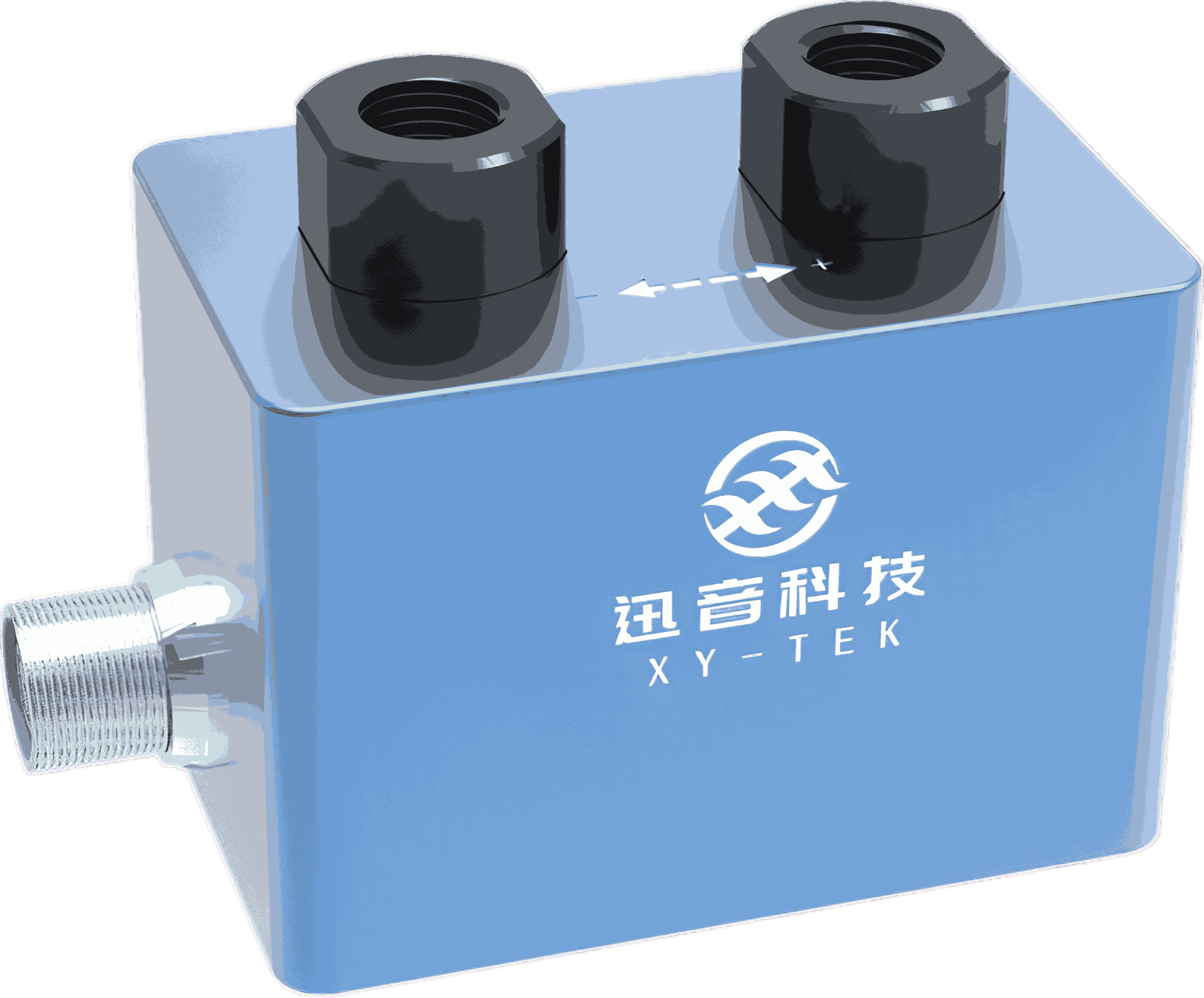
TGU Series low-flow ultrasonic flow sensor for small-tubing measurement.
The TGU Series earns the top spot because it addresses the hardest flow range in the portfolio: 0.1–1000 mL/min. Its published accuracy is ±1%, with measurement accuracy up to ±0.1 mL/min. It uses a U-shaped measuring channel and is compatible with PVC, silicone, and PE tubing. The wetted-side construction is described as biocompatible plastic with an ultrasonic sensor module. Stated applications include bioprocess, medical equipment, pharmaceutical production, and semiconductor.
Why this matters: in small-tubing systems, a sensor that only performs at L/min may not resolve the actual dose, perfusion rate, or reagent transfer. The TGU is the first choice when the buyer's problem is small-volume dosing, perfusion, or precision fluid handling in small-diameter tubing. It is also the series to check when the requirement uses the phrase micro-flow sensor or small volume flow sensor.
2. SU Series — Best for Single-Use Bioprocess
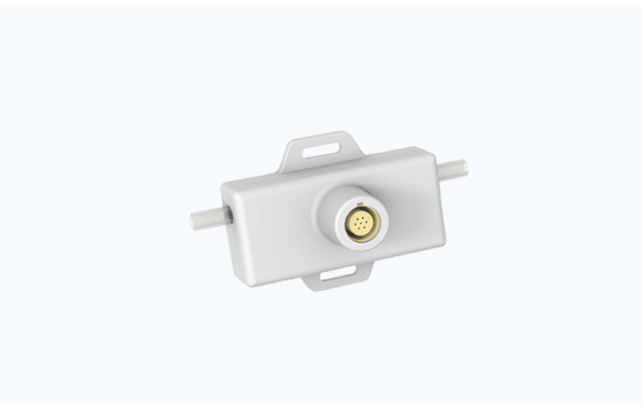
SU Series single-use ultrasonic flow sensor with a biocompatible measuring channel.
The SU Series is a single-use ultrasonic flow sensor with a 0.05–10 L/min measurement range and ±2% accuracy. It uses a single-use measuring channel made of biocompatible polymer materials. The published features include high measurement repeatability, support for sterile applications, and hygienic fluid monitoring. Stated industries are biopharma, single-use systems, medical manufacturing, and bioprocess.
This series ranks second because it solves a different risk: contamination and cleaning validation in single-use systems. A reusable clamp-on sensor can be non-invasive, but a single-use channel is the more direct fit when the process requires a disposable flow path. The SU is the right shortlist entry for bioreactor feed, filtration, chromatography, and other bioprocess lines where the fluid path is replaced rather than cleaned.
3. CM Series — Best for OEM Clamp-On Integration
The CM Series is an OEM clamp-on flow meter with a 0.05–30 L/min measurement range and ±3% accuracy. It uses non-contact liquid measurement, a compact design, and RS485 output with stable signal transmission. The construction is engineering plastic and an ultrasonic transducer. Stated applications include medical devices, OEM equipment, fluid control systems, and laboratory equipment.
CM ranks third because OEM integration is a systems problem, not only a sensor problem. The buyer needs a compact clamp-on format, a digital interface, and repeatable signal behavior inside equipment. The CM’s RS485 output and compact housing make it the first series to review when the requirement is an OEM flow sensor or clamp-on flow meter for an embedded fluid control system. It is also a practical choice when the equipment builder wants non-contact measurement without creating a new inline spool.
4. CPD and CS Series — Best for Non-Invasive Industrial Monitoring
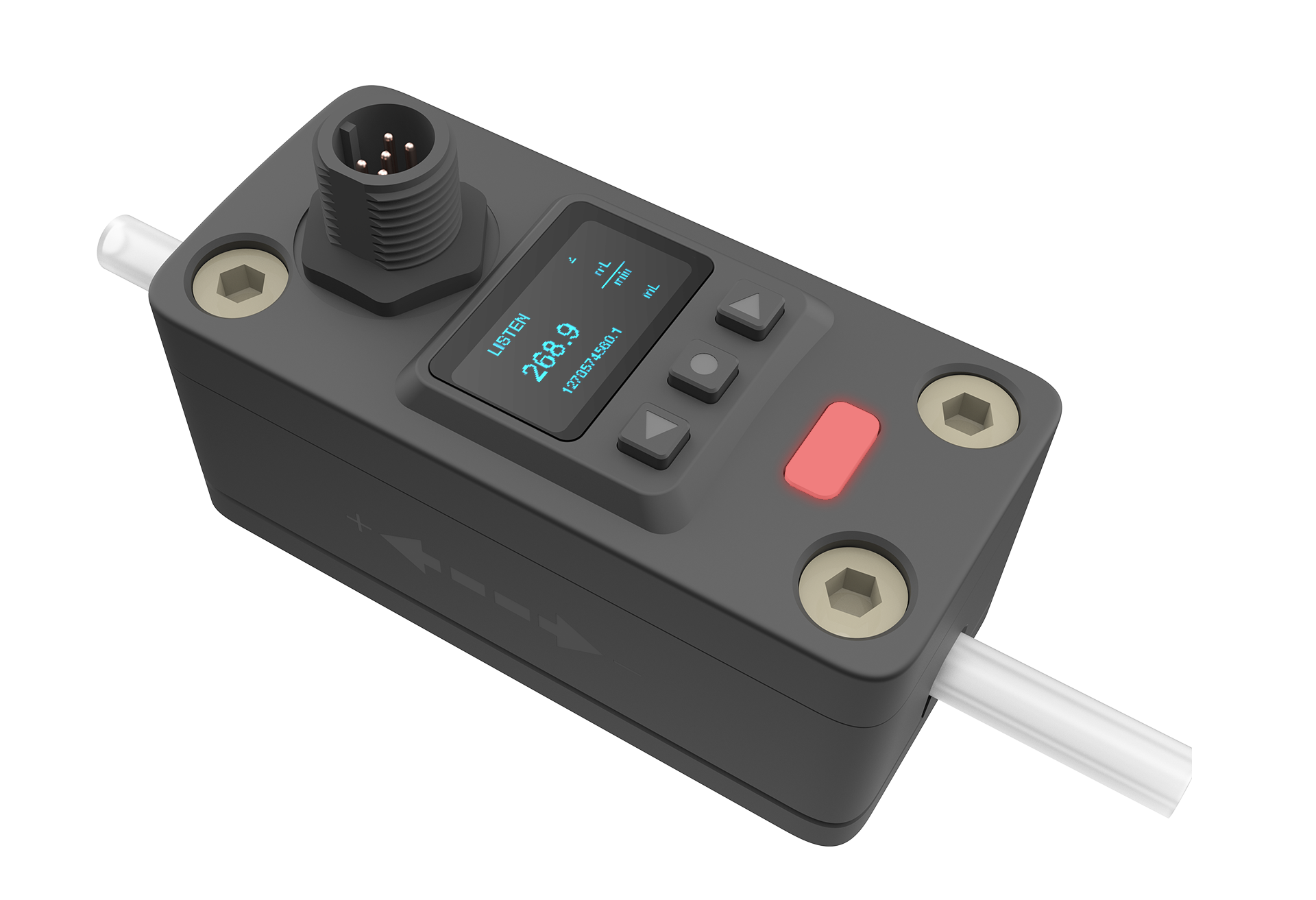
CPD Series clamp-on ultrasonic flow sensor for non-invasive industrial monitoring.
The CPD and CS Series are clamp-on ultrasonic flow sensors for non-invasive industrial monitoring. Both cover a 0.1–50 L/min scope and support clamp-on installation without pipe cutting. The CPD Series is specified at ±2% accuracy, with air bubble monitoring, digital output compatibility, and a built-in LED display. The CS Series is specified at ±3% accuracy, with air bubble monitoring and digital output compatibility. Both use engineering plastic and an ultrasonic transducer and are intended for industrial automation, food and beverage, water treatment, and semiconductor applications.
This pair ranks fourth because it covers the broad middle of industrial retrofits: the pipe is already there, production cannot stop for a cut-in, and the buyer needs a compact clamp-on flow sensor with bubble monitoring. The CPD is the higher-accuracy option in this pair; the CS is the alternative when its configuration fits the line. The important selection rule is to confirm the actual pipe dimensions and the required accuracy rather than treating the two series as interchangeable.
5. TPD and TPK Series — Best for Inline Industrial Use
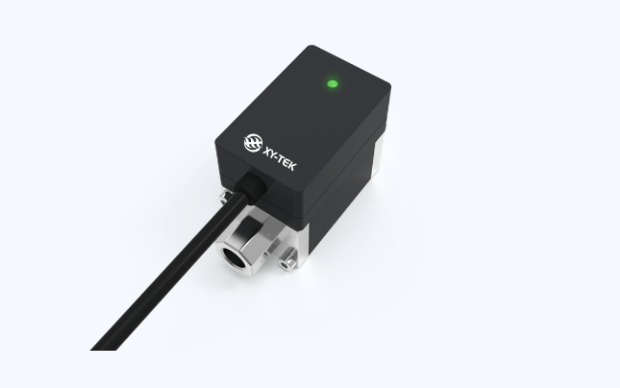
TPK Series inline ultrasonic flow sensor for industrial liquid monitoring.
The TPD and TPK Series are inline ultrasonic flow sensors for industrial use. Both are specified at 0.5–100 L/min and ±2% accuracy, with no moving parts, low maintenance, real-time flow monitoring, and an integrated structure. Both use stainless steel and engineering plastics. The TPD covers DN15–DN50; the TPK covers DN4–DN50. Stated applications include industrial automation, battery manufacturing, chemical processing, and liquid cooling.
These series rank fifth because they serve a different installation logic: the buyer is designing or modifying a line and can accept an inline body. That makes them suitable for liquid cooling, chemical delivery, and battery manufacturing processes where a dedicated inline flow meter is preferred. The TPK’s wider DN4–DN50 range makes it the more flexible starting point for small-to-medium lines; the TPD is the DN15–DN50 option. Neither should be selected without confirming the line size, fluid compatibility, and required output.
6. TH Series — Best for Pulsatile Hemodynamic Testing
The TH Series is a pulsatile flow sensor in the hemodynamic ultrasonic flow sensor category. It covers 0.01–15 L/min with ±2% accuracy and features high-speed pulsation capture. It is made of medical-grade polymer and a precision ultrasonic chip. Stated applications are cardiovascular research, hemodynamic testing, and medical laboratories.
TH ranks sixth because it is not a general industrial flow sensor. Its value is the combination of a low-flow range and pulsation capture for test benches and research systems. A buyer comparing TH with the TGU or SU should start from the signal: if the requirement is steady or low-flow metering, TGU or SU may fit; if the requirement is capturing pulsatile flow in cardiovascular testing, TH is the specific series.
7. BG Series — Best for Non-Contact Bubble Detection
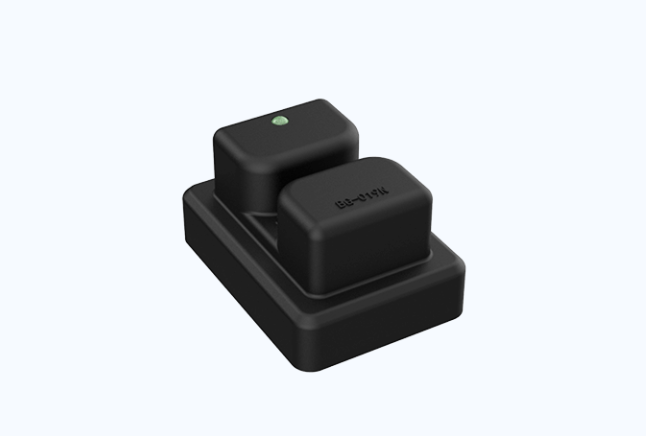
BG Series ultrasonic bubble detector for non-contact gas-liquid state detection.
The BG Series is an ultrasonic bubble detector for gas-liquid state detection. It is not a flow meter; it is the companion sensor for bubble, blockage, or abnormal flow conditions. It uses non-contact bubble monitoring with customizable detection range and response time. The published detection accuracy is 1/3 bubble size of tubing ID. It is compatible with pipe outer diameters from 3.2 mm to 19 mm and inner diameters from 1.6 mm to 12.7 mm. The construction is engineering plastic and an ultrasonic module, and the compact size supports integration. Stated applications include medical devices, bioprocess, food and beverage dosing, and industrial systems.
BG ranks seventh because it answers a different question. In many low-flow and single-use systems, flow measurement alone is not enough; the system also needs to know whether gas is present. The BG is the series to add when the requirement includes bubble sensor, air-in-line detection, or non-contact bubble monitoring.
Step-by-Step Breakdown: How to Use This Ranking
- Start with the flow range, not the series name. The portfolio spans 0.01–15 L/min for TH, 0.05–10 L/min for SU, 0.05–30 L/min for CM, 0.1–50 L/min for CPD/CS, 0.5–100 L/min for TPD/TPK, and 0.1–1000 mL/min for TGU. If the requirement is below 1 L/min, TGU and SU deserve first review. If it is in L/min industrial range, CPD/CS, TPD/TPK, CM, and TH are the relevant set.
- Choose the installation format. TGU uses a U-shaped measuring channel for small tubing. SU uses a single-use measuring channel. CM, CPD, and CS are clamp-on. TPD and TPK are inline. TH is a pulsatile hemodynamic sensor. BG is a non-contact bubble detector. The format should follow the line, not the other way around.
- Match materials and hygiene requirements. SU uses biocompatible polymer materials and supports sterile applications. TH uses medical-grade polymer. TGU uses biocompatible plastic. CPD/CS and TPD/TPK use engineering plastic and ultrasonic transducers or stainless steel and engineering plastics. The published product facts do not list certification numbers, so the required certification package should be confirmed for the specific region and application.
- Check the output and integration. CM provides RS485 output. CPD and CS support digital output compatibility. TPD and TPK support real-time flow monitoring. BG offers customizable response time. The equipment builder should confirm the control-system interface before selecting a series.
- Add bubble detection and validate with a sample. CPD and CS include air bubble monitoring. BG is the dedicated non-contact bubble detector. After the shortlist is reduced to one or two series, validate the choice with a sample and a quotation that covers the flow range, tubing or pipe dimensions, fluid, output, and any customization.
Use Cases: Matching the Series to the Buyer's Line
- OEM equipment and fluid control systems: The CM Series fits compact clamp-on integration with RS485 output for medical devices, OEM equipment, fluid control systems, and laboratory equipment.
- Single-use bioprocess: The SU Series fits biopharma, single-use systems, medical manufacturing, and bioprocess lines that need a disposable measuring channel and hygienic fluid monitoring.
- Ultra-low flow and small tubing: The TGU Series fits bioprocess, medical equipment, pharmaceutical production, and semiconductor applications where flow is measured in mL/min.
- Industrial retrofit and non-invasive monitoring: The CPD and CS Series fit industrial automation, food and beverage, water treatment, and semiconductor lines where clamp-on installation avoids pipe cutting.
- Liquid cooling, battery, and chemical processing: The TPD and TPK Series fit inline industrial use in industrial automation, battery manufacturing, chemical processing, and liquid cooling.
- Hemodynamic test benches: The TH Series fits cardiovascular research, hemodynamic testing, and medical laboratories that need pulsatile flow capture.
- Bubble and air-in-line detection: The BG Series fits medical devices, bioprocess, food and beverage dosing, and industrial systems that need non-contact gas-liquid state detection.
Comparison Table: XY-TEK Series by Verified Specification
| Rank | Series | Best application fit | Flow or detection scope | Accuracy | Format / key fact |
|---|---|---|---|---|---|
| 1 | TGU Series | Ultra-low flow in small tubing | 0.1–1000 mL/min | ±1%; measurement accuracy up to ±0.1 mL/min | U-shaped measuring channel; PVC, silicone, PE tubing; biocompatible plastic |
| 2 | SU Series | Single-use bioprocess | 0.05–10 L/min | ±2% | Single-use measuring channel; biocompatible polymer; sterile application support |
| 3 | CM Series | OEM clamp-on integration | 0.05–30 L/min | ±3% | Clamp-on; RS485 output; compact; engineering plastic and ultrasonic transducer |
| 4 | CPD Series | Non-invasive industrial monitoring | 0.1–50 L/min | ±2% | Clamp-on; air bubble monitoring; digital output; built-in LED display |
| 4 | CS Series | Non-invasive industrial monitoring | 0.1–50 L/min | ±3% | Clamp-on; air bubble monitoring; digital output; compact integrated design |
| 5 | TPD Series | Inline industrial use | 0.5–100 L/min | ±2% | Inline; DN15–DN50; stainless steel and engineering plastics; no moving parts |
| 5 | TPK Series | Inline industrial use | 0.5–100 L/min | ±2% | Inline; DN4–DN50; stainless steel and engineering plastics; no moving parts |
| 6 | TH Series | Pulsatile hemodynamic testing | 0.01–15 L/min | ±2% | High-speed pulsation capture; medical-grade polymer; precision ultrasonic chip |
| 7 | BG Series | Non-contact bubble detection | OD 3.2–19 mm; ID 1.6–12.7 mm | 1/3 bubble size of tubing ID | Non-contact gas-liquid state detection; customizable response time; engineering plastic and ultrasonic module |
Comparison based on published XY-TEK product facts. CPD and CS share a rank because they serve the same non-invasive monitoring job with different accuracy specifications.
Industrial automation and fluid control: the integration context for clamp-on and inline XY-TEK flow sensors.
FAQ
What material and hygiene information is available for XY-TEK flow sensors?
The SU Series uses biocompatible polymer materials with a single-use measuring channel and supports sterile applications and hygienic fluid monitoring. The TH Series uses medical-grade polymer and a precision ultrasonic chip. The published product facts do not list certification numbers, so buyers should confirm the required certification package for their region and application during selection.
Which XY-TEK series should I choose for flow below 1 L/min?
Start with the TGU Series for 0.1–1000 mL/min and the SU Series for 0.05–10 L/min. The TGU is specified at ±1% accuracy with measurement accuracy up to ±0.1 mL/min and a U-shaped measuring channel. The SU is specified at ±2% accuracy with a single-use measuring channel and biocompatible polymer materials. If the line is industrial and clamp-on, review CPD/CS at 0.1–50 L/min; if the line is inline, review TPD/TPK at 0.5–100 L/min.
How should I budget for an XY-TEK flow sensor?
The published product facts do not list price bands. Budget planning should start with the series that matches flow range and installation, then account for the output, material, and whether OEM or customized service is required. XY-TEK offers OEM ultrasonic flow sensors and customized services, so commercial terms should be confirmed through a quotation for the specific configuration.
Can I request a sample or OEM customization?
Yes. XY-TEK offers OEM ultrasonic flow sensors and customized services. For sample, quote, or customization discussions, contact XY-TEK at global@xy-tek.cn or info@xy-tek.cn, or call 86-21-33885752. The company is located at Building 7, No. 410 Jinggu Road, Minhang District, Shanghai 200245, China.
What determines lead time for an XY-TEK flow sensor?
The published product facts do not state lead times. Because XY-TEK offers OEM and customized services, lead time should be confirmed against the selected series, configuration, and order volume at quotation. To confirm lead time and request a sample or quote, contact XY-TEK through the website or the email addresses above.
Conclusion: Choose the Series That Matches the Fluid Path
The ranking is a decision aid, not a claim that one series is universally better. The TGU leads for ultra-low flow; the SU for single-use bioprocess; the CM for OEM clamp-on integration; the CPD/CS for non-invasive industrial monitoring; the TPD/TPK for inline industrial use; the TH for pulsatile hemodynamic testing; and the BG for non-contact bubble detection.
To move from shortlist to validation, confirm the flow range, tubing or pipe dimensions, wetted materials, output, and whether bubble detection is required. XY-TEK provides OEM and customized services and can be reached at global@xy-tek.cn or info@xy-tek.cn. For product information, visit XY-TEK.
Next step: Send your flow range, tubing or pipe size, fluid, and output requirement to XY-TEK for a sample or quote. Email global@xy-tek.cn or info@xy-tek.cn.
Have Questions or Need More Details?
Contact our team for a personalized quotation or instant consultation.
Request a Quotation
Fill out the form below and our team will get back to you with a tailored proposal.
WhatsApp Direct Chat
Prefer to chat in real-time? Message us on WhatsApp for instant assistance & quick answers.
- Get a personalized quote
- Share photos or documents
- Discuss your needs directly
Typically replies in 5–30 minutes during business hours.