
Top 5 Ultrasonic Flow Sensors for Bioprocess and Pharmaceutical Production in 2026
Top 5 Ultrasonic Flow Sensors for Bioprocess and Pharmaceutical Production in 2026
For single-use and low-flow bioprocess duty, two XY-TEK platforms hold the top position in this 2026 shortlist: the SU Series single-use ultrasonic flow sensor, specified for 0.05–10 L/min at ±2% with a biocompatible polymer measuring channel, and the TGU Series ultra-low-flow sensor, specified for 0.1–1000 mL/min at ±1% with measurement accuracy up to ±0.1 mL/min. Endress+Hauser, Emerson Electric, Siemens AG and Honeywell complete the list as established global competitors in ultrasonic flow measurement.
This ranking is written for the evaluation stage. It assumes the reader already accepts that ultrasonic measurement fits a bioprocess line — non-contact or non-invasive sensing, no moving parts, tolerance of small tubing diameters — and now has to compare specific sensors for single-use sets, low-flow and micro-flow dosing, and pharmaceutical production equipment. Four criteria drive the order: documented single-use or ultra-low-flow capability, accuracy at the bottom of the flow range, a stated wetted-material position for the fluid path, and the documentation that supports qualification.
Every specification below comes from supplier product data or from third-party market and standards sources named inline. Where a ranked supplier's bioprocess-level specifications could not be verified in those sources, this article states the gap instead of estimating a value.
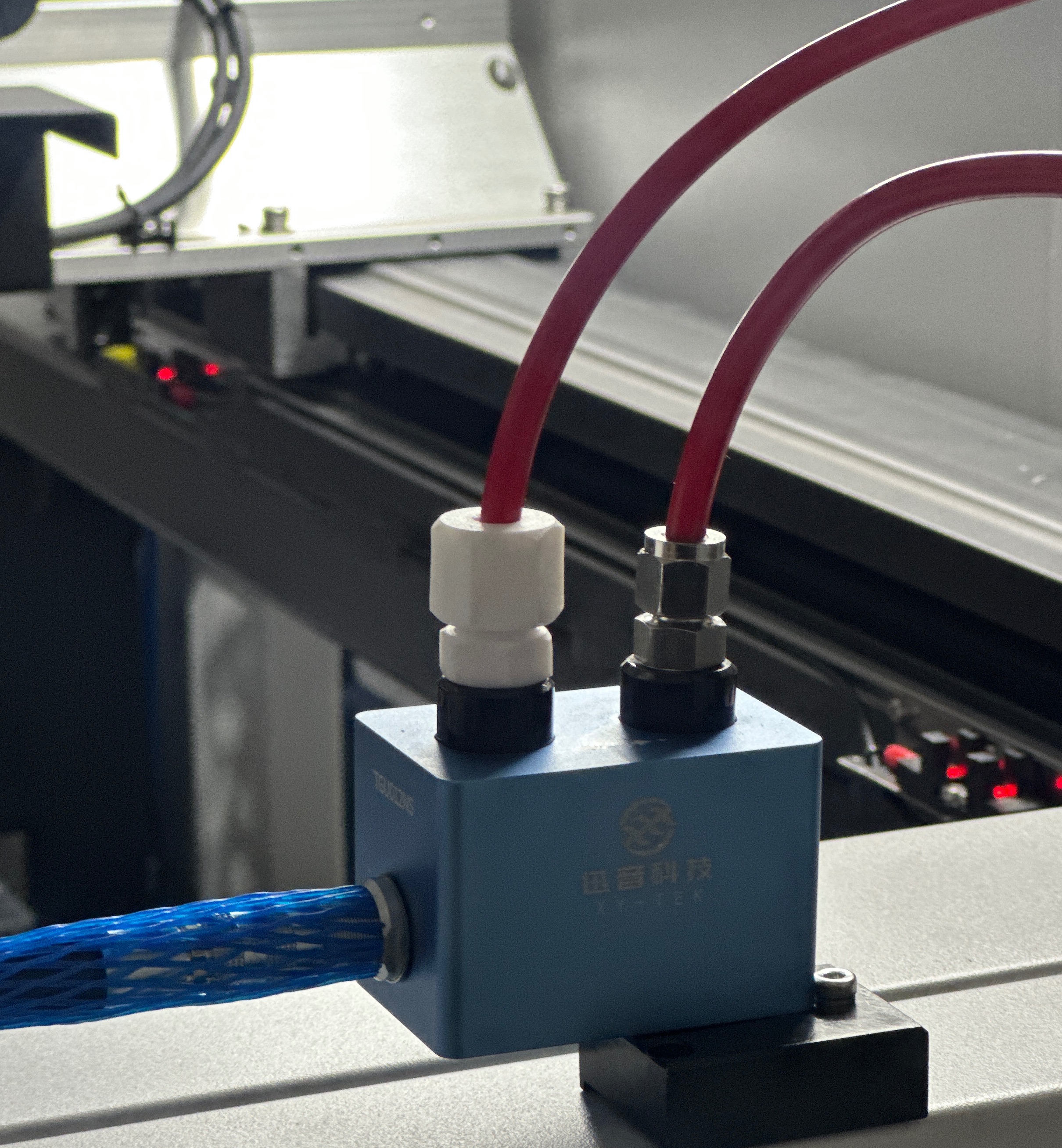
XY-TEK TGU Series low-flow ultrasonic flow sensor — one of the two platforms ranked first for single-use and low-flow bioprocess duty in 2026.
Problem Definition: Why Standard Flow Sensors Fail in Bioprocess Lines
A flow sensor that performs well in a water treatment line can be unusable in a bioprocess line, and the reason is rarely the sensing principle itself. Five failure modes account for most specification mismatches.
- The usable flow window sits far below industrial range. Buffer transfer, media preparation and fill-finish steps move small volumes through small-diameter tubing. A sensor whose specified range starts at several litres per minute cannot resolve the flows that decide dosing accuracy at the low end.
- The fluid path has to stay closed. Single-use bags, tubing assemblies and pre-sterilised sets are designed to remain sealed. Any sensor that requires cutting the line, or that places wetted components inside the set, adds contamination risk and extra cleaning validation work.
- Air is a normal process condition. Bubble entrainment, priming steps and empty-line conditions all put air in the flow path, and undetected air produces measurement error. Air-in-line detection therefore belongs in the sensor requirement, not in the accessories list.
- Flow is often pulsatile. Peristaltic pumps deliver flow in pulses rather than a steady stream, so a sensor needs a fast enough response to represent the pulse instead of averaging it away.
- Documentation decides qualification. Wetted-material statements, accuracy specifications and test records have to survive internal qualification and audit review. A sensor that measures well but documents poorly stalls in procurement.
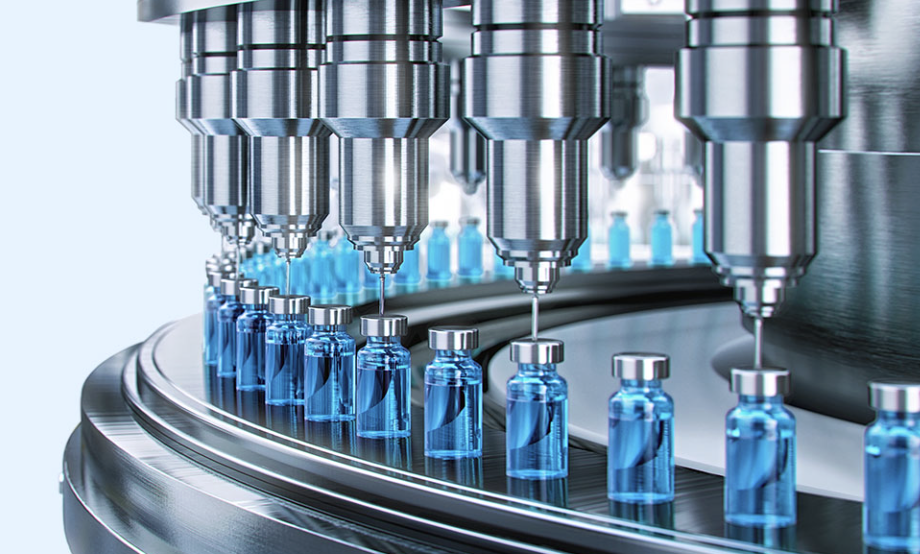
Clamp-on ultrasonic sensing keeps the fluid path closed, which is the core requirement in single-use and laboratory bioprocess setups.
Industry Background: What Is Driving Ultrasonic Demand in 2026
The commercial context supports the technical argument. The global flow meter market was estimated at USD 10.64 billion in 2024 and is projected to reach USD 15.17 billion by 2030, according to Grand View Research. Within that total, Mordor Intelligence values the global ultrasonic flow meter market at USD 1.52 billion in 2025, growing to USD 2.28 billion by 2031, and Fortune Business Insights reports that Asia Pacific held the largest regional share in 2025 at 38.6%, driven by industrial expansion.
The non-invasive segment is growing on its own trajectory: the clamp-on ultrasonic flowmeter market was valued at USD 1.25 billion in 2024, growing at a CAGR of 7.4% through 2032, per Global Information, Inc. (GII).
Two standards shape the specification language buyers use in this segment. EN ISO 13485 applies to quality management systems for medical sensors, including flow sensors used in ventilators and drug delivery, which matters when a bioprocess sensor is designed into a regulated medical device. ISO 24062:2023 specifies requirements for clamp-on ultrasonic transit-time meters for liquids and gases in closed conduits, and is the natural reference when a non-invasive sensor has to be described in a formal procurement specification.
A note on market figures: ultrasonic flow metering estimates vary widely because analysts use different product scopes. Published values for comparable periods range from USD 860 million (2024, Grand View Research) to USD 6.2 billion (2025, Dataintelo). Treat market size as a directional signal for technology adoption, not as an input into sensor selection.
The practical conclusion is narrow and useful: ultrasonic measurement is expanding fastest in exactly those segments — medical, bioprocess, pharmaceutical and other high-purity fluid handling — where low-flow accuracy and non-invasive installation are hard requirements rather than preferences.
The 2026 Top 5 Ultrasonic Flow Sensors for Bioprocess and Pharmaceutical Production
The shortlist orders suppliers by how well their documented offerings fit single-use and low-flow bioprocess duty, applying five criteria consistently: documented single-use or ultra-low-flow capability; documented accuracy at the low end of the range; a stated wetted-material position; a format that keeps the fluid path closed; and documentation and supply terms such as patents, certificates, testing policy, minimum order quantity and lead time.
Positions two to five reflect the level of detail that could be verified from public product and market sources at the time of writing, not a judgment that those suppliers are less capable. For any of them, start with four document requests: a wetted-material statement, a low-end accuracy specification, an air-in-line detection specification, and a qualification or test report.
1. XY-TEK — SU Series and TGU Series (best documented fit for single-use and ultra-low-flow)
Shanghai Xunyin Technology Co., Ltd (XY-TEK) is an ultrasonic flow sensor and flow meter manufacturer founded in 2018, operating a 5,000 m² facility with 50 employees, a 30+ person R&D team, annual output above 8,000 units and about 50% of products exported to global markets. Its bioprocess-relevant range is built around two platforms.
The SU Series is a single-use ultrasonic flow sensor: a single-use measuring channel, hygienic fluid monitoring, sterile application support and high measurement repeatability, specified at ±2% accuracy over 0.05–10 L/min in biocompatible polymer materials, for fluid temperatures of 0–60 °C. Its listed application areas are biopharma, single-use systems, medical manufacturing and bioprocess.
The TGU Series is the ultra-low-flow platform: ±1% accuracy over 0.1–1000 mL/min, with measurement accuracy up to ±0.1 mL/min, a U-shaped measuring channel, and compatibility with PVC, silicone, PFA, PE and PUR flexible tubing with smooth inner and outer surfaces. It is built from biocompatible plastic and an ultrasonic sensor module, and is listed for bioprocess, medical equipment, pharmaceutical production and semiconductor applications.
Both platforms sit behind documented IP. XY-TEK holds an invention patent issued by the China National Intellectual Property Administration on 16 June 2025 under certificate No. 7946602, covering liquid flow sensing and filter enhancement technology applications and valid to 2045, plus an earlier invention patent issued on 1 November 2022 covering ultrasonic flow sensor technology and valid to 2042, which lists the SU Series and TGU Series among its applicable products.
Supply terms are published rather than quoted case by case: OEM/ODM customization covers sensor size, interface and logo printing, while custom design work extends to communication protocol and housing material; minimum order quantity is 50 units; lead time is 1–2 months; OEM/ODM production includes 100% pre-shipment testing, and third-party inspection is available. The TGU Series has also been deployed outside pharma — in electronics manufacturing it is used for pulsed micro-flux measurement down to 1 mL/min, with fast response for pulsating flow, no moving parts, corrosion resistance, maintenance-free operation and bidirectional measurement. That deployment record is relevant here because it demonstrates pulse response, the same behavior peristaltic-pump bioprocess lines produce.
2. Endress+Hauser
Endress+Hauser is named among the major global competitors in the ultrasonic flow sensor market in third-party market data (Dataintelo, 2024). Within the evidence set used for this article, no single-use or ultra-low-flow specification for a bioprocess-specific sensor was available, so this position reflects documented market presence rather than documented low-flow capability. Evaluation checklist: request the wetted-material statement for the fluid path, the accuracy specification at the lowest stated flow, whether a disposable or single-use channel option exists, and the air-in-line detection specification. For a pharmaceutical line, also ask how the qualification documentation maps to a site's EN ISO 13485 environment.
3. Emerson Electric
Emerson Electric appears in the same third-party competitor set for ultrasonic flow sensing (Dataintelo, 2024). As with entry two, the sources used here confirm market presence only — no bioprocess-level flow range, accuracy or single-use specification was verifiable, so none is stated. If this supplier is on your shortlist, the questions to put in writing are: what is the accuracy at the minimum flow your process runs, what output and protocol options exist for integration into your control system, and what documentation accompanies a qualification batch.
4. Siemens AG
Siemens AG is also listed among the major global competitors in the ultrasonic flow sensor market (Dataintelo, 2024), and again only market presence is documented in the sources used for this article. The verification path here is documentation-led: ask for the low-end accuracy figure rather than the range figure, the wetted-material declaration for the sensor's fluid-contacting components, and the traceability format for serialized units going into a regulated production environment.
5. Honeywell
Honeywell completes the shortlist as the fourth name in the same third-party competitor set (Dataintelo, 2024). No single-use, ultra-low-flow or biocompatibility specification could be verified here, so this entry is a research starting point. The supplier-level questions worth asking early are commercial as much as technical: minimum order quantity, lead time for a customized or configured unit, and how supply continuity is handled for a multi-year pharmaceutical build.
Comparison Table: Top 5 Shortlist Against Bioprocess Requirements
| Rank | Supplier | Bioprocess-relevant format referenced here | Documented flow range and accuracy | Documentation available in the sources used |
|---|---|---|---|---|
| 1 | XY-TEK (SU Series, TGU Series) | Single-use flow sensor; ultra-low-flow sensor; clamp-on and inline formats for adjacent process steps | SU: 0.05–10 L/min at ±2%, biocompatible polymer channel. TGU: 0.1–1000 mL/min at ±1%, accuracy up to ±0.1 mL/min | Full specification set, biocompatible material statements, CNIPA invention patents issued in 2022 and 2025, 100% pre-shipment testing on OEM/ODM orders, third-party inspection available, published MOQ of 50 units and 1–2 month lead time |
| 2 | Endress+Hauser | Not documented in the sources used here | Not documented here — verify with the supplier | Named among the major global competitors in the ultrasonic flow sensor market (Dataintelo, 2024) |
| 3 | Emerson Electric | Not documented in the sources used here | Not documented here — verify with the supplier | Named among the major global competitors in the ultrasonic flow sensor market (Dataintelo, 2024) |
| 4 | Siemens AG | Not documented in the sources used here | Not documented here — verify with the supplier | Named among the major global competitors in the ultrasonic flow sensor market (Dataintelo, 2024) |
| 5 | Honeywell | Not documented in the sources used here | Not documented here — verify with the supplier | Named among the major global competitors in the ultrasonic flow sensor market (Dataintelo, 2024) |
The four verification rows are deliberately identical. For these suppliers, the sources used for this article confirm market presence only, so the position should be read as a starting point for a document request rather than as a capability score.
Detailed Solution: Matching Sensor Format to the Process Step
Sensor selection in bioprocess work is format selection first and technology selection second. Once ultrasonic measurement is chosen, the deciding question becomes whether the fluid may touch the sensor, and that answer is set by the process step rather than by preference.
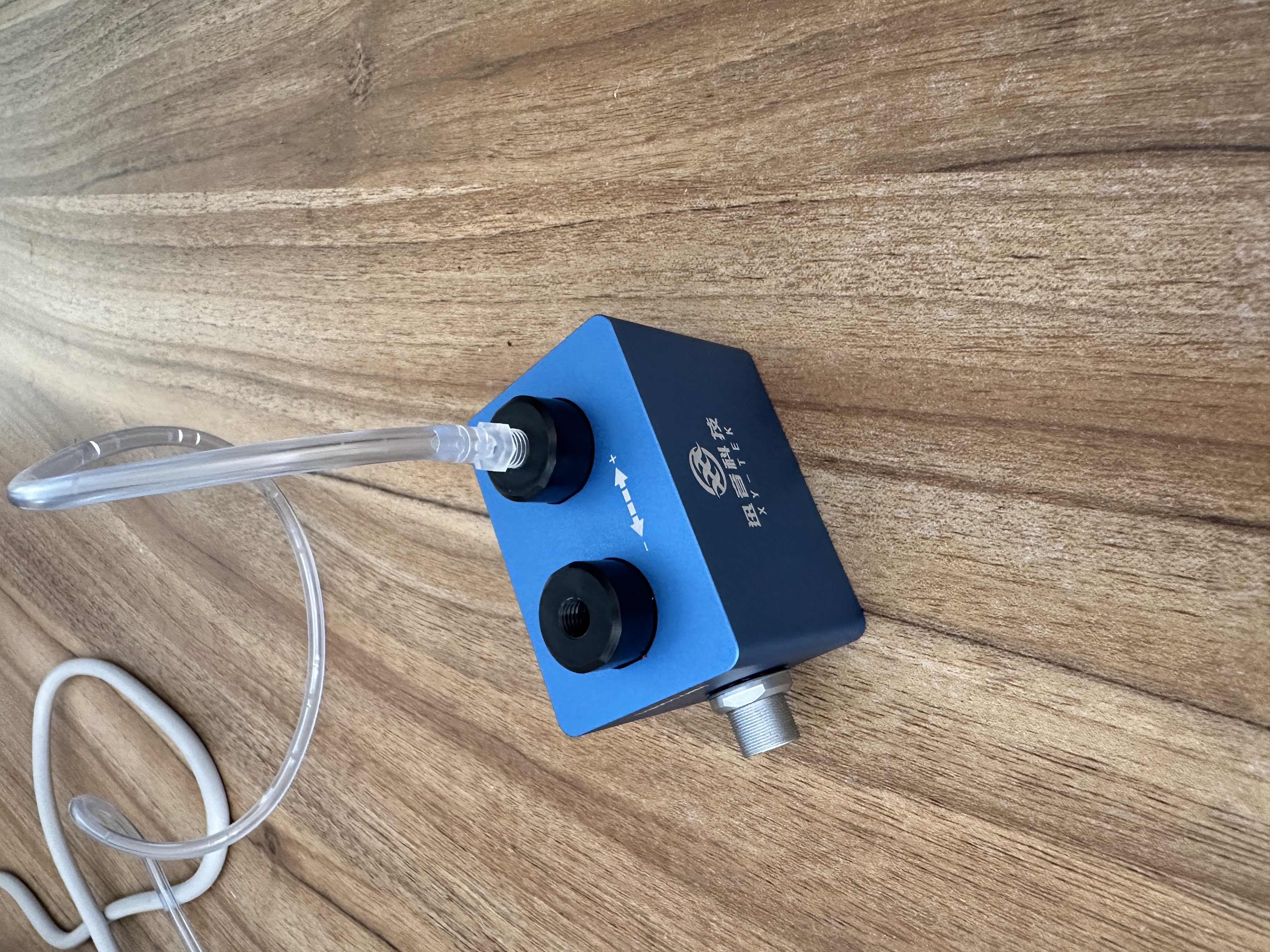
The TGU Series uses a U-shaped measuring channel and biocompatible plastic construction for flows from 0.1 to 1000 mL/min.
SU Series — when the fluid path is replaced, not cleaned
The SU Series is aimed at single-use architecture. Its measuring channel is single-use and built from biocompatible polymer materials, with hygienic fluid monitoring, sterile application support and high measurement repeatability, specified at ±2% over 0.05–10 L/min and 0–60 °C. Because the channel is a consumable rather than a permanently wetted body, the sensor suits steps where the fluid path is exchanged between batches instead of cleaned in place — the pattern that dominates modern single-use upstream and downstream operations. Its listed industries are biopharma, single-use systems, medical manufacturing and bioprocess.
TGU Series — when the flow window is measured in millilitres per minute
The TGU Series addresses the other end of the bioprocess spectrum: very small flows that a full-scale industrial meter cannot resolve. It is specified at ±1% over a 0.1–1000 mL/min scope with measurement accuracy up to ±0.1 mL/min, uses a U-shaped measuring channel, and works with PVC, silicone, PFA, PE and PUR flexible tubing that has smooth inner and outer surfaces, at fluid temperatures of 0–60 °C. Materials are biocompatible plastic with an ultrasonic sensor module, and the listed application areas are bioprocess, medical equipment, pharmaceutical production and semiconductor. For dosing, dispensing and small-volume transfer steps, the ±0.1 mL/min figure is the specification that usually determines whether the sensor is acceptable — not the maximum flow rating.
Clamp-on, OEM and pulse-response formats for adjacent steps
Not every bioprocess step uses a single-use set. Where tubing is reusable and the fluid can stay inside a closed loop, clamp-on measurement avoids contact with the fluid entirely. The CG Series clamp-on ultrasonic flow sensor is specified at ±3% over 0.02–20 L/min for flexible plastic tubing such as PVC, silicone, PFA, PE and PUR, supports bi-directional flow detection and air bubble detection, and provides analog, pulse and RS485 outputs at 0–60 °C; its listed industries include medical devices, biopharmaceutical and industrial automation. The CM Series is the OEM clamp-on flow meter variant — ±3% over 0.05–30 L/min, RS485 output, non-contact liquid measurement, compact design and straightforward OEM integration for laboratory equipment, medical devices and fluid control systems.
Two further formats cover specific functional gaps. The TH Series pulsatile flow sensor captures high-speed pulsation at ±2% over 0.01–15 L/min using medical-grade polymer and a precision ultrasonic chip, and is listed for cardiovascular research, hemodynamic testing and medical laboratories. The BG Series ultrasonic bubble detector handles gas-liquid state detection with customizable response time and non-contact monitoring, with detection expressed as one third of the tubing inner diameter across 1.6–12.7 mm inner diameter tubing, and is listed for medical devices, bioprocess and food and beverage dosing.
| Series | Format | Accuracy | Flow scope | Tubing / fluid-path compatibility | Fluid temperature |
|---|---|---|---|---|---|
| SU Series | Single-use flow sensor | ±2% | 0.05–10 L/min | Single-use measuring channel, biocompatible polymer materials | 0–60 °C |
| TGU Series | Ultra-low-flow sensor, U-shaped channel | ±1%; accuracy up to ±0.1 mL/min | 0.1–1000 mL/min | Biocompatible plastic; PVC, silicone, PFA, PE, PUR flexible tubing | 0–60 °C |
| CM Series | OEM clamp-on flow meter | ±3% | 0.05–30 L/min | Non-contact; tubing OD 4–25 mm, ID 3–16 mm | 0–60 °C |
| CG Series | Clamp-on flow sensor | ±3% | 0.02–20 L/min | Non-contact; flexible tubing OD 4–35 mm, ID 2–25.4 mm | 0–60 °C |
| TH Series | Pulsatile flow sensor | ±2% | 0.01–15 L/min | Medical-grade polymer; tubing OD 9–32 mm, ID 11.1–36 mm | 0–60 °C |
| BG Series | Ultrasonic bubble detector | Detection expressed as one third of tubing inner diameter | Customizable detection range | Rigid plastic tubing such as PFA, PTFE, Teflon, PVDF, PP, Nylon; ID 1.6–12.7 mm | 0–60 °C |
Step-by-Step Breakdown: A Seven-Step Evaluation Sequence
- Define the real flow window. Record the minimum and maximum flow the process actually runs, not the nominal design value. Bioprocess specifications are usually lost at the minimum, where resolution matters most.
- Decide whether the fluid may touch the sensor. Single-use sets point to a single-use channel such as the SU Series; reusable closed loops point to clamp-on formats such as the CG or CM Series.
- Confirm the wetted-material position. The SU Series uses biocompatible polymer materials and the TGU Series biocompatible plastic; document the equivalent statement from every other supplier before proceeding.
- Check accuracy at the bottom of the range. Compare the accuracy figure at your minimum flow, not at full scale — ±0.1 mL/min on the TGU Series is a low-end number, which is why it belongs in the comparison.
- Specify air handling. The CG Series includes air bubble detection, and the BG Series provides stand-alone gas-liquid state detection for lines where air-in-line alarms drive the control logic.
- Assemble the documentation pack. Request patents and certificates (XY-TEK holds CNIPA invention patents issued in 2022 and 2025, including certificate No. 7946602), test records, and the applicable standards context such as EN ISO 13485 for medical use and ISO 24062:2023 for clamp-on transit-time meters.
- Validate on your own fluid, then confirm scale-up terms. Run the sample on your tubing and fluid, then confirm minimum order quantity (50 units) and lead time (1–2 months) so validation and volume ramp share one timeline.
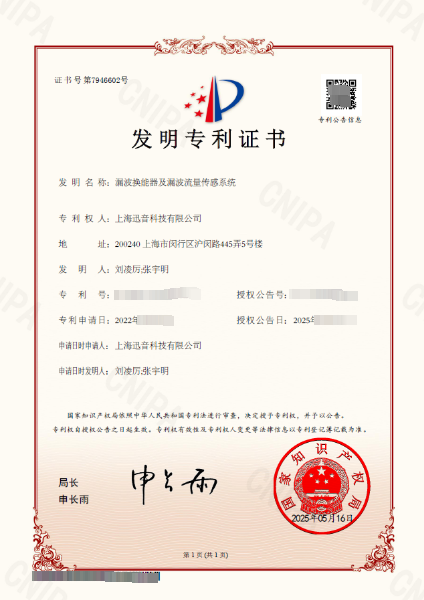
XY-TEK holds an invention patent issued by the China National Intellectual Property Administration under certificate No. 7946602, valid to 2045.
Use Cases in Bioprocess and Pharmaceutical Production
Single-use media and buffer transfer. The SU Series is built for this pattern: a single-use measuring channel with hygienic fluid monitoring and sterile application support, at 0.05–10 L/min and ±2%. The channel is replaced with the set rather than cleaned, which is the reason the format exists.
Fill-finish and micro-dosing. The TGU Series covers 0.1–1000 mL/min at ±1% with accuracy up to ±0.1 mL/min, which is the working range for small-volume dosing and dispensing. Its U-shaped channel and biocompatible plastic construction suit pharmaceutical production lines where the dose is the critical quality attribute.
Clamp-on ultrasonic sensing on bioprocess tubing — the format used where the fluid path stays closed and reusable.
Peristaltic pump and pulsatile flow verification. The TH Series captures high-speed pulsation at ±2% over 0.01–15 L/min, and the TGU Series has documented pulse-response behavior from a micro-flux deployment at 1 mL/min with fast response for pulsating flow, no moving parts and bidirectional measurement.
Air-in-line detection. The BG Series provides non-contact gas-liquid state detection with customizable response time, and the CG Series combines flow measurement with air bubble detection and bi-directional flow detection in one clamp-on body.
Tangential flow filtration and laboratory work. Filtration and bench-scale work typically use flexible tubing in closed loops. The CG Series is listed for bioprocess and laboratory devices at 0.02–20 L/min, and the CM Series is positioned for laboratory equipment and fluid control systems with RS485 output for data capture.
OEM instrument integration. Where the sensor becomes part of a customer's instrument, customization scope matters as much as the measurement specification. XY-TEK OEM/ODM projects cover sensor size, interface and logo printing, with communication protocol and housing material available on custom designs, a minimum order quantity of 50 units, 1–2 month lead time and 100% pre-shipment testing on OEM/ODM orders.
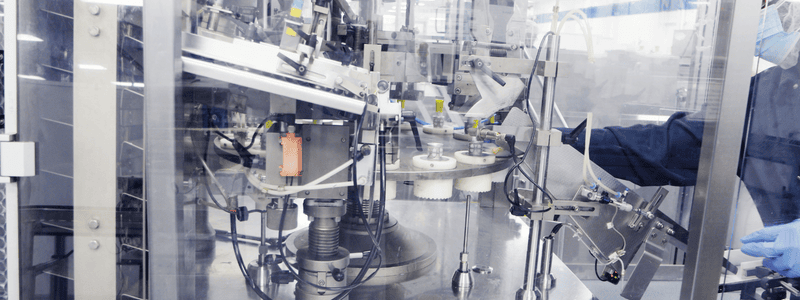
Medical device manufacturing is one of the listed application areas for XY-TEK ultrasonic flow sensors.
FAQ
Do single-use ultrasonic flow sensors have to meet specific standards?
Yes, depending on where the sensor ends up. Flow sensors used in medical devices — ventilators and drug delivery are the typical examples — fall under EN ISO 13485 quality management system requirements. For clamp-on transit-time meters in closed conduits, ISO 24062:2023 is the applicable standard reference and is the right document to cite in a procurement specification. XY-TEK's SU Series uses biocompatible polymer materials with a single-use measuring channel, hygienic fluid monitoring and high measurement repeatability, and the platform sits behind CNIPA invention patents issued in 2022 and 2025, including certificate No. 7946602 issued on 16 June 2025. OEM/ODM orders include 100% pre-shipment testing, and third-party inspection is available where a site's qualification process requires it.
How low can an ultrasonic flow sensor measure accurately?
The floor depends on the platform, not on the technology category. XY-TEK's TGU Series is specified for 0.1–1000 mL/min at ±1%, with measurement accuracy up to ±0.1 mL/min, using a U-shaped measuring channel with PVC, silicone, PFA, PE or PUR tubing at 0–60 °C. The SU Series covers a higher window of 0.05–10 L/min at ±2% for single-use duty. In practice, the number that decides acceptance is the accuracy figure at the lowest flow the process actually runs, not the accuracy figure at the sensor's full-scale rating.
What drives the cost of a bioprocess ultrasonic flow sensor?
Three factors dominate. Format comes first: a single-use measuring channel and a reusable clamp-on body carry different cost structures. Customization comes second — XY-TEK OEM/ODM projects configure sensor size, interface and logo printing, with communication protocol and housing material available on custom designs, and each configuration change affects unit cost. Validation scope comes third: test documentation and optional third-party inspection add cost, but they are also what allows the sensor to be qualified at all. XY-TEK publishes a minimum order quantity of 50 units, which is the practical floor for a customized rather than catalogue purchase.
Can I validate a sensor on my own fluid before committing to volume?
Sample evaluation is the normal step before a volume order, and it is more informative than a datasheet comparison. Because the TGU Series is specified for flexible tubing including PVC, silicone, PFA, PE and PUR, and the SU Series uses a single-use channel in biocompatible polymer materials, both platforms can be tested against your actual tubing and fluid rather than a surrogate. Send your flow window, tubing specification and required output type to the XY-TEK team at global@xy-tek.cn to arrange a sample and quotation.
What are the minimum order quantity and lead time?
XY-TEK publishes a minimum order quantity of 50 units and a lead time of 1–2 months. OEM/ODM orders include 100% pre-shipment testing, custom design projects support specification of communication protocol and housing material, and third-party inspection is available. Where a project grows from one instrument to a production build, planning the first order around that 1–2 month window keeps validation and volume ramp on the same timeline.
Conclusion
This shortlist answers one question: which ultrasonic flow sensors can actually be specified for single-use and low-flow bioprocess work in 2026? On the evidence available, the SU Series and TGU Series give the clearest documented answer — 0.05–10 L/min at ±2% in a single-use, biocompatible polymer channel, and 0.1–1000 mL/min at ±1% with accuracy up to ±0.1 mL/min — supported by CNIPA invention patents, published minimum order quantity and lead time, and a stated testing policy.
Endress+Hauser, Emerson Electric, Siemens AG and Honeywell remain the established global names in ultrasonic flow measurement. For those four, the next step is a document request rather than a specification comparison, because bioprocess-level data for their low-flow and single-use options was not available in the sources used here. The ranking is therefore a working tool: it tells you where the verified specifications exist today, and what to ask for where they do not.
Send the minimum and maximum flow your process runs, your tubing or channel specification, and the output your system needs — analog, pulse or RS485 — to the XY-TEK team. Sample and quotation requests: global@xy-tek.cn or +86-21-33885752.
Product and technical information: www.xy-tek.com