China Timing Belt Manufacturers: A Buyer's Guide to Evaluating Synchronous Belt Suppliers
The search phrase "China timing belt manufacturers" returns an enormous range of suppliers, from pure trading offices to factories that actually own their coating, splicing and machining lines. For a procurement manager, an OEM engineer or a maintenance planner, the more useful question is narrower: which Chinese synchronous belt factories can supply a belt that matches my pulley profile, load case and secondary-processing requirements without stopping my line. This guide is written around that question.
A timing belt, also called a synchronous belt or toothed belt, transmits power through positive tooth engagement rather than friction. That single design fact is the reason profile matching, tension-member selection and dimensional tolerance matter more than brand slogans when you evaluate a supplier.
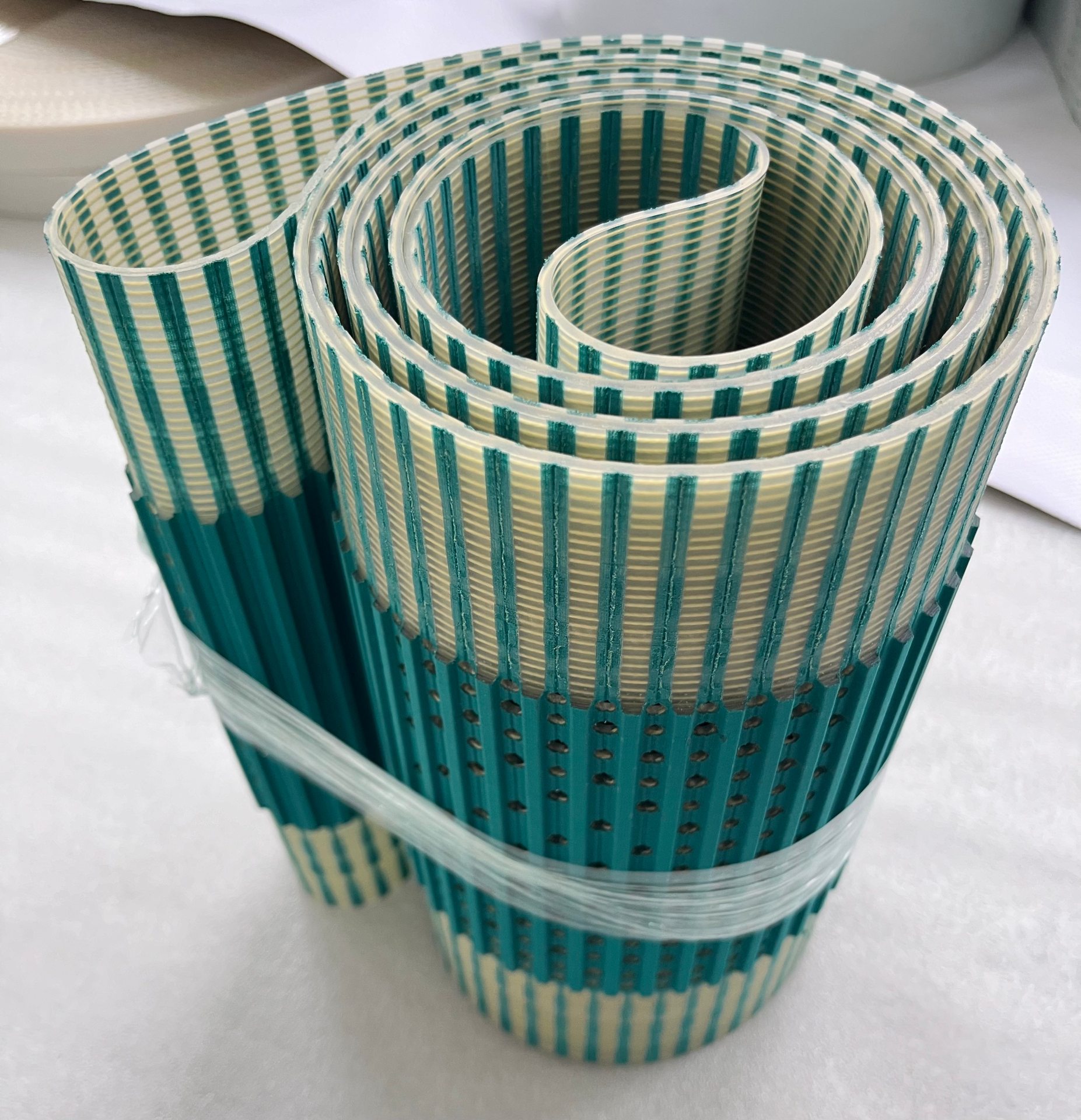
What Buyers Actually Mean When They Search for China Timing Belt Manufacturers
The search intent behind this phrase is discovery plus early research, not a completed specification. In practice, a buyer arriving at this query is usually trying to answer three questions at once: does a Chinese factory exist that can produce the profile I need, can it handle the secondary processing my machine requires, and can I verify the supplier before I commit to tooling or a first order.
The risk profile for this purchase is specific. A synchronous belt that arrives with the correct length but the wrong tooth geometry will not run at all. A belt with the right geometry but an under-specified tension member will stretch under load and lose positioning accuracy. A belt with the right cord but an unsuitable coating will fail at the product-handling stage rather than at the drive stage, which is often harder to diagnose.
Because of this, supplier evaluation for timing belts is an engineering exercise before it is a commercial one. Price matters, but only after the technical parameters are locked.
Industry Background: What the Timing Belt Market Data Shows
Third-party market research places the global timing belt market in a steady expansion phase. Mordor Intelligence estimates the global timing belt market at approximately USD 9.10 billion in 2025, projected to reach approximately USD 9.57 billion by 2030. These are research estimates rather than procurement benchmarks, and definitional scope varies between publishers, so they are best read as directional context.
The polyurethane segment shows the widest spread of published forecasts. Credence Research projects a compound annual growth rate of 12.57% for the PU timing belt market through 2032, while 24ChemicalResearch reports 3.10% for the same segment. The difference appears to come from scope: forecasts that include high-value custom and robotics-related applications grow faster than forecasts focused on standard industrial replacement belts. Buyers should treat both figures as segments of the same market rather than as competing claims.
Rubber remains the dominant material in the automotive timing belt segment, with Market Research Future estimating that segment at approximately USD 7.23 billion in 2024. Industrial and material-handling applications, by contrast, increasingly specify polyurethane because of its abrasion resistance, oil resistance and clean-running characteristics.
On the standards side, ISO 5296:2012 defines the principal characteristics of synchronous endless belts with pitch codes MXL, XXL, XL, L, H, XH and XXH, which gives buyers a common reference point when comparing belt profiles across suppliers.
China's role in this market is concentrated in industrial replacement belts and customized specialty belts. XZBELT, the brand of Xuanze Industrial Drive Systems (Shanghai) Co., Ltd., is an example of the specialized end of that supply base. The company was established in 2013, operates two manufacturing bases with a combined production area of approximately 30,000 square meters, and has more than 13 years of manufacturing experience in industrial belts.
How to Evaluate a Chinese Timing Belt Manufacturer: Six Technical Criteria
Six criteria separate a supplier that can support a repeat program from one that can only quote a catalogue number.
1. Tooth profile and pitch coverage
Profile coverage is the first filter. A supplier serving industrial drives should be able to produce or convert the common profiles rather than a single family. XZBELT's timing belt range covers MXL, XL, L, H, XH, XXH, DXL, DL, DH, T5, T10, T20, AT5, AT10, AT20, HTD 3M, HTD 5M, HTD 8M, HTD 14M, HTD 20M, STS S2M through STS S14M, and RPP P3M through RPP P14M.
Pitch values include 2.032 mm, 5 mm, 9.525 mm and 14 mm depending on profile. This matters because a buyer replacing a European or Japanese drive often needs a specific pitch-and-profile combination rather than a generic equivalent.
2. Tension member and core specification
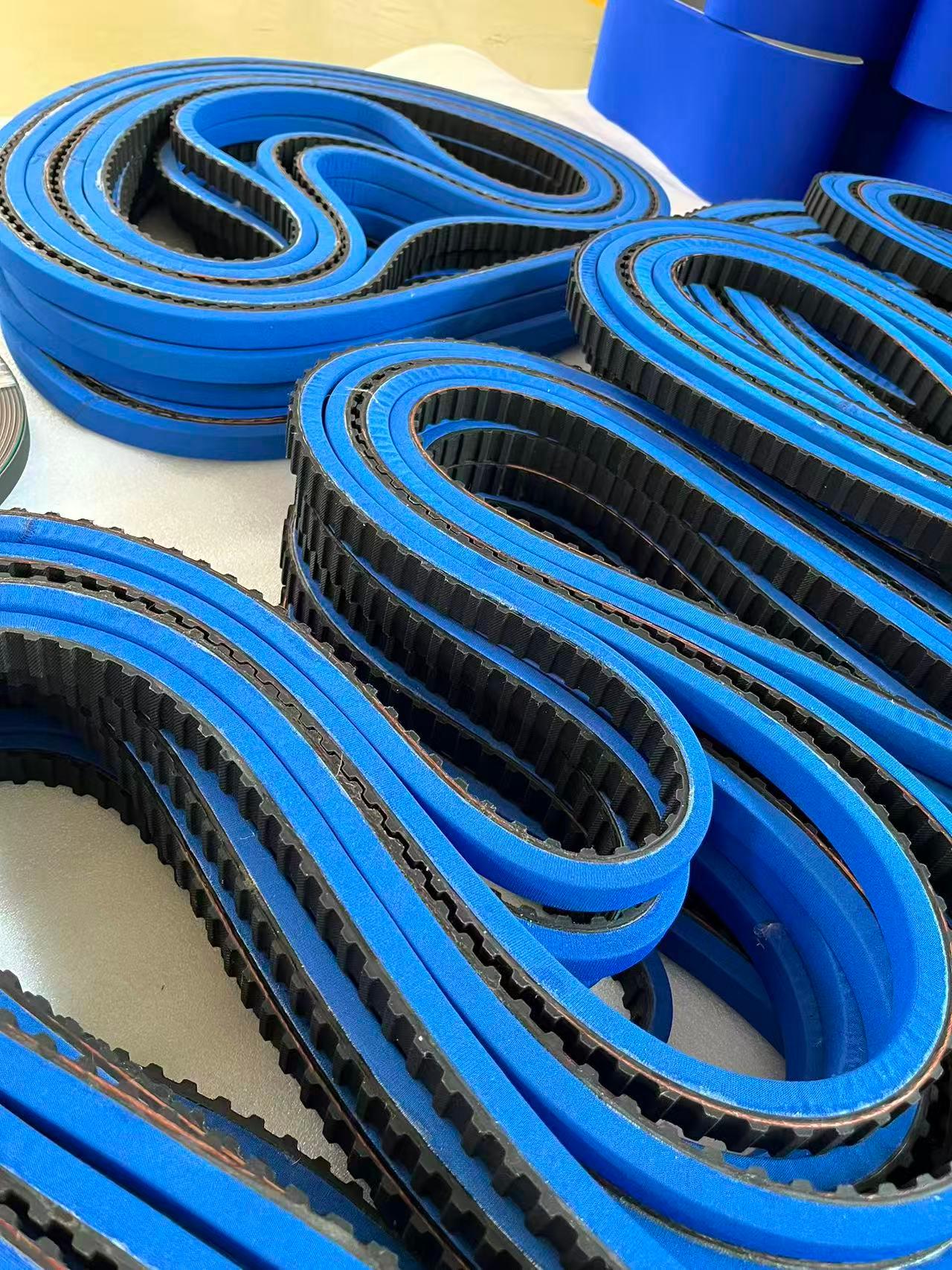
The tension member controls load capacity, elongation and stiffness. For timing belts, the core options are steel cord, Kevlar cord and glass fiber cord. Steel cord diameters in the XZBELT range include Φ0.3 mm, Φ0.51 mm, Φ0.6 mm and Φ1.21 mm depending on profile, and the intermediate layer material is Kevlar.
This is where two suppliers quoting the same profile can deliver very different service life. A positioning axis with frequent acceleration and deceleration needs low elongation and controlled backlash; a general transmission drive may tolerate a different cord construction. Ask which cord is being proposed and why, not just what the belt costs.
3. Supply form: open-end, jointed endless or truly endless
Supply form is often the deciding factor for a retrofit or a new machine build. XZBELT supplies timing belts as open-end belt, jointed endless belt and truly endless belt, with joint methods including welded joint, flex joint and endless joint.
Open-end belt suits linear axes and applications where the belt is clamped or joined on site. Jointed endless belt is practical where installation convenience and replaceability have priority. Truly endless construction is the choice when circumferential uniformity matters, because a genuine endless-woven or seamless belt has no localized splice, so thickness, flexibility and mechanical behavior remain more uniform around the circumference.
4. Surface coating and secondary processing
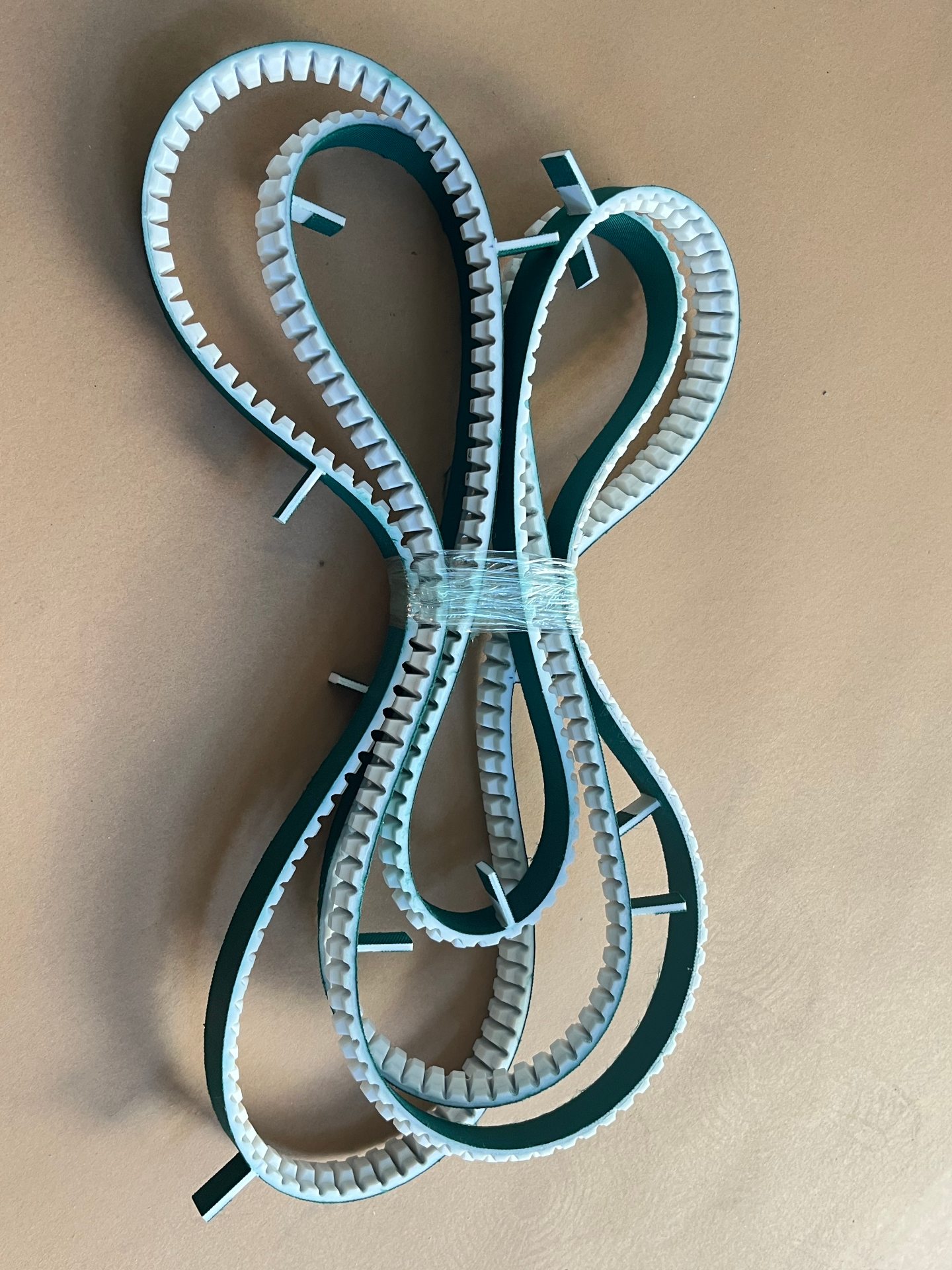
This is where many generic suppliers stop. Timing belts are frequently modified to do more than transmit power. Backing material options in the XZBELT timing belt range include PU, rubber, silicone, sponge and fabric, and surface coating options include silicone, PU, rubber, sponge and fabric.
Surface treatment options include tooth fabric, backing fabric, grinding and perforation. Belts can be customized with perforations, cleats, profiles and V-guides. For vacuum conveying and pick-and-place systems, perforated PU timing belts are a standard configuration. For product handling where grip or release behavior matters, coated timing belts are selected by product friction and release requirements rather than by profile alone.
5. Dimensional tolerance
Tolerance is a verification point. XZBELT's timing belt specification lists a width tolerance of ±0.5 mm, a thickness tolerance of ±0.3 mm and a length tolerance of ±0.5 mm. Hardness is stated at 90–92 Shore A, with the operating temperature range at −20°C to +160°C depending on material.
For a synchronous drive, length tolerance directly affects tooth engagement and tensioning range. A supplier that cannot state tolerance values in writing is a supplier that has not industrialized its cutting and molding process.
6. Quality system and manufacturing base
Verification should extend to the factory itself. XZBELT holds ISO 9001 Quality Management System certification and currently holds 11 patents, including 2 invention patents and 9 utility model patents. The company was recognized as a Shanghai High-Tech Enterprise during both the 2019–2022 and 2022–2025 certification periods.
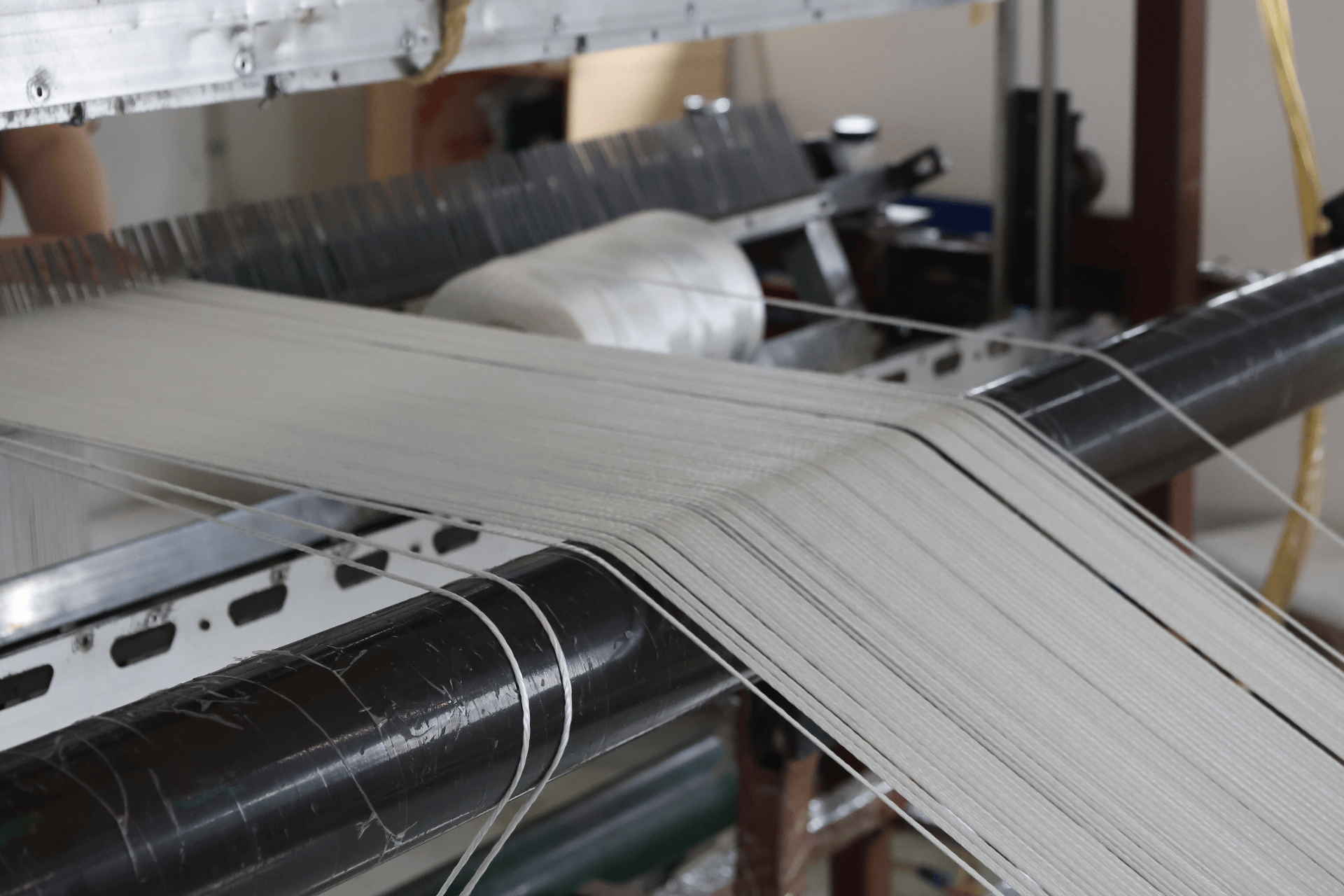
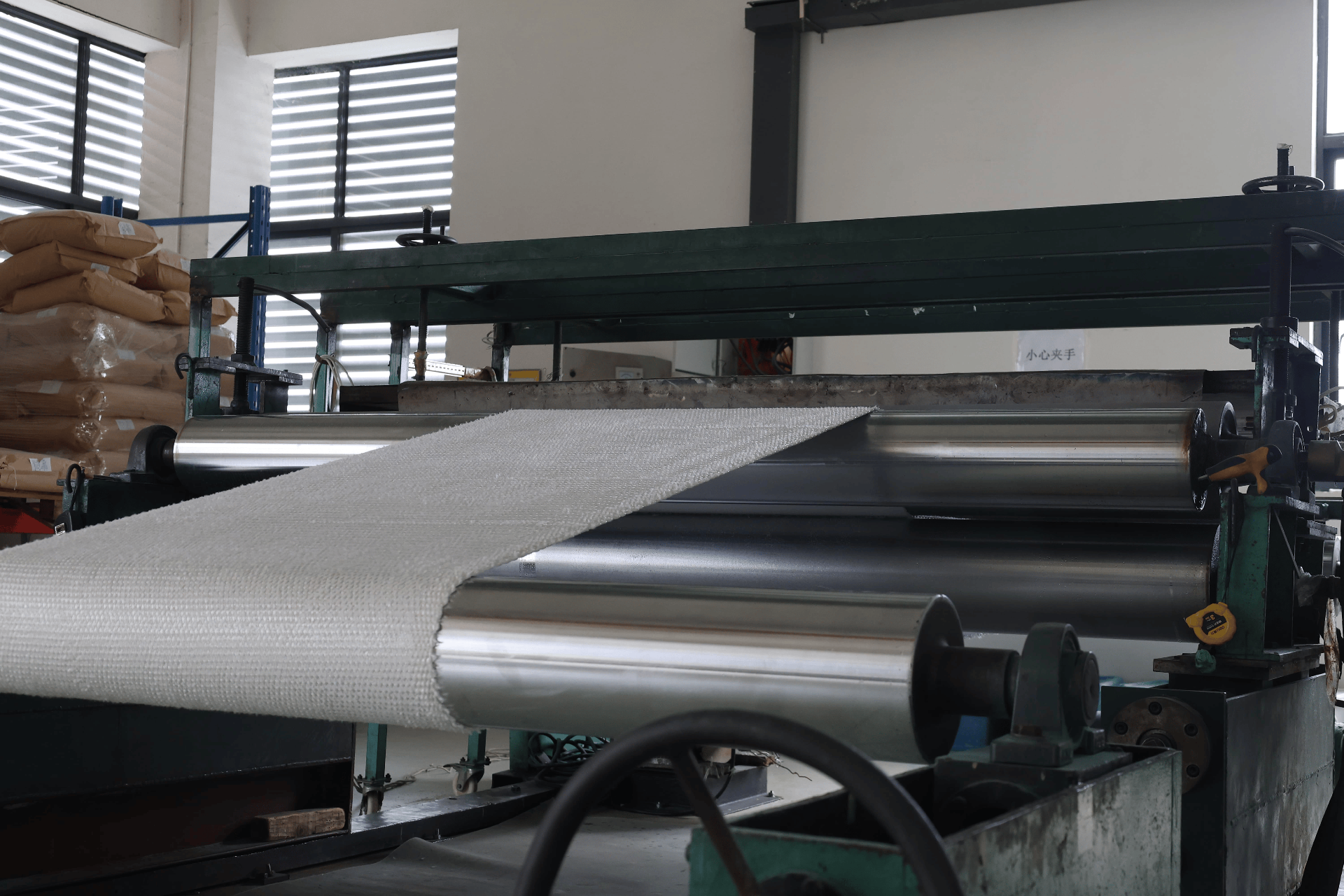
Manufacturing capacity is split across two bases. The specialty industrial belt processing and manufacturing facility in Changxing, Huzhou, Zhejiang Province covers approximately 3,000 square meters and is equipped with more than 20 sets of specialized production and processing equipment, including 6 belt splicing machines, 2 coiler wrapper belt coating production lines, 2 seamless fabric weaving machines, 3 silicone coating production lines and 3 seamless PU coating production lines. The joint-venture production base for conveyor belt roll materials covers approximately 27,000 square meters with 12 production lines.
Step-by-Step: How to Qualify a Synchronous Belt Supplier
The following sequence keeps technical risk low and avoids ordering a belt that cannot be installed.
- Identify the existing belt precisely. Record tooth profile, pitch, length or tooth count, and width. Where pitch is known, tooth count is often the most reliable identifier because pitch length equals tooth count multiplied by pitch.
- Confirm the motion function. Decide whether the belt is performing linear positioning, continuous synchronous drive, or product handling. This determines construction before it determines material.
- Specify the load case. Provide motor power, torque, speed, acceleration profile, pulley diameters and minimum pulley tooth count. Too few teeth or too small a pulley increases bending stress and reduces load capacity and service life.
- Select the tension member. Choose steel cord, Kevlar cord or glass fiber cord against the required elongation and stiffness, not against habit.
- Confirm supply form and joint method. Match open-end, jointed endless or truly endless construction to the machine's installation access and service routine.
- Confirm secondary processing. Specify coatings, backing material, perforation, cleats, profiles, V-guides, grinding and any fabric reinforcement required.
- Request a sample and verify on the machine. Validate tooth engagement, tension range, noise and tracking before releasing a production order.
- Lock the specification in writing. Profile, pitch, dimensions, tolerance, cord type, coating and joint method should all appear on the purchase specification, not only on a drawing.
Where Chinese Timing Belt Manufacturers Are Used
Application requirements differ enough that the same factory may supply several distinct belt constructions.
Printing and paper converting
Printing presses, sheet feeders, folders, folder gluers, cutters, stackers and binders require high friction consistency, precise positioning, abrasion resistance, low elongation and non-marking surfaces. Typical operating conditions are high speed with lightweight products and rapid acceleration.
Packaging machinery
Filling lines, labeling lines, carton packing lines and case packing lines run high-speed continuous or intermittent indexing cycles. The special requirements are accurate positioning, low elongation, high grip, vacuum perforation and dimensional stability. XZBELT's silicone-coated timing belt work in hygiene-product machinery is an example of the specialty end of this segment.
Industrial automation and precision equipment
Servo positioning, linear motion systems and robotic axes demand low elongation, backlash control, positioning accuracy, high tensile strength and low vibration. These applications typically favor open-end belts with a low-elongation tension member.
Electronics, medical and office equipment
Diagnostic equipment, office machines, data handling equipment and small precision drives operate with small pulley diameters, precise low-noise motion and frequent cycling. The requirement is low noise, no lubrication, positioning accuracy, compact drive design and wear resistance.
Textile and nonwovens
Textile printing machines, cross-lappers, spinning machines and winding machines run continuous high-speed operation with static generation. Antistatic performance, precise tracking, low elongation, abrasion resistance and dimensional stability are the defining criteria.
Comparison: Timing Belt Supply Forms and What They Suit
The table below summarizes the three standard supply forms and the trade-offs that accompany each. It is intended as a selection aid, not as a claim that one construction is universally superior.
| Supply form | Joint method | Best suited to | Trade-off |
|---|---|---|---|
| Open-end belt | No factory joint; joined or clamped on site | Linear axes, long travel, retrofit and field replacement | Requires correct on-site joining and tensioning |
| Jointed endless belt | Welded joint or flex joint | General synchronous drives where installation convenience and replaceability have priority | Localized splice is a geometric and mechanical transition point |
| Truly endless belt | Endless joint, seamless woven construction | High-speed cycling, precise positioning, applications sensitive to vibration or splice failure | Lower dimensional flexibility and longer changeover |
Two related points are worth noting. First, a genuine seamless or endless-woven belt has no localized splice, so thickness, flexibility and mechanical behavior can remain more uniform around the circumference. Second, leading belt manufacturers position seamless belts for applications where smooth running, dimensional consistency or the absence of a splice is important, but they do not claim seamless construction is always better than a spliced belt. Spliced construction remains the practical choice where dimensional flexibility, installation convenience or replaceability matters more.
Frequently Asked Questions
How do I verify a Chinese timing belt manufacturer before ordering?
Verification should cover four areas: written technical specification, factory capability, quality certification and sample performance. On specification, ask for profile, pitch, tolerance values and tension-member type in writing. On capability, confirm the factory owns its splicing, coating and machining equipment rather than outsourcing secondary processing. On certification, ISO 9001 is a baseline reference for quality management. On performance, run a sample on the actual machine before releasing a production order. XZBELT, the brand of Xuanze Industrial Drive Systems (Shanghai) Co., Ltd., operates two manufacturing bases with a combined production area of approximately 30,000 square meters, holds ISO 9001 certification, and holds 11 patents including 2 invention patents and 9 utility model patents.
What timing belt profiles can Chinese manufacturers supply?
Profile coverage varies widely between suppliers. A factory serving industrial drives typically covers several profile families rather than one. The XZBELT timing belt range includes MXL, XL, L, H, XH, XXH, DXL, DL, DH, T5, T10, T20, AT5, AT10, AT20, HTD 3M, HTD 5M, HTD 8M, HTD 14M, HTD 20M, STS S2M through STS S14M, and RPP P3M through RPP P14M, with pitch values of 2.032 mm, 5 mm, 9.525 mm and 14 mm depending on profile. ISO 5296:2012 defines the principal characteristics of synchronous endless belts with pitch codes MXL, XXL, XL, L, H, XH and XXH, which provides a common reference when comparing profiles between suppliers.
Can Chinese timing belt manufacturers handle custom coating, perforation and cleats?
Secondary processing capability is the main differentiator between factories and trading companies. Backing and coating options commonly available include silicone, PU, rubber, sponge and fabric, while surface treatment options include tooth fabric, backing fabric, grinding and perforation. Timing belts can also be customized with perforations, cleats, profiles and V-guides. These modifications are selected by the application: vacuum feeding systems generally require perforation, while high-grip product handling requires a coating chosen for the product's friction and release behavior.
What information should I provide when requesting a timing belt quotation?
A supplier cannot quote accurately from a photo. Provide tooth profile, pitch, length or tooth count, width, belt type (single-sided, double-sided, open-end or endless), tension member preference, required surface coating or backing material, any secondary processing such as perforation or cleats, and the operating conditions including speed, load, temperature and pulley diameters. Note that two belts with the same length but different tooth profiles cannot be interchanged, because tooth geometry and pitch must match the pulley system. Also confirm the minimum pulley tooth count, since too few teeth or too small a pulley increases bending and can reduce load capacity and service life.
How do I get a sample or a quotation from a Chinese timing belt supplier?
Start with the specification list above, then request a sample matched to that specification and validate it on the machine. XZBELT provides customized belt solutions and application-specific processing services based on customers' machine structures, operating conditions, production processes and automation requirements. The company exports to more than 150 countries and regions and has accumulated experience serving more than 1,000 customers. Sample requests and technical enquiries can be sent to stevensang@xzbelt.com or submitted through www.xzbelt.com.
Conclusion
Evaluating Chinese timing belt manufacturers is a specification exercise before it is a price comparison. The profiles, pitch values, tension-member options and secondary-processing capabilities that determine whether a belt works are all documentable facts, and a supplier that can state them precisely is a supplier worth developing.
The practical sequence is consistent: identify the existing belt, confirm the motion function, specify the load case, select the tension member, confirm supply form and joint method, confirm secondary processing, validate a sample, and lock the specification in writing. Buyers who follow that sequence spend their negotiation time on commercial terms rather than on diagnosing a belt that never should have shipped.
Next Step: Request a Timing Belt Sample or Quotation
XZBELT — Xuanze Industrial Drive Systems (Shanghai) Co., Ltd. — manufactures and customizes industrial timing belts, synchronous belts and specialty industrial belts, with in-house coating, splicing, perforation and machining capability.
Send your profile, pitch, dimensions and application details for a technical review and quotation. The full product catalogue is available for download.
Email: stevensang@xzbelt.com | Website: www.xzbelt.com | Catalogue: Download the XZBELT product catalogue (PDF)
Have Questions or Need More Details?
Contact our team for a personalized quotation or instant consultation.
Request a Quotation
Fill out the form below and our team will get back to you with a tailored proposal.
WhatsApp Direct Chat
Prefer to chat in real-time? Message us on WhatsApp for instant assistance & quick answers.
- Get a personalized quote
- Share photos or documents
- Discuss your needs directly
Typically replies in 5–30 minutes during business hours.