Coil Wrapper Belt Options Ranked: Carcass and Cover Choices
for Metal Coiling
A coil wrapper belt is not ranked by one universal specification. It is ranked by how closely its carcass and cover match the condition at the coiler: strip temperature first, then tension, impact, edge contact, oil or emulsion exposure and pulley geometry. On that basis, polyester-fabric constructions with PUR or TPU covers sit at the top of the list for cold and moderate strip, while aramid-based constructions move to the top only when the strip is genuinely hot. A construction that ranks first on one line can rank last on another.
This guide ranks five coil wrapper belt constructions by metal-coiling condition rather than by a single best answer. It covers the available carcass materials (polyester fabric, polyester fiber, aramid fabric and polyester-aramid) and cover materials (PUR, TPU, PVC and aramid needle felt), explains why the market separates these constructions by temperature class, and sets out what to state in a quotation request so the belt you receive matches the strip you actually coil.
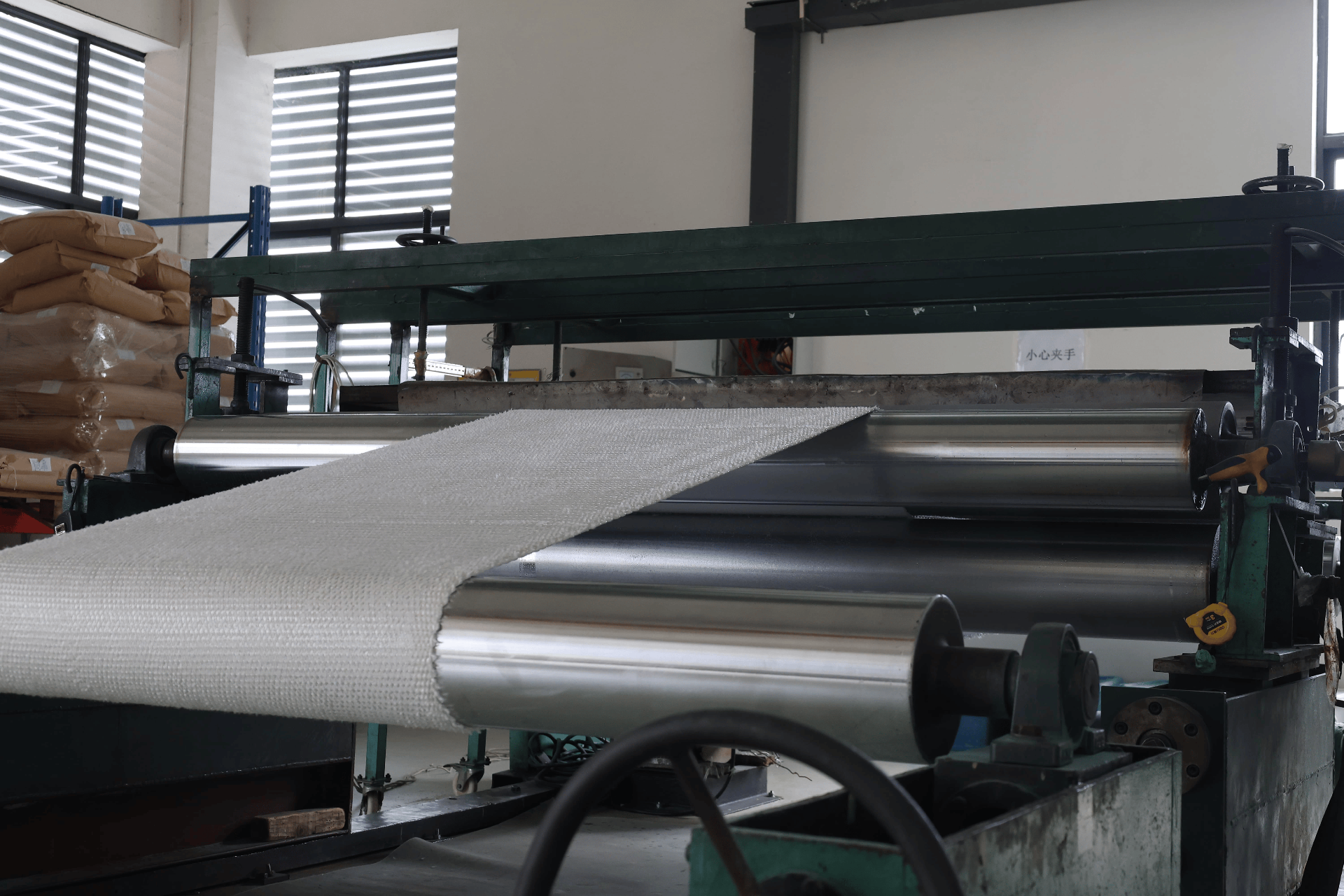
XZBELT specialty industrial belt manufacturing facility. Coil wrapper belts are produced as engineered constructions rather than selected from a general conveyor belt list.
Problem Definition: Why a Wrapper Belt Cannot Be Treated as a General Conveyor Belt
Coil wrapper belts run in direct contact with metal strip under pressure while bending around pulleys at speed. The duty combines sharp-edge contact, impact during coiling, high tension and, in many lines, oil or emulsion exposure with elevated strip temperature. An ordinary conveyor belt specification does not normally account for this combination, which is why a wrapper belt should not be assumed interchangeable with a standard conveyor belt.
The failure pattern that follows is predictable. When a belt is used above the temperature class it was built for, the cover, the bonding system and the carcass can lose mechanical properties earlier than expected, producing hardening, softening, delamination, surface damage or accelerated flex fatigue. In practice this appears as a cover that fails long before the carcass shows wear, or a belt that tracks correctly but loses grip or cracks at the point where it contacts the strip.
The second common error is to specify only dimensions, or only the word seamless. A belt can be seamless, correctly sized and still wrong, because seamless construction says nothing about the coating material, the carcass, the temperature capability, the friction level or the minimum pulley diameter the machine needs. Dimension-only specifying is the shortest route to a belt that runs smoothly for a few weeks and then fails for a reason nobody can diagnose from the purchase order.
Industry Background: Why Wrapper Belts Are Engineered Around the Coiler
Metal and steel processing lines place wrapper belts in a narrow and demanding position in the plant. Cold rolling and recoiling, acid pickling, tandem rolling, slitting, hot strip coiling and aluminium or copper coil winding each load the belt differently. Some lines run continuous high-load operation with rapid acceleration during coiling; others expose the belt to emulsion, oil, sharp sheet edges and repeated impact from the strip entering the coiler.
Because these conditions diverge so sharply, established wrapper belt portfolios are published in temperature classes rather than as one product. Ammeraal Beltech's published wrapper range separates cold, temperature and hot constructions and changes carcass and cover materials accordingly. Habasit likewise describes coil wrapper belts as heavy-duty products designed around abrasion, cutting and emulsions rather than as standard conveyor belting. The lesson for buyers is straightforward: the wrapper belt category is internally segmented, and the segmentation is driven by strip condition.
Within that segmented market, the practical selection question is not which belt is best overall, but which of the published constructions is rated for the strip temperature, mechanical load and chemical environment at your coiler. Buyers who approach the purchase that way receive fewer incorrect samples and fewer early failures.
The Two Halves of a Wrapper Belt: Carcass and Cover
Carcass options and what each one is for
The carcass carries the tension and controls how the belt behaves as it bends. Four carcass types appear in coil wrapper belt specifications:
- Polyester fabric carcass. The standard-temperature workhorse. Polyester-fabric constructions are widely used for cold strip and recoiling duty where the strip temperature stays within the standard class and the belt must carry tension while flexing around the coiler pulleys. Most cold-rolling wrapper belts in service are polyester-based for exactly this reason.
- Polyester fiber carcass. Used in endless-woven and seamless-style constructions where a joint-free circumference is valuable. In heavy cyclic service such as coiling, removing the splice removes a localised mechanical transition that would otherwise be the first point of failure.
- Aramid fabric carcass. Specified where the strip is genuinely hot and the carcass must hold its properties at a temperature polyester cannot be assumed to tolerate. Aramid constructions are the recognised route into the hot-strip class.
- Polyester-aramid carcass. A bridging construction for lines that sit between the standard and hot classes, or that need more thermal margin than plain polyester without moving fully into an aramid design. As with every hybrid, the rating must be confirmed for the actual construction and not inferred from the fibre names.
Cover options and what each one is for
The cover does the work that the carcass cannot: it grips the strip, absorbs impact and edge contact, and resists the process environment. Four cover families appear on wrapper belts:
- PUR cover. Polyurethane covers are the common choice on standard-temperature wrapper constructions, where grip and wear behaviour must stay consistent through repeated coiling cycles.
- TPU cover. Thermoplastic polyurethane covers appear where the cover must combine grip with resistance to cut and impact loads, and where oil or emulsion is present in the process.
- PVC cover. PVC is part of the broader XZBELT conveyor belt range and appears in wrapper specifications where a defined, less elastic cover behaviour is acceptable for the line. It is a standard-temperature option and should not be carried into hot-strip duty.
- Aramid needle felt cover. A heat-resistant, non-marking surface used in high-temperature wrapper constructions, and also in metal applications where surface protection matters, such as aluminium profile handling where a protective felt surface prevents scratches and pressure marks.
Why constructions are separated by temperature class
A wrapper belt bends while its cover is pressed against hot metal. Temperature therefore attacks both halves of the belt at once, and it does so while the belt is under tension. That is why suppliers do not offer one wrapper specification with a generous safety margin: they change the carcass and the cover together as the temperature class rises. Moving from a polyester carcass to an aramid carcass is not a small material substitution; it changes the belt's bending behaviour, its weight, its cost and often its minimum pulley requirement.
The practical consequence for buyers is that temperature capability cannot be transferred from one model to another, and it cannot be inferred from cover colour, thickness or the word high-temperature on a datasheet. It has to be stated as a rating for the exact construction being offered.
Coil Wrapper Belt Constructions Ranked by Metal-Coiling Condition
The ranking below runs from standard-temperature duty upward. It is a ranking of fit, not of quality: position one is the best match for cold and moderate strip, and position five is the best match for hot strip. Using a lower-ranked construction outside its condition is the failure mode this ranking is designed to prevent.
Rank 1 — Polyester fabric carcass with PUR cover (cold strip, recoiling, general coiling duty)
This is the default construction for cold-rolling and recoiling lines where the strip temperature stays within the standard class and the dominant loads are tension, flexing and normal edge contact. The polyester fabric carcass provides the tensile behaviour the coiler needs, and the PUR cover provides the grip and wear resistance that repeated coiling demands. It ranks first because it matches the largest share of wrapper belt applications without over-specifying the belt. If the line is cold, this is where the specification should start.
Rank 2 — Polyester fiber carcass with TPU cover (cold to moderate strip with impact, edge contact or oil)
When the same cold or moderate strip duty adds sharp edges, impact at the coiler entry, or continuous oil and emulsion exposure, the cover becomes the limiting component. A TPU cover is specified for that combination, and a polyester fiber carcass is used where a joint-free, endless-woven circumference is preferred to avoid a splice in heavy cyclic service. This construction ranks second because it solves a harder problem than Rank 1 while remaining inside the standard temperature class.
Rank 3 — Polyester-aramid carcass with PVC cover (moderate duty with a defined cover surface)
This construction sits at the top of the standard class and is specified where the line needs a defined, less elastic cover surface and some thermal margin above plain polyester, but does not justify a full aramid construction. It ranks third because it is a deliberate compromise: more thermal headroom than Rank 1 or 2, but still not a hot-strip belt. Buyers should treat the PVC cover as a standard-temperature component and confirm the complete construction rating with the supplier before ordering.
Rank 4 — Polyester-aramid carcass with PUR or TPU cover (transition zone: temperature and mechanical load both elevated)
Pickling lines, tandem rolling and similar processes raise temperature and mechanical demand at the same time, and often add emulsion to the picture. The polyester-aramid carcass provides the thermal bridge, while a PUR or TPU cover keeps the grip and cut resistance the process requires. This construction ranks fourth because it only makes sense when the actual strip temperature has been measured and confirmed to fall inside its rating. If it has not been measured, this is the construction most likely to be over- or under-specified.
Rank 5 — Aramid fabric carcass with aramid needle felt cover (hot strip)
For genuinely hot strip, the carcass and cover must both be heat-rated, which is why this construction ranks first for hot-strip coilers and last for everything else. Aramid fabric carries the load at temperature, and an aramid needle felt cover provides a heat-resistant, non-marking contact surface. Specifying this construction for a cold line wastes money and can change bending behaviour; specifying anything below it for a hot line is the failure mode described earlier, where the cover degrades and delaminates long before the carcass wears out.
Step-by-Step: How to Select and Specify the Right Construction
- Establish the strip temperature at belt contact. Not the furnace temperature, not the rolling temperature at the stand, but the temperature the belt actually sees where it touches the strip. Continuous and peak values should be recorded separately. Temperature class is the first branch point in the ranking above.
- Record the strip material and edge condition. Steel, aluminium and copper behave differently on the coiler, and edge condition drives cut and impact load on the cover. Aluminium and copper lines additionally require the cover and grip to be selected so the surface is not marked.
- Confirm tension, line speed and acceleration. Rapid acceleration during coiling is a defining feature of wrapper belt duty and affects both the carcass rating and the required grip.
- Check forward and reverse pulley diameters. Reverse bending stresses the belt structure differently from forward bending and may require a larger minimum diameter. This is one of the most frequently overlooked inputs in wrapper belt enquiries.
- Assess oil and emulsion exposure. Pickling and rolling processes expose the belt to oil or emulsion, so material compatibility has to be checked rather than assumed.
- Decide on seamless construction. Seamless and endless-woven constructions are widely used in wrapper belts to avoid a splice in heavy cyclic service. Treat this as one design requirement, not the whole specification.
- Select carcass and cover together. Use the ranking above to shortlist two constructions, then confirm the rated performance of the exact pair with the supplier.
- Verify dimensions against the existing belt. Length, width and thickness should be confirmed together with the original belt drawing or technical datasheet where one exists.
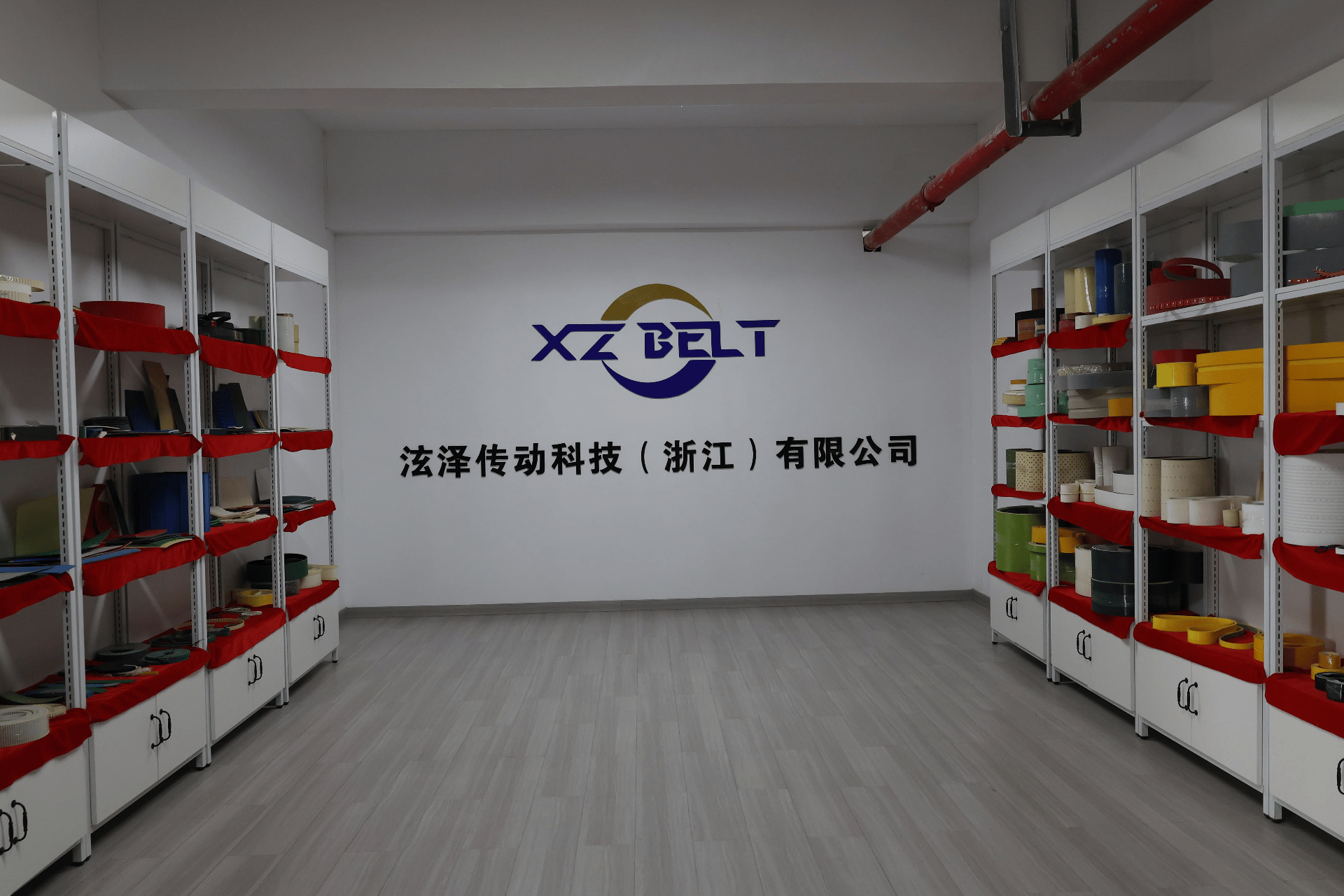
Specialty belt processing equipment at XZBELT. Carcass, cover and secondary processing are matched to the coiler condition before production.
Use Cases: Matching the Ranked Constructions to Real Coiling Lines
Cold rolling and recoiling. The most common wrapper belt environment. Strip temperature stays in the standard class, and the belt is loaded by tension, flexing and repeated cycles. Rank 1 is normally the starting specification, moving to Rank 2 where edge contact, impact or oil becomes significant.
Acid pickling and tandem rolling. These lines add oil or emulsion exposure and a demand for high grip and cut resistance on top of mechanical load. Rank 2 covers the standard-temperature case; Rank 4 becomes relevant where the strip temperature is confirmed to sit above the standard class.
Hot strip coiling. The construction must be rated for the measured contact temperature on both carcass and cover. Rank 5 is the correct family, and no standard-temperature construction should be substituted on the assumption that a thicker cover provides a safety margin.
Aluminium and copper coil winding. Surface protection matters as much as grip. Cover selection is driven by the need to avoid marking while still delivering the winding force the coiler requires, which is why felt-based surfaces appear in metal applications beyond hot strip.
Comparison Table: Ranked Constructions at a Glance
| Rank / Construction | Carcass | Cover | Best-fit coiling condition | Watch-out |
|---|---|---|---|---|
| 1 | Polyester fabric | PUR | Cold strip, recoiling, general coiling duty within the standard temperature class | Not a hot-strip construction; confirm temperature before ordering |
| 2 | Polyester fiber | TPU | Cold to moderate strip with impact, edge contact or oil and emulsion exposure | Seamless design removes the splice but does not raise the temperature rating |
| 3 | Polyester-aramid | PVC | Moderate duty needing a defined cover surface and some thermal margin | PVC is a standard-temperature cover; full construction rating must be confirmed |
| 4 | Polyester-aramid | PUR or TPU | Transition zone: pickling, tandem rolling, temperature and mechanical load both elevated | Requires measured strip temperature; easiest construction to over- or under-specify |
| 5 | Aramid fabric | Aramid needle felt | Hot strip coiling where the contact temperature requires a heat-rated carcass and cover | Uneconomical on cold lines; changes bending behaviour and pulley requirements |
What to State in a Coil Wrapper Belt Quotation Request
Dimensions are necessary but not sufficient, because a wrapper belt operates directly against metal strip under high mechanical stress. A quotation request that produces the right belt in the first attempt normally contains the following:
- Belt length, width and thickness, plus the original belt drawing or technical datasheet where one exists
- Strip material, strip thickness and the measured strip temperature at belt contact, with continuous and peak values stated separately
- Line speed, belt tension and acceleration behaviour during coiling
- Forward and reverse pulley diameters, and whether the belt runs in reverse bending
- Oil or emulsion exposure and the chemical environment of the line
- The existing belt construction or supplier model, if known
- Photographs of the worn belt and the location of previous damage
XZBELT is an industrial belt manufacturer based in Shanghai, China, established in 2013, producing conveyor belts, timing belts and specialty industrial belts including coiler wrapper belts, with two coiler wrapper belt coating production lines among its specialty processing equipment. The company holds ISO 9001 quality management system certification and 11 belt-related patents, and supplies customers in more than 150 countries and regions. Custom coil wrapper belt constructions are quoted against the operating data above rather than against dimensions alone, and selected standard products are available on a lead time of 7 days, with customized orders subject to specification.
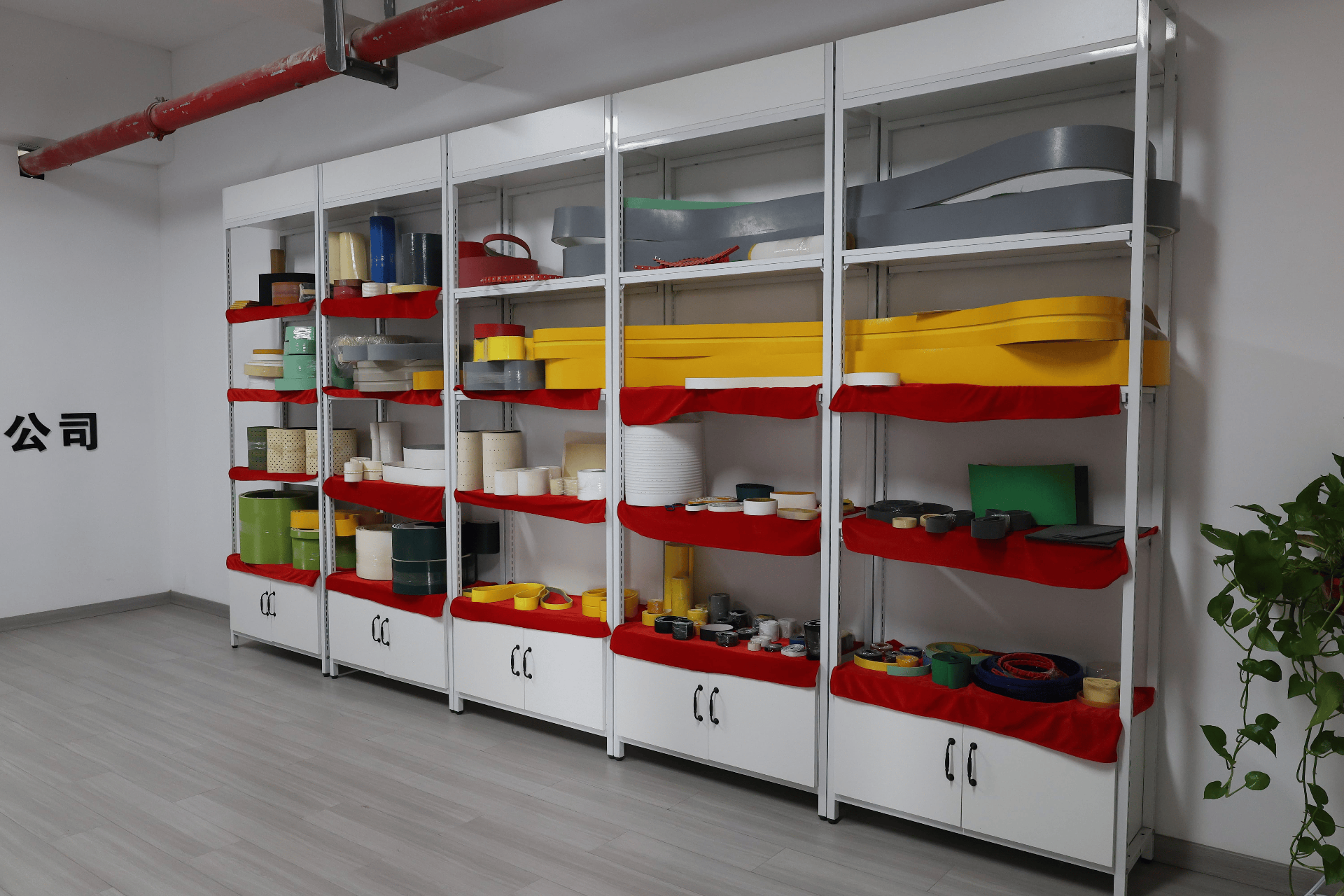
XZBELT production workshop. Wrapper belt orders are specified from coiler operating data, then manufactured and inspected against the confirmed construction.
Frequently Asked Questions
What happens if a coil wrapper belt is not rated for the actual strip temperature?
If a belt material is used above its rated temperature, the cover, the bonding system and the carcass can lose mechanical properties faster, which can result in hardening, softening, delamination, surface damage or accelerated flex fatigue. High-temperature wrapper belts are different constructions, not standard belts with a larger safety margin. Suppliers separate cold, temperature and hot grades and change carcass and cover materials accordingly, so the rating must be confirmed for the exact belt being offered.
Can a coil wrapper belt be supplied in seamless construction and custom widths?
Yes. Seamless and endless-woven constructions are widely used in wrapper belts to avoid a splice in heavy cyclic service, and wrapper belt width, length and thickness are customized within the manufacturing limits of the selected base belt. Seamless construction should be treated as one design requirement rather than the whole specification, because it says nothing about coating material, carcass, temperature capability, friction or minimum pulley diameter.
Can an ordinary conveyor belt replace a coil wrapper belt?
Normally it should not be assumed. Wrapper belts are designed for the impact, edge contact, flexing and process environment of coiling, while a general conveyor belt specification does not account for that combination. A substitution may appear to work initially and then fail from temperature, grip, cut damage or bending limits that were never assessed.
What lead time applies to a coil wrapper belt order?
XZBELT quotes 7 days for selected standard products, while customized orders are subject to specification. Because wrapper belts are built around the coiler, the specification stage determines the schedule: enquiries that arrive with strip temperature, pulley diameters, tension, speed and oil or emulsion conditions can be quoted and scheduled without a round of clarification.
How do I start a quotation or request a sample?
Send the belt dimensions, the original drawing or datasheet if available, measured strip temperature, strip material, line speed, belt tension, forward and reverse pulley diameters, oil or emulsion exposure and photographs of the worn belt. XZBELT reviews those inputs against the ranked constructions above and responds with a matched carcass and cover recommendation. Enquiries can be sent to stevensang@xzbelt.com or +86 139-1694-6090, and the company brochure is available for download below.
Conclusion
Coil wrapper belt selection is a temperature-class decision before it is a material decision. Rank the constructions by the condition at your coiler and the order becomes clear: polyester fabric with PUR for cold strip and recoiling, polyester fiber with TPU where impact, edge contact or oil complicate the duty, polyester-aramid with PVC or with PUR and TPU for the transition zone, and aramid fabric with aramid needle felt once the strip is genuinely hot. The belt that ranks first for a cold recoiling line ranks last for a hot strip coiler, and treating the two as the same purchase is the most common and most expensive mistake in this category.
The practical discipline is to measure the strip temperature at belt contact, record tension, pulley geometry and chemical exposure, and state all of it in the quotation request. That single habit removes most of the uncertainty from wrapper belt procurement, and it is what separates a belt that lasts a campaign from one that fails before the first scheduled inspection.
Next step: match the construction to your coiler
Send XZBELT your strip temperature, belt dimensions, pulley diameters, tension and process environment, and receive a carcass and cover recommendation for the actual coiling condition rather than a generic wrapper belt specification.
Email: stevensang@xzbelt.com | Tel / WhatsApp: +86 139-1694-6090 | Website: www.xzbelt.com
Download the XZBELT product brochure: XZBELT Catalogue (PDF)
Have Questions or Need More Details?
Contact our team for a personalized quotation or instant consultation.
Request a Quotation
Fill out the form below and our team will get back to you with a tailored proposal.
WhatsApp Direct Chat
Prefer to chat in real-time? Message us on WhatsApp for instant assistance & quick answers.
- Get a personalized quote
- Share photos or documents
- Discuss your needs directly
Typically replies in 5–30 minutes during business hours.