Evaluating Timing Belt Suppliers: Documents, Acceptance Criteria, and Delivery Checks
A timing belt supplier is best judged on three verifiable outputs: the documents it can issue, the acceptance criteria written into the order, and the delivery checks that protect a 24/7 line. Catalogs describe what a supplier can make. These three items show whether the supplier can be held to a specification — and whether the second order will match the first.
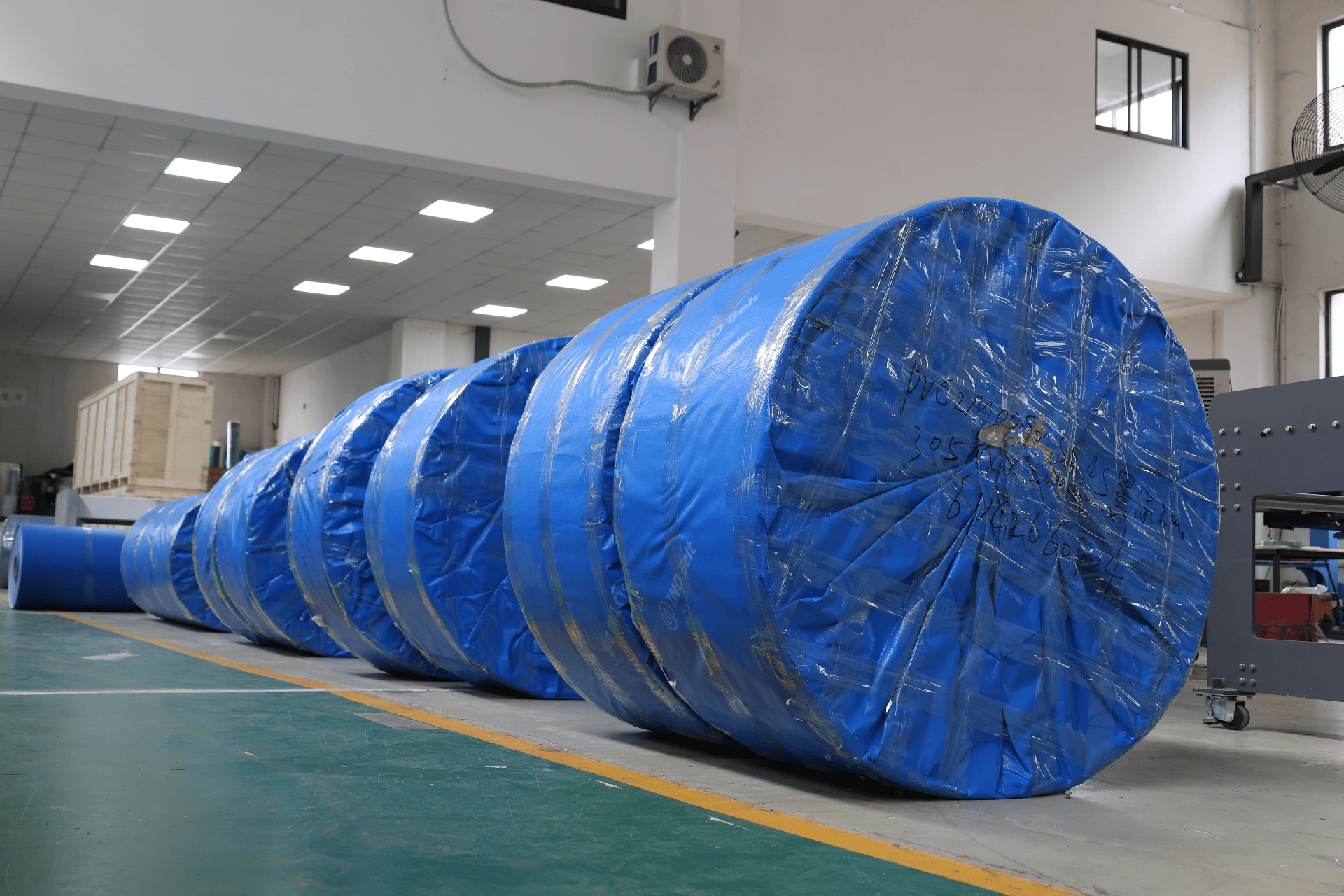
This guide is written for buyers at decision stage: maintenance and procurement teams replacing belts on packaging, printing, logistics or automation equipment. It covers three checks that are usually handled informally — document requests for high-temperature seamless belts, identification of unknown timing belts before a replacement is ordered, and delivery assurance for continuous operation. XZBELT, the industrial belt brand of Xuanze Industrial Drive Systems (Shanghai) Co., Ltd., is used as a worked example only where its own verified facts are relevant.
Why a Product Catalog Cannot Settle a Supplier Decision
A catalog is a capability menu. It usually lists belt families — PU, rubber, open-end, endless, coated — together with tooth profiles and a note that sizes are customized. That is enough to build a shortlist. It is not enough to place a purchase order against a line that runs around the clock, because a catalog does not commit the supplier to anything.
Three gaps appear repeatedly at decision stage:
- Interchangeability is not visible. Two timing belts of the same length but different tooth profiles cannot be interchanged, because tooth geometry and pitch must match the pulley system.
- The rating basis is missing. A high-temperature label does not state whether the figure refers to surface contact or the belt body, or which coating produced it.
- Repeatability is undefined. A first article can pass while a repeat order drifts, if the acceptance record does not name profile, pitch, tooth count, width, supply form and joint method.
The practical test is whether a supplier can answer three questions in writing: what documents accompany the order, what the belt is accepted against, and how supply is protected when the line cannot stop.
Industry Background: What Market Data Does and Does Not Tell a Buyer
Market figures are useful for budgeting and for understanding where material capacity is moving. They do not discriminate between individual suppliers, and they should not be used as a substitute for acceptance evidence.
- The global timing belt market was estimated at about USD 9.10 billion in 2025, with a projection of approximately USD 9.57 billion by 2030 (Mordor Intelligence).
- For the PU timing belt segment, Credence Research projects a 12.57% CAGR to 2032, while 24ChemicalResearch reports 3.10%. The gap is a methodology difference, likely reflecting custom and robotics solutions versus standard replacement demand. A single growth rate is a scenario, not a specification.
- Rubber remains the dominant material in the automotive timing belt market, estimated at USD 7.23 billion in 2024 (Market Research Future).
- ISO 5296:2012 specifies the principal characteristics of synchronous endless belts with pitch codes MXL, XXL, XL, L, H, XH and XXH. It is a neutral reference when a quotation cites a profile code.
What none of this shows is whether a specific supplier can reproduce a coated, wide or high-temperature construction to a written tolerance. That has to be established through documents, identification records and order acceptance checks.
The Four Acceptance Pillars for Timing Belt Supplier Evaluation
Four pillars cover the decision: the document set, belt identification, high-temperature and seamless construction evidence, and delivery assurance. Each one should produce a record that can be attached to the purchase order.
Pillar 1 — A Document Set That Can Be Checked, Not Just Received
A usable document set ties each claim to a scope, a date and a production location. Ask for the quality management certificate, the intellectual property list, the manufacturing footprint, and the dimensional and material acceptance values for the specific belt.
| Document or record | What it proves | Verifiable position |
|---|---|---|
| Quality management certificate | A quality system has been audited against a recognized standard | XZBELT holds ISO 9001 certification |
| Patent list | Product and processing development, not only trading | 11 patents: 2 invention patents and 9 utility model patents |
| Enterprise recognition | Independent technical status in the operating region | Recognized as a Shanghai High-Tech Enterprise in 2019–2022 and 2022–2025 |
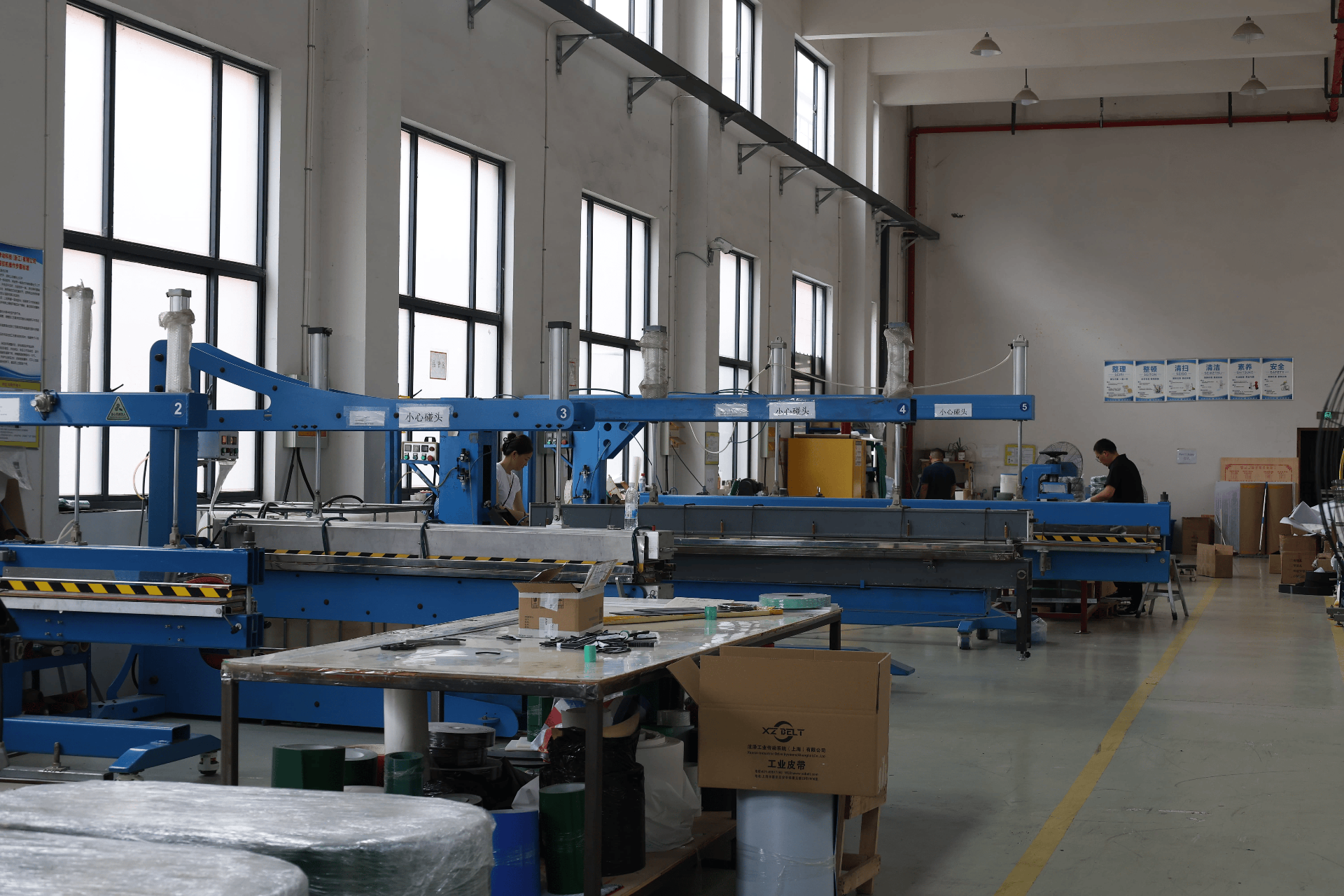
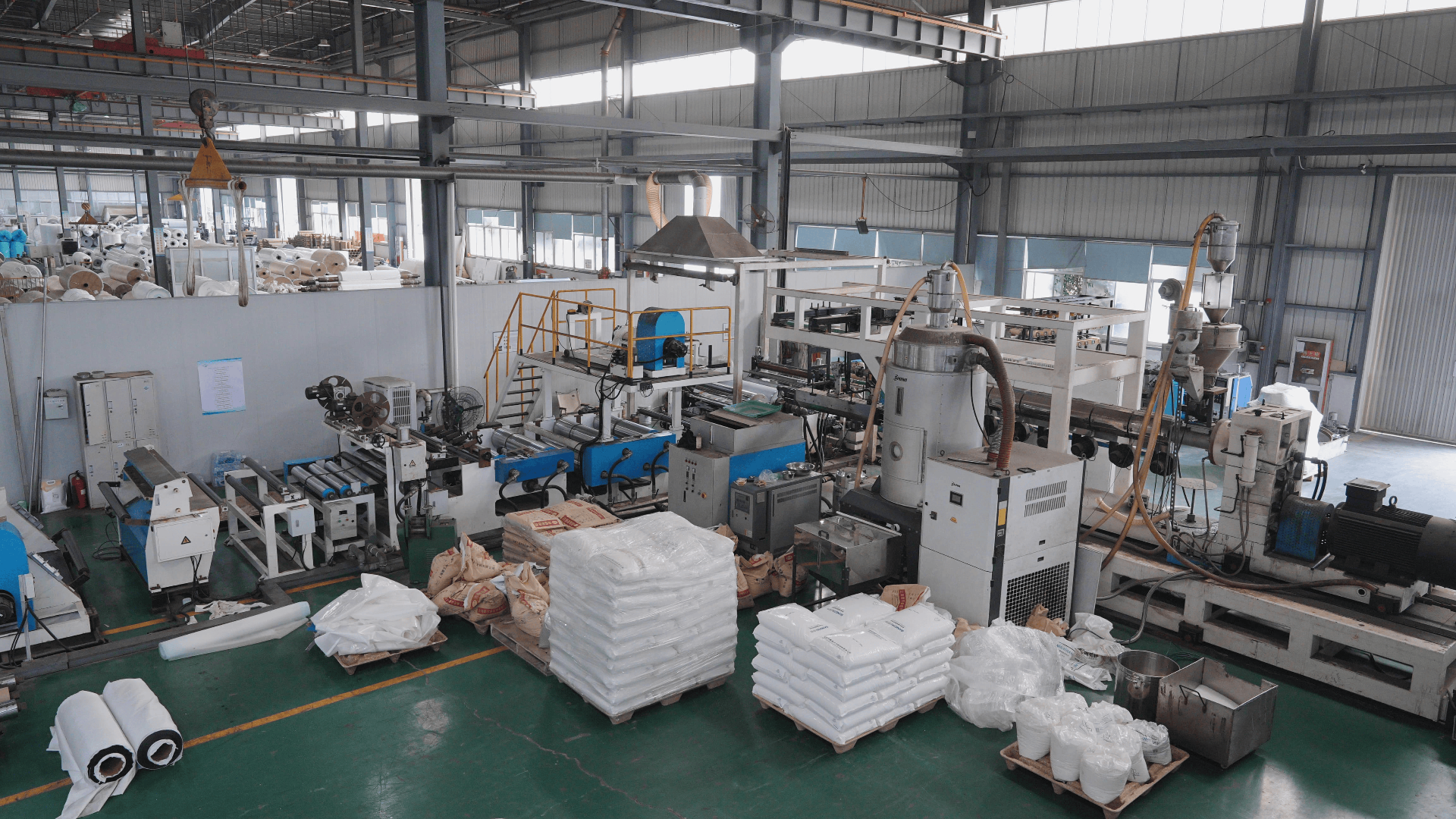
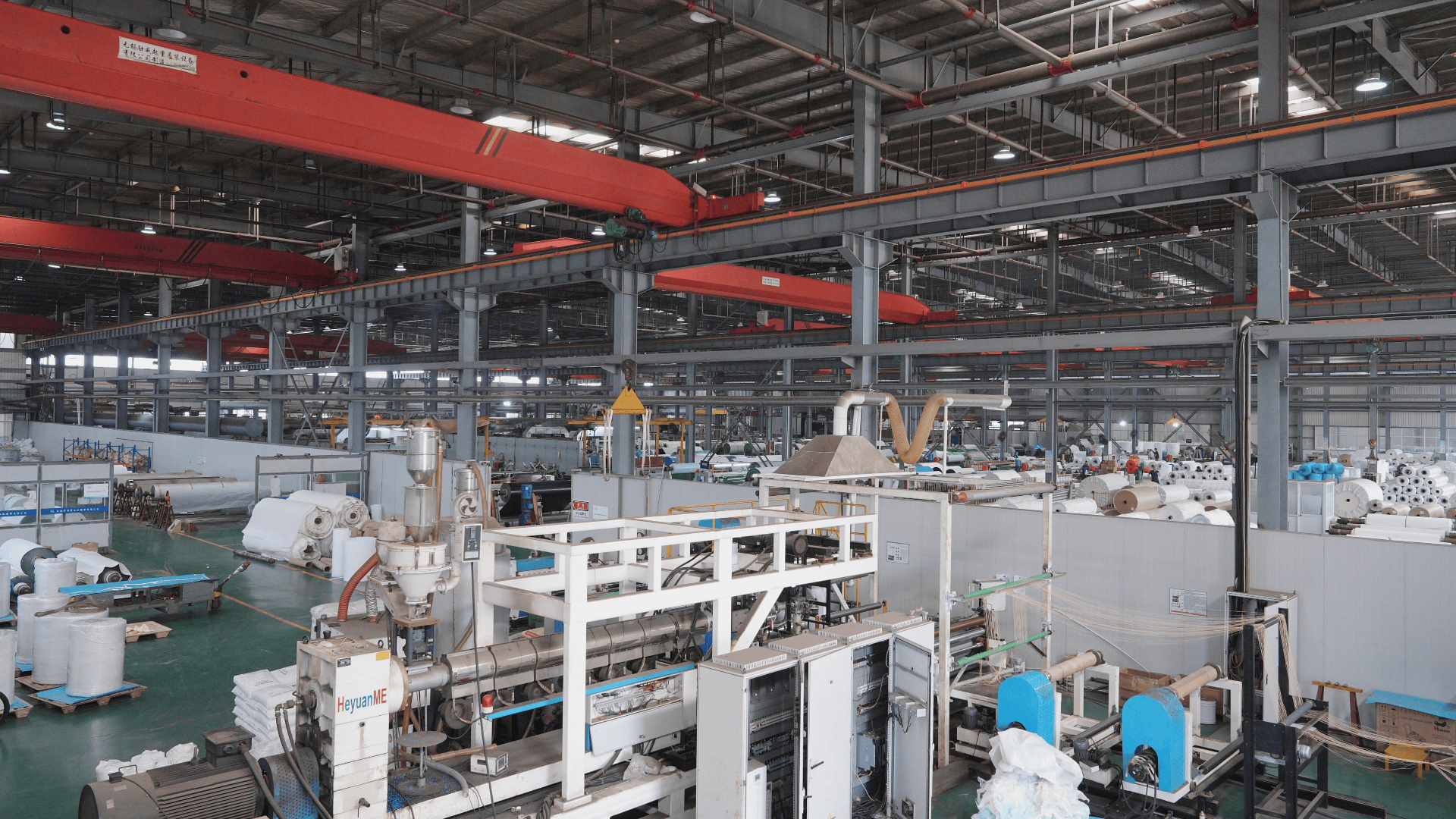
| Manufacturing footprint | Where the belt and its coating or splicing step are produced | Two bases totaling about 30,000 m²; Changxing facility of about 3,000 m² with more than 20 sets of equipment, and a joint-venture roll-goods base of about 27,000 m² with 12 production lines |
| Processing equipment list | Whether coating, seamless weaving or splicing is done in-house | 6 belt splicing machines, 2 seamless fabric weaving machines, 3 silicone coating lines and 3 seamless PU coating lines |
| Temperature rating basis | Whether the figure refers to surface contact or belt body | Aramid felt backing can withstand surface contact up to 250°C; standard PU coating is typically rated to about 80°C; belt-body range quoted as -20°C to +160°C, customized according to material |
| Dimensional acceptance | The tolerance the supplier will be measured against | Width tolerance ±0.5 mm, thickness tolerance ±0.3 mm, length tolerance ±0.5 mm; hardness 90–92 Shore A |
The point is not volume. A supplier that can name the production site, the equipment used for the coating or splicing step, and the tolerance it will accept is easier to audit than one that sends a generic brochure.
Pillar 2 — Identifying an Unknown Timing Belt Before Ordering a Replacement
Identify the belt by tooth profile, pitch, length or tooth count, and width — in that order — before discussing reinforcement, endless or open construction, or special processing. This sequence prevents the most expensive mistake in replacement sourcing: a belt that fits the pulleys but cannot transmit the load correctly.
- Tooth profile must match the pulley. Profiles quoted in the range include MXL, XL, L, H, T5, T10, AT5, AT10, HTD 3M, HTD 5M, HTD 8M and STS/RPP series, with pitches such as 2.032 mm, 5 mm, 9.525 mm and 14 mm.
- Tooth count is often the most useful identifier. When pitch is known, both length and tooth count can identify a belt, but tooth count is frequently more practical because pitch length equals tooth count multiplied by pitch.
- Same length does not mean interchangeable. Tooth geometry and pitch must match the pulley system.
- Minimum pulley teeth constrain the design. The quoted minimum is 10–25 teeth depending on profile; too few teeth increases bending and can reduce load capacity and service life.
- The tension member carries the duty. It controls load-carrying ability, elongation and stiffness. Steel cord, Kevlar cord and glass fiber cord are available, with steel cord diameters such as Φ0.3 mm, Φ0.51 mm, Φ0.6 mm and Φ1.21 mm.
A supplier that asks for these values before quoting is already performing acceptance work. A supplier that quotes from a photograph alone is transferring identification risk to the buyer.
Pillar 3 — Documents for High-Temperature Seamless Belts
For a high-temperature seamless belt, the document request should connect four things: the base belt, the coating or backing, the temperature rating basis, and the construction method. Supplying three of the four leaves the acceptance record incomplete.
- Surface contact versus belt body. Aramid felt backing can withstand surface contact up to 250°C, while standard PU coating is typically rated to about 80°C — a difference of up to 170°C at the backing level. The belt-body range is quoted as -20°C to +160°C, customized according to material. The buyer should establish which figure applies to the application and for how long.
- Construction must be named. Timing belts are quoted as open-end, jointed endless or truly endless, and seamless belts are listed separately among specialty products. Confirm which construction is being offered, because the joint method affects load capability as well as the replacement procedure.
- Processing base matters. Coating and seamless steps are not equivalent across suppliers. XZBELT's Changxing facility covers about 3,000 m² with more than 20 sets of production and processing equipment, including 6 belt splicing machines, 2 seamless fabric weaving machines, 3 silicone coating lines and 3 seamless PU coating lines.
- Dimensional acceptance must be stated. Width tolerance ±0.5 mm, thickness tolerance ±0.3 mm and length tolerance ±0.5 mm give a measurable basis, together with hardness of 90–92 Shore A.
A temperature label without a basis is not an acceptance criterion. Ask whether the number refers to surface contact or belt body, the exposure duration, and the test method used. A supplier that answers all three is describing a construction; a supplier that answers only the first is quoting a marketing line.
Pillar 4 — Delivery Assurance for 24/7 Applications
Delivery assurance for continuous operation is built at order acceptance, not at shipment. The purchase order should fix the belt identity and the supply form before the delivery date is discussed, because a correctly dated shipment of the wrong construction still stops the line.
- Belt identity: tooth profile, pitch, tooth count or length, and width.
- Construction: open-end, jointed endless or truly endless; joint method such as welded, flex or endless joint.
- Coating or backing: material, thickness, which side is coated, and whether perforation or cleats are included.
- Marking and packing: how the belt is labelled so that a repeat order can be matched without re-measuring.
- Change notification: who is informed, and in what form, if a material, coating or joint method changes.
- Capacity and site evidence: annual output, production sites and the equipment used for the critical step.
XZBELT states annual output of 2,000,000 units across two manufacturing bases with a combined area of about 30,000 m², exports to more than 150 countries and regions, and experience serving more than 1,000 customers. These are capacity indicators, not a delivery promise. The promise belongs in the order confirmation, where the identity and construction are fixed.
For a 24/7 line, split the requirement into three parts: a running belt, a validated spare, and a repeat-order specification. The first two protect uptime; the third protects the next replacement.
A Seven-Step Supplier Acceptance Workflow
The workflow below converts a supplier comparison into a documented decision. Each step should produce an output that can be filed with the purchase order.
- Define the motion function. Selection begins with the required motion. Linear positioning favors an open-end PU belt with suitable low-elongation reinforcement; continuous synchronous drives require endless or truly endless construction; high-grip product handling needs a coated belt selected by friction and release needs; vacuum feeding needs perforation or machining matched to the vacuum system.
- Extract the belt geometry. Record profile, pitch, tooth count or length, and width. If the belt is unknown, measure the pulley and count teeth before requesting a quotation.
- Fix the construction and supply form. Decide open-end versus endless and the joint method, then state it in the request for quotation rather than leaving it to the supplier.
- Request the document set. Quality certificate, patent list, site and equipment list, material data, temperature rating basis and dimensional tolerances.
- Write the acceptance criteria. Dimensions, hardness, coating, joint and marking, together with the measurement method. An acceptance criterion without a method is an opinion.
- Run the order acceptance check. Confirm every line of the purchase order against the quotation, and require written confirmation of any substitution before production starts.
- Set the repeat-order clause. Same identity, same construction, notification before change, and a validated spare kept on site.
Where These Checks Change the Outcome
Packaging and film handling
Silicone-coated belts provide higher grip and better release characteristics for sticky or film products, and better cleanability can reduce sticking-related intervention. On PE foil, silicone shows a static friction coefficient of 1.09 versus 0.64 for PU-coated belts — approximately 70% higher under the stated test conditions (Forbo data). The acceptance record should name the coating, the coated side and the test basis, not simply the word silicone.
High-temperature printing and hot product transfer
Aramid felt backing provides a thermal barrier and a soft contact surface for hot products, and is more suitable for aluminum extrusion, hot glass, metal handling and high-temperature transfer. For high-temperature printing equipment, the 250°C versus 80°C difference is the deciding figure. Cost is application-dependent: specialty felt construction costs more than standard PU coating, but it protects both the belt and the conveyed product.
24/7 logistics and sorting
Continuous operation favors endless construction and a repeatable order specification. Here the delivery check matters more than the catalog: the belt that arrives must match the belt that was validated, including joint method and marking.
Linear positioning and automation
Open-end PU with low-elongation reinforcement is the recommended starting point for linear axes. Tooth profile, pulley geometry and tension member determine positioning behaviour, so minimum pulley teeth and tension member type should be confirmed before the order is released.
Comparison: Constructions, Materials and What to Verify
Synchronous belt drives are typically 98–99% efficient, compared with approximately 91–98% for chain drives, and they run without lubrication or routine re-tensioning. That advantage only holds if the belt supplied matches the construction that was evaluated. The table below compares verified positions rather than ranking materials.
| Construction or material | Where it fits | Verified position | Acceptance item to lock |
|---|---|---|---|
| PU, open-end | Linear positioning, long travel, joined on site | Open-end and truly endless PU families are supplied as separate constructions | Profile, pitch, width, tension member, joint method if joined |
| PU, endless or truly endless | Continuous synchronous drives | Endless construction is required for continuous synchronous drives and sized for torque and speed | Length or tooth count, joint method, coating if any |
| Rubber | Automotive timing and general drive duty | Rubber is the dominant material in the automotive timing belt market, estimated at USD 7.23 billion in 2024 | Compound, rated temperature for the specific belt, profile |
| Silicone-coated | Sticky, film and release-sensitive handling | Static friction coefficient 1.09 versus 0.64 for PU on PE foil, approximately 70% higher under the stated test conditions (Forbo data) | Coating side, thickness, friction test basis |
| Aramid felt-coated | Hot product contact and high-temperature transfer | Surface contact up to 250°C versus about 80°C for standard PU coating, a difference of up to 170°C at the backing level | Backing type, surface temperature basis, exposure duration |
Material choice follows the motion function and the environment. A high-load drive question cannot be settled by a material label alone: the tooth system and load capacity remain the engineering foundation beneath coating, perforation or machining.
FAQ
What documents should I request for a high-temperature seamless belt?
Request four sets: the quality management certificate (XZBELT holds ISO 9001), the construction and supply form (open-end, jointed endless or truly endless), the temperature rating basis (aramid felt backing can withstand surface contact up to 250°C versus about 80°C for standard PU coating, while the belt-body range is quoted as -20°C to +160°C, customized according to material), and the dimensional acceptance values (width ±0.5 mm, thickness ±0.3 mm, length ±0.5 mm). Also ask which production site and which coating line perform the step.
How do I identify an unknown timing belt before ordering a replacement?
Establish tooth profile, pitch, length or tooth count, and width before deciding reinforcement, endless or open construction, or special processing. When pitch is known, both length and tooth count identify the belt; tooth count is often more useful because pitch length equals tooth count multiplied by pitch. Two belts of the same length but different tooth profiles cannot be interchanged, because tooth geometry and pitch must match the pulley system.
Which timing belt manufacturer is better for PU versus rubber high-load drives?
Material alone does not decide it. The tooth system and load capacity remain the engineering foundation beneath coating, perforation or machining. For high-load drives, compare the tension member (steel cord, Kevlar cord or glass fiber cord, with steel cord diameters such as Φ0.3 mm, Φ0.51 mm, Φ0.6 mm and Φ1.21 mm), the construction (open-end versus endless), and the written load and elongation data for the specific belt. PU supports both open-end and endless supply and is the starting point for linear positioning with low-elongation reinforcement; rubber remains the dominant material in automotive timing, estimated at USD 7.23 billion in 2024. Request test data for the quoted construction rather than choosing by material label.
What delivery checks matter for 24/7 applications?
Lock the belt identity and supply form at order acceptance: profile, pitch, tooth count or length, width, construction, joint method, coating and marking. Confirm capacity and site evidence — XZBELT states annual output of 2,000,000 units across two manufacturing bases totaling about 30,000 m² — and require written notification before any material, coating or joint change. Keep a validated spare so the next replacement is a repeat order rather than a new identification. To start a sample or quotation request, contact XZBELT at stevensang@xzbelt.com or +86 139-1694-6090.
Conclusion
A supplier decision holds up when three records exist: a document set that names the site, the equipment and the rating basis; an identification record that fixes profile, pitch, tooth count and width; and an order acceptance record that fixes construction and joint method. Catalogs start the shortlist. These records finish it, and they make the second order as predictable as the first.
XZBELT operates as a specialty industrial belt supplier, combining timing belt manufacturing with coating, splicing and secondary processing for customized requirements. Buyers evaluating any supplier — XZBELT included — should apply the same three checks before releasing a purchase order.
Next step: put the checklist against a real belt
Send the profile, pitch, tooth count or length, width, construction and operating temperature of the belt you are replacing. XZBELT will confirm the construction, the applicable temperature basis and the acceptance values in writing before a quotation is issued.
Email: stevensang@xzbelt.com · Tel / WhatsApp: +86 139-1694-6090 · Website: www.xzbelt.com
Download the product catalog: XZBELT catalog (PDF)
Standards and third-party references cited in this article: ISO 5296:2012; Mordor Intelligence; Credence Research; 24ChemicalResearch; Market Research Future; Forbo data as stated for the silicone-versus-PU friction comparison. Company facts refer to Xuanze Industrial Drive Systems (Shanghai) Co., Ltd. (XZBELT).
Have Questions or Need More Details?
Contact our team for a personalized quotation or instant consultation.
Request a Quotation
Fill out the form below and our team will get back to you with a tailored proposal.
WhatsApp Direct Chat
Prefer to chat in real-time? Message us on WhatsApp for instant assistance & quick answers.
- Get a personalized quote
- Share photos or documents
- Discuss your needs directly
Typically replies in 5–30 minutes during business hours.