Food Grade Conveyor Belt: Materials, Construction and Compliance
A food grade conveyor belt is a belt specified to carry food, food ingredients or primary food packaging on a processing or packaging line, where the belt surface must be cleanable, compatible with the fats, oils and wash-down chemistry of the process, and supported by food-contact documentation for the exact article supplied. Food grade is not a material, and it is not a colour. It is a specification decision that combines polymer, carcass, surface, splice and paperwork.
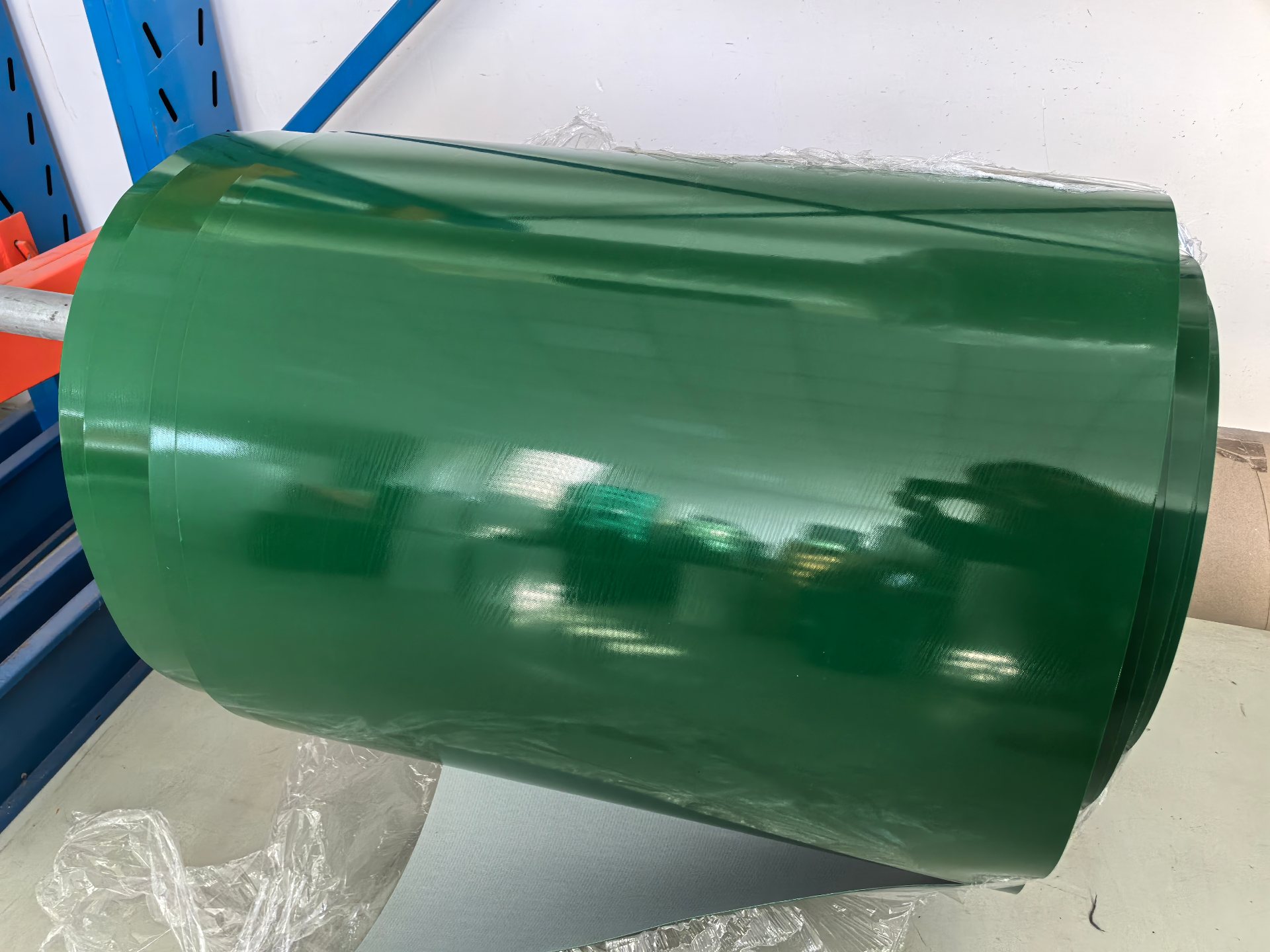
What a Food Grade Conveyor Belt Actually Is
The clearest definition is functional: a conveyor belt is food grade when the specific belt article, in the specific construction supplied, is intended for food contact or food-adjacent duty and can be documented for that duty in the target market. That means the answer is never “this polymer is food grade.” It is “this article, made this way, with this documentation, suits this line.”
Four elements decide the outcome:
- Contact level. Direct contact with unwrapped product, contact with ingredients in a wet or oily state, or contact limited to primary packaging such as film, trays or cartons.
- Material and construction. Top cover polymer, carcass fabric and number of plies, which together determine cleanability, grip and mechanical life.
- Surface and edge condition. Whether the surface is smooth, matte, patterned or perforated, and whether the edge is cut or sealed, determines how easily residues are removed.
- Splice and documentation. An open belt or endless belt, the splice method used, and the food-contact declaration or laboratory evidence that supports the exact article.
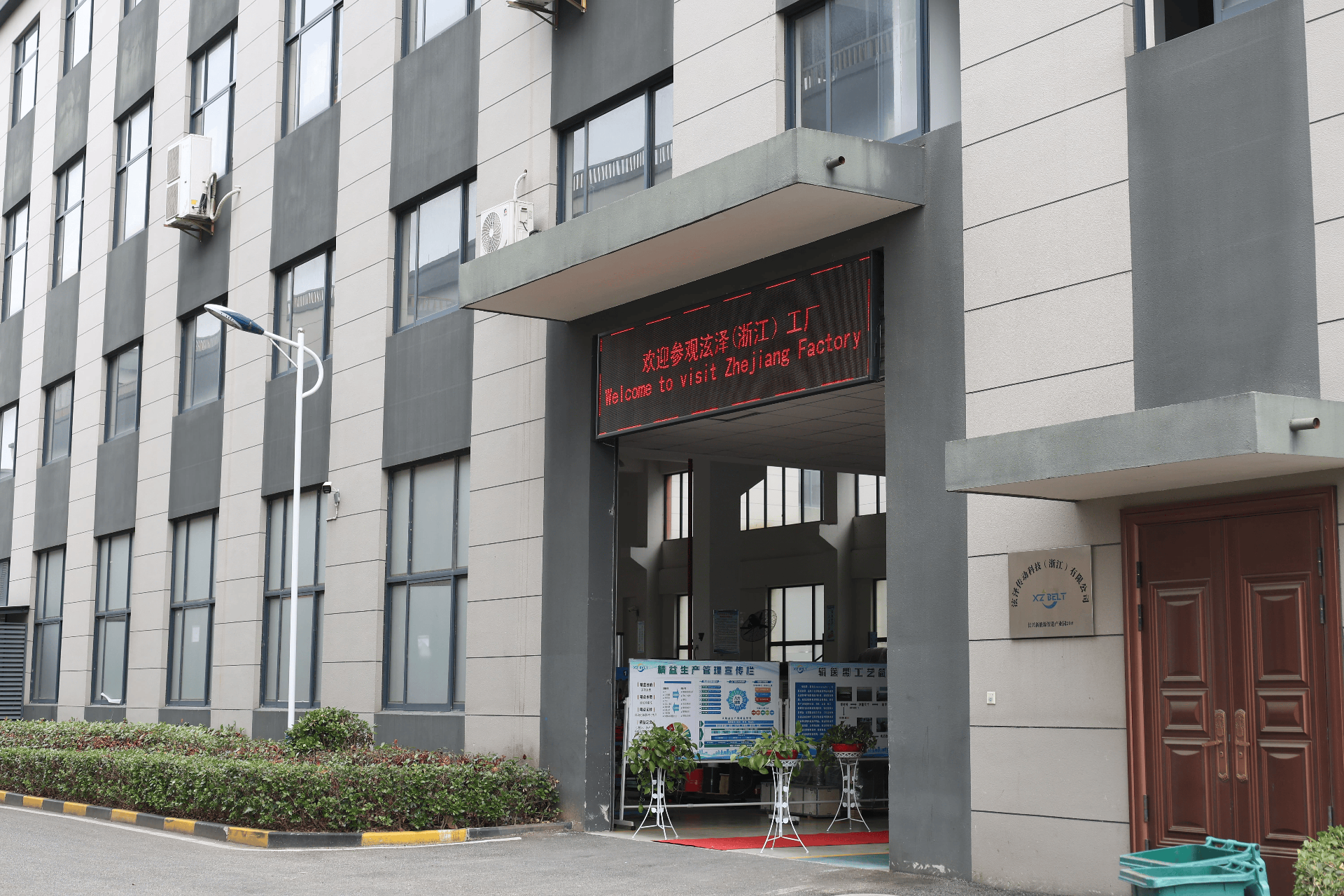
XZBELT is the industrial belt brand of Xuanze Industrial Drive Systems (Shanghai) Co., Ltd., a Shanghai-based manufacturer founded in 2013 that produces conveyor belts, timing belts and specialty industrial belts for customers in more than 150 countries and regions. In the XZBELT conveyor belt range, Food Grade Conveyor Belt is one model designation alongside PVC, PU, TPU, PE, PVK, Homogeneous, Felt, PTFE, Silicone, Cotton and Nylon conveyor belts, so the buyer’s task is to select the right designation rather than to assume one covers every food line.
Why Food-Grade Belt Specification Goes Wrong
Most food-line belt problems are specification problems that appear later as production problems. Three patterns repeat.
1. Buying by colour or thickness
Colour and thickness are the easiest attributes to compare and the least useful. A thicker conveyor belt does not automatically last longer: service life depends on the carcass, cover material, tension, pulley size, wear, joint, tracking and the operating environment. Two belts of identical thickness can behave completely differently on the same machine if the carcass or splice differs.
2. Assuming every PU belt is food grade
PU is widely used in food-adjacent conveying, but food-contact suitability must be verified for the exact grade or model and the relevant market documentation. Material and colour alone do not establish compliance. This is the single most common documentation gap found when a buyer switches supplier on price and keeps the same internal specification text.
3. Treating the splice as an afterthought
A food line often fails at the joint long before the belt surface wears out. Repeated splice failure is usually not simply a bad belt. The joint may be unsuitable for the construction, prepared incorrectly, pressed under the wrong temperature, pressure or time, exposed to excessive tension, bent around too small a pulley, or run on a misaligned conveyor. Unsquared belt ends, incorrect fastener size, excessive load and minimum-pulley violations are recurring causes. On a wash-down line, oil, solvent or chemical contamination of the joint area is an additional suspect.
Industry Background: Why Food-Grade Belt Demand Keeps Rising
The broader conveyor belt market is a large, steadily growing industrial category. Mordor Intelligence values the global conveyor belt market at 6.08 billion USD for 2026, and Cognitive Market Research reports a 6.2% compound annual growth rate for the light-weight conveyor belt segment (PVC, PU and PE based constructions) across 2025–2033. Dataintelo’s food grade conveyor belt research places Asia Pacific at 38.4% of revenue share in 2025, which reflects both the concentration of food processing capacity in the region and the growth of export-oriented processing lines.
Two standards frame the technical conversation. ISO 21183-1:2026 defines characteristics for light conveyor belts, the category most food-grade belts fall into. EN 12882:2015 sets safety requirements for general-purpose conveyor belts in the European Union. Neither standard tells a buyer which belt to install on a specific line; both tell a buyer which questions to ask of the supplier.
Alongside the market numbers, the practical driver is operational. Food processors face more frequent changeovers, more wash-down cycles, tighter audit trails and greater scrutiny of what actually touches the product. That shifts belt selection from a purchasing transaction to an engineering and documentation task.
The Solution: Select by Function, Then Verify by Document
There is no single best conveyor belt because each process emphasises different properties. The reliable approach is to match the belt family to the dominant operating condition, then confirm the construction and documentation.
Material families in the XZBELT range
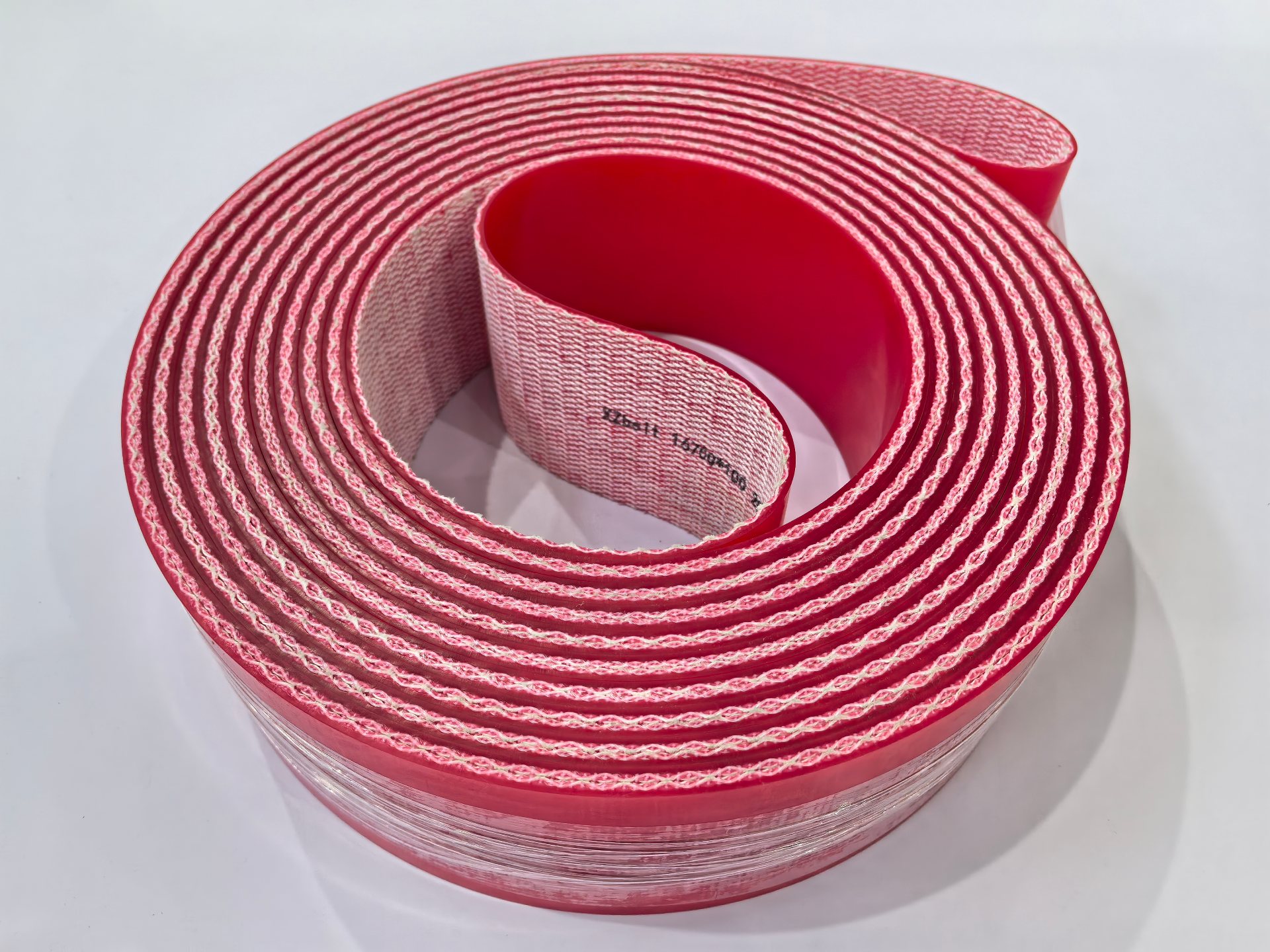
The XZBELT conveyor belt range is built from PU, TPU, PVC, PVK, PA, nylon, polyester, Nomex, felt, silicone or customised materials. Belts are supplied from 0.8 mm to 8 mm thick, with 1 to 3 plies, polyester, nylon or polyamide fabric, and top covers in PU, TPU, PVC, silicone or felt. The available temperature range is −20°C to +220°C for selected types, depending on material, which is why the process temperature must be stated before a family is chosen.
Selection logic, applied consistently:
- Hygiene-critical flat conveying where cleanability and a continuous surface dominate: evaluate PU, TPU or homogeneous constructions.
- General conveying, packaging and logistics duties: evaluate PVC, PU or PVK-type constructions according to load, wear and surface requirements.
- Incline conveying where friction alone cannot retain the product: consider patterned surfaces, cleats or sidewalls.
- Vacuum conveying: consider perforated belts or the specific vacuum-compatible construction the machine requires.
- High temperature: use a belt explicitly rated for the process temperature, and never infer heat resistance from colour or thickness.
Homogeneous belts versus modular belts
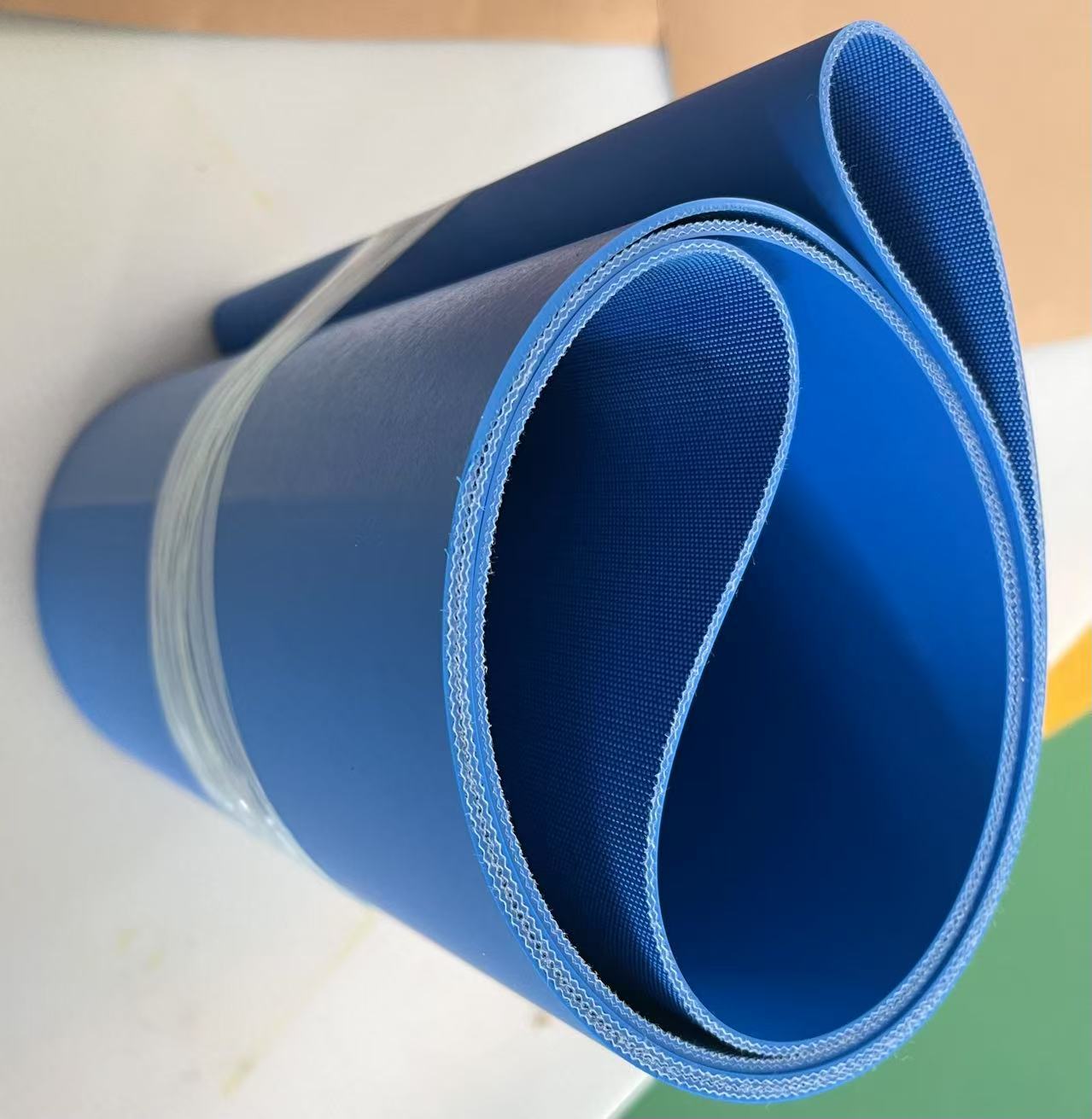
Both are established food-processing solutions, and they solve different problems because of their structures. A homogeneous belt provides a continuous thermoplastic surface with fewer hinges and joints where residues can accumulate, which is why it is chosen for hygiene-critical flat conveying where cleanability and a continuous surface are priorities. A plastic modular belt uses interlocking modules and sprocket drive, provides replaceable modules, and accommodates open-area, drainage, curved and complex conveyor layouts. The practical rule is to select according to the application rather than treating one belt type as universally superior. XZBELT supplies easy-to-clean homogeneous conveyor belts within its range, which places the continuous-surface option alongside conventional fabric-reinforced belts.
Construction details that decide hygiene and uptime
Two belts made from the same polymer can differ in cleanability because of small construction choices. A sealed edge closes the fabric path where water and residue can wick in. A smooth cover cleans faster than a deep pattern, but a pattern may be required to hold product on an incline. Perforation enables vacuum holding and drainage but adds openings that must be cleaned. These trade-offs are decided on the line, not in a catalogue.
What compliance actually requires
In the European Union, Regulation (EC) 1935/2004 provides the general framework for food-contact materials, and Regulation (EU) 10/2011 covers plastic materials and articles within its scope. In the United States, applicable FDA food-contact requirements apply. Verification means obtaining a supplier declaration or laboratory evidence for the exact article and the intended market — not a generic statement that a material family is approved. Buyers should identify the exact belt grade and request the applicable declaration. XZBELT operates an ISO 9001 quality management system; a quality management certificate is evidence of process control, not a substitute for food-contact documentation of the specific article.
Step-by-Step: How to Specify a Food Grade Conveyor Belt
The sequence below turns a vague requirement into a purchasable belt specification. Each step produces an input the next step needs.
Step 1 — Define the contact level
State whether the belt touches unwrapped food, ingredients, or only primary packaging. Record whether the product is wet, oily, sticky, dusty, frozen or hot. Contact level determines how strict the documentation and cleanability requirements must be.
Step 2 — Record the process environment
Capture continuous and peak temperature, wash-down frequency and chemicals, oil and fat exposure, incline angle, product weight per metre, line speed and start-stop behaviour. The XZBELT conveyor belt range spans −20°C to +220°C for selected types depending on material, so an approximate temperature is not sufficient to choose a family.
Step 3 — Choose the material family against the dominant duty
Use the selection logic in the previous section. Where hygiene and cleanability dominate, evaluate PU, TPU or homogeneous constructions. Where mechanical wear and general conveying dominate, evaluate PVC, PU or PVK-type constructions. Where heat dominates, select a belt explicitly rated for the process temperature.
Step 4 — Fix the construction
Define thickness within the 0.8–8 mm range, ply count from 1 to 3, fabric type, top cover and bottom cover. Specify the surface pattern — smooth, matt, diamond, golf, crescent or rough top — and confirm whether the surface must be non-marking, high grip or low friction.
Step 5 — Decide the splice and the supply form
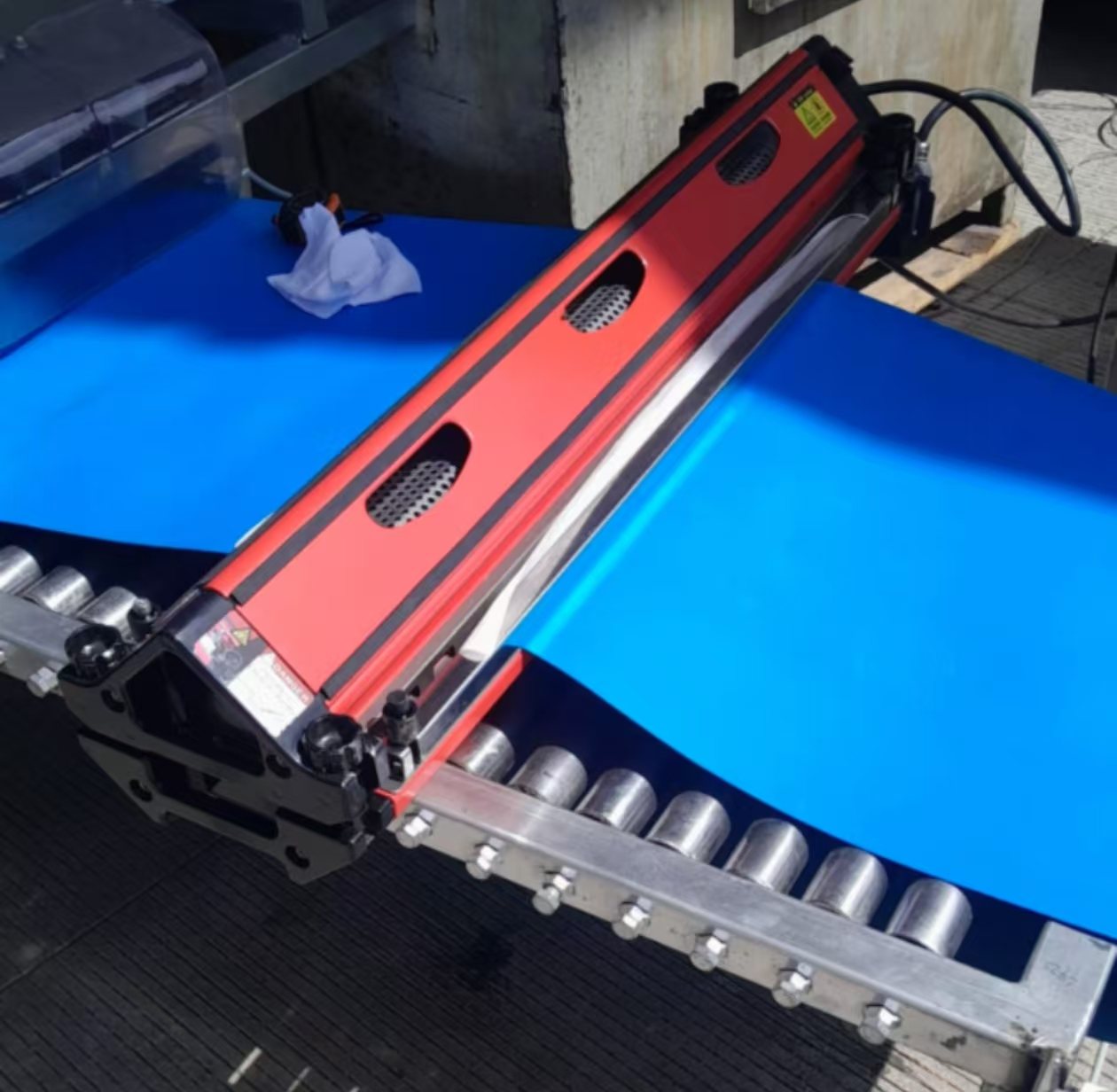
Available joint methods include hot melt joint, finger joint, Z-splice, stepped Z-splice, overlap joint, tooth joint, steel buckle and mechanical fastener. Supply form can be open belt, roll belt or endless belt, and the choice affects installation time, cleaning and joint strength. Whichever method is selected, check that the construction suits it, the belt ends are square, the press parameters are correct, the minimum pulley diameter is respected and the conveyor is aligned. Repeated joint failure is usually a system problem, not a belt problem.
Step 6 — Add fabrication only where the machine needs it
Cleats suit incline transport and product positioning. Sidewalls contain bulk or small items. V-guides support tracking on long or offset runs. Perforation supports vacuum conveying and drainage. Silicone, sponge and special surface coatings change release and grip behaviour. XZBELT provides single-side and double-side sidewalls, fabric reinforcement and lamination, cleats, perforation, silicone coating, sponge coating, special surface coating, belt splicing, and customised widths and lengths, so fabrication can be matched to the machine structure rather than retrofitted later.
Step 7 — Verify documentation, then release the order
Before production, confirm the exact article code, the food-contact declaration or laboratory evidence for the target market, and the dimensional tolerances for endless length and width. This is the step that prevents a technically correct belt from failing an audit.
| Information to send for an accurate quotation | Why it changes the specification |
|---|---|
| Belt dimensions, including width, open length or endless length | Determines available construction and splice length |
| Product carried and contact level | Sets hygiene, grip and release requirements |
| Continuous and peak process temperature | Selects the material family within the rated range |
| Wash-down chemicals, oils and fats | Drives cover material and resistance requirements |
| Load, line speed, incline and start-stop pattern | Affects carcass, tension and surface pattern |
| Pulley diameters and drive geometry | Constrains thickness, splice type and minimum bending |
| Required fabrication: cleats, sidewalls, V-guides, perforation | Adds processing steps and affects cleaning |
| Required food-contact documentation and target market | Determines which article can be offered |
| Existing belt specification or sample details | Shortens validation and reduces re-specification |
Use Cases: Where Food-Grade Belt Choices Differ
Wet and oily processing with frequent wash-down
Meat, poultry, fruit, vegetable and ready-meal lines run wet, oily and are washed frequently. The belt must tolerate hydrolysis, oil and cleaning chemicals, present a sealed hygienic surface and remain trackable after repeated wash cycles. In these conditions the continuous-surface option and the quality of the edge and splice matter more than raw thickness.
Bakery and confectionery
Bakery lines combine heat, sticky dough, flour and oil with frequent product release and transfer. The requirement set shifts toward high temperature resistance, a non-stick or easy-release surface, food-grade construction and abrasion resistance. A belt that performs well on a cold wash-down line is not automatically suitable after an oven.
Food packaging and container handling
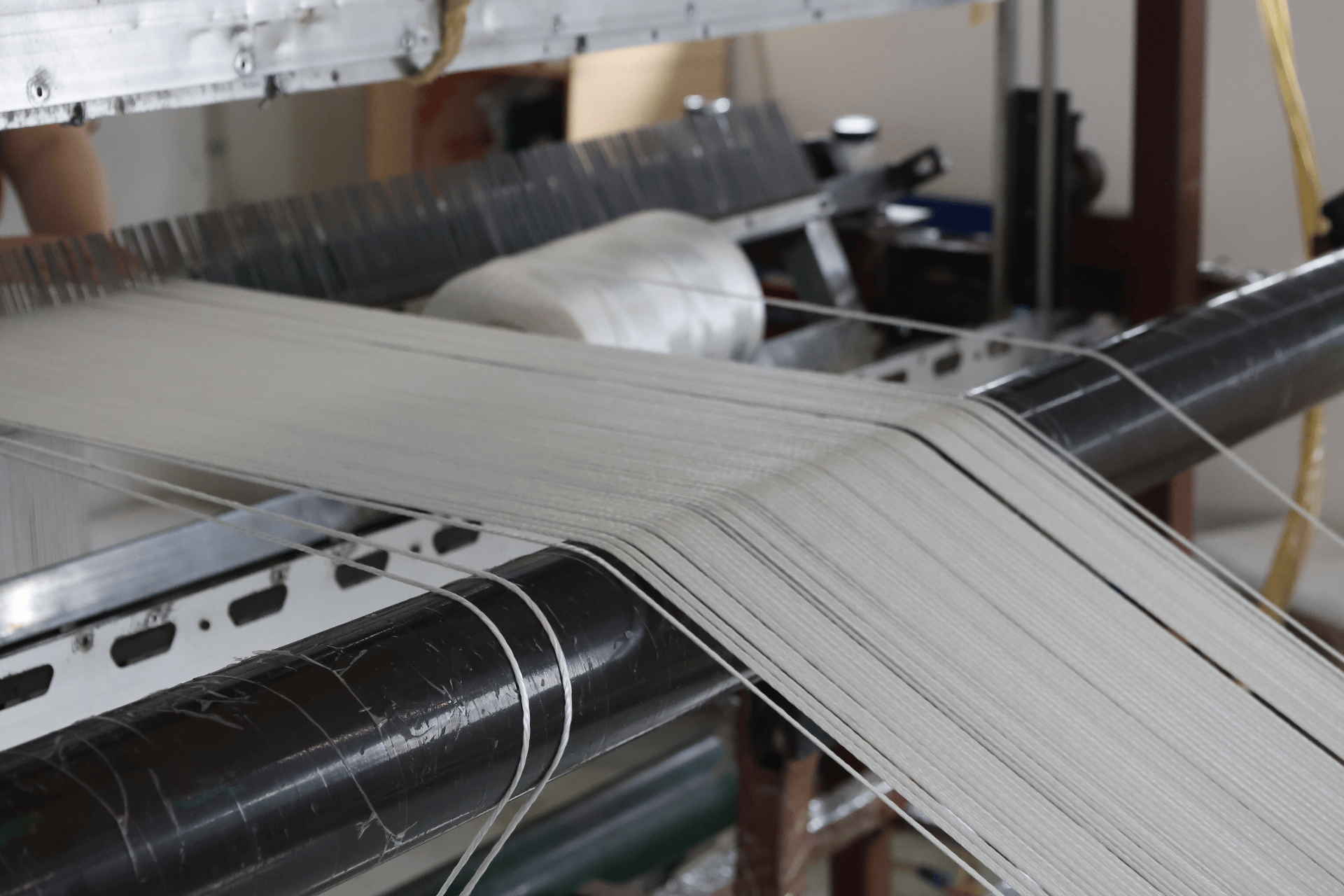
Where the belt handles primary packaging rather than exposed product, the priorities move to accurate positioning, low elongation, high grip or vacuum holding, wear resistance and dimensional stability. Perforated belts and profile fabrication are common here, and start-stop indexing puts additional stress on the splice.
Multi-product lines with frequent changeovers
Lines that switch between products need fast, verifiable cleaning. A smooth, sealed, continuous surface with a well-executed splice reduces cleaning time and removes the hinge and joint areas where residues accumulate. This is where a homogeneous construction is usually evaluated against a modular alternative, and the decision should follow the layout: flat hygiene-critical runs favour the continuous surface, while drainage, curves and sprocket-driven layouts favour modular belts.
Comparison: Material Families in a Food-Grade Specification
The table compares the families a food-line buyer is most likely to evaluate. It describes where each family is evaluated and what the XZBELT range offers; it does not rank them, because suitability depends on the line.
| Material family | Where it is typically evaluated | Construction options in the XZBELT range |
|---|---|---|
| PU / TPU | Hygiene-critical flat conveying and wash-down duties where cleanability and a continuous surface are priorities | 0.8–8 mm thickness, 1–3 plies, smooth to rough-top surfaces, hot melt, finger, Z-splice or stepped Z-splice joints |
| PVC and PVK | General conveying and packaging duties within the belt’s rated conditions | Same construction range, including cleats, sidewalls, V-guides and perforation |
| PE | Specific machine duties where the belt is matched to the equipment, such as tobacco machinery belts | Customised construction based on machine structure and process |
| Silicone and high-temperature types | Processes where the belt must be explicitly rated for the operating temperature | Selected types rated from −20°C to +220°C, with heat-resistant covers |
| Homogeneous | Hygiene-critical flat conveying where a continuous surface with fewer joints is the priority | Easy-to-clean homogeneous construction produced on a dedicated extrusion line |
| Felt and specialty surfaces | Release, grip, cushioning or specialised transfer duties | Felt covers, coatings and customised surface finishes |
Frequently Asked Questions
Is every food grade conveyor belt actually food-contact compliant?
No. Food-contact suitability must be verified for the exact grade or model and the relevant market documentation; material and colour alone do not establish compliance. In the European Union, Regulation (EC) 1935/2004 provides the general framework for food-contact materials and Regulation (EU) 10/2011 covers plastic materials and articles within its scope, while applicable FDA food-contact requirements apply in the United States. Buyers should identify the exact belt grade and obtain the supplier’s applicable declaration or laboratory evidence for the intended market.
Can a food grade conveyor belt be customised with cleats, sidewalls or perforation?
Yes, within the limits of the selected base belt. XZBELT provides secondary processing and fabrication including single-side and double-side sidewalls, fabric reinforcement and lamination, cleats, perforation, silicone coating, sponge coating, special surface coating, belt splicing, and customised widths and lengths. Compatibility depends on the belt material and the machine, so the fabrication should be confirmed together with the base belt rather than added afterwards.
What drives the cost of a food grade conveyor belt?
Cost is driven by the base material and carcass, belt thickness and ply count, width and length, surface pattern, and the amount of fabrication such as cleats, sidewalls, V-guides or perforation. The splice method and the documentation required for the target market also affect the offer, because a documented article and an undocumented one are not the same product. Comparing belts on price alone usually compares different specifications.
What information should I send to get an accurate quotation?
Send belt dimensions, the product carried and contact level, continuous and peak temperature, wash-down chemicals and oil exposure, load, line speed, incline, pulley diameters, required fabrication, the food-contact documentation your market requires, and the existing belt specification if one exists. XZBELT reviews customised belt solutions against machine structure, operating conditions, production processes and automation requirements, and the published catalogue can be downloaded as a starting reference.
Why does a food-line belt keep failing at the splice?
Repeated splice failure usually means the problem is not simply a bad belt. The joint may be unsuitable for the construction, prepared incorrectly, pressed under the wrong temperature, pressure or time, exposed to excessive tension, bent around too small a pulley, or run on a misaligned conveyor. Unsquared belt ends, incorrect fastener size, excessive load and minimum-pulley violations are recurring causes, and oil, solvent or chemical contamination is an additional suspect on wash-down lines. Correct the root cause before making another splice.
Conclusion
A food grade conveyor belt is a documented engineering choice, not a colour or a material label. The reliable sequence is to define the contact level, record the process environment, choose the material family against the dominant duty, fix the construction and splice, add fabrication only where the machine needs it, and verify the food-contact documentation for the exact article before the order is released.
XZBELT manufactures conveyor belts, timing belts and specialty industrial belts at two production bases with a combined area of approximately 30,000 m², including a joint-venture base with 12 production lines — 2 PU and 10 PVC — and an annual production capacity of 2,000,000 units. The company holds ISO 9001 certification and 11 patents, including 2 invention patents and 9 utility model patents, and has served more than 1,000 customers in over 150 countries and regions.
Next Step
Send your line data — product, temperature, wash-down chemistry, pulley diameters and required fabrication — and the XZBELT team will match it to a conveyor belt construction and the documentation your market requires. You can download the product catalogue here: XZBELT product catalogue (PDF).
Email: stevensang@xzbelt.com | Tel / WhatsApp: +86 139-1694-6090 | Website: www.xzbelt.com
Have Questions or Need More Details?
Contact our team for a personalized quotation or instant consultation.
Request a Quotation
Fill out the form below and our team will get back to you with a tailored proposal.
WhatsApp Direct Chat
Prefer to chat in real-time? Message us on WhatsApp for instant assistance & quick answers.
- Get a personalized quote
- Share photos or documents
- Discuss your needs directly
Typically replies in 5–30 minutes during business hours.