PE Conveyor Belt: A Light-Duty Belting Guide for Buyers
and Engineers
A PE conveyor belt is a light-duty conveyor belt whose construction belongs to the polyethylene (PE) family of thermoplastic belting. It is specified by machine geometry, conveyed product and process conditions rather than by colour or thickness alone. XZBELT — the brand of Xuanze Industrial Drive Systems (Shanghai) Co., Ltd., an industrial belt manufacturer established in 2013 — lists PE Conveyor Belt as one of the model designations in its PVC, PU, TPU, PE and PVK conveyor belt range, and names PE conveyor belts for tobacco machinery among its representative specialty products.
This guide explains what a PE conveyor belt is, where it fits in a light-duty conveying line, how it differs from PVC and PU constructions in documented coverage, and which information a buyer or engineer must confirm before a belt is cut, fabricated and spliced.
Short answer. A PE conveyor belt is a conveyor belt built in a polyethylene-based light-duty construction. In practice it is ordered for a defined machine and process: the belt body, surface, joint, edge and any cleats or perforation are confirmed against the conveyor geometry, the product being moved and the cleaning or temperature regime. XZBELT supplies PE belting inside a broader conveyor belt range that includes PVC, PU, TPU, PVK, homogeneous, felt, PTFE, silicone, cotton and nylon designs, which allows the same fabrication and splicing service to be applied across materials.
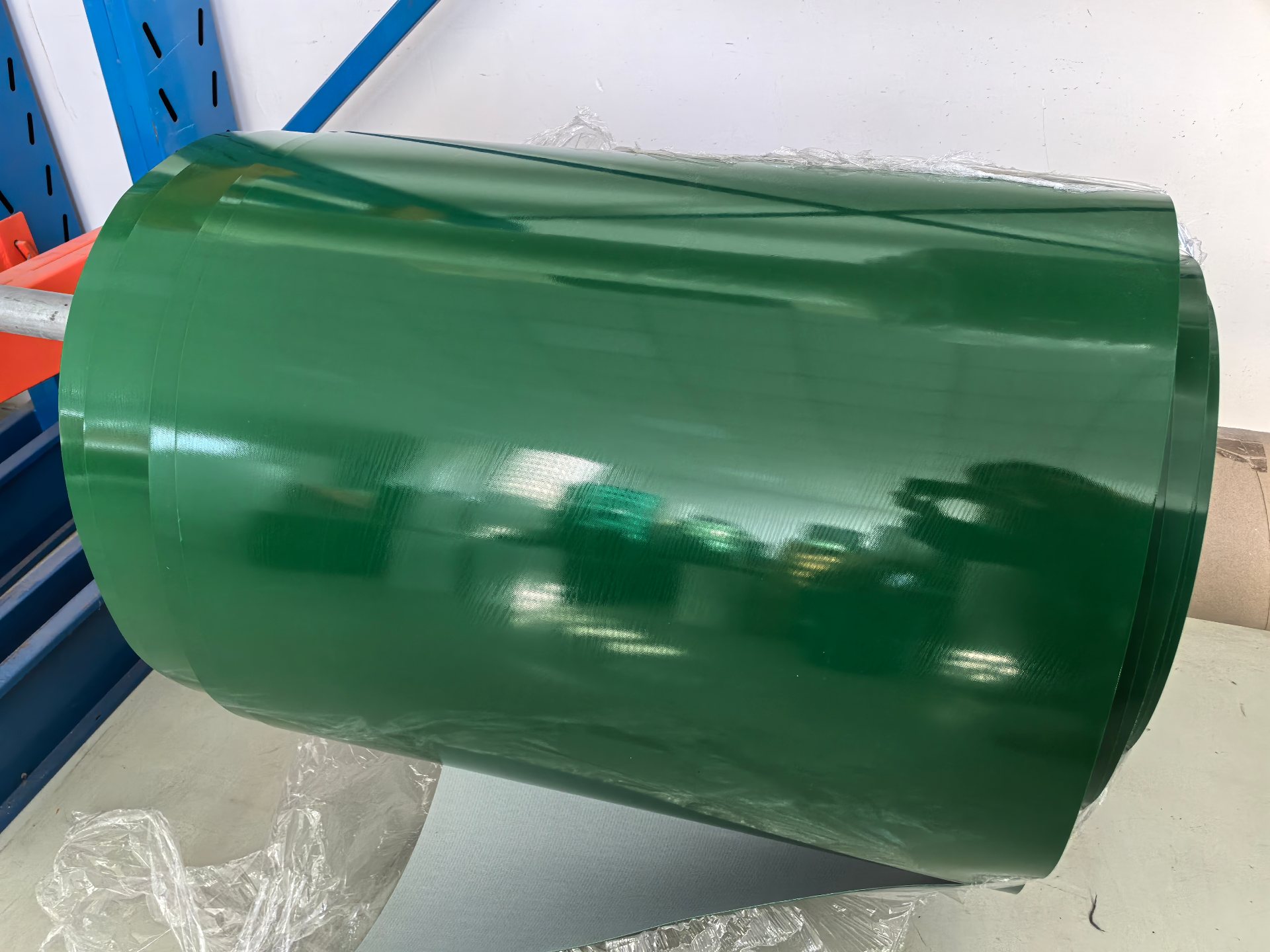
Light-duty thermoplastic conveyor belting from XZBELT's conveyor belt range, which includes PVC, PU, TPU, PE and PVK model designations. Surface, thickness and joint are confirmed per application.
Why “PE conveyor belt” is a starting point, not a specification
The phrase identifies a material family. It does not identify a belt that will run on a given conveyor. A belt is one component inside a mechanical system, and the failure modes that buyers actually experience are usually system failures rather than material failures.
The practical consequences are documented in the questions buyers ask most often. A thicker conveyor belt does not automatically last longer: service life depends on carcass, cover material, tension, pulley size, wear, joint, tracking and the operating environment. Replacing a belt using only width and length is likewise described as risky, because material, thickness, surface, joint, pulley geometry and operating conditions all influence whether the replacement will run correctly.
Splice behaviour is a good illustration. Repeated joint failure is usually not simply “a bad belt”. Documented causes include an incorrect splice type for the construction, incorrect joint preparation, belt ends that are not square, incorrect press temperature, pressure or time, excessive belt tension, a pulley below the minimum diameter, conveyor misalignment and chemical contamination. Every one of those causes sits outside the polymer itself.
Industry background: where light-duty PE belting sits
Light-duty thermoplastic belting is a large and still expanding segment of the conveyor belt market. Mordor Intelligence forecasts the global conveyor belt market at 6.08 billion USD in 2026, while Cognitive Market Research reports a 6.2% compound annual growth rate for the light-weight conveyor belt segment over 2025–2033. Light-weight belts are the segment in which PVC, PU and PE constructions compete, so demand for PE belting moves with the same drivers: packaging automation, food and tobacco processing, logistics throughput and general light conveying.
Two published standards frame the technical conversation. ISO 21183-1:2026 sets out the characteristics of light conveyor belts, which is the category PE belts belong to. EN 12882:2015 covers safety requirements for general-purpose conveyor belts in the European Union. Both are relevant when a buyer specifies a belt for a line that must satisfy an internal engineering standard or a market access requirement.
What the standards and market reports do not do is tell an engineer which PE grade to put on a specific machine. That decision still depends on the product being conveyed, the pulley diameters, the required grip, the cleaning method and the joint that the maintenance team can actually reproduce on site.
What XZBELT supplies within the PE belt family
XZBELT is a Shanghai-based manufacturer and supplier of specialty industrial belts, founded in 2013 and recognised as a Shanghai High-Tech Enterprise during both the 2019–2022 and 2022–2025 certification periods. Its conveyor belt range covers PVC Conveyor Belt, PU Conveyor Belt, TPU Conveyor Belt, PE Conveyor Belt, PVK Conveyor Belt, Food Grade Conveyor Belt, Homogeneous Conveyor Belt, Felt Conveyor Belt, PTFE Conveyor Belt, Silicone Conveyor Belt, Cotton Conveyor Belt and Nylon Conveyor Belt.
For that family, the published range-level parameters are:
- Thickness: 0.8–8 mm, customized.
- Number of plies: 1–3 plies, customized.
- Temperature range: −20 °C to +220 °C for selected types, depending on material and customized to the application.
- Surface patterns: smooth, matt, diamond, golf, crescent, rough top, customized.
- Surface finish options: smooth, matte, rough, high grip, low friction, customized.
- Joint methods: hot melt joint, finger joint, Z-splice, stepped Z-splice, overlap joint, tooth joint, steel buckle and mechanical fastener, customized.
- Supply form: open belt, roll belt or endless belt, customized.
- Edge treatment: cut edge or sealed edge, customized.
- Selectable features: oil resistance, cut resistance, wear resistance, anti-static, antimicrobial, high grip, low friction, food grade and high-temperature resistance, customized.
Fabrication is handled in-house as secondary processing: single-side and double-side sidewalls, fabric reinforcement and lamination, cleats, perforation, silicone coating, sponge coating, special surface coating, belt splicing, and customized widths and lengths. This is the part of the offer that matters most for PE belting, because a PE belt is rarely useful straight off a roll — it becomes useful when the profile, perforation, edge and joint are matched to the machine.
The manufacturing base behind that service covers approximately 30,000 m² across two sites, with annual output of 2,000,000 units. The joint-venture roll-material base runs 12 production lines — 2 PU lines and 10 PVC lines — and one PU extrusion line has an annual capacity of approximately 1,000,000 m². Quality management is certified to ISO 9001, and the company holds 11 patents, including 2 invention patents and 9 utility model patents.
How PE fits inside that production picture
The published line data for the joint-venture base refers to PU and PVC roll-material production. PE belt supply sits inside the company's specialty and customized belt business, which combines secondary processing capability with supply-chain integration and long-term cooperation with international belt brands such as Habasit, Ammeraal Beltech and Forbo Siegling. For a buyer, the practical meaning is straightforward: PE constructions are quoted as engineered items against a machine and a process, and the fabrication, splicing and quality control steps are the same steps used for the rest of the range.
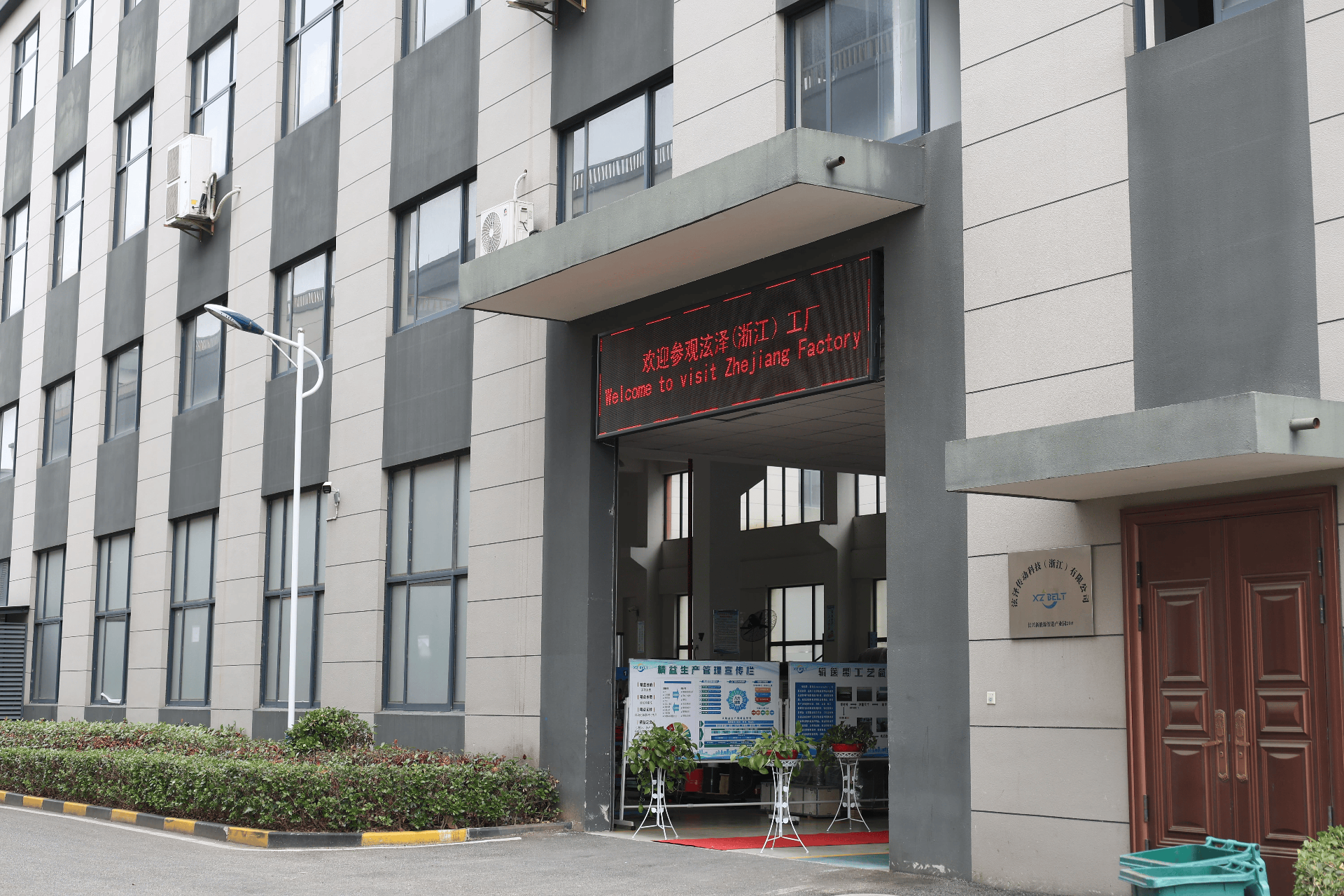
Production and processing area at one of XZBELT's two manufacturing bases, which together cover approximately 30,000 m².
Step-by-step: how to specify a PE conveyor belt correctly
The sequence below reflects how a light-duty belt is actually quoted. Skipping a step usually reappears later as tracking trouble, edge damage or a splice that opens.
1. Describe the conveyed product, not just the belt
Product weight, shape, surface condition, temperature at the belt, oil or dust load, and whether the product must release cleanly all drive material and surface choice. A sticky or lightweight product and a rigid heavy one rarely want the same cover.
2. Record the conveyor geometry
Pulley diameters (drive, tail and any nose pulley), centre distance, belt speed, take-up travel, incline angle and whether the belt runs on a slider bed or rollers. Minimum pulley diameter is a documented cause of splice and flex fatigue problems when it is ignored, and reverse bending is more demanding than forward running.
3. Confirm the material family against the duty
PE, PVC, PU/TPU and PVK all appear in the XZBELT range, and each is quoted for a defined duty. Where a process has an established belt specification, the fastest route is to send the existing belt data and let the supplier confirm the equivalent construction rather than to re-invent the specification.
4. Fix thickness and ply count inside the published window
The range runs from 0.8 mm to 8 mm in 1–3 plies, customized. The number has to satisfy stiffness, pulley bending and splice strength at the same time — a thicker belt is not automatically a longer-lasting one.
5. Select the surface and grip level
Smooth, matt, diamond, golf, crescent and rough-top patterns are available, with finishes from low friction to high grip. Incline conveying, accumulation and product release each point to a different answer.
6. Decide the fabrication package
Cleats, sidewalls, V-guides and perforation are all available as customized secondary processing, along with silicone coating, sponge coating and special surface coating. Perforation is normally tied to vacuum holding or drainage; cleats and sidewalls to incline retention; V-guides to tracking.
7. Choose the joint and supply form together
Hot melt, finger, Z-splice, stepped Z-splice, overlap, tooth, steel buckle and mechanical fastener joints are all listed, and the belt can be supplied open, in rolls or endless. The right joint is the one the maintenance team can reproduce to the required squareness, temperature, pressure and time — not simply the strongest option on paper.
8. Confirm documentation, then sample
Ask for the datasheet for the exact article, the applicable declaration where food contact or a specific market requirement applies, and a sample or first article for trial. Only after the sample runs on the actual conveyor should the production length be released.
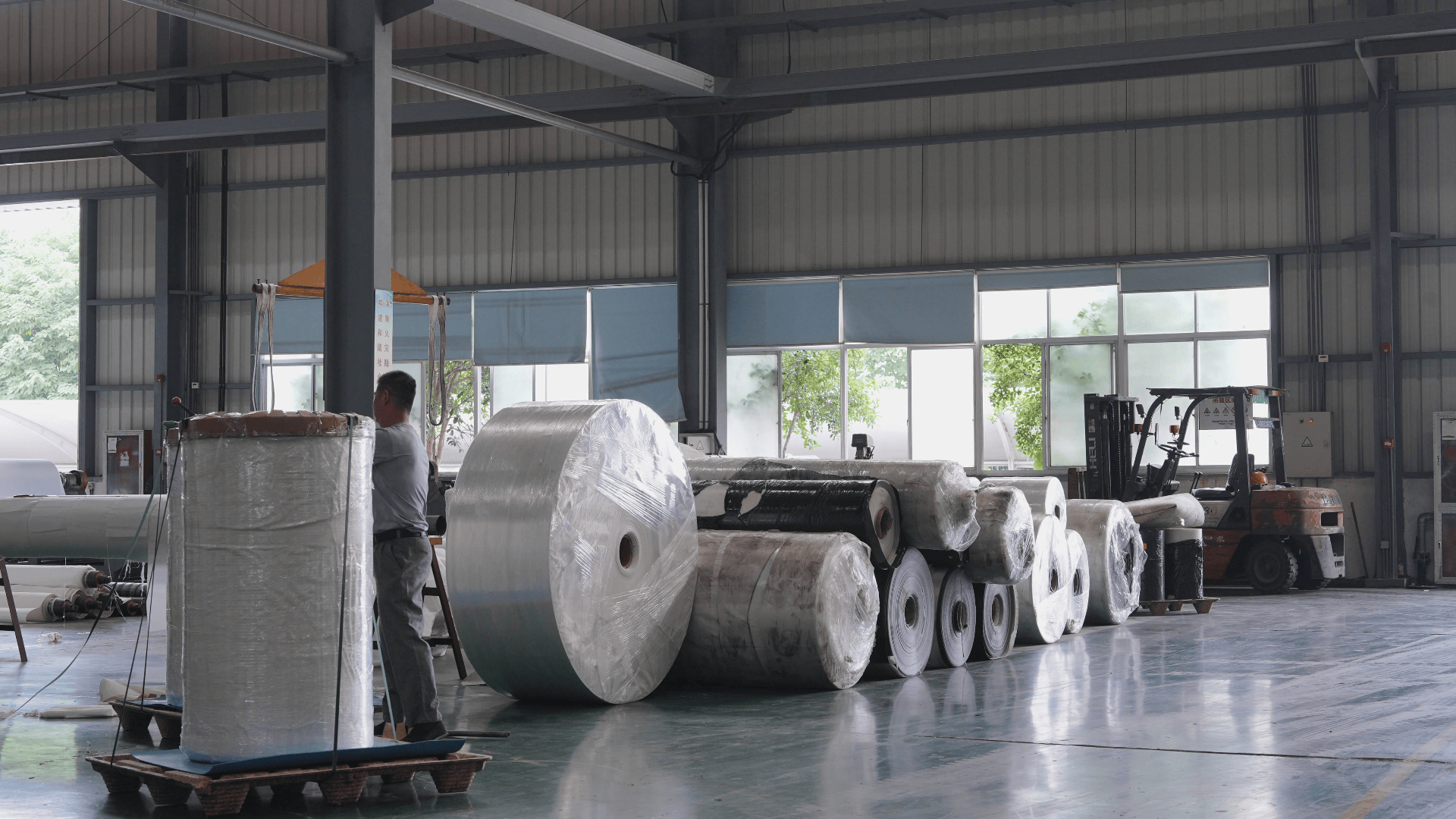
Secondary processing — cleats, sidewalls, perforation, coating and splicing — turns a roll-material belt into a machine-specific part.
Where PE conveyor belts are used
XZBELT documents PE conveyor belts for tobacco machinery as a representative specialty product. That single example explains the logic of the material: tobacco processing combines dust, changing temperature, inclined conveying and continuous operation, on equipment such as tobacco feeders, conditioning drums, cutters, dryers, cigarette machines and packaging machines. The stated requirements for that environment include pyrolysis-related requirements, food-contact-type compliance where applicable, dust control, profiles and cleats, and temperature resistance.
The same belt family is applied across the wider conveyor belt scenarios that XZBELT serves. The table below summarises the documented scenario conditions; the specific material grade for each must still be confirmed against the datasheet.
| Application scenario | Documented working conditions | Typical belt requirements |
|---|---|---|
| Tobacco processing (green leaf, primary processing, cigarette production, packaging) | Dust, changing temperature, inclined conveying, continuous processing | Pyrolysis requirements, food-contact-type compliance where applicable, dust control, profiles and cleats, temperature resistance |
| Packaging machinery | High speed, frequent start-stop, precise positioning, repetitive cycles | Accurate positioning, low elongation, high grip, vacuum perforation, wear resistance, dimensional stability |
| Logistics and intralogistics | High throughput, long running hours, repeated parcel impact, accumulation and sorting | Wear resistance, anti-static performance, low noise, stable tracking, high throughput |
| Food processing and beverage | Wet, oily, frequent washing, food contact, continuous production | Food-contact compliance, easy cleaning, hydrolysis resistance, oil and chemical resistance, sealed hygienic surface |
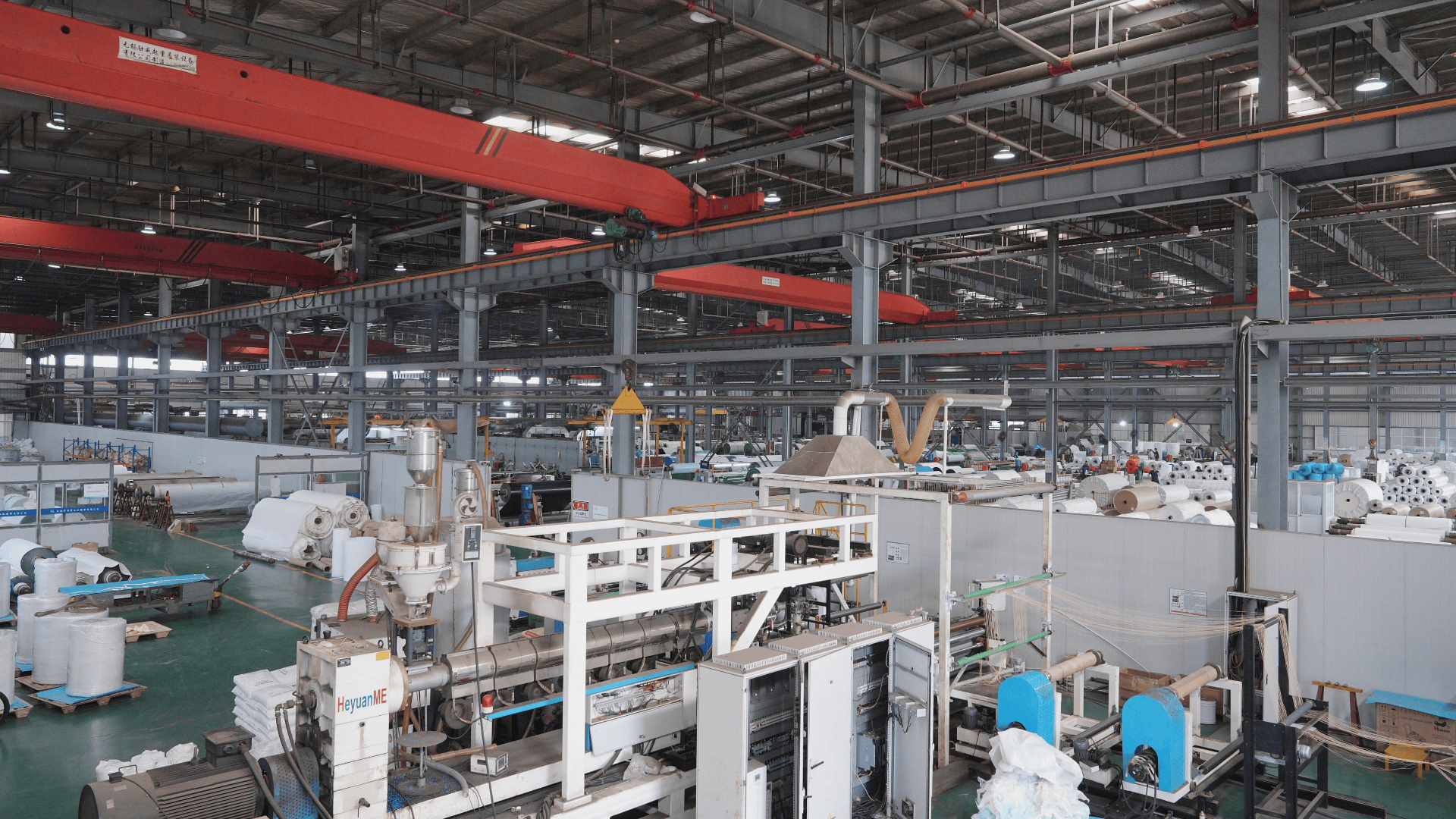
Inspection and quality management are part of the supply process; XZBELT operates an ISO 9001 quality management system.
Comparison: what is actually documented for PE, PVC, PU and PVK belts
The table below compares only what the supplied XZBELT range data and verifiable third-party sources support. Where a property is not separately documented at material level, the table says so instead of estimating a value.
| Comparison point | PE conveyor belt | PVC conveyor belt | PU / TPU conveyor belt | PVK conveyor belt |
|---|---|---|---|---|
| Position in the XZBELT range | Listed model designation | Listed model designation; PVC roll-material lines at the joint-venture base | Listed model designation; PU extrusion lines at the joint-venture base | Listed model designation |
| Documented specialty use in XZBELT material | PE conveyor belts for tobacco machinery | No separate specialty use listed in the supplied material | No separate specialty use listed in the supplied material | No separate specialty use listed in the supplied material |
| Range-level thickness | 0.8–8 mm, customized | 0.8–8 mm, customized | 0.8–8 mm, customized | 0.8–8 mm, customized |
| Range-level temperature window | −20 °C to +220 °C for selected types, depending on material | Same range-level statement; the grade governs | Same range-level statement; the grade governs | Same range-level statement; the grade governs |
| Fabrication options | Cleats, sidewalls, V-guides, perforation, coatings, splicing | Same fabrication service | Same fabrication service | Same fabrication service |
| Joint options | Hot melt, finger, Z-splice, stepped Z-splice, overlap, tooth, steel buckle, mechanical fastener | Same joint list | Same joint list | Same joint list |
| Third-party market or standards reference | ISO 21183-1:2026 covers light conveyor belt characteristics | PVC conveyor belt segment reported at 5.8 billion USD in 2025 (Dataintelo); scope definitions vary between reports | No separate published figure used here | No separate published figure used here |
| Before ordering | Request the datasheet for the exact PE grade | Request the datasheet for the exact PVC grade | Request the datasheet for the exact PU/TPU grade | Request the datasheet for the exact PVK grade |
The honest conclusion from that table is that material-level property differences between PE, PVC, PU and PVK cannot be ranked from the published range data alone. What can be ranked is fit: PE belting is documented for tobacco machinery and light-duty conveying; PVC and PU have the deepest published production data in this range; and all four share the same fabrication, jointing and quality process. Buyers who need a material property comparison — hydrolysis behaviour, oil resistance, low-temperature flexibility or surface energy — should request the datasheet for each candidate grade and compare like for like.
Frequently asked questions
What is a PE conveyor belt used for?
A PE conveyor belt is used for light-duty conveying where a polyethylene-based thermoplastic construction is matched to the machine and the product. XZBELT documents PE conveyor belts for tobacco machinery among its representative specialty products, in an environment that combines dust, changing temperature, inclined conveying and continuous operation. The same belt family is applied across packaging machinery, logistics and intralogistics, food processing and general conveying, with the specific grade confirmed per application.
How does a PE conveyor belt differ from a PVC or PU belt?
All three are light-duty thermoplastic constructions listed as separate model designations in the XZBELT conveyor belt range, and all three share the same range-level thickness window of 0.8–8 mm, the same joint list, and the same fabrication service including cleats, sidewalls, V-guides and perforation. The documented difference is application coverage: PE belting is specifically named for tobacco machinery, while PVC and PU roll-material production is documented at the joint-venture base with 10 PVC lines and 2 PU lines. Grade-level property differences should be verified from the datasheet for each article.
Is a PE conveyor belt automatically food-contact approved?
No. Material and colour alone do not establish food-contact compliance. The exact article supplied should have appropriate food-contact documentation for the target market and intended use, and buyers should identify the exact belt grade and obtain the supplier's applicable declaration or laboratory evidence. Where the target markets are the European Union and the United States, the relevant references include Regulation (EC) 1935/2004, Regulation (EU) 10/2011 and applicable FDA food-contact requirements. Food-contact suitability must be verified for the exact grade or model rather than assumed from the material family.
What information should I send to a conveyor belt manufacturer for a PE belt quote?
Send the belt dimensions and required length, the existing belt specification if one exists, the conveyed product and its temperature at the belt, oil, dust or chemical exposure, line speed, pulley diameters including reverse bending, take-up arrangement, required surface and grip, any cleats, sidewalls, V-guides or perforation, the preferred joint type, and the supply form — open, roll or endless. For food or regulated applications, state the target market so the correct declaration can be issued. That package is enough to quote a sample or a first article without a site visit.
How do I evaluate conveyor belt manufacturers for a PE belt project?
Check four things that are visible before an order. First, whether the manufacturer's range actually covers PE alongside PVC, PU and PVK, because a supplier who only stocks one material family will quote around the gap. Second, whether fabrication and splicing are in-house, since cleats, sidewalls, perforation, coating and joint quality determine whether the belt runs. Third, whether quality management is documented — XZBELT operates an ISO 9001 quality management system and holds 11 patents, including 2 invention patents and 9 utility model patents. Fourth, whether the supplier can serve your market: XZBELT was founded in 2013, has served customers in more than 150 countries and regions, and has supplied products and services to internationally recognised companies including Mercedes-Benz, POSCO, Nike and Baosteel.
Next step: sample, quote or datasheet
If you are replacing a belt on a tobacco line, a packaging machine or a light-duty conveyor, the fastest route is to send the current belt data and the machine details. XZBELT can confirm the PE construction, the fabrication package and the joint, then issue a sample or a first article for trial before the production length is released.
Email stevensang@xzbelt.com · Tel / WhatsApp +86 139-1694-6090 · Website www.xzbelt.com
Product catalogue for download: XZBELT industrial belt catalogue (PDF)
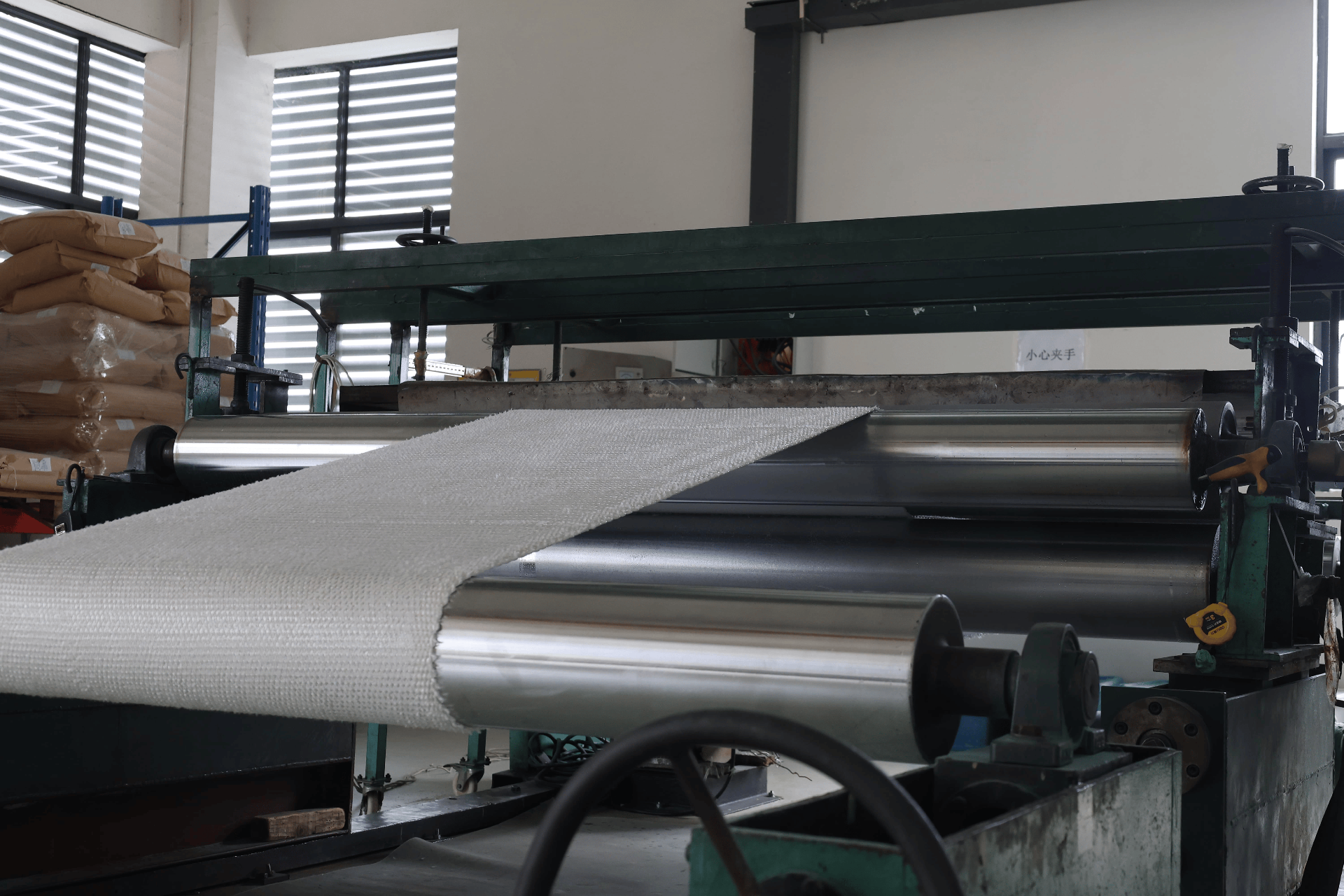
XZBELT operates through two manufacturing bases with a combined production area of approximately 30,000 m² and an annual output of 2,000,000 units.
Conclusion
A PE conveyor belt is a light-duty thermoplastic belt that only becomes a reliable component when the construction, surface, fabrication and joint are confirmed together against the conveyor and the process. The material family sets the boundary; the specification sets the performance. XZBELT's conveyor belt range covers PE, PVC, PU, TPU and PVK constructions with a shared thickness window of 0.8–8 mm, shared joint methods and shared secondary processing, which means the selection conversation can stay technical rather than commercial. Buyers who need material-level evidence for a specific PE grade should ask for the datasheet for that exact article, and should validate the choice with a sample before committing to a production run.
Have Questions or Need More Details?
Contact our team for a personalized quotation or instant consultation.
Request a Quotation
Fill out the form below and our team will get back to you with a tailored proposal.
WhatsApp Direct Chat
Prefer to chat in real-time? Message us on WhatsApp for instant assistance & quick answers.
- Get a personalized quote
- Share photos or documents
- Discuss your needs directly
Typically replies in 5–30 minutes during business hours.