PU Conveyor Belt Guide: Materials, Selection, and Sourcing
PU conveyor belts are conveyor belts in which polyurethane (PU) or thermoplastic polyurethane (TPU) is used as a belt material or cover. XZBELT lists PU and TPU among the materials and top-cover options in its conveyor belt range, alongside PVC, PVK, silicone, felt, and other constructions.
The practical sourcing question is not only “PU or PVC?” A PU belt has to match the conveyor geometry, the product being moved, the cleaning and temperature regime, the joint method, and any food-contact or documentation requirement. This guide explains the main selection points and the information a buyer should confirm before ordering.
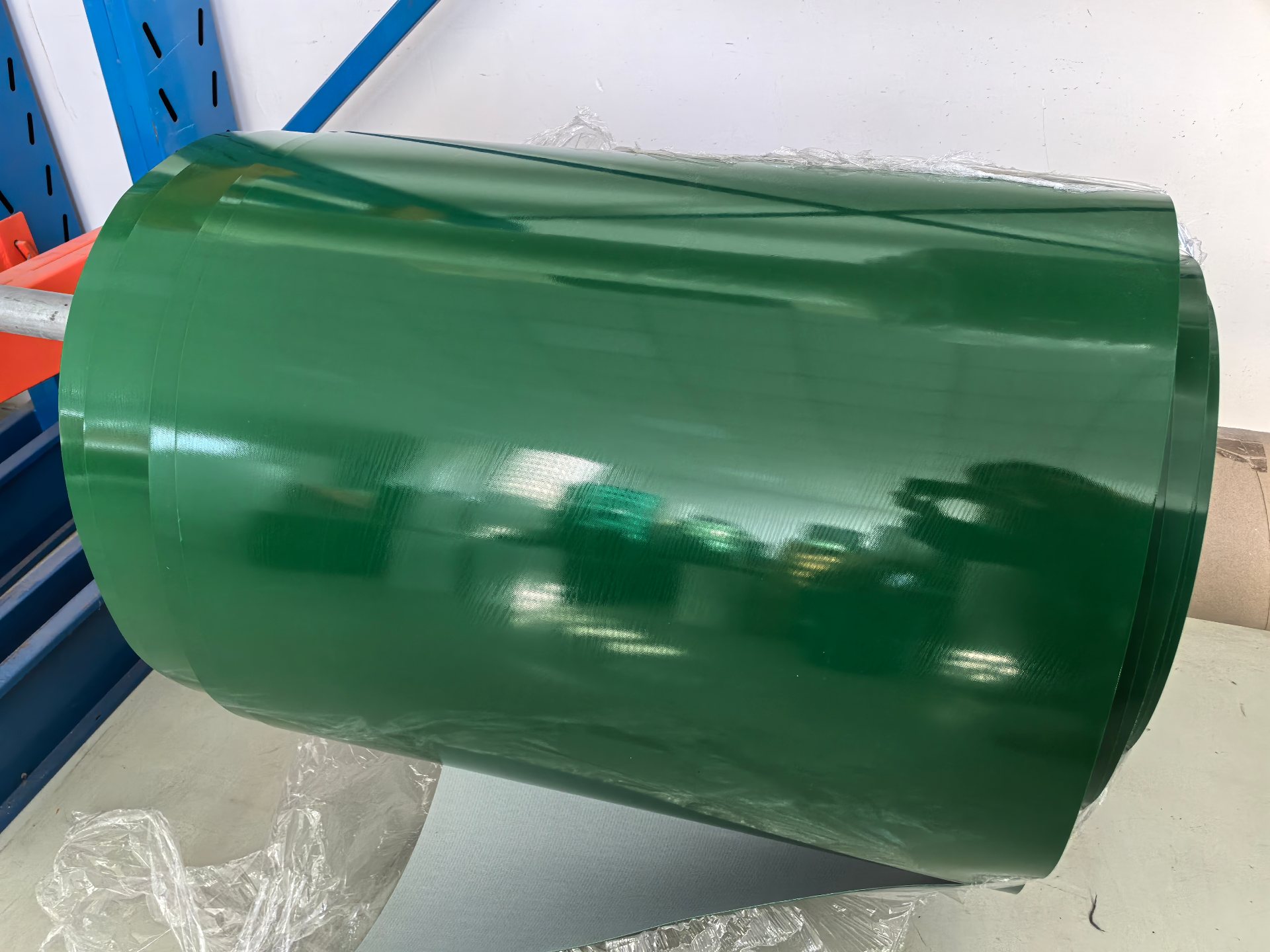
Cover image: conveyor belt product family from XZBELT. The final PU specification is confirmed by material grade, construction, and application data.
What a PU conveyor belt is—and what it is not
A PU conveyor belt is a light-duty conveyor belt construction that uses polyurethane as a material or surface cover. In XZBELT’s product data, “PU Conveyor Belt” and “TPU Conveyor Belt” are listed model designations within a wider conveyor belt family that also includes PVC, PE, PVK, food grade, homogeneous, felt, PTFE, silicone, cotton, and nylon belts.
PU is not a single, fixed specification. The same product family can vary in material, top cover, bottom material, thickness, number of plies, surface pattern, joint method, and fabricated features. XZBELT’s conveyor belt data lists thickness from 0.8 mm to 8 mm, 1–3 plies, and a temperature range of −20°C to +220°C for selected types, depending on material. Those are family-level figures; the exact belt grade must be confirmed for the application.
Answer first: specify a PU conveyor belt by application and construction, not by color or thickness alone. Material grade, surface, joint, dimensions, pulley geometry, and documentation all affect whether the belt works.
Problem definition: why PU belt sourcing goes wrong
Most sourcing errors happen before a quotation is issued. A buyer may replace a belt using only width and length, or assume that a thicker belt will last longer. XZBELT’s conveyor belt FAQ notes that replacing a belt using only width and length is risky, because material, thickness, surface, joint, pulley geometry, and operating conditions also need to be checked. It also notes that a thicker belt does not automatically last longer; service life depends on carcass, cover material, tension, pulley size, wear, joint, tracking, and the operating environment.
Food-contact status is another common assumption. A PU belt is not automatically food grade. Material and color alone do not establish food-contact compliance. The exact belt grade or article supplied should have appropriate documentation for the target market and intended use.
Tracking problems are also often treated as a belt defect. XZBELT’s FAQ lists possible causes including misalignment, off-center loading, tension, contamination, splice alignment, and machine geometry. A belt change alone may not correct a conveyor that is misaligned or loaded off-center.
These points matter at the awareness and research stage because they change the specification. A buyer who starts with the conveyor, the product, and the process will ask better questions than a buyer who starts with a color swatch.
Industry background: a light-weight segment with more specification pressure
Conveyor belts sit inside a large industrial components market. Mordor Intelligence estimates the global conveyor belt market at 6.08 billion USD in 2026. The light-weight segment, which includes PVC, PU, and PE belts, is forecast to grow at a 6.2% compound annual growth rate from 2025 to 2033, according to Cognitive Market Research.
Food-grade conveying is a significant part of that demand. Dataintelo reports that Asia Pacific accounted for 38.4% of food-grade conveyor belt revenue in 2025. Trade data also shows the scale of the category: a secondary analysis of UN Comtrade data published by HS Code Match reports China’s exports of vulcanized rubber conveyor belts under HS 4010.11 at 248.1 million USD in 2024.
Standards are part of the background. ISO 21183-1:2026 covers characteristics of light conveyor belts. EN 12882:2015 sets safety requirements for general-purpose conveyor belts in the European Union. These standards do not replace an application review, but they show why buyers increasingly ask for specification-level information rather than a generic “PU belt” description.
The commercial effect is simple: a supplier needs more than a width and a length to quote accurately, and a buyer needs more than a material name to compare offers.
Detailed solution: how XZBELT approaches PU conveyor belt supply
XZBELT—Xuanze Industrial Drive Systems (Shanghai) Co., Ltd.—is an industrial belt manufacturer established in 2013. The company operates through two manufacturing bases with a combined production area of approximately 30,000 square meters. Its conveyor belt range includes PVC, PU, PE, timing, power transmission, silicone, high-temperature, polyamide flat, coiler wrapper, easy-to-clean homogeneous, and seamless belts.
For PU and PVC roll materials, the joint-venture production base has 12 production lines, including 2 PU production lines and 10 PVC production lines. The PU production system includes one easy-to-clean homogeneous conveyor belt extrusion line with a maximum width of 1.2 meters and an annual production capacity of approximately 1,000,000 square meters, plus one 3.5-meter-wide PU extrusion line with an annual production capacity of approximately 73,000 square meters. These are production facts, not a claim that every PU belt is the same; the point is that the supply base can support different constructions and widths.
XZBELT also provides secondary processing and fabrication: single-side and double-side sidewalls, fabric reinforcement and lamination, cleats, perforation, silicone coating, sponge coating, special surface coating, belt splicing, and customized widths and lengths. The company states that its customization work is based on customers’ machine structures, operating conditions, production processes, and automation requirements.
Quality and documentation support the sourcing decision. XZBELT holds ISO 9001 Quality Management System certification and 11 patents, including 2 invention patents and 9 utility model patents. It reports experience serving more than 1,000 customers and customers in more than 150 countries and regions. For a buyer, those facts are relevant only when they connect to the actual belt specification, inspection, and supply requirement.
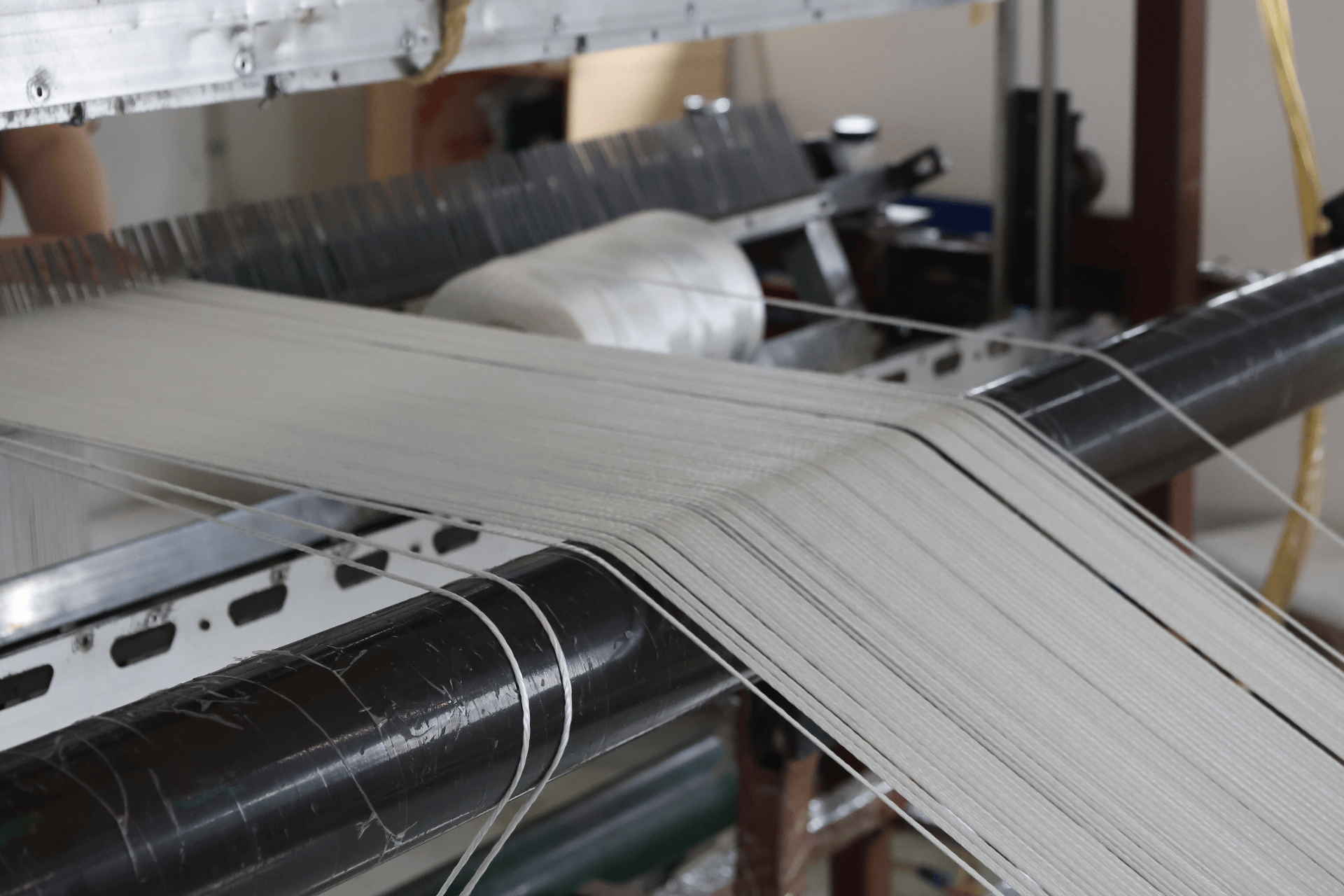
XZBELT operates two manufacturing bases with a combined production area of approximately 30,000 square meters.
Step-by-step breakdown: specifying a PU conveyor belt
1. Define the conveyed product and the environment
Start with what the belt carries and what it is exposed to: product weight and shape, temperature, oil, water, cleaning chemicals, dust, and whether the product is food. XZBELT’s conveyor belt data lists oil-resistant, cut-resistant, wear-resistant, anti-static, antimicrobial, high-grip, low-friction, food-grade, and high-temperature-resistant features as available options, depending on the belt.
2. Select the material grade and construction
Confirm whether the application needs PU, TPU, PVC, PVK, or another material. PU and TPU are listed as material and top-cover options, but the exact grade still needs to be matched to the application. Check thickness, number of plies, top cover, bottom material, and fabric material. The family data allows 0.8–8 mm thickness and 1–3 plies, customized according to the belt structure.
3. Confirm dimensions, joint, and pulley geometry
Width, length, and endless length should be confirmed before production. Joint options include hot melt, finger, Z-splice, stepped Z-splice, overlap, tooth, steel buckle, and mechanical fastener, depending on construction. Minimum pulley diameter is customized according to belt structure. A joint that is unsuitable for the belt or the pulley can create a repeat failure even if the belt material is correct.
4. Choose the surface and fabricated features
Surface patterns include smooth, matt, diamond, golf, crescent, and rough top. Fabrication options include cleats for incline transport, sidewalls, V-guides, and perforation for vacuum conveyors. These features change the belt’s handling behavior and must be matched to the machine interface, not selected as an afterthought.
5. Verify food-contact or other compliance documentation
If the belt will contact food, ask for the exact grade and the applicable declaration or laboratory evidence for the target market. In the EU, Regulation (EC) 1935/2004 provides the general framework for food-contact materials, and Regulation (EU) 10/2011 covers plastic materials within its scope. US applications may require applicable FDA food-contact requirements. A generic “food grade” label is not a substitute for the exact article documentation.
6. Build a sample and quotation request
A useful request includes the belt dimensions, intended application, conveyed product, operating temperature, oil or chemical exposure, cleaning method, required surface and joint, fabrication needs, and any documentation requirement. If the belt replaces an existing one, include the existing specification and the reason for replacement. XZBELT’s customization process is based on machine structure, operating conditions, production process, and automation requirements, so those inputs belong in the first inquiry.
7. Confirm inspection and supply details before production
Before release, confirm the approved drawing or specification, joint method, edge treatment, marking or packaging requirement, and the documentation package. XZBELT’s quality management system is certified to ISO 9001, but the buyer should still define what is inspected and what evidence is required for the order.
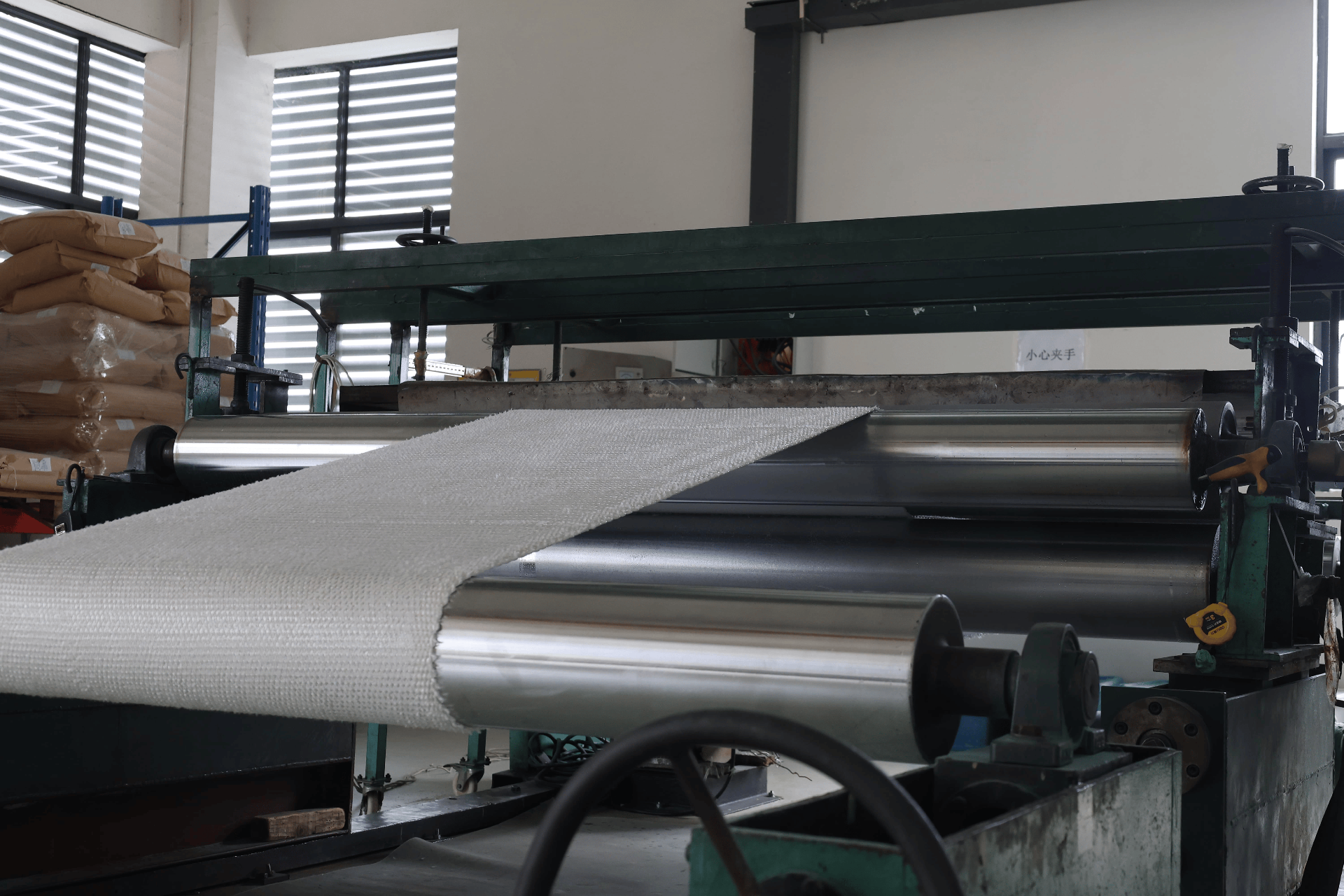
Secondary processing and fabrication are part of XZBELT’s belt supply, including cleats, sidewalls, perforation, coating, and splicing.
Use cases: where PU conveyor belts are specified
Food processing and beverage
Food processing lines can involve wet, oily, and wash-down conditions with frequent cleaning. XZBELT’s application data for food processing lists food-contact compliance, easy cleaning, hydrolysis resistance, oil resistance, chemical resistance, and a sealed hygienic surface as special requirements. A PU belt may be considered where those requirements match the grade, but the food-contact documentation must be checked for the exact article.
Packaging machinery
Packaging machines often run at high speed with frequent start-stop cycles and precise positioning. XZBELT’s packaging application data lists accurate positioning, low elongation, high grip, vacuum perforation, wear resistance, and dimensional stability as special requirements. Perforated belts and high-grip surfaces are among the fabrication options that may be relevant, depending on the machine.
Logistics and intralogistics
Distribution centers and parcel sorting systems run long hours with repeated impact, accumulation, and sorting. XZBELT’s logistics application data lists wear resistance, antistatic performance, low noise, low rolling resistance, stable tracking, and high throughput as requirements. Belt selection in this segment is usually driven by the conveyor layout and the product mix, not by material name alone.
Printing and paper converting
Printing and paper lines need precise sheet positioning, consistent friction, and a non-marking surface. XZBELT’s printing and paper application data lists high friction consistency, precise positioning, abrasion resistance, low elongation, and a non-marking surface. A PU belt may be one option, but the surface and joint must match the paper path and the machine’s acceleration profile.
Tobacco and other specialty conveying
XZBELT’s specialty range includes PE conveyor belts for tobacco machinery. The tobacco application data lists dust, changing temperature, inclined conveying, and continuous processing, with requirements that can include pyrolysis requirements, food-contact-type compliance where applicable, dust control, profiles and cleats, and temperature resistance. This illustrates why “PU conveyor belt” should be treated as a starting point, not a complete specification.
PU conveyor belt specification reference
The table below summarizes options listed in XZBELT’s conveyor belt product data. It is a specification checklist, not a claim that every combination is available in every grade.
| Specification area | Options listed in XZBELT conveyor belt data | What the buyer should confirm |
|---|---|---|
| Material | PU, TPU, PVC, PVK, PA, nylon, polyester, Nomex, felt, silicone, customized | Exact grade and suitability for the conveyed product and environment |
| Thickness | 0.8–8 mm, customized | Required thickness for the belt structure and application |
| Plies | 1–3 plies, customized | Load, pulley geometry, and required dimensional stability |
| Temperature | −20°C to +220°C for selected types, depending on material | Actual continuous and peak temperature at the belt |
| Surface | Smooth, matt, diamond, golf, crescent, rough top, customized | Grip, release, marking, and cleaning requirement |
| Joint | Hot melt, finger, Z-splice, stepped Z-splice, overlap, tooth, steel buckle, mechanical fastener, customized | Joint compatibility with belt construction and pulley diameter |
| Fabrication | Cleats, sidewalls, V-guides, perforation, customized | Machine interface, incline angle, vacuum requirement, and tracking |
| Features | Oil resistant, cut resistant, wear resistant, anti-static, antimicrobial, high grip, low friction, food grade, high temperature resistant, customized | Which feature is mandatory and how it will be verified |
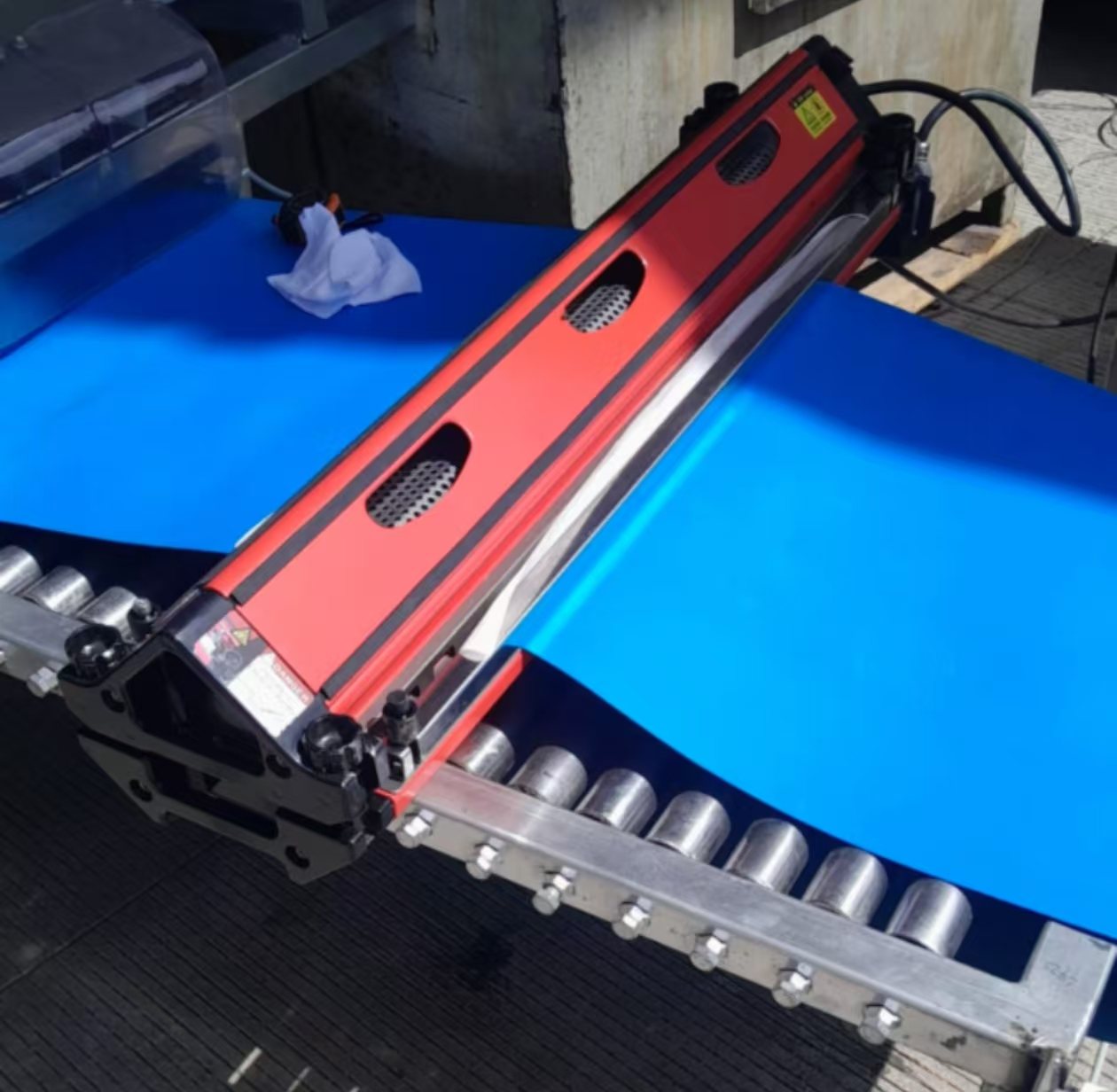
Surface pattern, joint, and fabrication are specified together; the image shows a conveyor belt construction example from the XZBELT range.
Product family reference
| Family | Listed in XZBELT data | Relevant production or application fact | Buyer check |
|---|---|---|---|
| PU Conveyor Belt | PU, TPU | Two PU production lines in the joint-venture base; one homogeneous PU extrusion line at 1.2 m maximum width and approximately 1,000,000 m² annual capacity | Confirm grade, surface, joint, and food-contact documentation if required |
| PVC Conveyor Belt | PVC | Ten PVC production lines in the joint-venture base, including coating and casting lines | Confirm grade, surface, and application conditions |
| PE Conveyor Belt | PE | PE conveyor belts are listed in the specialty range, including PE belts for tobacco machinery | Confirm application, profile, and temperature |
| Homogeneous Conveyor Belt | Easy-to-clean homogeneous | Homogeneous belts provide a continuous hygienic surface with fewer hinges and joints where residues can accumulate | Confirm cleanability and exact food-contact grade |
| Food Grade Conveyor Belt | Food grade | Food-contact suitability is grade-specific; material and color alone do not establish compliance | Obtain the supplier declaration or laboratory evidence for the target market |
| Cleated / Perforated Belt | Customized cleats and perforation | Cleats are available for incline transport; perforation is available for vacuum conveyors | Confirm geometry, machine interface, and tracking |
FAQ
Are all PU conveyor belts food grade?
No. A PU conveyor belt is not automatically food grade. Food-contact suitability must be verified for the exact grade or article supplied. Material and color alone do not establish compliance. In the EU, Regulation (EC) 1935/2004 provides the general framework for food-contact materials, and Regulation (EU) 10/2011 covers plastic materials within its scope. US applications may require applicable FDA food-contact requirements. Buyers should request the supplier’s declaration or laboratory evidence for the target market and intended use.
Can a PU conveyor belt be customized with cleats, sidewalls, V-guides, or perforation?
Yes, XZBELT lists customized cleats, sidewalls, V-guides, and perforation for its conveyor belts. Cleats are available for incline transport, and perforation is available for vacuum conveyors. XZBELT also provides secondary processing such as fabric reinforcement and lamination, silicone coating, sponge coating, special surface coating, belt splicing, and customized widths and lengths. Final feasibility depends on the selected belt construction and machine interface.
What specifications should be confirmed before ordering a PU conveyor belt?
Confirm the material grade, thickness, number of plies, top and bottom cover, surface pattern, joint method, width and length, and any fabricated features. XZBELT’s conveyor belt data lists 0.8–8 mm thickness, 1–3 plies, a −20°C to +220°C range for selected types depending on material, and multiple joint and surface options. Also confirm the minimum pulley diameter for the selected belt structure, because pulley geometry affects bending and joint performance.
What information should be included in a sample or quote request?
Include the belt dimensions, intended application, conveyed product, operating temperature, exposure to oil, water, or chemicals, cleaning method, required surface and joint, fabrication needs such as cleats or perforation, and any food-contact or other documentation requirement. If the belt replaces an existing one, include the existing specification and the reason for replacement. XZBELT bases customized belt solutions on machine structure, operating conditions, production process, and automation requirements, so those details help define the sample or quotation.
How does XZBELT support custom PU conveyor belt projects?
XZBELT provides customized belt solutions and application-specific processing based on customers’ machine structures, operating conditions, production processes, and automation requirements. It operates two manufacturing bases with a combined production area of approximately 30,000 square meters, including PU and PVC production lines, and provides secondary processing such as cleats, sidewalls, perforation, coating, and splicing. The company holds ISO 9001 certification and 11 patents. To discuss a sample or quotation, contact XZBELT at stevensang@xzbelt.com or WhatsApp +86 139-1694-6090.
Conclusion
A PU conveyor belt is a specification, not a generic item. The useful buying sequence is to define the conveyed product and environment, confirm the material grade and construction, match the joint and pulley geometry, select the surface and fabrication, and verify food-contact or other documentation before production. XZBELT’s conveyor belt range, PU production capacity, secondary processing, and ISO 9001 quality management system provide a starting point for that review. The next step is to send the actual application data, not only a width and length.
Next step: request a PU conveyor belt sample or quotation from XZBELT. Send the belt dimensions, application, operating conditions, and required fabrication. Contact: stevensang@xzbelt.com | WhatsApp +86 139-1694-6090 | www.xzbelt.com
Download the XZBELT product brochure: XZBELT brochure (PDF)
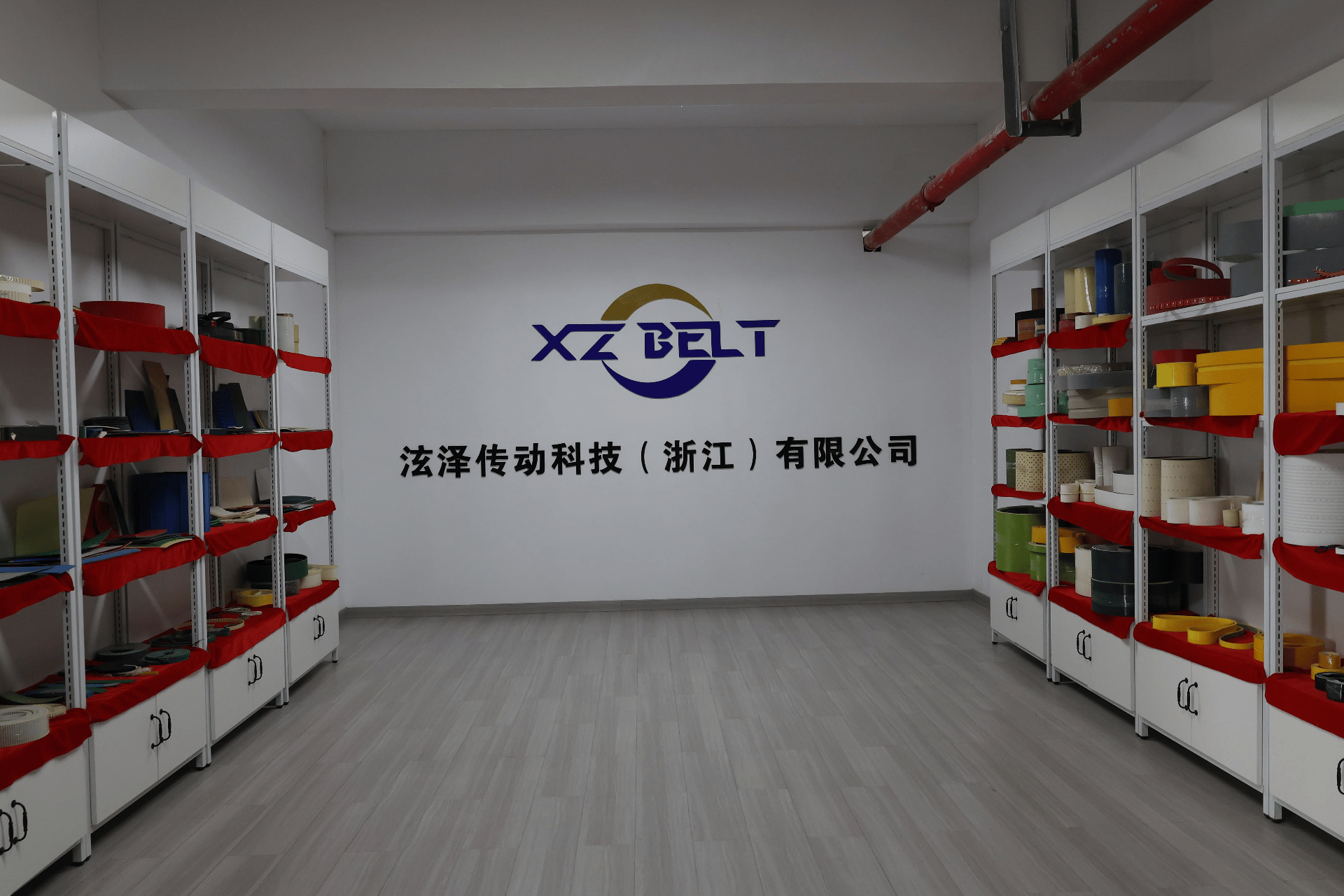
XZBELT manufacturing base. Product inquiries can include drawings, application data, and documentation requirements.
Have Questions or Need More Details?
Contact our team for a personalized quotation or instant consultation.
Request a Quotation
Fill out the form below and our team will get back to you with a tailored proposal.
WhatsApp Direct Chat
Prefer to chat in real-time? Message us on WhatsApp for instant assistance & quick answers.
- Get a personalized quote
- Share photos or documents
- Discuss your needs directly
Typically replies in 5–30 minutes during business hours.