PVC Conveyor Belt: How to Specify One That Fits Your Line
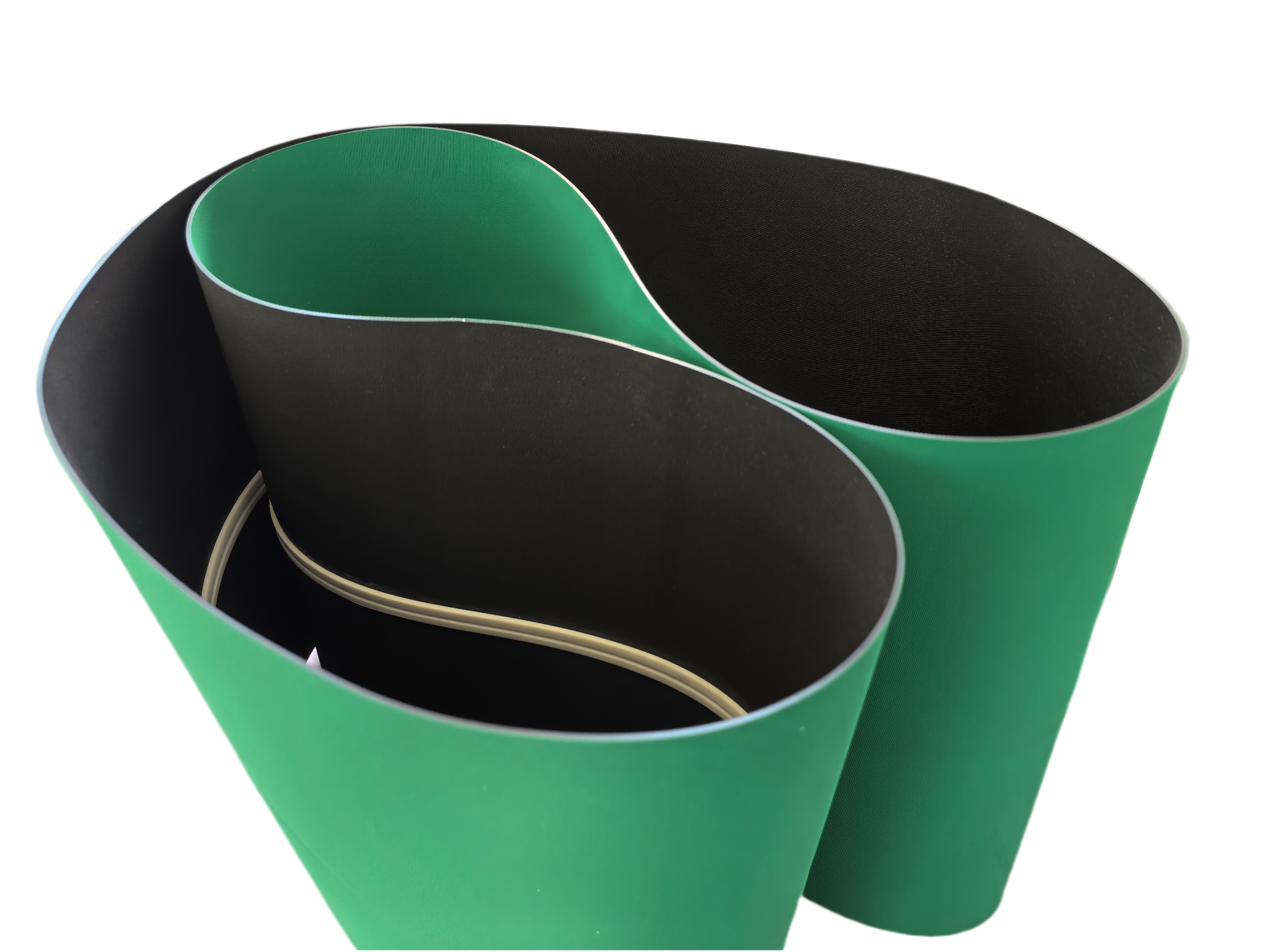
A PVC conveyor belt is a fabric-reinforced conveyor belt whose working surface is a polyvinyl chloride cover. In the XZBELT range, PVC appears as a top-cover material alongside PU, TPU, silicone and felt, on a carcass of polyester, nylon or polyamide fabric, supplied at 0.8 to 8 mm total thickness and 1 to 3 plies, with width, length, surface pattern, joint method and edge treatment specified per machine.
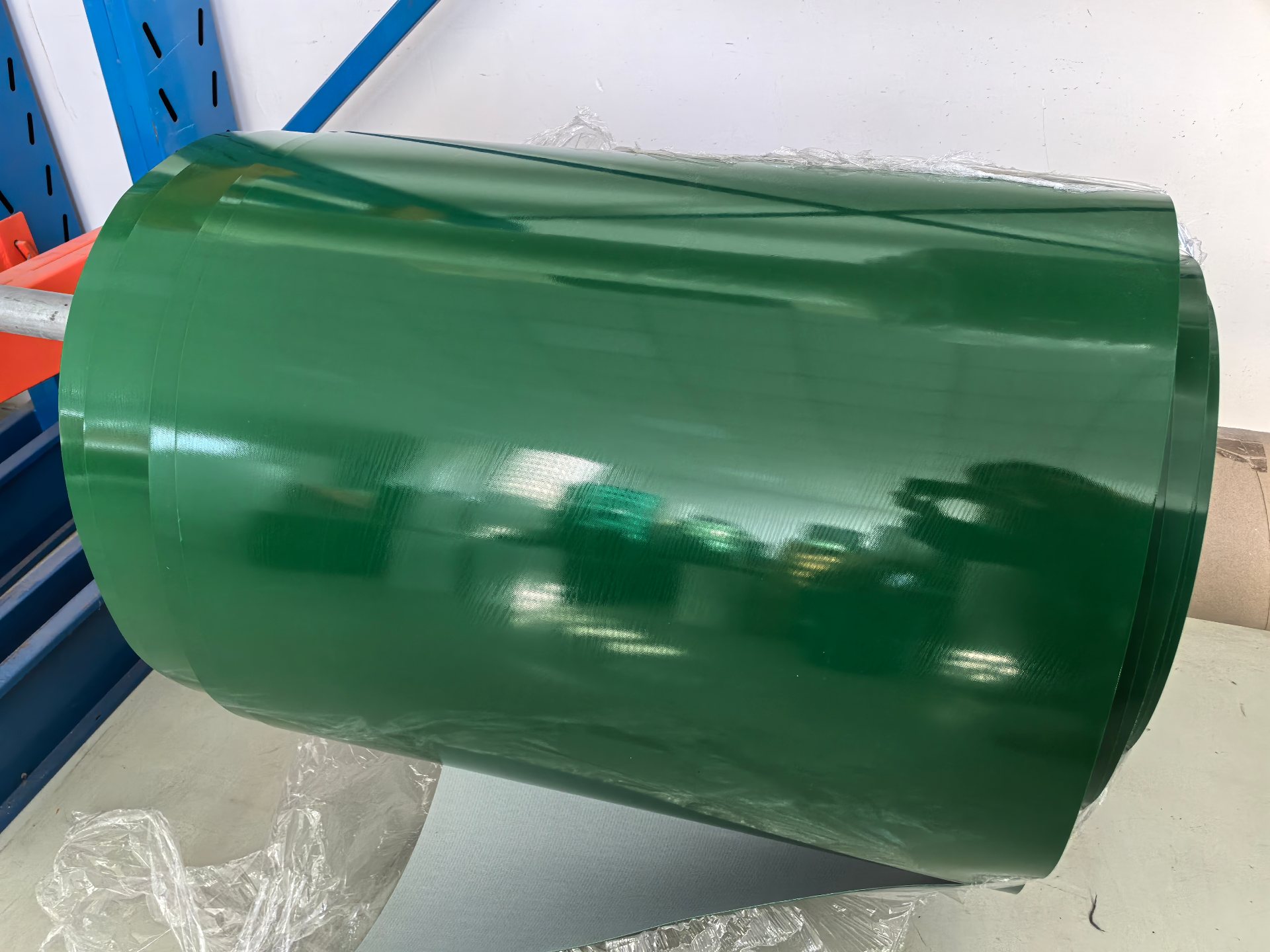
That definition is accurate, and it is also why a large share of first enquiries arrive underspecified. PVC conveyor belt names a family, not a part. Two belts sold under the same name can differ in cover material, surface pattern, ply count, splice method and accessory set, and those differences decide whether the belt tracks straight, whether the splice survives its first month, and how long the cover lasts.
This guide is written for buyers in the awareness and research stages: maintenance engineers, OEM design teams, importers and distributors who need to understand what they are specifying before they request a sample or a quotation. It covers what a PVC belt is made of, what the configuration range actually looks like, how to work through a specification in seven steps, where these belts are used, and which questions to put to a supplier.
Problem Definition: why the material name is not a specification
Selection problems on light conveyor lines rarely come from choosing the wrong polymer. They come from three specification gaps that the material name does not close: the mechanical envelope, the surface, and the joint.
The mechanical envelope
A belt has to bend. Minimum pulley diameter is defined by the belt structure rather than by a general rule, which is why the range lists it as customized according to belt structure. Ply count, total thickness and carcass material all move that limit, so a construction that runs correctly on one machine can run hot, slip or fatigue on another with tighter pulleys, shorter centre distances or higher load. This is the practical reason a belt cannot be swapped on width and length alone.
The surface
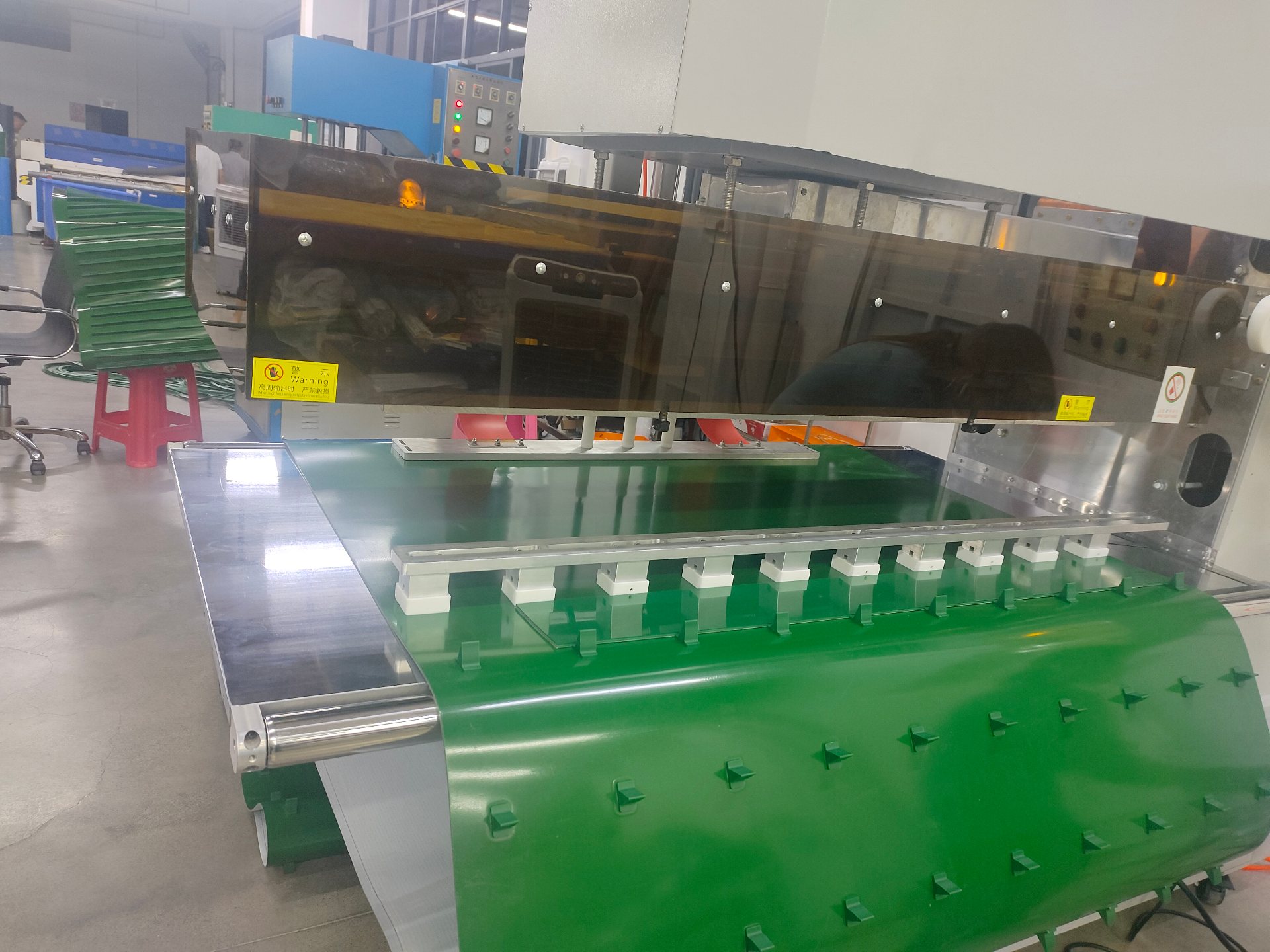
Surface pattern and finish decide how the product behaves on the belt. Smooth and matt surfaces, diamond, golf and crescent patterns, rough-top surfaces, and finishes described as high grip or low friction are all listed options. Grip is not automatically better: a high-grip surface that is wrong for the product can create transfer problems at the nose, and a low-friction surface that is wrong for an incline will not hold the load. Surface is chosen against the product and the conveyor geometry, not against a preference.
The joint
The joint is the part of the belt most likely to fail first, and it is chosen from a list that includes hot-melt joints, finger joints, Z-splices, stepped Z-splices, overlap joints, tooth joints, steel buckles and mechanical fasteners. Non-square belt ends, incorrect fastener size, and running a belt below its minimum pulley diameter are recurring causes of splice failure, and all three are preparation and geometry problems rather than material problems.
Industry Background: market size, standards and demand
Conveyor belts sit inside almost every automated industrial process, which makes the category large but also hard to size accurately. Published valuations differ mainly because they count different things.
- Total market. Mordor Intelligence puts the global conveyor belt market at USD 6.08 billion in 2026, covering heavy-weight, medium-weight and light-weight belts.
- PVC segment. Dataintelo reports the global PVC conveyor belt segment at USD 5.8 billion in 2025. That figure sits close to the total market estimate above, which reflects differing definitions, since segment reports of this kind can include belt-system value rather than finished belt material alone. The two numbers should be read as directional rather than additive.
- Growth. Cognitive Market Research forecasts a 6.2% CAGR for the light conveyor belt segment over 2025 to 2033, the segment that includes PVC, PU and PE constructions.
- Trade. China recorded USD 248.1 million in exports of vulcanized rubber conveyor belts under HS 4010.11 in 2024. The code covers rubber belts rather than PVC belts, so it indicates export scale and is not a PVC figure.
Two standards frame the technical conversation. ISO 21183-1:2026 sets out characteristics for light conveyor belts, the family PVC constructions belong to. EN 12882:2015 sets safety requirements for general-purpose conveyor belts in the European Union. Neither standard tells a buyer which belt to order; both tell a buyer which characteristics should be documented.
Demand concentrates where light conveying meets hygiene, speed and handling volume. Dataintelo attributes 38.4% of 2025 food-grade conveyor belt revenue to Asia-Pacific. The application sectors that recur across the category are food processing, packaging, logistics and warehousing, airport baggage handling, printing, paper, textile, electronics, medical and metal processing.
Detailed Solution: what a PVC conveyor belt is actually made of
A light PVC conveyor belt is described by six attributes: carcass, cover, surface, joint, edge and accessories. Each is specified separately, and each narrows the range of the next.
Carcass and plies
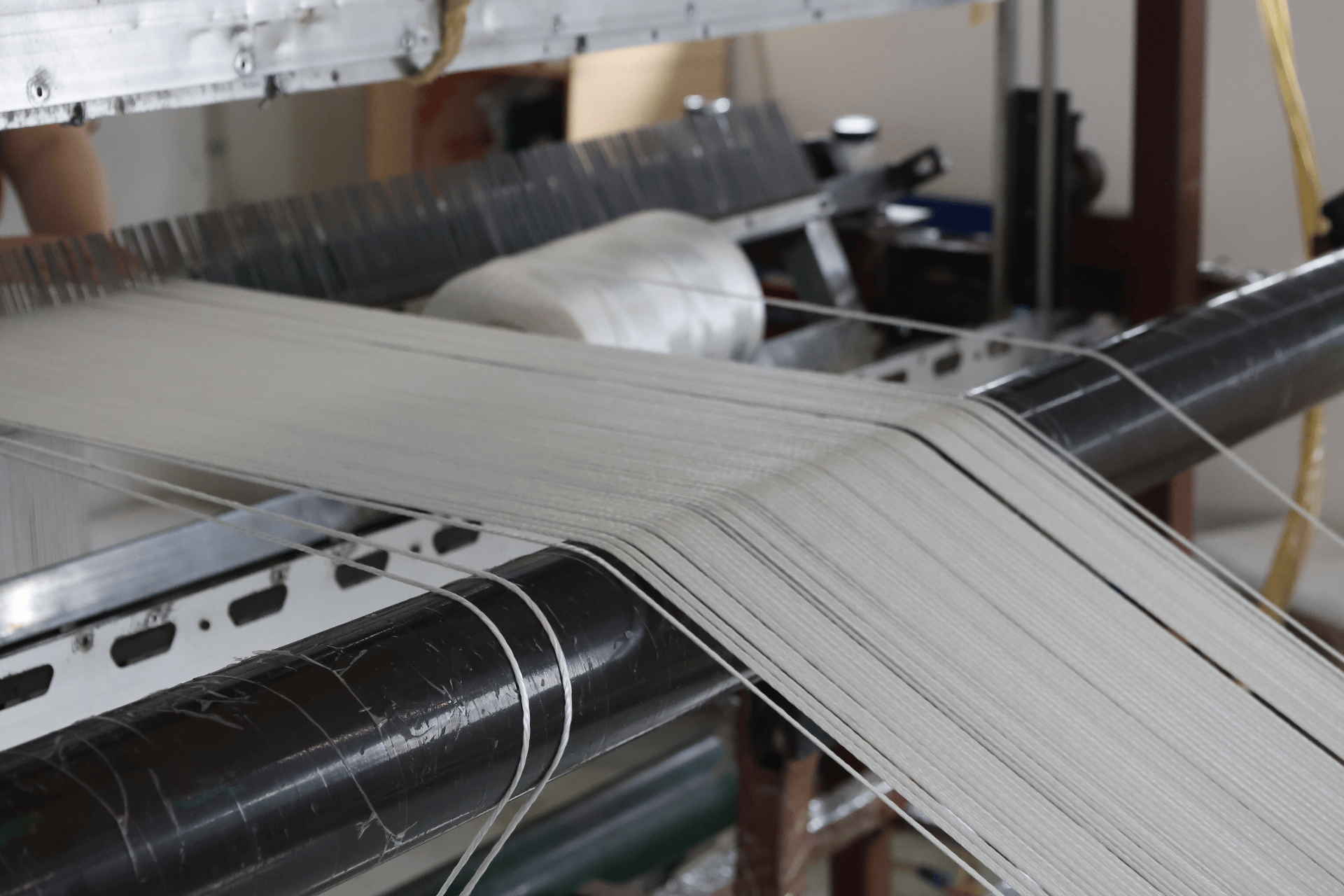
The carcass carries the tension. Fabric materials listed for this range are polyester, nylon and polyamide, in 1 to 3 plies. Ply count and fabric choice sit behind the belt elongation and its minimum pulley diameter, and both are set against the machine rather than against a catalogue default.
Cover
The cover is the working surface. In this range the top cover can be PU, TPU, PVC, silicone or felt, and the bottom can be fabric, PU, PVC or felt. Colour is a specification item rather than a decorative one: green, white, blue, black, red, grey and transparent covers are all listed, and the colour conventions used on food and logistics lines are a customer requirement, not a performance claim.
Surface pattern and finish
Surface pattern options are smooth, matt, diamond, golf, crescent and rough top, and finishes range from smooth and matte through rough to high grip and low friction. Pattern is chosen with the product in mind: patterned and rough-top surfaces exist because a flat smooth surface is not always enough to hold a product through an incline or an acceleration.
Joint
Joint options are hot-melt, finger, Z-splice, stepped Z-splice, overlap, tooth, steel buckle and mechanical fastener. The choice follows belt construction and site access. A mechanical fastener and a hot-melt splice are made under different conditions and require different preparation, and preparation is where most splice failures begin.
Edge, supply form and accessories
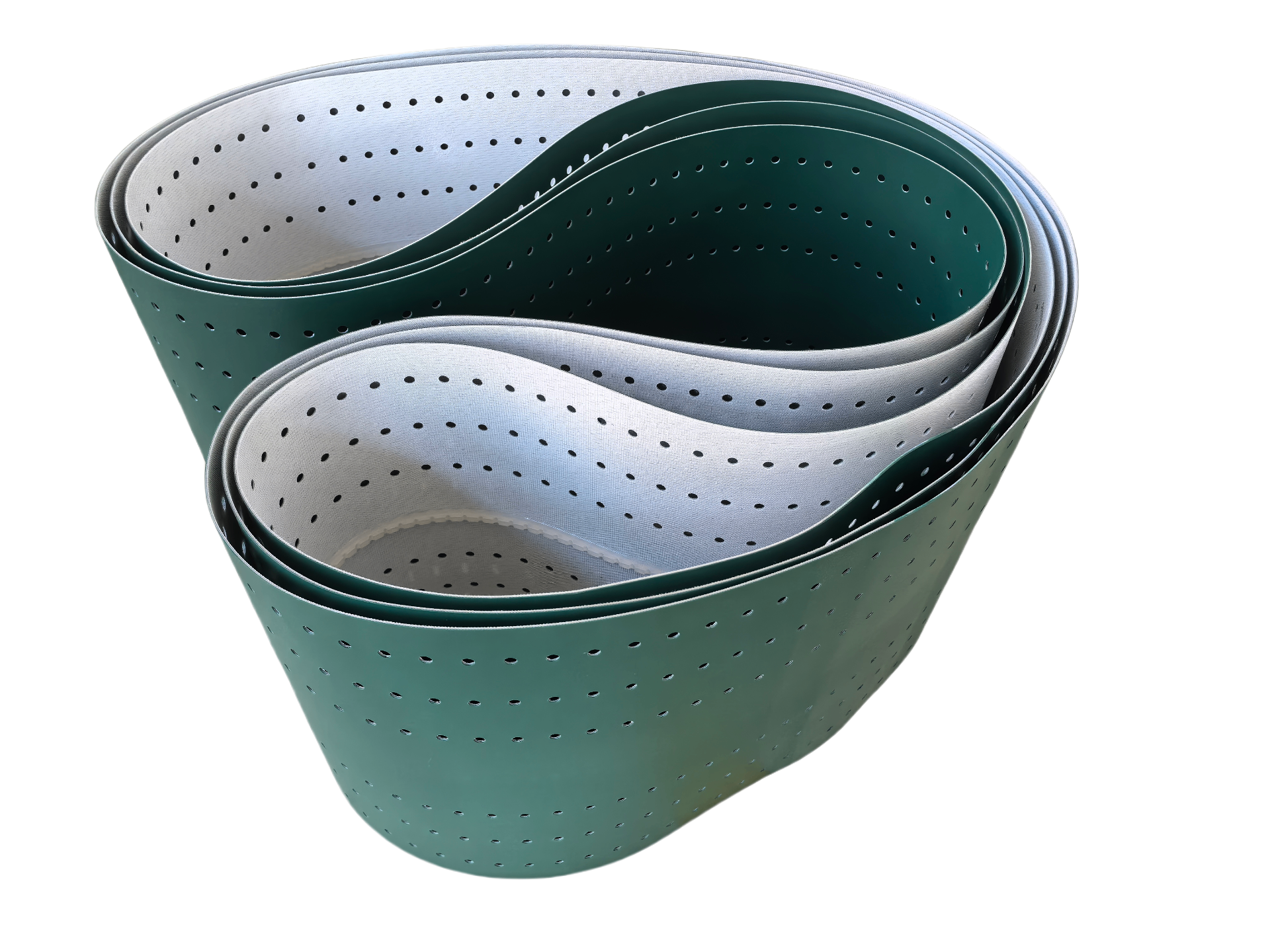
Edges are cut or sealed. Supply form is open belt, roll belt or endless belt. Cleats, sidewalls, V-guides and perforation are all available as customized additions: cleats for incline transport, perforation for vacuum conveyors, and sidewalls and V-guides to suit the machine. Accessories are where over-specification is most common, so each one should answer a specific machine requirement rather than a general preference.
Temperature is the last and most misread parameter. The range lists minus 20 to plus 220 degrees Celsius for selected types, depending on material. That is a range across the family, not a rating for every PVC belt, so the specific construction selected has to be confirmed against the actual process temperature.
| Configuration | Options in the range | Buyer decision driver |
|---|---|---|
| Thickness | 0.8 to 8 mm, customized | Machine geometry and load |
| Plies | 1 to 3 plies, customized | Tension and pulley diameter |
| Carcass fabric | Polyester, nylon, polyamide | Required tensile behaviour |
| Top cover | PU, TPU, PVC, silicone, felt | Product contact and cleaning regime |
| Bottom cover | Fabric, PU, PVC, felt | Pulley side and drive arrangement |
| Surface pattern | Smooth, matt, diamond, golf, crescent, rough top | Product shape, incline, acceleration |
| Surface finish | Smooth, matte, rough, high grip, low friction | Release versus hold requirement |
| Joint | Hot-melt, finger, Z-splice, stepped Z-splice, overlap, tooth, steel buckle, mechanical fastener | Construction and site access |
| Edge | Cut edge, sealed edge | Belt path and edge condition |
| Supply form | Open belt, roll belt, endless belt | Installation method |
| Accessories | Cleats, sidewalls, V-guides, perforation | Incline, guidance, vacuum |
| Temperature | Minus 20 to plus 220 degrees Celsius for selected types | Actual process temperature |
Source: XZBELT conveyor belt product data.
Step-by-step: specifying a PVC conveyor belt in seven steps
Step 1: describe the product and the environment
Record what is being conveyed, its weight, the temperature at contact, whether it is wet, oily, dusty or sticky, and how the line is cleaned. The application scenarios recorded for this product family show how much that changes the answer. Food processing lines run wet, oily and frequent wash-down duty with food-contact and chemical-resistance requirements. Logistics lines run high throughput, long hours and repeated parcel impact.
Step 2: fix the mechanical envelope
Width, length, belt speed, pulley diameters and centre distance. Width and length are customizable within the manufacturing limits of the selected base belt, but minimum pulley diameter has to be confirmed for the selected construction rather than assumed. Getting this wrong tends to show up as heat, slip or joint fatigue rather than as an obvious material fault.
Step 3: choose the cover and the surface
Confirm the food-contact requirement first, because it constrains the cover material. Then choose grip: smooth or low-friction surfaces where the product must release or slide, rough-top or patterned surfaces where it must be held through an incline or an acceleration. Colour is confirmed here against the customer colour convention.
Step 4: choose the joint
Match the joint to the belt construction and to what is possible on site. A spliced belt and an endless belt imply different installation procedures. Whichever method is chosen, preparation matters as much as the method itself: unsquared ends and incorrect fastener sizing are recurring causes of splice failure.
Step 5: add accessories only where the machine needs them
Cleats for incline transport. Perforation for vacuum conveyors. Sidewalls and V-guides where the machine geometry calls for them. Each is a customized item and should appear on the belt drawing, because each changes what has to be manufactured and what has to be checked before shipment.
Step 6: confirm standards and documentation
Ask which characteristics are documented, and against what. ISO 21183-1:2026 defines characteristics for light conveyor belts, and EN 12882:2015 sets safety requirements for general-purpose belts in the European Union. For food contact, the material name is not evidence: the exact article supplied needs an appropriate declaration or laboratory evidence for the target market and the intended use.
Step 7: confirm supply form and secondary processing
Open belt, roll belt or endless belt; cut or sealed edge; and any secondary processing such as fabric reinforcement and lamination, silicone coating, sponge coating, special surface coating, belt splicing, or custom width and length. This is the step where a standard belt becomes a machine-specific part.
Use Cases: where PVC conveyor belts are used
PVC constructions appear across the light-conveying sectors rather than in a single niche. The scenarios below follow the application conditions recorded for this product family, and each one lists what has to be verified for that condition rather than what any belt automatically provides.
- Food processing and beverage. Wet, oily, frequently washed lines with continuous production. Requirements to verify: food-contact compliance, easy cleaning, hydrolysis resistance, oil resistance, chemical resistance and a sealed hygienic surface.
- Bakery and confectionery. High temperature, sticky dough, oil, flour and frequent release and transfer. Requirements to verify: heat resistance, non-stick surface, easy release, food-grade documentation and abrasion resistance.
- Packaging machinery. High speed, frequent start-stop, precise positioning and repetitive cycles. Requirements to verify: accurate positioning, low elongation, high grip, vacuum perforation, wear resistance and dimensional stability.
- Logistics and intralogistics. High throughput, long running hours, repeated parcel impact, accumulation and sorting. Requirements to verify: wear resistance, antistatic performance, low noise, low rolling resistance, stable tracking and throughput.
- Airport baggage handling. Continuous duty with frequent acceleration and deceleration and irregular baggage. Requirements to verify: flame retardancy where required, antistatic performance, low noise, high wear resistance and reliable tracking.
- Printing and paper converting. High speed, lightweight products, rapid acceleration and precise sheet positioning. Requirements to verify: friction consistency, precise positioning, abrasion resistance, low elongation and a non-marking surface.
| Industry | Working condition | Requirements to verify before ordering |
|---|---|---|
| Food processing and beverage | Wet, oily, frequent washing, food contact, continuous production | Food-contact compliance, easy cleaning, hydrolysis resistance, oil and chemical resistance, sealed hygienic surface |
| Bakery and confectionery | High temperature, sticky dough, oil, flour, frequent release and transfer | Heat resistance, non-stick surface, easy release, food grade, abrasion resistance |
| Packaging machinery | High speed, frequent start-stop, precise positioning, repetitive cycles | Accurate positioning, low elongation, high grip, vacuum perforation, wear resistance, dimensional stability |
| Logistics and intralogistics | High throughput, long running hours, repeated parcel impact, accumulation and sorting | Wear resistance, antistatic performance, low noise, low rolling resistance, stable tracking |
| Airport baggage handling | Continuous duty, frequent acceleration and deceleration, heavy and irregular baggage | Flame retardancy where required, antistatic performance, low noise, high wear resistance, reliable tracking |
| Printing and paper converting | High speed, lightweight products, rapid acceleration, precise sheet positioning | Friction consistency, precise positioning, abrasion resistance, low elongation, non-marking surface |
Source: XZBELT application scenario data for conveyor belt products. These are requirements to check against a selected construction, not automatic properties of every PVC belt.
Manufacturing context: what capacity means for a PVC order
XZBELT, registered as Xuanze Industrial Drive Systems (Shanghai) Co., Ltd., has manufactured industrial belts since 2013 and operates through two manufacturing bases with a combined production area of approximately 30,000 square metres. The joint-venture production base for conveyor belt roll materials is equipped with 12 production lines, of which 10 are PVC lines and 2 are PU lines.
The PVC system behind that range is made up of one 4.1-metre-wide coating line with an annual production capacity of approximately 300,000 square metres, three 3.0 to 3.5-metre-wide coating lines with a combined annual capacity of approximately 240,000 square metres, four 2.0-metre-wide coating lines with a combined annual capacity of approximately 240,000 square metres, and two 2.0-metre-wide casting lines with a combined annual capacity of approximately 144,000 square metres. Annual production capacity is stated at 2,000,000 units.
For a buyer, the practical point is not the tonnage but the processing depth. The company provides secondary processing and fabrication including single-side and double-side sidewalls, fabric reinforcement and lamination, cleats, perforation, silicone coating, sponge coating, special surface coating, belt splicing, and customized widths and lengths, and it builds customized belt solutions around a customer machine structure, operating conditions, production process and automation requirement. It holds ISO 9001 certification and 11 belt-related patents, including 2 invention patents and 9 utility model patents, and supplies customers in more than 150 countries and regions.
Frequently asked questions
Is every PVC or PU conveyor belt food grade?
No. Food-contact suitability has to be verified for the exact grade or model and against the documentation required in the destination market. Material and colour alone do not establish food-contact compliance: the exact article supplied needs an appropriate declaration or laboratory evidence for the target market and intended use. Food Grade Conveyor Belt is one of the listed model designations in this range, which makes it a starting point for documentation rather than a substitute for it. On the standards side, ISO 21183-1:2026 covers characteristics of light conveyor belts and EN 12882:2015 covers safety requirements for general-purpose conveyor belts in the European Union.
Can a PVC conveyor belt be customized with cleats, sidewalls, V-guides and perforation?
Yes. Customized cleats are available for incline transport, customized perforation is available for vacuum conveyors, and sidewalls and V-guides are supplied as customized items. Width and length are customizable within the manufacturing limits of the selected base belt. Secondary processing also includes fabric reinforcement and lamination, silicone coating, sponge coating, special surface coating and belt splicing. The limit is the belt construction rather than the accessory list, which is why accessories have to be confirmed against the machine rather than added after the specification is fixed.
Does a thicker conveyor belt always last longer?
No. Service life depends on the carcass, cover material, tension, pulley size, wear, joint, tracking and operating environment. Thickness from 0.8 to 8 mm is available in this range, but a thicker cover does not correct an undersized pulley, a misaligned frame or a splice that was prepared incorrectly. Thickness is one variable in a system, not a proxy for durability.
Can I replace a belt using only width and length?
It is risky. Material, thickness, surface, joint, pulley geometry and operating conditions should also be checked. A replacement belt that matches on width and length but differs in ply count, cover surface or joint type can run badly on the same machine, and the resulting problems usually appear as tracking faults or splice failures rather than as an obvious belt defect.
What causes a conveyor belt to run sideways, and what should I send with an enquiry?
Tracking problems can come from misalignment, off-centre loading, tension, contamination, splice alignment or machine geometry. Before ordering, it helps to send the belt dimensions, the existing belt specification or drawing, the conveyed product and its temperature, whether the line is wet, oily or washed down, the pulley diameters, the belt speed, the required surface and joint, any accessories such as cleats, sidewalls, V-guides or perforation, and the documentation your market requires.
Conclusion
PVC conveyor belt selection is a specification exercise, not a material choice. The polymer tells you which family you are in; the carcass, cover, surface, joint, edge and accessories tell you whether the belt will work on the machine. Buyers who close those gaps early avoid the three most common outcomes of underspecification: a belt that tracks badly, a splice that opens, and a cover that wears faster than expected.
The sequence is short. Describe the product and the environment. Fix the mechanical envelope. Then choose surface, joint, accessories and documentation in that order, and confirm each against the actual machine rather than against a catalogue default. Where a standard applies, ask for the characteristic to be documented rather than assumed.
Next step: sample, quotation or catalogue
If you are at the specification stage, send machine data rather than a belt name. XZBELT can review width, length, pulley diameters, conveyed product, temperature, cleaning regime, required surface and joint, and the documentation your market needs, then respond with a proposed construction, a sample arrangement and a quotation.
Contact: Steven Sang, stevensang@xzbelt.com, +86 139-1694-6090 (WhatsApp available)
Visit the XZBELT website · Download the XZBELT product catalogue (PDF)
Have Questions or Need More Details?
Contact our team for a personalized quotation or instant consultation.
Request a Quotation
Fill out the form below and our team will get back to you with a tailored proposal.
WhatsApp Direct Chat
Prefer to chat in real-time? Message us on WhatsApp for instant assistance & quick answers.
- Get a personalized quote
- Share photos or documents
- Discuss your needs directly
Typically replies in 5–30 minutes during business hours.