Seamless Belt vs Spliced Belt: A Comparison Guide for Industrial Buyers
Quick answer: A seamless belt and a spliced belt solve different risks. A seamless belt is produced as a continuous loop with no splice, so it removes the joint as a failure point, but it must still fit the machine, pulley geometry, temperature, load and installation method. A spliced belt is made from open belt or roll belt and joined into an endless loop by a hot melt joint, finger joint, Z-splice, stepped Z-splice, overlap joint, tooth joint, steel buckle, mechanical fastener or another customized method. It can be practical for long conveyors and field replacement, but the joint must be engineered for the belt construction and the minimum pulley diameter. The decision should be driven by joint risk, minimum pulley diameter, splice failure modes and the actual operating details, not by the presence or absence of a splice alone.
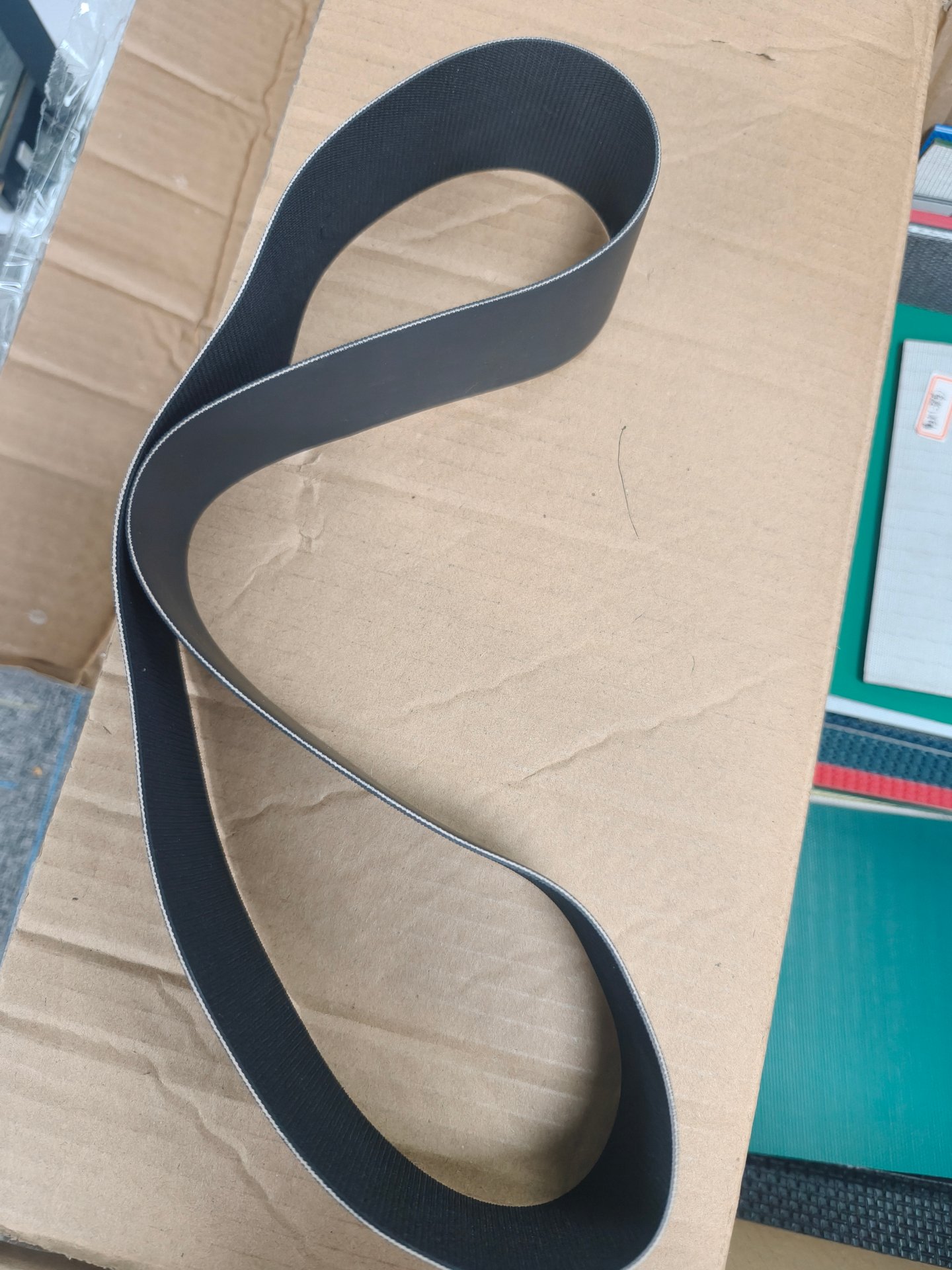
XZBELT, the brand of Xuanze Industrial Drive Systems (Shanghai) Co., Ltd., is a Shanghai-based industrial belt manufacturer established in 2013. Its product range includes PVC conveyor belts, PU conveyor belts, PE conveyor belts, silicone belts, high-temperature conveyor belts, seamless belts and customized specialty industrial belts. Because XZBELT operates both belt splicing equipment and seamless fabric weaving equipment, the comparison below is written from a manufacturing and application-review perspective rather than from a single-product preference.
Problem Definition: What Buyers Are Really Comparing
The buyer’s problem is not simply “seamless versus spliced.” It is a fit problem with four linked questions: Where is the joint risk acceptable? What is the minimum pulley diameter the belt can run around? How will the belt be installed or replaced? And what does the operating environment do to the belt cover, carcass and joint?
Repeated splice failure usually means the problem is not simply a bad belt. The joint may be unsuitable for the construction, prepared incorrectly, pressed under incorrect conditions, exposed to excessive tension, bent around too small a pulley or forced to run on a misaligned conveyor. Documented splice failure symptoms include joint cracking, finger separation, peeling, mechanical-fastener pull-out and belt fracture immediately adjacent to the splice. Recurring causes include incorrect splice type, incorrect joint preparation, belt ends that are not square, incorrect press temperature, pressure or time, excessive belt tension, minimum pulley diameter that is too small, conveyor misalignment and chemical contamination.
The most important mechanical point for buyers is this: a splice run around a pulley below the required minimum diameter repeatedly bends the joint beyond its design limit. The joint is not a static part. Every revolution flexes it. If the pulley is too small for the belt and splice combination, the joint accumulates fatigue in a way that a correctly sized pulley does not impose. That is why a spliced belt can fail quickly even when the belt material itself is sound.
Industry Background: Why the Choice Matters More Than Before
Light conveyor belts are used across food processing, packaging, logistics, printing, paper, textile, electronics, medical and general conveying. The light-weight conveyor belt segment is forecast to grow at a 6.2% CAGR from 2025 to 2033, according to Cognitive Market Research in 2026. As lines run faster and buyers ask for more documentation, the joint and the belt construction become operational decisions rather than minor purchasing details.
Two standards are useful reference points. ISO 21183-1:2026 covers characteristics of light conveyor belts. EN 12882:2015 covers safety requirements for general-purpose conveyor belts in the European Union. These standards do not choose a seamless or spliced construction for the buyer, but they reinforce the need to verify the exact belt, joint and application rather than relying on a generic product description.
In commercial terms, “spliced belt” is not one product. A conveyor belt can be supplied as an open belt, roll belt or endless belt, and the joint method can be a hot melt joint, finger joint, Z-splice, stepped Z-splice, overlap joint, tooth joint, steel buckle, mechanical fastener or a customized method. A seamless belt is a different supply form: the belt is produced as a continuous loop, typically with a seamless woven construction. Both forms can be appropriate, but they carry different risks and different verification requirements.
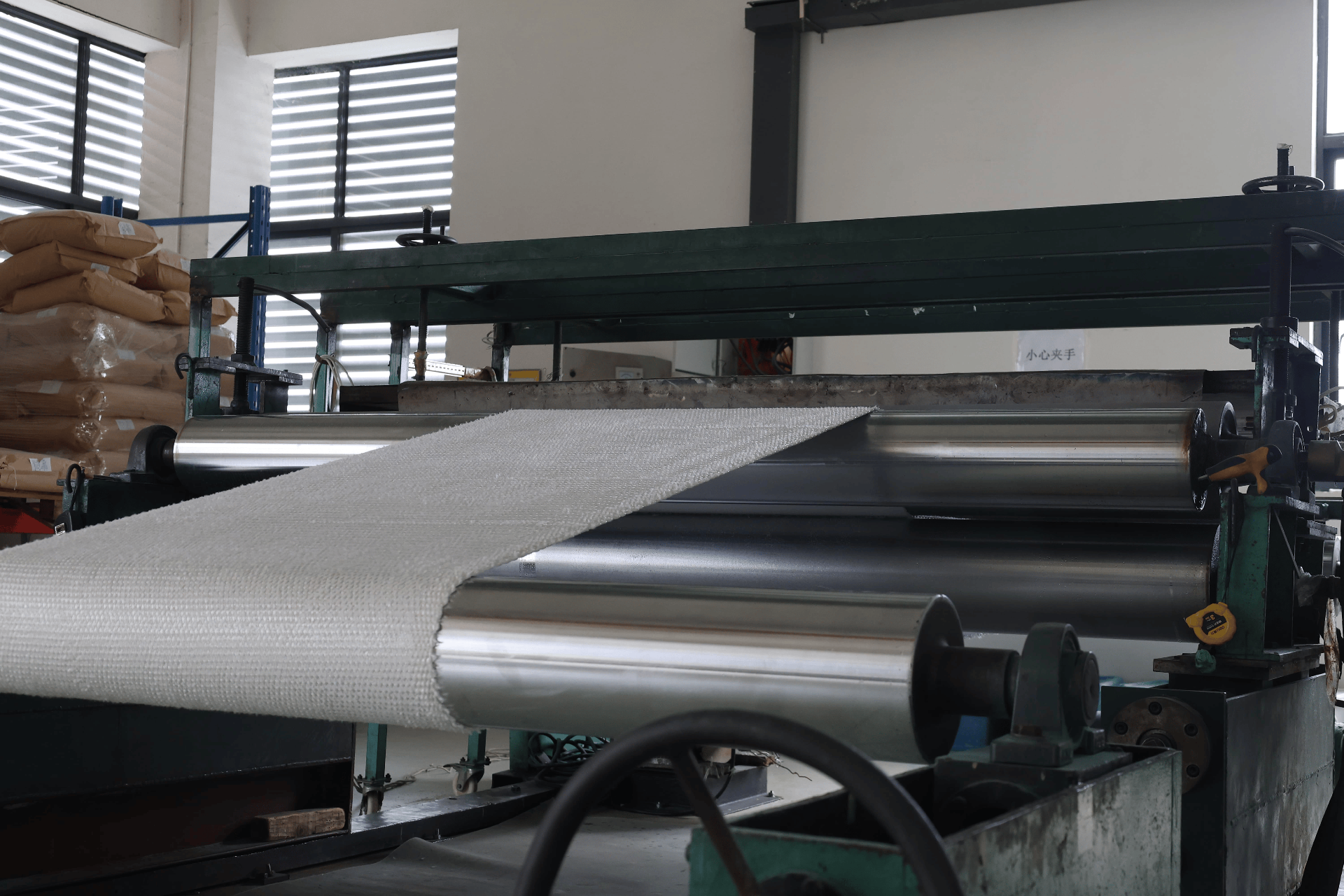
XZBELT’s manufacturing base covers approximately 30,000 m² and includes 6 belt splicing machines, 2 seamless fabric weaving machines, 3 silicone coating lines and 3 seamless PU coating lines. That combination matters because a supplier that only splices may not control seamless weaving, while a supplier that only weaves may not support field splicing. Buyers should ask which construction the supplier actually controls and which joint methods it can support for the selected belt.
Detailed Solution: How to Compare Seamless and Spliced Construction
What a seamless belt is, and what it is not
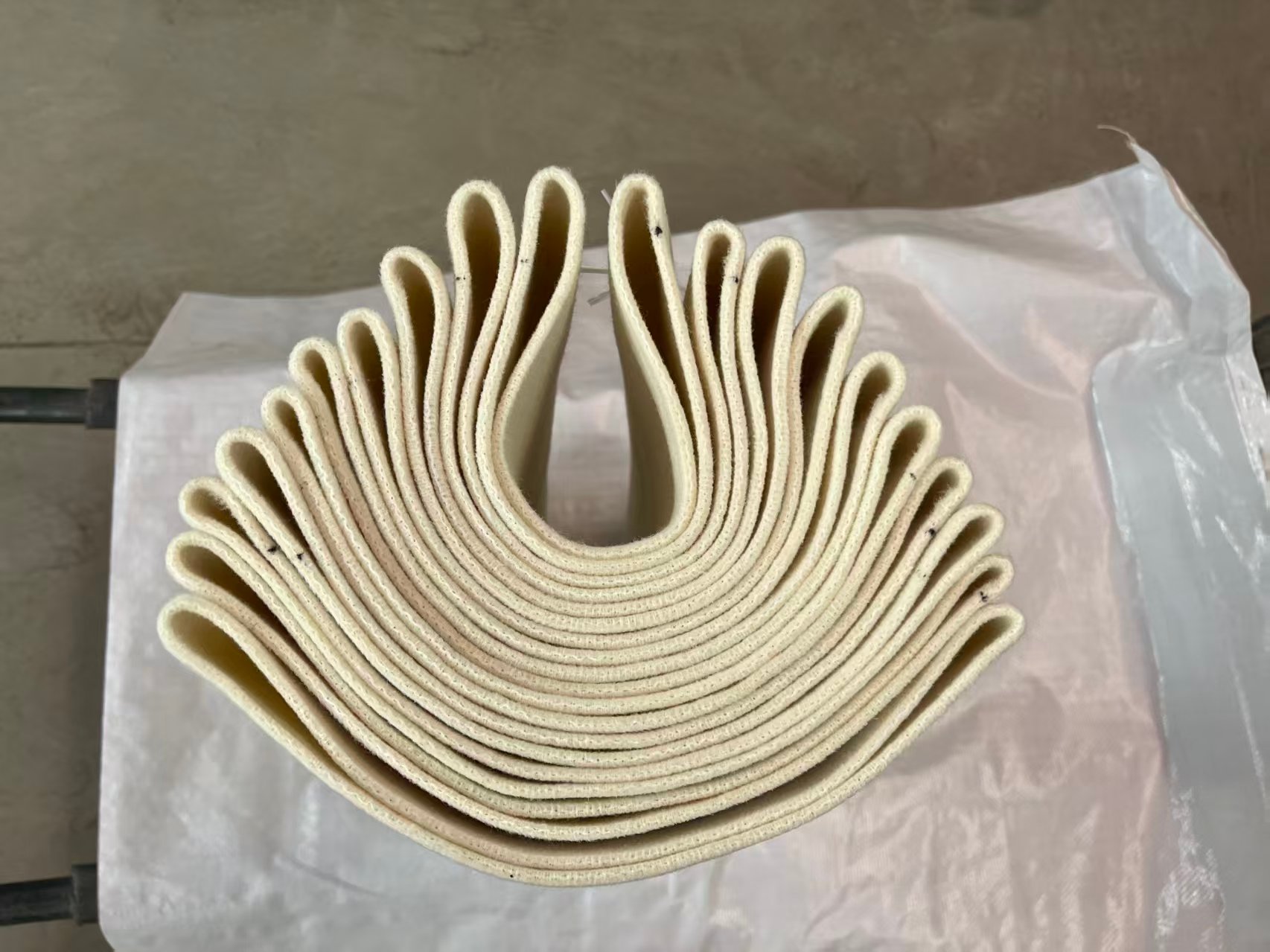
A seamless belt is produced as a continuous loop with no splice. In the verified XZBELT Seamless Belt example, the belt is made of silicone, Nomex fiber and polyester filament fiber. It has a single-layer construction and a seamless weaving construction. The overall thickness is 9 ± 0.5 mm, the surface coating thickness is 3 mm and the baseband thickness is 6 mm. The tensile force at 1% elongation is 30 N/mm, the tensile strength at 3% elongation is 350 N/mm, the maximum operating speed is 400 m/min and the belt is recoverable after 2.5% elongation. The minimum pulley diameter is 70 mm forward and 120 mm reverse, and the temperature range is −40°C to +210°C.
Those figures explain why seamless belts are often considered for small-pulley systems, high-temperature processing equipment, textile machinery, packaging machinery and industrial conveying and transfer equipment. The seamless woven construction removes the splice weak point, and the silicone-coated surface supports high-temperature use. The belt also has low elongation and good recovery, which matters on high-speed lines where stable running is required.
But a seamless belt is not a universal answer. The verified minimum pulley diameter is still 70 mm forward and 120 mm reverse. A machine with a smaller pulley does not become suitable simply because the belt has no splice. The buyer must also check width, length, installation access, tracking, edge condition, surface coating, load and chemical exposure. A seamless belt can still fail at the edge, at the coating, through misalignment or through incorrect tension. “No splice” removes one failure mode; it does not remove every failure mode.
What a spliced belt is, and where the risk sits
A spliced belt starts as an open belt or roll belt and is joined into an endless loop. The joint can be a hot melt joint, finger joint, Z-splice, stepped Z-splice, overlap joint, tooth joint, steel buckle, mechanical fastener or a customized method. The splice is a deliberate discontinuity in the belt structure. That does not make it defective, but it does mean the joint must be treated as an engineered component with its own preparation, pressing, fastening and inspection requirements.
The documented failure modes are specific: joint cracking, finger separation, peeling, mechanical-fastener pull-out and belt fracture immediately adjacent to the splice. These failures are often caused by a combination of factors rather than one single defect. Incorrect splice type for the belt construction, unsquared belt ends, wrong press temperature, pressure or time, excessive tension, a pulley below the required minimum diameter, misalignment and chemical contamination can all contribute.
For a buyer, this means a spliced belt quote is incomplete if it only states belt material and dimensions. The quote should identify the joint method, the minimum pulley diameter allowed for that belt and joint, the tension and speed limits, and the installation conditions. If the conveyor has a small pulley, reverse bending, high tension or frequent start-stop cycles, the joint deserves the same engineering review as the belt cover.
Joint risk versus installation flexibility
The practical trade-off is straightforward. A seamless belt removes the splice, but it must be installed as a continuous loop. That can be an advantage on compact machines where a joint would be the weakest point. It can be a disadvantage on long conveyors, in confined spaces or in field replacement situations where an open belt is easier to install and tension.
A spliced belt offers supply and installation flexibility, but it places a joint in the running path. If the joint is correctly selected, prepared and installed, and if the pulley diameter is within the allowed range, the spliced belt can perform reliably. If the joint is treated as an afterthought, the same belt can fail at the splice even when the cover material is suitable for the product.
Step-by-Step Breakdown for Industrial Buyers
- Map the pulley geometry first. Record forward and reverse pulley diameters, take-up movement, conveyor length and belt width. For the verified Seamless Belt, the minimum pulley diameter is 70 mm forward and 120 mm reverse. For a spliced belt, the required minimum depends on the belt structure and the splice; it must be confirmed by the supplier. If any pulley is below the confirmed minimum, do not assume the belt will run correctly.
- Define the environment before the material. Record temperature, oil, emulsion, washdown, humidity, dust and food-contact requirements. The verified Seamless Belt has a temperature range of −40°C to +210°C, which supports high-temperature processing equipment. For food-contact or regulated markets, check the exact compliance document for the exact model, not just the product family.
- Describe the product and the load. Note whether the product is abrasive, sharp, sticky, hot, heavy or impact-loaded. A seamless construction may reduce joint risk, but the cover still has to handle the product. A spliced belt may need a cut-resistant or oil-resistant cover, and the joint must be compatible with that cover and carcass.
- Check speed, tension and recovery. The verified Seamless Belt has a maximum operating speed of 400 m/min, a tensile force at 1% elongation of 30 N/mm, a tensile strength at 3% elongation of 350 N/mm and recovery after 2.5% elongation. For a spliced belt, confirm the speed and tension limits for the belt and joint combination. Do not apply a belt-level rating to a joint without confirmation.
- Select the joint method if the belt is spliced. Match the joint to the belt construction. Available joint methods include hot melt joint, finger joint, Z-splice, stepped Z-splice, overlap joint, tooth joint, steel buckle and mechanical fastener, with customized options. A joint that is correct for one belt construction may not be correct for another.
- Validate compliance for the exact product and market. For the Seamless Belt, the GALAB Laboratory Test Report P2024153524 / GCH24-0580 applies to the Germany / EU reference market, and FDA Compliance Test Report SHAFD2102055302 A01 applies under US FDA 21 CFR 175.300. For conveyor belts, a CE Technical Inspection Attestation of Conformity M.2026.206.C00240 is cited under 2006/42/EC and EN ISO 14890:2026, valid from 2026-05-27 to 2031-05-26. XZBELT also holds ISO 9001 Quality Management System certification. Always match the certificate to the exact belt, joint and application.
- Request a sample and a specification-based quote. Supply belt dimensions, pulley diameters, temperature, speed, load, chemical exposure, food-contact status, joint preference and quantity. XZBELT supports customized processing for trial and sample evaluation orders. Lead time is 7 days for selected standard products, while customized orders are subject to specification.
- Inspect the installation and track the result. After installation, check alignment, tension, edge condition and splice appearance. If a splice fails, correct the root cause before making another splice. Replacing a failed joint without checking pulley size, tension and alignment usually repeats the failure.
Use Cases: Where Each Construction Fits
Small pulley and compact machine layouts
A seamless belt is often considered where the machine has small pulleys and the buyer wants to remove the splice from the running path. The verified Seamless Belt has a minimum pulley diameter of 70 mm forward and 120 mm reverse, so it can suit compact layouts within that limit. The buyer should still confirm the actual pulley diameter, reverse bending and installation access. A seamless belt is not suitable for a pulley below its stated minimum simply because it has no splice.
High-temperature processing
The verified Seamless Belt has a temperature range of −40°C to +210°C and a silicone-coated surface. That makes it relevant to high-temperature processing equipment, textile machinery, packaging machinery and industrial conveying and transfer equipment. In these applications, the value of the seamless construction is not only the absence of a splice; it is the combination of heat resistance, low elongation and stable running. The buyer should still verify the actual contact temperature and the effect of the product on the coating.
High-speed conveying
At high speed, joint fatigue and tracking become more demanding. The verified Seamless Belt has a maximum operating speed of 400 m/min, a tensile force at 1% elongation of 30 N/mm and recovery after 2.5% elongation. These values support stable running within the stated limits. A spliced belt can also run at speed, but the joint must be rated for that speed and must be inspected for cracking, separation or fastener movement.
Long conveyors and field replacement
Spliced belts are practical where the conveyor is long, access is limited or the belt must be installed on site. The available supply forms include open belt, roll belt and endless belt, and the joint can be selected from several methods. The buyer should treat the joint as a serviceable component: specify the joint method, confirm the minimum pulley diameter, check tension and alignment, and inspect the splice during maintenance. A spliced belt can be a sound choice when the joint is engineered for the duty.
Packaging and carton lines
In a documented packaging application, a packaging machinery distributor and carton packaging manufacturer used more than 1,000 belts annually on high-speed carton feeding, folding, pressing and conveying on folder-gluer and carton packaging lines. The reported result included reduced belt replacement frequency by approximately 40%, improved feeding accuracy and operating stability, and reduced belt slippage and unplanned downtime. The lesson for this comparison is that joint reliability and belt stability are operational issues, not only purchase-price issues. Whether the belt is seamless or spliced, the buyer should verify the construction against the actual line.
Comparison Table: Seamless Belt vs Spliced Belt
| Decision factor | Seamless belt — verified example | Spliced belt — what the corpus establishes |
|---|---|---|
| Construction | Seamless weaving, single layer; silicone, Nomex fiber and polyester filament fiber | Open belt or roll belt joined into an endless loop by a hot melt joint, finger joint, Z-splice, stepped Z-splice, overlap joint, tooth joint, steel buckle, mechanical fastener or customized method |
| Joint | No splice; seamless woven construction | Splice is a defined discontinuity; documented failure modes include joint cracking, finger separation, peeling, mechanical-fastener pull-out and belt fracture adjacent to the splice |
| Minimum pulley diameter | 70 mm forward and 120 mm reverse for the verified Seamless Belt | Must be confirmed for the belt structure and splice; a splice run below the required minimum diameter repeatedly bends the joint beyond its design limit |
| Temperature range | −40°C to +210°C for the verified Seamless Belt | Not stated as a single value in the verified example; confirm cover, carcass and joint for the actual temperature |
| Maximum operating speed | 400 m/min for the verified Seamless Belt | Confirm the belt and joint rating for the actual speed |
| Tensile data | 30 N/mm at 1% elongation; 350 N/mm at 3% elongation; recoverable after 2.5% elongation | Confirm the belt and joint data for the actual tension and start-stop duty |
| Supply form | Continuous loop with no splice | Open belt, roll belt, endless belt or customized supply form |
| Compliance examples | GALAB Laboratory Test Report P2024153524 / GCH24-0580; FDA Compliance Test Report SHAFD2102055302 A01 under US FDA 21 CFR 175.300 | Conveyor belts can be covered by CE Technical Inspection Attestation of Conformity M.2026.206.C00240 under 2006/42/EC and EN ISO 14890:2026; confirm the exact belt and joint |
| Typical fit | Small pulley systems within the stated minimum, high-temperature processing, high-speed conveying and applications where splice risk is the dominant concern | Long conveyors, field installation, open-belt or roll-belt supply and applications where the joint can be correctly specified and maintained |
Why Choosing Seamless Only Because It Has No Splice Carries Its Own Risks
A seamless belt can be the right choice, but “no splice” is not a complete specification. The buyer still has to confirm the minimum pulley diameter, belt width and length, installation access, tension, tracking, surface coating, temperature and chemical exposure. A seamless belt that is outside its pulley limit or poorly tracked can still fail. A seamless belt can also be more difficult to install in a confined space, and it may not be repairable in the same way as a spliced belt. The absence of a splice should not be used to skip the machine review.
The same caution applies in reverse. A spliced belt is not automatically a lower-cost compromise. If the joint method is correct, the belt ends are square, the press parameters are controlled and the pulley diameter is within the allowed range, a spliced belt can be a practical and reliable choice. The mistake is to compare only the belt price and ignore the joint, installation and downtime risk.
The operating details that should drive the decision are: environment, product, speed, pulley size and load. Add chemical exposure, food-contact status, cleaning method, reverse bending, start-stop frequency and maintenance access. Those details determine whether the joint is a minor service item or the dominant failure risk.
FAQ
What is the difference between a seamless belt and a spliced belt?
A seamless belt is produced as a continuous loop with no splice. A spliced belt is made from open belt or roll belt and joined by a hot melt joint, finger joint, Z-splice, stepped Z-splice, overlap joint, tooth joint, steel buckle, mechanical fastener or another customized method. The seamless construction removes the joint; the spliced construction places a joint in the running path, so the joint method and minimum pulley diameter must be confirmed.
Why do spliced belts fail at the joint?
Repeated splice failure usually means the joint is unsuitable for the construction, prepared incorrectly, pressed under incorrect conditions, exposed to excessive tension, bent around too small a pulley or forced to run on a misaligned conveyor. Documented failure modes include joint cracking, finger separation, peeling, mechanical-fastener pull-out and belt fracture immediately adjacent to the splice. A splice run around a pulley below the required minimum diameter repeatedly bends the joint beyond its design limit.
Can a seamless belt run on a smaller pulley than a spliced belt?
Not automatically. For the verified Seamless Belt, the minimum pulley diameter is 70 mm forward and 120 mm reverse. For a spliced belt, the required minimum depends on the belt structure and splice and must be confirmed for the exact combination. The correct comparison is the confirmed minimum for each candidate against the actual pulley diameter, including reverse bending.
What compliance documents should I check for food-contact or EU applications?
Check the certificate against the exact product and market. For the Seamless Belt, the GALAB Laboratory Test Report P2024153524 / GCH24-0580 applies to the Germany / EU reference market, and FDA Compliance Test Report SHAFD2102055302 A01 applies under US FDA 21 CFR 175.300. For conveyor belts, the CE Technical Inspection Attestation of Conformity M.2026.206.C00240 is cited under 2006/42/EC and EN ISO 14890:2026, valid from 2026-05-27 to 2031-05-26. XZBELT also holds ISO 9001 Quality Management System certification.
What information should I send for a sample or quote?
Send belt dimensions, forward and reverse pulley diameters, temperature, speed, load, chemical exposure, food-contact status, joint preference and quantity. XZBELT supports customized processing for trial and sample evaluation orders, and lead time is 7 days for selected standard products, with customized orders subject to specification. For a sample or quote, contact XZBELT at stevensang@xzbelt.com or +86 139-1694-6090, or download the product brochure at XZBELT brochure.
Conclusion
Seamless and spliced belts are both valid industrial constructions, but they should not be selected by habit. A seamless belt is the stronger fit when the machine has small pulleys within the verified minimum, when high temperature or high speed makes joint fatigue unacceptable, and when the buyer can install a continuous loop without compromising access or tension. A spliced belt is the practical fit when the conveyor is long, field installation is required or the supply form must be open belt or roll belt, provided the joint method and minimum pulley diameter are confirmed.
The decisive question is not “Does it have a splice?” The decisive question is “Which construction removes the dominant risk without creating a worse constraint?” Check the environment, product, speed, pulley size and load first. Then confirm the construction, joint, compliance and installation method with the supplier. XZBELT supplies both seamless belts and conveyor belts with customized joint methods, and can review the machine data against documented product specifications. For a specification-based review, visit www.xzbelt.com or contact the XZBELT team.
Have Questions or Need More Details?
Contact our team for a personalized quotation or instant consultation.
Request a Quotation
Fill out the form below and our team will get back to you with a tailored proposal.
WhatsApp Direct Chat
Prefer to chat in real-time? Message us on WhatsApp for instant assistance & quick answers.
- Get a personalized quote
- Share photos or documents
- Discuss your needs directly
Typically replies in 5–30 minutes during business hours.