Top Timing Belt Recommendations for Bakery Ovens and Dough Processing Equipment
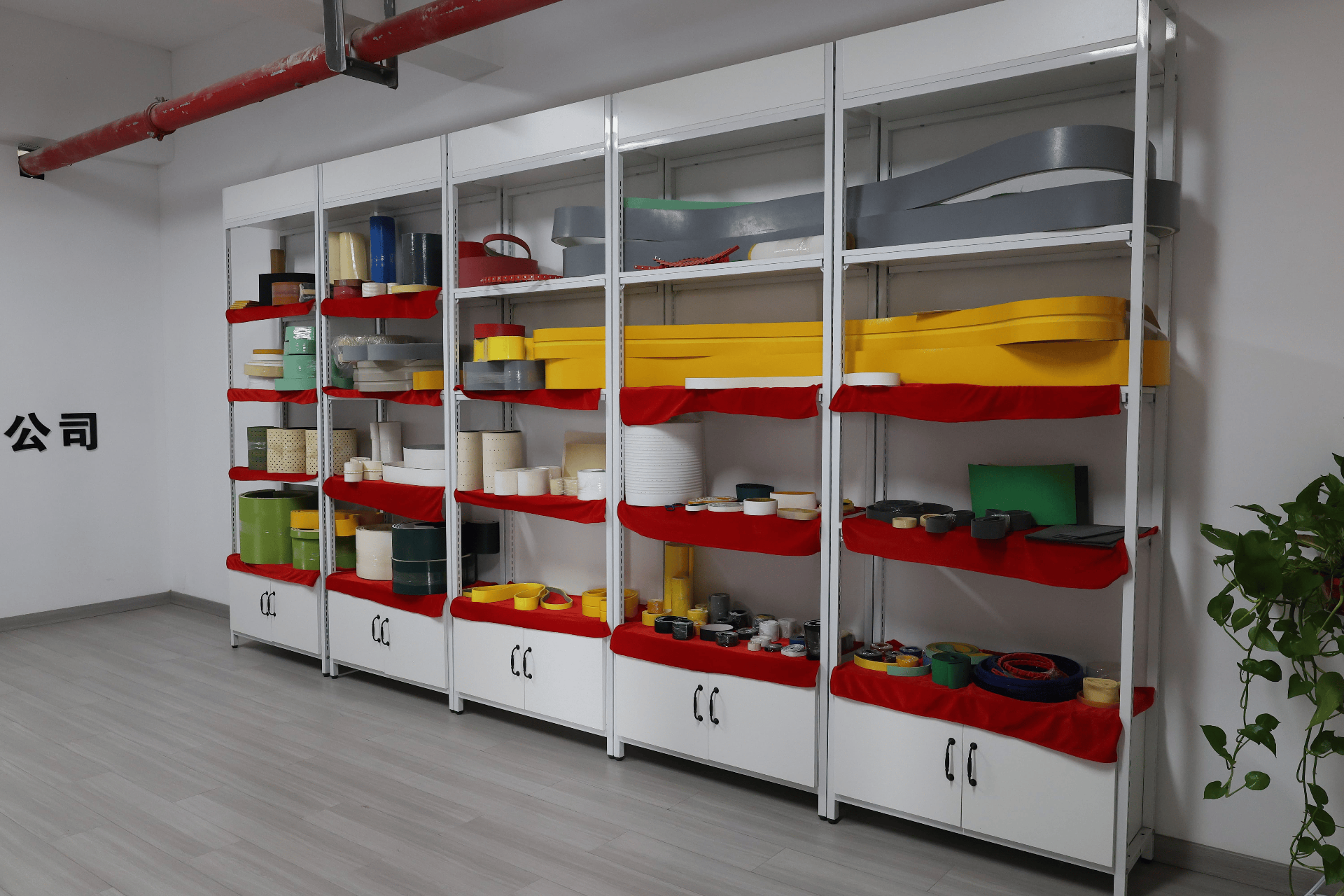
A bakery line rarely runs one belt duty. A dough divider, a laminator roll pair and a tunnel oven discharge can sit within a few metres of each other, yet each one asks something different from the belt involved: synchronous power transmission, release from sticky dough, abrasion resistance against flour dust, and tolerance of continuous heat in an oven-adjacent zone. A single “heavy duty timing belt” specification seldom survives contact with a real bakery.
This guide ranks timing belt recommendations by application fit for bakery ovens and dough processing equipment. Each recommendation states the bakery duty it serves, the evidence behind its inclusion, and the limits that should be confirmed before ordering. The constructions, dimensions and processing options referenced below come from XZBELT’s published timing belt specification range and from comparison data on coated belt surfaces.
Short answer: match the belt to the duty. Use a silicone-coated PU timing belt where dough or sticky product contacts the belt; a high-temperature construction with heat-resistant felt or aramid backing at oven infeed and discharge; a high-strength PU synchronous belt in AT10, T10 or HTD profile for divider, rounder and mixer drives; a double-sided belt for counter-rotating sheeter rolls; a perforated PU belt for vacuum pick-up and depanning; and an open-end, low-elongation Kevlar-reinforced belt for linear positioning axes. Tooth profile, pitch, width and pulley compatibility must be confirmed in every case.
Why Bakery Ovens and Dough Lines Stress Belts Differently
Heat, flour, oil and sticky product are usually treated as separate selection problems. In a bakery they occur inside the same machine envelope, often during the same production shift.
- Oven-adjacent heat. Belts running at tunnel oven infeed, discharge and depanning positions sit in a zone where radiant and contact heat is continuous. Published comparison data for coated belts shows how wide the spread can be: an aramid felt backing can withstand surface contact up to 250°C, while a standard PU coating is typically rated to about 80°C — a difference of up to 170°C at the backing level.
- Sticky dough and release. Dough, fillings and glazes adhere to belt surfaces. Under the PE foil test conditions reported by Forbo, a silicone surface showed a static friction coefficient of 1.09 against 0.64 for standard PU coating — approximately 70% higher grip under those stated conditions.
- Flour dust as an abrasive. Fine flour works into tooth flanks and pulley grooves and accelerates wear. Where static build-up is a concern, antistatic belt options can be specified (customized antistatic index 10⁸–10⁹).
- Positioning accuracy. Divider gates, cutters and depositors depend on repeatable index positions. Low elongation, correct tension and full tooth engagement matter more here than nominal belt strength.
- Lubrication and contamination. A synchronous belt drive requires no lubrication and no routine re-tensioning, which keeps the area around exposed dough cleaner and quieter than a chain drive. Typical synchronous belt drive efficiency is 98–99%, against approximately 91–98% for chain drives.
- Food-contact documentation. Where a belt or coating can contact product, the paperwork has to match the supplied item. A PASS result under FDA 21 CFR 177.2600 applies to the specific submitted sample; it does not automatically extend to another colour, material, coating or construction.
Industry Background: Why Bakery Belts Are Specified by Function
Timing belts sit inside a market that continues to expand alongside automation. Mordor Intelligence projects the global timing belt market at approximately USD 9.57 billion by 2030, growing from a 2025 base of about USD 9.10 billion. Within that total, the polyurethane segment is the one most closely tied to food, packaging and hygiene machinery: Credence Research projects a 12.57% CAGR for PU timing belts to USD 25.5 billion by 2032, although a second published estimate places PU segment growth near 3% under a different methodology. Segment-level growth figures are therefore best treated as directional rather than precise.
Standards work at the profile level. ISO 5296 specifies the principal characteristics of synchronous endless belts with pitch codes MXL, XXL, XL, L, H, XH and XXH — the imperial family still found on imported bakery machinery. Metric families including T5, T10, AT10 and HTD are used on many dough processing drives, and XZBELT’s timing belt range covers these profiles alongside STS, RPP and custom tooth forms. Because both families remain in service, belt identification has to start with the pulley rather than with the belt itself.
Food-grade status is product-level, not brand-level. Forbo’s food-line timing belts, for example, identify compliant PU compounds and coatings rather than treating an entire range as food-contact suitable. The practical consequence for bakeries is that the base belt, the tension member and every cover or fabrication that can touch food must be verified separately.
XZBELT — Xuanze Industrial Drive Systems (Shanghai) Co., Ltd. — is a Shanghai-based manufacturer of industrial belts established in 2013, supplying conveyor belts and timing belts from two manufacturing bases with a combined production area of approximately 30,000 m². Its specialty timing belt work covers silicone-coated timing belts, rubber timing belts with high-temperature felt, extra-wide timing belts, seamless belts and timing belts for sausage processing machines, alongside fabrication services such as perforation, silicone coating, sponge coating, fabric lamination and belt splicing. The company was recognised as a Shanghai High-Tech Enterprise in the 2019–2022 and 2022–2025 certification periods and holds 11 belt-related patents.
The six recommendations below are ranked by application fit, starting with the duty that most often causes product rejects rather than belt wear (dough contact) and finishing with the duty that demands the tightest motion control (linear positioning). Brand reputation is deliberately not the ranking criterion; verified construction behaviour is.
1. Silicone-Coated PU Timing Belt (T10, AT10, HTD Profiles) — Recommended for Sticky Dough Contact and Release
Dough, fillings and glazes create the first failure mode in a bakery: product that sticks, tears or shifts instead of releasing cleanly. A silicone-coated PU timing belt is ranked first because it addresses that contact behaviour directly rather than compensating elsewhere. Silicone provides higher grip and better release characteristics for sticky or film products, and in the PE foil test conditions reported for these coatings, silicone delivered a static friction coefficient of 1.09 versus 0.64 for standard PU — roughly 70% higher under the stated conditions.
In bakery duty this construction suits dough transfer, depanning pick-up, filling and glazing positions, and any station where slip translates into weight or length variation. XZBELT manufactures silicone-coated timing belts and operates three silicone coating production lines and three seamless PU coating lines at its specialty industrial belt plant in Changxing, Huzhou, Zhejiang Province.
Limits to confirm: the friction coefficients above were measured on PE foil, not on dough, so the surface behaviour should be validated on the actual product; additional coating increases belt processing cost and remains application-dependent; and a standard PU coating is typically rated to about 80°C, so a silicone-coated belt used near an oven still needs a separate temperature check.
2. High-Temperature Timing Belt with Heat-Resistant Felt or Aramid Backing — Recommended for Oven Infeed and Discharge
The second ranked duty is the oven-adjacent zone, where the belt is hot rather than sticky. Aramid felt backing can withstand surface contact up to 250°C, while a standard PU coating is typically rated to about 80°C — a difference of up to 170°C at the backing level. That gap is the reason this construction sits so high in the ranking: it changes the process capability of the line rather than only the belt life.
Bakery positions that fit this recommendation include tunnel oven infeed and discharge, depanner transfer and the hot end of a cooling conveyor. XZBELT’s specialty range includes rubber timing belts with high-temperature felt, and its general timing belt range is listed at −20°C to +160°C, customized according to material.
Limits to confirm: a higher backing rating does not raise the rating of the cord, the tooth side or the pulleys. The temperature capability of the assembly has to be verified per construction, and the documentation must describe the exact belt supplied rather than a generic heat-resistant claim.
3. High-Strength PU Synchronous Belt (AT10, T10, HTD) — Recommended for Divider, Rounder and Mixer Drives
Most belts by volume in a bakery are doing straightforward power transmission in dough processing equipment: mixer, divider, rounder, moulder and gearless servo drives. A high-strength PU synchronous belt earns the third position because it delivers positive transmission without lubrication or routine re-tensioning, which matters where exposed dough makes oil mist undesirable, and because synchronous belt drive efficiency is typically 98–99% against approximately 91–98% for chain drives.
Construction details available in XZBELT’s range include hardness of 90–92 Shore A, width tolerance of ±0.5 mm and thickness tolerance of ±0.3 mm for dimensional repeatability, and a choice of steel cord, Kevlar cord or glass fibre cord as the tension member. Tension member selection controls load-carrying ability, elongation and stiffness, which is what makes a strong belt also a repeatable belt.
Limits to confirm: profile and pitch must match the pulleys; tension has to come from design data rather than hand feel. Too little tension allows vibration, unstable positioning and tooth jumping under load, while excessive tension increases shaft and bearing load and shortens belt life.
4. Double-Sided Timing Belt — Recommended for Counter-Rotating Roll Pairs
Sheeters, laminators and roll pairs need two shafts rotating in opposite directions, often from a single drive path. A double-sided timing belt carries teeth on both faces and drives both shafts from one belt run, which removes a second drive train from the machine. XZBELT’s belt type range includes single-sided, double-sided, open-end, endless and flex belt constructions, with customized widths and lengths.
Limits to confirm: both pulley sets must be verified for profile and pitch, because two belts of equal length but different tooth profiles cannot be interchanged — tooth geometry and pitch must match the pulley system. Width reduction on laminated dough lines also affects the load each side carries.
5. Perforated PU Timing Belt — Recommended for Vacuum Pick-Up and Depanning
Vacuum pick-up of dough pieces or baked products requires a belt that can pass air while still transmitting motion. Selected PU timing belts can be perforated by drilling or machining for vacuum and handling systems. XZBELT lists perforation among its secondary processing and fabrication services, together with cleats, sidewalls, fabric reinforcement and special surface coating.
Limits to confirm: perforation removes material from the belt cross-section, so hole pattern, belt width and operating load have to be specified together. Tooth engagement and pulley compatibility remain the foundation beneath any surface modification.
6. Open-End Kevlar-Reinforced Timing Belt — Recommended for Linear Positioning Axes
Depositor gantries, cutting heads and nozzle axes convert rotation into controlled linear movement, and they rank last in this list only because fewer belts are used in that duty than in drive duties. The recommended construction is an open-end PU timing belt with suitable low-elongation reinforcement; XZBELT’s guidance for repeat supply of linear positioning axes states that this is the construction which reproduces the required motion function. Kevlar cord is available as a tension member alongside steel cord and glass fibre cord, supporting the high-precision positioning these stations require.
Limits to confirm: open-end and endless constructions solve different problems. An endless timing belt forms a closed loop for continuous synchronous transmission, while an open-end belt is fixed at its ends for linear axes; switching between them is not simply a matter of cutting or joining the same belt.
Step-by-Step: Matching a Bakery Belt to a Specific Duty
- Define the duty first. Is the belt transmitting continuous synchronous power (endless construction), converting rotation into linear position (open-end construction), or handling product (coated or perforated construction)?
- Establish the tooth system from the pulley. Tooth profile and pitch must match the pulley system; two belts of the same length with different profiles are not interchangeable.
- Measure the dimensions. Record width, tooth count or pitch length. Tooth count is often especially useful because pitch length equals tooth count multiplied by pitch. Do not identify a belt by outside circumference alone.
- Choose the construction and supply form. Open-end belt, jointed endless belt or truly endless belt; single-sided or double-sided.
- Select the tension member and geometry limits. Steel cord, Kevlar cord or glass fibre cord; hardness target of 90–92 Shore A where specified; minimum pulley teeth of 10–25 depending on profile and a minimum turning diameter of 10 mm–108.7 mm depending on profile.
- Specify the product-side surface and fabrication. Silicone, PU, rubber, sponge or fabric coating; perforation; belt colour can be specified from transparent, white, black, green, red, blue or a customized shade, so red rubber coated constructions can be produced to a customer colour specification.
- Confirm heat and documentation scope. Match the rated temperature to the actual zone, and request documentation that covers the exact belt supplied rather than the range.
- Lock the specification record and set tension from design data. Verify alignment and pulley wear. If teeth fail, work the sequence: inspect the damage pattern across several teeth; verify belt and pulley profile match; check pulley teeth for wear or damage; check tension; verify shaft and pulley alignment; check drive and shock loads; remove foreign objects or contamination; replace damaged belt and defective pulley components together where necessary.
Bakery Use Cases: Where Each Recommendation Fits
Bread and bun lines
Divider, rounder and moulder drives run continuous synchronous transmission under flour dust. Recommendation 3 applies, with tension set from design data and pulley wear checked at each belt change.
Pastry, croissant and laminated dough
Sheeter and laminator roll pairs need two shafts turning in opposite directions, which points to Recommendation 4, with both pulley sets verified before ordering. Where the belt itself contacts dough, Recommendation 1 supports release.
Tunnel oven infeed, discharge and depanning
Continuous heat makes Recommendation 2 the starting point. Because aramid felt backing and standard PU coating differ by up to 170°C at the backing level, the temperature of the actual zone should define the specification rather than the temperature of the room.
Cooling, transfer and wrapping
Vacuum pick-up and product placement use perforated constructions (Recommendation 5). Wrapper infeed and carton handling follow the same synchronous principle as dedicated packaging machine timing belts, so profile and pitch checks are identical.
Proofing rooms and washdown areas
Humidity and cleaning cycles put a premium on construction choices rather than on the claim of a seamless or coated belt. A belt should not be selected only because it has no splice: construction, coating, hardness, tensile behaviour, friction, temperature resistance and minimum pulley capability all have to suit the machine.
Bakery Timing Belt Comparison Table
| Rank | Recommended construction | Primary bakery duty | Why it ranks here (basis) |
|---|---|---|---|
| 1 | Silicone-coated PU timing belt (T10, AT10, HTD) | Sticky dough contact, depanning pick-up, positioning | Silicone static friction 1.09 vs PU 0.64 on PE foil under stated conditions (approx. 70% higher); better release for sticky products |
| 2 | High-temperature belt with heat-resistant felt or aramid backing | Tunnel oven infeed and discharge, depanner transfer | Aramid felt backing rated for surface contact up to 250°C vs standard PU coating typically about 80°C — up to 170°C difference at the backing level |
| 3 | High-strength PU synchronous belt (AT10, T10, HTD) | Mixer, divider, rounder and moulder drives | Synchronous belt efficiency typically 98–99% vs chain 91–98%; no lubrication, no routine re-tensioning; steel, Kevlar or glass fibre cord |
| 4 | Double-sided timing belt | Counter-rotating sheeter, laminator and roll pairs | Drives two shafts from one belt path; double-sided construction is part of the available belt type range with customized widths and lengths |
| 5 | Perforated PU timing belt | Vacuum pick-up, depanning and placement | Selected PU timing belts can be drilled or machined for vacuum and handling systems; perforation available as a fabrication service |
| 6 | Open-end Kevlar-reinforced timing belt | Depositor gantries, cutting heads, nozzle axes | Open-end PU belts with suitable low-elongation reinforcement are the recommended repeat construction for linear positioning axes |
The table ranks constructions by application fit only. It does not imply that one construction replaces another, and heat, friction and positioning claims should always be re-verified against the specific belt supplied.
Long-Term Supply: Repeat Builds and Batch Traceability
Bakery maintenance teams rarely order one belt. A divider, a sheeter and an oven discharge line will each be replaced repeatedly over the life of the equipment, and the practical problem is repeatability: the second and fifth belt must reproduce the motion and handling behaviour of the first.
Repeat supply therefore depends on a fixed construction record rather than a part number alone. For linear positioning axes, XZBELT’s stated approach is to keep the same open-end PU construction with low-elongation reinforcement so the required motion function is reproduced for repeat supply. In practice, that record needs tooth profile, pitch, tooth count or pitch length, width, material, tension member, open-end or endless form, coating, perforation and joint method.
Continuity also depends on manufacturing capacity. XZBELT operates two manufacturing bases with a combined production area of approximately 30,000 m². The specialty belt plant at Changxing covers about 3,000 m² of standardized production space with more than 20 sets of specialized equipment, including 6 belt splicing machines, 3 silicone coating production lines and 3 seamless PU coating production lines. The joint-venture roll material base covers approximately 27,000 m² with 12 production lines, and the PU extrusion system includes a 1.2 m wide homogeneous belt line with annual capacity of approximately 1,000,000 m² and a 3.5 m wide PU extrusion line with annual capacity of approximately 73,000 m². Annual output is 2,000,000 units, with 60% of production exported and customers served in more than 150 countries.
Batch traceability is largely a documentation discipline. ISO 9001 demonstrates a supplier-level quality management system; it does not by itself prove the specification of a single belt. Buyers should ask for records that tie the delivered product to its construction data, and keep acceptance criteria explicit from the first order. Documentation must match the exact belt and material supplied, and temperature ratings or material safety information should not be transferred from unrelated models.
| Purchasing item | Stated terms |
|---|---|
| MOQ | By product type and specification |
| Delivery terms | EXW, FOB, CIF — subject to quotation |
| Acceptance criteria | Factory inspection, dimensional inspection, appearance inspection, functional inspection; third-party testing available on request, subject to quotation |
| Payment terms | T/T, subject to quotation |
FAQ: Bakery Timing Belts
Do bakery timing belts need food-grade documentation?
Only where the belt, its coating or a fabrication can contact food. A PASS result under FDA 21 CFR 177.2600 means the specific submitted sample met the tested requirements and limits identified in that report; it does not automatically extend to belts of another colour, material, coating or construction. For a bakery application, verify both the base belt and any cover or fabrication that may touch product, and treat ISO 9001 as supplier-level evidence of a quality management system rather than product-level proof. A high-temperature claim also has to be supported by a datasheet for the exact construction, because temperature capability depends on the fibre and coating used.
Can one timing belt handle both dough contact and oven-zone heat?
Usually not, and trying to cover both duties with one construction is a common source of premature failure. Comparison data shows an aramid felt backing able to withstand surface contact up to 250°C, while a standard PU coating is typically rated to about 80°C — a difference of up to 170°C at the backing level. XZBELT’s general timing belt range is listed at −20°C to +160°C, customized according to material. In practice a bakery line is better served by separating the dough-contact belt from the heat-zone belt and specifying each against its own temperature, friction and cleaning requirements.
What drives the cost of a bakery timing belt?
Application-dependent construction, not the nominal belt size alone. Coating type (silicone, PU, rubber, sponge or fabric), perforation, belt splicing, cord selection (steel, Kevlar or glass fibre), double-sided construction and custom widths or lengths each add processing steps. XZBELT’s purchasing terms list MOQ by product type and specification, delivery terms of EXW, FOB or CIF subject to quotation, and payment by T/T subject to quotation. Lifecycle cost belongs in the same comparison: a synchronous belt drive requires no lubrication and no routine re-tensioning, which removes lubrication and tensioning labour from the maintenance schedule, while the cost difference against a chain drive remains application-dependent.
How do we validate a belt before a full production run?
Start with a complete specification record — tooth profile, pitch, tooth count or pitch length, width, material, tension member, open-end or endless construction, coating and any perforation — and check it against the pulley, because equal-length belts with different tooth profiles cannot be interchanged and a belt cannot be identified by outside circumference alone. XZBELT’s stated acceptance criteria cover factory inspection, dimensional inspection, appearance inspection and functional inspection, with third-party testing available on request and subject to quotation. A sample or trial belt is only meaningful once that specification record is fixed.
How do you keep long-term Chinese PU timing belt supply consistent with batch traceability?
Repeatability comes from a fixed construction record rather than a part number alone. For linear positioning axes, the recommended repeat construction is an open-end PU timing belt with low-elongation reinforcement, so that each batch reproduces the same motion function; the same principle applies to coated and fabricated bakery belts. XZBELT was established in Shanghai in 2013 and now supplies from two manufacturing bases with a combined production area of approximately 30,000 m², an annual output of 2,000,000 units and customers in more than 150 countries, with ISO 9001 certification and 11 belt-related patents. Buyers evaluating a long-term Chinese supplier should ask for documentation that ties the delivered belt to its construction data, keep acceptance criteria explicit, and confirm the coating, cord and profile on every repeat order. XZBELT can be contacted directly for bakery timing belt specifications, samples and quotation requests.
Conclusion
Bakery ovens and dough processing equipment reward a duty-by-duty belt strategy. Sticky dough contact, oven-adjacent heat, flour-dust abrasion and linear positioning each sit on the same line but do not accept the same construction. Ranking the recommendations by application fit — silicone-coated PU first for contact, heat-resistant backing second for oven zones, high-strength PU third for drive duties, then double-sided, perforated and open-end Kevlar-reinforced constructions — gives maintenance and procurement teams a specification language that can be repeated order after order.
The rest is discipline: match the tooth system to the pulley, measure rather than assume, keep documentation scoped to the supplied belt, and lock the construction record so the next delivery behaves like the last one.
Next step: bakery timing belt specification and quotation
Send the tooth profile, pitch, width, tooth count or pitch length, operating temperature and product-contact requirement, and XZBELT will confirm the matching construction. XZBELT is the brand of Xuanze Industrial Drive Systems (Shanghai) Co., Ltd., Room 701, No. 1033, Moyu South Road, Anting Town, Jiading District, Shanghai, China.
Contact: Steven Sang · Email stevensang@xzbelt.com · Tel / WhatsApp +86 139-1694-6090 · Website www.xzbelt.com
Product catalogue (PDF): download the XZBELT brochure.
Have Questions or Need More Details?
Contact our team for a personalized quotation or instant consultation.
Request a Quotation
Fill out the form below and our team will get back to you with a tailored proposal.
WhatsApp Direct Chat
Prefer to chat in real-time? Message us on WhatsApp for instant assistance & quick answers.
- Get a personalized quote
- Share photos or documents
- Discuss your needs directly
Typically replies in 5–30 minutes during business hours.