
Evaluating a Wipes Liquid Supplier: Model-Specific Capability
Short answer: judge a wipes liquid supplier on whether it can reproduce one named model — batch after batch, against a written acceptance criterion, and on the delivery date agreed in the purchase order. General statements about factory size, product range or “OEM capability” do not tell you whether the baby wipes liquid you approved at pH 5.5–6.5 will arrive at pH 5.5–6.5 next quarter, or whether a patient care liquid claimed at an antibacterial rate of ≥99% was tested by a method you can defend in your own market.
This guide sets out a model-specific evaluation method for buyers at Research and Evaluation stage, and uses three formulations from Xiamen Huaqiangda Biotechnology Co., Ltd. as worked examples: HUA-BY baby wipes liquid, HUA-PC patient care disposable wipes liquid, and HUA-AW anti-fog wipes liquid. Xiamen Huaqiangda Biotechnology Co., Ltd. is a manufacturer located in Xiamen, Fujian, China, established in 2018, that develops and produces wipes liquid formulations, antibacterial solutions, cosmetic functional liquids and customized daily chemical solutions, and provides OEM/ODM formulation support to wet wipes producers.
Problem Definition: Why General Supplier Evaluations Fail on Named Models
A wipes liquid supplier can show a clean facility, a valid certificate and a long product list, and still fail to reproduce your specific model. The gap usually appears after the first purchase order, not during the evaluation, because the evaluation asked portfolio questions while production requires formulation-level answers.
Three failure modes account for most of the damage:
- Portfolio capability read as model capability. “We produce baby wipes liquid” is a category statement. “We hold pH 5.5–6.5, appearance transparent to milky, alcohol-free and a baby-care-grade preservative system in every batch” is a model statement. Only the second one is testable.
- Claims accepted without a test method. An antibacterial rate of ≥99% means nothing to a buyer, a regulator or a retail customer until the organism, method, contact time and dilution are stated alongside it.
- Delivery assurance reduced to a lead-time number. A quoted range such as 3–15 days describes production time under certain conditions, not a guarantee for your volume, your packaging or your repeat order.
The correction is structural: evaluate the supplier model by model, and convert every claim into a document you can file and a criterion you can inspect against.
Industry Background: What Buyers Are Actually Purchasing
Wipes liquid is a semi-finished industrial chemical, not a finished consumer good. Its performance is a function of three variables that are controlled in three different places: the formulation (supplier), the nonwoven substrate and fill ratio (converter), and the storage and transport conditions (buyer). That is why a liquid approved on a sample can behave differently on a high-speed line.
Demand context supports the attention this category now receives. The global wet wipes market was estimated at USD 30.90 billion in 2025 (Fortune Business Insights), and the surface disinfectant wipes segment is projected to grow from USD 6.4 billion in 2026 to USD 8.0 billion in 2030, a CAGR of 5.4% (Grand View Research). Growth of that kind pulls more suppliers into the market, which raises rather than lowers the value of disciplined verification.
Regulatory treatment reinforces the same point. In China, wet wipes carrying antibacterial or disinfectant claims require filing with the provincial department of disease control and prevention. In the United States, disinfectant products are labelled with product-specific active ingredients and concentrations — one EPA label lists hydrogen peroxide at 1.00% and peroxyacetic acid at 0.08%; another lists four quaternary ammonium active ingredients at individually stated concentrations. These are different products with different active systems, and their values cannot be combined into an “industry range.” The practical consequence for buyers is that “antibacterial wipes liquid” is not a comparable category; a specific model with a specific active system and a specific claim basis is.
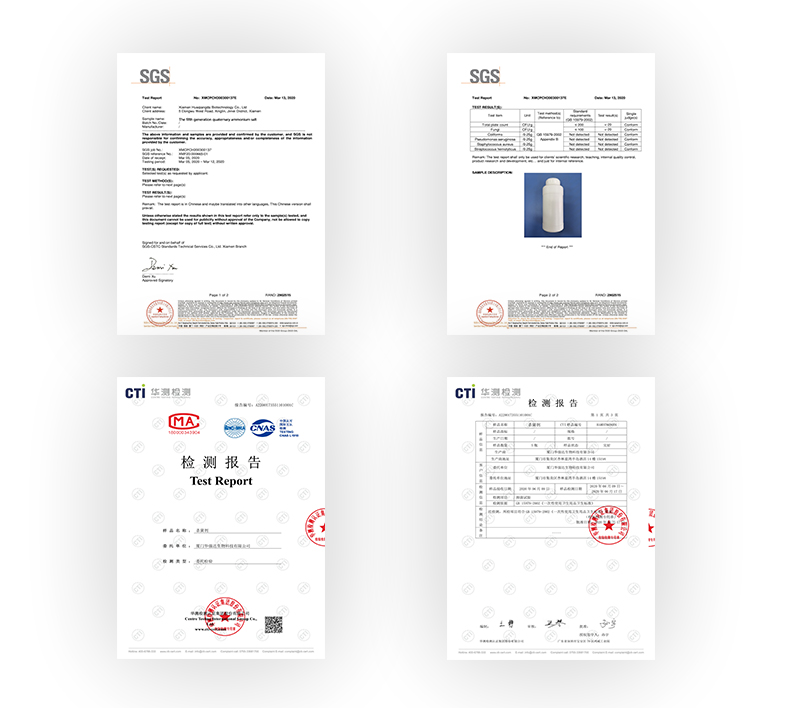
Quality testing is the evidence layer that turns a supplier claim into a verifiable model specification.
Detailed Solution: A Four-Layer Verification Framework
Model-specific capability can be verified in four layers, in this order. Each layer produces a document, and each document becomes part of the purchase agreement.
Layer 1 — Lock the model identity and its parameter table
The model code and its published parameters are the anchor of the whole evaluation. Without them, “baby wipes liquid” means something different to every supplier you approach.
For HUA-BY baby wipes liquid, the specification is explicit: appearance transparent to milky liquid; function gentle skin cleansing and moisturizing; pH 5.5–6.5; alcohol-free formula supported; hypoallergenic performance supported; suitable for sensitive baby skin; fragrance-free or mild fresh scent; shelf life 24 months. The declared material set is mild non-ionic surfactants, aloe vera extract as the moisturizing ingredient, chamomile extract as the soothing component, and a baby-care-grade preservative system.
HUA-PC patient care disposable wipes liquid is specified differently, and the difference matters: appearance transparent liquid; function patient skin cleansing and hygiene care; pH 5.5–7.0; alcohol-free formula supported; antibacterial rate ≥99%; suitable for sensitive skin and daily patient care; fragrance-free or mild fresh scent; shelf life 24 months. Its material set is mild non-ionic surfactants, aloe vera extract, glycerin as the moisturizing component, and a medical-grade preservative system.
HUA-AW anti-fog wipes liquid for eyeglass lenses adds a performance parameter that the other two do not carry: appearance transparent liquid; function anti-fog and lens cleaning; pH 6.0–7.5; anti-fog duration up to 24 hours; streak-free performance supported; suitable surfaces eyeglass lenses, goggles and camera lenses; alcohol-free formula supported; shelf life 24 months. Its functional ingredient is a polymer anti-condensation compound, with an optical-grade preservative system.
Read the surface scope literally. If your intended application is automotive glass rather than eyewear, goggles or camera lenses, that extension must be confirmed in writing by the supplier before it enters the acceptance criteria — a documented scope that does not name your substrate is a question, not an approval.
Layer 2 — Assess formulation control and batch reproducibility
Reproducibility is a manufacturing property, not a formulation property. Two suppliers can publish the same parameter table and achieve very different batch-to-batch consistency, because consistency depends on batching discipline, laboratory capability and in-process testing.
At Xiamen Huaqiangda Biotechnology Co., Ltd., production runs in a 2,000 m² facility with a 100,000-level clean production workshop plus standardized microbiology and fine chemical laboratories, supported by an R&D team of 5 engineers. Declared quality control covers 100% raw material inspection, microbiological testing, stability testing and third-party inspection (SGS). Those are the four control points that should appear as named evidence in a supplier file rather than as adjectives in a brochure.
Customization levers also belong in this layer, because each one is a variable that can drift: formula, fragrance, antibacterial ingredients, moisturizing ingredients, viscosity, pH value, packaging design and logo printing. If your model uses any of them — and a pH-tuned baby liquid or a fragrance-free patient care liquid uses at least two — the approved value must be written down with a tolerance, not left to the supplier’s discretion.
Layer 3 — Verify the evidence behind each claim
Certification and testing answer different questions, and buyers routinely conflate them.
The wipes liquid product holds ISO 9001:2015 certification, conforming to GB/T19001-2016, issued by Shenzhou Yixin (Beijing) Certification Co., Ltd. with certificate number SZ56425Q10129R0S, issued 2025-05-19 and valid to 2028-05-18 for the worldwide market. That certificate supports the existence of a quality management system. It does not, by itself, prove that a specific batch of HUA-PC reached an antibacterial rate of ≥99%.
Reading the certification scope is the step most buyers skip. The registered scope covers “blending and compounding of alkyl polyglycoside detergents and quaternary ammonium salt preservatives; wholesale of fragrance.” A buyer should confirm in writing that the model being purchased falls inside that scope, and should record the certificate number and expiry date in the supplier file so that renewal is tracked rather than assumed.
Claim-to-evidence rule: for every performance number in the specification — pH range, antibacterial rate, anti-fog duration, shelf life — request the test report that produced it, including the method, the sample batch and the date. A number without a method is a marketing statement; a number with a method is a purchase criterion.

Batch reproducibility, not the published parameter table, determines whether pH 5.5–6.5 is held across production runs.
Layer 4 — Convert delivery promises into delivery assurance
Delivery assurance is a commercial document, not a conversation. Xiamen Huaqiangda Biotechnology Co., Ltd. states a minimum order quantity of 25KG and a lead time of 3–15 days, with OEM, ODM, private label and custom formula development as production modes. Those three data points are the starting position for negotiation, and each needs a qualifier before it becomes a commitment.
- MOQ of 25KG — confirm whether it applies to your model, your packaging format and your fragrance option, since customization levers can change the minimum.
- Lead time of 3–15 days — ask what the low end and the high end each represent: which batch size, which packaging, which season, and whether raw material arrival is included.
- Capacity — ask for the definition behind any capacity figure (annual or monthly, single line or site-wide, theoretical or demonstrated). Where a supplier reports more than one capacity number, the buyer’s task is to reconcile them in writing before scheduling a launch.
Storage conditions belong here as well, because they affect shelf-life claims in transit. The application profile for this category specifies storage across a wide temperature range of −20°C to 40°C, which should be matched against your own warehouse and your distributor’s.
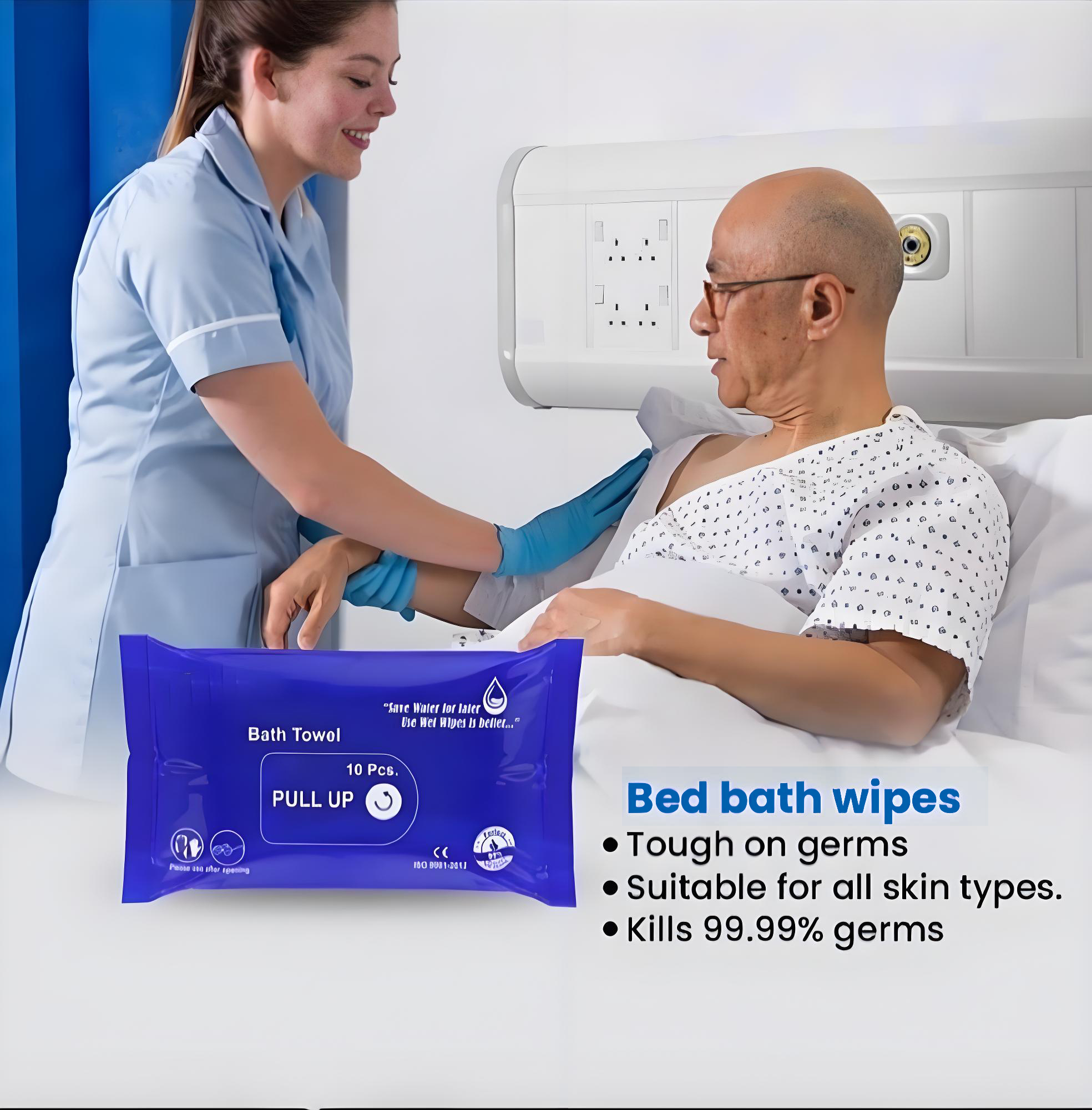
HUA-PC carries an antibacterial rate of ≥99% in its specification — the test method behind that figure is what the buyer must obtain.
Step-by-Step Breakdown: Eight Checks Before You Commit to a Delivery Schedule
Step 1 — Write the acceptance criteria table first
Start from the model specification and convert it into a table with parameter, target, tolerance and test method. For HUA-BY that means pH 5.5–6.5, appearance transparent to milky, alcohol-free confirmed, fragrance-free or mild fresh scent, shelf life 24 months. Do this before you contact the supplier, so the conversation is about your criteria rather than their catalogue.
Step 2 — Request the current technical data sheet and ingredient disclosure
Ask for the document version that applies to the batch you will receive, and ask which ingredient list it corresponds to. For a baby wipes liquid formulation, the preservative system is the component most likely to change quietly between versions, and it is also the component most likely to trigger a customer or regulatory question later.
Step 3 — Map the certificate scope to the model
Take the ISO 9001:2015 certificate number SZ56425Q10129R0S, check the issuing body (Shenzhou Yixin (Beijing) Certification Co., Ltd.), the standard (GB/T19001-2016) and the validity window (2025-05-19 to 2028-05-18), then read the scope wording line by line against the product you are buying. Record any gap as an open item rather than a rejection: a scope question is answered by documentation, not by assumption.
Step 4 — Demand claim-specific test evidence
For HUA-PC, request the report supporting the ≥99% antibacterial rate, including organism, method, contact time and the batch tested. For HUA-AW, request the basis for the anti-fog duration of up to 24 hours and for the streak-free claim. For HUA-BY, request the documentation supporting the hypoallergenic performance statement. Third-party inspection through SGS is available as part of the declared quality control system, which gives the buyer an independent route where the internal report is not sufficient for the destination market.
Step 5 — Run a sample against your own substrate and line
Evaluate the sample on your nonwoven, at your fill ratio, at your line speed. Record appearance, odor, pH, wetting behaviour and any residue. Keep a retention sample sealed and dated, because the retention sample is the reference that settles any later dispute about what was approved.
Step 6 — Put the criteria into purchase-order language
Attach the acceptance criteria table to the purchase order, name the model code and the specification version, and state the consequence of deviation. This is the point where most quality disputes are prevented: not by a stricter specification, but by a specification both parties signed.
Step 7 — Verify the delivery arithmetic
Reconcile the MOQ of 25KG, the lead time of 3–15 days and the capacity definition against your launch plan, your packaging format and your reorder cycle. Ask for the quantity basis in writing, and confirm that the storage range of −20°C to 40°C is compatible with your route to market.
Step 8 — Set change control and reorder acceptance
Agree in advance what happens when the formula, fragrance, preservative system, packaging or production site changes. Reference case files help here: two wet wipes manufacturers, in Uzbekistan (120 tons) and Indonesia (80 tons), have run with this supplier for two years on projects described as delivering stable long-term antibacterial performance and compatibility with high-speed wipes production lines. Ask what specifically was held constant in those relationships — that answer is more informative than the reference itself.
Use Cases: Three Models, Three Different Verification Priorities
Baby care brand — HUA-BY
The verification priority is pH discipline and preservative consistency. HUA-BY is specified at pH 5.5–6.5, alcohol-free, with hypoallergenic performance supported for sensitive baby skin, and a fragrance-free or mild fresh scent option. For a private label wipes liquid programme, the buyer should fix the fragrance decision early, because switching between fragrance-free and mild fresh scent is a specification change, not a cosmetic preference.
Healthcare distributor — HUA-PC
The verification priority is claim substantiation. HUA-PC is specified at pH 5.5–7.0 with an antibacterial rate ≥99%, alcohol-free, suitable for sensitive skin and daily patient care, and built on a medical-grade preservative system. Buyers supplying hospitals or nursing homes should pair the test report with the documentation route required in the destination market, since antibacterial claims are filed or registered differently across jurisdictions.
Optical and surface-care programmes — HUA-AW
The verification priority is surface scope. HUA-AW is specified at pH 6.0–7.5, alcohol-free, streak-free, with anti-fog duration up to 24 hours, for eyeglass lenses, goggles and camera lenses. Where the end use is automotive glass, treat the extension as an open technical question and obtain written confirmation plus a test on the actual substrate before ordering.
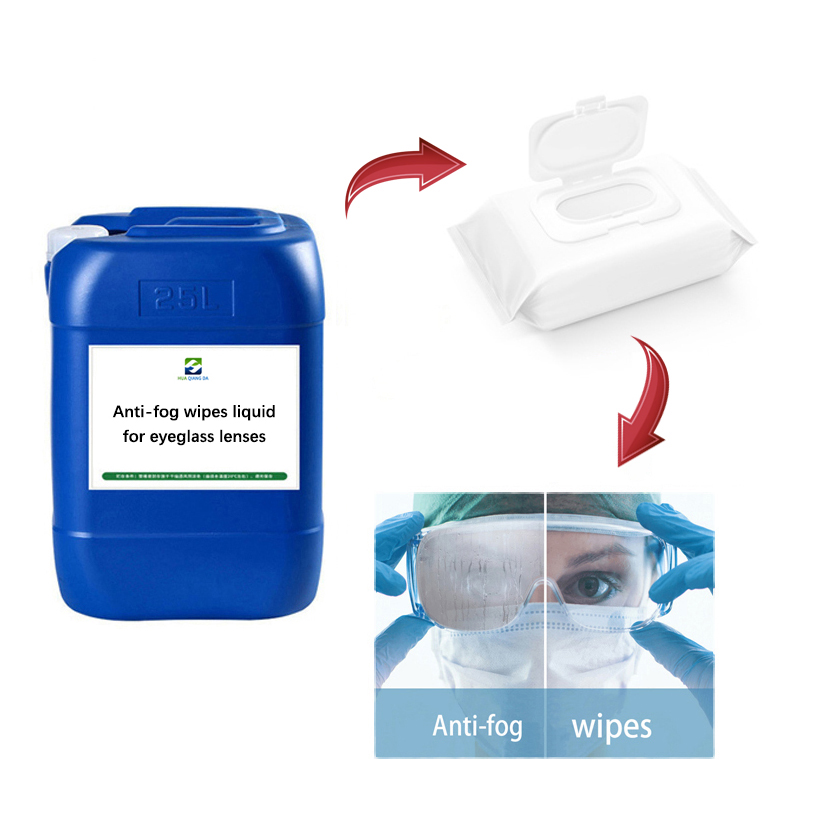
HUA-AW documents eyeglass lenses, goggles and camera lenses as its suitable surfaces — any other substrate requires written confirmation.
Comparison Table: Three Models Side by Side
The table below compares the three models on the parameters each one actually declares. Blank cells reflect parameters not stated in the individual specification, not a negative result.
| Parameter | HUA-BY Baby Wipes Liquid | HUA-PC Patient Care Wipes Liquid | HUA-AW Anti-Fog Wipes Liquid |
|---|---|---|---|
| Primary function | Gentle skin cleansing and moisturizing | Patient skin cleansing and hygiene care | Anti-fog and lens cleaning |
| Appearance | Transparent to milky liquid | Transparent liquid | Transparent liquid |
| pH value | 5.5–6.5 | 5.5–7.0 | 6.0–7.5 |
| Antibacterial rate | Not stated in specification | ≥99% | Not stated in specification |
| Anti-fog duration | Not applicable | Not applicable | Up to 24 hours |
| Alcohol-free formula | Supported | Supported | Supported |
| Fragrance | Fragrance-free or mild fresh scent | Fragrance-free or mild fresh scent | Not stated in specification |
| Suitable skin / surfaces | Sensitive baby skin | Sensitive skin and daily patient care | Eyeglass lenses, goggles, camera lenses |
| Key functional materials | Mild non-ionic surfactants; aloe vera extract; chamomile extract; baby-care-grade preservative | Mild non-ionic surfactants; aloe vera extract; glycerin; medical-grade preservative | Surfactants; polymer anti-condensation compound; purified water; optical-grade preservative |
| Shelf life | 24 months | 24 months | 24 months |
The same logic applies to the commercial layer. MOQ of 25KG and lead time of 3–15 days are stated for the supplier’s OEM, ODM and private label modes; they should be re-confirmed per model, since formulation complexity differs across the three examples above.
| Verification point | Document to request | Criterion to write into the purchase order |
|---|---|---|
| Model identity | Technical data sheet with model code and version | Model code, specification version and parameter table attached as an annex |
| Quality system | ISO 9001:2015 certificate SZ56425Q10129R0S with scope wording | Scope confirmed in writing to cover the purchased model; expiry tracked |
| Performance claim | Test report stating method, organism or substrate, contact time and batch | Claim accepted only with a referenced method and a retained reference batch |
| Batch consistency | Raw material inspection, microbiological and stability records; SGS report where required | Certificate of analysis per batch; retention sample held and dated |
| Sample approval | Sealed sample plus approved specification | Retention sample defines the approved standard for later comparison |
| Commercial terms | Written quotation with MOQ and lead time | MOQ 25KG basis and lead time 3–15 days confirmed per model and packaging |
| Change control | Notification procedure for formula, fragrance, preservative or site changes | Prior written notice and re-approval before any change is shipped |
Frequently Asked Questions
Which certification should a wipes liquid supplier hold, and what does it actually prove?
The relevant certificate here is ISO 9001:2015, conforming to GB/T19001-2016, issued by Shenzhou Yixin (Beijing) Certification Co., Ltd. under certificate number SZ56425Q10129R0S, valid from 2025-05-19 to 2028-05-18 for the worldwide market. It proves that a quality management system is certified within a defined scope, which in this case covers the blending and compounding of alkyl polyglycoside detergents and quaternary ammonium salt preservatives and the wholesale of fragrance. It does not prove that a specific batch met an antibacterial rate or an anti-fog duration. Buyers should confirm that the purchased model falls inside the certified scope and should request product-level test evidence separately.
How do I confirm a supplier can reproduce a named model rather than a general category?
Work from the model specification, not the product list. For example, ask the supplier to confirm HUA-BY at pH 5.5–6.5, appearance transparent to milky, alcohol-free and fragrance-free or mild fresh scent, or HUA-PC at pH 5.5–7.0 with an antibacterial rate of ≥99% and a medical-grade preservative system. Then require the supporting records: 100% raw material inspection, microbiological testing, stability testing and third-party inspection through SGS, each tied to a batch. A supplier able to answer at that level is demonstrating model capability; a supplier that answers only at category level is not.
What commercial terms drive the cost of a wipes liquid order?
Four terms set most of the commercial outcome: the model and its active system, the customization levers used (fragrance, antibacterial ingredients, moisturizing ingredients, viscosity, pH value, packaging design, logo printing), the minimum order quantity, and the lead time. This supplier states an MOQ of 25KG and a lead time of 3–15 days across OEM, ODM and private label modes. Ask for quotations normalized on model code, pack size and delivery term so that two offers can actually be compared, and ask which customization levers are included in the base price rather than added afterwards.
What should a sample evaluation include before approval?
Test the named model on your own nonwoven, at your fill ratio and line speed, and record appearance, odor, pH, wetting behaviour and residue. Compare the results against the written acceptance criteria rather than against a general impression. Keep a sealed, dated retention sample, because it becomes the reference standard for every later batch, and request the certificate of analysis for the sample batch it came from. A sample that cannot be traced to a batch record is a demonstration, not an approval basis.
How do I turn a quoted lead time into genuine delivery assurance?
A quoted lead time of 3–15 days is a range, and the buyer’s job is to identify where inside that range the order will land. Confirm the batch size, the packaging format, the MOQ of 25KG basis for your specific model, and the capacity definition behind any capacity figure the supplier reports. Reference projects can help frame the question: two wet wipes manufacturers, in Uzbekistan (120 tons) and Indonesia (80 tons), have worked with this supplier for two years on programmes described as delivering stable long-term antibacterial performance and compatibility with high-speed production lines. Then write the agreed reorder lead time into the agreement. To move from evaluation to verification, request the model-specific sample and a written quotation for Xiamen Huaqiangda Biotechnology Co., Ltd. through www.wipesliquid.com, quoting the model code and your acceptance criteria.
Conclusion: Evaluate the Model, Then the Supplier
Supplier evaluation for wipes liquid becomes reliable at the moment it stops comparing companies and starts comparing models. Lock the specification, read the certification scope against the product you are buying, demand method-based evidence for every performance number, approve a traceable sample, and convert MOQ, lead time and capacity into written commitments. Applied to HUA-BY, HUA-PC and HUA-AW, that discipline produces three concrete checklists rather than one generic impression — and it is the difference between a supplier that can quote your formulation and a supplier that can reproduce it.
Next step: request a model-specific sample and written quotation
Share your model code, target pH, claim requirements and packaging format with Xiamen Huaqiangda Biotechnology Co., Ltd. to receive a sample, a specification sheet and a quotation stating MOQ and lead time for your exact model.
Website: www.wipesliquid.com | Email: wenkunhua@xmqfh.com | Tel / WhatsApp: +86 159-5929-1685
Product catalogue and full specification pack: download the brochure (PDF)

Model-specific sample preparation and quotation support for OEM, ODM and private label wipes liquid programmes.
Have Questions or Need More Details?
Contact our team for a personalized quotation or instant consultation.
Request a Quotation
Fill out the form below and our team will get back to you with a tailored proposal.
WhatsApp Direct Chat
Prefer to chat in real-time? Message us on WhatsApp for instant assistance & quick answers.
- Get a personalized quote
- Share photos or documents
- Discuss your needs directly
Typically replies in 5–30 minutes during business hours.