
Wipes Liquid Long-Term Partnership FAQ: Reorders & Acceptance Criteria
Wipes Liquid Long-Term Partnership FAQ: Reorders & Acceptance Criteria
B2B SupplyConstraints & ComplianceResearch → Evaluation
A long-term wipes liquid partnership is not secured by a strong first shipment. It is secured by written acceptance criteria, a locked specification sheet, a repeatable reorder protocol and a defined after-sales path. This FAQ answers the questions B2B buyers raise after the first quotation — how onboarding should work, what batch consistency can realistically be expected, how reorders are coordinated, and how after-sales issues are handled when the same liquid is used across baby care, household cleaning or disinfection applications.
Three products from Xiamen Huaqiangda Biotechnology Co., Ltd. — HUA-BY baby wipes liquid, HUA-FC floor cleaning wipes liquid and HUA-DW disinfecting wipes liquid — are used throughout this guide to show how application-specific support is structured once a supply relationship moves past the sampling stage.
Short answer: A partnership-ready wipes liquid agreement fixes four things before the second order — a documented compliance baseline, a locked formulation specification with tolerances, an acceptance criteria set that applies to every batch, and a reorder and after-sales workflow with named responsibilities.
- Compliance baseline: ISO 9001:2015 (GB/T19001-2016), certificate number SZ56425Q10129R0S, issued by Shenzhou Yixin (Beijing) Certification Co., Ltd., valid for the worldwide market.
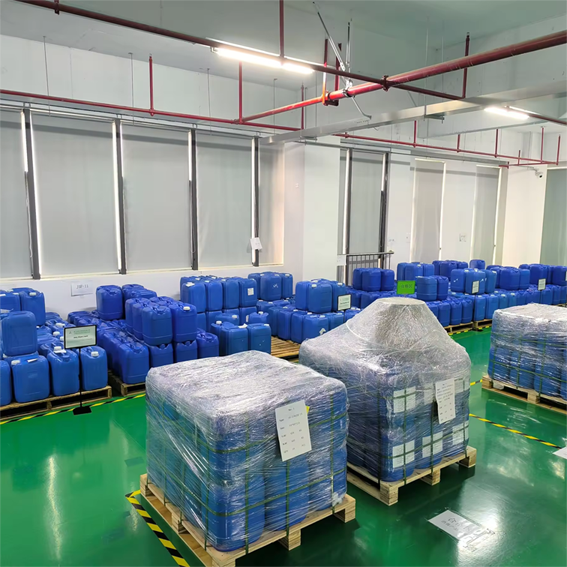
- Commercial baseline: MOQ from 25 kg, lead time of 3–15 days, monthly capacity of 3,000 tons, with packaging in 25 kg containers, 1-ton IBC tanks or customised formats.
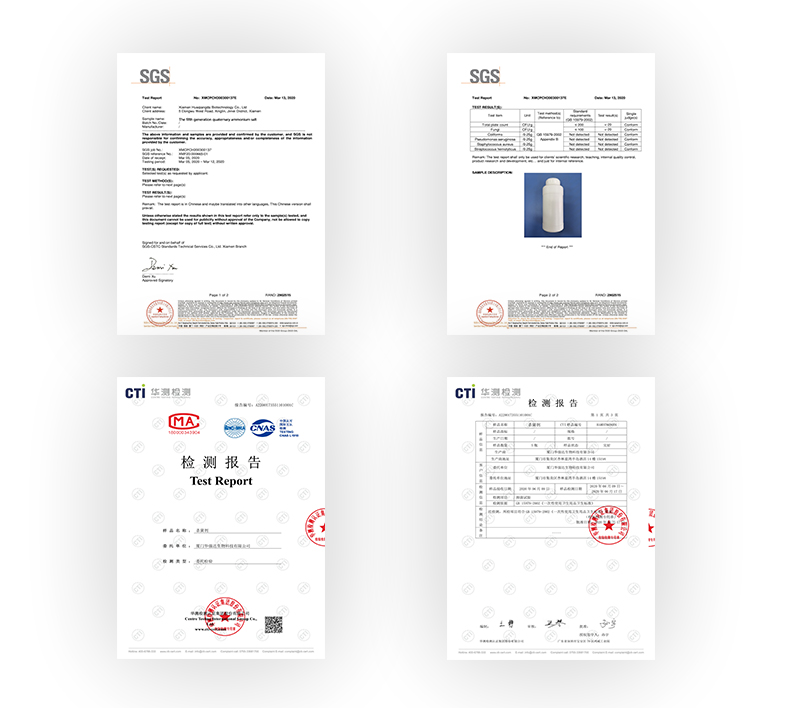
- Quality control: 100% raw material inspection, microbiological testing, stability testing and third-party inspection (SGS).
- After-sales scope: technical formula support, production guidance, regulatory document support and after-sales quality tracking.

Problem Definition: Why Wipes Liquid Supply Breaks Down After the First Order
Most wipes liquid sourcing problems do not appear in the first delivery. They appear in the third, fifth or tenth reorder, when the buyer can no longer compare an incoming batch against a written reference and must rely on memory, email threads or a sample bottle kept on a shelf. At that point the supplier relationship is still functioning commercially, but it has lost the technical discipline that made the first order successful.
Five recurring failure points appear in repeat wipes liquid supply:
- Undocumented specification drift. The original order was approved against a sample or a verbal description. Once the formula is reproduced, no one can prove whether pH, fragrance intensity or appearance has moved, because no tolerance range was written down.
- Acceptance criteria that were never defined. Buyers frequently receive a certificate of analysis but have no agreed benchmark against which to judge it, so rejected or marginal batches are absorbed into production rather than escalated.
- Fragrance and preservative variation. Fragrance systems and preservative systems are the most common source of perceived inconsistency in wipes liquid, because they are sensory and formulation-dependent rather than visible on a specification sheet.
- Reorder ambiguity. A reorder placed by product name alone — for example “baby wipes liquid” — can be filled with a different revision of the same formula.
- Compliance mismatch that surfaces late. A claim such as antibacterial or disinfectant can trigger a different regulatory route than a general cleansing claim, and that difference is often discovered only when the finished wipes reach the destination market.
The cost of these failures is not limited to a rejected batch. A liquid that behaves differently on a high-speed wipes line can slow the line, change the wet-to-dry feel of the finished wipes, or force an unbudgeted reformulation project in the middle of a retail season. Long-term supply is therefore a documentation problem before it is a pricing problem.
Industry Background: What Is Changing in the Wipes Liquid Market
Wipes liquid demand tracks the finished wipes market. The global wet wipes market was estimated to reach USD 30.90 billion in 2025 (Fortune Business Insights, 2026). The surface disinfectant wipes segment is projected to grow from USD 6.4 billion in 2026 to USD 8.0 billion in 2030, a CAGR of 5.4% (Grand View Research, 2026). Growth at this scale pushes buyers toward multi-year supply arrangements rather than one-off purchases, which is exactly why partnership terms now carry more commercial weight.
Three shifts shape those arrangements:
- Formulation preference. Baby wipes formulations increasingly feature alcohol-free, hypoallergenic and pH-balanced specifications with ingredients such as aloe vera, which raises the bar for what a “baby wipes liquid formulation” must document.
- Regulatory classification. In China, wet wipes with antibacterial or disinfectant claims require filing with the provincial department of disease control and prevention. Classification therefore depends on the claim, not only on the chemistry.
- Active ingredient transparency. Official US EPA labels show how far disinfecting products can differ from one another. One ready-to-use disinfectant wipes label lists hydrogen peroxide at 1.00% and peroxyacetic acid at 0.08%; a separate solvent-free disinfectant label lists four quaternary ammonium actives at product-specific concentrations. Neither label is an industry benchmark — which is precisely why buyers should verify a specific formula instead of assuming a category norm.
Xiamen Huaqiangda Biotechnology Co., Ltd. is a wipes liquid formulation manufacturer established in 2018 and located in Xiamen, Fujian, China. The company operates a modern independent facility with a 100,000-level clean production workshop and standardised microbiology and fine chemical laboratories, and supplies OEM, ODM and private label wipes liquid programmes to markets including Central Asia, Southeast Asia, South America, the Middle East, North America and Africa.
Verification note: The formulation values in this article reflect the published product specifications of the referenced wipes liquid models. Because efficacy, compatibility and claim-related statements are supplier-reported, buyers should verify active ingredient identity and concentration, test protocol and jurisdiction-specific registration before approving a formula for a long-term programme.
Detailed Solution: The Four Pillars of a Partnership-Ready Wipes Liquid Agreement
A workable long-term structure separates four areas of responsibility: compliance, formulation, reorder logistics and after-sales. Each area produces documents that the next one depends on, so weak documentation in any pillar shows up later as a dispute.
Pillar 1 — Compliance baseline and the document set
The compliance baseline is the certificate that survives scrutiny at the start of a relationship and the claim review that happens at the end of it. For the wipes liquid product, the quality management certification is ISO 9001:2015, based on the standard GB/T19001-2016, with certificate number SZ56425Q10129R0S, issued by Shenzhou Yixin (Beijing) Certification Co., Ltd., and valid for the worldwide market. The certification scope covers the blending and compounding of alkyl polyglycoside detergents and quaternary ammonium salt preservatives, and the wholesale of fragrance.
For a long-term agreement, the certificate should be filed together with the technical data sheet, the preservative system statement and the intended claim category. Claim category matters commercially: a general cleansing wipes liquid and a disinfectant wipes liquid can follow different regulatory routes even when they are packed in the same 25 kg container.
Pillar 2 — Locked formulation and batch consistency
Batch consistency is a process output, not a promise. A production workflow built on 100% raw material inspection, microbiological testing, stability testing and third-party inspection (SGS) gives the buyer measurable checkpoints across repeat orders. Specification tolerances should be agreed as ranges rather than single values, and each batch should be traceable to a batch record and a certificate of analysis that references the agreed specification revision.
The published specifications for the three products discussed here illustrate why tolerances differ by application. HUA-BY baby wipes liquid is specified at pH 5.5–6.5 with an alcohol-free formula, hypoallergenic performance and a baby-care-grade preservative system. HUA-FC floor cleaning wipes liquid is specified at pH 6.5–8.5 with an antibacterial rate of ≥99% and a fresh lemon fragrance. HUA-DW disinfecting wipes liquid is specified at pH 6.0–8.0 with quaternary ammonium compounds at 0.2%–0.5% and a stated antibacterial efficacy of ≥99.99%. All three carry a 24-month shelf life.
Pillar 3 — Reorder coordination
Reorder coordination is an operational protocol. Production capacity of 3,000 tons per month with a lead time of 3–15 days supports recurring programmes, particularly when the supplier runs automatic batching systems, continuous mixing operations and fully automated filling with 24/7 production support. The buyer's side of the protocol is equally important: a fixed formula code, a fixed packaging format and a fixed fragrance code, quoted against a written specification sheet rather than a product name.
Pillar 4 — After-sales handling
After-sales support in a wipes liquid relationship covers technical formula support, production guidance, regulatory document support and after-sales quality tracking. In practice this means the supplier remains involved when a buyer scales a formula onto a new line, changes nonwoven substrate, or needs documentation for a market filing. Defining the escalation path early — who is contacted, what evidence is required, and what a replacement batch looks like — prevents a quality question from becoming a supply interruption.
Step-by-Step Breakdown: From Onboarding to a Predictable Reorder Cycle
- Define the application and the claim. State the finished product (baby wipes, floor cleaning wipes, disinfecting wipes, pet wipes, private label programme) and the claim the label will carry. The claim determines the compliance route and the documentation that must be prepared.
- Lock the specification sheet. Convert the sample into written ranges: appearance, pH range, fragrance type, active ingredient or preservative system, antibacterial target where applicable, shelf life and packaging format.
- Validate samples against the real line. Test the exact formula revision on the intended nonwoven, at the intended line speed, and record the sample batch code. Compatibility with high-speed wipes production lines is a core criterion, not an afterthought.
- Write the acceptance criteria. Agree what is checked on receipt, what tolerance triggers a query, and what tolerance triggers rejection, together with the certificate of analysis format.
- Document the reorder pack. Keep one reference file containing formula code, model number, packaging format, fragrance code, pH specification, certification copy and batch record reference. This file, not an email thread, becomes the basis of every repeat order.
- Set the after-sales escalation path. Name the technical contact, the response expectation and the evidence required, and schedule a periodic review of batch data and market requirements.
Acceptance criteria: what to write into the agreement
Acceptance criteria turn a sample into a contract term. The table below shows the fields that should carry an agreed value or range for each wipes liquid in the programme.
| Acceptance field | What to document | Reference values used in the examples below |
|---|---|---|
| Appearance | Visual description and any acceptable variation | Transparent liquid (HUA-FC, HUA-DW); transparent to milky liquid (HUA-BY) |
| pH range | Lower and upper limit, with test method | 5.5–6.5 (HUA-BY); 6.5–8.5 (HUA-FC); 6.0–8.0 (HUA-DW) |
| Antibacterial performance | Target rate and the test basis used to confirm it | ≥99% (HUA-FC); ≥99.99% stated (HUA-DW); not stated for HUA-BY |
| Fragrance | Fragrance code and acceptable intensity band | Fragrance-free or mild fresh scent (HUA-BY); fresh lemon (HUA-FC); light fresh scent (HUA-DW) |
| Packaging | Container type, fill weight and labelling artwork | 25 kg, 1-ton IBC tank, customisable |
| Shelf life | Duration and storage conditions | 24 months for all three products |
| Batch traceability | Batch code, certificate of analysis, retained sample | Batch record referenced against the agreed specification revision |
Use Cases: How Application-Specific Support Works Over Time
The value of a long-term relationship is easiest to see in products that carry very different formulation logic but share one supply programme.
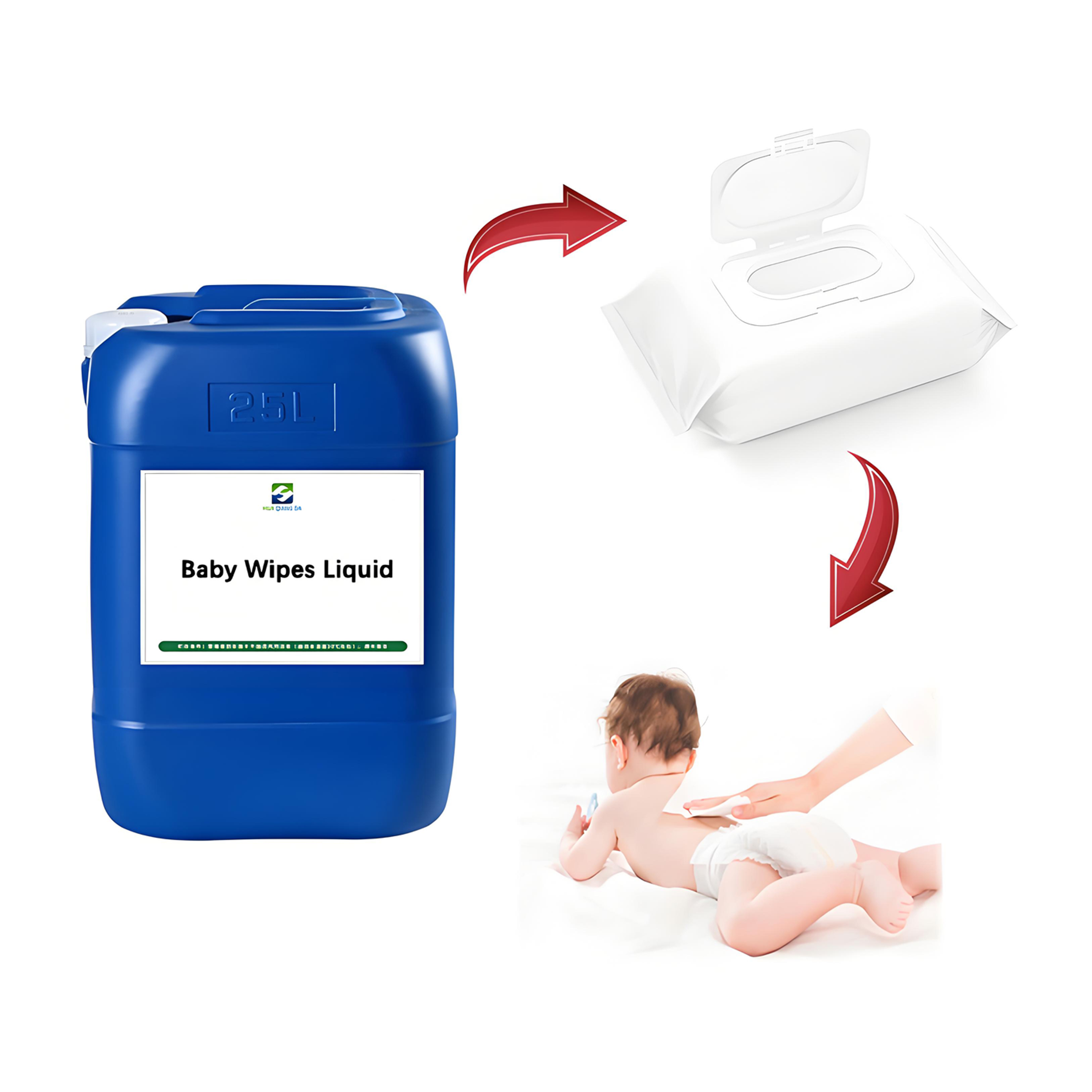
HUA-BY baby wipes liquid — sensitive skin programmes
A baby wipes liquid formulation sits at the strict end of the specification range: pH 5.5–6.5, alcohol-free, hypoallergenic performance, suitable for sensitive baby skin, and built on mild non-ionic surfactants with aloe vera extract, chamomile extract and a baby-care-grade preservative system. It is supplied fragrance-free or with a mild fresh scent. Over a multi-year programme, the reorder risk is formula drift in the preservative system, so the acceptance criteria should pin the preservative system and the fragrance decision separately, and each batch should retain a sample for comparison.
HUA-FC floor cleaning wipes liquid — household and commercial cleaning
Floor cleaning wipes liquid works in a different direction: high-efficiency degreasing with an antibacterial rate of ≥99%, based on non-ionic surfactants, a citrus extract solvent and benzalkonium chloride, specified at pH 6.5–8.5 for tile, wood floor, laminate and marble. Reorder discipline here focuses on degreasing consistency and fragrance, because both are evaluated by the end user in a wet-use scenario rather than in a laboratory.

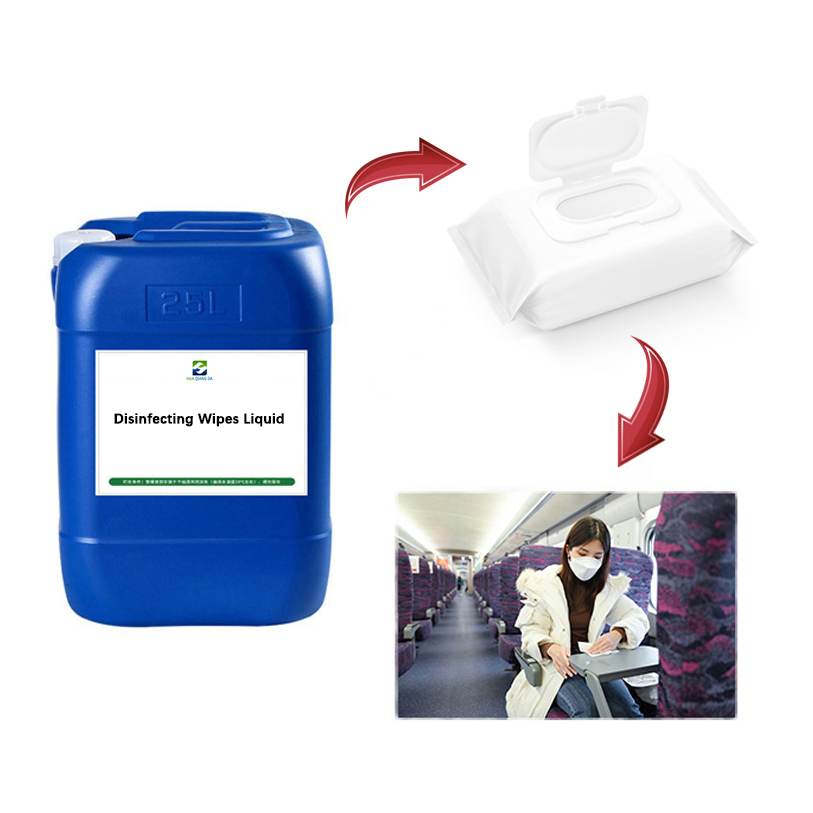
HUA-DW disinfecting wipes liquid — claim-sensitive programmes
Disinfecting wipes liquid demands the most documentation. HUA-DW is specified at pH 6.0–8.0 with quaternary ammonium compounds at 0.2%–0.5% and a stated antibacterial efficacy of ≥99.99%, for household, office and medical non-critical surfaces. Because disinfectant claims are regulated differently from general cleansing claims, the buyer should confirm the intended market's requirement, the active ingredient identity and concentration, and the test basis before the first repeat order — not after the first shipment.
Documented supply programmes
These patterns are not theoretical. A wet wipes manufacturer in Uzbekistan has run a two-year supply programme totalling 120 tons, and a customer in Indonesia has run 80 tons over two years. Both programmes cover baby wipes production, antibacterial wipes manufacturing, household cleaning wipes and personal care wipes, with reported stable long-term antibacterial performance, increased production efficiency and compatibility with high-speed wipes production lines. The client types involved include wet wipes factories, baby care brands, private label companies and healthcare products distributors.
Product Comparison for Long-Term Supply Planning
The table below compares the three products on the parameters that most often become acceptance criteria in a repeat-order agreement.
| Parameter | HUA-BY Baby Wipes Liquid | HUA-FC Floor Cleaning Wipes Liquid | HUA-DW Disinfecting Wipes Liquid |
|---|---|---|---|
| Appearance | Transparent to milky liquid | Transparent liquid | Transparent liquid |
| Primary function | Gentle skin cleansing and moisturising | Floor cleaning and stain removal | Surface disinfection and antibacterial cleaning |
| pH value | 5.5–6.5 | 6.5–8.5 | 6.0–8.0 |
| Key ingredients | Mild non-ionic surfactants, aloe vera extract, chamomile extract | Non-ionic surfactants, citrus extract solvent, benzalkonium chloride | Quaternary ammonium compounds, surfactants, corrosion inhibitor |
| Antibacterial performance | Not stated in the product specification | ≥99% | ≥99.99% stated |
| Suitable surfaces or skin | Sensitive baby skin | Tile, wood floor, laminate floor, marble | Household, office and medical non-critical surfaces |
| Fragrance | Fragrance-free or mild fresh scent | Fresh lemon scent | Light fresh scent |
| Shelf life | 24 months | 24 months | 24 months |
Shared across all three: OEM, ODM, private label and custom formula development support, with customisation available for formula, fragrance, antibacterial ingredients, moisturising ingredients, viscosity, pH value, packaging design and logo printing. This is the practical advantage of a single-supplier partnership — one compliance file, one reorder protocol and one after-sales contact across several product lines.
FAQ: Long-Term Wipes Liquid Partnership Questions
1. Which compliance documents should be attached to a long-term wipes liquid supply agreement?
At minimum, attach the current quality management certificate with its number, issuing body, scope and validity dates. For the wipes liquid product this is ISO 9001:2015, based on GB/T19001-2016, certificate number SZ56425Q10129R0S, issued by Shenzhou Yixin (Beijing) Certification Co., Ltd., and valid for the worldwide market. The document set should also include the technical data sheet, the preservative system statement and the certificate of analysis format. Market-specific requirements need equal attention: in China, wet wipes with antibacterial or disinfectant claims require filing with the provincial department of disease control and prevention, and in the United States disinfectant products are subject to EPA pesticide product labelling. Filing the claim category alongside the certificate prevents a compliance question from appearing after the first repeat order.
2. How can a buyer expect batch consistency to be maintained across repeat orders?
Consistency is a process output, so verify the process. Production runs in a 100,000-level clean production workshop supported by standardised microbiology and fine chemical laboratories, with 100% raw material inspection, microbiological testing, stability testing and third-party inspection (SGS). Agree tolerances rather than single values: HUA-BY baby wipes liquid is specified at pH 5.5–6.5, HUA-FC floor cleaning wipes liquid at pH 6.5–8.5, and HUA-DW disinfecting wipes liquid at pH 6.0–8.0, all with a 24-month shelf life. Each batch should be traceable to a batch record and a certificate of analysis referencing the agreed specification revision, and retained samples should be kept for comparison against later reorders.
3. What commercial terms should be fixed before the first reorder?
Fix the operational terms first, because they determine whether a reorder is realistic: MOQ from 25 kg, packaging in 25 kg containers, 1-ton IBC tanks or customised formats, lead time of 3–15 days, and monthly capacity of 3,000 tons, supported by automatic batching, continuous mixing, fully automated filling and 24/7 production support. Then fix the specification-linked items — formula code, fragrance code, active ingredient or preservative specification, labelling artwork and the formula revision number. Price should be quoted against that fixed specification sheet, since two products both sold as wipes liquid can differ in surfactant system, fragrance, preservative system and active ingredient concentration. Comparing headline prices across non-equivalent formulas is the most common commercial error in this category, so request a written quotation tied to a defined specification.
4. How should samples be validated before committing to a repeat programme?
Sample validation should reproduce production conditions. Request the exact formula revision rather than a generic category sample, then test compatibility with the intended nonwoven, run behaviour at the intended line speed, fragrance intensity after drying, pH after wetting and stability across the shelf-life window. Record the sample batch code so the validated sample can be traced if a later reorder is questioned. The formulas described here are positioned as compatible with high-speed wipes production lines, and after-sales scope includes technical formula support and production guidance during scale-up, which is where most substrate or viscosity issues are resolved.
5. What does reorder coordination and lead time look like after the first supply cycle?
A mature reorder cycle runs on a fixed documentation pack rather than on new negotiation: formula code, model number, packaging format, fragrance code, pH specification, current certification copy and the batch record reference. Against that pack, production lead time is 3–15 days, with monthly capacity of 3,000 tons and 24/7 production support for recurring programmes. Buyers should also plan buffer stock around their own line schedule and review batch data periodically with the technical contact. To start that process, request a sample of the specific formula revision or a written quotation against your specification sheet — that is the point at which a supplier relationship becomes a supply programme.
Conclusion
Long-term wipes liquid supply holds together when four pillars are documented: a compliance baseline that can be filed and re-verified, a formulation specification written as tolerances, acceptance criteria that apply to every batch, and a reorder and after-sales protocol with named responsibilities. Certification such as ISO 9001:2015 (GB/T19001-2016, certificate number SZ56425Q10129R0S, issued by Shenzhou Yixin (Beijing) Certification Co., Ltd.) provides the quality management anchor, while quality control steps including 100% raw material inspection, microbiological testing, stability testing and third-party inspection (SGS) provide the checkpoints that make consistency measurable. Applied to baby wipes liquid, floor cleaning wipes liquid or disinfecting wipes liquid, the same discipline produces one outcome: repeat orders that can be compared, questioned and approved without rebuilding the original agreement.
Next Step: Lock the Specification Before the Next Reorder
If you are evaluating wipes liquid suppliers for a multi-year programme, the practical starting point is a specification sheet and a sample, not a price list.
- Request a sample of the exact formula revision you intend to run — baby wipes liquid, floor cleaning wipes liquid, disinfecting wipes liquid, or a custom formula.
- Request a quotation against your own specification sheet, including packaging format and target lead time.
- Download the company brochure: Xiamen Huaqiangda Biotechnology Co., Ltd. brochure (PDF).
Contact: Kelvin — Email: wenkunhua@xmqfh.com | Tel / WhatsApp: +86 159-5929-1685 | Website: www.wipesliquid.com | Address: No. 199-1, Dongren West Road, Jimei District, Xiamen City, Fujian Province, China.
Have Questions or Need More Details?
Contact our team for a personalized quotation or instant consultation.
Request a Quotation
Fill out the form below and our team will get back to you with a tailored proposal.
WhatsApp Direct Chat
Prefer to chat in real-time? Message us on WhatsApp for instant assistance & quick answers.
- Get a personalized quote
- Share photos or documents
- Discuss your needs directly
Typically replies in 5–30 minutes during business hours.