OCA Optical Bonding Touch Display Module Guide
An OCA optical bonding touch display module bonds the cover glass and touch sensor directly to the display surface with an optically clear adhesive film, leaving no air gap inside the stack. In this construction the cover glass, the indium tin oxide (ITO) touch sensor and the TFT panel behave as a single optical unit. Guangzhou Xiangrui Optoelectronics Technology Co., Ltd., a touch screen and touch display module manufacturer based in Guangzhou, China, produces custom touch display modules in this construction and uses OCA optical adhesive film as its optical bonding layer.
Buyers entering the research stage usually meet three words at the same time — laminated, bonded and optical — and treat them as marketing variants of one thing. They are not. The difference between an OCA-bonded module and a frame-bonded module changes how the display reads under bright light, how it behaves after years of cleaning, and how much protection engineering the enclosure still has to carry. This guide covers the construction, the trade-offs, the product options and the questions a purchasing or engineering team should settle before committing a design.
The Problem: What an Air Gap Does to a Touch Display
A conventional frame-bonded touch display assembly holds the touch panel slightly above the display panel so that the two can be fixed to the frame at their edges. The space between them is filled with air. The assembly is cheap and repairable, but the gap has physical consequences that appear in the field rather than on a datasheet.
- Reflection. Every interface between two media reflects part of the incoming light. An air gap adds two extra interfaces inside the stack, which normally lowers contrast and lifts black levels, so the display looks washed out under strong ambient light.
- Internal fogging. An enclosed air cavity can hold moisture. When the surface temperature drops below the dew point of that trapped air, condensation forms between the layers. Full lamination removes the cavity, which is why the laminated option is documented as anti-fog.
- Contamination. Dust and liquid reach an open gap far more easily than a bonded interface, and once inside they cannot be cleaned without disassembly. The laminated version is documented as dustproof.
- Parallax. The touch sensor sits on the underside of the cover glass while the image sits below the gap. At an angle the two are visibly offset, which is awkward for point-and-drag operations on small targets.
- Sealing effort. An air cavity must itself be sealed to reach a given ingress protection level, and that work then has to be repeated for every product variant that reuses the enclosure.
The product documentation summarises the trade-off plainly: G+G full lamination is described as the mainstream option offering high contrast ratio, no air gap, dustproof and anti-fog behaviour, while frame bonding remains available at a lower cost and gives customers two price tiers to choose between.
Industry Background: Where Laminated Touch Modules Fit
The commercial touch display market is projected to grow from USD 6.9 billion in 2025 to USD 16.3 billion by 2035, at a compound annual growth rate of 9.0% (Future Market Insights, 2025). By technology, capacitive touch modules held approximately 71% of the touch screen module market in 2025 while resistive modules accounted for about 19% (Business Research Insights, 2025).
That split is easy to misread. A 71% share does not make resistive obsolete; it means projected capacitive (PCAP) has become the default for new consumer, medical and self-service designs where gestures and image viewing matter. The remaining 19% persists because specific industrial conditions — heavy work gloves, hard-object pressing, heavy oil contamination, single-point operation and tight budgets — still favour a resistive layer. Lamination is a separate decision from touch technology, and the two are frequently confused during early evaluation.
Behind those proportions sits a practical driver: equipment makers are pushing displays into environments that used to be handled by sealed cabinets with a membrane keypad. Industrial control panels, medical monitors, self-service kiosks, smart home controllers and new energy equipment now expect a glass-fronted interface that survives the room it is installed in. Xiangrui Optoelectronics has been manufacturing touch screens and touch display modules since 2010, operates a 5,000 square metre facility with about 60 staff including 15 engineers, and reports an annual production capacity of 300,000 units. Roughly half of output is exported, with main markets in Asia, Europe and America. The company holds ISO 9001 and ISO 14001 certification, 16 utility model patents and National High-Tech Enterprise status.
What OCA Optical Bonding Actually Changes
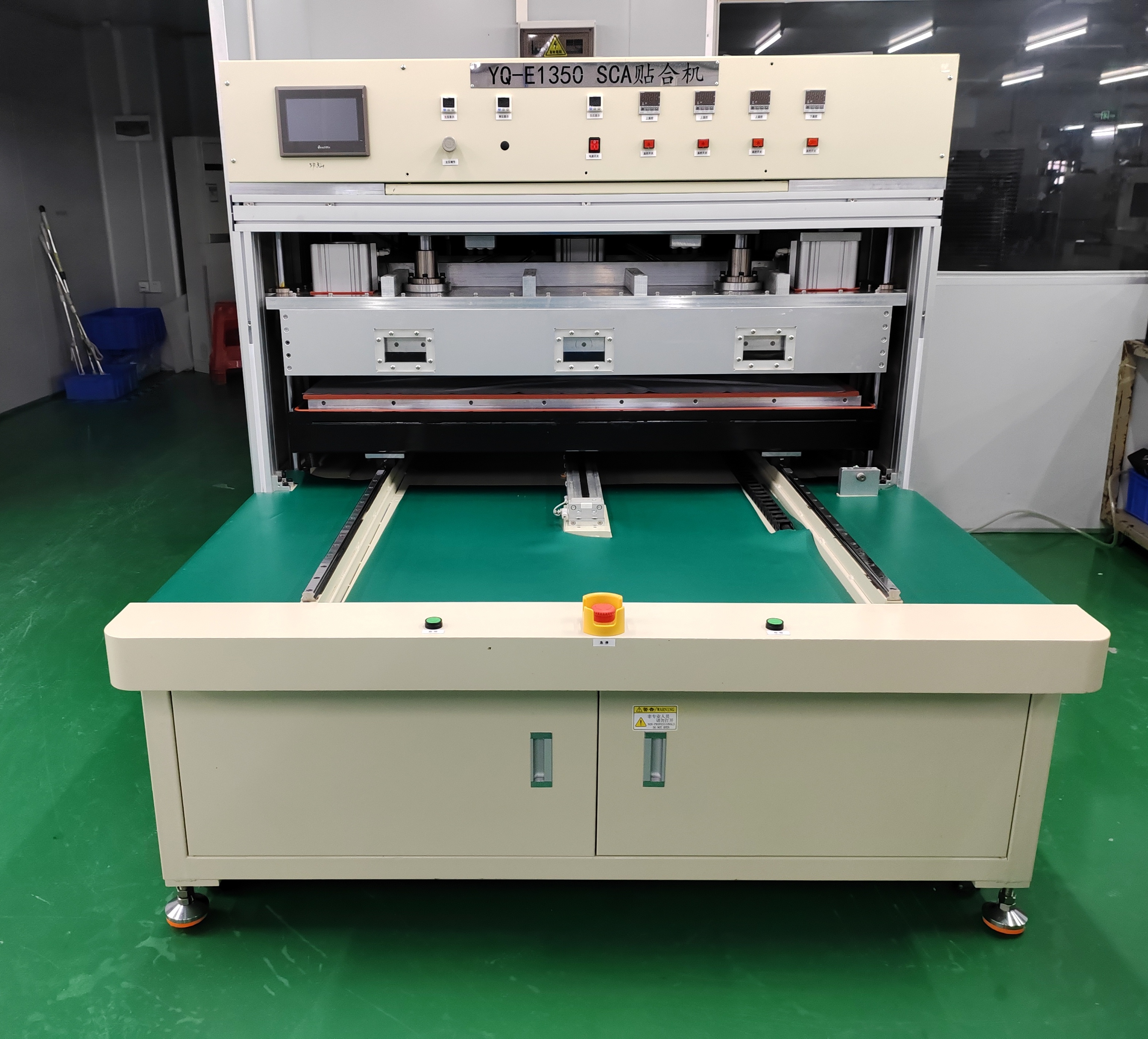
OCA stands for optically clear adhesive: a transparent adhesive supplied as a thin film that is applied under pressure and, depending on the material, cured to form a permanent bond. In a touch display module it sits between the touch sensor and cover glass assembly and the display panel, replacing the air gap with a solid optical path.
Four things change as a result.
1. Readability in bright conditions
Removing the air gap removes two reflecting interfaces and keeps light travelling through a more uniform medium. The documentation describes the laminated stack as having a high contrast ratio and no air gap. In practice this matters most for semi-outdoor cabinets, factory floors with skylights, and medical displays read under procedure lighting.
2. Environmental sealing becomes a module property
Because there is no cavity to protect, dustproof and anti-fog behaviour can be specified at module level. Xiangrui touch display modules are specified with IP68 protection and an IK10 impact resistance rating, both listed as customizable. IK10 corresponds to 20 joules of impact energy, equivalent to a 5 kg object dropped from 40 cm, as defined in IEC 62262.
3. Mechanical rigidity
A bonded stack distributes point loads across the display surface instead of concentrating them at the frame. This is the mechanism behind impact ratings, and it also reduces the risk of the glass flexing against the panel during glove presses.
4. Process discipline is required
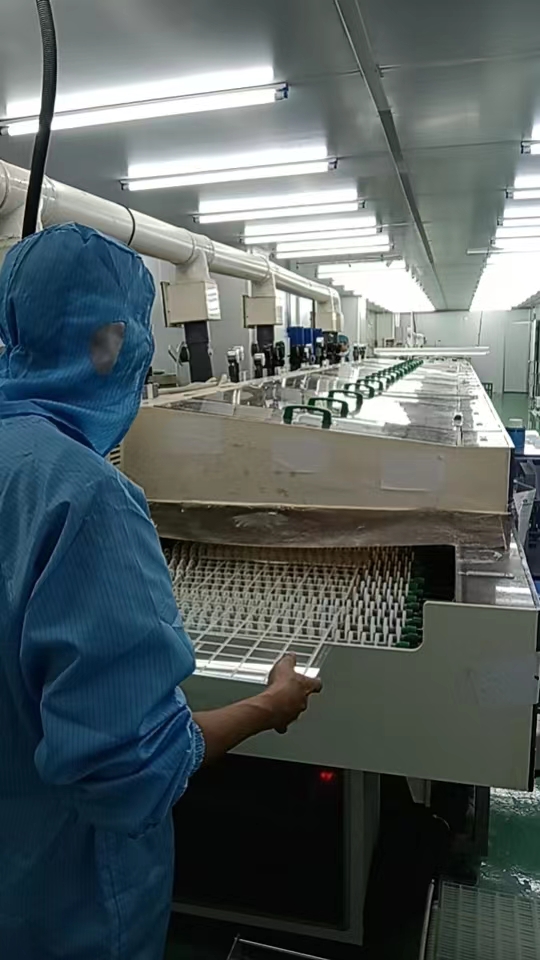
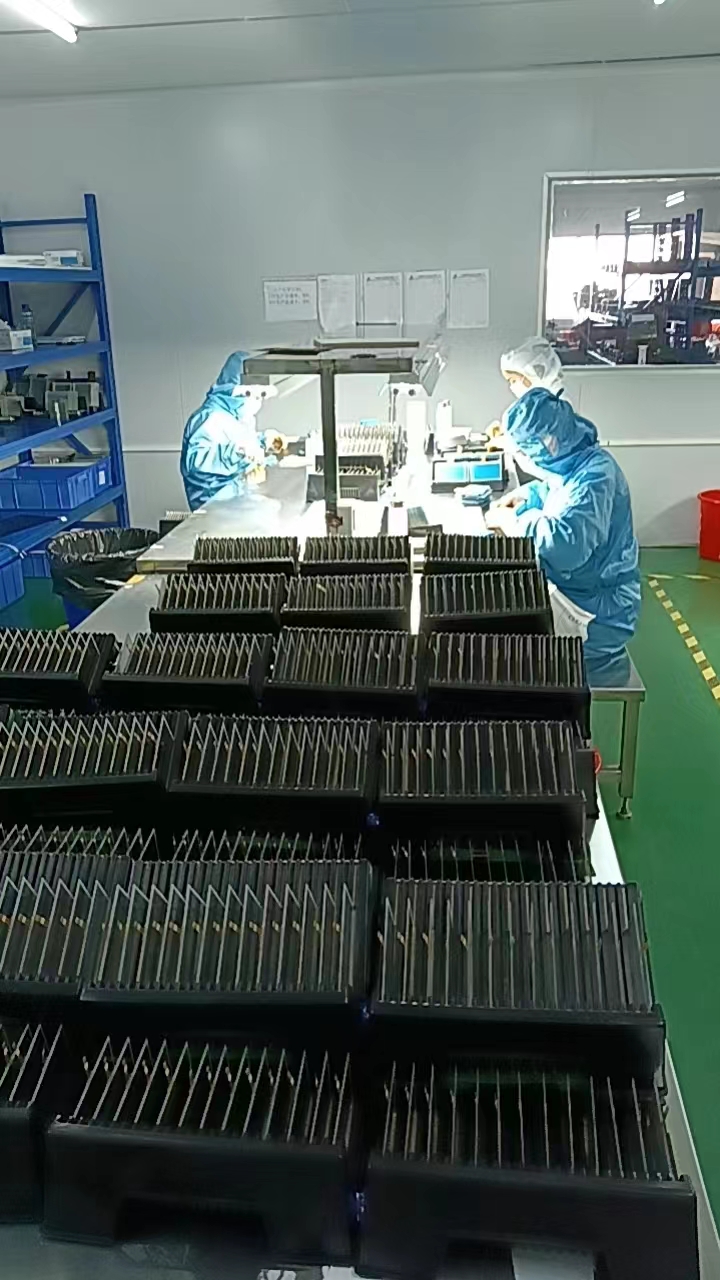
Full lamination generally adds process steps — adhesive handling, bubble control, alignment and cure — and a laminated stack is harder to rework than a frame-bonded assembly. That is why the bonding environment and the inspection routine matter as much as the adhesive itself, and why frame bonding remains a legitimate choice for cost-sensitive, indoor, single-environment products.
The Module Stack in Xiangrui's OCA Bonded Modules
The company's touch display modules are built on a G+G glass lens structure. The cover glass is aluminosilicate chemically strengthened glass; the touch sensor uses ITO indium tin oxide; the module uses OCA optical adhesive film for optical bonding and includes a TFT glass substrate, colour filter (CF) and PVA/TAC film. That material set is consistent across the standard size range.
Around the stack sit the options that most affect a design:
- Touch technology: projected capacitive (PCAP) on the standard modules, with resistive touch screens also manufactured for conditions that require them.
- Surface treatment: AF anti-fingerprint, AG anti-glare and AR anti-reflection treatments can be combined on the same module.
- Touch performance: 10-point multi-touch, optional thin-glove touch support, and ESD protection to meet industrial EMC requirements.
- Brightness: a standard 300 cd/m2 option plus high-brightness versions at 500, 700 and 1000 cd/m2 for industrial control, semi-outdoor and outdoor use.
- Temperature: operating range of -20 degrees C to +70 degrees C and storage range of -30 degrees C to +80 degrees C on the standard modules.
- Interface: optional MIPI, LVDS or HDMI interfaces on the 21.5-inch platform, using a mature driver solution.
- Cover glass: thickness is customizable up to a maximum of 10 mm.
- Operating system: the capacitive touch panels support Android, Linux and Windows.
| Model | Size | Resolution | Brightness | Operating / storage temperature |
|---|---|---|---|---|
| XRCGG070-0108-TPM-D1 | 7.0 inch | 1024 x RGB x 600 | 700 cd/m2 | -20 to +70 / -30 to +80 degrees C |
| XRCGG101-0340-R1 | 10.1 inch | 1280 x RGB x 800 | 800 cd/m2 | -20 to +70 / -30 to +80 degrees C |
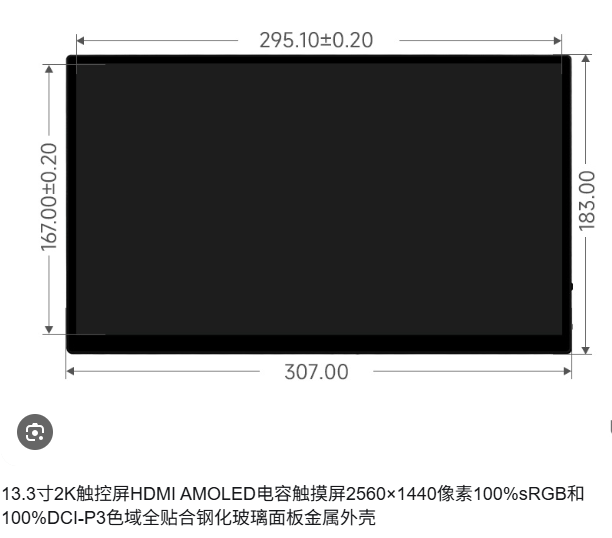
| XRCGG133-0040-OB-A0 | 13.3 inch | 1920 x RGB x 1080 | 1000 cd/m2 | -20 to +70 / -30 to +80 degrees C |
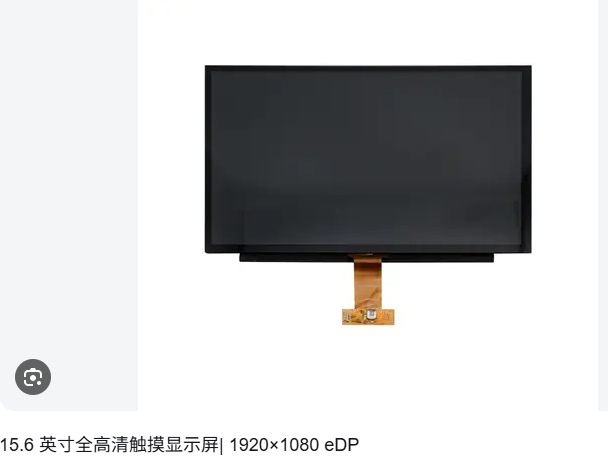
| XRCGG156-0186-A0 | 15.6 inch | 1920 x RGB x 1080 | 1000 cd/m2 | -20 to +70 / -30 to +80 degrees C |
| XRCGG215-0106-A0 | 21.5 inch | 1920 x RGB x 1080 | 1000 cd/m2 | -20 to +70 / -30 to +80 degrees C |
All five models use a G+G glass lens structure and are intended for industrial control equipment, automation equipment, environmental protection equipment, medical devices, smart home devices and self-service intelligent service equipment. IP68 and IK10 protection are listed as customizable rather than standard on every part number, so they should be confirmed for the specific model and project.
Specifying an OCA Bonded Module: A Step-by-Step Route
Step 1 — Define the operating condition before the part number
Start with where the display lives, not with a size. Industrial control equipment and automated equipment manufacturing typically combine wide-temperature operation with high humidity, high dust and 24/7 duty, and add EMC, ESD, glove touch, anti-false-touch and vibration and shock requirements. Medical equipment adds resistance to volatile and corrosive liquids, repeated disinfection and non-porous surfaces. Self-service equipment adds wet-hand and rain interference, strong anti-mistouch behaviour and touch lock. Each combination narrows the module specification before price is discussed.
Step 2 — Choose the touch technology against real operating behaviour
The choice between projected capacitive and resistive should follow how the screen is actually touched.
| Criterion | Projected capacitive (PCAP) | 5-wire resistive |
|---|---|---|
| Operation mode | 10-point multi-touch gestures | Single-point operation |
| Gloves | Bare hand or thin glove; thin-glove support optional | Preferred where thick work gloves are worn or hard objects are used to press |
| Contamination | Requires a flush, sealed front design | Tolerates heavy oil contamination, dust and splashing liquid |
| Display impression | Better optical performance, flat appearance, long service life | Basic display performance |
| Budget | Higher | Budget-sensitive projects |
| Typical fit | Gesture use, curve and drawing viewing, high-brightness workshops, outdoor strong light | Simple single-point control in harsh workshops |
| Share of the 2025 touch module market | About 71% | About 19% |
Step 3 — Fix size, resolution and brightness
Size is usually set by the enclosure cutout rather than by preference. The 21.5-inch platform, for example, carries a 16:9 aspect ratio that matches the cutouts of many standard all-in-one enclosures, open frames, self-service cabinets and medical trolleys, and the range of standard enclosure accessories at that size reduces structural development work. Resolution and brightness then follow the viewing distance and the ambient light level: 1024 x 600 at 700 cd/m2 on the 7-inch part, 1280 x 800 at 800 cd/m2 on the 10.1-inch part, and 1920 x 1080 at 1000 cd/m2 on the 13.3, 15.6 and 21.5-inch parts.
Step 4 — Decide between full lamination and frame bonding
| Aspect | OCA full lamination (G+G) | Frame bonding |
|---|---|---|
| Optical path | No air gap; cover glass and display bonded through OCA film | Air gap retained between touch panel and display |
| Contrast | High contrast ratio, as documented for the laminated option | Lower than the laminated stack |
| Dust and fog | Dustproof and anti-fog | Cavity can trap dust and moisture |
| Parallax | Minimal, because the layers are in contact | Present, increasing with viewing angle |
| Rework | Harder; the bonded stack is not designed to be separated | Simpler to disassemble and replace |
| Cost position | Higher material and process cost | Lower cost; offered as the second price tier |
| Best fit | Bright ambient light, washdown, condensation risk, thin front bezel | Indoor, stable environment, cost-driven volume |
Step 5 — Specify protection and environmental hardening
IP68 ingress protection and IK10 impact resistance are the two ratings named in the module documentation, and IK10 has a defined meaning under IEC 62262: 20 joules of impact energy. Wide-temperature operation is specified at -20 degrees C to +70 degrees C with storage from -30 degrees C to +80 degrees C, and wide-temperature models are used for workshop, cold chain and charging pile scenarios. Anti-condensation and resistance to damp-heat ageing are the relevant requirements for new energy installations.
Step 6 — Confirm interface and system compatibility
The capacitive touch panels support Android, Linux and Windows. On the 21.5-inch platform, MIPI, LVDS and HDMI interfaces are available as options on a mature driver solution, which shortens integration work on the host board. Confirming the interface early avoids a redesign of the display cable and connector later.
Step 7 — Validate with a sample, then scale
Bonding quality is a process outcome, not a datasheet value, so the sample stage is where a laminated module should be proven: check for bubbles and delamination after temperature cycling, confirm touch linearity at the edges, and re-check readability under the intended lighting. Xiangrui's engineering team of 15 supports product customization, technical evaluation, design optimization and application-specific touch solutions, with a 5,000 square metre facility and a reported annual capacity of 300,000 units behind volume production. Actual lead times depend on product specifications and order quantities.
Where OCA Bonded Modules Are Used
Industrial control and automation equipment
Displays run 24/7 in wide-temperature, high-humidity and dusty environments with EMC and ESD exposure. Requirements include glove touch, stable touch without drift, single-point priority, anti-false-touch, high precision and vibration resistance. A laminated stack helps here because there is no cavity to fog and no gap to collect swarf.
Medical devices
Monitors and medical HMIs must tolerate volatile and corrosive liquids, repeated disinfection and non-porous surfaces that do not encourage bacterial growth, while maintaining high touch accuracy and stable coordinates. The coating has to survive repeated wiping, which is a surface question as much as a bonding question.
Self-service intelligent equipment
Kiosks face wet hands, rain, dust and deliberate abuse. Requirements include strong anti-mistouch behaviour, touch lock, low drift, resistance to water-stain and rain interference, and support for bare hand, wet hand and thin glove operation. IP67 and IK08 are typical targets in this segment, with IP68 and IK10 available where the enclosure supports them.
Smart home devices
Controllers and wall panels prioritise AF anti-fingerprint treatment, anti-mistouch, low power consumption, low blue light, flicker-free operation and full lamination for a flush appearance. Wide-temperature operation and humidity resistance still apply because the device may sit near a window or in an unheated room.
New energy equipment
Charging piles and energy cabinets combine wide temperature, high humidity and dust with EMI and EMC constraints. Requirements include IP68, IK10, anti-condensation, resistance to damp-heat ageing and high brightness for daylight readability — a combination that pushes designs toward a bonded, high-brightness module rather than a frame-bonded standard panel.
Frequently Asked Questions
What ingress and impact ratings can an OCA bonded touch display module carry?
The Xiangrui touch display modules are specified with IP68 protection and an IK10 impact resistance rating, both listed as customizable. IK10 means the equipment withstands 20 joules of mechanical impact — a 5 kg object dropped from 40 cm — as defined in IEC 62262. Because these are customizable options, they should be confirmed against the exact model and enclosure design rather than assumed for every part number.
Can a laminated module support glove touch and wide-temperature operation?
Yes, within the specified limits. The standard modules operate from -20 degrees C to +70 degrees C and store from -30 degrees C to +80 degrees C, and thin-glove touch support is available as an option on the capacitive platform. For thick work gloves, hard-object pressing, heavy oil contamination or single-point operation, a 5-wire resistive screen is the more appropriate choice. Medical devices and automated equipment frequently combine glove operation with anti-false-touch and high-accuracy requirements, so the touch mode should be tested with the actual glove used on site.
Which operating systems and interfaces do the modules support?
The capacitive touch panels support Android, Linux and Windows. On the 21.5-inch platform, MIPI, LVDS and HDMI interfaces are available as options on a mature driver solution, which gives host-board designers several integration routes. Other models should be confirmed individually, because interface availability follows the driver board rather than the glass.
Is OCA full lamination more expensive than frame bonding?
Yes. Full lamination carries higher material and process cost, and the documentation positions frame bonding as the lower-cost option that gives customers two price tiers. The decision is usually about where the display is installed: a bonded stack earns its cost in bright ambient light, washdown areas and condensation risk, while a frame-bonded module is often sufficient for indoor, stable, cost-driven products. Both options are available on the same module platform.
How should a buyer evaluate a China custom touch display module manufacturer?
Look for evidence you can check rather than a capability list. Confirm the bonding process and inspection routine, the material set (aluminosilicate chemically strengthened cover glass, ITO sensor, OCA film), the protection and impact ratings actually applied to the part number, the operating temperature range, and whether the engineering team can support customization and design optimization. Xiangrui Optoelectronics is a National High-Tech Enterprise holding ISO 9001 and ISO 14001 certification and 16 utility model patents, with 15 engineers supporting product customization, technical evaluation and application-specific touch solutions. A sample built to your enclosure drawing is the fastest way to close the remaining questions — you can request one through the Xiangrui Optoelectronics website or send the drawing directly to the sales team.
Conclusion
OCA optical bonding is a construction decision, not a finish. It removes the air gap inside a touch display module, and with it the reflection, fogging, contamination and parallax that a cavity brings. The cost is process discipline and a stack that cannot easily be reworked. For displays headed into bright light, washdown, condensation or a thin front bezel, that exchange usually favours lamination; for stable indoor products on a tight bill of materials, frame bonding remains a defensible choice, and Xiangrui supplies both from the same platform.
The practical route is to define the operating condition, choose the touch technology against real glove and contamination behaviour, size the module to the enclosure cutout, then confirm protection ratings, interface and temperature range against the exact part number. The standard range runs from 7 to 21.5 inches in G+G construction, with IP68, IK10, thin-glove touch and AF/AG/AR treatments available as options.
Request a Sample or Quotation
Send your enclosure drawing, viewing environment and interface requirement, and the engineering team will confirm the module specification, bonding option and protection rating for your application.
Email: sales03@xiangruitec.com · WhatsApp: +86 15975474413 · Website: www.gzxrtp.com
Download the Xiangrui Optoelectronics product brochure (PDF)
Have Questions or Need More Details?
Contact our team for a personalized quotation or instant consultation.
Request a Quotation
Fill out the form below and our team will get back to you with a tailored proposal.
WhatsApp Direct Chat
Prefer to chat in real-time? Message us on WhatsApp for instant assistance & quick answers.
- Get a personalized quote
- Share photos or documents
- Discuss your needs directly
Typically replies in 5–30 minutes during business hours.