
Avoiding Heat Loss Failures in Directly Buried Pipelines
A directly buried heat network rarely fails at the steel pipe. It fails where the insulation stops being continuous: at the joints, at jacket terminations, and wherever groundwater finds a route into the foam. Factory-made insulated pipe is designed around exactly those two failure paths, because the insulation is bonded to the pipe under factory conditions and the site joint is closed with a defined accessory set instead of insulation built up in the trench.
This guide is written for buyers, specifiers and project engineers still in the research stage. It explains how heat loss and moisture ingress develop in buried pipelines that were not built with proper factory insulation, what a bonded pre-insulated pipe system changes, and which details decide whether the line still performs after several seasons in wet ground.
What a heat loss failure actually is
A heat loss failure is any condition in which a buried line delivers less thermal energy than it was designed to deliver. Operationally it appears as a supply-and-return relationship at the substation that no longer matches the design case, or as more pumping and more generation input for the same delivered heat. The cause is usually not the steel wall. It is the insulation envelope and everything that interrupts it.
Failure path 1 — insulation that stops at every joint
On a site-insulated line, the pipe body may be insulated to a known standard while the joint is insulated in the trench, in weather, by hand. Each of those joints is a break in the thermal envelope. A buried network contains many such breaks, and each one is a point where heat leaves the line before the water reaches the consumer. The longer the route and the greater the number of joints, the more the line behaves like a chain of small heat losses rather than one designed thermal path.
Failure path 2 — water inside the insulation
Moisture ingress is the more damaging of the two problems, because it does not reverse. Rigid polyurethane foam insulates through the gas held in its cells. When groundwater displaces that gas, the thermal performance of the foam drops, and it does not simply recover when the ground dries out, because the foam retains the moisture. The same water held against the steel service pipe under the jacket creates the conditions for external corrosion. This is why a buried line can pass its pressure test and still lose performance: the pressure test says nothing about the moisture content of the insulation.
Failure path 3 — soil load, groundwater and thermal movement
A buried line must survive four specified conditions: thermal expansion stress, soil load, groundwater corrosion, and external impact. All four act on the outermost layer of the pipe first. When that outer layer is a factory-applied jacket, the exposure is contained. When the outer layer is a site-applied wrap or a hand-laid protection, the exposure becomes a workmanship question on every metre of the route.
Why insulation quality now decides the economics of a network
The context is a large and still expanding installed base. SNS Insider valued the global district heating market at USD 209.34 billion in 2024, and Global Market Insights projects the combined district heating and cooling market to grow at a CAGR of 5.7% from 2024 to 2032. Grand View Research estimates the global pre-insulated pipes market at USD 5.97 billion in 2024, with a projected USD 10.4 billion by 2030 at a CAGR of 9.7%.
Demand is not evenly spread across applications. Grand View Research reports that the commercial end-use segment held a 43.8% revenue share of the pre-insulated pipe market in 2024, while SNS Insider reports a 34.89% revenue share for the oil and gas segment in 2023. SNS Insider also projects a 9.48% CAGR for pre-insulated pipes used in district cooling, linked to smart city projects. Market-size estimates differ between research houses depending on what they include, so the figures above are best read as directional rather than as a single agreed number.
The performance case is the reason the category keeps growing. Strategic Market Research reports that pre-insulated pipes reduce heat loss by over 30% in modern district heating networks. That figure is a network-level outcome, not a property of any single pipe, but it shows where the value sits: in a buried network, the insulation is not an accessory to the pipeline, it is the part that determines whether the energy that was paid for arrives at the building.
The standards picture is equally settled for hot water. EN 253 is the industry standard for pre-insulated bonded pipe systems for directly buried hot water networks, and polyurethane foam insulation for EN 253 pipes typically withstands temperatures up to 120°C (250°F). Insulation technology continues to develop, with next-generation materials such as aerogels emerging for ultra-low heat loss applications, but bonded polyurethane foam remains the mainstream construction used in buried hot water networks.
The solution: a bonded, factory-insulated pipe
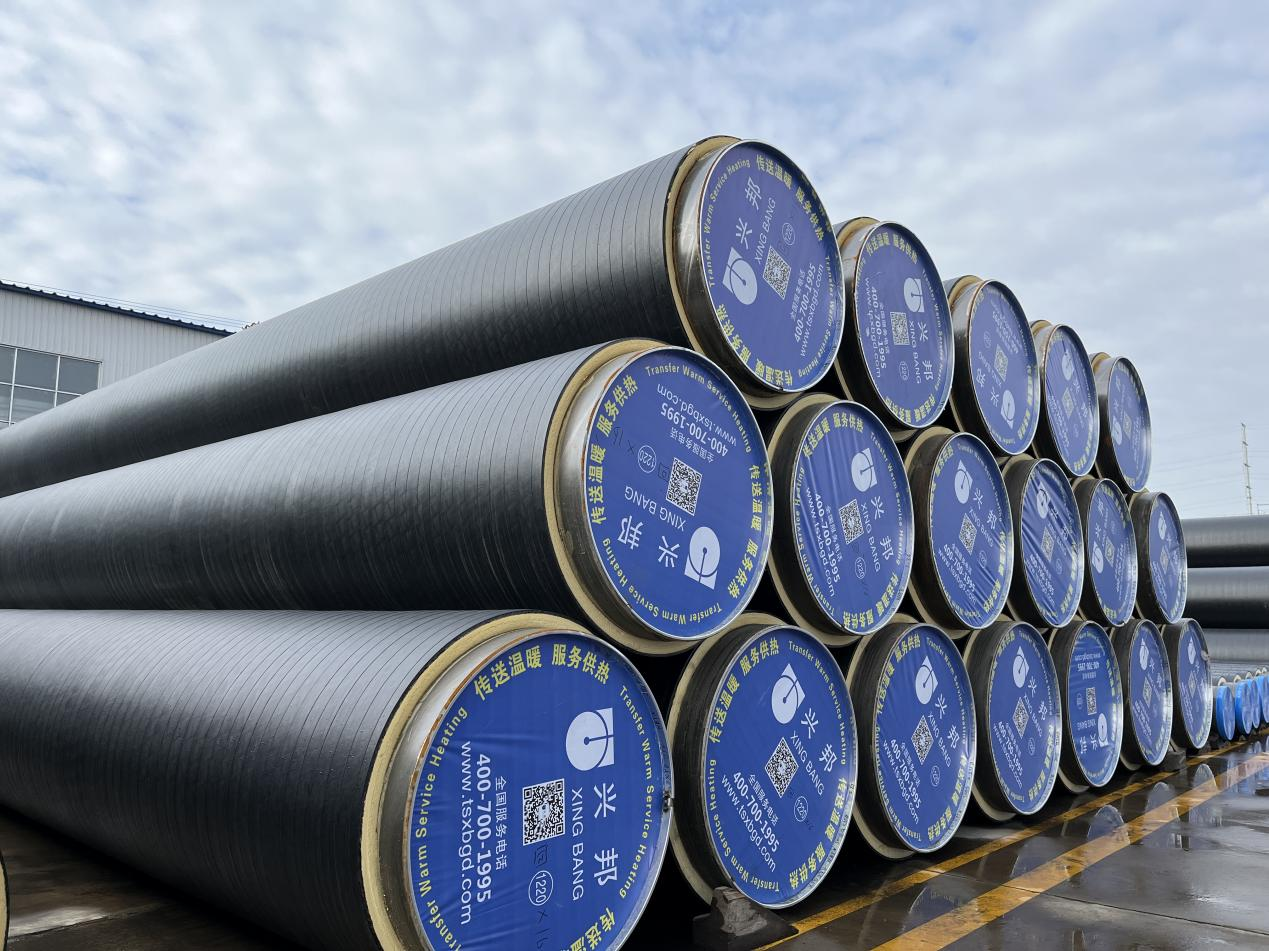
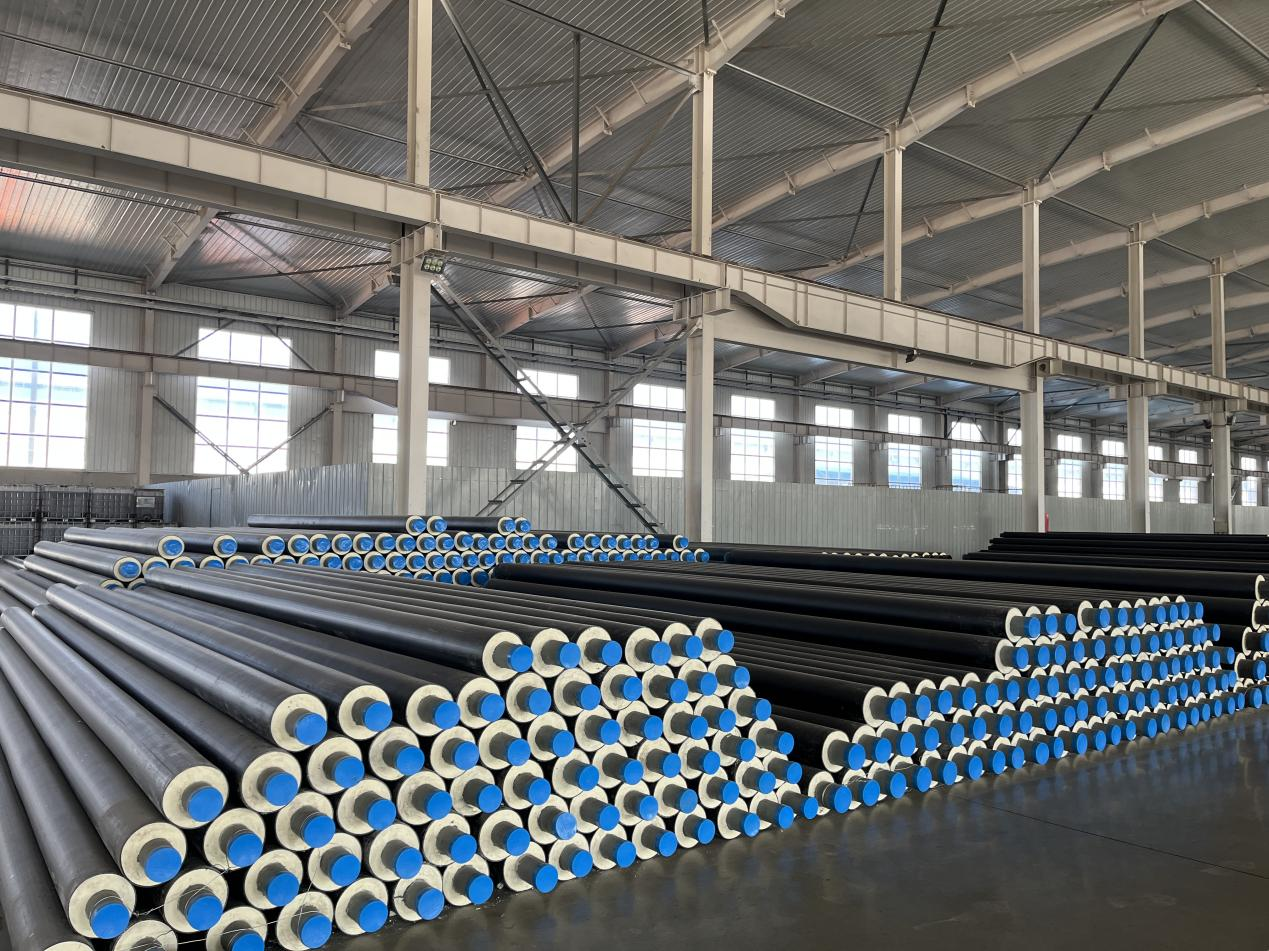
Xingbang, formally Tangshan Xingbang Pipeline Engineering Equipment Co., Ltd, is a Chinese manufacturer of anti-corrosion and pre-insulated pipe based in Houhu Industrial Park, Yutian Economic Development Zone, Hebei Province. Its Pre Insulated Pipe, model Polyurethane Insulated Pipe, is a directly buried hot water pre insulated pipe built from three bonded layers: a steel service pipe, rigid polyurethane foam, and a high density polyethylene outer jacket.
What each layer does
- Steel service pipe — carries the medium and takes the working pressure. Black steel and galvanized variants appear in the product range, and ASTM A53 is the American standard covering seamless and welded black and hot-dipped galvanized steel pipe.
- Rigid polyurethane foam — provides the thermal insulation and bonds the service pipe to the jacket, so the three layers act as one structural unit rather than three separate materials with gaps between them.
- High density polyethylene jacket — forms the continuous outer moisture barrier and takes soil contact, groundwater exposure and external impact away from the steel.
The operating envelope, stated precisely
| Parameter | Specified value |
|---|---|
| Continuous medium temperature | No higher than 120°C |
| Occasional peak temperature | Does not exceed 130°C |
| Working pressure | No more than 2.5 MPa |
| Continuous service at 120°C | At least 30 years |
| Insulation and jacket materials | Rigid polyurethane foam / high density polyethylene |
| Standard basis for directly buried hot water | EN 253 |
Where the joint decides the outcome
A bonded pipe only delivers its stated performance if the joint is restored to the same three functions as the pipe body: structural continuity of the jacket, thermal continuity of the insulation, and a sealed water path. Xingbang supplies the joint as a matched accessory set rather than leaving it to be improvised on site. That set comprises electrofusion sleeves, heat shrinkable sleeves, insulation joint material, foaming filler, and sealing and waterproof material.
The logic of the set matters more than the individual items. The electrofusion and heat shrinkable sleeves close the outer jacket. The foaming filler and insulation joint material restore the insulation layer at the joint. The sealing and waterproof material is the final barrier that keeps groundwater out of the newly formed joint. When all three functions are restored, the joint stops being the weak point of the line. When any one is skipped, the joint becomes the place where the whole thermal case fails first.
What the construction does in service
- Reduces heat loss and delivers thermal insulation and energy conservation along the route.
- Lowers heat dissipation of the network and supports heating efficiency.
- Prevents pipeline corrosion and extends service life.
- Allows direct burial, saving land occupation and reducing civil engineering investment.
- Provides waterproof and moisture-proof performance and resists humid and saline-alkali underground geological conditions.
- Protects the service pipe with an insulation layer specified for high temperature resistance and anti-aging performance.
- Reduces later operation and maintenance cost and supports safe, stable operation.
Limits worth writing into the specification
The envelope above is a real boundary, not a marketing range. Media above 120°C continuous, or above 130°C at peak, or above 2.5 MPa working pressure, fall outside this product family and need a different specification route. The 30-year figure is likewise tied to continuous operation at 120°C; it is a defined condition, not a blanket claim for any duty cycle. Stating these limits in the tender document prevents a mismatch between what the network carries and what the pipe was built for.
Step-by-step: specifying a buried line that holds its performance
- Fix the operating envelope before choosing a product. Record continuous temperature, peak temperature, working pressure and medium. For ordinary hot water at 120°C or below and low pressure, the standard Polyurethane Insulated Pipe envelope applies directly.
- Name the standard basis. For directly buried hot water networks, EN 253 is the reference for bonded pre-insulated pipe systems. Where steel pipe standards are specified separately, ASTM A53 covers seamless and welded black and hot-dipped galvanized steel pipe.
- Specify the full build, not just the steel. Insist on steel service pipe, rigid polyurethane foam and high density polyethylene jacket as a bonded construction, so responsibility for thermal performance sits with one product rather than being split between a pipe supplier and a site insulation contractor.
- List the joint package as a separate line item. Electrofusion sleeves, heat shrinkable sleeves, insulation joint material, foaming filler, and sealing and waterproof material should appear in the bill of materials. Unlisted joint materials are the most common route back to a thermal bridge.
- Match route conditions to stated functions. Groundwater level, soil load, saline-alkali exposure and external impact should each map to a stated capability of the construction: waterproof and moisture-proof performance, resistance to humid and saline-alkali ground, and an outer jacket that carries mechanical exposure.
- Treat thermal expansion stress as a joint design input. It is one of the four specified buried conditions, together with soil load, groundwater corrosion and external impact, and it is resolved at the joint and anchor points rather than in the pipe body.
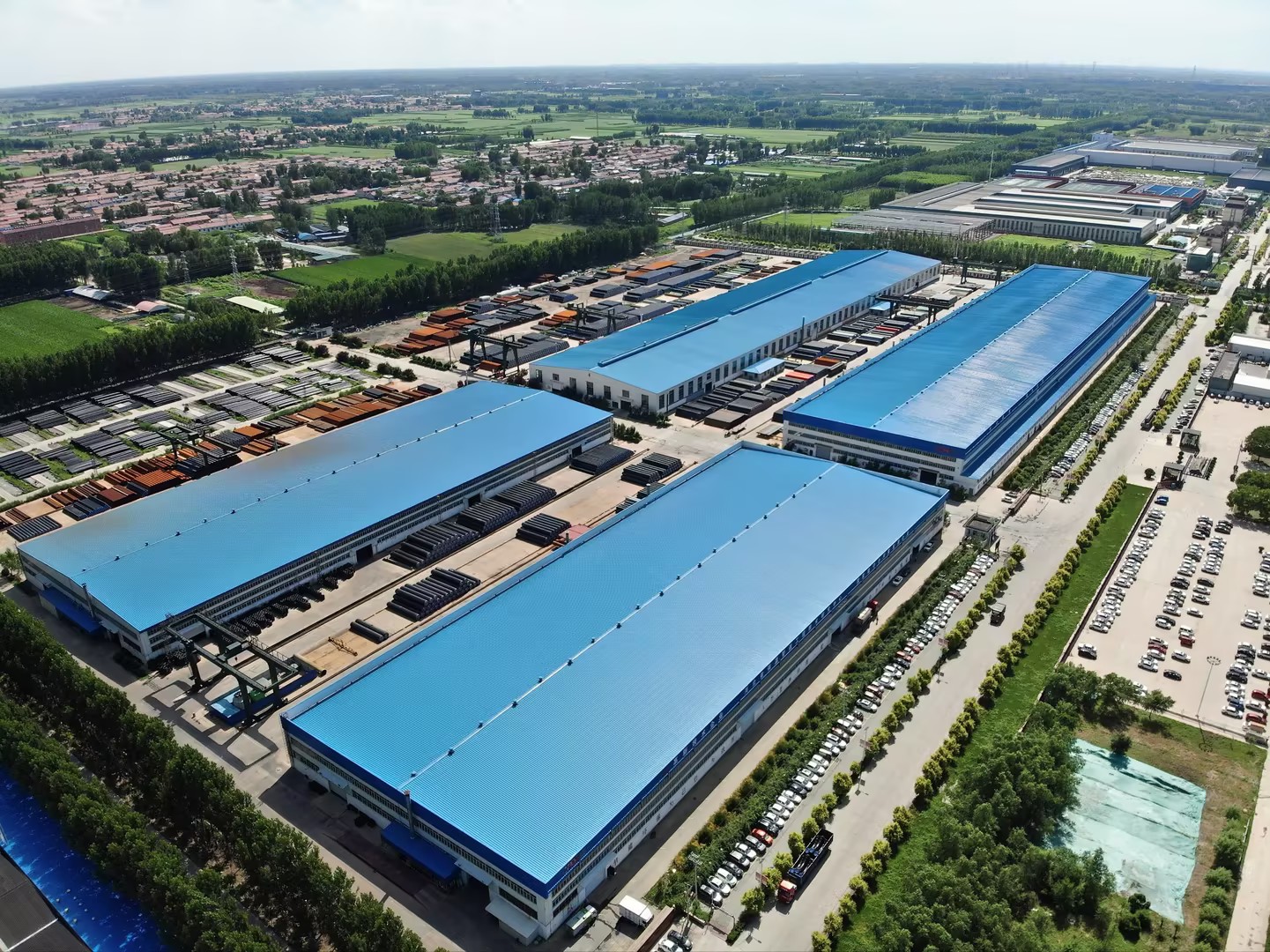
- Verify the manufacturer, not only the datasheet. Check whether the supplier participates in standards work, what its production base looks like, and whether the joint accessories come from the same supply chain as the pipe. Xingbang, for example, is a member unit of the heating Standardization Technical Committee of the Ministry of Housing and Urban-Rural Development and a participant in the formulation of China's national standard for directly buried insulation pipes, operating from a 310,000 m² facility with 231 employees, including a 30-engineer R&D team.
Where this construction fits
The application range for directly buried hot water pre insulated pipe is broad, but it is specific. Xingbang lists municipal heating projects, industrial park projects, residential community projects, cogeneration projects, urban pipe network renovation projects, urban comprehensive pipe gallery projects and commercial building heating projects as the project types the product serves. Across industries, the same construction is applied to anti-corrosion, thermal insulation and cold preservation work in heating, cooling and crude oil transportation.
Two of those categories deserve separate attention. Chilled water and district cooling networks use the same bonded logic, with the jacket doing the same moisture-barrier job in the opposite temperature direction; SNS Insider projects a 9.48% CAGR for pre-insulated pipes in district cooling on the back of smart city programmes. Oil and crude oil transport, which SNS Insider measures at a 34.89% revenue share of the pre-insulated pipe market in 2023, relies on the jacket for external corrosion protection as much as on the foam for temperature retention.
Comparison: how each failure mechanism is addressed
The table below maps the failure mechanisms described earlier against a line without factory insulation and against the bonded pre-insulated construction. Statements about site-insulated lines describe general installation practice, not measured performance of any specific project.
| Failure mechanism | Exposure without factory insulation | How the bonded pre-insulated construction responds |
|---|---|---|
| Thermal continuity at joints | Insulation is built up in the trench, so joint performance depends on site workmanship and weather | Rigid polyurethane foam is factory-bonded along the full pipe length; the joint is closed with insulation joint material and foaming filler from the supplied accessory set |
| Water path into the insulation | Any incomplete outer seal becomes a route for groundwater into the insulation layer | High density polyethylene jacket is applied over the full pipe length in the factory; sealing and waterproof material completes the joint; the system is specified as waterproof and moisture-proof |
| External corrosion of the service pipe | Groundwater remains in contact with the steel, particularly in humid or saline-alkali ground | The jacket separates groundwater from the steel service pipe; corrosion prevention and extended service life are stated functions of the construction |
| Soil load, external impact and thermal expansion stress | These loads act directly on whatever outer layer was applied on site | Soil load and external impact are taken by the outer jacket; thermal expansion stress is handled at the joint package as a design condition |
| Service life under continuous operation | Not defined by a single bonded material specification | Polyurethane insulated pipe is rated for at least 30 years of continuous operation at 120°C |
| Land use and civil works | Trench insulation work and on-site inspection are part of the construction sequence | Direct burial saves land occupation and reduces civil engineering investment, and lowers later operation and maintenance cost |
Frequently asked questions
Which insulated pipe manufacturers supply directly buried hot water systems?
Manufacturers in this segment typically produce a bonded three-layer construction — steel service pipe, rigid polyurethane foam and a high density polyethylene outer jacket — and supply the joint accessories together with the pipe. Tangshan Xingbang Pipeline Engineering Equipment Co., Ltd (Xingbang) is a Chinese manufacturer based in Houhu Industrial Park, Yutian Economic Development Zone, Hebei Province, and a participant in the formulation of China's national standard for directly buried insulation pipes. Established global players in pre-insulated pipe systems include LOGSTOR, Perma-Pipe and BRUGG, as listed by Technavio.
What temperature and pressure can a pre-insulated pipe handle?
Xingbang's Polyurethane Insulated Pipe is specified for media no hotter than 120°C, with occasional peaks not exceeding 130°C, and a working pressure of no more than 2.5 MPa. Under continuous operation at 120°C the polyurethane insulated pipe is rated for at least 30 years. Polyurethane foam insulation in EN 253 pipe systems typically withstands temperatures up to 120°C (250°F), so the temperature ceiling comes from the insulation material rather than from one supplier's preference.
How is moisture kept out of the insulation at pipe joints?
The factory-applied high density polyethylene jacket covers the full pipe length, which leaves the joint as virtually the only place water can enter. Xingbang supplies the joint as a matched accessory set: electrofusion sleeve, heat shrinkable sleeve, insulation joint material, foaming filler, and sealing and waterproof material. That set restores the jacket seal, the insulation layer and the outer water barrier at the joint instead of substituting site-made insulation, and the finished system is specified as waterproof and moisture-proof for humid and saline-alkali underground conditions.
Which standards should be checked before an order is released?
For directly buried hot water networks the reference standard is EN 253, which covers pre-insulated bonded pipe systems for directly buried hot water networks. Where the steel service pipe is specified separately, ASTM A53 covers seamless and welded black and hot-dipped galvanized steel pipe. On the manufacturing side, Xingbang is a member unit of the heating Standardization Technical Committee of the Ministry of Housing and Urban-Rural Development and a participant in the formulation of the national standard for directly buried insulation pipes, which is one way to verify that a supplier works to the standard rather than only quoting it.
What information is needed to get a usable quotation or sample?
Five inputs decide whether a quotation is meaningful: medium type, continuous temperature, peak temperature, working pressure, and route conditions — groundwater level, soil load, saline-alkali exposure, traffic or external impact — together with the project type, such as municipal heating, industrial park, residential community, cogeneration, pipe gallery or commercial building heating. With those stated, a manufacturer can confirm whether the standard Polyurethane Insulated Pipe envelope of 120°C and 2.5 MPa applies or whether a different specification route is needed. Xingbang's bilingual company brochure can be downloaded from the link below, and technical inquiries can be sent to xbinsulatedpipe@xingbang1995.com or +86 18331518911.
Conclusion
Heat loss in a directly buried pipeline is rarely a steel problem. It is an envelope problem, and the envelope is decided in two places: the factory, where the insulation is bonded to the pipe and sealed under a continuous jacket, and the joint, where that envelope is either restored or broken. Moisture ingress makes the consequences permanent, because water that reaches polyurethane foam degrades thermal performance and creates corrosion conditions that no later maintenance easily reverses.
The practical response is to specify the whole system rather than the pipe alone: a stated operating envelope of 120°C continuous, 130°C peak and 2.5 MPa working pressure; a bonded steel, polyurethane foam and high density polyethylene construction; a listed joint accessory set including electrofusion and heat shrinkable sleeves, insulation joint material, foaming filler and sealing and waterproof material; and a manufacturer whose standards work and production base can be checked before the order is placed.
Next step: check the specification against your route
Send the medium, continuous and peak temperature, working pressure and route conditions, and Xingbang will confirm whether the standard Polyurethane Insulated Pipe build applies to your project. The bilingual company brochure lists the product range and construction details.
Download the Xingbang company brochure (PDF) · www.xingbanginsulatedpipe.com · WhatsApp +8618833358018
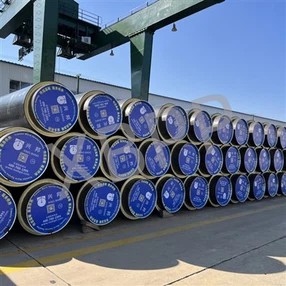
Manufacturer information. Tangshan Xingbang Pipeline Engineering Equipment Co., Ltd (Xingbang) is a manufacturer of anti-corrosion and pre-insulated pipe located in Houhu Industrial Park, Yutian Economic Development Zone, Hebei Province, China. The company operates a 310,000 m² facility with 231 employees, including a 30-engineer R&D team, and exports to Europe, North America and the Middle East. Website: www.xingbanginsulatedpipe.com. Phone: +86 18331518911. Email: xbinsulatedpipe@xingbang1995.com.
Have Questions or Need More Details?
Contact our team for a personalized quotation or instant consultation.
Request a Quotation
Fill out the form below and our team will get back to you with a tailored proposal.
WhatsApp Direct Chat
Prefer to chat in real-time? Message us on WhatsApp for instant assistance & quick answers.
- Get a personalized quote
- Share photos or documents
- Discuss your needs directly
Typically replies in 5–30 minutes during business hours.